How Long Does an AC Unit Last? Complete Homeowner’s Guide for 2026
Most central AC units last 15 to 20 years with proper maintenance. This guide covers what affects lifespan, warning signs of a failing system, and when it makes more sense to replace than repair.
How Long Does an AC Unit Last on Average?
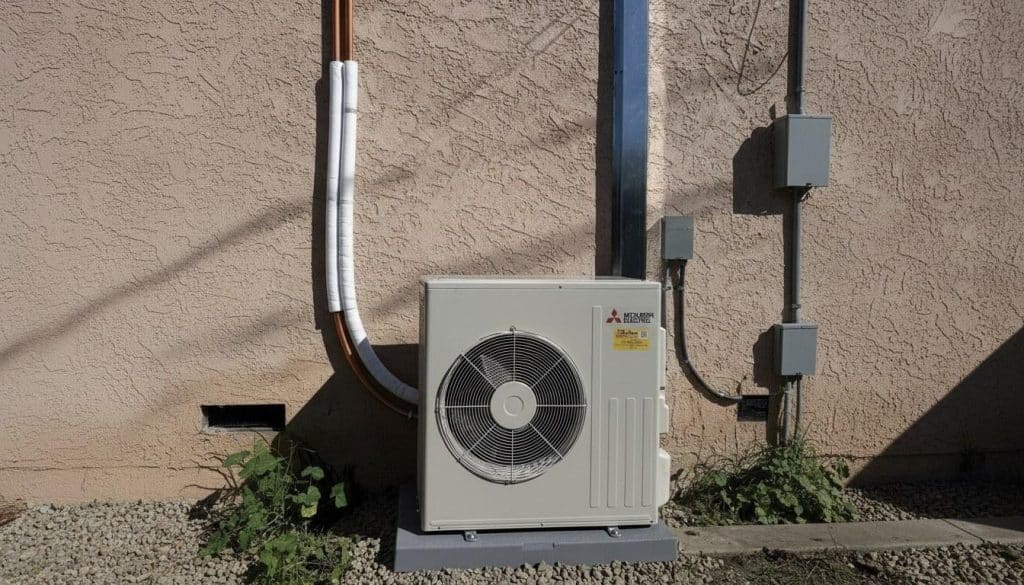
Most central air conditioning systems last between 15 and 20 years. Window units and ductless mini-splits typically fall in the 10 to 15 year range. How long does an AC unit last in a place like Southern California? Because systems here run hard from May through October — often 8 to 10 hours a day — many homeowners see meaningful performance drops after 12 to 15 years even with regular service.
The U.S. Department of Energy recommends planning for replacement around the 15-year mark, especially when repair costs start climbing. That does not mean every unit fails at 15 years, but it is the point where the math often shifts in favor of a new, more efficient system.
Here is a quick reference for average AC lifespan by system type:
| System Type | Average Lifespan | Key Variable |
|---|---|---|
| Central split system (standard) | 15–20 years | Maintenance frequency, climate |
| Ductless mini-split | 15–20 years | Filter cleaning, refrigerant charge |
| Window/room AC unit | 8–12 years | Usage hours, coil condition |
| Packaged rooftop unit | 12–17 years | Exposure to elements, service schedule |
What Factors Shorten (or Extend) Your AC’s Lifespan?
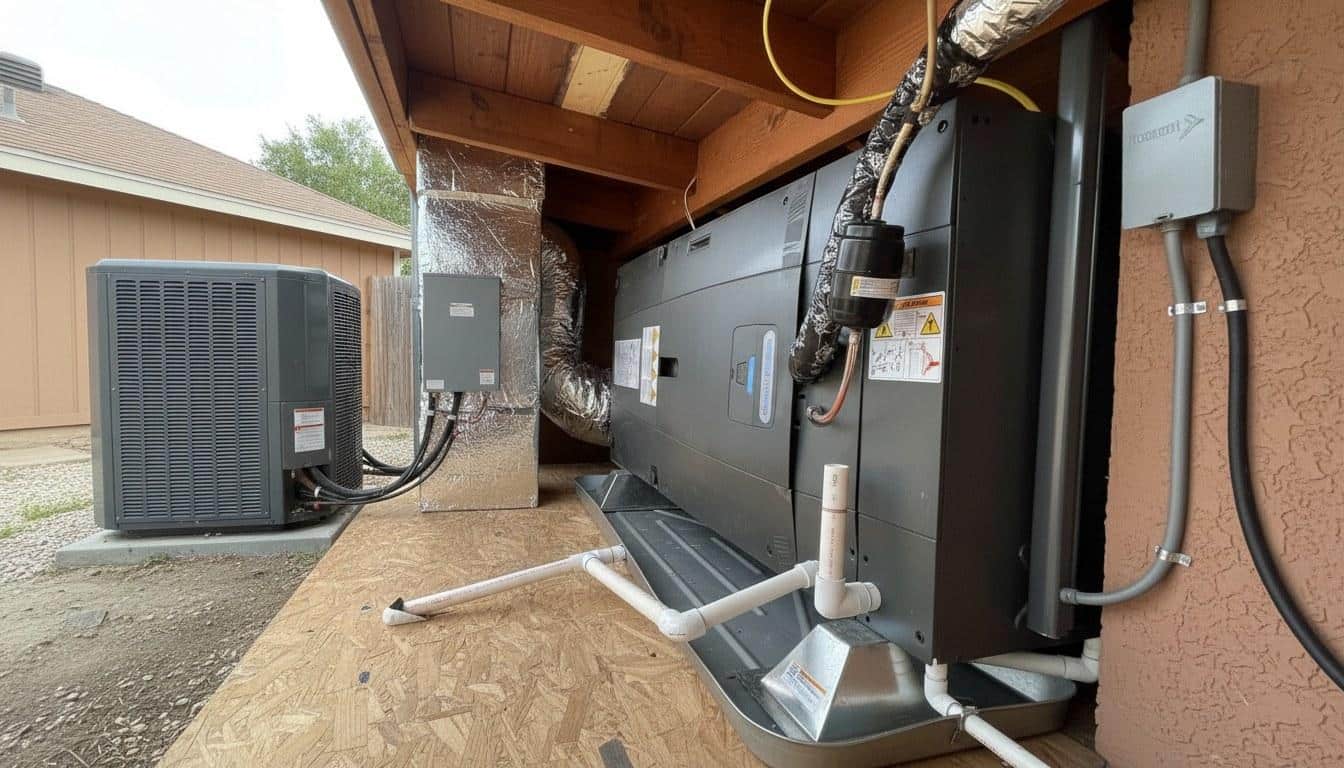
The single biggest factor is how often the system runs — and how well it is maintained during those run hours. A unit that runs 2,000 hours per year in a hot inland valley ages faster than one running 800 hours per year in a milder coastal area.
Here are the main variables that move the needle on AC lifespan:
- Maintenance history: Systems that receive annual tune-ups consistently outlast neglected units by 3 to 5 years on average. A tune-up catches small problems before they cascade into compressor failure.
- Correct sizing: An oversized unit short-cycles — it turns on and off too frequently — which puts extra stress on the compressor. An undersized unit runs almost nonstop. Both patterns accelerate wear. ACCA Manual J load calculations are the industry standard for getting sizing right.
- Refrigerant level: Low refrigerant forces the compressor to work harder. Under EPA refrigerant regulations (Section 608), only certified technicians can handle refrigerant — a leak left unrepaired quietly destroys the compressor over months.
- Air filter changes: A clogged filter restricts airflow, raising internal temperatures and overworking the blower motor. Filters should be changed every 1 to 3 months depending on dust levels and pet dander.
- Coil condition: Dirty evaporator or condenser coils reduce heat transfer efficiency by up to 30%, forcing the system to run longer cycles. Annual coil cleaning is one of the highest-return maintenance steps.
- Local climate: Coastal areas with salt-laden air can corrode condenser fins faster than inland locations. High-heat regions push systems harder during peak months.
- Installation quality: Improper installation — wrong refrigerant charge, poor duct sealing, incorrect electrical connections — can cut years off a brand-new unit’s life before it ever has a chance to prove itself.
Our technicians see roughly 40% of premature compressor failures on units under 10 years old trace back to an original installation problem — most often an incorrect refrigerant charge or undersized return duct that was never corrected.
What Are the Warning Signs Your AC Is Failing?
The clearest early warning sign is a system that runs longer cycles to reach the same temperature it used to hit quickly. Other signs show up in your energy bills, your air quality, and the sounds the unit makes.
Watch for these symptoms, especially on a system older than 10 years:
- Weak or warm airflow: Vents push less cold air than usual, or the air is barely cooler than room temperature.
- Frequent cycling: The system turns on and off every few minutes instead of running a steady 10 to 20 minute cycle.
- Unusual noises: Grinding, banging, or squealing often point to a failing blower motor, loose belt, or compressor issue.
- Ice on the unit: Ice forming on the evaporator coil or refrigerant lines usually means low refrigerant or restricted airflow.
- Moisture or leaks: Pooling water around the air handler can signal a blocked condensate drain or a refrigerant leak.
- Rising energy bills: A system working harder to do the same job consumes more electricity. A 15 to 25% spike in cooling costs with no change in usage habits is a red flag.
- Inconsistent temperatures: Some rooms stay hot while others are comfortable, pointing to duct problems or a system that can no longer distribute air properly.
- Frequent repairs: Needing service more than once per cooling season is a strong sign the system is nearing the end of its useful life.
Should You Repair or Replace Your AC Unit?
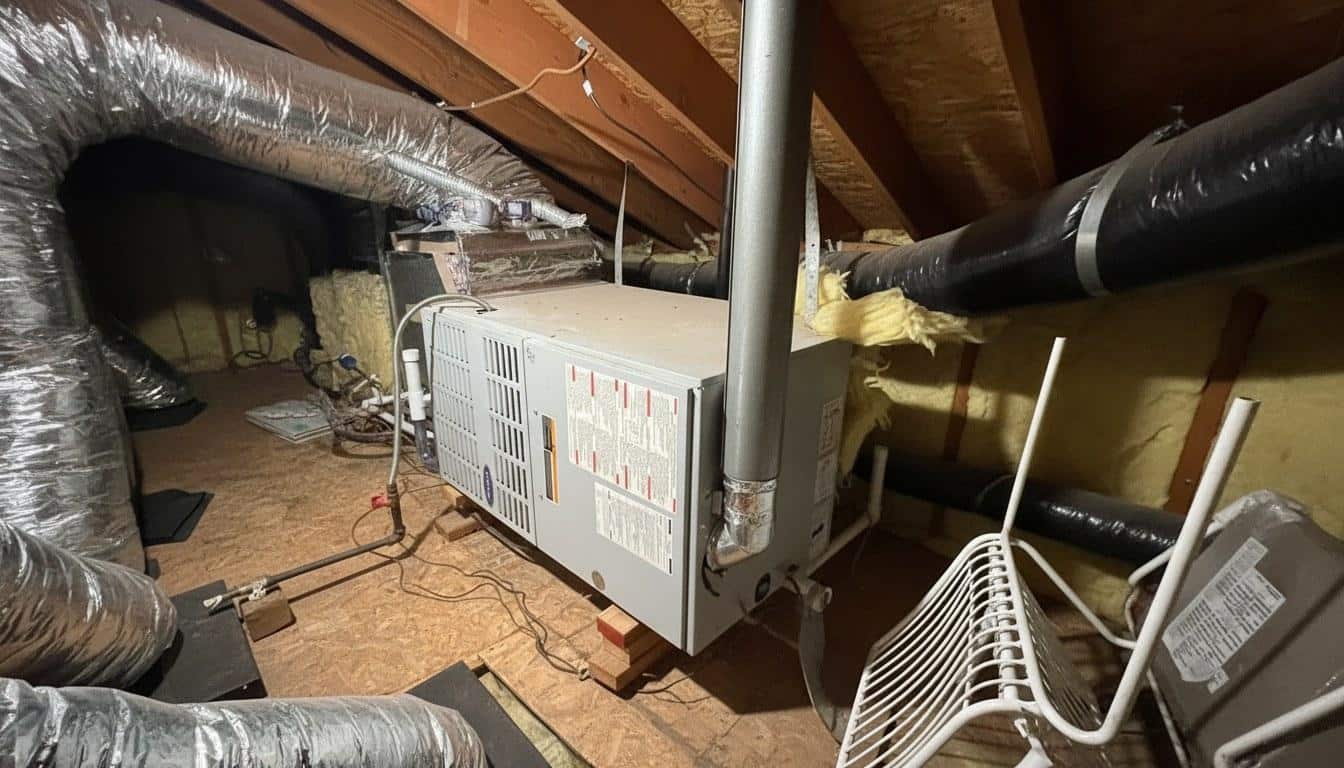
The standard industry rule is the “5,000 rule”: multiply the system’s age by the estimated repair cost, and if the result exceeds $5,000, replacement is usually the smarter investment. For example, a 12-year-old unit needing a $500 repair scores 6,000 — lean toward replacement.
But the math is only part of the picture. Efficiency improvements matter too. Systems manufactured before 2023 often carry SEER ratings of 10 to 13. New systems must meet California’s minimum SEER2 standards under California’s Title 24 building energy standards, and many top-performing units hit SEER2 ratings of 18 to 22. That gap translates to real monthly savings.
Use this table as a starting decision guide:
| Situation | Repair | Replace |
|---|---|---|
| System is under 10 years old, first major repair | Usually yes | Not yet |
| System is 10–15 years old, moderate repair cost | Evaluate with 5,000 rule | Consider if efficiency is low |
| System is over 15 years old, compressor or refrigerant issue | Rarely | Usually yes |
| System uses R-22 refrigerant (phased out as of 2020) | Not recommended — refrigerant is scarce and expensive | Yes |
| Repeated repairs in the same season | No | Yes |
One important note: if your system still uses R-22 refrigerant, the EPA phaseout means that refrigerant now costs several times what it did a decade ago. A single refrigerant recharge on an R-22 system can cost as much as a significant portion of a new unit. Replacement almost always wins in that scenario.
Also worth knowing: the Inflation Reduction Act federal tax credit offers up to 30% back (capped at $600) on qualifying high-efficiency AC equipment installed through 2032. That credit can meaningfully change the replacement math for many homeowners.
The Inflation Reduction Act federal tax credit offers up to 30% back on qualifying high-efficiency AC equipment installed through 2032.
How Can You Make Your AC Last Longer?
Annual professional maintenance is the single highest-return action a homeowner can take — systems that receive it consistently last 3 to 5 years longer than neglected ones. Most of the steps that extend AC life are low-cost or free.
Here is a practical maintenance calendar:
- Change the air filter every 1 to 3 months. Use a filter rated MERV 8 to 11 for most homes. Higher MERV ratings can restrict airflow on some systems — ask your technician what rating fits your unit.
- Clear the area around the outdoor condenser. Keep at least 2 feet of clearance on all sides. Trim back shrubs and remove debris after windstorms.
- Schedule a professional tune-up each spring before the heavy cooling season begins. A full tune-up covers refrigerant level, coil cleaning, electrical connections, blower motor, and thermostat calibration.
- Check the condensate drain line annually. A simple flush with diluted bleach prevents algae buildup that causes drain clogs and water damage.
- Seal duct leaks. The U.S. Department of Energy estimates that leaky ducts waste 20 to 30% of the conditioned air a system produces. Mastic sealant or metal-backed tape on accessible joints is a worthwhile DIY step.
- Use a programmable or smart thermostat. Reducing the cooling load during unoccupied hours cuts run time significantly, reducing wear on the compressor and blower motor.
- Keep the evaporator coil clean. If you notice frost forming on indoor components, call a technician — do not try to chip it off, as that can damage the coil fins.
We see a clear pattern across summer service calls: homes with a documented annual maintenance history average fewer than one emergency repair call per 5 years, while homes with no maintenance record average closer to one emergency call per 18 months.
What Does AC Replacement Cost in Southern California?
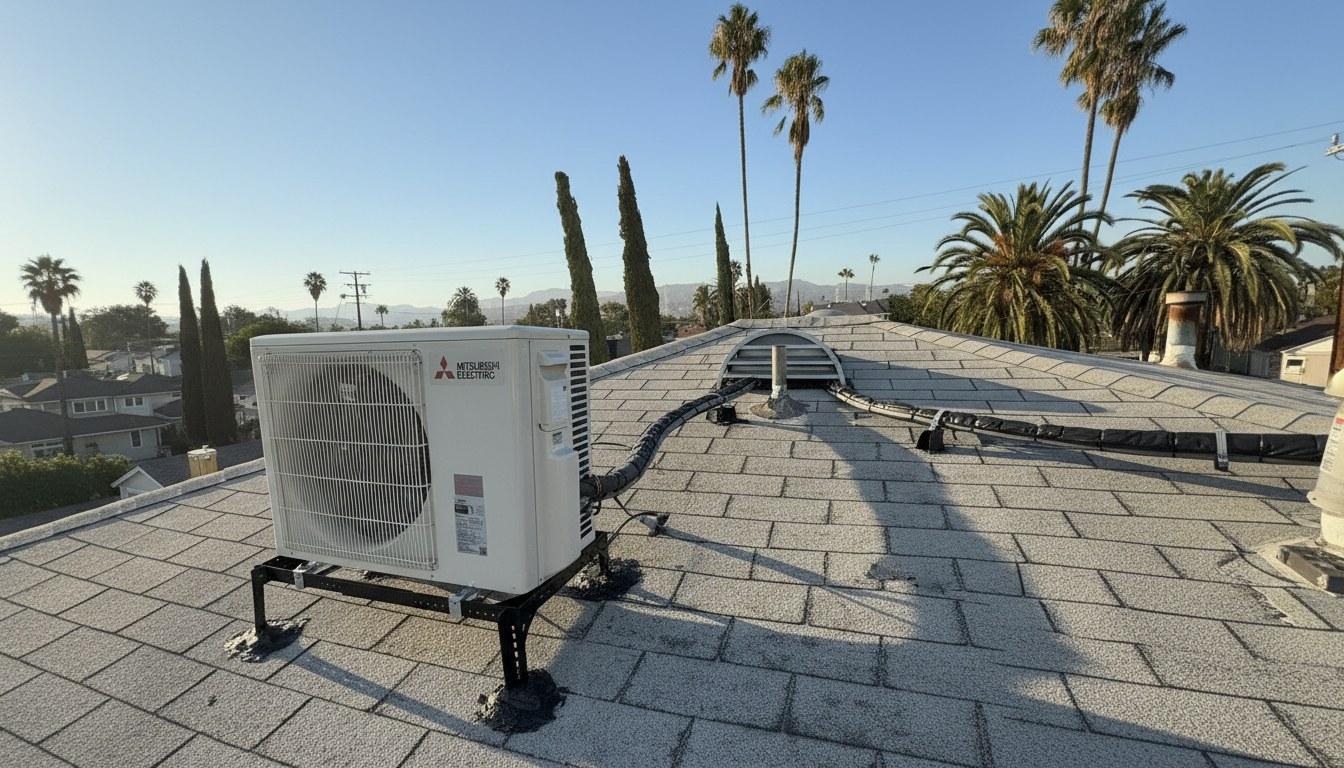
In the Southern California market, a standard central AC replacement — including equipment, labor, and permits — typically ranges from $4,500 to $12,000 depending on system size, efficiency rating, and installation complexity. Ductless mini-split installations for a single zone generally run $2,500 to $5,500 per zone in this market.
The factors that move a project toward the higher end of the range include:
- System size (tonnage): A 2-ton unit for a smaller home costs less than a 5-ton system for a larger one. Proper sizing requires a Manual J load calculation — not a rule-of-thumb guess.
- SEER2 efficiency rating: Higher-efficiency units cost more upfront but lower monthly bills. The Inflation Reduction Act federal tax credit and TECH Clean California rebate programs can offset part of that premium.
- Duct condition: If existing ductwork needs repair or replacement alongside the new unit, total project cost rises accordingly.
- Electrical upgrades: Older homes sometimes need a panel upgrade or new dedicated circuit to support a modern system.
- Permit and inspection fees: California requires permits for AC installation. Fees vary by jurisdiction but typically add $150 to $500 to the total project cost.
As of 2026, homeowners replacing qualifying equipment may claim the Inflation Reduction Act federal tax credit of up to 30% on the equipment cost (capped at $600 for central AC). The TECH Clean California program also offers rebates on heat pump systems that replace fossil-fuel equipment. Always request a written, itemized quote before any work begins so you know exactly what is included.
Explore our full range of HVAC services across Southern California.
Frequently Asked Questions
How long does an AC unit last if I never get it serviced?
Without annual maintenance, most central AC units show significant decline by 10 to 12 years instead of lasting the typical 15 to 20. Neglected systems accumulate dirty coils, low refrigerant, and worn electrical contacts that quietly compound into compressor failure. Regular service is the most cost-effective way to reach the full expected lifespan.
How much does it cost to repair an AC unit?
In the Southern California market, common AC repairs typically range from $150 to $600 for minor issues like capacitor replacement or thermostat repair, and from $800 to $2,500 or more for compressor or refrigerant system work. The final cost depends on the part involved, refrigerant type, and labor time. For a system older than 15 years, always weigh the repair cost against replacement before committing.
Why is my air conditioner blowing warm air?
Warm air from an AC is most often caused by low refrigerant from a leak, a dirty evaporator coil blocking heat transfer, or a failed compressor. It can also result from a tripped breaker on the outdoor unit while the indoor blower keeps running. A licensed technician can diagnose the root cause quickly — refrigerant handling requires EPA Section 608 certification, so this is not a DIY repair.
How do I know if my AC compressor needs replacing?
Signs of a failing compressor include warm air despite the system running, loud banging or grinding from the outdoor unit, the outdoor unit not starting while the indoor air handler runs, and a circuit breaker that trips repeatedly when the AC turns on. Compressor replacement is one of the most expensive AC repairs — often $1,200 to $2,500 in parts and labor — so on a unit older than 12 years, full replacement is frequently the better financial decision.
Does California have any rebates or tax credits for replacing an old AC unit?
Yes. As of 2026, the Inflation Reduction Act federal tax credit covers up to 30% of qualifying high-efficiency AC equipment costs, capped at $600 for central air conditioning systems. The TECH Clean California program offers additional rebates for heat pump systems that replace older equipment. Your contractor should be able to identify which incentives your specific equipment qualifies for before installation.