How Much Does a Ductless Mini-Split Cost to Run Per Month in Southern California?
A ductless mini-split typically costs between $20 and $80 per month to run in Southern California, depending on system size, usage hours, and local utility rates. This guide breaks down every factor so you can estimate your real operating cost.
What Is the Ductless Mini Split Monthly Operating Cost in Southern California?
A single-zone ductless mini-split in Southern California typically costs between $20 and $80 per month to operate, based on running the system about 8 hours per day. Multi-zone systems with two or more indoor heads generally range from $60 to $180 per month during peak cooling season. These figures reflect regional electricity rates and typical SEER2 ratings on systems sold in California as of 2024.
Mini-splits are significantly more efficient than window units and older central air systems. Because they use inverter-driven compressors, they ramp up and down instead of cycling on and off at full power, which cuts energy waste considerably.
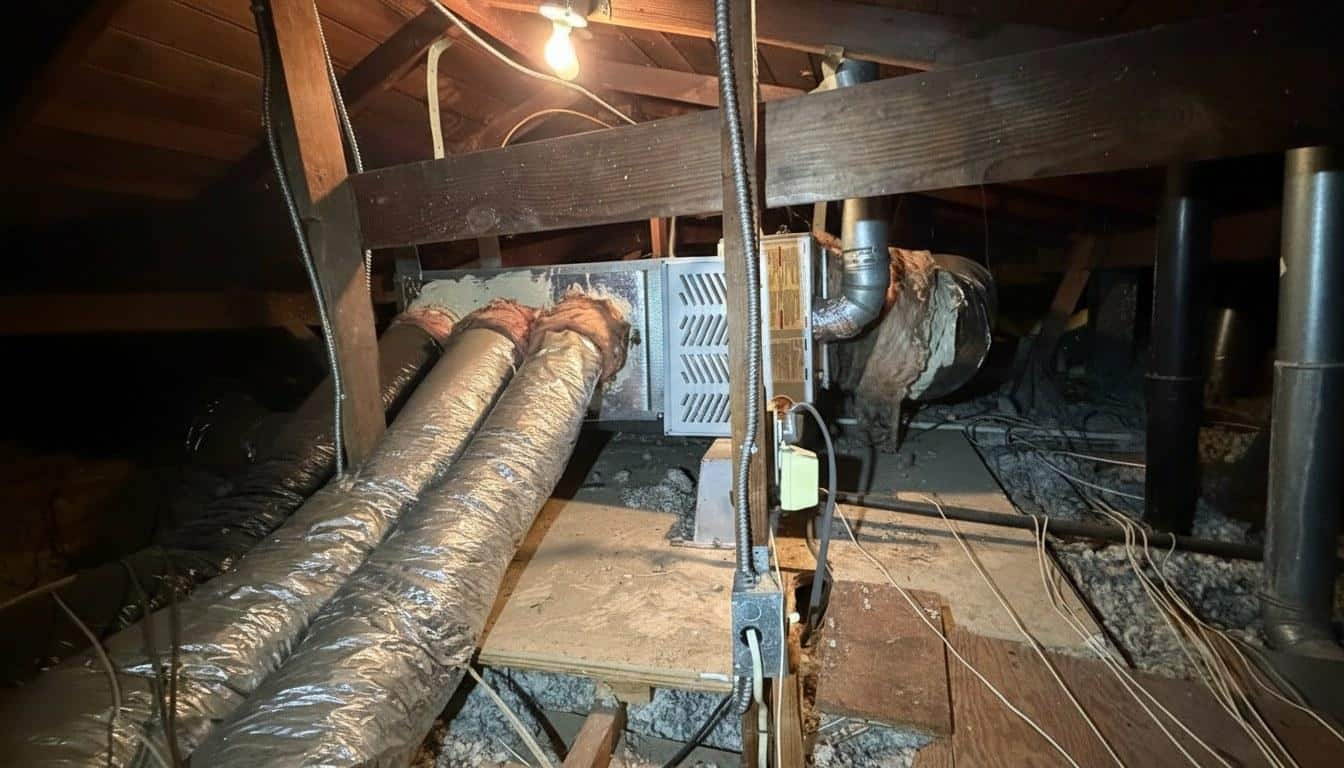
The ductless mini split monthly operating cost in Southern California is lower than many homeowners expect, especially compared to running a central HVAC system through leaky ductwork. The U.S. Department of Energy notes that duct losses can account for more than 30% of energy consumption in a forced-air system, a loss that mini-splits avoid entirely.
Duct losses can account for more than 30% of energy consumption in a forced-air system, a loss that mini-splits avoid entirely.
What Factors Affect How Much Your Mini-Split Costs to Run?
Six main variables determine what you will actually pay each month: system efficiency, unit size, daily runtime, local utility rate, climate zone, and home insulation quality. Changing any one of these can shift your monthly bill by $20 or more.
- SEER2 rating: SEER2 is the current efficiency standard required under California Energy Commission appliance standards adopted in 2023. A 20 SEER2 system uses roughly 25% less electricity than a 15 SEER2 unit of the same capacity.
- BTU capacity: A 9,000 BTU (0.75-ton) unit serving a small bedroom draws far less power than an 18,000 BTU (1.5-ton) unit cooling an open-concept living area. Oversized units cycle inefficiently and raise costs.
- Daily runtime: Running a mini-split 6 hours per day versus 12 hours per day can double your monthly electricity cost. In inland Southern California communities where summer highs regularly exceed 95°F, runtimes stretch longer than in coastal areas.
- Electricity rate (cents per kWh): Southern California Edison and SDG&E rates vary by tier and time of use. The rate you pay per kilowatt-hour has a direct, dollar-for-dollar impact on your bill.
- Home insulation and air sealing: A poorly insulated room forces the compressor to work harder and longer. Upgrading attic insulation to R-38 or better can reduce runtime by 15% to 25% in hot inland climates.
- Thermostat set point: The ENERGY STAR program recommends setting cooling to 78°F when home and 85°F when away. Each degree lower adds roughly 3% to cooling energy use.
How Do Electricity Rates in Southern California Change Your Bill?
Southern California Edison’s tiered residential rates as of 2025 range from roughly 28 cents per kWh in the baseline tier to over 45 cents per kWh in the high-usage tier, meaning the same mini-split can cost nearly twice as much to run depending on your total household consumption. Time-of-use (TOU) plans add another layer: running your system between 4 p.m. and 9 p.m. on a TOU plan can cost 50% more per hour than running it at midday.
Here is a practical way to estimate your cost. A 12,000 BTU mini-split rated at 20 SEER2 draws about 600 watts (0.6 kW) at full load. Running it 8 hours a day equals 4.8 kWh per day, or roughly 144 kWh per month. At 30 cents per kWh, that is about $43 per month. At 45 cents per kWh (upper tier), the same usage costs about $65 per month.
Our technicians see billing surprises most often when homeowners move from a low-tier rate to a high-tier rate mid-summer. Across service calls in Orange County and the surrounding region, we find that roughly 40% of households running multi-zone systems cross into the higher SCE tier by July, which adds $25 to $40 to their expected monthly cost.
Single-Zone vs. Multi-Zone: How Does the Number of Heads Change Monthly Costs?
A single-zone mini-split serves one room or area, while a multi-zone system connects two to five indoor heads to one outdoor compressor. Each additional indoor zone adds to your monthly electricity draw, but multi-zone systems are still more efficient than running separate window units in every room.
| Scenario | Typical Monthly Market Range (Southern CA) | What This Estimate Includes |
|---|---|---|
| Single-zone, 9,000 BTU (small bedroom) | $15 to $40 per month | 8 hrs/day runtime, mid-tier SCE rate, well-insulated room |
| Single-zone, 12,000 BTU (living room or master) | $35 to $65 per month | 8-10 hrs/day runtime, mid-tier SCE rate, average insulation |
| Single-zone, 18,000 BTU (open floor plan) | $55 to $90 per month | 10 hrs/day runtime, inland climate, average insulation |
| Two-zone system (two bedrooms + living area) | $80 to $140 per month | Both zones running 8 hrs/day, mid-to-upper SCE tier |
| Four-zone system (whole-home coverage) | $130 to $220 per month | Mixed runtimes, upper SCE tier, inland Southern CA summer |
These ranges reflect typical regional market conditions. Your actual cost will depend on your specific equipment, usage habits, and utility plan. A Manual J load calculation, the industry-standard sizing method defined by ACCA (Air Conditioning Contractors of America), ensures each zone is correctly sized so you are not paying to run an oversized unit.
What Is NOT Included in a Typical Monthly Operating Cost Estimate?
Monthly electricity costs cover only the energy to run the system. Several other recurring and one-time costs catch homeowners off guard. Knowing these in advance helps you budget accurately.
- Annual maintenance: A professional tune-up, including filter cleaning, coil inspection, and refrigerant check, typically costs $80 to $150 per visit in the Southern California market. Skipping maintenance raises energy use by 5% to 15% over time.
- Filter cleaning: Mini-split filters need cleaning every 2 to 4 weeks during heavy use. This is a DIY task, but neglecting it forces the blower to work harder and raises your bill.
- Refrigerant service: If the system develops a leak, recharging refrigerant is a separate cost. Under EPA refrigerant regulations (Section 608), only certified technicians may handle refrigerants, so this is never a DIY repair.
- Electrical infrastructure: If your panel needs a new dedicated circuit for the mini-split, that electrical work is a one-time cost not reflected in monthly operating figures.
- Warranty service calls: Most manufacturers offer 5 to 10 year parts warranties, but labor is often not covered after the first year. Budget for occasional service visits.
How Can You Lower Your Mini-Split’s Monthly Electricity Bill?
The fastest way to cut your monthly cost is to shift runtime away from peak rate hours and keep filters clean. Combining those two habits alone can reduce your bill by 10% to 20% without any equipment changes.
- Use scheduling features: Most mini-split remotes and smart controllers let you pre-cool the space before 4 p.m. and raise the set point during the expensive evening peak window on TOU plans.
- Set the fan to auto: Leaving the fan on continuous mode wastes electricity even when the compressor is off. Auto mode runs the fan only when cooling or heating is active.
- Clean filters every 2 to 4 weeks in summer: A clogged filter can raise energy draw by up to 15% and shorten compressor life.
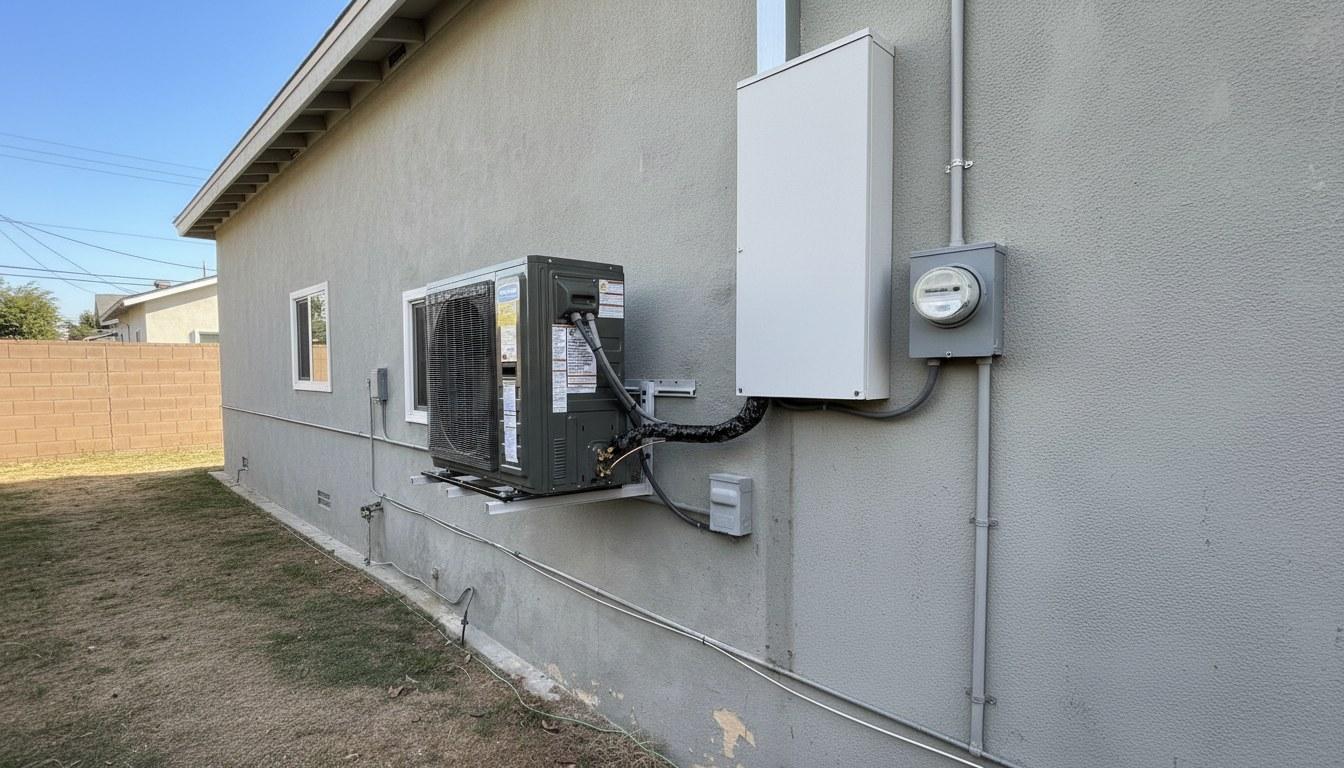
- Seal gaps around the line set penetration: The hole drilled through the wall for refrigerant lines is a common air leak. Foam sealant costs a few dollars and stops conditioned air from escaping.
- Claim available rebates: The TECH Clean California program and the Inflation Reduction Act federal tax credit (up to 30% of qualifying equipment and installation costs, capped at $600 for energy-efficient home improvement credits as of 2025) can offset your upfront investment, which lowers the effective cost per month of ownership over the system’s lifespan.
- Right-size from the start: An oversized unit short-cycles, fails to dehumidify properly, and wears out faster. A correctly sized system runs longer, steadier cycles and costs less to operate month over month.
How Do You Get an Accurate Cost Estimate for Your Home?
An accurate monthly operating cost estimate starts with knowing three things: the square footage and orientation of each zone, your current utility rate plan, and the SEER2 rating of the equipment you are considering. With those three inputs, a qualified contractor can model your expected monthly draw within a reasonable range before any equipment is purchased.
Here is what to have ready before calling for a quote:
- Square footage of each room or zone you want to condition.
- Your most recent utility bill showing your rate plan name and current cost per kWh.
- The age and condition of your existing insulation (attic R-value if known).
- How many hours per day you expect to run the system in summer and winter.
- Whether you want heating capability (heat pump mini-splits cost slightly more to install but replace your heater too, lowering total energy costs).
A licensed contractor will also perform or recommend a Manual J load calculation to confirm the right BTU capacity for each zone. This step is required under California’s Title 24 building energy standards for permitted installations and prevents the oversizing problem that drives up both upfront cost and monthly bills.
Shalom Heating & Air serves communities across Orange County, Los Angeles County, and surrounding areas of Southern California. Our team replaces and installs dozens of mini-split systems each year and consistently finds that homes without a proper load calculation end up with oversized equipment that short-cycles, raising monthly operating costs by 10% to 20% compared to correctly sized systems.
Ready for a clear picture of what a mini-split will actually cost to run in your home? Call Shalom Heating & Air at (714) 886-2021 to schedule a no-obligation assessment. A technician will review your space, your utility plan, and the right equipment options so you know your real numbers before you commit to anything.
Explore our full range of HVAC services across Southern California.
Frequently Asked Questions
How much does it cost to install a ductless mini-split in Southern California?
Installation costs in the Southern California market typically range from $3,000 to $7,500 for a single-zone system and $6,000 to $15,000 or more for a multi-zone setup, depending on the number of indoor heads, equipment brand, and any electrical panel work needed. These are regional market ranges, not guaranteed prices. Contact Shalom Heating & Air at (714) 886-2021 for a custom quote based on your specific home and zones.
Is a ductless mini-split cheaper to run than central air conditioning?
Yes, in most cases a ductless mini-split costs less to run than a central AC system of comparable capacity. Mini-splits avoid the 20% to 30% energy loss that occurs in ductwork, and their inverter compressors modulate output instead of running at full blast every cycle. The exact savings depend on your home's layout, insulation, and how many zones you are cooling.
How is a ductless mini-split installed in a California home?
Installation involves mounting the indoor air handler on a wall, running refrigerant lines and electrical wiring through a small hole in the exterior wall, and setting the outdoor condenser on a pad or wall bracket. A licensed contractor will also pull the required permits and ensure the installation meets California's Title 24 building energy standards. Most single-zone installations are completed in one day.
Do ductless mini-splits work well in Southern California's climate?
Mini-splits are well suited to Southern California's climate, which includes hot dry summers inland and mild coastal conditions year-round. Modern heat pump mini-splits provide both cooling and heating efficiently, handling temperatures down to around 5°F on the heating side, which covers nearly every condition in the region. Their ability to dehumidify without overcooling also makes them comfortable during humid late-summer periods.
Are there rebates or tax credits available for mini-split installation in California?
Yes. The Inflation Reduction Act federal tax credit covers up to 30% of qualifying heat pump mini-split equipment and installation costs, subject to annual caps. The TECH Clean California program also offers rebates through participating utilities for high-efficiency heat pump systems. Eligibility depends on equipment efficiency ratings and your utility provider, so ask your contractor to confirm which programs apply to your project before purchasing equipment.