Ductless Mini-Split Installation Cost in 2026: What Affects the Price
Mini-split installation typically runs between $3,000 and $10,000 or more in Southern California, depending on zone count, brand tier, and local permit requirements. This guide breaks down every cost factor so you can budget accurately before calling a contractor.
What Is the Typical Mini Split Installation Cost in Southern California?
Mini split installation cost in the Southern California regional market typically falls between $3,000 and $5,500 for a single-zone system and $7,000 to $14,000 or more for a multi-zone setup with three or four indoor heads. Those ranges cover the equipment and standard labor. Permits, electrical panel upgrades, and attic or crawlspace line-set routing can add anywhere from a few hundred to several thousand dollars on top.
Southern California’s climate makes ductless systems especially popular. NOAA data shows that many inland communities across Los Angeles and Orange County regularly see summer highs above 95 degrees Fahrenheit, pushing homeowners toward zone-controlled cooling that doesn’t require tearing open walls for ductwork. Demand for mini-split installations has grown steadily since 2022, and that demand is reflected in regional labor rates.
The figures above are market context, not quotes from any single contractor. Actual pricing depends on the specific scope of your project. Read on for the factors that move the number up or down.
What Factors Affect Mini Split Installation Cost the Most?
Six variables account for the bulk of price differences between mini-split installation projects. Understanding them before you call contractors helps you compare quotes accurately and avoid surprise charges.
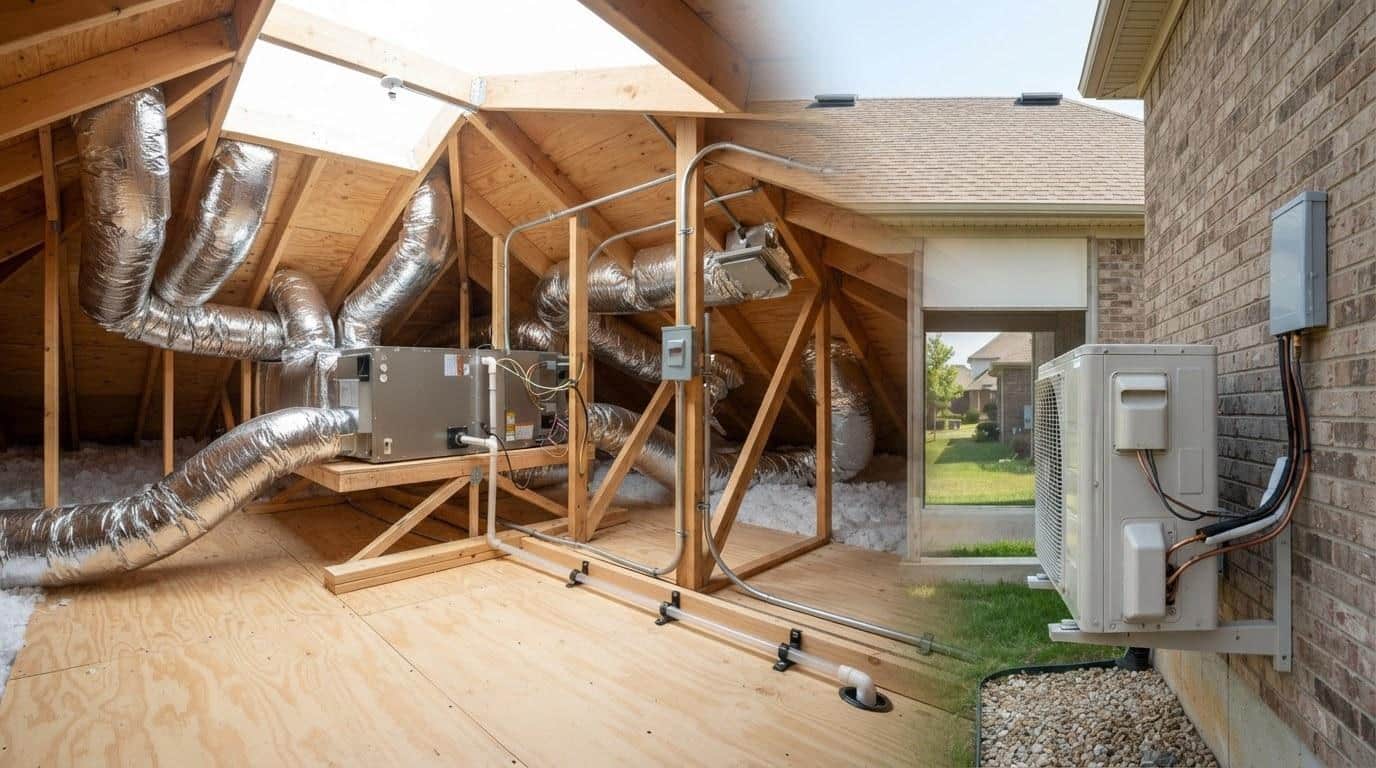
- Number of zones (indoor heads): Each additional indoor air handler adds equipment cost plus one to three hours of labor. A four-zone system is not simply four times a single-zone price because the outdoor condenser is shared, but labor and refrigerant line costs scale with each head.
- System capacity (BTU/ton): A 9,000 BTU single-zone unit costs less than a 24,000 BTU unit. Proper sizing requires a Manual J load calculation based on square footage, insulation quality, window area, and local climate data. Undersizing a system to save money leads to higher energy bills and premature equipment failure.
- Line-set length and routing difficulty: The copper refrigerant lines connecting the outdoor condenser to each indoor head are priced partly by the linear foot (typically $10 to $25 per foot in this market). Routing through finished walls, attic trusses, or multi-story framing adds labor hours quickly.
- Electrical requirements: Most mini-split systems require a dedicated 240-volt circuit. If your panel lacks available breaker slots or is undersized, an electrical upgrade can add $500 to $2,500 to the project, depending on the panel’s age and amperage.
- Permit and inspection fees: California building codes require permits for HVAC installations in most jurisdictions. County permit fees in Los Angeles and Orange County typically range from $150 to $600 per project, and some cities charge additional plan-check fees. Work done without a permit can create problems when you sell the home.
- Brand and efficiency tier: Entry-level brands carry lower equipment costs but may not qualify for rebates. Premium brands with higher ENERGY STAR SEER2 ratings cost more upfront but can offset that gap through utility rebates and lower monthly bills over a 15-year equipment life.
Our technicians see line-set routing as the single most unpredictable cost variable on residential jobs. On roughly 40 percent of the multi-story homes we work on across the region, the routing adds at least two additional labor hours compared to a single-story installation with a direct exterior wall path.
How Much Does a Single-Zone vs. Multi-Zone System Cost?
Single-zone systems are the most affordable entry point, while multi-zone systems offer the best cost-per-room value when three or more spaces need conditioning. The table below shows typical regional market ranges for common project configurations. These are ranges based on market conditions as of 2026, not guaranteed prices from any contractor.
| Scenario | Typical Market Range (Installed) | What’s Usually Included |
|---|---|---|
| Single-zone, 9,000-12,000 BTU (one room up to ~550 sq ft) | $3,000 to $5,500 | Condenser, one indoor head, line set up to 25 ft, standard electrical connection, basic permit |
| Single-zone, 18,000-24,000 BTU (larger room or open plan up to ~1,200 sq ft) | $4,000 to $6,500 | Larger condenser, one indoor head, line set up to 25 ft, dedicated circuit, basic permit |
| Two-zone system (two indoor heads, one condenser) | $5,500 to $9,000 | Multi-zone condenser, two indoor heads, two line sets, two circuits or shared circuit, permit |
| Three-zone system (three indoor heads, one condenser) | $8,000 to $12,500 | Multi-zone condenser, three indoor heads, three line sets, electrical work, permit |
| Four-zone system (four indoor heads, one condenser) | $10,500 to $14,500+ | High-capacity condenser, four indoor heads, four line sets, panel work often required, permit |
These ranges assume standard single-story or straightforward two-story installations with exterior wall access. Projects with complex routing, older homes with narrow wall cavities, or locations requiring crane access for rooftop condensers will fall toward the higher end or above these ranges.
How Do Brand Tiers Change the Price?
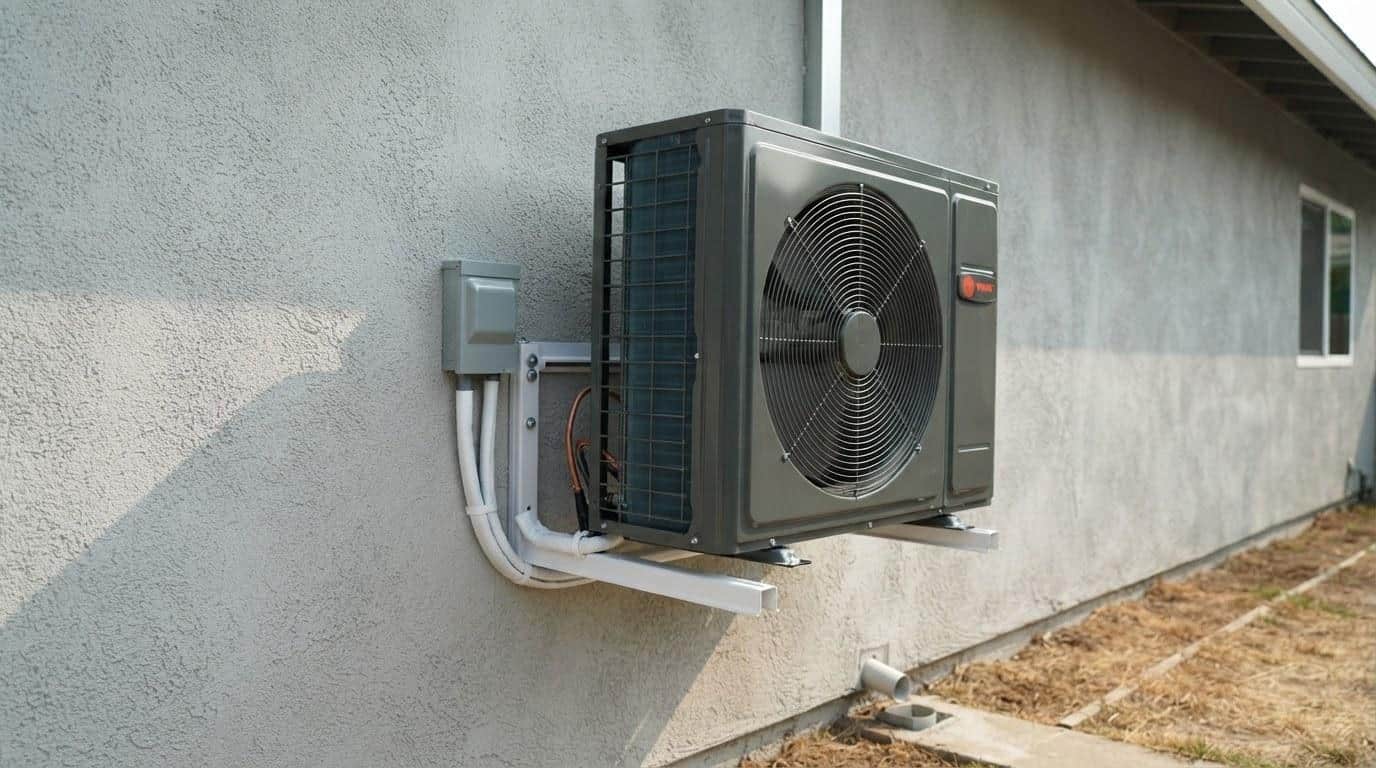
Brand and efficiency tier can shift equipment cost alone by $800 to $3,000 or more on a single-zone system, and the gap widens on multi-zone configurations. There are three general tiers in the market.
- Entry-level brands: These units typically carry SEER2 ratings between 16 and 19. They cost less upfront but may not qualify for utility rebates or the Inflation Reduction Act federal tax credit. They are a reasonable fit for supplemental cooling in a garage or bonus room where runtime is limited.
- Mid-tier brands: SEER2 ratings in the 20 to 24 range. These units often qualify for ENERGY STAR certification and for rebates through programs like TECH Clean California. The Inflation Reduction Act federal tax credit covers up to 30 percent of qualifying heat pump costs, capped at $2,000 per year, which meaningfully reduces the net cost of a mid-tier or premium system.
- Premium brands: SEER2 ratings of 25 and above, with advanced inverter compressors, Wi-Fi controls, and longer compressor warranties (some up to 10 years on parts). These units cost the most upfront but deliver the lowest operating costs over a 15-plus-year lifespan. In Southern California’s climate, the energy savings on a premium unit can be measurable within the first two to three cooling seasons.
Across our service calls in the region, we’ve seen homeowners who chose the lowest-bid entry-level unit return within 18 months needing repairs that erased their initial savings. Matching the efficiency tier to how many hours per day the system will actually run is the smarter budget decision than simply minimizing the upfront number.
Always ask your contractor which SEER2 rating the proposed unit carries and whether it qualifies for any current rebate programs. California’s California Energy Commission appliance standards set minimum efficiency floors, and units that only meet the floor offer the least long-term value.
What Is NOT Included in a Standard Installation Quote?
Several common cost items are left out of initial mini-split quotes, and they can add $500 to $4,000 or more to the final bill if they aren’t discussed upfront. Ask every contractor to clarify whether these are included before you sign anything.
- Electrical panel upgrades: A dedicated 240-volt circuit is required, but if your panel is at capacity or is an older 100-amp service, upgrading it is a separate electrical contractor cost not typically bundled into an HVAC quote.
- Drywall patching or painting: Running line sets through finished walls often requires cutting and patching drywall. Most HVAC contractors do not include finish carpentry or painting in their scope.
- Permit fees: Some contractors include permit fees in their quote; others list them as a pass-through cost billed at actual. Confirm which applies.
- Extended line sets: Standard quotes often assume a line set of 25 feet or less. Each additional 10 feet of copper refrigerant line can add $100 to $250 in material plus labor.
- Condensate drain line installation: Indoor heads produce condensate that must drain somewhere. If a gravity drain isn’t available, a condensate pump adds cost.
- Old equipment removal and disposal: If you’re replacing a window unit or removing old equipment, disposal fees may apply and are often not included in a base quote.
- Smart thermostat or Wi-Fi module: Some mini-split models require an add-on module for app control. This is not always included in the base equipment price.
How to Get an Accurate Mini Split Installation Quote
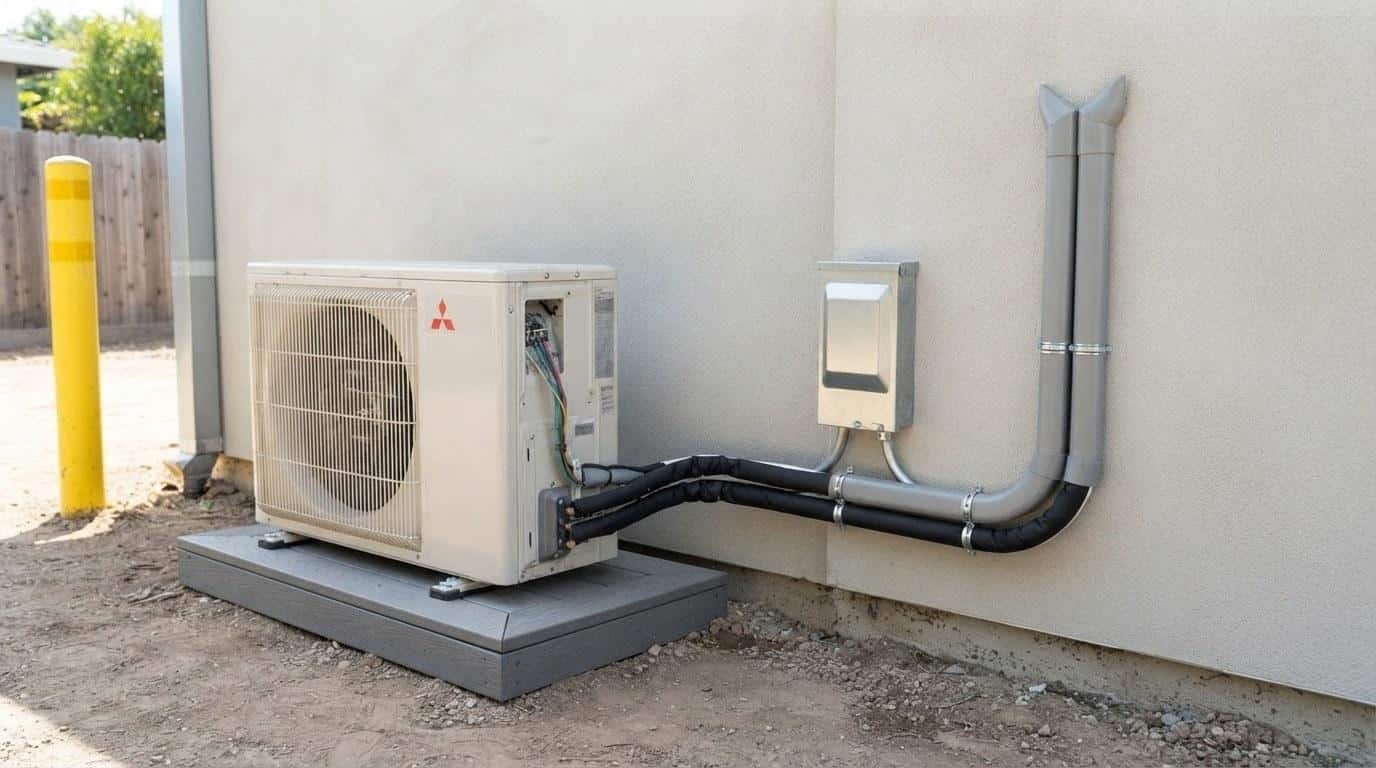
An accurate quote requires the contractor to physically assess your space, not just take your square footage over the phone. A phone estimate based only on room size can be off by 30 percent or more once routing complexity and electrical requirements are factored in.
Have the following information ready before your appointment:
- The square footage of each room or zone you want to condition.
- The age and amperage of your electrical panel (check the main breaker label).
- The approximate distance from where the outdoor condenser will sit to each indoor head location.
- Whether the exterior wall behind each indoor head location is accessible or finished (tile, brick, or stucco adds penetration cost).
- Any existing HVAC equipment that needs to be removed.
- Your utility provider (some Southern California utilities offer rebates that a good contractor will apply for on your behalf).
Ask each contractor to provide a written, itemized quote that separates equipment cost, labor, permit fees, and any electrical work. This makes apples-to-apples comparison possible. Also confirm that the contractor is Licensed by the California Contractors State License Board (CSLB) and carries general liability insurance. You can verify any CSLB license number at cslb.ca.gov in about 30 seconds.
EPA refrigerant regulations (Section 608) require that any technician handling refrigerant be EPA-certified. Ask for proof before work begins, especially on systems using R-410A or the newer R-32 refrigerant that is becoming more common in 2026 equipment.
Get a Custom Quote from Shalom Heating & Air
The market ranges in this guide give you a realistic starting point for budgeting, but your actual mini split installation cost depends on the specific details of your home, the zones you need, and the equipment tier that fits your goals. A written quote based on a real site assessment is the only number you should budget from.
Shalom Heating & Air serves homeowners and businesses across Southern California with licensed, insured ductless mini-split installation. Whether you need a single-zone system for a home addition or a four-zone setup for a whole-house solution, the team can walk you through equipment options, available rebates, and a clear itemized price before any work begins.
Call (714) 886-2021 to schedule your on-site assessment and get a written quote tailored to your project.
Explore our full range of HVAC services across Southern California.
Frequently Asked Questions
How much does it cost to install a ductless mini-split in Southern California?
In the Southern California regional market, a single-zone ductless mini-split typically costs between $3,000 and $5,500 installed, including equipment and standard labor. Multi-zone systems with three or four indoor heads generally range from $8,000 to $14,500 or more. Permit fees, electrical upgrades, and complex line-set routing can push any project higher, so a written on-site quote is essential for accurate budgeting.
How is a ductless mini-split actually installed?
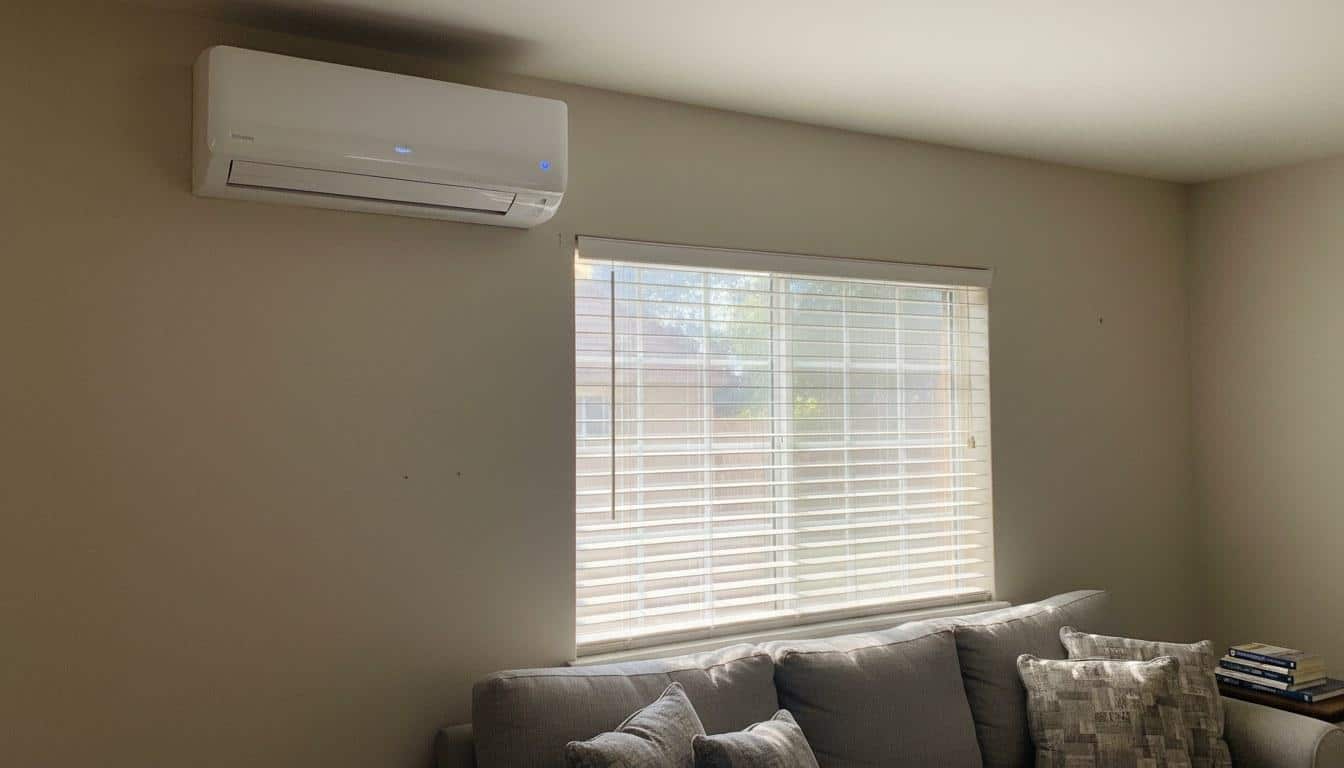
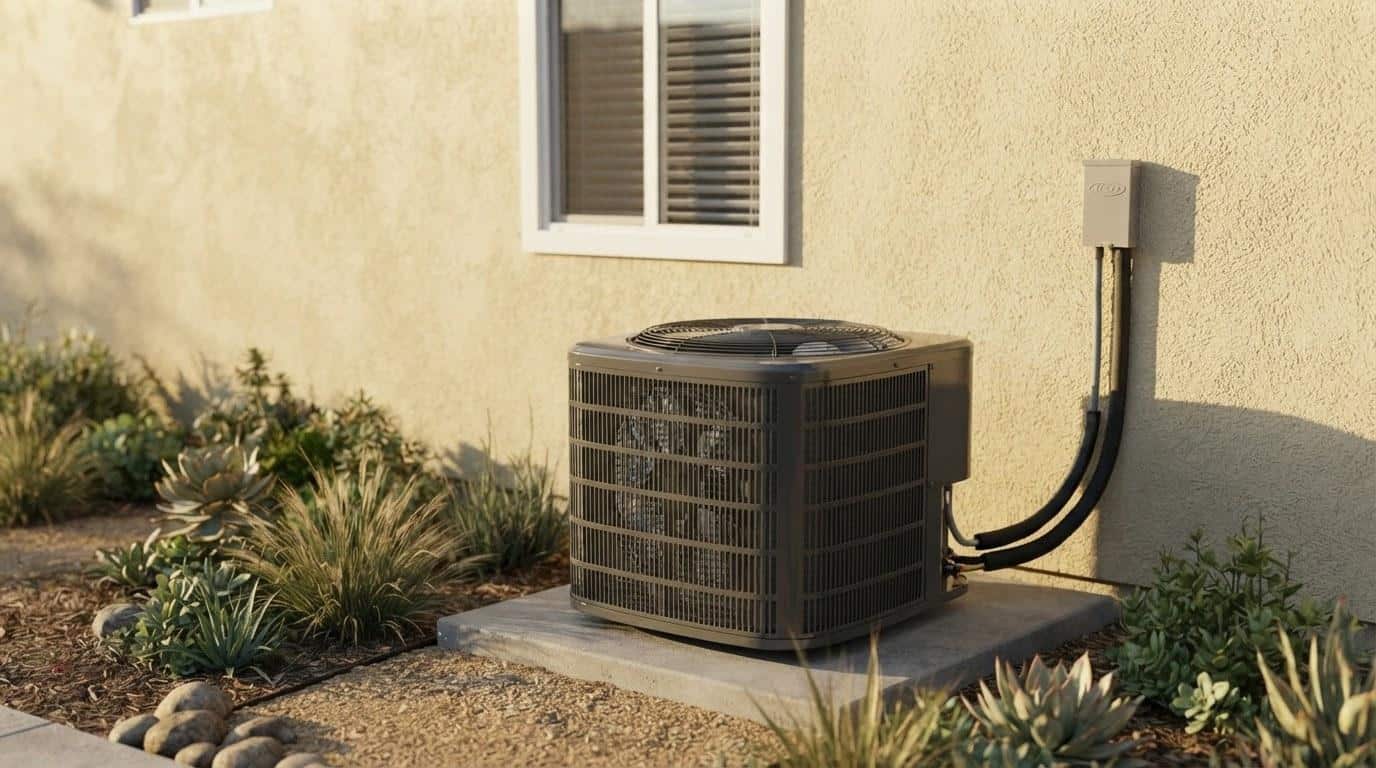
Installation involves mounting the indoor air handler on the wall, drilling a small hole (typically 2.5 to 3 inches in diameter) through the exterior wall, running copper refrigerant lines and electrical wiring through that hole to the outdoor condenser, and connecting the refrigerant circuit. The outdoor condenser is placed on a concrete pad or wall bracket. A licensed technician then pressure-tests the refrigerant lines, pulls a vacuum, charges the system, and verifies operation. Most single-zone installs take four to six hours; multi-zone systems can take a full day or more.
Do I need a permit to install a mini-split in California?
Yes, in most California jurisdictions a permit is required for any new HVAC installation, including ductless mini-splits. Permit fees in Los Angeles and Orange County typically range from $150 to $600. Working without a permit can create issues when you sell your home and may void your equipment warranty. A licensed HVAC contractor will pull the permit on your behalf as part of the project.
Can I get a tax credit or rebate for a mini-split installation?
Yes. The Inflation Reduction Act federal tax credit covers up to 30 percent of qualifying heat pump costs, capped at $2,000 per year for homeowners who file a federal return. California's TECH Clean California program also offers rebates for qualifying heat pump installations. The exact rebate amount depends on the equipment's efficiency rating and your utility provider. Ask your contractor which programs your chosen system qualifies for before you finalize the equipment selection.
How many zones do I need for my home?
The right number of zones depends on how many distinct spaces you want to condition independently. A single-zone system works well for one room, a garage conversion, or a home addition. Multi-zone systems make sense when you want to control temperatures in three or more rooms without running ductwork throughout the house. A proper Manual J load calculation, performed by a licensed contractor, determines the correct BTU capacity for each zone based on square footage, insulation, window area, and local climate data.