Do You Need a Permit to Replace an AC Unit in California?
Replacing an AC unit in California almost always requires a permit, and skipping that step can cost you far more than the permit itself. This guide explains exactly when permits apply, what inspectors check, and how to stay on the right side of California code.
Do You Need a Permit to Replace an AC Unit in California?
Yes, in nearly every California jurisdiction, you need a permit to replace an AC unit. California law treats a full AC unit replacement as a mechanical alteration, which triggers both local building codes and California’s Title 24 building energy standards. This applies even when you are doing a straight swap of the same tonnage in the same location. The exact permit requirements vary by city and county, but the baseline rule across the state is consistent: any work that touches refrigerant lines, electrical connections, or ductwork requires a permit and a final inspection.
Many homeowners are surprised to learn this. The phrase “permit to replace ac unit california” comes up constantly because the rules are not obvious, and some contractors skip the permit step to save time. This guide breaks down exactly when permits apply, what inspectors look for, what happens if you skip the permit, and how to move through the process smoothly.
What Does a California AC Replacement Permit Actually Cover?
A California AC replacement permit covers the mechanical work, the electrical connections, and the refrigerant system. In many jurisdictions it also triggers a Title 24 energy compliance review to confirm the new equipment meets current efficiency standards. The permit is not just a piece of paper. It authorizes a licensed inspector to verify the installation is safe and code-compliant before the system goes into regular use.
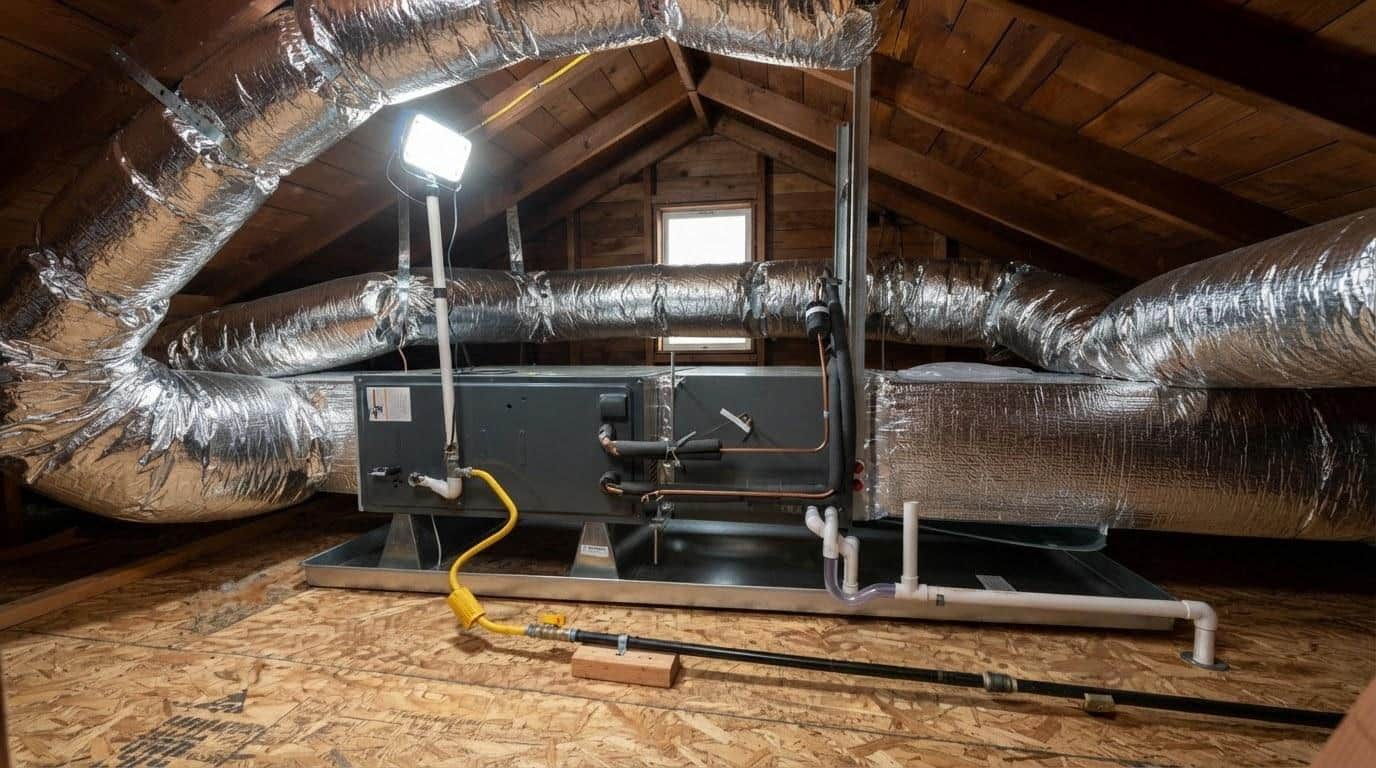
Here is what a typical inspection covers during an AC replacement:
- Electrical disconnect and wiring: The inspector checks that the new unit is wired to the correct breaker size and that the disconnect box meets current National Electrical Code requirements.
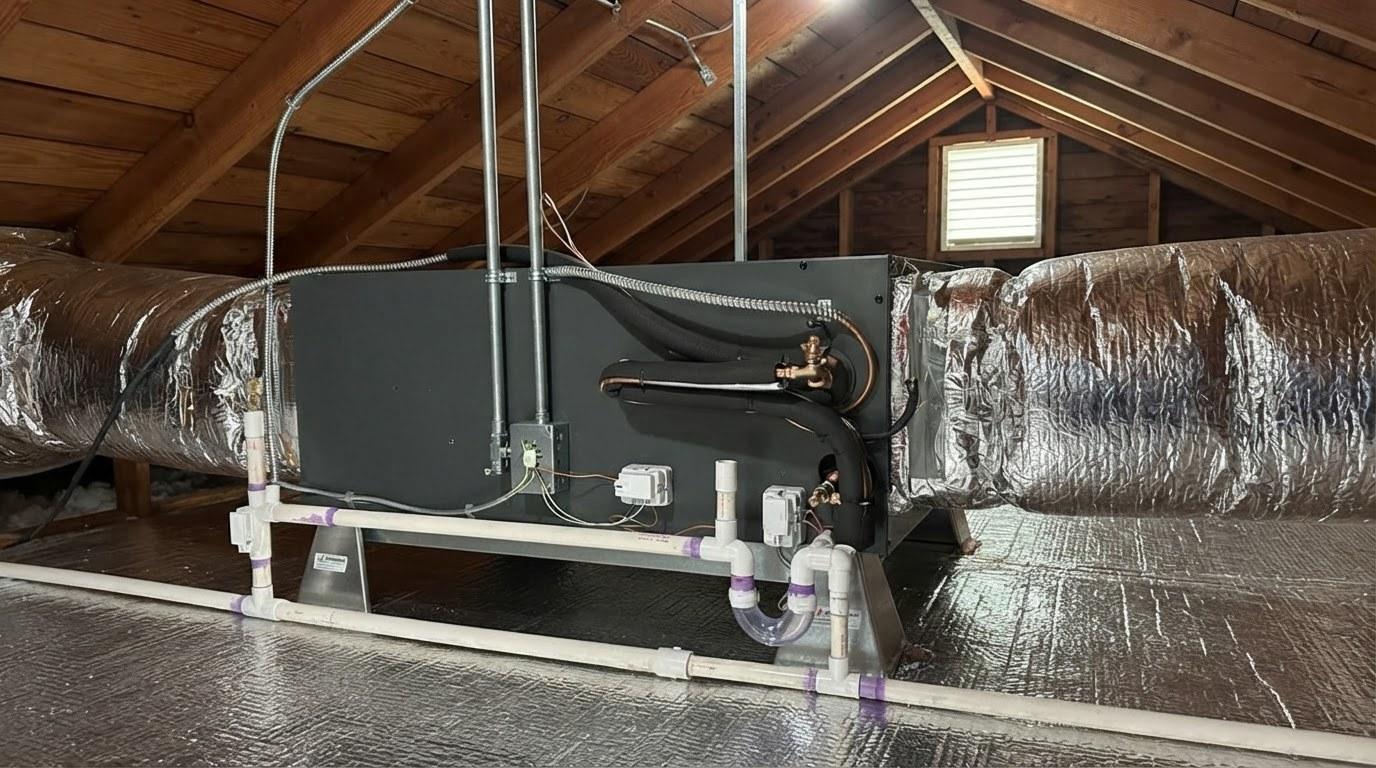
- Refrigerant line connections: Lines must be properly insulated and leak-free. Under EPA refrigerant regulations (Section 608), only EPA-certified technicians may handle refrigerants, and any venting of refrigerant into the atmosphere is illegal.
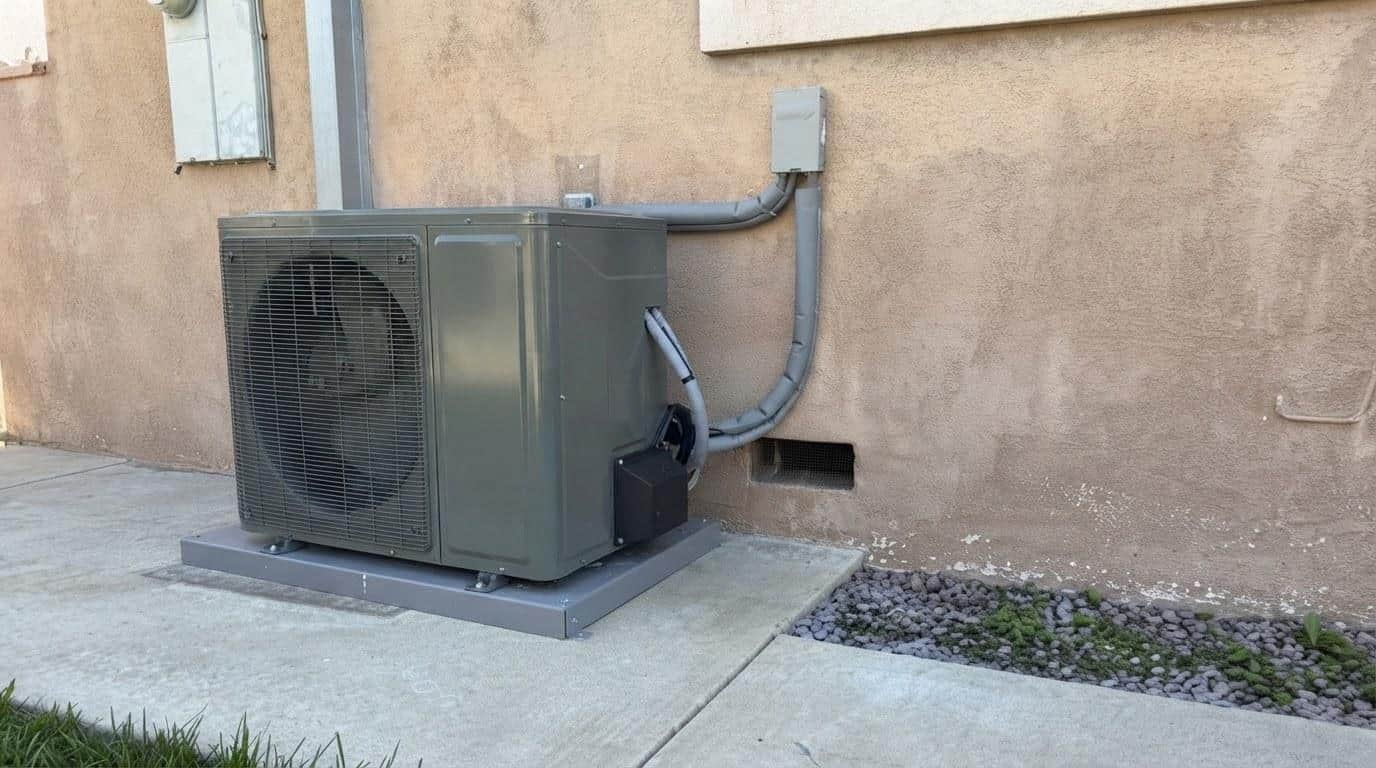
- Equipment clearances: The condenser unit must meet minimum clearance requirements from walls, fences, and combustibles.
- Ductwork connections: If existing ducts are reconnected or modified, the inspector checks for leakage and proper sealing.
- Thermostat and controls: Smart or programmable thermostat requirements may apply under Title 24.
- SEER2 efficiency rating: California requires that new residential AC systems meet a minimum ENERGY STAR-aligned efficiency threshold. As of 2023, California follows the federal DOE rule requiring a minimum 15.2 SEER2 for split systems in the Southwest region, which includes all of California.
Our technicians regularly find that the existing disconnect box is undersized for a new, more efficient unit, which is exactly the kind of safety issue a permit inspection catches before it becomes a hazard.
When Is a Permit NOT Required for AC Work?
Minor maintenance and repairs generally do not require a permit in California. Replacing a capacitor, cleaning coils, recharging refrigerant, or swapping a thermostat are typically considered maintenance tasks that fall below the permit threshold. However, the line between “repair” and “replacement” matters a great deal legally.
The table below summarizes common AC tasks and whether they typically trigger a permit requirement in California:
| AC Task | Permit Typically Required? | Key Reason |
|---|---|---|
| Full condenser or air handler replacement | Yes | Mechanical alteration, electrical work, Title 24 compliance |
| Like-for-like refrigerant recharge | No (but EPA 608 certification required) | Maintenance, no structural or electrical change |
| Capacitor or contactor replacement | No | Component-level repair, no system alteration |
| Thermostat replacement | Sometimes (smart thermostat under Title 24) | Depends on jurisdiction and thermostat type |
| Ductwork repair or sealing | Sometimes | Depends on scope; major duct work usually requires a permit |
| New ductless mini-split installation | Yes | New mechanical system, electrical, and refrigerant work |
| Coil cleaning or filter replacement | No | Routine maintenance |
When in doubt, check with your local building department before work begins. Jurisdiction rules vary: a city like Los Angeles may have additional requirements that a smaller municipality does not. Your HVAC contractor should know the local rules and pull the permit on your behalf as part of the job.
What Are the Risks of Replacing an AC Unit Without a Permit?
Replacing an AC unit without a required permit creates financial, legal, and safety risks that can far outweigh the cost of the permit itself, which typically runs between $100 and $500 in most California jurisdictions depending on the scope of work. These are not theoretical risks. They come up regularly during real estate transactions and insurance claims.
Here are the most serious consequences of skipping a permit:
- Insurance denial: If an unpermitted AC system causes a fire or flood, your homeowner’s insurance carrier may deny the claim. The insurer can argue the work was not code-compliant.
- Problems at resale: California law requires sellers to disclose unpermitted work. Buyers can demand the work be retroactively permitted, which often means opening walls and redoing connections. Retroactive permits cost significantly more than pulling one before the job.
- Stop-work orders and fines: If a city inspector discovers unpermitted work, they can issue a stop-work order and assess fines. Some jurisdictions in California charge double-permit fees for after-the-fact applications.
- Safety hazards: An uninspected electrical connection on a 240-volt AC circuit is a genuine fire risk. Improperly sealed refrigerant lines can leak, creating health and environmental hazards.
- Contractor liability: A contractor who performs unpermitted work is operating outside the terms of their license issued by the California Contractors State License Board (CSLB). Hiring an unlicensed or permit-skipping contractor puts you, not them, on the hook for the consequences.
The permit fee is a small line item compared to the cost of a retroactive permit process or a denied insurance claim. Always confirm your contractor is pulling the permit before work starts.
How Does the California AC Permit Process Work, Step by Step?
The permit process for an AC replacement in California typically takes between one and three weeks from application to final inspection, though many jurisdictions now offer over-the-counter or same-day mechanical permits for straightforward residential replacements. Your licensed HVAC contractor handles most of this process on your behalf.
Here is how the process generally works:
- Contractor submits a permit application: The application includes the equipment specifications, the SEER2 rating of the new unit, and a description of the scope of work. Many California cities now accept online applications.
- Plan check (if required): Simple replacements often skip this step. Larger or more complex projects, such as adding a new system to a home that did not previously have central air, may require a plan check that adds a few days to the timeline.
- Permit is issued and posted: The permit must be on-site during the work. Your contractor receives it and keeps it available for inspection.
- Installation is completed: The contractor installs the new equipment to code, following California’s Title 24 requirements and local amendments.
- Rough inspection (if applicable): If any new electrical work or ductwork is involved, an inspector may need to view it before it is covered up.
- Final inspection: An inspector visits the property, checks the installation, verifies equipment specs, and signs off. This typically takes 30 to 60 minutes on-site.
- Record is filed: The permit is closed and recorded with the local building department. This record protects you at resale.
Most homeowners never need to attend any of these steps in person. A qualified contractor manages the paperwork, schedules the inspection, and ensures the system passes. If your contractor tells you a permit is not needed for a full AC unit replacement in California, that is a significant red flag.
How Do SEER2 Ratings and Title 24 Affect Your AC Replacement?
California’s Title 24 building energy standards require that any new AC system installed in the state meet current minimum efficiency levels, and the permit process is the mechanism that enforces this rule. As of 2023, the U.S. Department of Energy‘s updated efficiency standards require a minimum 15.2 SEER2 for split-system air conditioners installed in California and the broader Southwest region. This replaced the older 14 SEER benchmark.
SEER2 (Seasonal Energy Efficiency Ratio 2) is the updated testing standard that more accurately reflects real-world operating conditions. A system rated at 15.2 SEER2 or higher uses less electricity to produce the same cooling compared to an older 10 or 12 SEER unit, which means lower utility bills over the life of the equipment. Higher-efficiency systems, such as those rated 18 SEER2 or above, may qualify for the Inflation Reduction Act federal tax credit, which covers up to 30 percent of the cost of qualifying HVAC equipment, capped at $600 for central air conditioners as of the 2024 and 2025 tax years.
California also runs rebate programs through utilities and programs like TECH Clean California that reward homeowners who upgrade to high-efficiency or all-electric systems, including heat pumps. These rebates are separate from the federal tax credit and can be stacked in some cases. The permit record is often required as proof of installation when claiming these incentives.
When our technicians pull an older condenser, the nameplate often shows a SEER rating of 10 or 11, which means the replacement unit will be at least 40 percent more efficient right out of the box, before any other upgrades are made.
Ready to Replace Your AC the Right Way?
Pulling the correct permit before an AC replacement protects your investment, keeps your insurance valid, and ensures the new system runs safely and efficiently for its full service life, which typically runs 15 to 20 years for a properly installed central air conditioner.
Here is a quick checklist to use before any AC replacement project:
- Confirm your contractor is licensed by the California Contractors State License Board (CSLB) and carries current liability insurance.
- Ask specifically whether a permit will be pulled and who is responsible for scheduling the final inspection.
- Verify the new unit meets California’s minimum 15.2 SEER2 efficiency requirement.
- Ask about the Inflation Reduction Act federal tax credit and any available utility rebates before you finalize equipment selection.
- Keep a copy of the final permit sign-off for your home records and future resale documentation.
Shalom Heating & Air handles the full permit process as part of every AC replacement across Southern California. The team is licensed by the California Contractors State License Board (CSLB), carries insurance, and installs equipment that meets California’s Title 24 standards. If you have questions about whether your project requires a permit, or you want a written quote before any work begins, call (714) 886-2021. Get the job done right the first time and have the paperwork to prove it.
Explore our full range of HVAC services across Southern California.
Frequently Asked Questions
Do I need a permit to replace my AC unit in California if I am keeping the same size system?
Yes, a like-for-like replacement still requires a permit in California. The permit is triggered by the mechanical work, electrical connections, and refrigerant handling involved, not by any change in system size. California's Title 24 standards also require that the new unit meet current minimum efficiency levels, and the permit inspection verifies this.
How much does an AC replacement permit cost in California?
Permit fees for a residential AC replacement in California typically range from $100 to $500, depending on the jurisdiction and the scope of work. Some cities charge a flat mechanical permit fee, while others calculate the fee as a percentage of the project value. Your HVAC contractor should include the permit fee in their project estimate.
Can my HVAC contractor pull the permit for me, or do I have to do it myself?
In California, a licensed HVAC contractor can and typically should pull the permit on the homeowner's behalf. This is standard practice. If a contractor tells you the homeowner must pull their own permit for an AC replacement, that can indicate the contractor is not properly licensed, since pulling mechanical permits requires a valid CSLB contractor's license.
What happens if I sell my home and the AC was replaced without a permit?
California law requires sellers to disclose known unpermitted work to buyers. If an unpermitted AC replacement is discovered during the sale process, the buyer can require you to obtain a retroactive permit before closing. Retroactive permits often require opening walls or re-exposing connections for inspection, and some jurisdictions charge double the standard fee for after-the-fact applications.
Does replacing an AC unit in California qualify for any tax credits or rebates?
Yes, qualifying high-efficiency AC systems may be eligible for the Inflation Reduction Act federal tax credit, which covers up to 30 percent of the equipment cost, capped at $600 for central air conditioners for tax years 2024 and 2025. California utility rebate programs and TECH Clean California may offer additional incentives. The permit record is typically required as proof of installation when claiming these benefits.