How to Prepare Your AC for a Southern California Heat Wave
When a Southern California heat wave hits, an unprepared AC system can fail within hours of peak demand. This guide walks you through every maintenance step to keep your system running strong all summer.
Why Does Heat Wave Preparation Matter for Southern California AC Systems?
Southern California heat waves routinely push outdoor temperatures above 100 degrees Fahrenheit for three to seven consecutive days, forcing residential AC systems to run nearly non-stop. A system that has not been serviced in 12 or more months is far more likely to fail under that kind of sustained load. The National Weather Service Los Angeles office documents multiple heat events each summer across the region, with overnight lows staying above 80 degrees in many inland communities. That means your system never gets a recovery window.
A system that has not been serviced in 12 or more months is far more likely to fail under sustained heat-wave load.
Heat waves also coincide with the highest demand for HVAC service calls. When every AC in the neighborhood is running at full capacity, the electrical grid strains, voltage fluctuations increase, and worn components that might have lasted another month can fail in a single afternoon. Preparation is not optional; it is the difference between staying cool and waiting days for a repair appointment during the busiest week of the year.
California’s housing stock adds another layer of complexity. Many homes across Los Angeles County and Orange County are running systems that are 10 to 15 years old. Older equipment has less tolerance for extreme operating conditions, making pre-season maintenance even more critical as of 2026.
How Do You Prepare Your AC for a Heat Wave with Southern California Maintenance Steps?
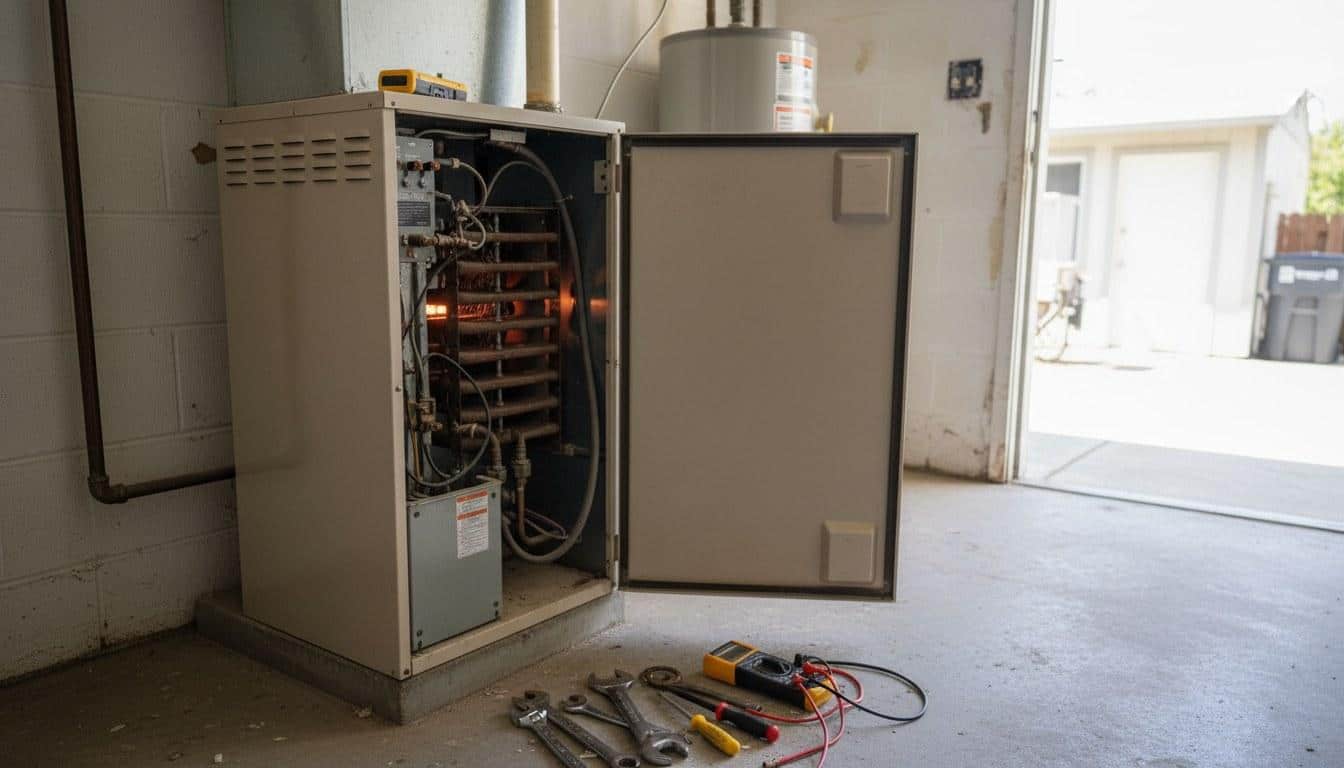
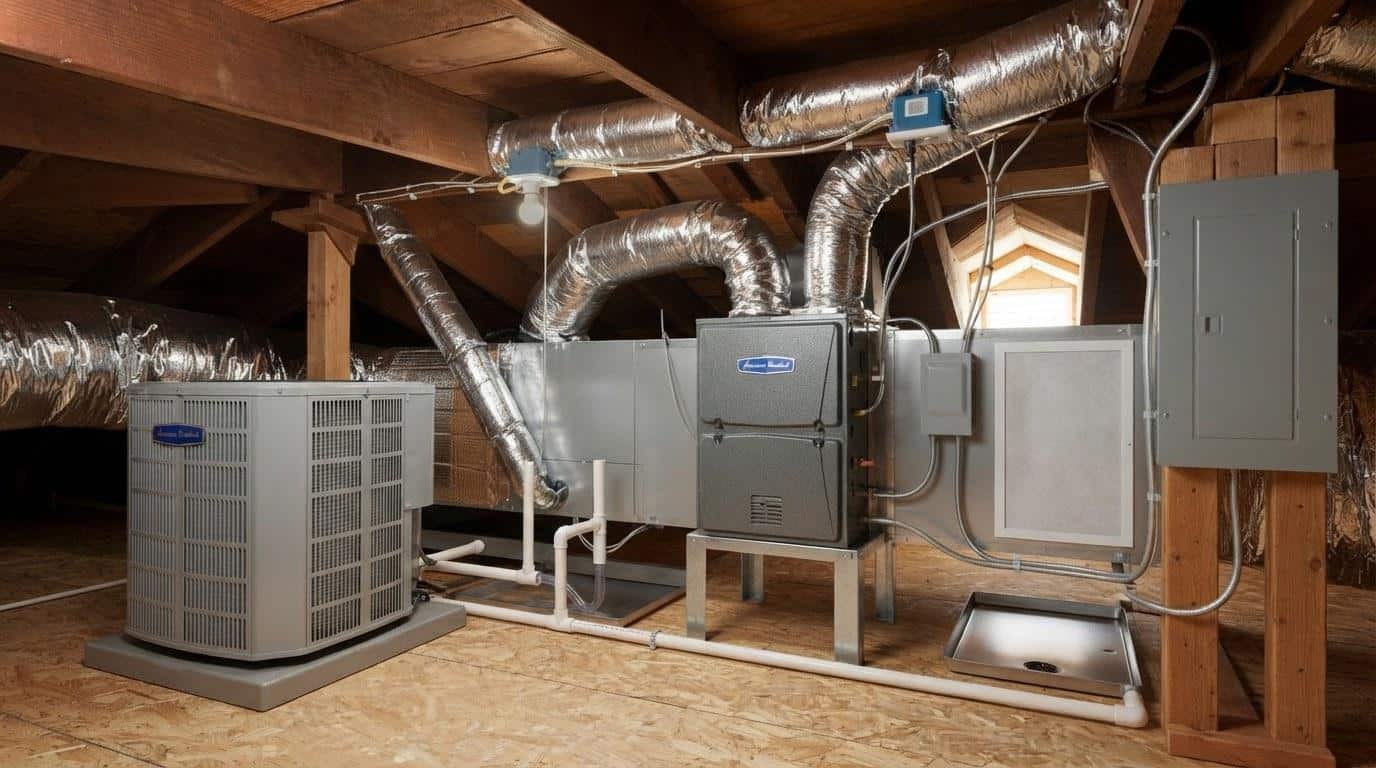
To prepare your AC for a heat wave, Southern California maintenance should cover seven key tasks: filter replacement, coil cleaning, thermostat testing, refrigerant check, electrical inspection, condensate drain clearing, and airflow verification. Each one addresses a specific failure point that heat amplifies.
Work through this list at least two to three weeks before a forecast heat event. That window gives you time to order parts or schedule a professional if you find a problem.
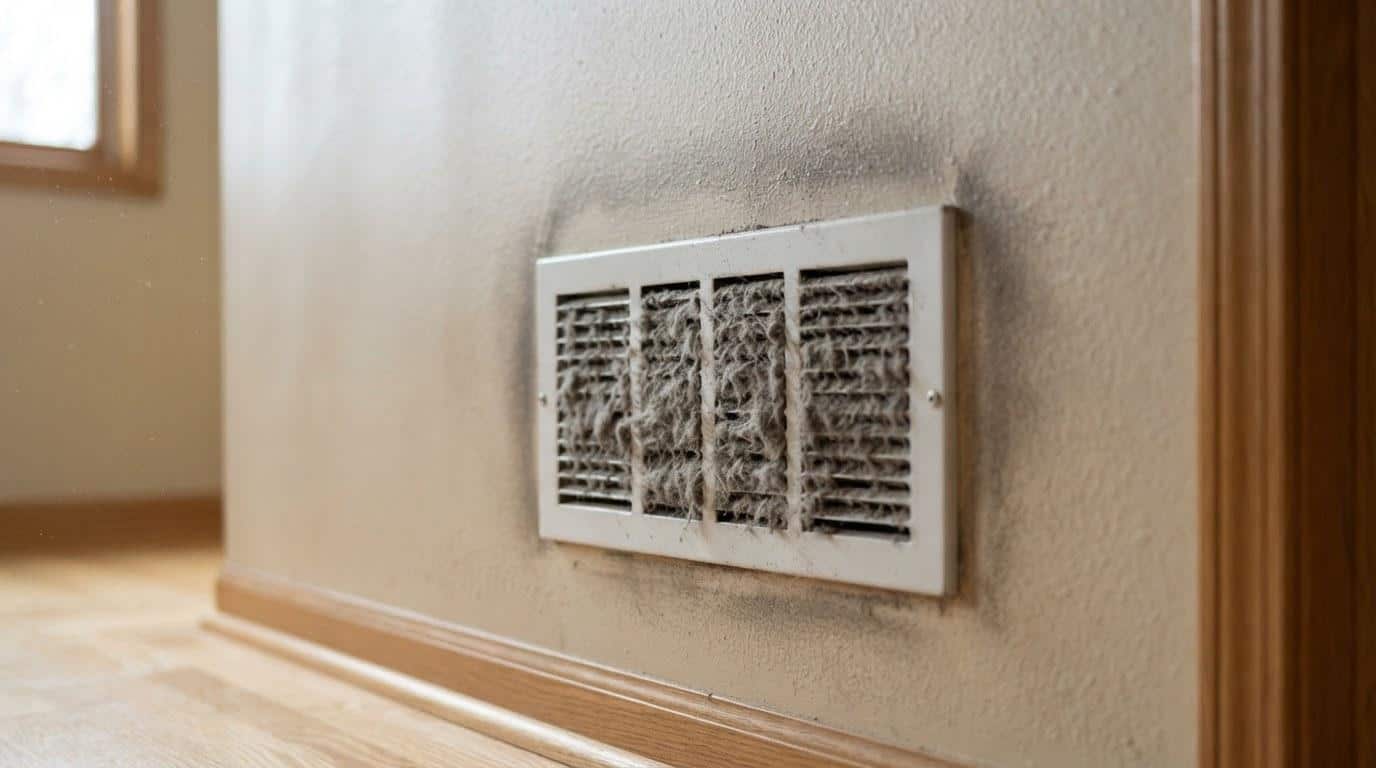
- Replace the air filter: A clogged filter forces the blower to work harder and restricts airflow across the evaporator coil. The U.S. Department of Energy recommends checking filters every 30 days during peak cooling season and replacing them when dirty. Most 1-inch pleated filters should be swapped every 30 to 60 days in summer.
- Clean the outdoor condenser unit: Shut off power at the disconnect box, then rinse the condenser fins with a garden hose from the inside out. Remove leaves, grass clippings, and debris from around the unit. Keep at least 18 inches of clearance on all sides.
- Test the thermostat: Set the thermostat 5 degrees below the current room temperature and confirm the system starts within 60 seconds. If it hesitates or displays an error, the thermostat or control board may need attention.
- Check refrigerant levels: Low refrigerant is one of the top causes of AC failure during heat waves. This task requires a licensed technician under EPA refrigerant regulations (Section 608). Do not attempt to add refrigerant yourself.
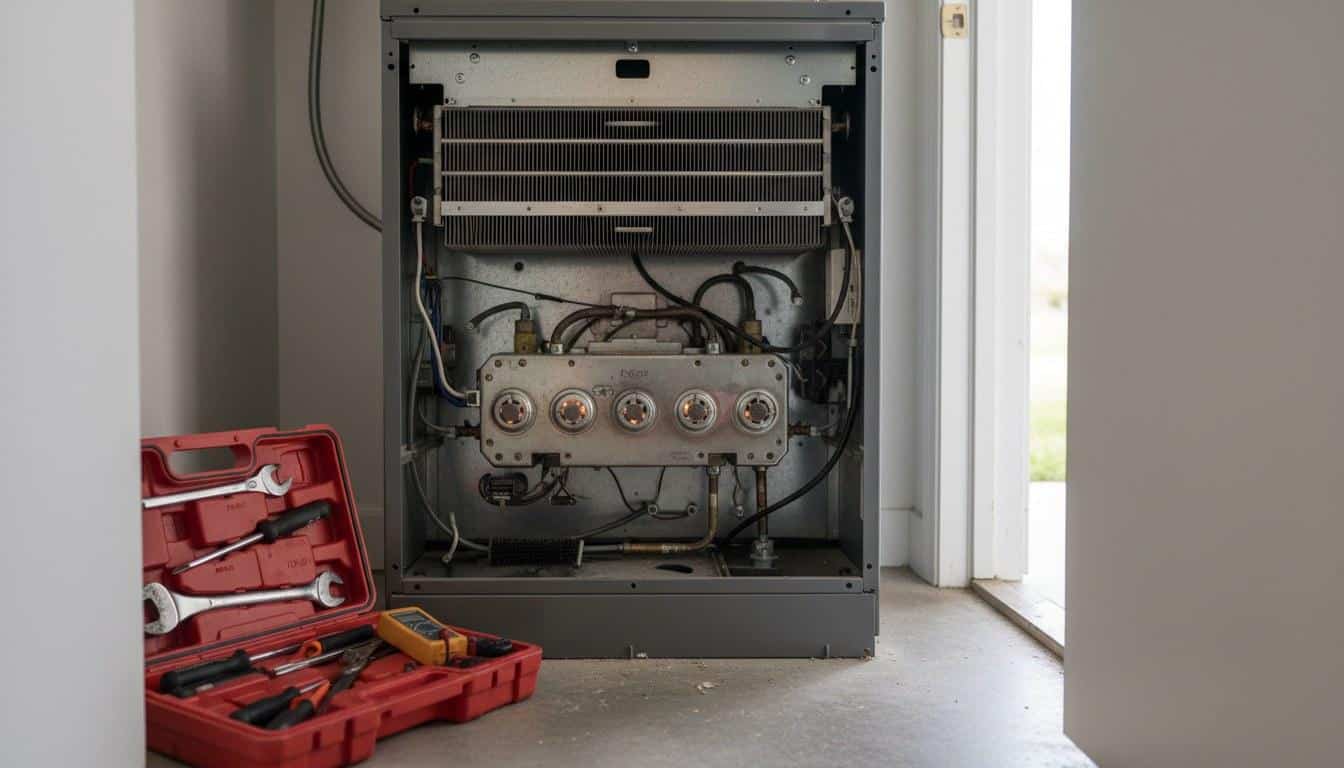
- Inspect electrical connections and capacitors: Capacitors start and run the compressor and fan motors. They are among the most common heat-related failures. A technician can test capacitor microfarad ratings in minutes.
- Clear the condensate drain line: Pour a cup of diluted white vinegar down the drain line access port to prevent algae buildup. A clogged drain can trigger a safety float switch that shuts the system down entirely.
- Verify airflow at every register: Walk each room and hold your hand near supply vents. Weak airflow in one zone often points to a disconnected duct, a closed damper, or a dirty secondary filter.
Our technicians respond to roughly three times more service calls in July and August than in any other two-month window, and the majority of those calls involve a problem that a pre-season check would have caught: a failing capacitor, a dirty coil, or a refrigerant leak that had been slowly developing since the prior winter.
What Should You Do Each Season to Keep Your AC Ready?
Year-round maintenance prevents small issues from becoming heat-wave emergencies. The most critical window is late spring, ideally April through May, before Southern California temperatures climb above 90 degrees.
Spring (April to May)
- Schedule a professional tune-up and safety inspection.
- Replace the air filter and stock a spare.
- Clean condenser fins and remove winter debris.
- Test the thermostat and replace batteries if needed.
- Flush the condensate drain line.
Summer (June to September)
- Check the filter every 30 days and replace when gray or clogged.
- Keep outdoor unit clear of vegetation and debris weekly.
- Monitor energy bills; a sudden spike often signals a refrigerant or airflow problem.
- Set the thermostat to 78 degrees when home and 85 degrees when away to reduce strain.
- Run ceiling fans counterclockwise to improve perceived cooling.
Fall (October to November)
- Schedule a heating system check while the HVAC contractor is already at the property.
- Inspect ductwork for gaps or disconnections revealed during summer use.
- Replace the filter again before switching to heating mode.
Winter (December to March)
- Keep the outdoor unit clear of standing water and debris after rain.
- Run the AC briefly on a mild day to confirm the system still starts correctly.
- Plan and book your spring tune-up early to avoid the rush.
| Maintenance Task | Recommended Frequency | DIY or Pro? |
|---|---|---|
| Air filter replacement | Every 30 to 60 days in summer | DIY |
| Condenser coil rinse | Once per season | DIY (basic) / Pro (deep clean) |
| Thermostat test | Before each season | DIY |
| Condensate drain flush | Every 3 months | DIY |
| Refrigerant level check | Annually or if cooling drops | Pro only (EPA Section 608) |
| Capacitor and electrical test | Annually | Pro only |
| Ductwork inspection | Every 2 to 3 years | Pro |
| Evaporator coil cleaning | Annually | Pro |
| Full system tune-up | Once per year (spring) | Pro |
What Does a Professional AC Tune-Up Include Before a Heat Wave?
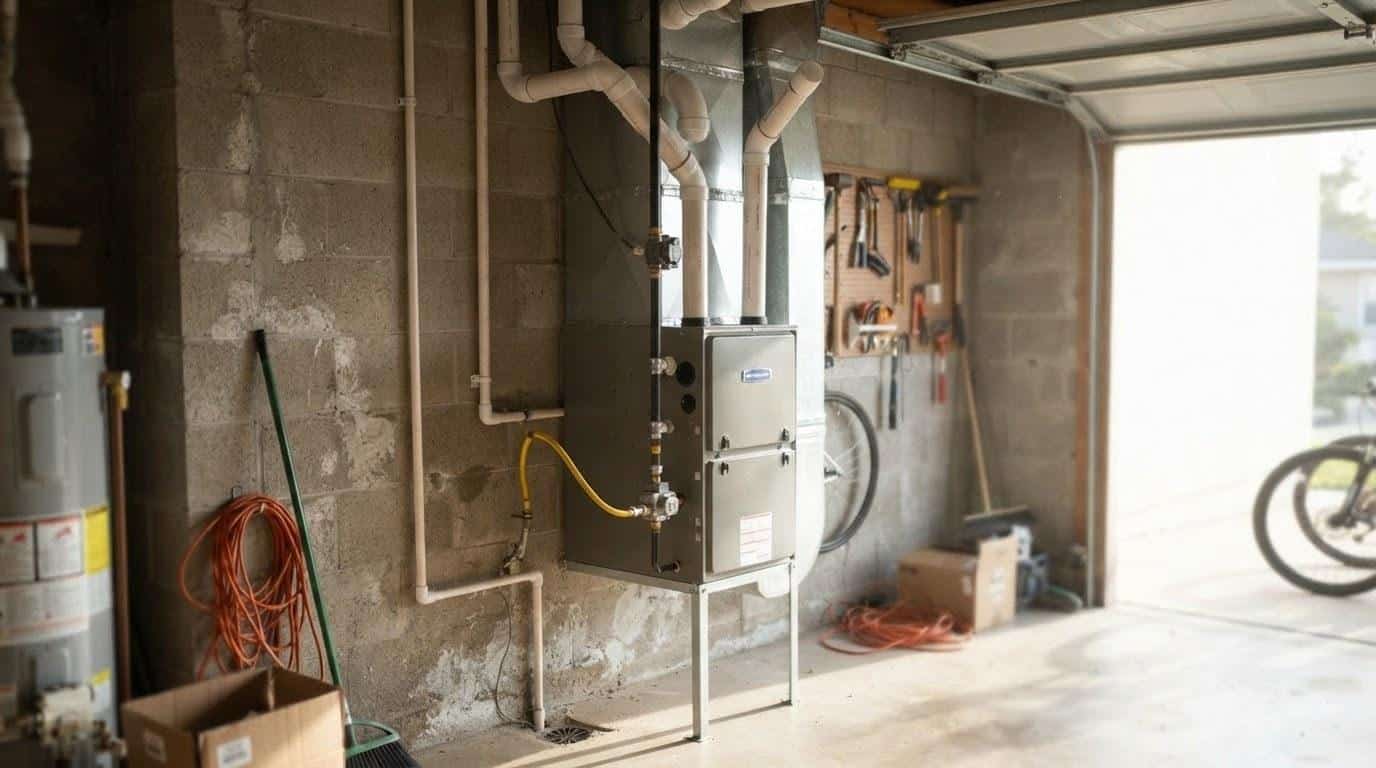
A professional pre-heat-wave tune-up typically takes 60 to 90 minutes and covers a 20-point inspection: refrigerant pressure testing, electrical connection tightening, capacitor testing, coil cleaning, blower motor amp draw, thermostat calibration, and a full safety check. This is not the same as a filter swap; it is a diagnostic review of every component that can fail under sustained high-load operation.
Technicians follow ACCA (Air Conditioning Contractors of America) standards for system evaluation, which include measuring supply and return air temperatures, checking static pressure in the duct system, and verifying that the system is delivering the airflow it was designed for. A properly sized and tuned system runs more efficiently and lasts longer.
During a professional inspection, the technician will also confirm whether your system meets current California’s Title 24 building energy standards for efficiency. Systems installed before 2023 may be operating on older SEER ratings that fall below today’s SEER2 minimums. If your system is approaching 15 years of age, the technician can also advise whether repair or replacement makes more financial sense.
If your system is more than 10 years old and the technician finds a major component failure, ask about replacement options that qualify for the Inflation Reduction Act federal tax credit, which covers up to 30 percent of the cost of qualifying high-efficiency heat pumps and central AC systems as of 2026. California residents may also qualify for TECH Clean California rebate programs that stack on top of federal credits.
What Warning Signs Should You Watch for Before and During a Heat Wave?
The most dangerous AC problems during a heat wave are the ones that develop slowly over weeks and then fail completely on the hottest afternoon of the year. Catching these warning signs early gives you time to act before the system shuts down entirely.
- Warm or lukewarm air from vents: If supply air is not noticeably cooler than room temperature, the system may have low refrigerant, a dirty evaporator coil, or a failing compressor.
- Short cycling: The system turns on and off every few minutes instead of completing a full cooling cycle. This often points to an oversized unit, a refrigerant issue, or a failing capacitor.
- Ice on the refrigerant lines or indoor coil: Counterintuitively, ice means the system is not cooling. It usually signals restricted airflow or low refrigerant. Shut the system off and call a technician.
- Unusual sounds: Grinding, squealing, or banging from the indoor air handler or outdoor unit are signs of mechanical wear. Rattling from the outdoor unit often means a loose panel or debris inside the cabinet.
- Higher electric bills without a usage change: A system working harder to produce the same cooling draws more power. A 15 to 20 percent spike in your bill during a month with similar temperatures is worth investigating.
- Visible water pooling near the indoor unit: A clogged condensate drain or a frozen coil that has thawed can leave standing water near the air handler. Left unaddressed, this causes mold growth and structural damage.
- Thermostat reads correctly but the house never cools down: If the system runs continuously for more than 30 minutes without reaching the set temperature during moderate outdoor conditions, the system is undersized, has a refrigerant problem, or the ducts are leaking.
How Much Does Pre-Heat-Wave AC Maintenance Cost in Southern California?
In the Southern California regional market, a professional AC tune-up and inspection typically ranges from $80 to $200, depending on the scope of the visit, the age of the equipment, and whether any parts are replaced during the appointment. That range reflects a standard single-system residential visit; homes with two systems or complex ductwork generally fall toward the higher end.
Individual repairs discovered during a tune-up add to that baseline. Common heat-wave-related repairs and their typical regional cost ranges include the following.
- Capacitor replacement: Typically $150 to $350 per unit, including parts and labor. Capacitors are the most frequently replaced component on aging systems.
- Refrigerant recharge: Generally $200 to $600 depending on the refrigerant type and the amount needed. Systems using R-22 refrigerant (phased out under EPA regulations) cost significantly more to service than newer R-410A or R-32 systems.
- Evaporator coil cleaning: Typically $100 to $400 depending on accessibility and degree of buildup.
- Condensate drain clearing: Usually $75 to $200 if a technician is needed beyond the basic DIY flush.
- Thermostat replacement (smart thermostat upgrade): Parts and installation generally range from $150 to $400 in this market. ENERGY STAR certified smart thermostats may qualify for utility rebates.
Compared to the cost of an emergency service call during a heat wave, which can run $300 to $600 or more for after-hours work, a pre-season tune-up is a straightforward investment. A full system replacement, if deferred maintenance leads to compressor failure, typically costs $4,000 to $12,000 in the Southern California market depending on system size and efficiency rating. Request a custom quote for your specific equipment and home before any work begins.
Compared to the cost of an emergency service call during a heat wave, which can run $300 to $600 or more for after-hours work, a pre-season tune-up is a straightforward investment.
Schedule Your AC Maintenance Before the Next Heat Wave Hits
Do not wait for a forecast to act. Book your pre-heat-wave tune-up now, before appointment slots fill up across Southern California. Shalom Heating & Air serves homeowners across the region with licensed, insured HVAC maintenance, repair, and installation. Our team is licensed by the California Contractors State License Board (CSLB), so you can be confident the work meets California’s standards.
Call (714) 886-2021 to schedule your AC maintenance appointment. Whether your system needs a basic tune-up, a refrigerant check, or a full inspection before the next heat event, Shalom Heating & Air is ready to help you stay cool all summer long.
Explore our full range of HVAC services across Southern California.
Frequently Asked Questions
How early should I schedule AC maintenance before a Southern California heat wave?
Schedule your tune-up at least two to three weeks before forecast heat arrives. HVAC appointment slots across Southern California fill up quickly once a heat event is announced. Booking in April or May gives you the most flexibility and the best chance of catching problems before temperatures climb above 90 degrees.
Can I prepare my AC for a heat wave myself, or do I need a professional?
Homeowners can handle several tasks on their own, including replacing the air filter, rinsing the condenser fins with a garden hose, flushing the condensate drain, and testing the thermostat. However, refrigerant checks, capacitor testing, and electrical inspections require a licensed technician under EPA Section 608 regulations. Attempting refrigerant work without certification is illegal and can damage the system.
Why does my AC stop cooling during a heat wave even though it was fine last summer?
Heat waves push AC systems to run continuously for hours or days at a time, which accelerates wear on components that were marginal but functional under lighter loads. A capacitor, refrigerant charge, or coil that was barely adequate in mild weather may fail completely when the system runs non-stop at 100-plus degree outdoor temperatures. A professional inspection before the season can identify these borderline components.
How do I know if my AC system is too old to handle a Southern California heat wave?
Most residential AC systems have a service life of 15 to 20 years. If your system is 12 years or older and has not been regularly maintained, it is at higher risk of failure during extreme heat. Signs that replacement may be smarter than repair include frequent breakdowns, refrigerant leaks, SEER ratings below current California Energy Commission standards, and repair costs that exceed 50 percent of a new system's price.
Are there rebates available for upgrading my AC system in Southern California?
Yes. As of 2026, the Inflation Reduction Act federal tax credit covers up to 30 percent of the installed cost of qualifying high-efficiency heat pumps and central AC systems. California residents may also qualify for TECH Clean California rebates, which can be stacked with federal credits. Contact Shalom Heating & Air at (714) 886-2021 to find out which incentives apply to your home and equipment.