Indoor Air Quality Problems in Southern California Homes: Causes & Solutions
Southern California's dry heat, wildfire smoke, and aging housing stock create some of the worst indoor air pollution conditions in the country. This guide breaks down the causes, warning signs, and proven fixes.
Why Are Indoor Air Quality Problems in Southern California So Common?
Indoor air quality problems in Southern California are more severe than in most other U.S. regions because of a combination of outdoor pollution, dry climate, wildfire smoke, and homes that stay sealed for air conditioning most of the year. When outdoor air is bad and windows stay shut, pollutants build up indoors with nowhere to go. The National Oceanic and Atmospheric Administration links California’s increasing wildfire seasons directly to longer periods of elevated particulate matter that penetrates homes.
Southern California’s housing stock adds to the problem. Many homes built before 1990 have ductwork that has never been cleaned, insulation that contains older materials, and little mechanical ventilation. When the HVAC system runs for eight or more months a year, it cycles whatever is inside those ducts through every room in the house.
The region’s dry, Santa Ana wind conditions also stir up fine dust, pollen, and soil particulates. The EPA estimates that indoor air can be two to five times more polluted than outdoor air, and in Southern California that baseline outdoor pollution is already elevated compared to national averages.
What Are the Warning Signs Your Home’s Air Quality Has a Problem?
The clearest warning signs of poor indoor air quality are physical symptoms that improve when you leave the house, visible dust buildup on vents, and persistent musty or chemical odors. Many homeowners dismiss these as allergies or seasonal colds when the real cause is the air circulating inside their own home.
- Frequent headaches or fatigue: Feeling foggy or tired indoors, especially in the morning, can point to elevated carbon dioxide or VOC levels.
- Sneezing, runny nose, or eye irritation: Symptoms that appear at home and clear up outside suggest airborne allergens like dust mites, pet dander, or mold spores.
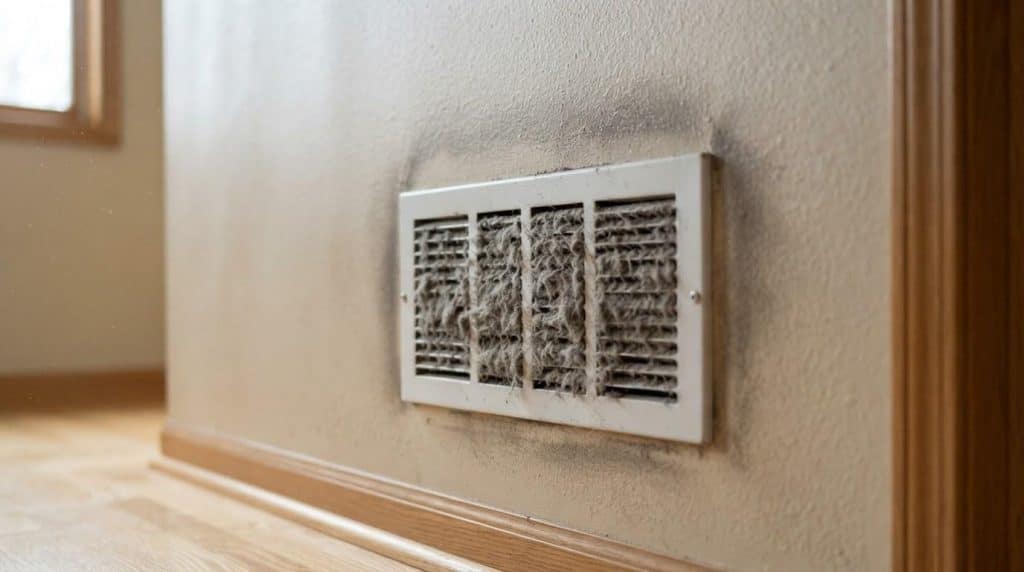
- Visible dust on vents and registers: Gray or dark buildup around supply and return vents is a sign that your filter is not catching particulates before they circulate.
- Musty or stale odors: A persistent smell, especially in bathrooms, closets, or near the air handler, often signals mold or mildew growth inside the system or walls.
- Worsening asthma or allergy symptoms: A spike in inhaler use or antihistamine needs during months when the HVAC runs heavily is a red flag.
- Condensation on windows or walls: Excess moisture indoors above 50% relative humidity creates conditions where mold can grow within 24 to 48 hours.
- Smoke or haze smell that lingers: During and after wildfire events, fine particulate matter (PM2.5) infiltrates through gaps in doors, windows, and ductwork and can linger for days.
What Is Causing the Poor Air Quality in Your Home?
The most common causes of indoor air pollution in Southern California homes are dirty or leaking ductwork, inadequate filtration, wildfire smoke infiltration, biological growth like mold, and off-gassing from building materials. Most homes have more than one issue happening at the same time.
The table below maps the most frequent causes to their likely source and whether the fix is a DIY task or a job for a licensed professional.
| Symptom | Likely Cause | DIY or Pro? |
|---|---|---|
| Dust on vents, dusty rooms | Clogged or low-MERV filter; leaky duct joints | DIY filter swap; Pro for duct sealing |
| Musty smell near vents or closets | Mold or mildew in ducts, drain pan, or walls | Pro (mold remediation required) |
| Smoky or hazy indoor air | Wildfire PM2.5 infiltration through gaps and ductwork | DIY weatherstripping; Pro for duct sealing and HEPA filtration |
| Chemical or paint-like odor | VOC off-gassing from flooring, furniture, or adhesives | DIY ventilation; Pro for air quality testing |
| Stuffy air, high CO2 feel | Insufficient fresh-air ventilation (sealed home) | Pro (ERV or HRV installation) |
| Sneezing and eye irritation | Dust mites, pet dander, or pollen in ducts | DIY filter upgrade; Pro for duct cleaning |
| Condensation on windows | Indoor humidity above 50%; inadequate ventilation | DIY dehumidifier; Pro for whole-home solution |
Wildfire Smoke and PM2.5
Wildfire smoke contains fine particles smaller than 2.5 microns (PM2.5) that pass through standard 1-inch HVAC filters rated below MERV 11. ENERGY STAR-certified air cleaners with true HEPA filtration capture at least 99.97% of particles at 0.3 microns, making them one of the most effective tools during smoke events. California’s wildfire seasons now regularly run from June through November, meaning Southern California homes face elevated PM2.5 risk for nearly half the year.
California's wildfire seasons now regularly run from June through November, meaning Southern California homes face elevated PM2.5 risk for nearly half the year.
Duct Leakage and Dirty Ductwork
The U.S. Department of Energy estimates that the average forced-air system loses 20 to 30% of conditioned air through duct leaks. Those same leaks pull in unconditioned air from attics, crawl spaces, and wall cavities, bringing dust, fiberglass particles, and mold spores directly into the living space. Our technicians find that roughly 6 out of 10 homes we inspect in the region have duct leakage that measurably worsens particle counts in the living area.
The U.S. Department of Energy estimates that the average forced-air system loses 20 to 30% of conditioned air through duct leaks.
Volatile Organic Compounds (VOCs)
New flooring, paint, cabinetry, and furniture release VOCs for months after installation. In a tightly sealed Southern California home running air conditioning, those chemicals recirculate rather than dissipate. Common VOCs include formaldehyde from pressed-wood products and benzene from certain paints and adhesives. The off-gassing rate is highest in the first 90 days and drops significantly after six months.
Biological Pollutants: Mold, Dust Mites, and Pollen
Coastal areas of Southern California experience enough marine-layer humidity to support mold growth in poorly ventilated bathrooms, crawl spaces, and HVAC drain pans. Inland areas see extreme pollen counts from grasses and chaparral plants from February through May. Dust mites thrive in bedding and carpet when indoor humidity stays above 50% for extended periods.
How Do You Test Indoor Air Quality at Home?
You can measure indoor air quality at home using a combination of consumer air quality monitors, single-pollutant test kits, and professional-grade assessments. Consumer monitors typically measure PM2.5, PM10, VOCs, carbon dioxide (CO2), temperature, and humidity in real time and cost between $50 and $300 depending on the sensor count.
For specific concerns, targeted test kits are available for radon (which should be below 4 picocuries per liter according to EPA guidelines), mold spores, carbon monoxide, and formaldehyde. These kits are mailed to a certified lab and return results within five to ten business days. Professional indoor air quality assessments use calibrated instruments and can identify pollutant sources that consumer devices miss, including specific mold species and VOC compound breakdowns.
When measuring indoor air quality, take readings in at least three rooms: the bedroom (where you spend the most hours), the main living area, and near the air handler or a supply vent. Compare readings taken with the HVAC running versus off to isolate whether the system is contributing to the problem.
What Can You Fix Yourself?
Several of the most impactful indoor air quality improvements cost under $100 and take less than an hour to complete. Start with the fixes that address the highest-volume pollutant sources before moving to more complex solutions.
- Upgrade your HVAC filter: Replace a MERV 1-4 fiberglass filter with a MERV 11-13 pleated filter. This single change captures a significantly higher percentage of fine dust, pollen, and smoke particles. Check the filter every 30 days during wildfire season and replace it when it appears gray or clogged.
- Seal gaps around doors and windows: Use foam weatherstripping tape or door sweeps to block the entry points that wildfire smoke and outdoor allergens use. Focus on the gap at the base of exterior doors first, as it is typically the largest.
- Run exhaust fans consistently: Bathroom and kitchen exhaust fans remove moisture and cooking combustion byproducts. Run the bathroom fan for at least 15 minutes after a shower and the kitchen fan any time you use the stovetop.
- Control indoor humidity: Keep indoor relative humidity between 30% and 50% using a portable dehumidifier or your HVAC system’s humidity controls. A $25 digital hygrometer lets you monitor levels in any room.
- Reduce VOC sources: Choose low-VOC or zero-VOC paints and adhesives for any renovation. Air out new furniture outdoors for 48 to 72 hours before bringing it inside. Open windows for 20 minutes in the early morning when outdoor air quality is typically at its best.
- Vacuum with a HEPA-filtered vacuum: Standard vacuums recirculate fine dust back into the air. A HEPA-filtered vacuum traps particles down to 0.3 microns, reducing dust mite allergens and pet dander on floors and upholstery.
When Should You Call a Professional?
Call a licensed HVAC professional when you suspect mold in the ductwork, when air quality monitors show consistently elevated PM2.5 or VOC levels despite DIY fixes, or when household members experience ongoing respiratory symptoms. These situations require equipment and expertise that go beyond what consumer products can address.
Specifically, you need a professional for:
- Duct cleaning and sealing: A professional duct cleaning removes accumulated debris from inside the duct system, and aerosol-based duct sealing (such as Aeroseal) can close leaks that are inaccessible by hand. ACCA (Air Conditioning Contractors of America) standards require a post-cleaning verification to confirm debris has been removed rather than redistributed.
- Whole-home ventilation systems: Energy Recovery Ventilators (ERVs) and Heat Recovery Ventilators (HRVs) bring in filtered fresh air without wasting conditioned air. These systems are particularly important in tightly sealed homes that meet California’s Title 24 building energy standards, where natural infiltration is intentionally minimized.
- UV air purification and advanced filtration: In-duct UV-C lights kill mold spores and bacteria as air passes through the system. Whole-home HEPA bypass systems filter air at a level that portable units cannot match. Installation requires electrical work and precise placement within the air handler.
- Mold remediation: If a professional assessment confirms mold in the duct system, wall cavities, or air handler, remediation must follow EPA guidelines. This is not a DIY project. Disturbing mold without proper containment spreads spores throughout the home.
- Refrigerant and coil service: A dirty evaporator coil is a common mold growth site and significantly degrades filtration efficiency. Cleaning requires EPA refrigerant regulations (Section 608) compliance and should only be performed by a technician with the proper certification.
Across our service calls throughout Southern California, we see elevated PM2.5 readings inside the home drop by an average of 40 to 60% after combining a duct cleaning with a MERV 13 filter upgrade, particularly in homes that have not had duct service in more than five years.
Homeowners may also be eligible for rebates through programs like TECH Clean California or the Inflation Reduction Act federal tax credit when upgrading to qualifying ventilation equipment or high-efficiency HVAC systems. A licensed contractor can confirm which incentives apply to your specific equipment and installation. Contractors performing this work should be licensed by the California Contractors State License Board (CSLB), which you can verify at cslb.ca.gov.
Get Expert Indoor Air Quality Help Today
Poor indoor air quality is not just uncomfortable, it is a health risk that compounds over months and years of exposure. If you have upgraded your filter, reduced humidity, and sealed gaps but still see elevated readings or persistent symptoms, the problem is likely inside your duct system or HVAC equipment.
Shalom Heating & Air helps homeowners across Southern California identify and fix the root causes of indoor air pollution, from duct inspections and air quality testing to whole-home filtration and ventilation upgrades. Call (714) 886-2021 to schedule an indoor air quality assessment and get a written quote before any work begins.
Explore our full range of HVAC services across Southern California.
Frequently Asked Questions
How do I know if my home has an indoor air quality problem?
The most reliable signs are physical symptoms that improve when you leave the house, such as headaches, sneezing, or fatigue, combined with visible dust on vents or a persistent musty smell. A consumer air quality monitor can confirm elevated PM2.5, VOC, or CO2 levels in real time. If readings stay high even with windows closed and the HVAC running, the duct system or air handler is likely part of the problem.
How do you test indoor air quality at home?
Start with a consumer air quality monitor that measures PM2.5, VOCs, CO2, and humidity. These devices cost between $50 and $300 and provide continuous real-time readings. For specific concerns like mold or radon, use a certified mail-in test kit. A professional indoor air quality assessment with calibrated instruments is the most accurate option and can identify pollutant sources that consumer devices miss.
What plants are good for improving indoor air quality?
Plants like spider plants, peace lilies, and snake plants have been studied for their ability to absorb certain VOCs in controlled settings. However, the volume of plants needed to meaningfully reduce pollutant levels in a typical room is impractical for most homes. Plants work best as a supplement to mechanical filtration, not a replacement for it. If you add plants, keep soil from staying overly wet to avoid mold growth.
How often should I change my HVAC filter to improve indoor air quality?
A MERV 11-13 pleated filter should be replaced every 60 to 90 days under normal conditions. During Southern California's wildfire season, which typically runs from June through November, check the filter every 30 days and replace it when it appears visibly gray. A clogged filter restricts airflow and can actually push more particles into the living space than it captures.
Why is indoor air quality worse in Southern California than in other parts of the country?
Southern California homes face a combination of factors that stack on top of each other: elevated outdoor pollution from traffic and industry, wildfire smoke for up to six months a year, dry Santa Ana winds that stir up fine dust and pollen, and homes that stay sealed with air conditioning running for most of the year. When outdoor air is poor and windows stay shut, indoor pollutants build up to levels two to five times higher than outdoors, according to EPA estimates.