HVAC Repair vs. Replace: How to Make the Right Call and What It Costs
Not sure whether to repair or replace your HVAC system? This guide breaks down real cost ranges, the 5,000 rule, efficiency ratings, and the warning signs that make replacement the smarter move.
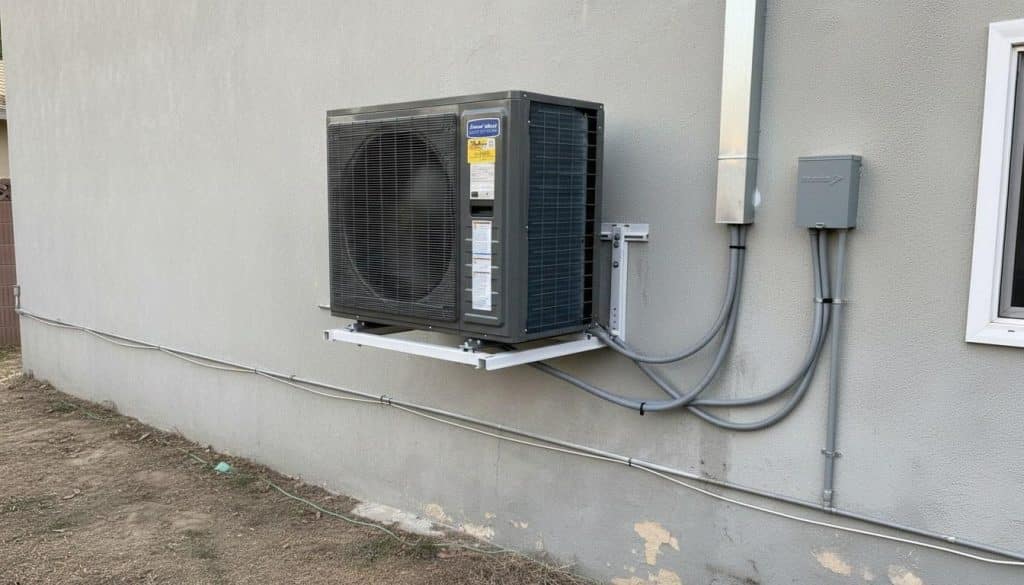
How Do You Decide Between HVAC Repair and Replacement?
The repair-or-replace decision comes down to three factors: your system’s age, the cost of the repair compared to a new unit, and how much energy efficiency you are losing every month. Most HVAC systems have a useful life of 15 to 20 years for furnaces and 12 to 15 years for central air conditioners. Once a system crosses those thresholds, individual repairs become a game of whack-a-mole — fix one part and another fails within a season or two.
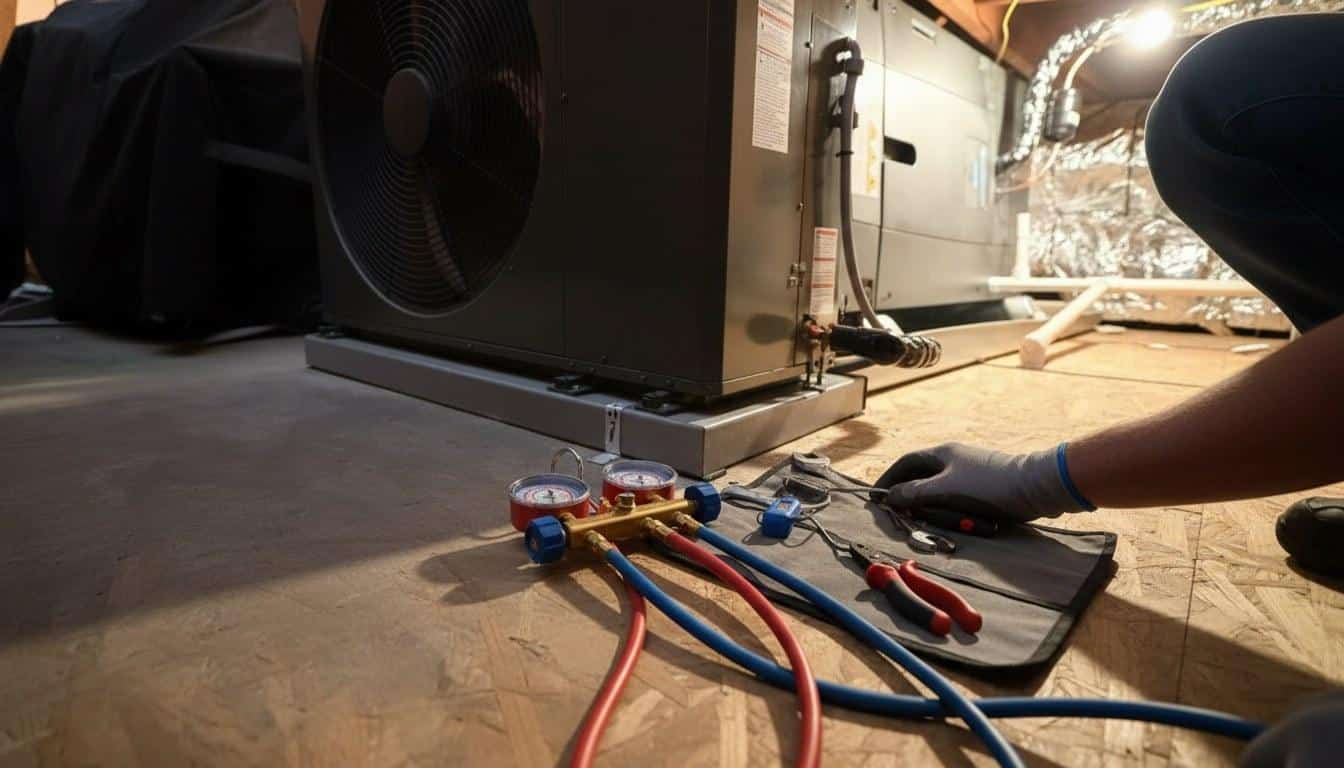
Homeowners researching hvac repair vs replace cost often focus only on the immediate invoice. That is a mistake. The real comparison is total cost of ownership: repair bill plus ongoing energy waste plus the risk of the next breakdown, stacked against the cost of a new system that runs efficiently for another 15 years.
A few quick questions help frame the decision before you call a technician:
- How old is the system? Under 8 years, lean toward repair. Over 12 years, lean toward replacement.
- What is the repair quote? If it exceeds 50% of a new system’s installed cost, replacement is almost always the better financial move.
- How high are your utility bills? A 15-year-old system can consume 20-40% more energy than a current ENERGY STAR-rated model running the same load.
- How many repairs have you paid for in the last two years? Two or more service calls is a strong signal of systemic decline.
- Is the refrigerant R-22? R-22 was phased out under EPA refrigerant regulations (Section 608) and is now extremely expensive. A system still running R-22 is almost always worth replacing.
What Does HVAC Repair vs Replace Cost in Today’s Market?
In the Southern California market, a typical HVAC repair ranges from $150 to $1,500 depending on the component, while a full system replacement generally runs $5,000 to $14,000 installed, depending on system size, efficiency rating, and home configuration. Those ranges are wide because the variables are significant — a capacitor swap is a $150-$300 job, while a compressor replacement can hit $1,800 to $2,800 on its own.
The table below compares common repair scenarios against the replacement option so you can see where the math tips:
| Scenario | Typical Repair Cost | Replacement Cost (Installed) | Better Choice |
|---|---|---|---|
| Capacitor or contactor failure, system under 8 years old | $150 – $350 | $5,000 – $14,000 | Repair |
| Refrigerant recharge (R-410A), system 8-12 years old | $300 – $700 | $5,000 – $14,000 | Repair + leak fix |
| Evaporator coil replacement, system over 12 years old | $900 – $2,000 | $5,000 – $14,000 | Replacement |
| Compressor replacement, system over 10 years old | $1,800 – $2,800 | $5,000 – $14,000 | Replacement |
| Heat exchanger crack in furnace | $1,500 – $3,500 | $3,500 – $7,500 | Replacement |
| Circuit board or control failure, system under 6 years old | $300 – $900 | $5,000 – $14,000 | Repair |
These ranges reflect the regional market as of 2025. Labor rates, refrigerant costs, and equipment prices all shift with supply chains and local demand. Always request a written, itemized quote before authorizing any work. Factors that move the replacement number higher include larger home square footage (requiring a bigger-tonnage system), multi-zone setups, ductwork modifications, and premium efficiency tiers.
What Is the 5,000 Rule and How Do You Use It?
The 5,000 rule is a quick financial filter: multiply the system’s age in years by the repair quote in dollars. If the result exceeds 5,000, replacement is the financially smarter path. For example, a 12-year-old system facing a $500 repair scores 6,000 — above the threshold, lean toward replacement. A 4-year-old system with the same $500 repair scores 2,000 — well below the threshold, repair it.
The rule is not perfect, but it captures two key truths at once: older systems carry more risk of cascading failures, and expensive repairs on aging equipment rarely pay back their cost before the next breakdown arrives.
Our technicians see this pattern consistently — on service calls where the system is 11 years or older and the repair quote tops $600, roughly 7 out of 10 customers who choose repair are back within 18 months with a second major failure.
Use the 5,000 rule as a starting point, then layer in the efficiency and rebate factors in the sections below to sharpen the decision.
Which Warning Signs Mean You Should Replace, Not Repair?
Certain failure patterns are strong signals that a repair will only delay the inevitable by a season or two. If you recognize two or more of these, replacement is almost certainly the right call.
- System age over 12-15 years: The average central AC lasts 12-15 years in Southern California’s climate. Furnaces typically reach 15-20 years. Beyond those windows, core components wear out in clusters.
- Frequent cycling or short cycling: If the system turns on and off every few minutes without reaching the set temperature, the compressor or refrigerant charge is usually failing — both are expensive fixes on an old unit.
- Uneven temperatures room to room: A system that can no longer distribute conditioned air evenly has lost capacity — either the equipment is undersized for current duct conditions or the compressor is degrading.
- Utility bills rising year over year: A system losing efficiency draws more power to do the same job. A 15-year-old unit running at 10 SEER can cost 40-50% more to operate than a new 18 SEER2 model doing identical work.
- R-22 refrigerant system: R-22 production ended in 2020 under EPA phase-out rules. Remaining supplies are recycled and expensive — a single recharge can cost $600 to $1,200 alone, and the underlying leak will return.
- Visible rust, corrosion, or cracked heat exchanger: A cracked heat exchanger on a furnace is a safety issue — it can allow combustion gases into living spaces. This is a replace-immediately situation, no exceptions.
- Loud banging, grinding, or squealing sounds: These noises typically indicate failing motor bearings, a loose blower wheel, or compressor damage — all expensive and often not worth fixing on a system past its prime.
- Multiple repairs in the past 24 months: Two or more service calls in two years is a reliable predictor of accelerating component failure.
How Much More Efficient Is a New HVAC System?
A new air conditioner meeting current California Energy Commission appliance standards must achieve a minimum of 15 SEER2, while top-tier models reach 20-25 SEER2. A system installed in 2008 likely ran at 10-13 SEER — meaning a replacement can cut cooling energy use by 25-40% in real-world conditions. That translates to meaningful monthly savings, especially during Southern California’s long cooling season, which can run from May through October.
The ENERGY STAR program certifies HVAC equipment that exceeds federal minimum efficiency thresholds. Choosing an ENERGY STAR-rated system is also a prerequisite for many California rebate programs, so efficiency and incentive eligibility go hand in hand.
For furnaces, the comparable metric is AFUE (Annual Fuel Utilization Efficiency). An older 80% AFUE furnace wastes 20 cents of every dollar of gas burned. A new 96-98% AFUE model wastes less than 4 cents. Over a heating season, that gap adds up to real savings on your gas bill.
The U.S. Department of Energy estimates that heating and cooling account for roughly 50% of a typical home’s energy use — making HVAC efficiency the single highest-leverage upgrade most homeowners can make.
Across our service calls in Southern California, we find that homeowners who replace a system older than 12 years with a current SEER2-rated unit typically report a noticeable drop in their first summer utility bill — often $40 to $90 per month during peak cooling months compared to what they paid the prior year with the old system running.
What Rebates and Tax Credits Can Offset Replacement Cost?
As of 2025, California homeowners replacing HVAC equipment can access federal tax credits through the Inflation Reduction Act, state rebates through the TECH Clean California program, and utility rebates through providers like SoCalGas and Southern California Edison — stacking these can reduce out-of-pocket replacement costs by $1,000 to $3,000 or more depending on the equipment chosen.
Here is a breakdown of the main programs available to CA homeowners:
- Inflation Reduction Act federal tax credit: Homeowners who install qualifying high-efficiency heat pumps or central air conditioners can claim up to $600 for AC units and up to $2,000 for heat pump systems as a federal tax credit. This is a dollar-for-dollar reduction in your tax bill, not just a deduction. Visit ENERGY STAR’s tax credit page for current equipment eligibility requirements.
- TECH Clean California: This statewide program provides point-of-sale rebates for heat pump HVAC systems, with amounts varying by income level and equipment type. Income-qualified households can receive significantly higher rebates.
- Utility rebates: Southern California Edison and SoCalGas both offer rebates for qualifying high-efficiency equipment. These typically range from $100 to $600 and are stackable with state and federal programs.
- California’s Title 24 building energy standards: Any permitted HVAC replacement must meet Title 24 requirements. A contractor who pulls the proper permits ensures your installation is code-compliant, which protects your rebate eligibility and your home’s resale value.
Rebate programs change annually, and eligibility depends on equipment specifications and installation details. The best way to confirm what you qualify for is to ask your contractor to walk through current programs before the job is quoted — a good contractor will include this as part of the proposal.
Get a Professional Assessment Before You Decide
A licensed technician can give you a repair quote, an efficiency reading on your current system, and a replacement proposal side by side — that comparison is the only way to make a fully informed hvac repair vs replace cost decision. Guessing from symptoms alone often leads homeowners to either overpay for a repair that buys only one more season, or replace prematurely when a targeted fix would have served them well for several more years.
When you schedule an assessment, ask the technician for the following in writing:
- The specific component that has failed and its root cause.
- An itemized repair quote including parts and labor.
- The system’s current SEER or SEER2 rating and estimated remaining useful life.
- A replacement proposal with equipment efficiency rating, installed cost, and applicable rebates.
- Confirmation that any replacement work will be permitted and meet California’s Title 24 building energy standards.
Make sure any contractor you hire is licensed by the California Contractors State License Board (CSLB). You can verify a license number at cslb.ca.gov in about 30 seconds. Working with an unlicensed contractor can void manufacturer warranties, disqualify you from rebates, and leave you with no recourse if the work is substandard.
Shalom Heating & Air provides honest, side-by-side repair and replacement assessments for homeowners across Southern California. Whether you need a second opinion on a repair quote or a full system proposal, call (714) 886-2021 to schedule your assessment. Get a written quote before any work begins — and ask about current Inflation Reduction Act tax credit eligibility when you call.
Explore our full range of HVAC services across Southern California.
Frequently Asked Questions
How do I know if I should repair or replace my HVAC system?
The clearest signal is the combination of system age and repair cost. If your system is older than 12 years and the repair quote exceeds 50% of a new system's installed cost, replacement almost always saves more money over five years. Also factor in rising utility bills and how many repairs you have paid for in the last two years — two or more recent service calls is a strong sign the system is in decline.
How much does it cost to replace an HVAC system in Southern California?
In the Southern California market, a full HVAC system replacement typically ranges from $5,000 to $14,000 installed, depending on system size, efficiency rating, and whether ductwork modifications are needed. Higher-efficiency systems and larger homes push the number toward the top of that range. Always get an itemized written quote, and ask your contractor about current rebate programs that can reduce your out-of-pocket cost by $1,000 to $3,000.
What is the 5,000 rule for HVAC repair vs replacement?
The 5,000 rule says to multiply the system's age in years by the repair quote in dollars. If the result is over 5,000, replacement is generally the smarter financial decision. For example, a 10-year-old system with an $800 repair scores 8,000 — well above the threshold, making replacement the better call. It is a quick filter, not a final answer, so pair it with an efficiency comparison and rebate check.
Are there tax credits or rebates available for replacing my HVAC system in California?
Yes. As of 2025, the Inflation Reduction Act federal tax credit offers up to $600 for qualifying high-efficiency central AC units and up to $2,000 for heat pump systems. California's TECH Clean California program adds state rebates on top of that, and utility companies like Southern California Edison offer additional rebates ranging from $100 to $600. Stacking these programs can meaningfully reduce your replacement cost.
How long does a new HVAC system last compared to a repaired old one?
A properly installed new central AC system typically lasts 12 to 15 years in Southern California's climate, and a new furnace can last 15 to 20 years. A repaired older system, by contrast, often has additional component failures within 12 to 24 months once it crosses the 12-year mark. Replacement resets that clock and comes with a manufacturer warranty — usually 5 to 10 years on parts — that a repair cannot provide.