Indoor Air Quality Tips: A Complete Home Maintenance Guide
The air inside your home can be two to five times more polluted than outdoor air, according to the EPA. This guide walks you through the maintenance habits, seasonal tasks, and professional services that make the biggest difference.
Why Is Indoor Air Quality Such a Big Problem at Home?
Indoor air can contain two to five times more pollutants than outdoor air, according to the U.S. Environmental Protection Agency. Americans spend roughly 90 percent of their time indoors, which means the quality of that air has a direct impact on health, sleep, and comfort.
Indoor air can contain two to five times more pollutants than outdoor air, making the quality of that air a direct factor in your health, sleep, and daily comfort.
Modern homes are built tighter than ever to meet California’s Title 24 building energy standards. That airtight construction cuts energy waste, but it also traps dust, moisture, gases, and biological particles inside. Without a deliberate maintenance plan, pollutants accumulate faster than most homeowners realize.
Southern California’s climate adds another layer of challenge. Hot, dry summers drive wildfire smoke indoors. Mild winters mean heating systems sit idle for months, collecting dust before they run again. Coastal areas see salt-laden air accelerate corrosion on HVAC equipment, which can reduce filtration effectiveness over time.
What Are the Most Common Indoor Air Pollutants?
The six most common sources of indoor air pollution in California homes are particulate matter, mold spores, volatile organic compounds (VOCs), carbon monoxide, dust mites, and pet dander. Each has a different source and a different fix.
Understanding what you are dealing with helps you prioritize the right indoor air quality tips for your situation. Some pollutants come from outside; others are generated entirely inside the home.
- Particulate matter (PM2.5): Tiny airborne particles from wildfire smoke, traffic, and combustion appliances. Particles smaller than 2.5 microns penetrate deep into the lungs.
- Mold spores: Thrive when indoor relative humidity climbs above 60 percent. Common in bathrooms, crawl spaces, and around leaking ductwork.
- VOCs: Released from paints, cleaning products, furniture, and flooring. New construction and freshly painted rooms can have VOC levels 10 times higher than outdoor air.
- Carbon monoxide: An odorless gas produced by gas furnaces, water heaters, and attached garages. Even low concentrations cause headaches and fatigue.
- Dust mites: Microscopic organisms that live in bedding, carpets, and upholstered furniture. Their waste particles are a leading trigger for asthma and allergies.
- Pet dander: Proteins shed from skin, fur, and saliva. Dander is lightweight and stays airborne for hours, making filtration especially important for pet owners.
Our technicians respond to roughly three times more indoor air quality calls in October and November than in any other two-month window, almost always tied to homeowners turning on furnaces that sat idle all summer and stirring up a season’s worth of settled dust and mold growth in neglected ductwork.
What Are the Best Indoor Air Quality Tips You Can Act on Today?
The highest-impact indoor air quality tips are filter replacement, humidity control, and source reduction. Most of these steps cost under $50 and take less than 30 minutes.
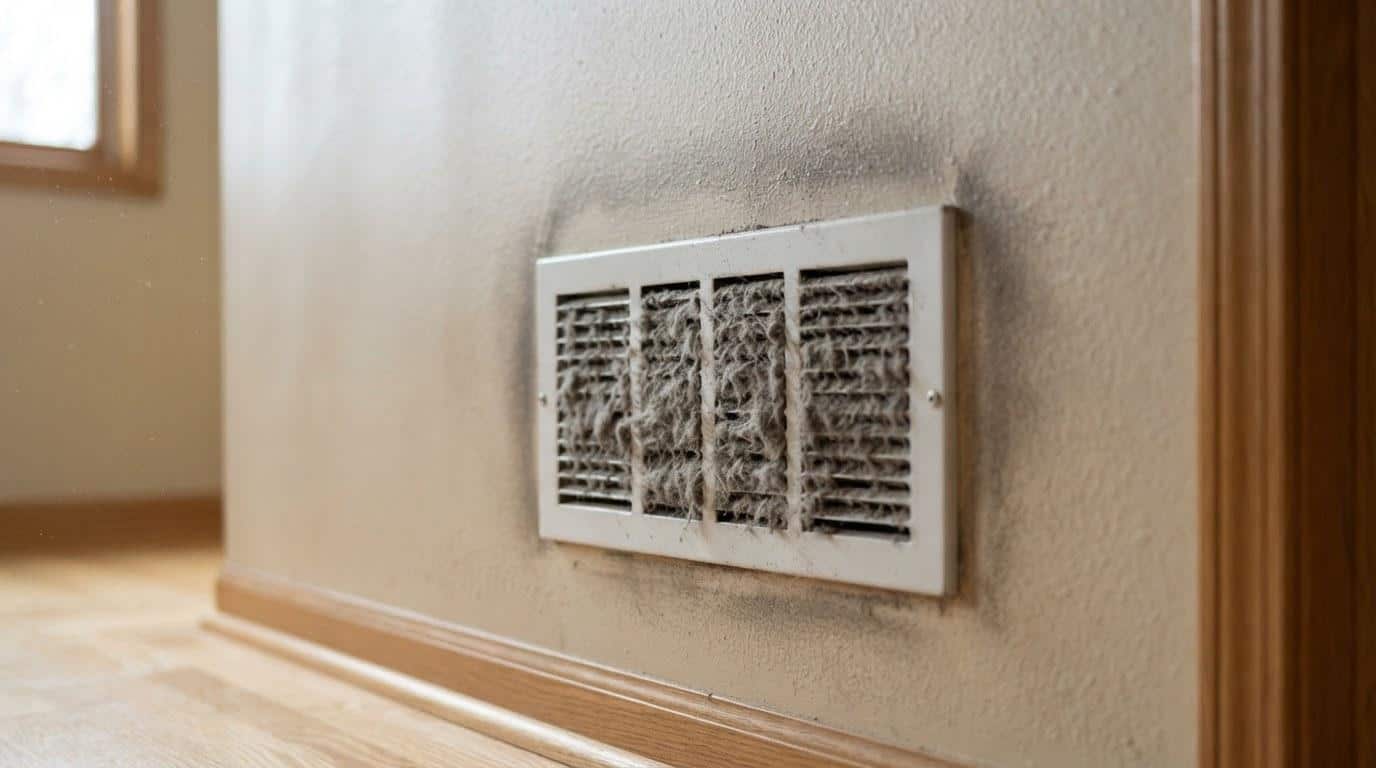
Start with the HVAC filter. A clogged filter does not just reduce airflow; it stops capturing new particles and can push contaminants back into the living space. The U.S. Department of Energy recommends checking filters monthly and replacing them every 1 to 3 months depending on household conditions.
- Upgrade your air filter: Choose a filter with a Minimum Efficiency Reporting Value (MERV) of 8 to 13 for most homes. MERV 13 captures particles as small as 0.3 microns, including many bacteria and smoke particles. Avoid MERV 16 or higher without a professional check, as they can restrict airflow on systems not designed for them.
- Control humidity: Keep indoor relative humidity between 30 and 50 percent. Use exhaust fans in bathrooms and kitchens. A whole-home dehumidifier or humidifier integrated into your HVAC system gives the most consistent control.
- Ventilate deliberately: Open windows on low-pollution days to flush stale air. Use the HVAC fan-only mode to circulate and filter air without conditioning it.
- Reduce VOC sources: Store paints, solvents, and cleaning products in sealed containers in a garage or outdoor shed. Choose low-VOC paints and flooring adhesives when renovating.
- Vacuum with a HEPA filter: Standard vacuum bags release fine particles back into the air. HEPA-equipped vacuums capture 99.97 percent of particles at 0.3 microns.
- Install carbon monoxide detectors: Place one on every floor and within 10 feet of each sleeping area. Replace detectors every 5 to 7 years; the sensor degrades over time.
- Consider an air purifier: Standalone HEPA air purifiers work well in bedrooms and living areas. Whole-home UV air purification systems installed in the HVAC air handler neutralize bacteria, mold spores, and some viruses continuously.
- Groom pets regularly: Bathing and brushing pets outdoors reduces the dander load inside by a meaningful amount, especially during shedding seasons.
What Should You Do Each Season to Protect Your Indoor Air?
Indoor air quality maintenance is not a once-a-year task. Each season brings different risks, and a quarterly routine catches problems before they become health hazards.
Spring (March through May)
- Replace the HVAC filter after the heating season ends.
- Schedule an AC tune-up before summer demand peaks.
- Clean bathroom exhaust fans and kitchen range hood filters.
- Check window seals and weatherstripping to prevent pollen infiltration.
- Test carbon monoxide and smoke detectors; replace batteries.
Summer (June through August)
- Check the filter again, especially if wildfire smoke events have occurred.
- Monitor indoor humidity; aim to keep it below 50 percent as outdoor humidity rises.
- Keep outdoor air intake vents clear of debris and vegetation.
- Run kitchen and bathroom exhaust fans during and after cooking and showering.
Fall (September through November)
- Replace the HVAC filter before turning on the furnace for the first time.
- Schedule a furnace or heat pump inspection to check for combustion issues and duct leaks.
- Clean dryer vents; lint buildup is a fire hazard and a source of airborne particles.
- Check crawl space and attic ventilation to prevent moisture buildup as temperatures drop.
Winter (December through February)
- Add a humidifier if indoor air becomes excessively dry (below 30 percent humidity causes respiratory irritation).
- Inspect gas appliance venting for blockages caused by debris or nesting animals.
- Run the HVAC fan periodically to keep air circulating and filtered even on mild days.
- Replace the filter again if the system has run heavily.
| Maintenance Task | Recommended Frequency | DIY or Pro? |
|---|---|---|
| Replace HVAC air filter (MERV 8-13) | Every 1 to 3 months | DIY |
| Clean bathroom and kitchen exhaust fans | Every 3 months | DIY |
| Test carbon monoxide and smoke detectors | Monthly; replace every 5-7 years | DIY |
| HVAC system professional tune-up | Once a year (twice for heat pumps) | Pro |
| Ductwork inspection and cleaning | Every 3 to 5 years | Pro |
| Dryer vent cleaning | Once a year | DIY or Pro |
| Whole-home air purifier UV lamp replacement | Every 12 months | Pro |
| Humidity level check (hygrometer reading) | Weekly in summer and winter | DIY |
| Evaporator coil and condensate drain cleaning | Once a year | Pro |
| Indoor air quality test (VOCs, CO, particulates) | Every 2 to 3 years or after renovation | Pro |
What Does a Professional Indoor Air Quality Service Include?
A professional HVAC-based indoor air quality inspection typically takes 60 to 90 minutes and covers airflow measurement, duct integrity, coil condition, humidity levels, combustion safety, and filtration effectiveness. It gives you a data-driven picture of what is actually in your air.
Many homeowners rely on DIY habits alone, but some problems are invisible without instruments. A technician uses tools like a combustion analyzer, a manometer for duct pressure, and a particle counter to identify issues that a visual check misses.
A thorough professional inspection covers the following areas:
- Filter and filtration system audit: Confirms the installed filter is the right MERV rating for the system and is seated without gaps that allow unfiltered air to bypass it.
- Evaporator coil and condensate drain: A dirty coil is a breeding ground for mold. The technician cleans the coil and flushes the drain line to prevent biological growth and water damage.
- Duct inspection: Leaky ducts pull unconditioned air from attics, crawl spaces, and wall cavities, introducing insulation fibers, rodent dander, and mold spores directly into the living space. Duct leakage of 20 to 30 percent is common in older California homes.
- Combustion safety check: For gas furnaces and water heaters, the technician tests for carbon monoxide production and checks that flue gases are venting properly.
- Humidity measurement: Using a calibrated hygrometer, the tech checks both supply air and return air humidity to determine whether a humidifier or dehumidifier is warranted.
- Ventilation rate assessment: Confirms the system is bringing in adequate fresh air, especially important in tightly sealed homes built to California’s Title 24 building energy standards.
- Air purification system check: If a UV lamp, ionizer, or electronic air cleaner is installed, the tech verifies it is operating within manufacturer specifications. UV lamps lose roughly 20 percent of their germicidal output per year and need annual replacement.
In the Southern California market, professional indoor air quality assessments and HVAC tune-ups typically range from $89 to $250 depending on system size, age, and the scope of additional testing requested. Duct cleaning, if needed, generally adds $300 to $700 for a standard single-family home. Contact Shalom Heating & Air for a custom quote based on your specific system and home.
What Warning Signs Should You Watch for Between Services?
Certain symptoms in your home or your household members can signal declining indoor air quality well before your next scheduled maintenance visit. Acting on these early prevents minor issues from becoming expensive repairs or health problems.
Across our service calls in Southern California, we see that homes with three or more of the following warning signs present simultaneously almost always have a measurable filtration or ductwork problem driving the issue, not just seasonal allergies or coincidence.
- Visible dust buildup within days of cleaning: Rapid reaccumulation on surfaces near vents points to a failed or wrong-sized filter, or duct leaks pulling in attic dust.
- Musty or stale odors: A persistent musty smell, especially when the HVAC runs, suggests mold growth on the evaporator coil, in the ductwork, or in a damp area the system serves.
- Increased allergy or asthma symptoms indoors: If symptoms are worse at home than outside, the indoor environment is the likely source.
- Condensation on windows: Persistent window condensation in winter means indoor humidity is too high, creating conditions for mold growth on walls and framing.
- Uneven airflow between rooms: One room significantly hotter, colder, or stuffier than others can indicate a duct blockage or leak that is also compromising filtration in that zone.
- Headaches, fatigue, or dizziness at home: These symptoms that improve when you leave the house may signal elevated carbon monoxide or VOC levels and warrant immediate professional testing.
- Yellow or orange burner flame on a gas furnace: A healthy natural gas flame burns blue. A yellow or orange flame indicates incomplete combustion and possible carbon monoxide production.
- Water stains near HVAC vents or air handler: Staining around vents or the air handler cabinet points to a clogged condensate drain or refrigerant leak, both of which promote mold growth.
Schedule Your Indoor Air Quality Maintenance
Clean indoor air starts with a consistent maintenance routine and a licensed professional who can identify what you cannot see on your own. Shalom Heating & Air provides HVAC tune-ups, ductwork inspections, air purification installation, and humidity control solutions for homeowners across Southern California.
The team is licensed by the California Contractors State License Board (CSLB) and carries full insurance. Whether you need a seasonal filter swap confirmed, a full duct inspection, or a whole-home UV air purification system installed, the right next step is a professional assessment of your specific system and home.
If you have noticed any of the warning signs above, or if it has been more than 12 months since your last HVAC service, do not wait for symptoms to get worse. Call Shalom Heating & Air at (714) 886-2021 to schedule your indoor air quality inspection and tune-up. A healthier home starts with one call.
Explore our full range of HVAC services across Southern California.
Frequently Asked Questions
How do I know if my indoor air quality is bad?
Common signs of poor indoor air quality include dust that reappears within a day or two of cleaning, musty odors when the HVAC runs, allergy or asthma symptoms that are worse at home than outside, and condensation on windows in winter. Headaches or fatigue that improve when you leave the house can also signal elevated carbon monoxide or VOC levels. A professional air quality test using a particle counter and combustion analyzer gives you a definitive answer.
How often should I change my air filter to improve indoor air quality?
Most homes should replace their HVAC air filter every one to three months. Homes with pets, allergy sufferers, or high dust levels should change filters closer to every month. Using a MERV 8 to 13 rated filter captures the widest range of common household particles without restricting airflow on most residential systems.
What plants are actually good for indoor air quality?
Some plants, such as spider plants, peace lilies, and snake plants, can absorb small amounts of VOCs like formaldehyde and benzene. However, the EPA notes that the effect in a real home is modest compared to proper ventilation and filtration. Plants work best as a supplement to good HVAC maintenance, not a replacement for it. They also add humidity, which can be helpful in dry winter months.
How do you test indoor air quality at home?
You can start with inexpensive DIY tools: a hygrometer measures humidity, and plug-in carbon monoxide detectors alert you to combustion gases. For a more complete picture, a certified HVAC technician can use a particle counter, combustion analyzer, and VOC meter to measure pollutant levels precisely. Professional testing is especially important after a renovation, a mold scare, or if household members have unexplained respiratory symptoms.
Does running the AC help with indoor air quality?
Running your air conditioner does help filter and dehumidify indoor air, as long as the filter is clean and the system is well maintained. A dirty filter or a moldy evaporator coil can actually worsen air quality by circulating contaminants. Keeping the AC properly serviced, including annual coil cleaning and regular filter changes, makes it one of the most effective tools for maintaining healthy indoor air in Southern California's climate.