Why Is My AC Running But Not Cooling? A Troubleshooting Guide for Homeowners
When your AC runs but the house stays warm, something is blocking the system from doing its job. This guide walks you through the most common causes and what to do about each one.
Why Does an AC Run Without Actually Cooling?
An air conditioner that runs but fails to cool is usually suffering from a blocked airflow path, a refrigerant problem, or a failed component inside the system. The compressor and fan can keep running even when the system cannot move heat out of your home. That is why the unit sounds normal but the rooms stay warm.
Southern California summers push residential AC systems hard. The National Weather Service Los Angeles office regularly records inland temperatures above 95 degrees Fahrenheit during July and August, which means a system that is even slightly underperforming will feel like a complete failure inside the house. Understanding why this happens is the first step toward fixing it.
AC systems are designed to run in cycles, typically 15 to 20 minutes at a time. When something goes wrong, the system may run continuously without ever dropping the indoor temperature more than a degree or two. That continuous run is a clue, not just an annoyance.
What Are the Warning Signs Your AC Needs Attention?
The clearest warning signs are warm air from the vents, ice on the indoor or outdoor unit, weak airflow, and unusual sounds or smells. Catching these early can prevent a minor issue from turning into a major repair.
- Warm or room-temperature air from vents: The fan is running but the air coming out is not cold, which points to a refrigerant, compressor, or coil issue.
- Ice or frost on the indoor unit or refrigerant lines: Frozen coils block airflow and stop heat transfer entirely, causing the system to run without cooling.
- Weak airflow: Vents push less air than usual, often caused by a clogged filter, blocked duct, or failing blower motor.
- Short cycling: The unit turns on and off every few minutes instead of completing a full cycle, which can signal an oversized system, low refrigerant, or an electrical fault.
- Hissing or bubbling sounds: These noises near the refrigerant lines or indoor coil often indicate a refrigerant leak.
- Higher than normal electric bills: A system running constantly without cooling is working overtime and driving up energy costs.
- Thermostat reads higher than the set point for more than 30 minutes: If the indoor temperature cannot reach the set point on a day under 100 degrees, the system is undersized, low on refrigerant, or has a failing component.
- Musty or burning smell from vents: Musty odors often mean mold in the coil or drain pan; a burning smell can point to an electrical problem that needs immediate attention.
How Do You Match the Symptom to the Cause?
Most ac running but not cooling troubleshooting problems fall into five root causes: dirty filters, frozen coils, refrigerant loss, compressor failure, or ductwork leaks. The table below maps the symptom you can observe to the most likely cause and whether it is a DIY fix or a job for a licensed technician.
| Symptom You Notice | Most Likely Cause | DIY or Pro? |
|---|---|---|
| Warm air from all vents, filter is gray and clogged | Restricted airflow from dirty filter | DIY: replace filter |
| Ice or frost on indoor coil or copper lines | Frozen evaporator coil (low airflow or low refrigerant) | DIY: turn system off to thaw; Pro: find root cause |
| Hissing or bubbling near the unit, warm air | Refrigerant leak | Pro only (EPA Section 608 requires a certified technician) |
| Outdoor unit runs but no cool air; loud clanking | Compressor failure | Pro only |
| Some rooms cool, others stay warm | Duct leak or blockage | Pro for sealing; DIY for checking registers |
| Unit runs constantly, never reaches set point | Undersized system, dirty condenser coil, or low refrigerant | Pro for diagnosis and coil cleaning |
| Thermostat display is blank or incorrect | Dead batteries, wiring fault, or failed thermostat | DIY: replace batteries; Pro: wiring or thermostat replacement |
| Outdoor unit not running, indoor fan running | Tripped breaker, failed capacitor, or contactor issue | DIY: reset breaker once; Pro: capacitor or contactor |
What Can You Safely Check Yourself?
Before calling a technician, four safe checks can either solve the problem or give the pro a head start when they arrive. None of these require tools or electrical knowledge.
Step 1: Check and Replace the Air Filter
A clogged filter is the single most common cause of reduced cooling. Most 1-inch filters should be replaced every 30 to 90 days depending on household dust and pets. Hold the filter up to light; if you cannot see light through it, replace it before anything else. A dirty filter starves the evaporator coil of airflow and can cause it to freeze within a few hours.
Step 2: Check the Thermostat Settings
Confirm the thermostat is set to COOL, not FAN ONLY. Fan-only mode circulates air without activating the compressor, so the air feels moving but not cold. Also check that the set point is at least 3 to 5 degrees below the current indoor temperature; if the gap is smaller, the system may not cycle on at all. Replace the batteries if the display looks dim or behaves erratically.
Step 3: Inspect the Outdoor Condenser Unit
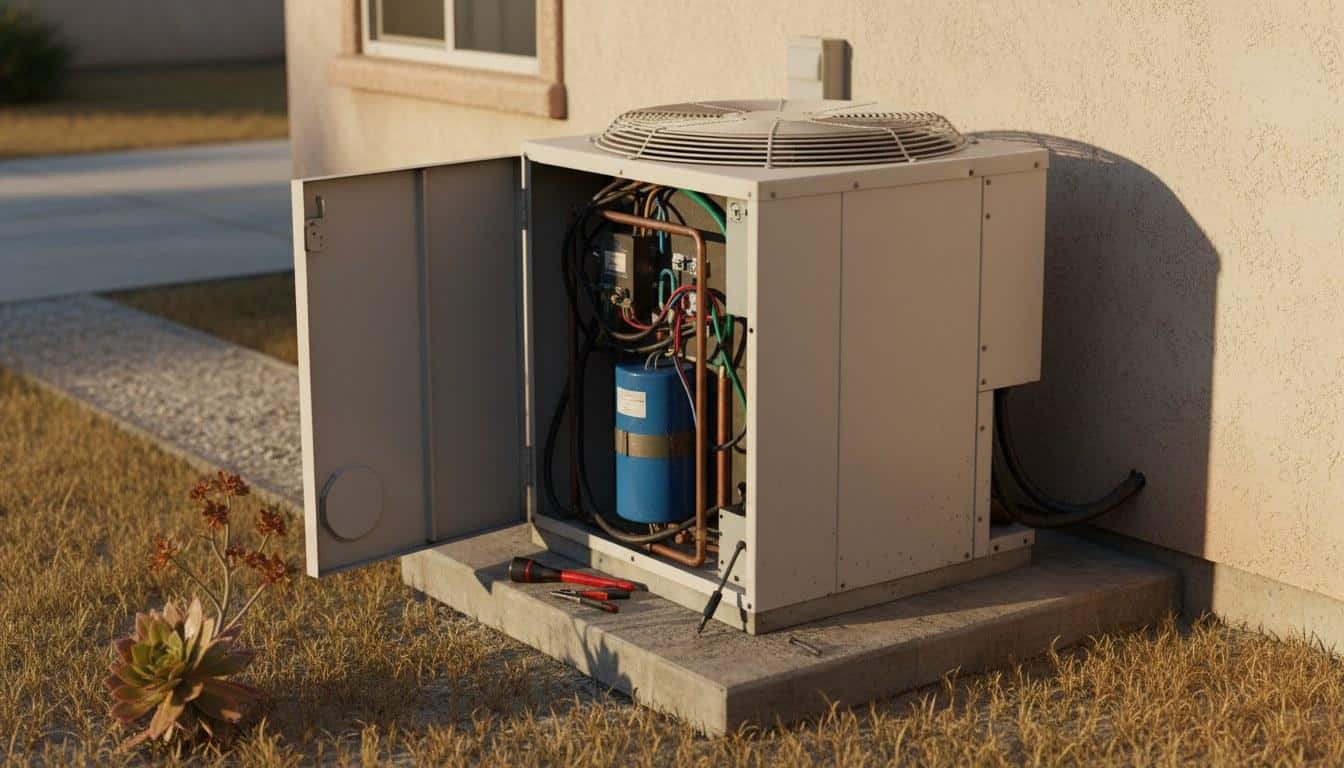
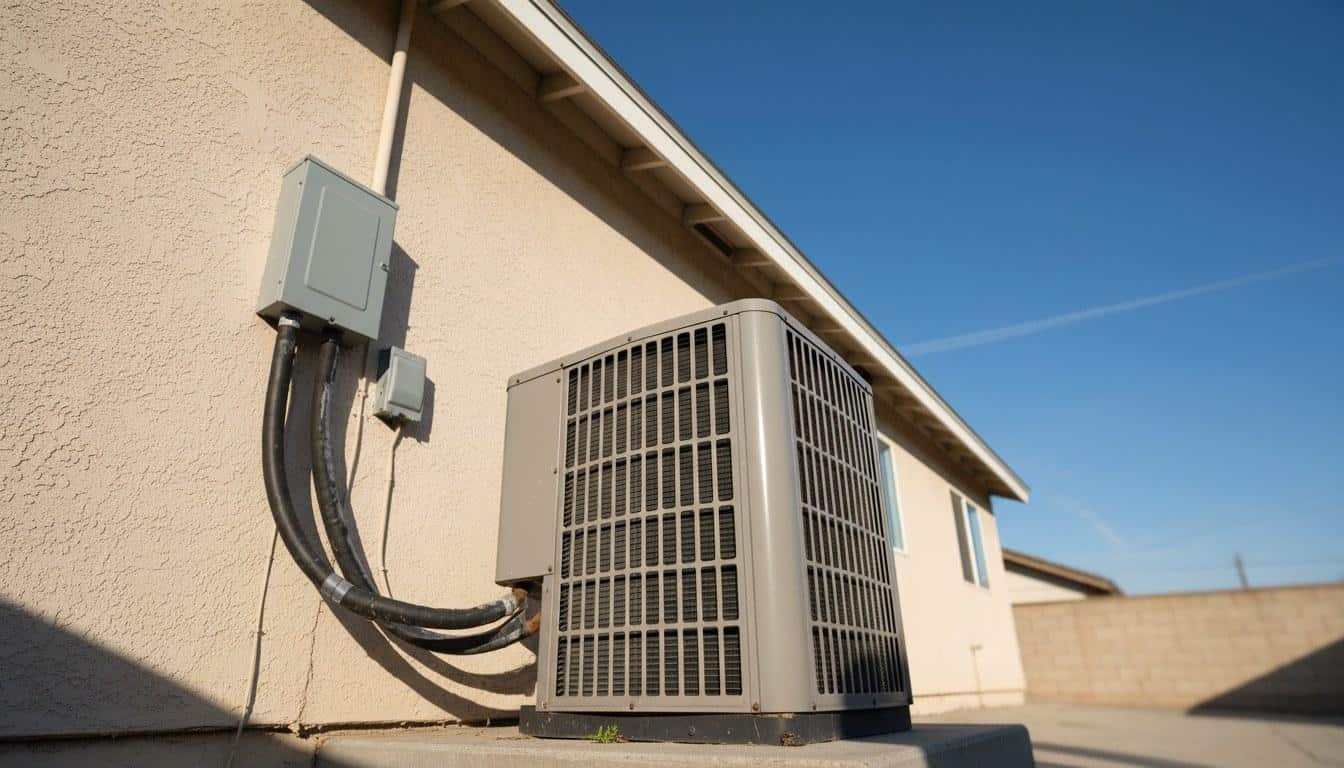
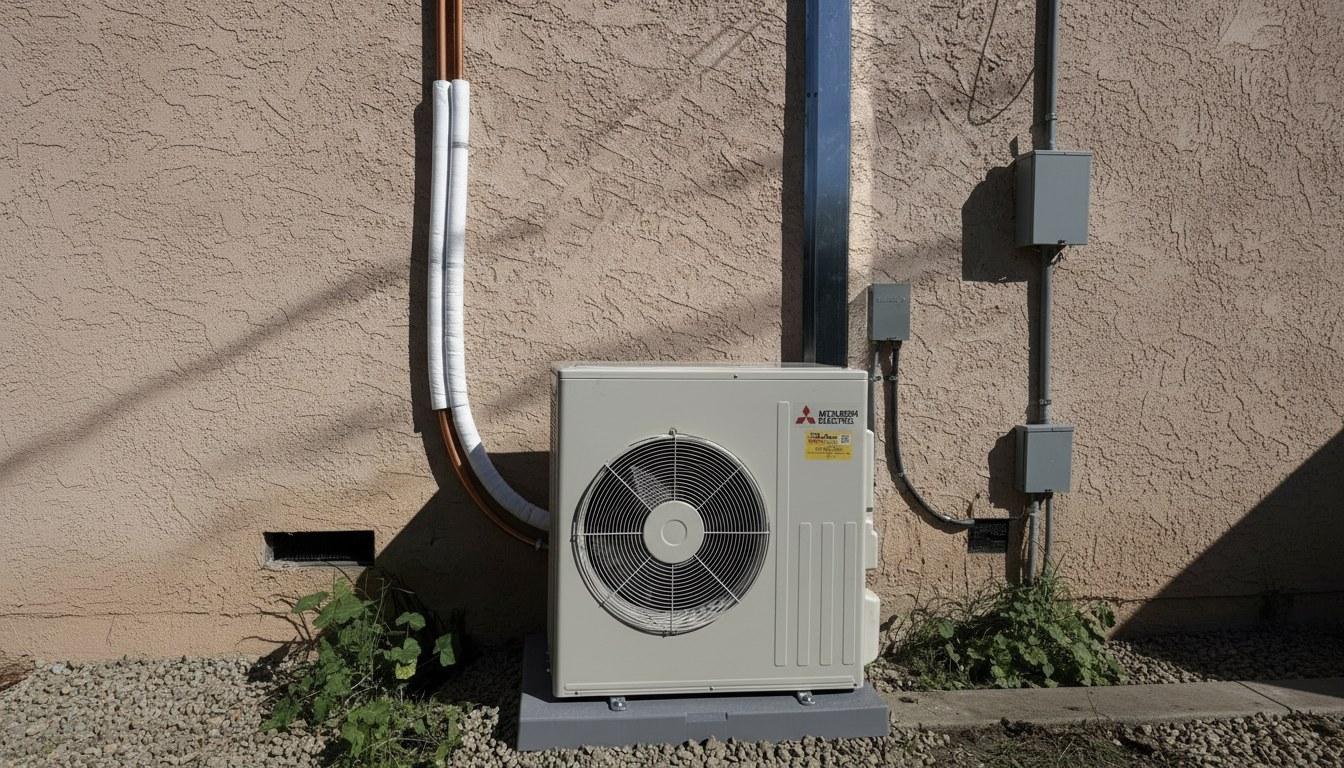
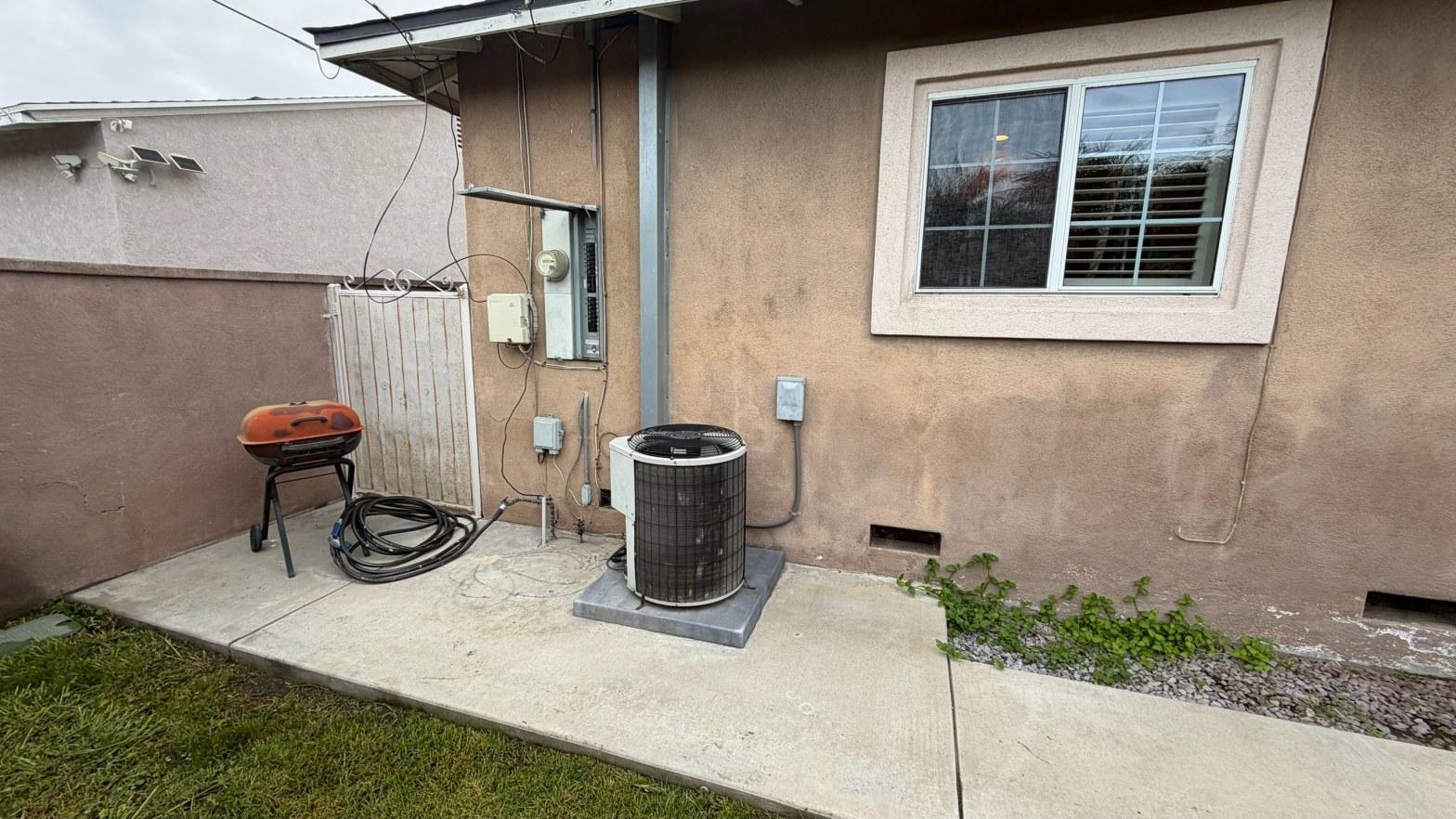
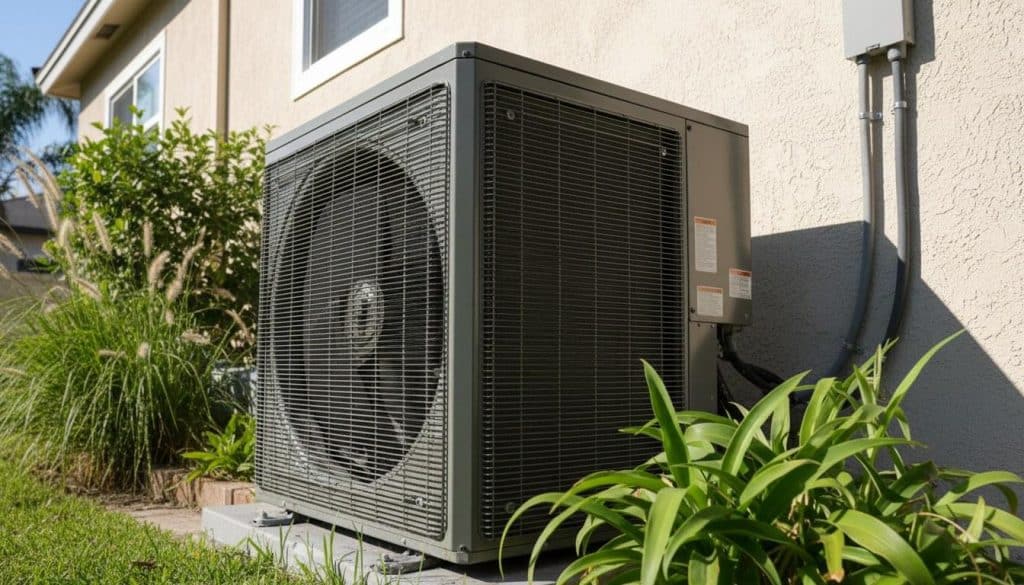
Walk outside and look at the condenser unit. The large fan on top should be spinning when the system is running. If it is not, the unit may have tripped its own breaker or the capacitor may have failed. Also check whether the condenser coils (the fins around the outside of the unit) are packed with dirt, leaves, or cottonwood fluff. A condenser coil clogged with debris cannot release heat and will cause the system to run without cooling the house. You can gently rinse the fins from the outside with a garden hose on a low setting.
Step 4: Look for Ice on the Indoor Unit
Open the panel on your air handler or furnace and look at the evaporator coil. If it is coated in ice or frost, turn the system off at the thermostat and switch the fan to ON to help it thaw. This can take 2 to 3 hours. Do not run the AC in COOL mode while the coil is frozen; you risk damaging the compressor. Once thawed, replace the filter and try again. If it freezes a second time, a refrigerant leak or airflow problem needs professional diagnosis.
Step 5: Check Your Circuit Breakers
Go to your electrical panel and look for a tripped breaker labeled AC, HVAC, or AIR HANDLER. A tripped breaker sits between ON and OFF. Reset it once by switching it fully to OFF and then back to ON. If it trips again immediately, stop and call a technician; repeated tripping signals a wiring or compressor fault that is not safe to reset repeatedly.
When Should You Call a Licensed HVAC Professional?
Call a licensed HVAC professional when you see ice that returns after thawing, smell refrigerant (a sweet chemical odor), hear grinding or screeching, or when the breaker trips more than once. These symptoms go beyond what any homeowner can safely address.
Refrigerant handling is regulated under EPA refrigerant regulations (Section 608), which require a certified technician to recover, recycle, or recharge refrigerant. It is illegal for an unlicensed person to purchase or handle refrigerants like R-410A or the newer R-454B. If your system is low on refrigerant, it also means there is a leak somewhere that must be found and repaired before a recharge will hold.
Compressor replacement is another job that always requires a pro. A residential compressor typically costs between $800 and $2,500 in parts alone, and the labor and refrigerant handling add to that. On a system older than 10 years, many technicians and the U.S. Department of Energy recommend weighing replacement against repair, especially since systems manufactured before 2023 may use R-410A, which is being phased out under new EPA rules.
Duct leaks are also a professional repair in most cases. The U.S. Department of Energy estimates that typical homes lose 20 to 30 percent of conditioned air through duct leaks, which means a system that seems undersized may simply be losing its output before it reaches the rooms you want cooled. A technician can perform a duct pressure test to confirm this.
The U.S. Department of Energy estimates that typical homes lose 20 to 30 percent of conditioned air through duct leaks, which means a system that seems undersized may simply be losing its output before it reaches the rooms you want cooled.
Our technicians often find that when a system freezes repeatedly, the evaporator coil has a slow pinhole leak at a brazed joint rather than a fitting, which is easy to miss without a refrigerant detector and UV dye test.
Any contractor you hire in California should be licensed by the California Contractors State License Board (CSLB). You can verify a license number on the CSLB website before work begins.
What Does AC Repair Typically Cost in This Market?
In the Southern California market, most common AC repairs range from around $150 for a capacitor replacement to $1,500 or more for refrigerant leak detection, repair, and recharge. The factors that move the price most are the type of repair, the refrigerant type, the age of the system, and parts availability.
Here is a general breakdown of typical repair cost ranges in this region:
- Air filter replacement (DIY): $10 to $40 depending on filter type and MERV rating.
- Capacitor replacement: $150 to $400 including labor. Capacitors are one of the most common summer failures and are usually replaced in under an hour.
- Refrigerant recharge (after leak repair): $200 to $600 or more depending on the refrigerant type and the amount needed. R-410A prices have risen as the phase-out approaches.
- Refrigerant leak detection and repair: $200 to $1,500 depending on where the leak is located and whether a coil needs replacement.
- Evaporator or condenser coil replacement: $600 to $2,000 depending on the unit size and coil type.
- Compressor replacement: $1,200 to $3,000 or more for parts and labor on a residential split system.
- Thermostat replacement: $150 to $500 depending on whether it is a basic model or a smart thermostat.
- Duct sealing (professional): $300 to $1,000 depending on the length and accessibility of the duct run.
If your system is more than 15 years old and the repair cost exceeds 50 percent of the price of a new unit, replacement is often the smarter financial decision. New systems must meet California’s Title 24 building energy standards and carry a minimum SEER2 rating of 15.2 for split systems in this climate zone, which means a new unit will use noticeably less energy than an aging system even before factoring in repair costs.
If your system is more than 15 years old and the repair cost exceeds 50 percent of the price of a new unit, replacement is often the smarter financial decision.
New systems must meet California's Title 24 building energy standards and carry a minimum SEER2 rating of 15.2 for split systems in this climate zone, which means a new unit will use noticeably less energy than an aging system even before factoring in repair costs.
Homeowners replacing a qualifying system may also be eligible for the Inflation Reduction Act federal tax credit of up to $600 for high-efficiency central air conditioners, or up to $2,000 for qualifying heat pumps. The TECH Clean California rebate program offers additional incentives for heat pump installations in the state. Always request a custom quote so you know the exact scope before any work begins.
Get Expert Help from Shalom Heating & Air
If you have worked through these checks and your AC is still running but not cooling, it is time to bring in a licensed technician. Shalom Heating & Air serves homeowners across Southern California and handles everything from ac running but not cooling troubleshooting problems to full system replacements. The team is licensed and insured, and work is backed by a warranty.
Call (714) 886-2021 to schedule a diagnostic visit. Get a written quote before any work begins so you know exactly what you are paying for and why.
Explore our full range of HVAC services across Southern California.
Frequently Asked Questions
Why is my AC running but the house is not getting cold?
The most common reasons are a clogged air filter blocking airflow, a frozen evaporator coil, low refrigerant from a leak, or a failing compressor. Start by checking the filter and thermostat settings. If those look fine and the air from the vents is still warm, the system likely needs a professional diagnostic to check refrigerant levels and component function.
How much does it cost to repair an AC unit that is not cooling?
In the Southern California market, repair costs typically range from around $150 for a simple capacitor swap to $1,500 or more for refrigerant leak detection, repair, and recharge. The exact cost depends on the failed component, the refrigerant type your system uses, and the age of the unit. Always get a written quote before authorizing any repair work.
Can I recharge my AC refrigerant myself?
No. Under EPA refrigerant regulations (Section 608), only a certified technician is legally allowed to purchase and handle refrigerants like R-410A. Attempting to recharge the system yourself without fixing the underlying leak will also fail quickly, since the refrigerant will escape through the same leak again. A licensed technician must locate and repair the leak before recharging.
How do I know if my AC compressor is failing?
Common signs of a failing compressor include the outdoor unit running but producing no cold air, loud clanking or grinding from the outdoor cabinet, the system tripping its breaker repeatedly, or the unit starting and stopping within seconds. A technician can confirm compressor failure with an electrical test. On a system older than 10 years, full replacement is often more cost-effective than replacing the compressor alone.
Why does my AC freeze up and stop cooling?
A frozen evaporator coil is almost always caused by restricted airflow, usually from a clogged filter or blocked return vent, or by low refrigerant that drops coil temperature below freezing. When the coil ices over, it cannot absorb heat from the indoor air and the system runs without cooling. Turn the system off to let it thaw for 2 to 3 hours, replace the filter, and try again. If it freezes a second time, a refrigerant leak or blower problem needs professional diagnosis.