AC Troubleshooting Before Calling a Technician: Fix Common Problems Yourself
Before you schedule an air conditioning repair, a few simple checks could save you time and money. This guide walks you through the most common AC problems homeowners can safely troubleshoot on their own.
Why Do AC Systems Fail in Southern California’s Climate?
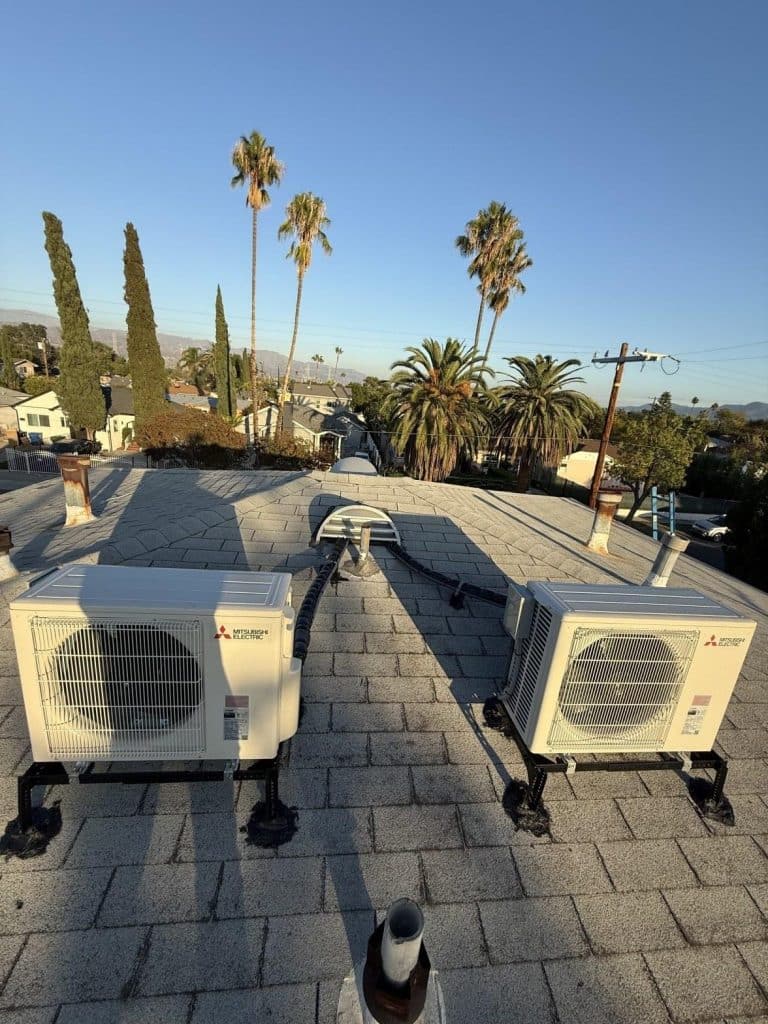
Southern California’s heat, dust, and long cooling seasons put more stress on air conditioning systems than most other regions in the country. Units that run for 8 to 10 months a year wear out faster than those in cooler climates.
Inland communities across Los Angeles and Orange County regularly see summer temperatures above 95°F. According to NOAA, Southern California has experienced a measurable increase in the number of days exceeding 90°F over the past two decades, pushing residential AC systems to their limits.
Older housing stock adds to the challenge. Many homes built before 1990 have ductwork that was never designed for today’s higher-efficiency equipment. Dust, pollen, and wildfire smoke also clog filters and coils faster here than in most other states. That combination of heat, age, and air quality means AC breakdowns tend to cluster in late spring and summer, right when you need cooling the most.
The good news: many failures start small. Catching them early, through basic ac troubleshooting before calling a technician problems, can prevent a minor issue from turning into a costly repair.
What Are the Warning Signs Your AC Needs Attention?
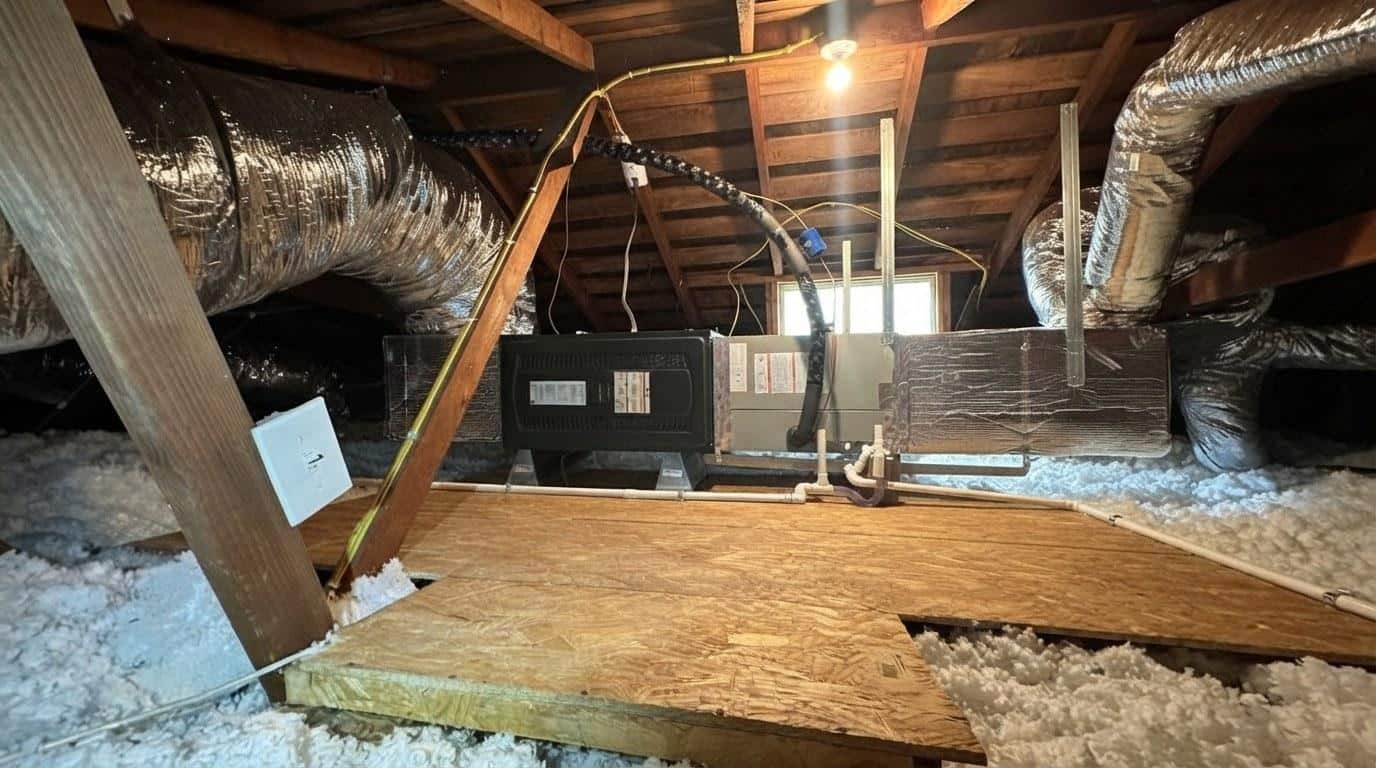
The most reliable warning signs are changes you can see, hear, or feel: warm air from the vents, unusual sounds, higher electric bills, or water pooling near the unit. Catching these early gives you a chance to fix the problem before it escalates.
Watch for these specific symptoms:
- Warm or lukewarm air from vents: The system runs but does not cool the space below the thermostat setpoint.
- Weak airflow: Vents push noticeably less air than usual, even when the fan is set to high.
- Short cycling: The compressor turns on and off every few minutes instead of running a full cycle of 10 to 20 minutes.
- Ice on the indoor unit or refrigerant lines: Visible frost or ice buildup on the evaporator coil or copper lines outside the air handler.
- Water or moisture around the indoor unit: Puddles or staining near the air handler, which often signals a clogged condensate drain.
- Unusual sounds: Grinding, squealing, banging, or rattling that was not there before.
- Musty or burning smell from vents: Musty odors suggest mold in the drain pan or ductwork; a burning smell points to an electrical or motor issue.
- Spike in your electric bill: A sudden increase without a change in usage habits often means the system is working harder than it should.
Our technicians often find that the first symptom a homeowner notices, usually warm air or a higher bill, has been building for several weeks before the call comes in. Checking for these signs monthly during the cooling season can catch problems while they are still inexpensive to fix.
Symptom, Likely Cause, and Action: A Quick-Reference Table
Use this table to match what you are experiencing to the most likely cause and decide whether a DIY check or a professional air conditioning repair call is the right next step.
| Symptom | Likely Cause | DIY or Pro? |
|---|---|---|
| AC won’t turn on | Tripped circuit breaker, blown fuse, or thermostat set incorrectly | DIY first: reset breaker, check thermostat settings |
| Warm air from vents | Dirty air filter, low refrigerant, or frozen evaporator coil | DIY: replace filter, let coil thaw; Pro if refrigerant is low |
| Weak airflow | Clogged filter, blocked return vent, or failing blower motor | DIY: check filter and vents; Pro if blower motor is suspected |
| Short cycling | Oversized unit, dirty coil, refrigerant issue, or failing capacitor | Pro: capacitor and refrigerant work require a licensed technician |
| Ice on lines or coil | Low refrigerant, dirty filter, or blocked airflow | DIY: turn off unit, replace filter; Pro if ice returns after thaw |
| Water pooling near unit | Clogged condensate drain line | DIY: flush drain with diluted bleach; Pro if overflow switch trips repeatedly |
| Grinding or squealing noise | Worn motor bearings or loose belt | Pro: mechanical failure risk if ignored |
| Musty smell from vents | Mold or algae in drain pan or ductwork | DIY: clean drain pan; Pro for ductwork mold |
| Burning smell from vents | Electrical component overheating or motor failure | Pro immediately: turn off system and call |
| High electric bill, no other symptoms | Dirty condenser coils, low refrigerant, or aging compressor | Pro: efficiency diagnosis needed |
What Can You Check Yourself? Safe AC Troubleshooting Before Calling a Technician for Common Problems
Several of the most common AC failures can be resolved in under 30 minutes with no special tools. Start with these steps before scheduling an air conditioning service call.
Step 1: Check the Thermostat
Confirm the thermostat is set to COOL, not HEAT or FAN ONLY. Set the target temperature at least 5°F below the current room temperature. If the thermostat uses batteries, replace them even if the display looks fine. A weak battery can cause erratic behavior that mimics a system failure.
Step 2: Reset the Circuit Breaker
Go to your electrical panel and look for the breaker labeled for the AC or air handler. If it is in the middle position (tripped), push it fully to OFF and then back to ON. Wait 5 minutes before turning the thermostat back on. Resetting a tripped breaker more than once without finding the cause is a sign of an electrical problem that needs a pro.
Step 3: Replace or Clean the Air Filter
A clogged filter is the single most common cause of reduced airflow and frozen coils. The U.S. Department of Energy recommends checking filters every 30 days and replacing them every 1 to 3 months depending on household dust levels and whether pets are present. Hold the filter up to a light. If you cannot see light through it, replace it before anything else.
A clogged filter is the single most common cause of reduced airflow and frozen coils, and replacing it takes less than five minutes.
Step 4: Inspect the Condensate Drain Line
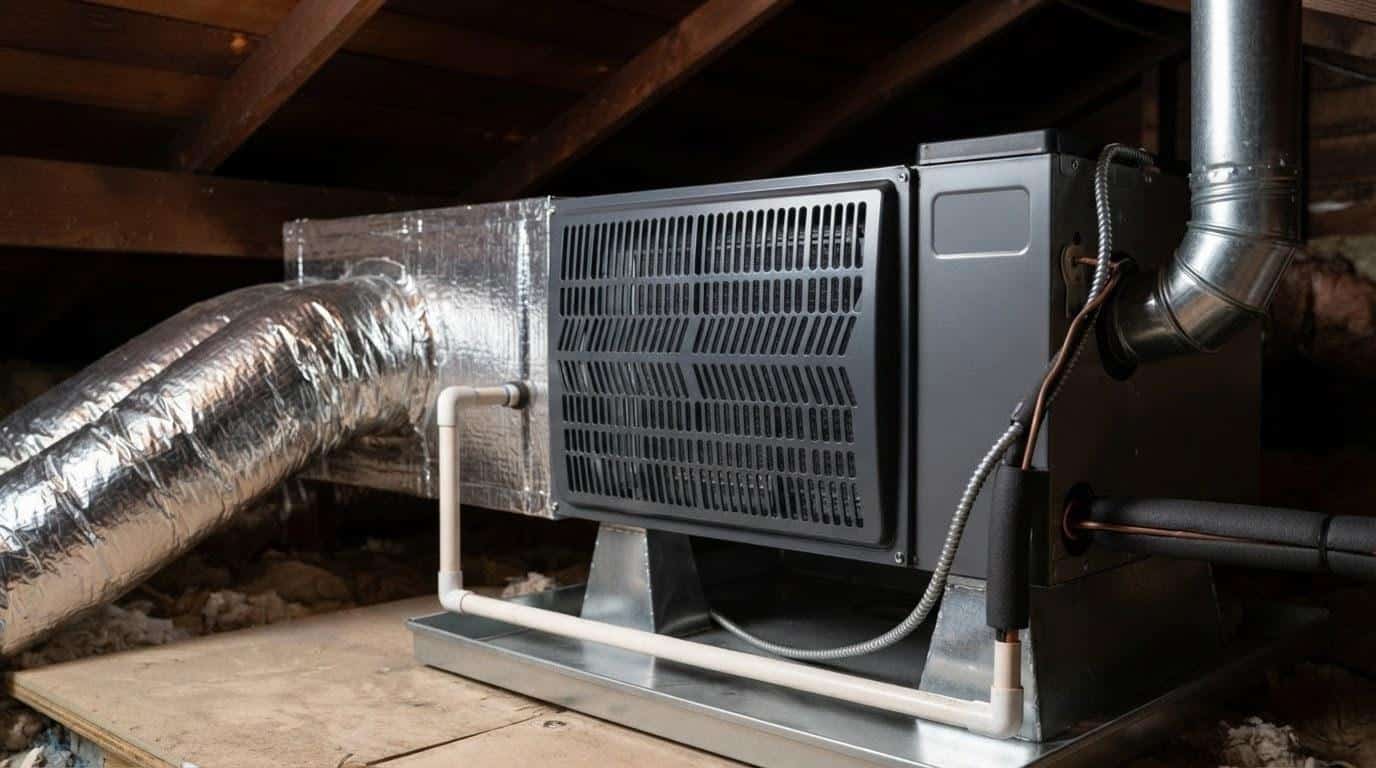
The drain line is a PVC pipe, usually 3/4 inch in diameter, that exits the air handler and drains outside or into a utility drain. If it is clogged, water backs up into the drain pan and can trigger a float switch that shuts the system off. Pour a cup of diluted bleach (one part bleach to four parts water) into the drain access port near the air handler every 90 days to prevent algae buildup.
Step 5: Check the Outdoor Condenser Unit
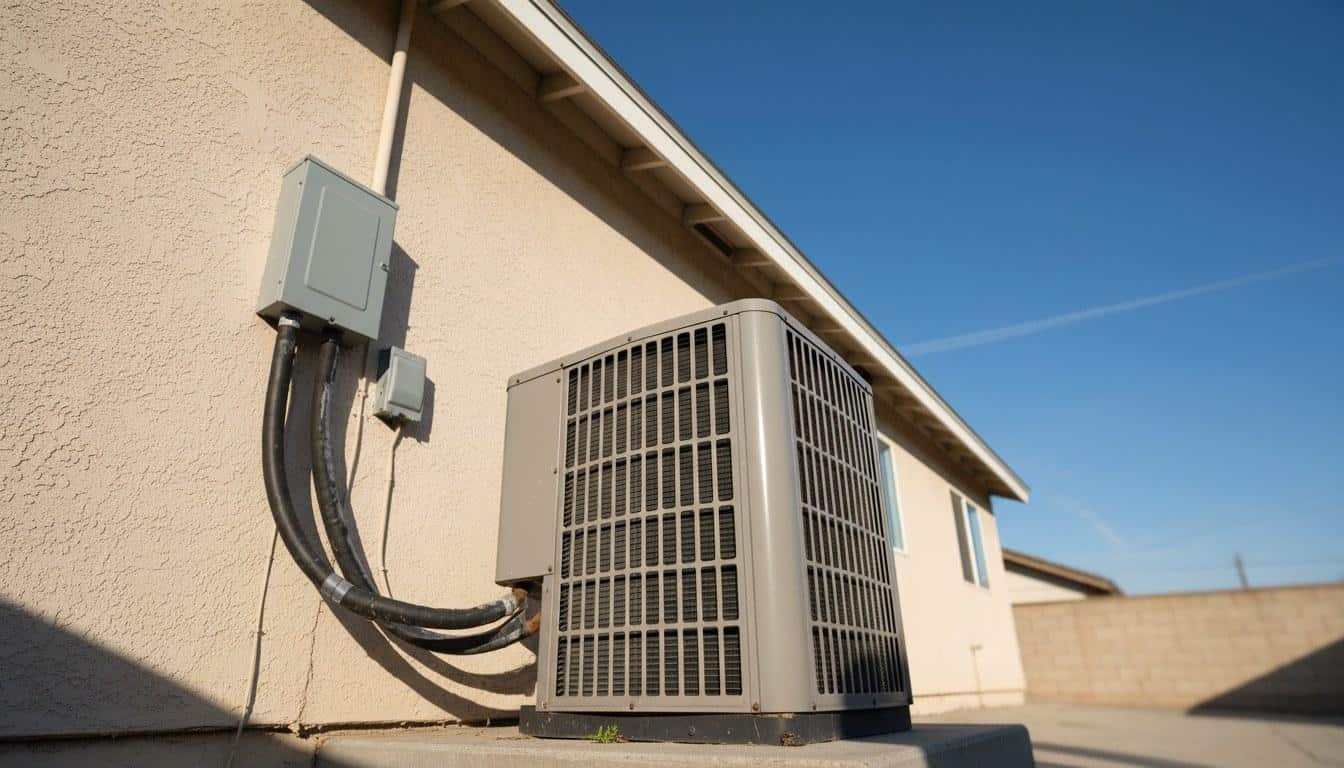
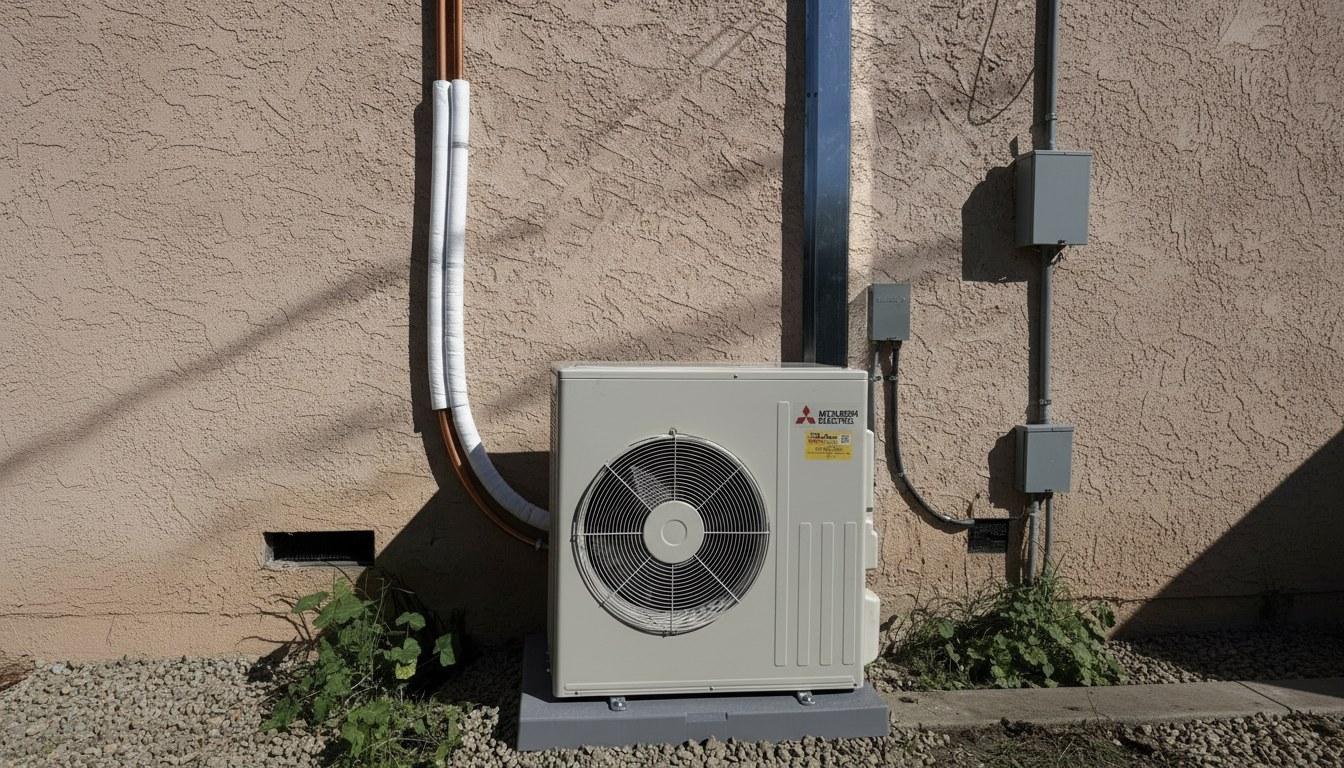
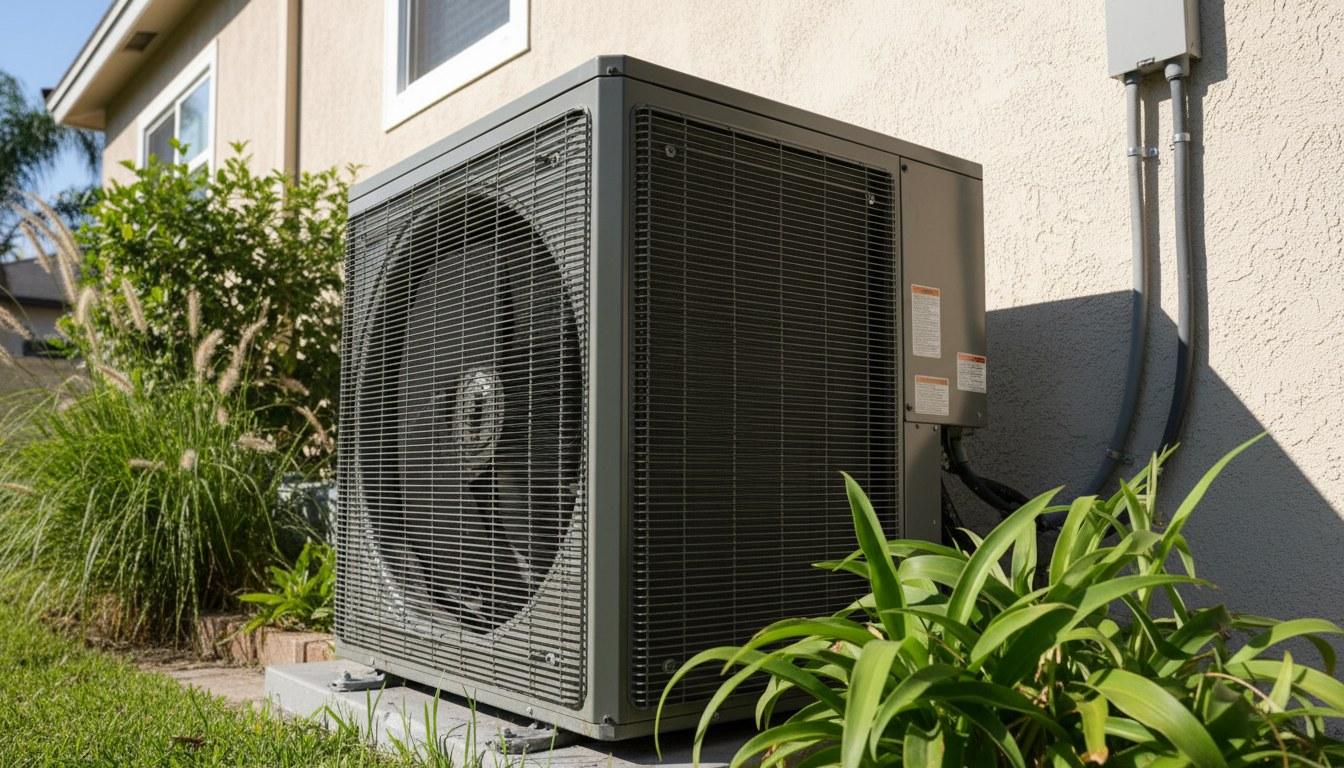
Walk to the outdoor unit and confirm the fan on top is spinning when the system is running. Clear any debris, leaves, or overgrown plants within 2 feet of the unit on all sides. The condenser needs free airflow to reject heat. If the fan is not spinning but you can hear the compressor humming, a capacitor may have failed. That part requires a licensed technician to replace safely.
Step 6: Look for Ice on the Evaporator Coil
If the indoor unit has ice on it, turn the system off and set the fan to ON (not AUTO) to let the coil thaw. Thawing can take 1 to 3 hours. Once thawed, replace the filter and restart the system. If ice returns within a day, the refrigerant charge is likely low, which requires a technician certified under EPA refrigerant regulations (Section 608).
Step 7: Verify All Vents Are Open
Closed supply or return vents increase static pressure in the duct system and can cause the evaporator coil to freeze. Walk through the home and make sure every vent is open and unobstructed by furniture or rugs. This is a quick fix that is easy to overlook.
When Should You Call a Professional for Air Conditioning Repair?
Call a licensed HVAC technician when you smell burning, see ice that returns after thawing, hear grinding or banging from the compressor, or when the system trips the breaker more than once. These symptoms involve refrigerant, high-voltage electrical components, or mechanical failure that cannot be safely handled without proper training and equipment.
Specific situations that always require a pro include:
- Refrigerant leak or low charge: Adding or recovering refrigerant requires EPA Section 608 certification. Handling refrigerant without it is illegal and dangerous.
- Compressor failure: Compressor replacement is one of the most labor-intensive repairs in residential HVAC. It involves refrigerant recovery, electrical disconnection, and precise torque specs.
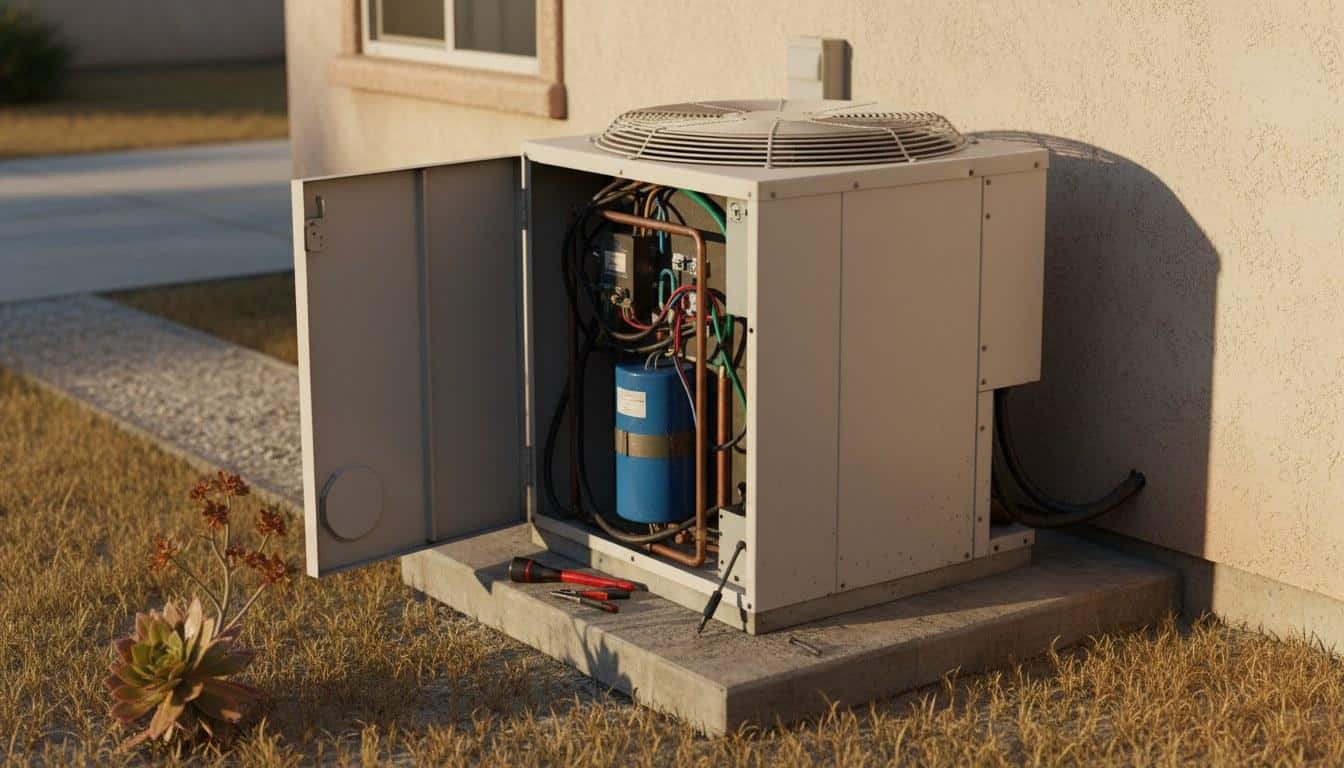
- Capacitor or contactor replacement: These parts sit inside the electrical compartment of the condenser. The capacitor can hold a lethal charge even when the unit is off.
- Ductwork leaks: Leaky ducts can reduce system efficiency by 20 to 30 percent according to ENERGY STAR estimates. Sealing them properly requires pressure testing and mastic or foil-tape application in confined spaces.
- Burning smell or visible scorching: Shut the system off immediately and do not restart it. This is a fire risk.
- System over 15 years old with repeated failures: Older units running R-22 refrigerant (phased out as of January 2020 under EPA rules) are increasingly expensive to service. A technician can help you weigh repair versus replacement.
California requires HVAC contractors to be Licensed by the California Contractors State License Board (CSLB) under a C-20 (warm-air heating and air conditioning) license. Always verify the license number at cslb.ca.gov before allowing work to begin.
How Much Does AC Repair Typically Cost in This Market?
In the Southern California market, most residential air conditioning repair calls typically range from $150 to $650 for common fixes like capacitor replacement, drain cleaning, or thermostat repair. Major repairs involving compressor replacement or refrigerant work generally run $800 to $2,500 or more, depending on the system size and refrigerant type.
Several factors move the final number:
- Type of repair: A capacitor swap is far less labor-intensive than a coil replacement or compressor job.
- System age and refrigerant type: Systems using R-410A refrigerant are less expensive to service than older R-22 units. R-22 has not been produced domestically since 2020, making it scarce and costly.
- System size: A 5-ton commercial-grade residential unit costs more to service than a 2-ton unit because parts are larger and labor time is longer.
- Seasonal demand: Repair calls in June through August often carry higher service fees due to technician demand across Southern California.
- Permit requirements: Refrigerant work and some electrical repairs may require permits under California’s Title 24 building energy standards, which adds to the total cost but protects the homeowner.
If your system is more than 15 years old and the repair estimate exceeds 50 percent of the cost of a new unit, replacement is often the smarter financial decision. New systems with ENERGY STAR certification and SEER2 ratings of 16 or higher qualify for the Inflation Reduction Act federal tax credit of up to $600 for eligible homeowners. Ask your contractor to verify eligibility before you decide.
For a precise quote based on your specific system and situation, contact Shalom Heating & Air at (714) 886-2021. A technician can diagnose the issue and give you a written estimate before any work begins.
Get the Right Help for Your AC System
Running through basic ac troubleshooting before calling a technician problems can save you a service call fee and get your home cooling again faster. But when the fix goes beyond a filter swap or breaker reset, working with a licensed professional protects your equipment, your home, and your family.
Shalom Heating & Air provides air conditioning repair, maintenance, and installation for homeowners across Southern California. Whether your system is blowing warm air, making strange noises, or simply not keeping up on a hot day, the team can diagnose the problem and walk you through your options.
Call (714) 886-2021 to schedule your service appointment. Get a written diagnosis and cost estimate before any repair work starts, so you can make an informed decision about your home comfort system.
Explore our full range of HVAC services across Southern California.
Frequently Asked Questions
Why is my air conditioner running but not cooling the house?
The most common reasons are a clogged air filter, a frozen evaporator coil, or low refrigerant. Start by replacing the filter and checking for ice on the indoor unit. If the coil is frozen, turn the system off and let it thaw for 1 to 3 hours. If the problem returns after you restart, the refrigerant charge is likely low and you will need a licensed technician to inspect and recharge the system.
How do I know if my AC compressor is failing?
A failing compressor often shows up as warm air despite the system running, a grinding or clanking sound from the outdoor unit, or a unit that trips the circuit breaker repeatedly. The compressor is the heart of the system and is one of the most expensive components to replace. If you suspect compressor failure, turn the unit off and call a licensed HVAC technician rather than continuing to run it, since running a failing compressor can cause additional damage.
How much does it usually cost to repair an AC unit in Southern California?
Most common repairs, like a capacitor replacement, drain line clearing, or thermostat fix, typically range from $150 to $650 in this regional market. More involved repairs like refrigerant recharging or coil replacement generally run $400 to $1,500. Compressor replacement is the most expensive single repair, often ranging from $1,200 to $2,500 or more depending on the system size. Request a written estimate before approving any work.
Can I add refrigerant to my AC myself?
No. Handling refrigerant requires EPA Section 608 certification, and doing so without it is a federal violation. Refrigerant work also requires specialized recovery equipment to prevent releasing the gas into the atmosphere. If your system is low on refrigerant, there is also an underlying leak that needs to be found and repaired before adding more refrigerant will help. Always call a licensed HVAC technician for refrigerant-related issues.
How often should I have my AC serviced to avoid breakdowns?
The U.S. Department of Energy and most HVAC manufacturers recommend a professional tune-up once a year, ideally in spring before the cooling season begins. A tune-up typically includes cleaning the coils, checking the refrigerant charge, testing electrical components, and clearing the condensate drain. Homeowners should also replace the air filter every 1 to 3 months and clear debris from around the outdoor unit throughout the year.