Furnace Installation Cost: What to Expect in California
Furnace installation cost in California typically runs between $2,500 and $7,500 or more, depending on the unit, fuel type, and scope of work. This guide breaks down every factor so you know what to expect.
What Does Furnace Installation Cost in California?
Furnace installation cost in California typically ranges from $2,500 to $7,500 or more in the current regional market. Straightforward gas furnace swaps in existing ductwork tend to land in the $2,500–$4,500 range, while high-efficiency systems, new ductwork, or complex retrofits push totals toward $6,000–$10,000 or higher. These are market ranges based on regional project data — not quotes from any single contractor. Actual costs depend on your home’s size, the unit you choose, and the scope of work involved.
Southern California homeowners replace furnaces less often than those in colder climates, but when a system fails during a cold snap, the cost question becomes urgent. Understanding what drives furnace installation cost helps you evaluate bids, spot missing line items, and make a confident decision.
What Factors Affect the Total Furnace Installation Cost?
Six core variables move furnace installation cost the most: unit size, efficiency rating, fuel type, ductwork condition, permit requirements, and labor complexity. Changing any one of them can shift your total by hundreds or even thousands of dollars.
- Unit size (BTU output): A correctly sized furnace requires a Manual J load calculation based on your home’s square footage, insulation, ceiling height, and window area. Undersized units run constantly; oversized units short-cycle and wear out faster. Most Southern California homes need units in the 40,000–80,000 BTU range, but larger homes can require 100,000 BTU or more.
- Efficiency rating (AFUE): Annual Fuel Utilization Efficiency (AFUE) measures how much fuel becomes heat. An 80% AFUE unit wastes 20 cents of every dollar spent on gas. A 96% AFUE unit wastes only 4 cents. Higher-efficiency units cost $500–$1,500 more upfront but reduce operating costs over the system’s 15–20 year lifespan.
- Fuel type: Natural gas furnaces are the most common in Southern California and typically cost less to install than propane systems, which require tank infrastructure. Electric furnaces have lower equipment costs but higher monthly operating costs in most California utility markets.
- Ductwork condition: If existing ducts are leaky, undersized, or deteriorated, repairs or replacement add $1,000–$5,000+ to the project depending on the home’s layout and duct material. The U.S. Department of Energy estimates that leaky ducts can waste 20–30% of conditioned air in a typical home.
- Permits and inspections: California building codes require permits for furnace replacements in most jurisdictions. Permit fees generally range from $100 to $400 depending on the city or county. Skipping a permit creates liability and can complicate home sales.
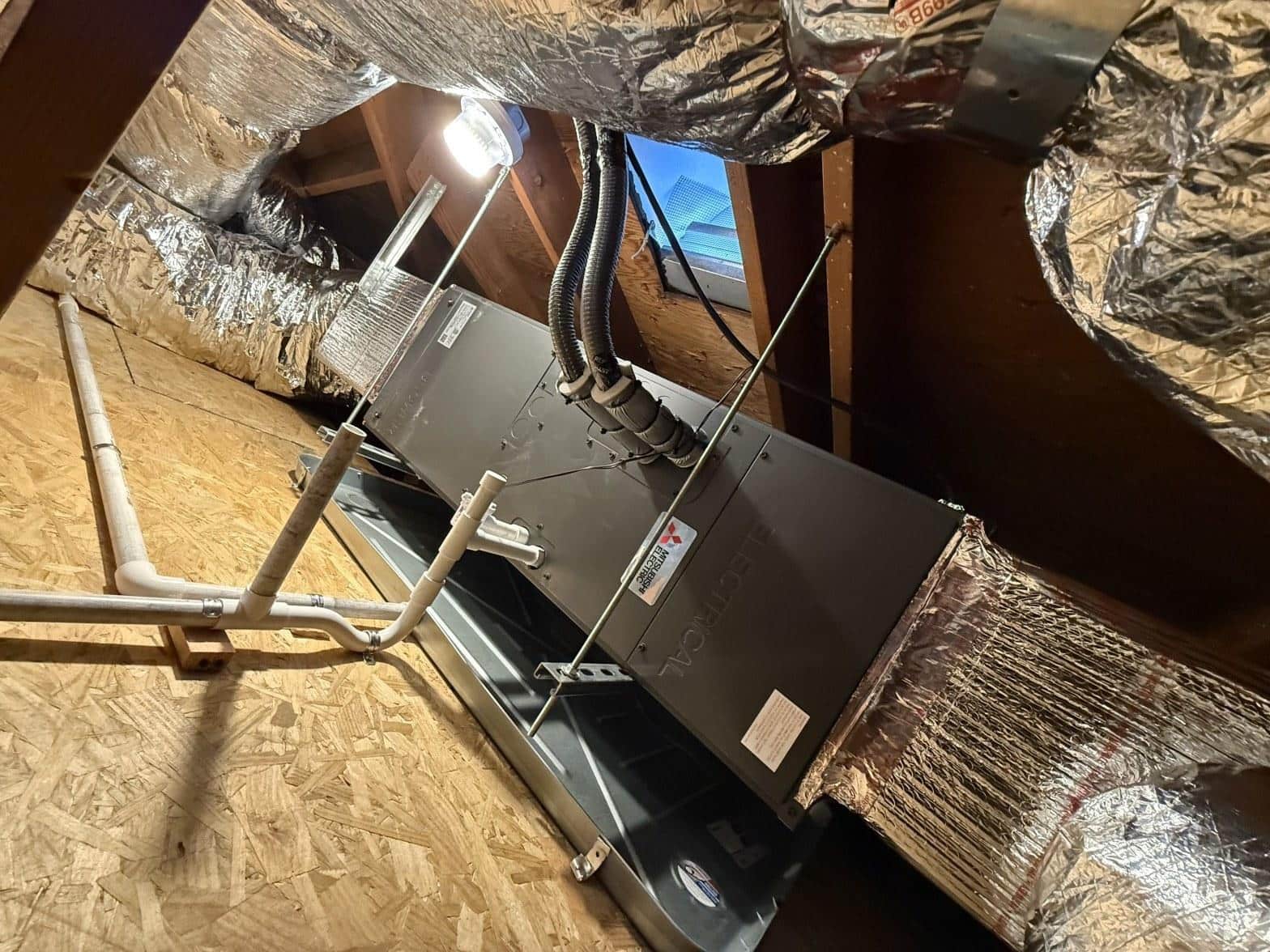
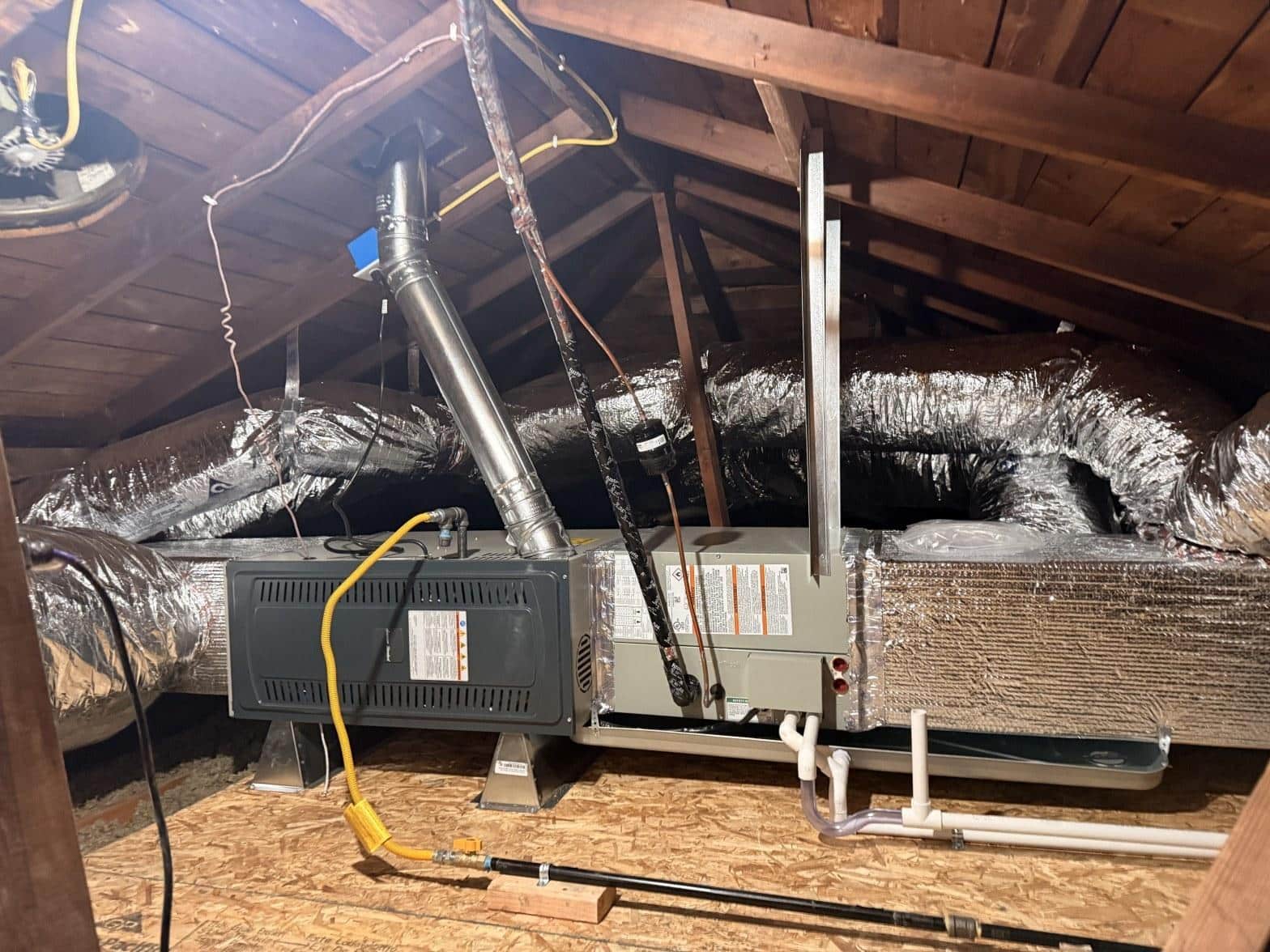
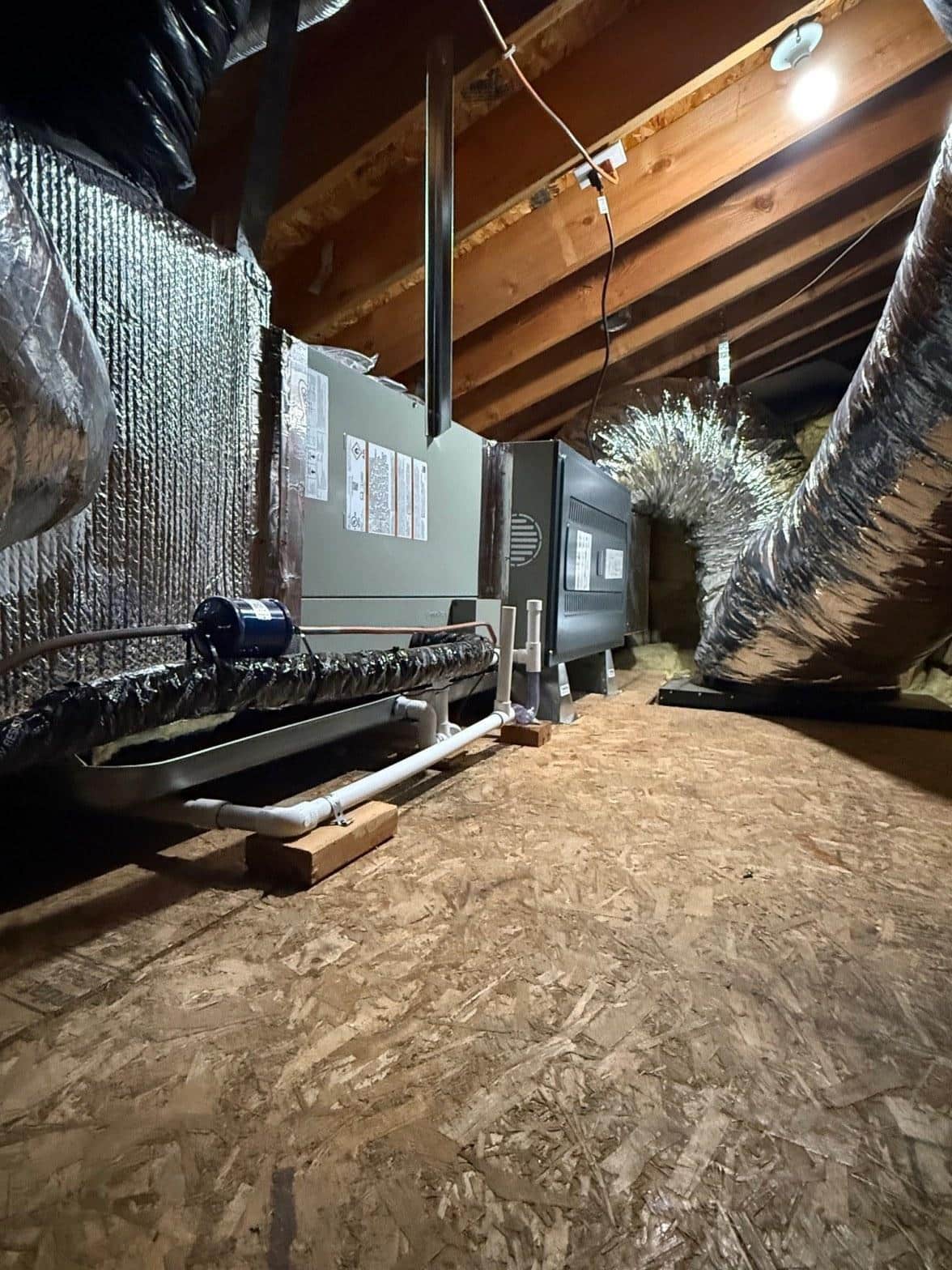
- Labor complexity: A like-for-like swap in an accessible utility closet takes 4–6 hours. A new installation in a tight attic, a crawl space, or a location requiring new gas line work can take 8–12 hours or more, significantly raising labor costs.
Our technicians see ductwork issues on roughly 40% of the furnace replacement calls we handle — most homeowners don’t realize their ducts need attention until the inspection is done. Catching that early prevents a new furnace from underperforming on day one.
How Do Furnace Types and Efficiency Ratings Change the Price?
The type of furnace you choose — single-stage, two-stage, or variable-speed — has a direct impact on both the equipment price and your long-term comfort and energy bills. California’s Title 24 building energy standards set minimum efficiency requirements for new and replacement HVAC equipment, so not every unit on the market qualifies for a permitted installation.
| Furnace Type | Typical AFUE Range | Typical Market Price Range (Equipment + Labor) | Best Fit |
|---|---|---|---|
| Single-Stage Gas (80% AFUE) | 80% | $2,500 – $4,000 | Budget-conscious replacements in mild climates; note California Title 24 may require higher efficiency in some zones |
| Two-Stage Gas (95%+ AFUE) | 95–97% | $3,500 – $5,500 | Homes that want lower utility bills and more even heating without the top-tier equipment cost |
| Variable-Speed Modulating Gas (98% AFUE) | 96–98% | $5,000 – $8,000+ | Maximum efficiency, quietest operation, best humidity control — ideal for larger homes or those prioritizing comfort |
| Electric Furnace | 95–100% (electric) | $2,000 – $4,500 | Homes without gas service; higher monthly operating costs offset the lower install price |
| Propane Furnace | 80–97% | $3,000 – $6,500 | Rural properties without natural gas; tank installation or rental adds to total project cost |
As of 2026, the Inflation Reduction Act federal tax credit allows homeowners to claim up to 30% of the cost of a qualifying high-efficiency furnace (95%+ AFUE), up to $600 per year, through the Energy Efficient Home Improvement Credit. Check energy.gov for current qualifying criteria. California’s TECH Clean California program may also offer additional rebates on heat pumps and high-efficiency heating systems — worth checking before you finalize your equipment choice.
What Does a Typical Furnace Installation Project Look Like?
A standard furnace replacement takes one full day — typically 4 to 8 hours for the installation itself, plus time for inspection and startup testing. More complex projects involving new ductwork, gas line extensions, or attic installations can span two days.
Here is what a professional installation generally includes:
- Load calculation: A Manual J calculation confirms the correct BTU size for your home. Skipping this step is one of the most common mistakes in the industry and leads to comfort problems and premature equipment failure.
- Old equipment removal: The existing furnace is safely disconnected from gas, electrical, and duct connections, then removed and disposed of properly.
- New unit installation: The new furnace is set in place, leveled, and connected to the gas supply, flue or venting system, electrical supply, and ductwork. Venting must meet current California code — older B-vent systems may need to be upgraded to PVC venting for high-efficiency condensing units.
- Thermostat wiring and setup: The control wiring is connected and the thermostat is programmed. Many high-efficiency systems are compatible with smart thermostats, which can reduce heating energy use by 10–15% annually according to U.S. Department of Energy estimates.
- Combustion and safety testing: A licensed technician verifies gas pressure, checks for carbon monoxide, tests all safety limits, and confirms proper airflow. This step is non-negotiable and required for a passed inspection.
- Permit inspection: In most California jurisdictions, a city or county inspector must sign off on the installation before the permit is closed. Your contractor should handle scheduling this.
Across our service calls in Southern California, we see roughly 1 in 5 replacement furnaces that were previously installed without a permit — which creates problems when homeowners try to sell their homes or file insurance claims years later.
What Is NOT Included in a Standard Furnace Installation Quote?
Most base quotes cover the furnace unit, standard installation labor, and basic connections — but several common add-ons are typically billed separately and can surprise homeowners at final invoice. Always ask your contractor to clarify what is and is not included before signing.
- Ductwork repair or replacement: If ducts need sealing, resizing, or full replacement, this is almost always a separate line item. Get a duct inspection before finalizing your furnace quote.
- New thermostat: A smart or programmable thermostat is often sold and installed separately, typically adding $100–$400 to the project depending on the model.
- Gas line upgrades: If your existing gas line is undersized for a higher-BTU unit, a plumber or gas fitter may need to upsize it. This can add $300–$1,200 depending on the run length.
- Electrical upgrades: High-efficiency furnaces require a dedicated 120V circuit. If your panel or wiring doesn’t support this, an electrician’s visit adds cost.
- Permit fees: Some quotes include permit fees; many do not. Confirm in writing whether the permit pull and inspection scheduling are included.
- Disposal fees: Old equipment removal and disposal is sometimes itemized separately, typically $50–$150.
- Extended warranties or service agreements: Manufacturer warranties are standard (usually 5–10 years on the heat exchanger), but extended labor warranties are add-ons. Ask what is covered and for how long.
- Air quality accessories: Whole-home air purifiers, UV lights, or upgraded filtration systems are often upsold at installation time. These are optional but may be worth considering, especially for households with allergy concerns.
How Do You Get an Accurate Furnace Installation Quote?
The most accurate furnace installation quotes come from contractors who physically inspect your home, measure your ductwork, and perform a load calculation before pricing the job. A phone quote based only on square footage is a rough estimate at best.
To get a quote you can actually rely on, have the following information ready:
- Home square footage and layout: Single-story vs. two-story matters for duct runs and BTU sizing.
- Current system details: The make, model, and age of your existing furnace, plus the fuel type (gas, electric, propane).
- Duct system condition: If you know of leaks, cold rooms, or past duct repairs, mention them. If you don’t know, ask for a duct inspection as part of the quote visit.
- Location of the unit: Utility closet, garage, attic, or crawl space — each affects labor time and complexity.
- Permit history: Whether your existing system was permitted and inspected affects what the new installation will require.
- Efficiency goals: If you want to maximize rebates or qualify for the Inflation Reduction Act federal tax credit, let the contractor know upfront so they can spec a qualifying unit.
Always get at least two written quotes that itemize equipment, labor, permits, and any ductwork separately. A contractor who is licensed by the California Contractors State License Board (CSLB) is required to provide a written contract for jobs over $500. You can verify any contractor’s license status at cslb.ca.gov.
When comparing quotes, watch for bids that seem unusually low — they often exclude permits, use lower-efficiency equipment, or skip the load calculation entirely. A proper installation that passes inspection and performs correctly over 15–20 years is worth paying for once rather than twice.
Get a Custom Furnace Installation Quote in Bellflower and Across Southern CA
Market ranges give you a starting point, but your actual furnace installation cost depends entirely on your home, your equipment choice, and the scope of work involved. The ranges discussed in this guide reflect the regional Southern California market as of 2026 — they are not quotes from Shalom Heating & Air, and your project may fall above or below these ranges.
Shalom Heating & Air provides written, itemized furnace installation quotes for homeowners across Southern California. Every quote includes a load calculation, a duct inspection, and a clear breakdown of equipment, labor, and permit costs — no surprises at final invoice.
Call (714) 886-2021 to schedule your on-site assessment. Same-day and next-day appointments are available across the region. Get the right system, sized correctly, installed to code — and know exactly what you’re paying before any work begins.
Explore our full range of HVAC services across Southern California.
Frequently Asked Questions
How much does it usually cost to install a furnace in California?
Furnace installation cost in California typically ranges from $2,500 to $7,500 or more in the current regional market, depending on the unit size, efficiency rating, and scope of work. Simple like-for-like gas furnace swaps tend to cost less, while high-efficiency systems or projects that require new ductwork push totals higher. Getting a written, itemized quote from a licensed contractor is the best way to know your actual cost.
How long does a furnace installation take?
Most standard furnace replacements take one full day, typically 4 to 8 hours for the installation itself plus time for startup testing and inspection. More complex projects — such as attic installations, new gas line runs, or ductwork replacement — can take two days. Your contractor should give you a clear timeline before work begins.
Is a permit required when replacing a furnace in California?
Yes, most California jurisdictions require a permit for furnace replacements. Permit fees generally range from $100 to $400 depending on the city or county. A licensed contractor should pull the permit on your behalf and schedule the required inspection. Skipping a permit can create problems when selling your home or filing insurance claims.
What efficiency furnace should I buy for a California home?
For most Southern California homes, a two-stage or modulating gas furnace with 95% or higher AFUE is a strong choice — it qualifies for the Inflation Reduction Act federal tax credit and meets California Title 24 building energy standards. The right efficiency level also depends on your local utility rates and how long you plan to stay in the home. A load calculation from a licensed HVAC contractor will help you choose the right unit.
Are there rebates available to help with furnace installation cost?
Yes. As of 2026, the Inflation Reduction Act federal tax credit allows homeowners to claim up to 30% of the cost of a qualifying high-efficiency furnace, up to $600 per year. California's TECH Clean California program may also offer rebates on qualifying heating systems. Ask your contractor to confirm which units qualify before you finalize your equipment choice.