How to Choose an AC Repair Company: A Homeowner’s Buying Guide
Choosing the right AC repair company can save you hundreds of dollars and prevent repeat breakdowns. This guide walks you through every factor that matters before you hire.
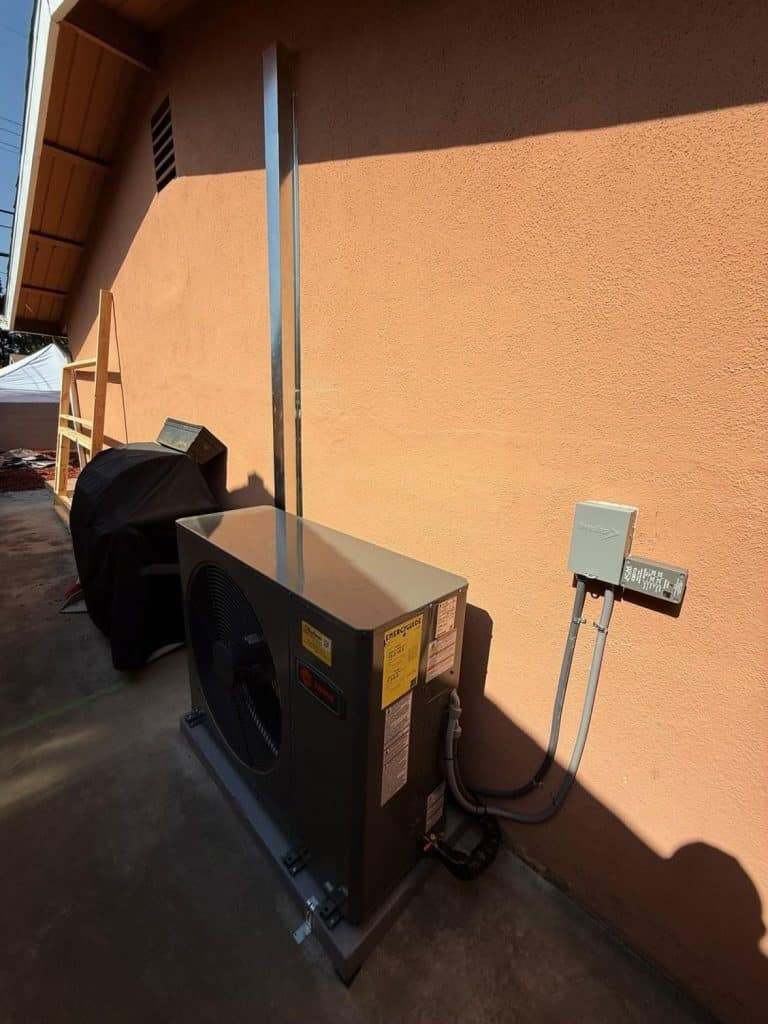
What Should You Know Before Calling an AC Repair Company?
Most AC failures in Southern California happen during the hottest stretch of summer, when every HVAC company in the region is fully booked and response times stretch from hours to days. Knowing what to look for before you pick up the phone puts you in control instead of just taking whoever answers first.
California’s climate means air conditioners run hard from late May through October. In communities across Los Angeles County and Orange County, summer temperatures regularly push past 90°F, and a broken AC stops being an inconvenience and becomes a health risk in a matter of hours. The National Weather Service Los Angeles office tracks regional heat advisories that affect how urgently you need a working system.
Understanding how the repair process works — diagnostics, parts sourcing, refrigerant handling, and labor — helps you evaluate any contractor’s quote with confidence rather than guessing.
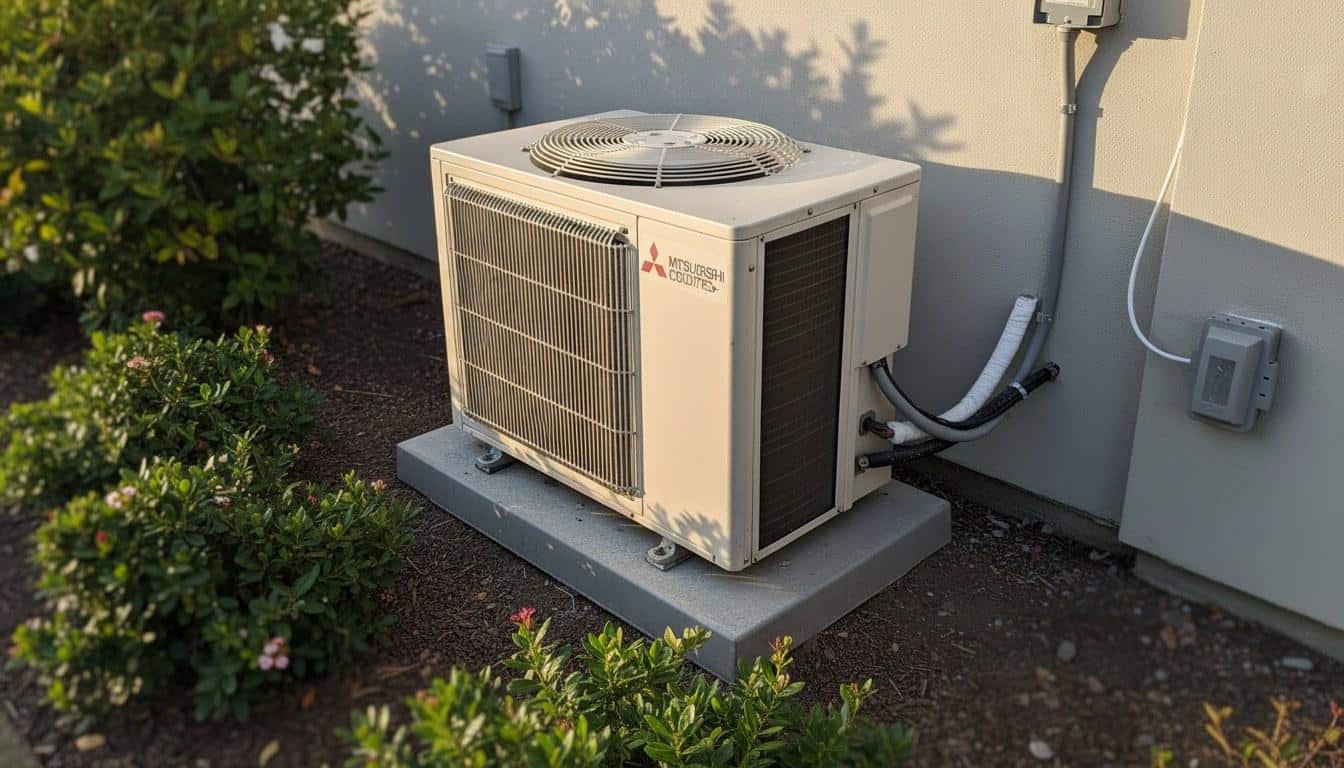
How to Choose an AC Repair Company: The Criteria That Actually Matter
The single most important step when figuring out how to choose an AC repair company is confirming the contractor holds a valid California Contractors State License Board (CSLB) license — specifically a C-20 HVAC classification. After that, five more criteria separate trustworthy companies from ones that will cost you more in the long run.
License and Certification
Any company handling refrigerant in California must comply with EPA refrigerant regulations (Section 608). Technicians must be certified to purchase and handle refrigerants like R-410A or the newer R-454B that is entering the market as of 2025. Ask to see both the CSLB license number and the EPA 608 certification card before work starts.
You can verify any contractor’s CSLB license in about 60 seconds at cslb.ca.gov. An expired or suspended license is an immediate disqualifier.
Written Diagnostic and Quote
A reputable company will always run a paid or complimentary diagnostic before quoting a repair price. Any contractor who quotes a price over the phone without seeing the system is guessing. The diagnostic should identify the specific failed component, the refrigerant level, and whether the failure has caused secondary damage elsewhere in the system.
Warranty on Parts and Labor
Industry-standard warranties on AC repairs typically run 30 days to 1 year on labor and 1 to 5 years on parts, depending on the component. A company that offers no written labor warranty is signaling that they are not confident in their own work. Get the warranty terms in writing before you authorize the repair.
Reviews and Local Track Record
Look for companies with at least 50 Google reviews and an average rating of 4.5 stars or higher. Pay attention to how the company responds to negative reviews — that tells you more about their culture than the rating itself. Ask neighbors, landlords, or property managers in your community for referrals, since local word of mouth is still the most reliable signal.
Availability and Response Time
During peak summer months, same-day service is not always possible. Ask specifically whether the company offers emergency or after-hours service, what the additional fee is for that service, and what their average response time has been in the past 30 days. A company that is honest about a 24-hour wait is more trustworthy than one that promises same-day service and then misses it.
- CSLB license (C-20): Confirms the contractor is legally authorized to perform HVAC work in California.
- EPA Section 608 certification: Required for any technician who handles refrigerant.
- Written diagnostic report: Documents exactly what failed and why before any money changes hands.
- Written warranty: Covers both parts and labor for a defined period after the repair.
- Verifiable reviews: At least 50 reviews on a third-party platform like Google or Yelp.
- Transparent pricing: A detailed line-item quote, not a single lump-sum number.
How Much Does AC Repair Cost in Southern California?
AC repair costs in the Southern California market typically range from $150 for a minor fix like a capacitor replacement to $1,800 or more for a compressor repair or refrigerant recharge on a large system. The spread is wide because the cost depends almost entirely on which component has failed.
Our technicians see capacitor failures as the single most common summer repair call — we replace them on roughly 3 out of every 10 service visits during July and August, and nearly all of those units are more than 10 years old.
The factors that move the price most significantly are:
- Component replaced: A capacitor costs far less than a compressor or evaporator coil.
- Refrigerant type and quantity: R-410A prices have risen since the phase-down began under the AIM Act; R-22 (Freon) is now extremely expensive because it is no longer manufactured.
- System age and access: Older systems or units installed in tight attic spaces take longer to service.
- Emergency or after-hours service: Expect a surcharge of $75 to $200 or more for weekend or after-hours calls.
- Permit requirements: Some repairs in California require a permit under local building codes, adding cost and time.
If your system qualifies, the Inflation Reduction Act federal tax credit may offset part of the cost of a qualifying high-efficiency replacement unit. The IRS guidance at energystar.gov explains which ENERGY STAR-rated equipment qualifies for credits of up to $600 on central AC systems as of the 2024 and 2025 tax years. Always request a custom quote from your contractor — market prices shift with parts availability and refrigerant costs.
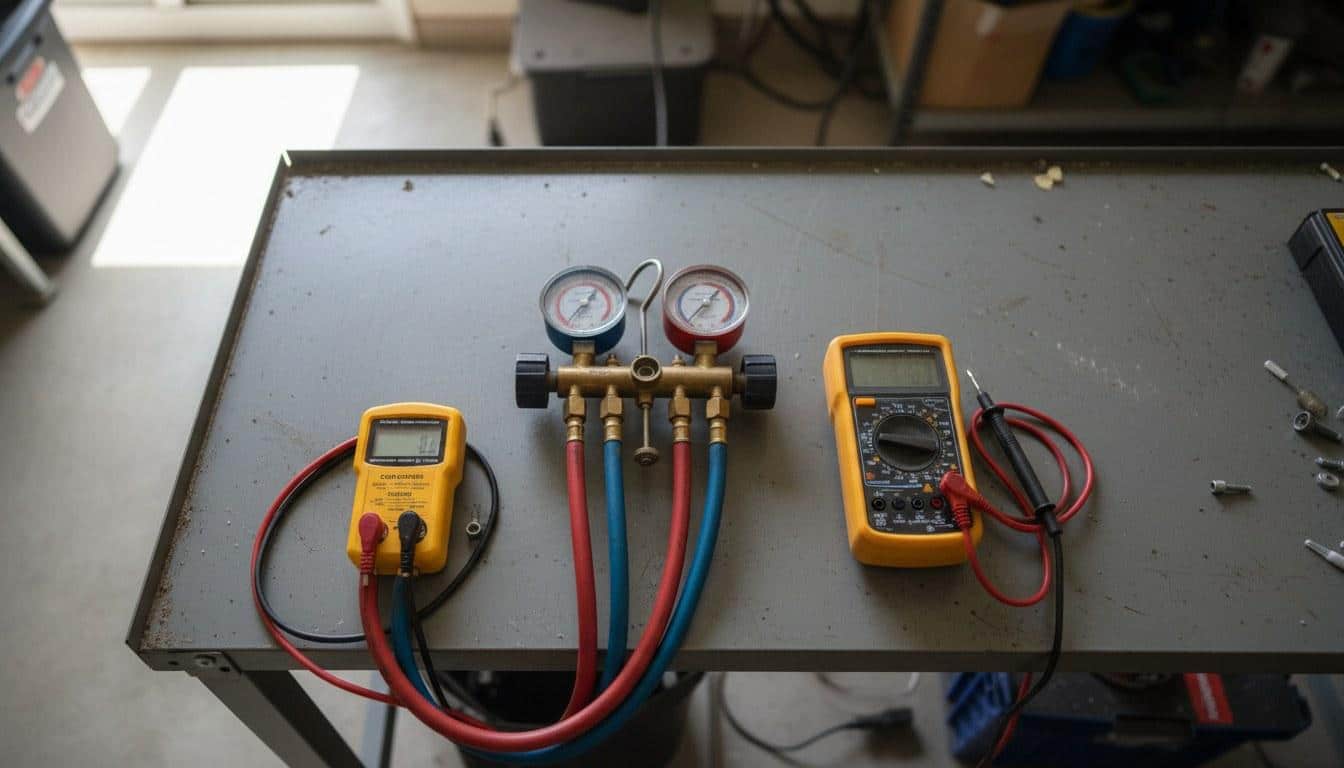
How Do You Compare AC Repair Options Side by Side?
The fastest way to compare contractors is to request a written quote from at least two companies after each has performed a diagnostic, then evaluate them across five criteria rather than just price. The cheapest quote is rarely the best value when you factor in warranty coverage, parts quality, and the contractor’s track record.
| Evaluation Criteria | What to Look For | Red Flag |
|---|---|---|
| CSLB License Status | Active C-20 license, verifiable at cslb.ca.gov | No license number provided, or license is expired/suspended |
| EPA 608 Certification | Technician carries a valid certification card | Company cannot confirm technician certification |
| Diagnostic Process | Detailed written report identifying the failed component | Phone quote with no in-person inspection |
| Warranty Terms | At least 90 days on labor, 1 year on parts in writing | Verbal warranty only, or no warranty offered |
| Quote Transparency | Line-item breakdown of parts, labor, and any fees | Single lump-sum number with no itemization |
| Review Volume and Quality | 50+ Google reviews, 4.5 stars or higher average | Fewer than 20 reviews or no third-party reviews at all |
When comparing quotes, make sure both contractors are quoting the same repair. A quote for a compressor replacement is not comparable to a quote that includes a full system tune-up and refrigerant recharge. Ask each company to itemize every line so you are comparing apples to apples.
What Mistakes Should You Avoid When Hiring an HVAC Contractor?
The most expensive mistake homeowners make is authorizing a repair without a written diagnostic report — which makes it nearly impossible to dispute the work if something goes wrong. Here are the other pitfalls that cost homeowners the most money and time.
- Choosing based on price alone: A low quote often means used or off-brand parts, uncertified labor, or a scope of work that leaves the root cause unfixed.
- Skipping license verification: Unlicensed contractors have no accountability under California law, and their work may not be covered by your homeowner’s insurance.
- Accepting a verbal warranty: If it is not written down with a specific duration and what it covers, it is not enforceable.
- Waiting until the system fails completely: Strange noises, weak airflow, or warm air from vents are early warning signs. Catching a failing capacitor or refrigerant leak early typically costs 3 to 5 times less than waiting for a full breakdown.
- Ignoring ACCA standards: Reputable contractors follow ACCA (Air Conditioning Contractors of America) guidelines, including Manual J load calculations for any new equipment. A contractor who skips load calculations may install the wrong-sized system.
- Not asking about California’s Title 24 building energy standards: Any new equipment installed in California must meet California’s Title 24 building energy standards. A contractor who is unaware of this requirement is not current on California code.
- Paying the full amount upfront: A standard industry practice is a deposit of no more than 10% or $1,000 (whichever is less) before work begins, per California contractor law. Full payment before completion removes your leverage if the work is unsatisfactory.
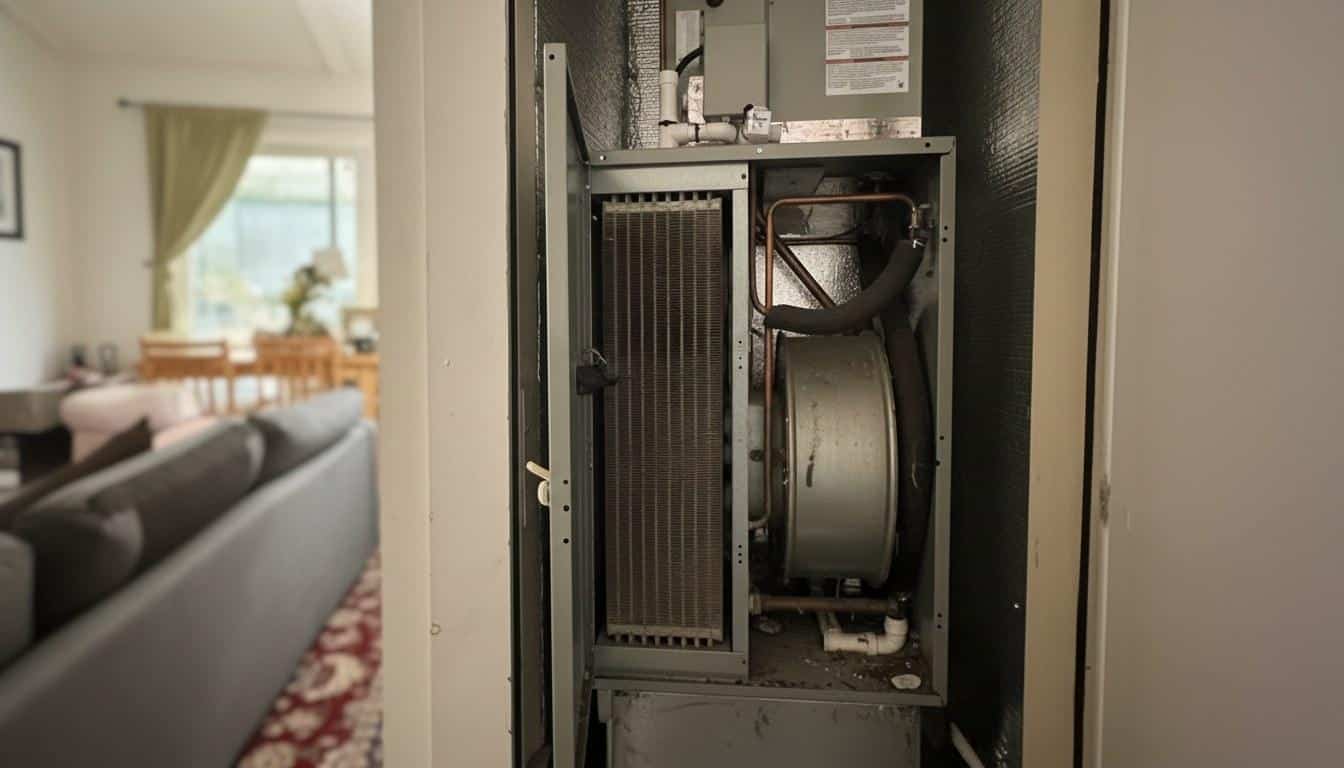
When Should You Repair vs. Replace Your AC Unit?
A common rule of thumb in the HVAC industry is the “5,000 rule”: multiply the system’s age in years by the estimated repair cost, and if the result exceeds $5,000, replacement is usually the smarter financial choice. But age and repair cost are not the only factors.
Multiply the system's age in years by the estimated repair cost, and if the result exceeds $5,000, replacement is usually the smarter financial choice.
Across our service calls in Southern California, we see the repair-vs.-replace decision come up most often on systems that are 12 to 15 years old — at that age, the likelihood of a second major failure within 18 months rises sharply, and the cost of two repairs often exceeds the cost of a new, more efficient system.
Consider replacement more seriously when:
- The system uses R-22 refrigerant (Freon), which is no longer manufactured and now costs $100 or more per pound to source.
- The compressor has failed on a unit older than 10 years — compressors typically cost $1,200 to $2,500 installed, and a failing compressor often signals broader system wear.
- Your energy bills have risen 20% or more over two to three summers without a change in usage habits.
- The system has needed repairs in two or more consecutive summers.
- A new system with a SEER2 rating of 16 or higher would qualify for the Inflation Reduction Act federal tax credit or a TECH Clean California rebate, making the economics of replacement more attractive.
The U.S. Department of Energy recommends replacing AC systems that are 15 to 20 years old even if they are still running, because efficiency losses at that age typically cost more in electricity than a new system’s payments would. A contractor who follows ACCA guidelines will perform a Manual J load calculation to make sure any replacement unit is correctly sized for your home’s square footage, insulation, and window exposure — not just swapped for the same tonnage as the old unit.
Get Expert AC Repair Advice From Shalom Heating & Air
Knowing how to choose an AC repair company is the first step — finding one that actually meets every standard is the second. Shalom Heating & Air is Licensed by the California Contractors State License Board (CSLB), EPA 608 certified, and has been diagnosing and fixing air conditioning systems across Southern California for homeowners who want straightforward answers and written quotes before any work begins.
Schedule your diagnostic or request a written quote today. Call (714) 886-2021 — same-day appointments are available based on technician availability, and after-hours service options are offered during peak summer months. Whether you need a quick capacitor swap, a refrigerant recharge, or an honest second opinion on whether to repair or replace, Shalom Heating & Air serves homeowners across Southern California and is ready to help.
Explore our full range of HVAC services across Southern California.
Frequently Asked Questions
How much does it usually cost to repair an AC unit in Southern California?
AC repair costs in the Southern California market typically range from $150 for a minor component like a capacitor to $1,800 or more for a compressor repair or refrigerant recharge. The biggest cost drivers are which part failed, the refrigerant type the system uses, and whether after-hours service is needed. Request a written quote from a licensed contractor after a diagnostic — phone quotes without an inspection are rarely accurate.
How do I know if my AC repair company is actually licensed in California?
You can verify any contractor's license in about 60 seconds at cslb.ca.gov. Search by the company name or the license number the contractor provides. For HVAC work, look for a C-20 Warm-Air Heating, Ventilating, and Air-Conditioning classification. An expired, suspended, or missing license means the contractor cannot legally perform the work and their repairs may not be covered by your homeowner's insurance.
Why is my air conditioner blowing warm air?
The most common causes of warm air from an AC system are a refrigerant leak, a failed capacitor, a dirty evaporator coil, or a malfunctioning compressor. A refrigerant leak is the most frequently misdiagnosed issue — adding refrigerant without finding and sealing the leak is a temporary fix that will fail again within one to two seasons. A licensed technician should run a full diagnostic to identify the root cause before any repair is authorized.
How do I know if my AC compressor needs to be repaired or replaced?
Signs that a compressor is failing include hard starting, the system tripping the circuit breaker, warm air despite the system running, and loud clanking or grinding noises from the outdoor unit. On units older than 10 years, a failed compressor often makes replacement more cost-effective than repair, since compressor replacement typically costs $1,200 to $2,500 installed and the rest of the system is also aging. A written diagnostic from a licensed HVAC contractor is the only reliable way to confirm the compressor is the actual problem.
How long does a typical AC repair take?
Most common AC repairs — capacitor replacement, contactor swap, thermostat wiring, or a minor refrigerant top-off — are completed in one to three hours. More involved repairs like evaporator coil replacement or compressor work can take four to eight hours or require a follow-up visit if a part must be ordered. During peak summer months, parts availability is the most common reason a repair stretches into a second day.