Furnace Repair vs Replacement: How to Make the Right Call for Your Home
Deciding between furnace repair vs replacement comes down to age, repair cost, and efficiency. This guide walks you through every factor so you can make a confident, cost-smart decision.
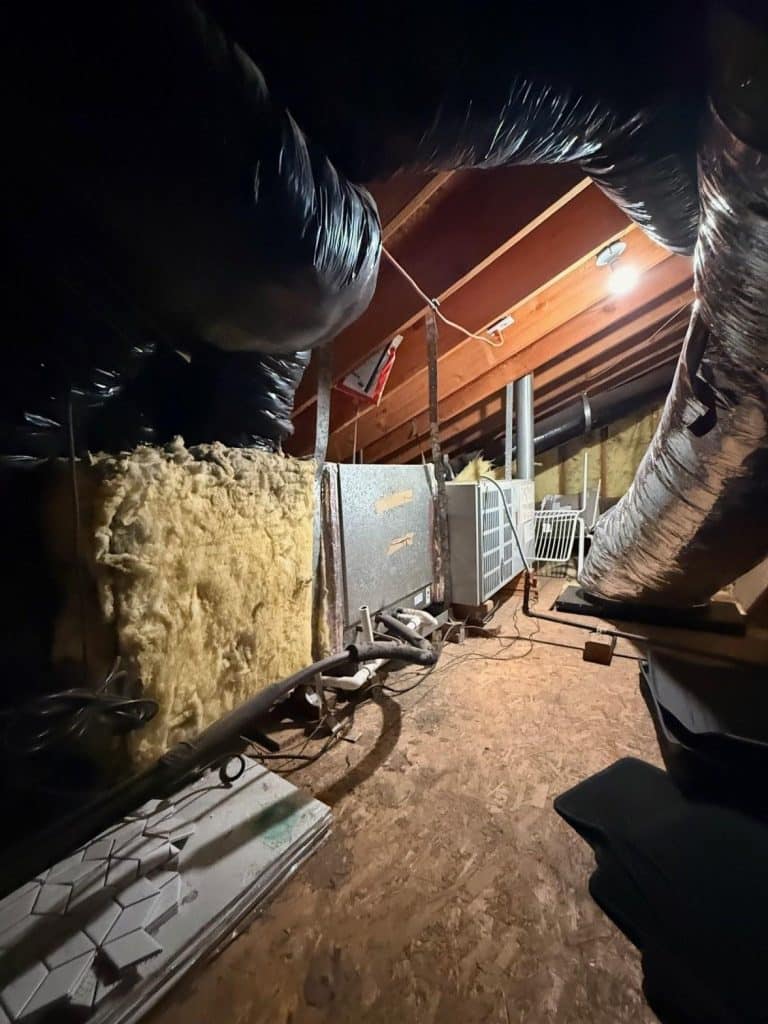
What Should You Know Before Deciding on Furnace Repair vs Replacement?
The core rule for furnace repair vs replacement is simple: if the repair cost exceeds 50% of the price of a new furnace, replacement almost always makes more financial sense. Age matters just as much — most gas furnaces last 15 to 20 years, and units past that range rarely justify large repair bills.
If the repair cost exceeds 50% of the price of a new furnace, replacement almost always makes more financial sense.
Southern California’s mild winters can make it easy to put off furnace decisions. But when temperatures in the region drop into the 40s overnight — which happens regularly from November through February according to the National Weather Service — a failing furnace becomes an urgent problem, not a background task.
The decision also involves efficiency. A furnace installed before 2006 may carry an AFUE (Annual Fuel Utilization Efficiency) rating as low as 70%, meaning 30 cents of every dollar spent on gas is wasted. Modern ENERGY STAR-certified furnaces run at 95% to 98% AFUE, which can cut heating bills significantly over a 10-year horizon.
Understanding both the short-term repair cost and the long-term efficiency picture gives you the full view you need to decide wisely.
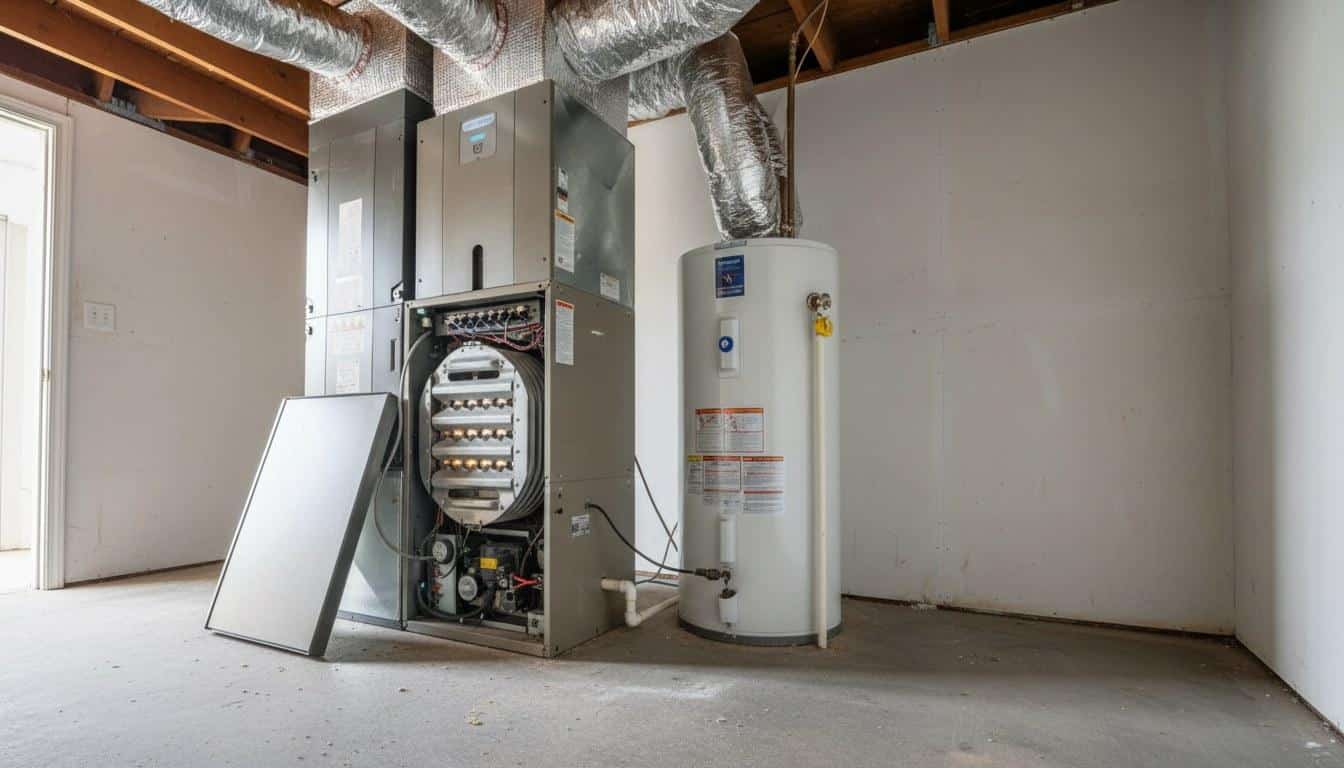
What Are the Warning Signs Your Furnace Needs Attention?
The most reliable warning signs are unusual noises, rising energy bills, uneven heating across rooms, and a pilot light or burner flame that burns yellow instead of blue. Any one of these alone may point to a repairable issue; two or more together often signal a system nearing the end of its life.
Our technicians respond to roughly 3 times more emergency furnace calls in December and January than in any other two-month window, and in the majority of those calls the homeowner had noticed at least one symptom weeks earlier but waited.
- Banging or rattling sounds: Often a loose blower wheel, cracked heat exchanger, or delayed ignition. A cracked heat exchanger is a safety issue and should be evaluated immediately.
- Short cycling: The furnace turns on and off repeatedly without completing a full heating cycle. Common causes include a dirty flame sensor, a clogged filter, or an oversized unit.
- Yellow or flickering pilot flame: A healthy gas burner burns blue. Yellow or orange flames can indicate incomplete combustion or carbon monoxide risk.
- Uneven heat between rooms: Some rooms stay cold while others overheat, pointing to duct problems, a failing blower motor, or a heat exchanger issue.
- Spike in gas or electric bills: A furnace working harder than it should to reach the set temperature is a clear sign of declining efficiency.
- Frequent cycling of the thermostat: If you are adjusting the thermostat more than once an evening to stay comfortable, the furnace is no longer delivering consistent output.
- Age over 15 years: Even without obvious symptoms, a furnace older than 15 years is statistically more likely to fail within the next 3 to 5 years.
How Much Does Furnace Repair Cost — and What Drives the Price?
In the Southern California regional market, furnace repairs typically range from $150 to $1,200 depending on the part involved and the labor required. Igniter replacements and flame sensor cleanings sit at the lower end; heat exchanger repairs or blower motor replacements sit at the higher end.
The factors that move the price most are the age of the unit (older parts are harder to source), the brand (proprietary components cost more), and whether the repair requires refrigerant or combustion work that must comply with EPA refrigerant regulations (Section 608) or California’s Title 24 building energy standards.
Here is a breakdown of the most common repairs and their typical regional market ranges:
| Repair Type | Typical Cost Range (CA Market) | DIY Possible? | Repair or Replace Signal? |
|---|---|---|---|
| Igniter replacement | $150 – $300 | Sometimes (with experience) | Repair — low cost, common fix |
| Flame sensor cleaning | $80 – $150 | Yes (careful DIY) | Repair — routine maintenance |
| Blower motor replacement | $400 – $900 | No | Repair if unit is under 12 years old |
| Heat exchanger repair/replacement | $800 – $1,500+ | No | Replace if unit is over 12 years old |
| Control board replacement | $350 – $700 | No | Repair if unit is under 10 years old |
| Full furnace replacement | $3,000 – $7,500 | No | Replace if repair cost exceeds 50% of this |
New furnace installation in the California market typically ranges from $3,000 to $7,500, depending on the unit’s BTU capacity, efficiency rating, and whether new ductwork or permits are required. Projects requiring a Manual J load calculation — which ACCA (Air Conditioning Contractors of America) standards recommend for any replacement — add a modest diagnostic fee but ensure you do not overbuy or underbuy capacity.
The Inflation Reduction Act federal tax credit currently offers up to $600 for qualifying high-efficiency furnaces, and California’s TECH Clean California rebate program may stack additional savings on top of that. Always request a custom quote to confirm which incentives apply to your specific equipment and installation.
How Do You Compare Furnace Repair vs Replacement Side by Side?
The fastest decision tool is the “5,000 rule”: multiply the age of your furnace (in years) by the estimated repair cost. If the result exceeds $5,000, replacement is almost always the smarter financial move. If it falls well below $5,000, repair is likely worth it.
For example, a 12-year-old furnace facing an $800 blower motor repair scores 9,600 — pushing toward replacement territory. A 5-year-old furnace with the same repair scores 4,000 — clearly worth fixing.
Here is a broader comparison to help frame the decision:
| Factor | Lean Toward Repair | Lean Toward Replacement |
|---|---|---|
| Unit age | Under 12 years | Over 15 years |
| Repair cost vs. new unit | Less than 30% of replacement cost | More than 50% of replacement cost |
| AFUE efficiency | 80% or higher | Below 80% (especially pre-2006 units) |
| Repair history | First or second repair ever | Two or more repairs in the past 24 months |
| Carbon monoxide or heat exchanger issue | Not present | Present — safety risk, replace promptly |
| Rebate or tax credit eligibility | Not a deciding factor | Inflation Reduction Act credit + CA rebates available |
| Comfort and even heating | Consistent across rooms | Persistent cold spots or humidity issues |
Across our service calls in the region, we see that homeowners who replace a furnace older than 17 years — even when the immediate repair cost seems manageable — typically recoup the replacement cost within 5 to 7 years through lower gas bills alone, especially when upgrading from a 70% AFUE unit to a 96% AFUE model.
What Mistakes Should You Avoid When Making This Decision?
The most costly mistake homeowners make is focusing only on the immediate repair bill and ignoring the cumulative cost of an aging, inefficient system. A $300 repair on a 19-year-old furnace running at 70% AFUE can feel like a win — but the next repair is rarely far behind.
- Skipping the efficiency calculation: A furnace with a 70% AFUE costs roughly 27% more to operate than a 96% AFUE model running the same hours. Over 10 years, that gap adds up to hundreds or even thousands of dollars in wasted gas.
- Accepting a diagnosis without a written estimate: Always get the repair scope and cost in writing before authorizing work. Verbal estimates are hard to dispute if the final bill grows.
- Ignoring permit requirements: In California, furnace replacements typically require a permit and inspection under local building codes tied to California’s Title 24 building energy standards. Skipping this step can create problems when you sell the home.
- Choosing an unlicensed contractor to save money: Any HVAC contractor working in California should be Licensed by the California Contractors State License Board (CSLB). You can verify a license at cslb.ca.gov before any work begins.
- Buying the wrong size replacement: Bigger is not better. An oversized furnace short-cycles, wears out faster, and creates humidity and comfort problems. A proper Manual J load calculation prevents this.
- Missing available rebates: Many homeowners in the region leave money on the table by not checking the Inflation Reduction Act federal tax credit or California’s TECH Clean California program before committing to a replacement.
- Delaying a safety-related repair: A cracked heat exchanger or a yellow flame is not a “wait and see” situation. Carbon monoxide leaks are odorless and dangerous. If a technician flags a safety issue, act on it the same day.
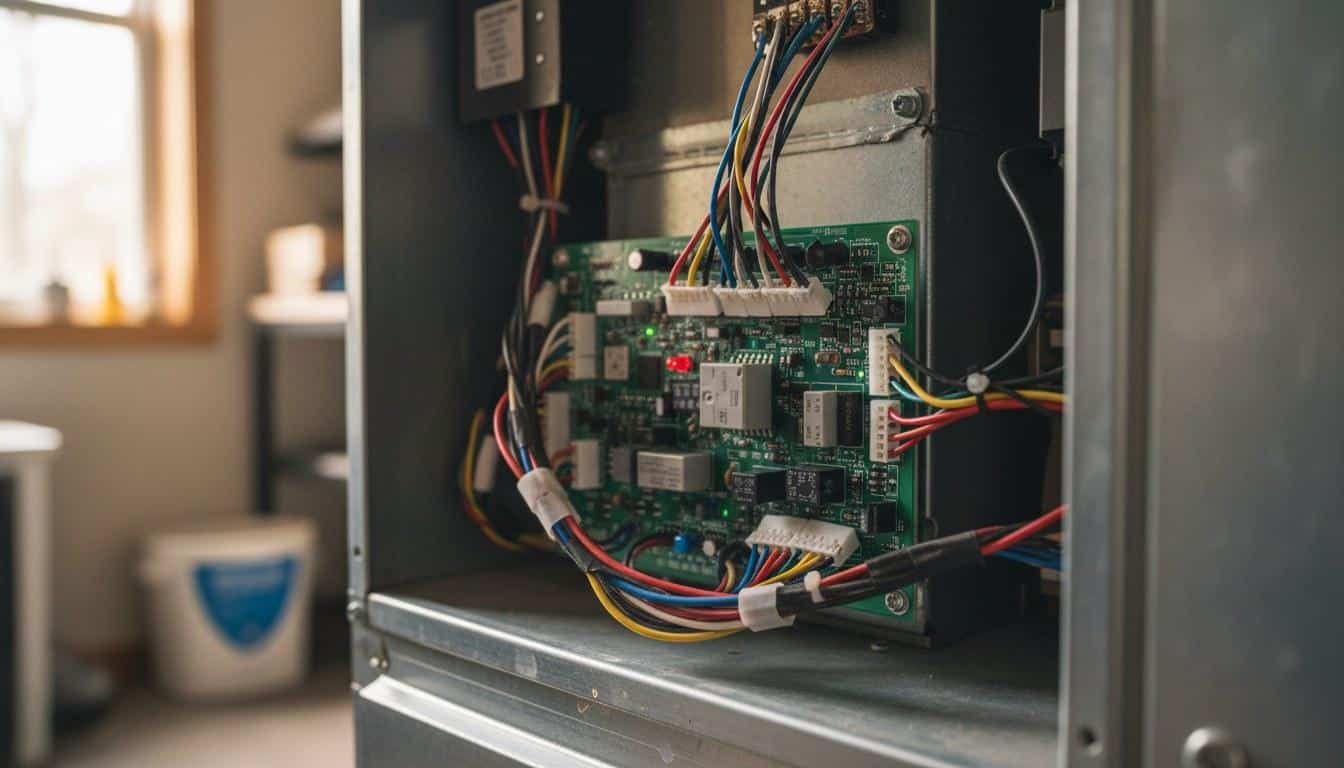
What Does a Professional Furnace Inspection Actually Cover?
A thorough professional furnace inspection covers 15 to 20 checkpoints, including heat exchanger integrity, burner operation, flue and venting condition, electrical connections, blower motor amperage, and thermostat calibration. The inspection itself typically takes 45 to 90 minutes and should result in a written report of findings.
Here is what a qualified technician should check during a furnace inspection or diagnostic visit:
- Inspect the heat exchanger for cracks or corrosion using a combustion analyzer or camera.
- Test the burner flame color and combustion efficiency (CO2, CO, and O2 levels).
- Measure flue gas temperature and check for proper venting and draft.
- Clean or inspect the flame sensor, igniter, and gas valve.
- Check the blower motor amperage draw against the nameplate rating.
- Inspect the air filter and return air path for restrictions.
- Test the thermostat calibration and staging (on two-stage or modulating units).
- Inspect electrical connections, capacitors, and the control board for fault codes.
- Verify the flue pipe, condensate drain (on high-efficiency units), and safety switches.
- Confirm the system cycles on and off cleanly without short-cycling or delayed ignition.
After the inspection, a good technician will give you a clear recommendation on furnace repair vs replacement — not just a parts list. If the system is borderline, ask for the AFUE rating of the current unit, the estimated repair cost, and the cost of a comparable replacement side by side. That comparison is the only honest way to make the call.
The U.S. Department of Energy recommends annual furnace tune-ups to maintain efficiency and catch problems before they become expensive failures. Skipping annual service is one of the leading reasons furnaces fail prematurely.
Get Expert Furnace Advice From Shalom Heating & Air
Schedule a furnace diagnostic or free replacement estimate with Shalom Heating & Air before the next cold stretch arrives. The team serves communities across Orange County, Los Angeles County, and surrounding areas in CA — and can walk you through the furnace repair vs replacement decision with a written estimate in hand.
Call (714) 886-2021 to book a same-day or next-day appointment. Ask about current TECH Clean California rebates and the Inflation Reduction Act federal tax credit — a qualified technician can confirm which programs apply to your home and equipment before any work begins.
Explore our full range of HVAC services across Southern California.
Frequently Asked Questions
How much does it usually cost to repair a furnace in Southern California?
Furnace repairs in the Southern California regional market typically range from $150 to $1,200 depending on the part and labor involved. Simple fixes like a flame sensor cleaning or igniter swap sit at the lower end, while blower motor or heat exchanger work pushes toward the higher end. The age of the unit and availability of parts also affect the final price. For an accurate number, request a written diagnostic estimate before authorizing any work.
How do I know if my furnace needs replacing instead of just repairing?
Replace your furnace if it is older than 15 to 20 years, has needed two or more repairs in the past two years, or if the repair cost exceeds 50% of what a new unit would cost. A cracked heat exchanger is a safety issue that almost always justifies full replacement regardless of age. An AFUE rating below 80% is another strong signal that a new high-efficiency unit will pay for itself over time.
How do I repair a furnace that keeps shutting off?
A furnace that keeps shutting off is usually short-cycling, which is most often caused by a dirty air filter, a faulty flame sensor, or an oversized unit. Start by replacing the air filter — a clogged filter restricts airflow and triggers the high-limit safety switch. If that does not solve the problem, a technician should clean or test the flame sensor and check the control board for fault codes. Do not attempt gas valve or heat exchanger work without a licensed HVAC professional.
Are there tax credits or rebates available when I replace my furnace in California?
Yes. The Inflation Reduction Act federal tax credit offers up to $600 for qualifying high-efficiency furnaces as of 2024. California's TECH Clean California program may offer additional rebates stacked on top of the federal credit. Eligibility depends on the equipment's efficiency rating and the installation meeting California's Title 24 building energy standards. Ask your HVAC contractor to confirm which programs apply before you purchase.
How long does a furnace repair usually take?
Most furnace repairs are completed in one to three hours during a single service visit. Simple jobs like igniter replacement or flame sensor cleaning typically take under an hour. More involved repairs such as a blower motor swap or control board replacement can take two to four hours, especially if parts need to be ordered. A cracked heat exchanger replacement or full system swap is usually scheduled as a half-day to full-day job.