Furnace Maintenance Checklist: What to Do Every Season to Avoid Costly Repairs
A complete furnace maintenance checklist for Southern California homeowners — covering seasonal tasks, warning signs, professional tune-up details, and when to repair or replace.
Why Does Furnace Maintenance Matter in Southern California’s Climate?
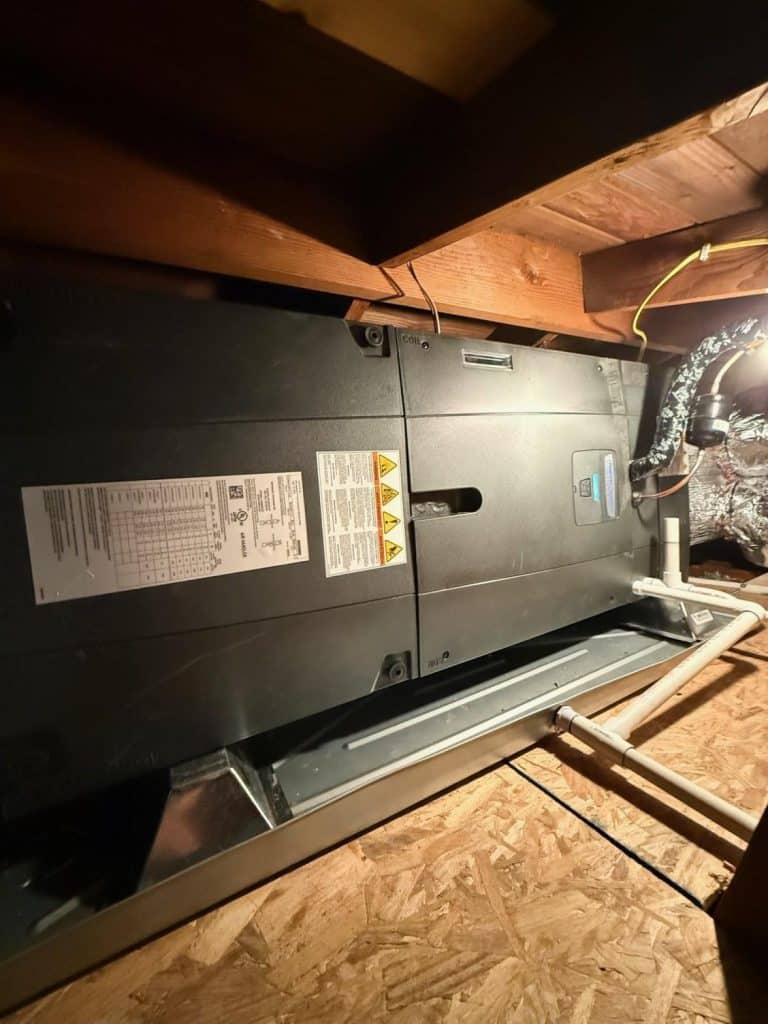
Southern California furnaces typically sit idle for 6 to 8 months each year, and that long dormancy creates its own set of problems — dust buildup, dried lubricants, and components that haven’t cycled in months. When temperatures drop in late October or November, a neglected furnace is far more likely to fail on the first cold night of the season.
The region’s air quality also plays a role. Communities across Los Angeles County and Orange County see higher particulate counts during wildfire season, which can clog filters faster than normal and push debris into heat exchangers. Following a solid furnace maintenance checklist before each heating season is the most reliable way to catch these problems early.
According to the U.S. Department of Energy, regular furnace maintenance can cut energy consumption by 5 to 15 percent compared to a neglected system. Over a typical heating season, that adds up to meaningful savings on your gas bill.
What Is a Complete Furnace Maintenance Checklist?
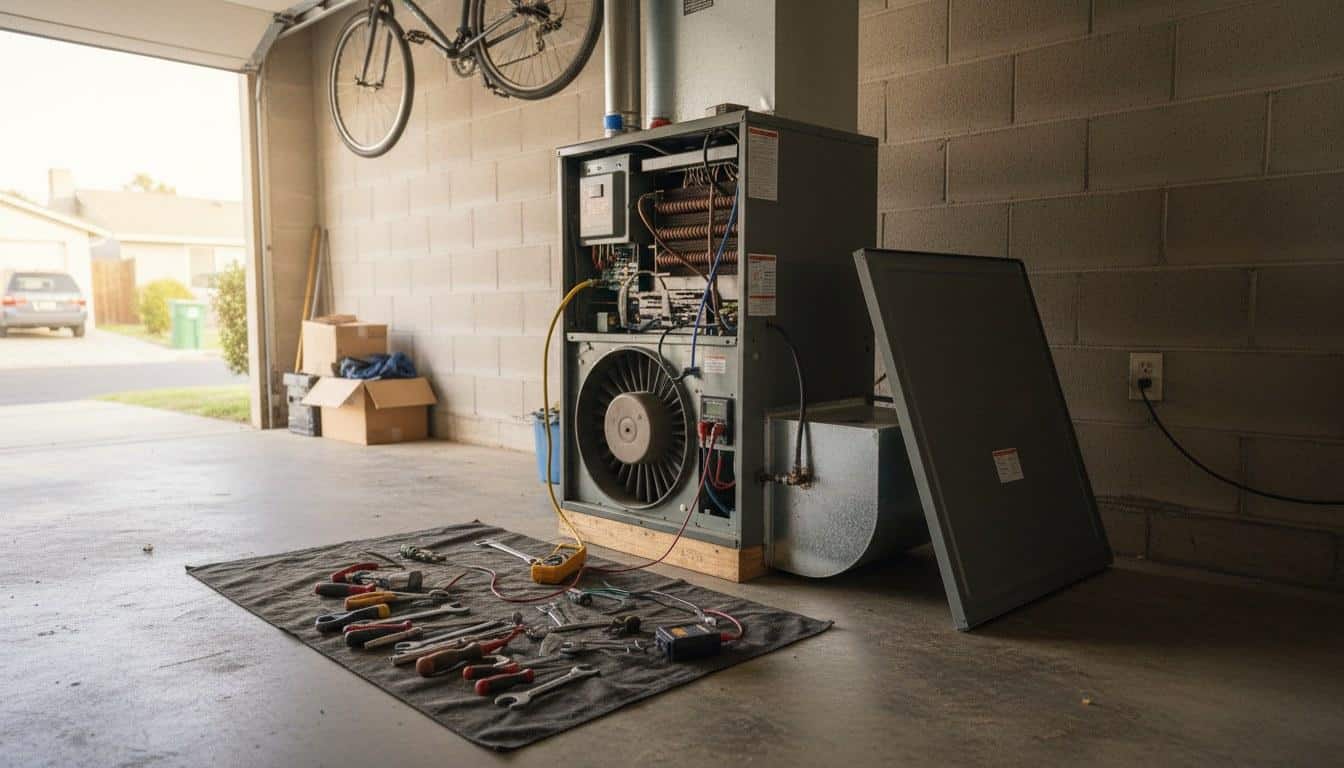
A complete furnace maintenance checklist covers 10 core tasks that should be performed on a monthly, seasonal, or annual basis — some are safe for homeowners to handle, and others require a licensed technician. The table below breaks down each task, how often it should be done, and who should do it.
| Task | Frequency | DIY or Pro? |
|---|---|---|
| Replace or inspect air filter | Every 1 to 3 months | DIY |
| Clear debris from vents and registers | Monthly during heating season | DIY |
| Test carbon monoxide detector | Monthly | DIY |
| Inspect and clean burners | Annually (pre-season) | Pro |
| Check heat exchanger for cracks | Annually | Pro |
| Lubricate blower motor bearings | Annually | Pro |
| Inspect and tighten electrical connections | Annually | Pro |
| Test gas pressure and valve operation | Annually | Pro |
| Calibrate thermostat | Annually | DIY or Pro |
| Inspect flue and exhaust venting | Annually | Pro |
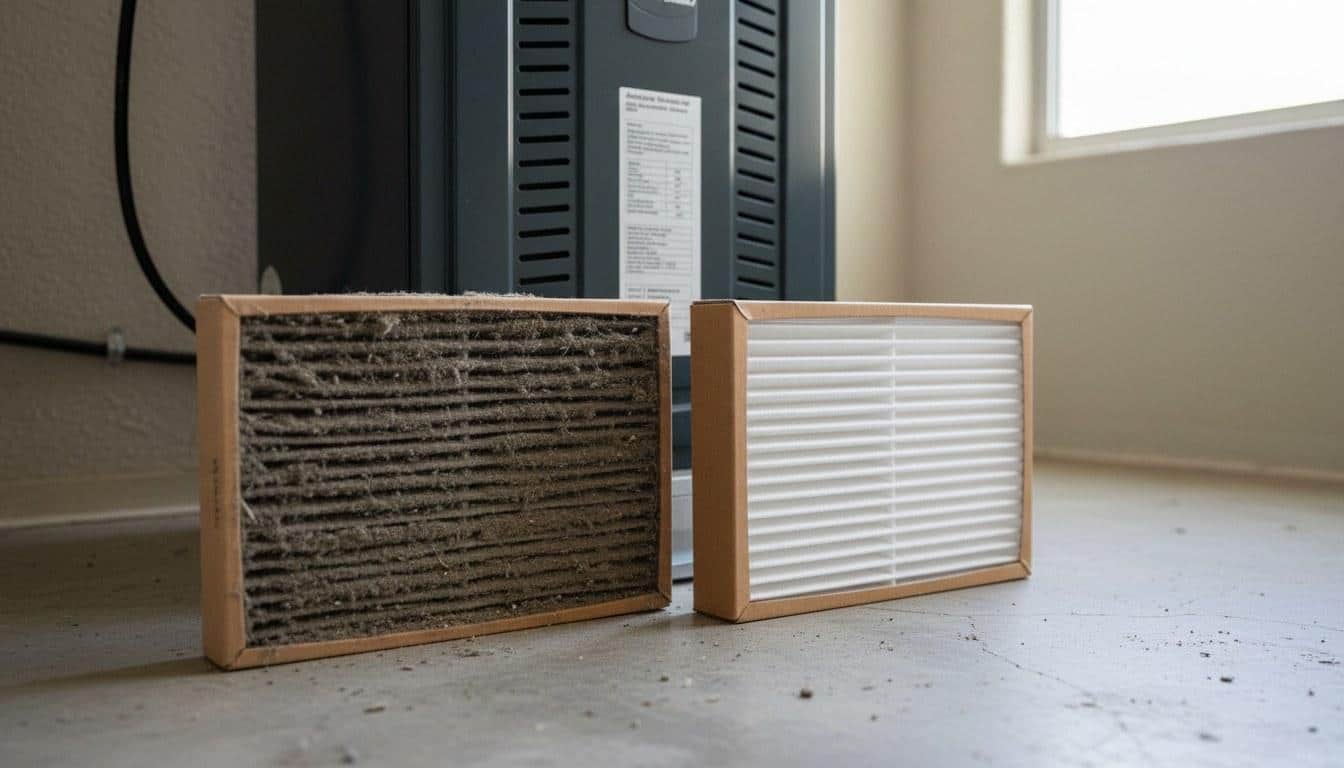
Filters are the single most impactful DIY task. A standard 1-inch filter should be swapped every 30 to 60 days during active use. Thicker 4-inch media filters can last up to 6 months, but during wildfire season in Southern CA, check them every 3 to 4 weeks regardless of the rating.
What Should You Do Each Season?
Furnace care is not a once-a-year event — a few quick tasks each season keep the system ready and catch small issues before they become expensive repairs. Here is what to do quarter by quarter.
Fall (September through November) — Pre-Season Prep
- Replace the air filter: Start the heating season with a fresh filter so airflow is unrestricted from day one.
- Test the furnace before you need it: Turn the thermostat to heat and set it 5 degrees above room temperature. Confirm the burner lights and warm air flows within 2 to 3 minutes.
- Check the pilot light or igniter: A healthy pilot flame is steady and blue. A yellow or flickering flame can signal a combustion problem.
- Clear the area around the furnace: Remove any stored items within 3 feet of the unit — this is a fire code requirement in California.
- Schedule a professional tune-up: Book your annual inspection in September or early October before technician schedules fill up.
- Test all carbon monoxide detectors: California law requires CO detectors in homes with gas appliances. Confirm batteries are fresh.
Winter (December through February) — Active Season Monitoring
- Inspect the filter monthly: Usage is highest now. Replace if the filter looks gray or clogged.
- Keep vents open and unblocked: Closing too many registers forces excess static pressure on the blower and can trip the high-limit switch.
- Listen for new sounds: Banging, rattling, or squealing during a cycle are signs something has changed inside the system.
- Watch your gas bill: A sudden 20 percent or greater spike in usage without a weather explanation can signal a combustion or duct efficiency problem.
Spring (March through May) — Post-Season Wrap-Up
- Replace the filter one final time: Send the system into its off-season with a clean filter so dust does not bake onto the heat exchanger.
- Wipe down exterior surfaces: Remove dust from the cabinet, blower access panel, and any exposed ductwork near the unit.
- Note any issues for the fall: Write down anything unusual you noticed during the winter so you can report it to your technician at the next tune-up.
Summer (June through August) — Off-Season Checks
- Keep the area clear: Do not store items near the furnace just because it is not in use.
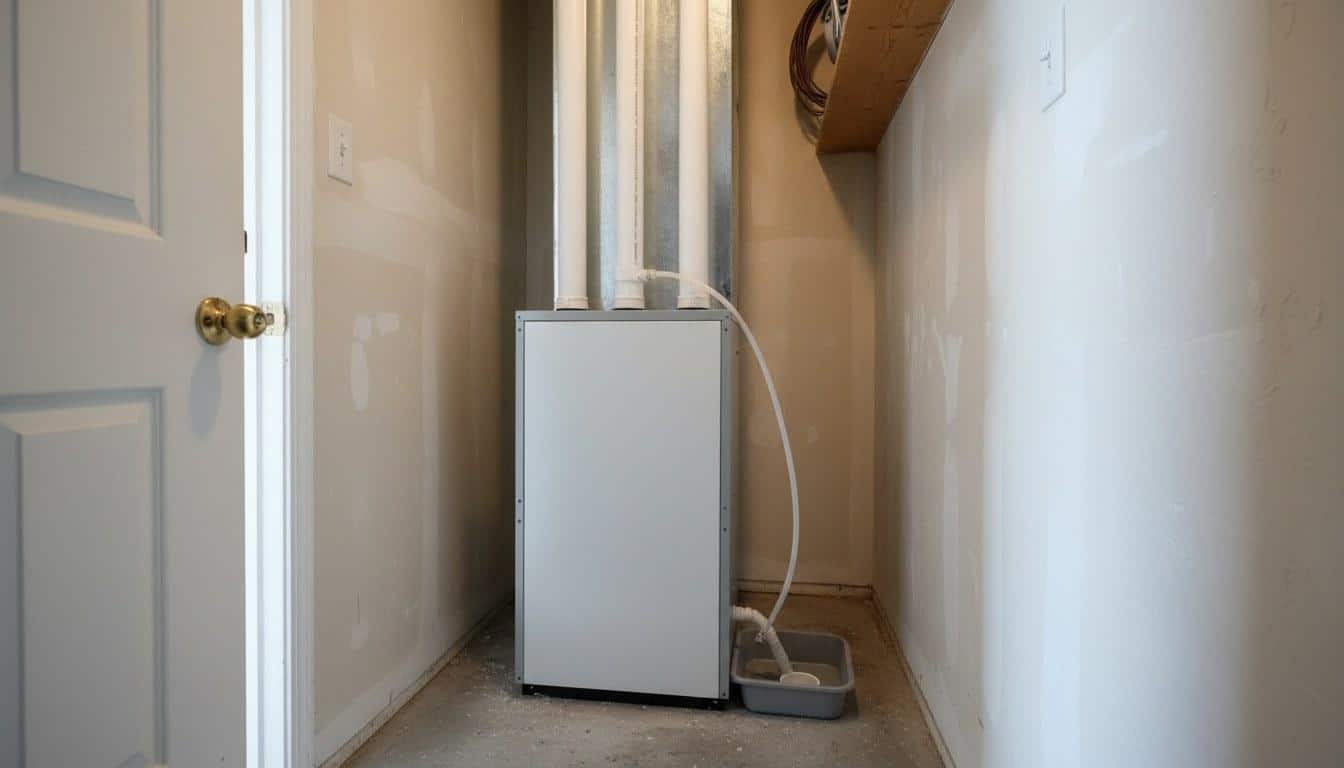
- Check the condensate drain (on high-efficiency models): High-efficiency furnaces produce condensate. A clogged drain line can cause water damage even in summer.
- Confirm your CO detector is still working: Test it even during months when the furnace is off — other gas appliances run year-round.
What Does an Annual Professional Tune-Up Include?
A standard professional furnace tune-up takes 60 to 90 minutes and covers a 20-point inspection that homeowners cannot safely replicate on their own. Here is what a licensed technician checks during a thorough service visit.
Our technicians find cracked heat exchangers in roughly 1 out of every 12 furnaces they inspect on pre-season service calls — and most of those homeowners had no idea the crack was there, because the symptom (carbon monoxide seeping into living space) is invisible without a combustion analyzer.
- Heat exchanger inspection: Cracks in the heat exchanger allow carbon monoxide to mix with conditioned air. This is a safety-critical check that requires a combustion analyzer or camera scope.
- Burner cleaning and flame inspection: Dirty burners produce uneven flames, incomplete combustion, and higher gas consumption. A tech cleans and adjusts them to manufacturer specs.
- Gas pressure test: Incorrect inlet or manifold pressure causes short cycling, overheating, or poor ignition. The tech measures pressure with a manometer and adjusts the regulator if needed.
- Blower motor inspection and lubrication: Bearings that run dry create friction, draw more electricity, and eventually seize. Lubrication takes minutes and can add years to motor life.
- Electrical connection check: Loose terminals cause arcing, component failure, and tripped breakers. All connections are inspected and tightened to spec.
- Flue and exhaust vent inspection: Blocked or corroded flue pipes trap combustion gases inside the home. The tech checks for obstructions, corrosion, and proper draft.
- Thermostat calibration: A thermostat reading 3 to 5 degrees off can cause the furnace to short cycle or run longer than needed, wasting fuel.
- Filter replacement (if not recently done): Many tune-up packages include a standard 1-inch filter swap.
- Safety control testing: The high-limit switch, pressure switches, and rollout switches are tested to confirm they shut the system down safely under fault conditions.
- Carbon monoxide reading at the flue: A combustion analyzer measures CO levels at the exhaust to confirm safe operation.
In California, the technician performing gas appliance work should be Licensed by the California Contractors State License Board (CSLB). Always ask for the license number before work begins.
Tune-up costs in the Southern California market typically range from $80 to $180, depending on the contractor, the equipment type, and whether the visit includes a filter or any minor adjustments. High-efficiency condensing furnaces (those with AFUE ratings of 90 percent or above) have additional components — a secondary heat exchanger and condensate system — that add time to the inspection.
What Warning Signs Should You Watch for Between Services?
Most furnace failures give at least one warning sign before they become a full breakdown — catching these early can cut repair costs significantly and prevent safety hazards. Watch for these red flags between your annual service visits.
- Yellow or orange burner flame: A healthy gas flame is blue. Yellow or orange coloring indicates incomplete combustion, which produces excess carbon monoxide.
- Short cycling: If the furnace turns on and off every 2 to 4 minutes without reaching the set temperature, the high-limit switch may be tripping due to restricted airflow or an overheating heat exchanger.
- Unusual smells: A brief dusty smell at the start of the season is normal. A persistent burning smell, rotten egg odor (gas leak), or metallic smell warrants an immediate service call.
- Increased energy bills: A furnace working harder than it should — due to a dirty filter, failing blower, or combustion problem — will show up on your gas bill before it shows up as a breakdown.
- Uneven heating: Some rooms significantly colder than others can point to duct leaks, a weak blower, or a zoning problem.
- Loud banging at startup: Delayed ignition causes gas to accumulate before it lights, producing a small explosion sound. This stresses the heat exchanger and should be addressed promptly.
- Frequent pilot or igniter failures: If you are relighting the pilot more than once per season, the thermocouple or igniter is likely near the end of its life.
- Water pooling near a high-efficiency unit: Condensate drain clogs cause water backup. Left unaddressed, this leads to rust, mold, and control board damage.
If your CO detector sounds an alarm, leave the home immediately, call 911, and do not re-enter until emergency responders have cleared the building. This is not a situation to troubleshoot on your own.
How Much Does Furnace Repair Cost — and When Should You Replace Instead?
Furnace repair costs in the Southern California market typically range from $150 to $900 for common repairs, while full system replacement generally runs $3,000 to $7,500 installed, depending on efficiency rating, capacity, and ductwork condition. The right choice depends on the age of the system, the cost of the repair, and the efficiency of what you have now.
A useful rule of thumb from the HVAC industry: if the repair cost exceeds 50 percent of the replacement cost and the system is more than 15 years old, replacement is usually the better financial decision. A new high-efficiency furnace with an ENERGY STAR rating and an AFUE of 95 percent or higher can cut heating costs by 20 to 30 percent compared to an older 80 percent AFUE unit.
If the repair cost exceeds 50 percent of the replacement cost and the system is more than 15 years old, replacement is usually the better financial decision.
As of 2026, the Inflation Reduction Act federal tax credit offers up to $600 for qualifying high-efficiency furnace upgrades, and California’s TECH Clean California program may offer additional rebates for households switching to electric heat pump systems. These incentives can meaningfully shift the repair-versus-replace math in favor of upgrading.
Across our service calls over the past two heating seasons, we have seen heat exchanger failures account for nearly 30 percent of all furnace replacements in systems between 18 and 25 years old — and in most of those cases, the homeowner had skipped at least two consecutive annual inspections.
Common repair cost ranges in this market include:
- Igniter replacement: $150 to $300
- Thermocouple or flame sensor: $100 to $250
- Blower motor replacement: $350 to $700
- Control board replacement: $400 to $900
- Heat exchanger replacement: $600 to $1,500 (often triggers a replacement recommendation instead)
- Gas valve replacement: $300 to $650
These are market ranges, not quotes. Actual costs depend on the brand, part availability, and labor time involved. Request a written estimate before authorizing any repair.
Schedule Your Furnace Maintenance in Southern CA
Fall tune-up slots fill quickly across Los Angeles County and Orange County — most homeowners call in October, which means September bookings get faster scheduling and better availability. Do not wait until the first cold night to find out your furnace has a problem.
Shalom Heating & Air provides full furnace maintenance, repair, and replacement services across Southern California. Every inspection follows the complete furnace maintenance checklist outlined in this guide, and all technicians are licensed through the CSLB. Whether you need a pre-season tune-up, a specific repair, or an honest assessment of whether your system is worth keeping, the team is ready to help.
Call (714) 886-2021 to schedule your annual furnace service. Same-day appointments are available for urgent issues. You can also request a written quote before any work begins — no pressure, no surprises.
Explore our full range of HVAC services across Southern California.
Frequently Asked Questions
How do I know if my furnace needs repair or just maintenance?
If your furnace is making new sounds, short cycling, producing uneven heat, or showing a yellow flame, it likely needs a repair beyond routine maintenance. A professional inspection is the fastest way to tell the difference — a technician can run a combustion analysis and check all safety controls in about 60 to 90 minutes. Routine maintenance tasks like filter changes and vent cleaning are things you can handle yourself. Anything involving gas pressure, the heat exchanger, or electrical components should go to a licensed pro.
How much does it usually cost to repair a furnace in Southern California?
Furnace repair costs in the Southern California market typically range from $150 to $900 depending on the part involved and labor time. Simple fixes like an igniter or flame sensor are on the lower end, while blower motor or control board replacements push toward the higher end. Heat exchanger repairs often cost $600 to $1,500 and frequently lead to a replacement recommendation instead. Always request a written estimate before authorizing work — call Shalom Heating & Air at (714) 886-2021 for a no-pressure quote.
How often should I have my furnace professionally serviced?
Furnaces should be professionally inspected and tuned up once a year, ideally in September or early October before the heating season begins. In Southern California, where furnaces sit idle for 6 to 8 months, that pre-season checkup is especially important because components can degrade during long dormancy periods. Homeowners should also replace filters every 1 to 3 months during active use and check CO detectors monthly throughout the year.
Why is my furnace blowing cold air instead of heat?
A furnace blowing cold air is usually caused by one of four things: a tripped high-limit switch due to a clogged filter, a failed igniter or flame sensor, a thermostat set to 'fan only' instead of 'heat', or a gas supply issue. Start by checking the thermostat setting and replacing the air filter. If the problem continues after those steps, the igniter or flame sensor likely needs professional diagnosis and replacement.
Is it worth repairing a furnace that is more than 15 years old?
Generally, if a repair costs more than 50 percent of what a new system would cost and the furnace is 15 years old or older, replacement is the smarter long-term investment. Older furnaces typically have AFUE ratings of 80 percent or less, while modern high-efficiency units reach 95 percent or higher — meaning a new system can cut heating costs by 20 to 30 percent. As of 2026, the Inflation Reduction Act federal tax credit offers up to $600 toward qualifying high-efficiency furnace upgrades, which can help offset the replacement cost.