AC Repair and Maintenance: What to Expect, What It Costs, and How to Keep Your System Running
A complete guide to AC repair and maintenance in California — covering seasonal tasks, professional tune-up checklists, warning signs, and typical costs so you know exactly what to expect.
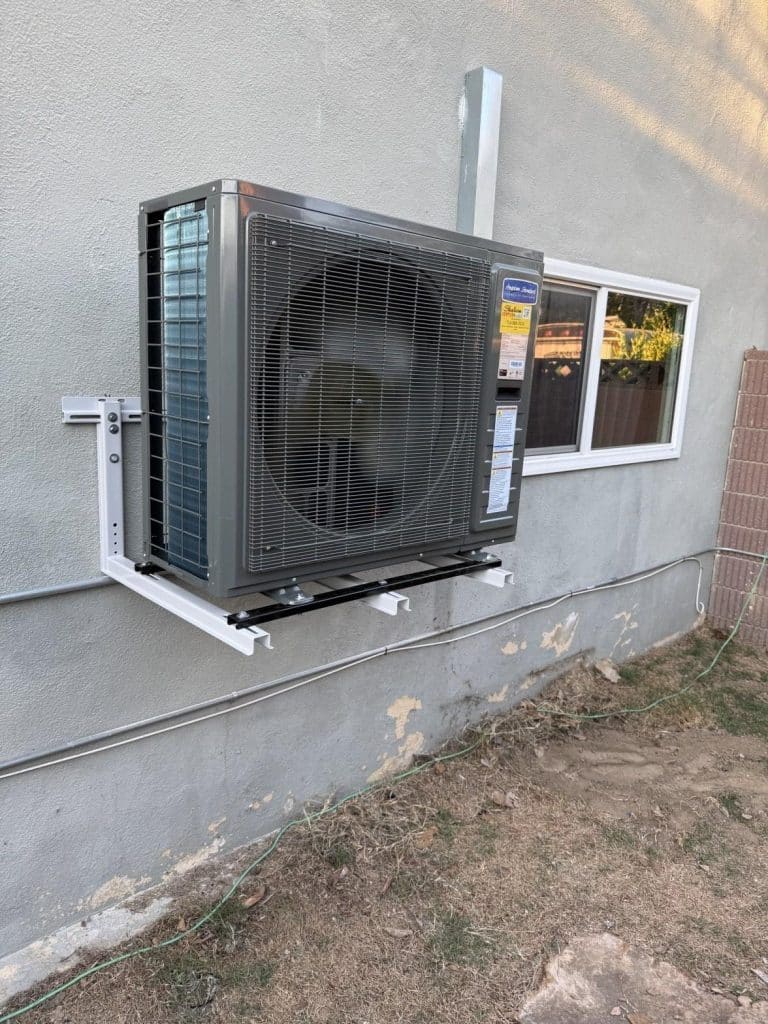
Why Does AC Repair and Maintenance Matter in California’s Climate?
California’s long cooling season — often running from April through October — puts more stress on air conditioning systems than most parts of the country. A system that skips annual ac repair and maintenance is far more likely to fail on the hottest day of the year, when repair costs and wait times are at their peak.
Southern California communities regularly see summer temperatures above 95°F, and some inland areas push past 110°F during heat events. Running a poorly maintained AC unit under that kind of load accelerates wear on compressors, capacitors, and coils. The result is a shorter lifespan and higher energy bills.
Beyond comfort, there are real efficiency stakes. The U.S. Department of Energy estimates that a dirty or poorly tuned AC system can use 5 to 15 percent more energy than a well-maintained one. Over a full cooling season in California, that adds up quickly on your utility bill.
The U.S. Department of Energy estimates that a dirty or poorly tuned AC system can use 5 to 15 percent more energy than a well-maintained one.
California’s Title 24 building energy standards also set minimum efficiency requirements for HVAC equipment. Keeping your system maintained helps ensure it stays within those standards and continues to qualify for rebates through programs like TECH Clean California.
What Should You Do Each Season to Maintain Your AC?
Consistent seasonal maintenance is the single most effective way to prevent expensive AC repairs. Most tasks take less than 30 minutes and require no special tools.
Spring (March – May)
- Replace or clean the air filter: A clogged filter restricts airflow and forces the blower motor to work harder. Replace 1-inch filters every 30 to 60 days during cooling season.
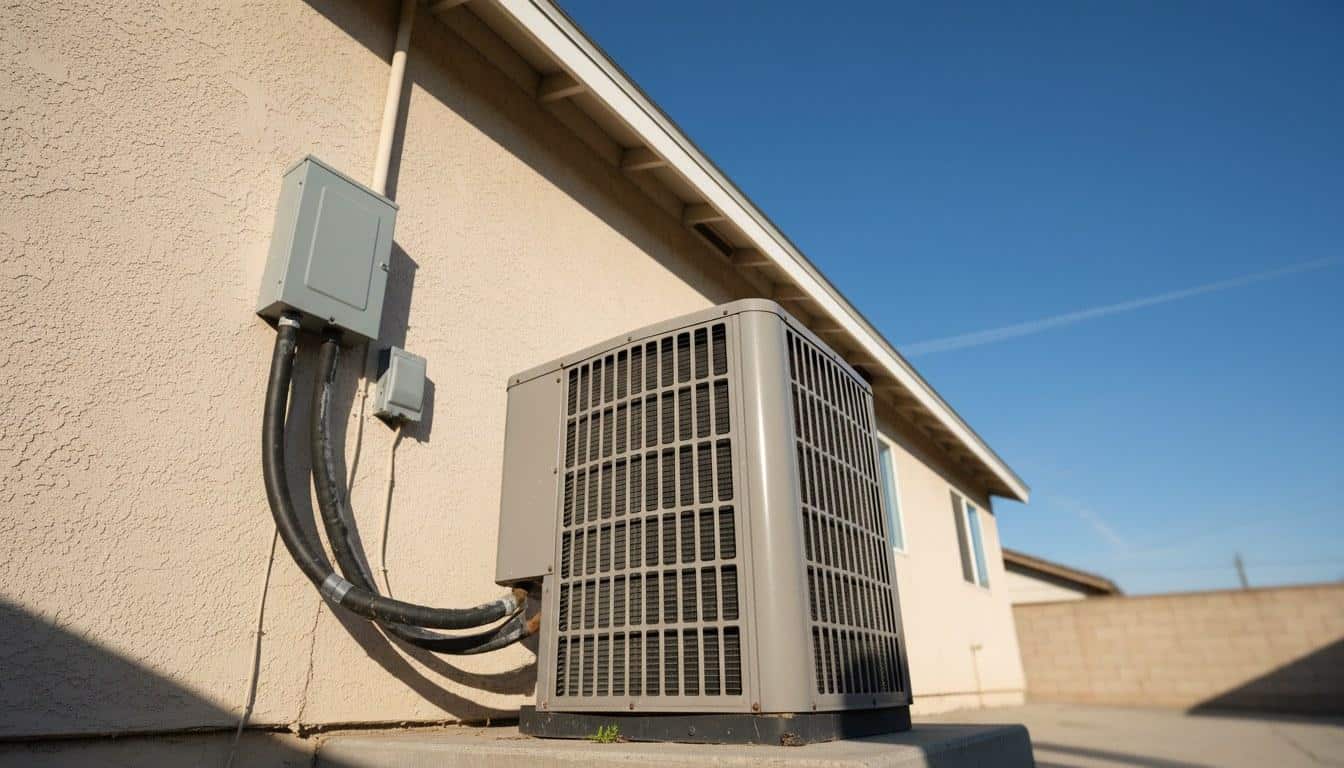
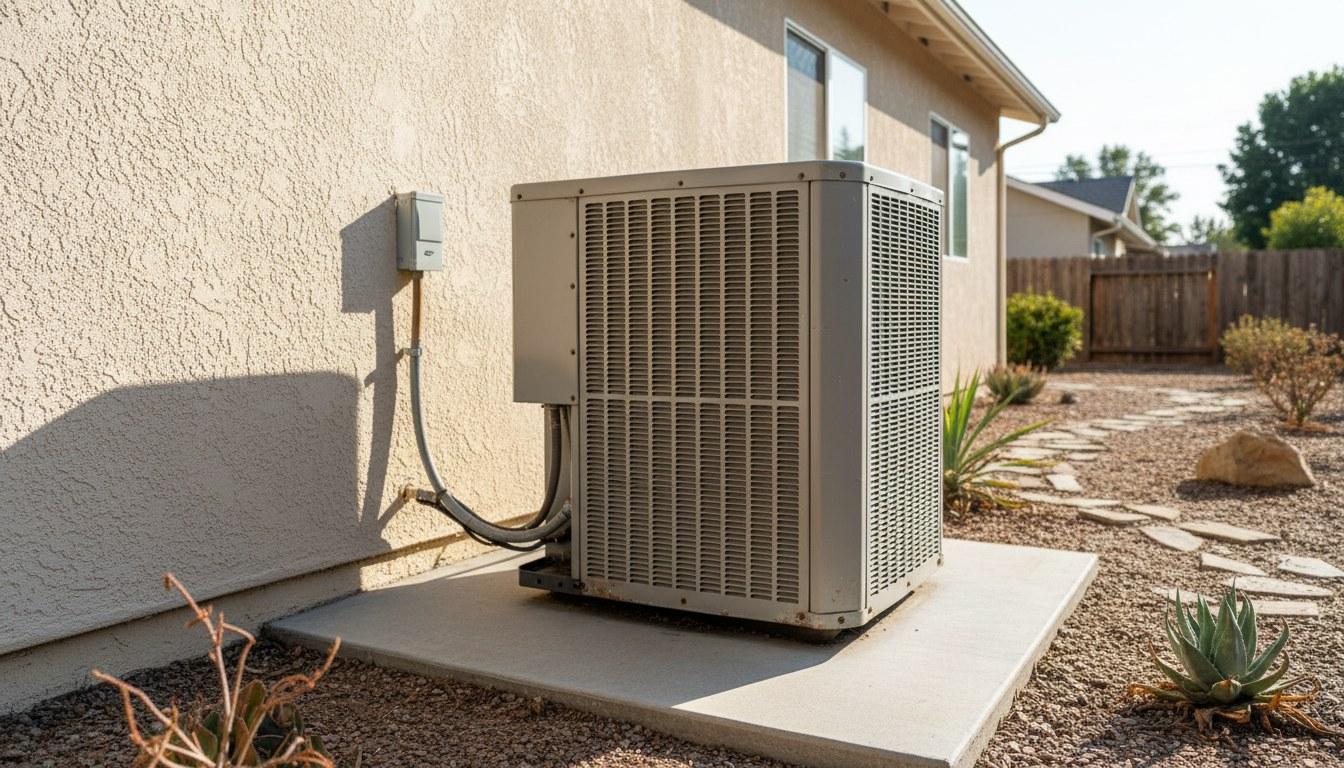
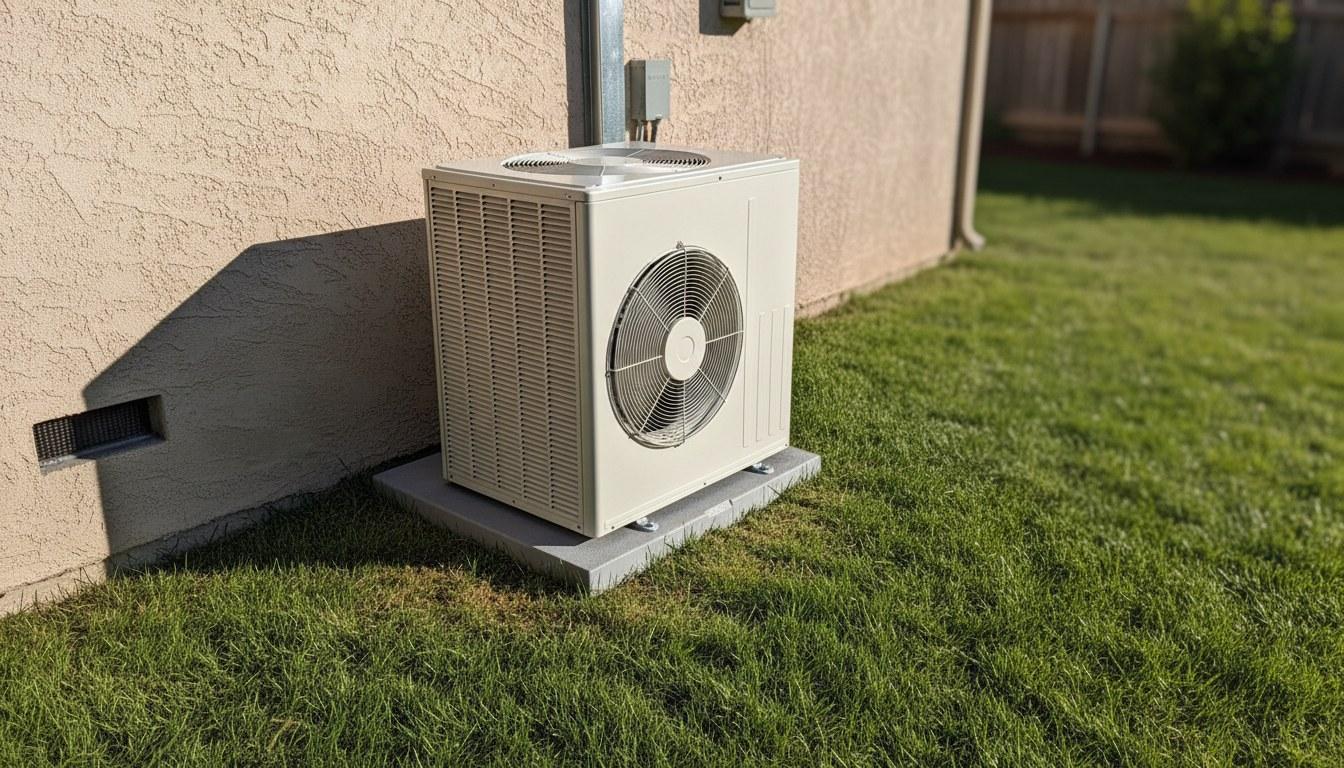
- Clear debris from the outdoor condenser: Remove leaves, dirt, and plant growth from around the unit. Keep at least 18 inches of clearance on all sides.
- Test the thermostat: Switch to cooling mode and confirm the system reaches your set temperature within a reasonable time.
- Schedule a professional tune-up: Spring is the best time — technicians are less busy and you avoid mid-summer emergency pricing.
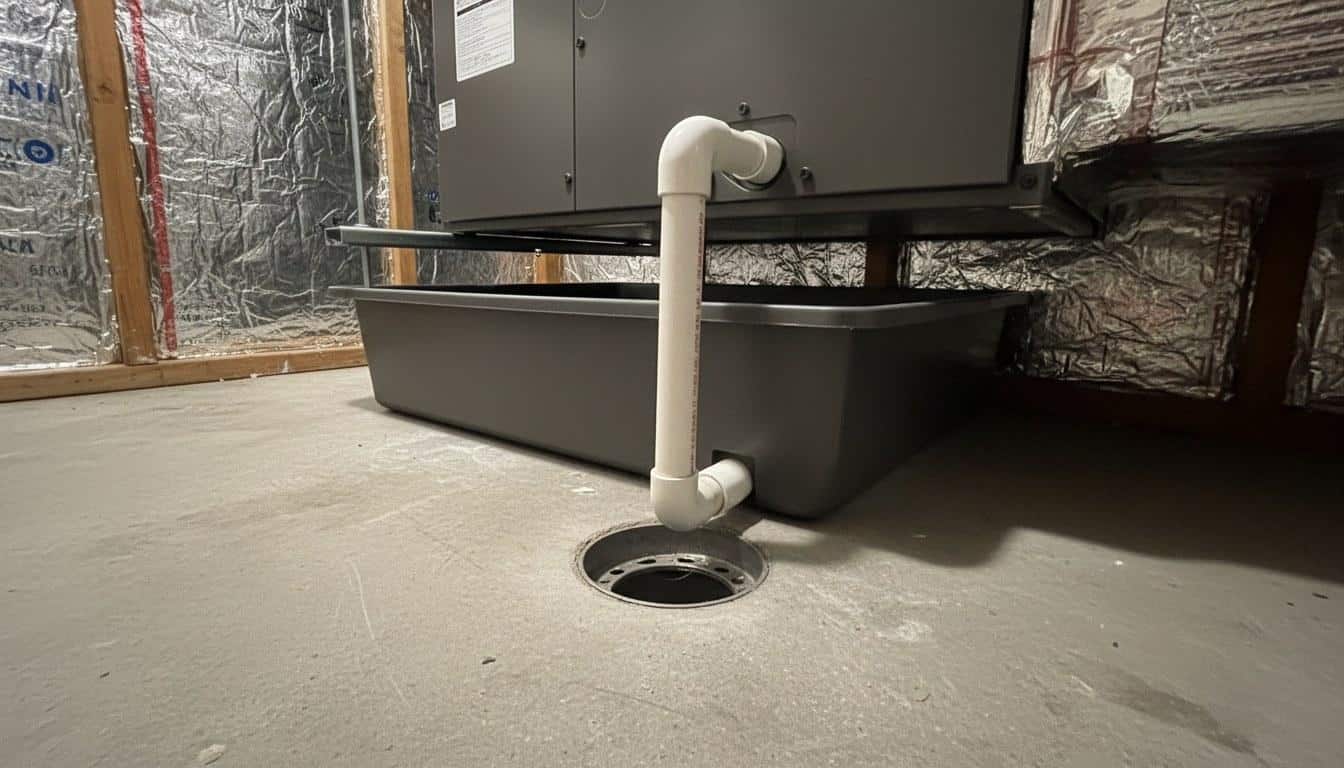
- Check condensate drain lines: Pour a small amount of water into the drain pan to confirm it flows freely. A clogged drain can cause water damage and mold growth.
Summer (June – August)
- Check the filter monthly: During peak use, filters load up faster — inspect every 30 days without exception.
- Monitor your energy bills: A sudden spike in usage with no change in habits often signals a refrigerant leak or failing component.
- Keep vents unobstructed: Furniture, rugs, and curtains blocking supply or return vents reduce system efficiency and can cause uneven cooling.
- Watch for ice on the unit: Ice on the evaporator coil or refrigerant lines is a sign of restricted airflow or low refrigerant — turn the system off and call a technician.
Fall (September – November)
- Clean the condenser coils: After a full summer of use, outdoor coils collect dust and grime that reduces heat transfer. A professional coil cleaning restores efficiency.
- Inspect electrical connections: Loose connections corrode faster in coastal areas with marine-layer humidity. A technician should check and tighten terminals annually.
- Cover or protect the outdoor unit: If you use a cover, use a breathable one to prevent moisture buildup and pest nesting.
Winter (December – February)
- Run the system briefly once a month: Even in mild Southern California winters, running the AC for 10 to 15 minutes keeps seals lubricated and prevents the compressor from seizing.
- Check the air handler for pests: Rodents can nest in ductwork and air handlers during cooler months, chewing wires and insulation.
- Review your system’s age: Systems older than 10 to 12 years should be evaluated for replacement before the next cooling season, especially if they use older R-22 refrigerant.
What Does a Professional AC Tune-Up Actually Include?
A thorough professional AC tune-up takes 60 to 90 minutes and covers 15 to 20 inspection and service points. It goes well beyond what a homeowner can do with a filter change and a garden hose.
Here is what a qualified technician checks during a standard service visit:
- Refrigerant levels and leak check: Low refrigerant almost always means a leak, not just depletion. Under EPA refrigerant regulations (Section 608), only certified technicians may handle refrigerants. A leak test identifies the source before more refrigerant is added.
- Electrical connections and voltage: Loose or corroded terminals cause premature compressor and motor failure. The tech measures voltage and amperage on all major components.
- Capacitor and contactor condition: These small parts start the compressor and fan motors. They degrade over time and are among the most common causes of summer breakdowns.
- Evaporator and condenser coil cleaning: Dirty coils reduce heat transfer by up to 30 percent. The tech uses a coil cleaner and rinse to restore surface contact.
- Blower motor and belt inspection: Worn belts or a dirty blower wheel reduce airflow and strain the motor.
- Thermostat calibration: A thermostat that reads 2 to 3 degrees off causes the system to over-run or short-cycle, wasting energy.
- Condensate drain flush: Algae and debris clog drain lines, causing water backup into the air handler or ceiling.
- Safety controls test: High-pressure and low-pressure switches are tested to confirm they will shut the system down before a dangerous condition develops.
- Overall system performance check: The tech measures supply and return air temperatures to verify the system is achieving the expected 15 to 20 degree temperature split.
Our technicians replace 40 to 60 capacitors across service calls in the region each summer, and nearly all of them come from units that are 10 years old or older — making an annual inspection the single most reliable way to catch that failure before it strands you in the heat.
How Much Does AC Repair and Maintenance Cost in California?
Annual AC maintenance tune-ups in the Southern California market typically range from $80 to $175 for a standard single-system visit. Repair costs vary widely depending on the component involved and the system’s age.
The table below shows typical market ranges for common ac repair and maintenance services in California. These are regional market estimates — actual costs depend on system size, refrigerant type, parts availability, and labor time.
| Service | Typical CA Market Range | Key Cost Factors |
|---|---|---|
| Annual tune-up / preventive maintenance | $80 – $175 | Number of systems, add-on services |
| Capacitor replacement | $150 – $300 | Capacitor type, labor access |
| Refrigerant recharge (R-410A) | $200 – $500 | Amount needed, leak repair required |
| Refrigerant leak repair | $200 – $1,500+ | Leak location, coil vs. line set |
| Evaporator or condenser coil cleaning | $100 – $400 | Coil condition, chemical vs. rinse |
| Blower motor replacement | $400 – $900 | Motor type, variable vs. single-speed |
| Compressor replacement | $1,200 – $2,800 | System tonnage, compressor type, age |
| Thermostat replacement (smart) | $200 – $500 installed | Brand, wiring compatibility |
Compressor replacement is the most expensive single repair short of full system replacement. On a system older than 10 years, many HVAC contractors — following ACCA (Air Conditioning Contractors of America) best practices — will recommend a full system replacement instead, since a new compressor on an aging system often leads to another major failure within two to three years.
The Inflation Reduction Act federal tax credit offers up to 30 percent back (capped at $600) on qualifying high-efficiency central AC replacements as of 2025. Pairing that with TECH Clean California rebates can significantly offset the cost of a new ENERGY STAR-rated system. Request a custom quote from Shalom Heating & Air to see which incentives apply to your situation.
What Warning Signs Mean Your AC Needs Repair?
Most AC failures give warning signs days or weeks before a complete breakdown. Catching these early almost always means a smaller repair bill and a faster fix.
Watch for these red flags between professional service visits:
- Warm or barely cool air from vents: The most common causes are low refrigerant, a dirty evaporator coil, or a failing compressor. Do not ignore this — it typically gets worse quickly under summer heat load.
- Weak airflow: Reduced airflow from supply vents usually points to a clogged filter, a failing blower motor, or collapsed ductwork. A system pushing little air is working twice as hard for half the result.
- Ice on the indoor unit or refrigerant lines: Ice buildup means the system is not absorbing heat properly. Turn it off immediately and call for service — running a frozen system can damage the compressor.
- Unusual noises: Banging or clanking suggests a loose or broken part inside the compressor or air handler. Squealing points to a worn belt or bearing. Clicking on startup or shutdown is normal; clicking that continues is not.
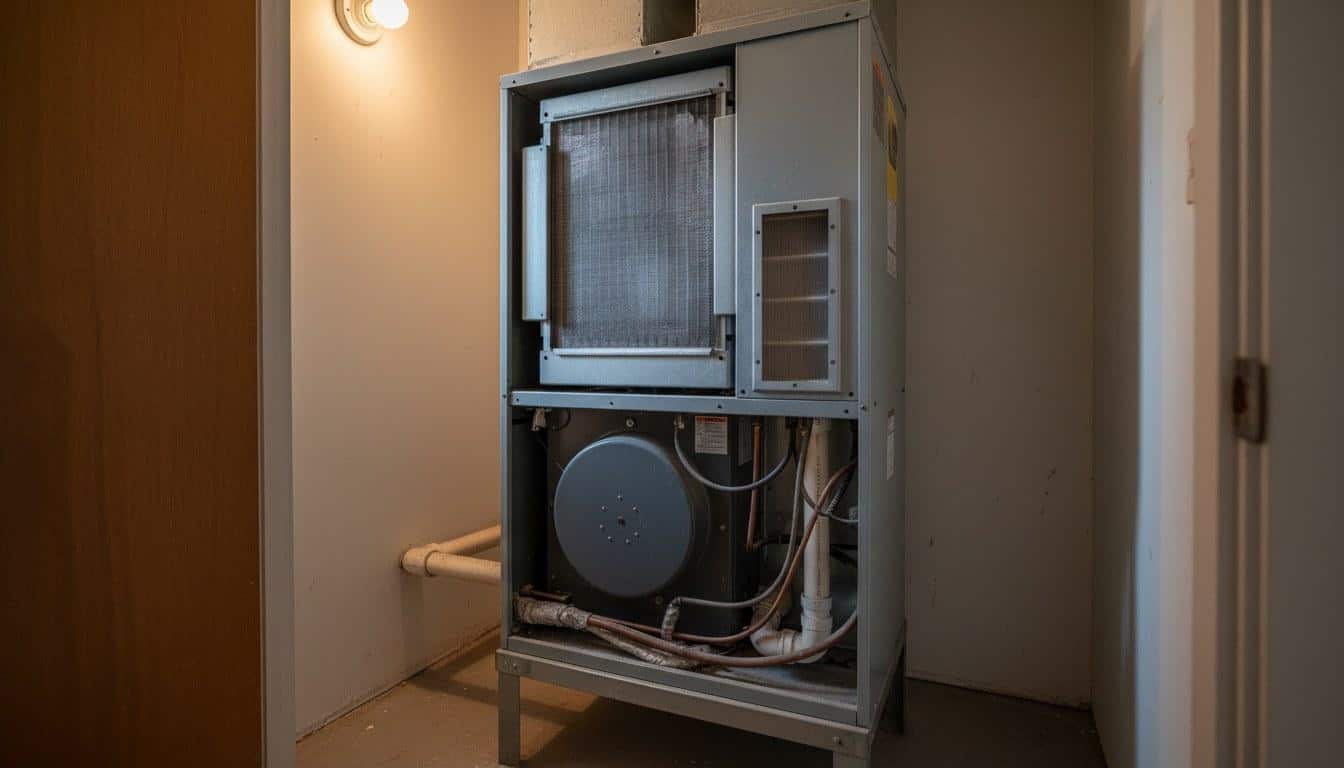
- Water pooling around the air handler: A clogged condensate drain or a cracked drain pan lets water back up into the unit. Left unchecked, this causes mold growth and ceiling or drywall damage.
- Short cycling (turns on and off rapidly): A system that runs for only 2 to 3 minutes before shutting off is either oversized, has a refrigerant problem, or has a failing thermostat or pressure switch.
- Spike in energy bills: A 15 to 20 percent increase in electricity use with no change in habits is a reliable indicator that the system is losing efficiency — often due to dirty coils, low refrigerant, or a worn compressor.
- Musty or burning smells: Musty odors suggest mold in the drain pan or ductwork. Burning smells mean an electrical component is overheating — shut the system down and call immediately.
Across our service calls in the region, we see refrigerant leak repairs increase roughly 25 to 30 percent each summer on systems installed before 2015 — a pattern that tracks directly with those systems entering their second decade of operation without regular service.
How Do You Choose a Qualified AC Repair and Maintenance Provider?
The most important credential to verify is an active license with the California Contractors State License Board (CSLB). In California, any HVAC contractor performing work on your system must hold a C-20 (Warm-Air Heating, Ventilating and Air-Conditioning) license.
You can verify any contractor’s license status for free at cslb.ca.gov. A license confirms the contractor has passed a trade exam, carries insurance, and is bonded — protecting you if something goes wrong during the job.
Beyond licensing, here is what to look for when evaluating a provider:
- EPA Section 608 certification: Any technician who handles refrigerant must hold this federal certification. Ask for it specifically if refrigerant work is needed.
- Written estimate before work begins: A reputable contractor provides a written scope of work and price before starting any repair. Verbal estimates leave you exposed to unexpected charges.
- Manufacturer-trained technicians: Brands like Carrier, Lennox, Trane, and Daikin offer factory training. A tech familiar with your specific equipment brand diagnoses problems faster.
- Clear warranty on parts and labor: Most quality repairs carry at least a 1-year parts and labor warranty. Ask specifically — not all contractors offer the same terms.
- No pressure on unnecessary replacements: A trustworthy technician explains what is wrong, shows you the evidence, and gives you options. High-pressure upselling on a system that could be repaired is a red flag.
- Knowledge of current rebate programs: A knowledgeable contractor should be able to tell you whether your repair or replacement qualifies for TECH Clean California rebates or the Inflation Reduction Act federal tax credit.
For ac repair and maintenance in Long Beach and communities throughout Los Angeles County and Orange County, the same licensing and certification standards apply. Do not assume a lower price means comparable quality — verify credentials first.
Schedule Your AC Service with Shalom Heating & Air
Do not wait for a breakdown in the middle of a heat wave to think about your air conditioning. Book your annual tune-up in spring, address warning signs as soon as they appear, and keep up with the seasonal tasks in this guide. Your system will last longer, run more efficiently, and cost less to operate year after year.
Shalom Heating & Air provides ac repair and maintenance across communities in Southern California. Licensed by the California Contractors State License Board (CSLB), our team handles everything from a standard annual tune-up to emergency compressor repairs and full system replacements.
Call (714) 886-2021 to schedule your service or request a written quote. Same-day and next-day appointments are available for urgent repairs. Get a quote before any work begins so you know exactly what to expect.
Explore our full range of HVAC services across Southern California.
Frequently Asked Questions
How much does it usually cost to repair an AC unit in California?
AC repair costs in California typically range from $150 for a simple capacitor swap to over $2,800 for a compressor replacement. The biggest factors are which component failed, the system's age, and whether refrigerant work is needed. Minor repairs caught during routine maintenance almost always cost less than emergency repairs. Request a written estimate from Shalom Heating & Air at (714) 886-2021 before any work begins.
How do I know if my AC has a refrigerant leak?
The most common signs of a refrigerant leak are warm or barely cool air from your vents, ice forming on the indoor unit or refrigerant lines, and a noticeable increase in your energy bill. You may also hear a faint hissing near the refrigerant lines. Only an EPA Section 608-certified technician can legally diagnose and repair a refrigerant leak — do not attempt to add refrigerant yourself.
How often should I schedule AC maintenance?
Most HVAC manufacturers and the U.S. Department of Energy recommend professional AC maintenance at least once a year, ideally in spring before the cooling season begins. In Southern California, where systems run 6 to 8 months a year, some homeowners benefit from a second check-up in early fall. Regular maintenance extends system life, keeps efficiency high, and catches small problems before they become expensive repairs.
Can I repair my AC compressor myself?
Compressor repair is not a DIY job. It involves handling refrigerant — which requires EPA Section 608 certification — plus working with high-voltage electrical components. Attempting it without the right tools and certification can void your warranty, create a safety hazard, and result in a much larger repair bill. A licensed technician can diagnose whether the compressor needs repair or replacement and give you a written quote.
Why is my air conditioner blowing warm air?
The most common reasons an AC blows warm air are low refrigerant due to a leak, a dirty evaporator coil blocking heat transfer, a tripped circuit breaker on the outdoor unit, or a failed compressor. Start by checking that both the indoor and outdoor units have power and that the thermostat is set to cooling mode. If those basics check out and the air is still warm, call a technician — continuing to run the system in that condition can damage the compressor.