Furnace Maintenance Tips: How to Keep Your Heating System Running All Year
The right furnace maintenance tips can prevent costly breakdowns and keep your heating system running efficiently all year long. This guide covers seasonal tasks, warning signs, and what a professional tune-up includes.
Why Does Furnace Maintenance Matter So Much?
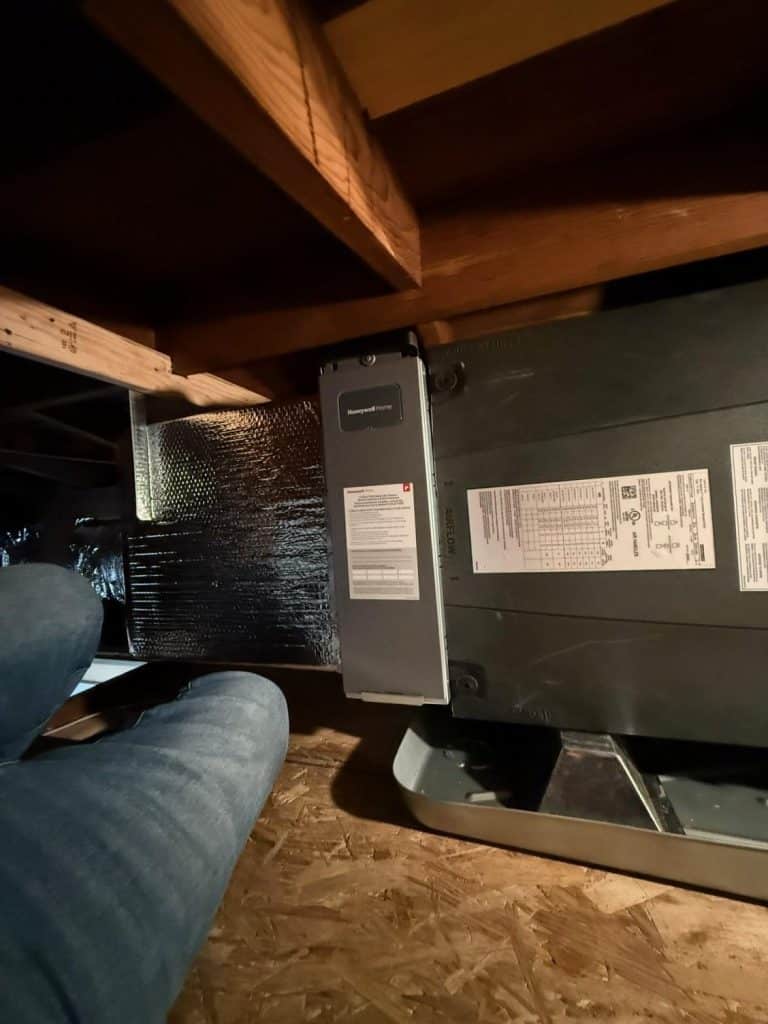
A neglected furnace is the leading cause of mid-winter breakdowns, and most of those breakdowns are preventable with routine care. Furnaces that receive annual professional service last an average of 15-20 years, while ignored systems often fail before the 12-year mark. In Southern California, where heating season runs roughly October through March, it is easy to forget about your furnace for months at a time. That gap is exactly when small problems turn into expensive repairs. A seasonal furnace maintenance checklist covers the key tasks that keep those gaps from becoming costly surprises.
Furnaces that receive annual professional service last an average of 15-20 years, while ignored systems often fail before the 12-year mark.
Southern California’s climate is mild compared to the Midwest, but National Weather Service data for the Los Angeles basin shows overnight lows regularly dropping into the 40s from November through February. When temperatures dip, furnaces that have sat idle for months are asked to work hard immediately. Dust buildup, worn ignitors, and clogged filters all become urgent problems at that moment.
Good furnace maintenance tips also protect your indoor air quality. A dirty filter or cracked heat exchanger can push dust, allergens, or even carbon monoxide into your living space. Staying proactive is not just about comfort — it is about safety.
What Are the Best Furnace Maintenance Tips for Each Season?
Breaking furnace care into seasonal tasks makes it manageable and ensures nothing gets skipped. Fall is the most critical window because it is your last chance to catch problems before you need heat every night. Here is what homeowners across the region should do each season. A similar seasonal approach applies to cooling systems, and an AC spring maintenance checklist covers the key steps to prepare before summer demand peaks.
Fall (September – November)
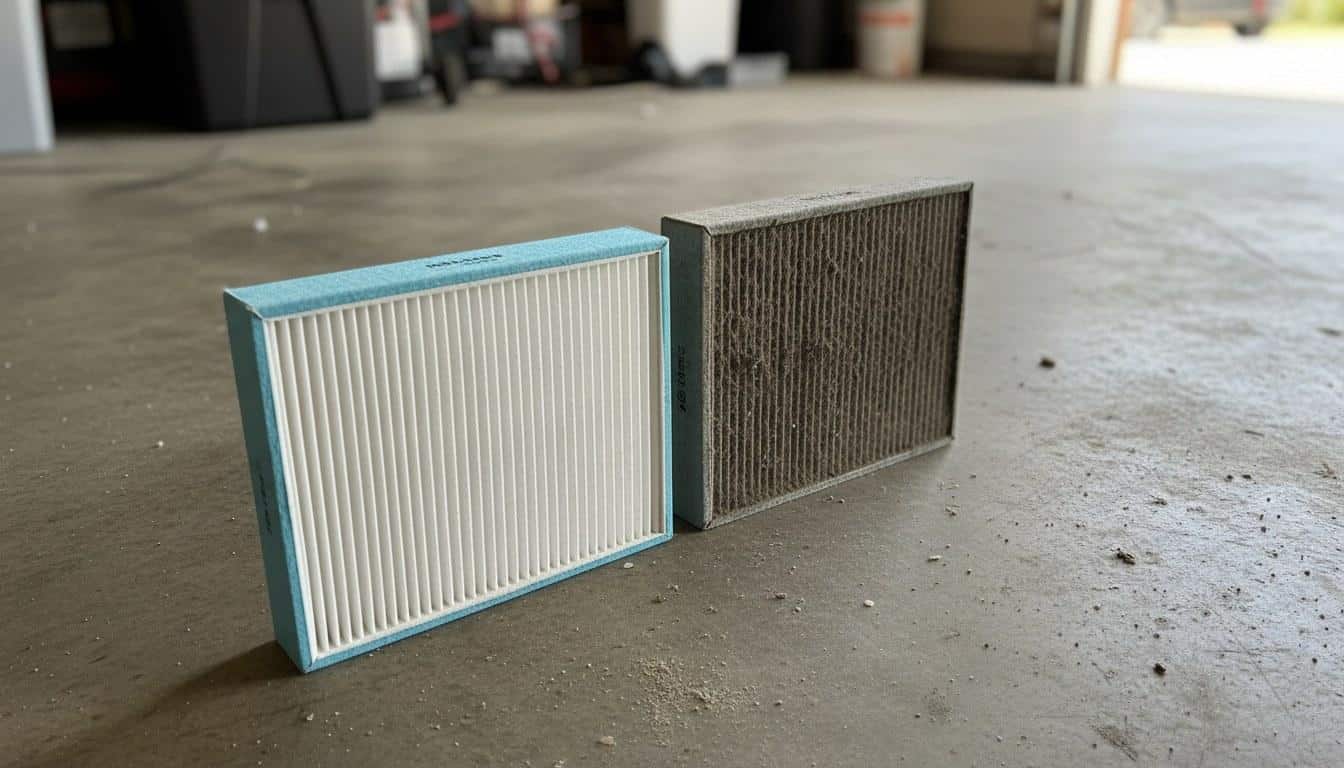
- Replace the air filter: Start the heating season with a fresh 1-inch pleated filter. MERV 8-11 filters balance airflow and particle capture well for most homes.
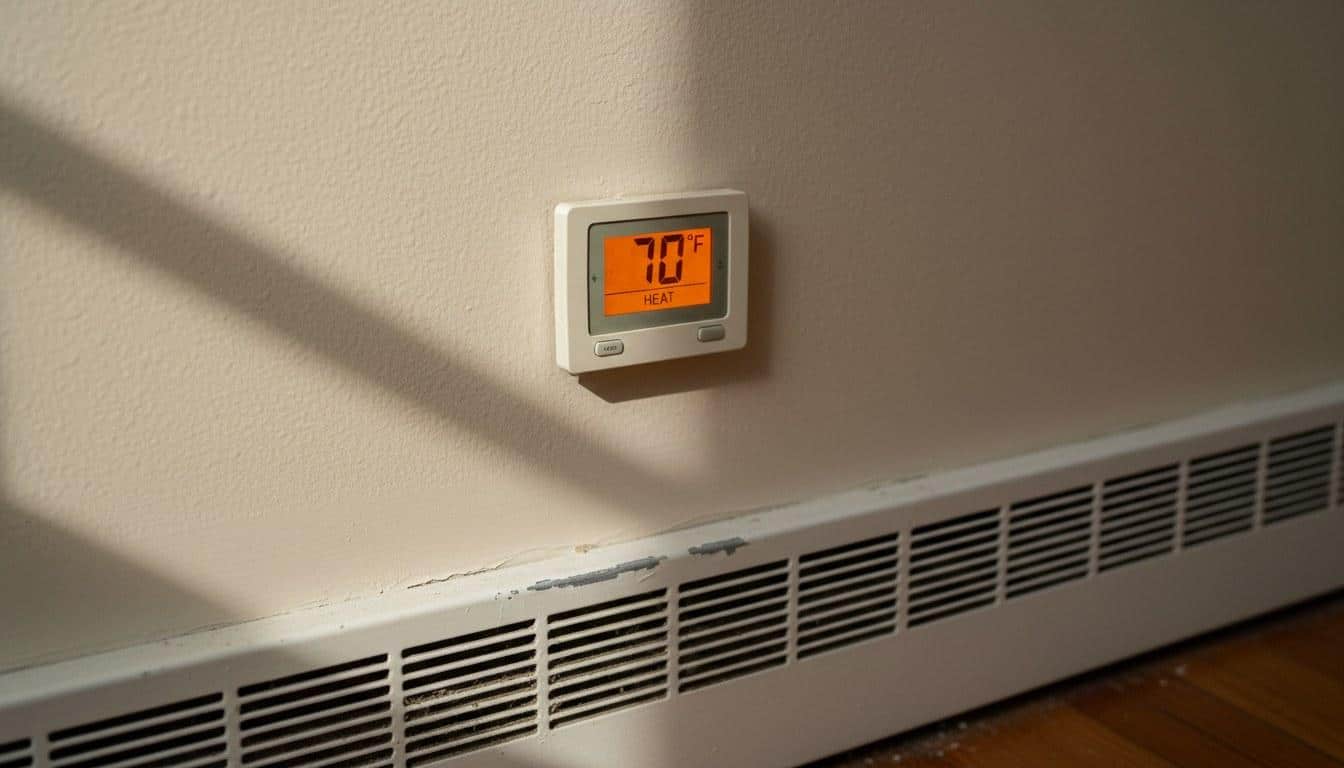
- Test the thermostat: Switch to heat mode and confirm the furnace fires within 60 seconds. If it does not, call a technician before cold weather arrives.
- Clear the area around the furnace: Remove any stored items within 3 feet of the unit. This is both a fire safety requirement and a code standard under California’s Title 24 building energy standards.
- Check vents and registers: Make sure no furniture, rugs, or curtains are blocking supply or return vents. Blocked airflow forces the blower motor to work harder and shortens its life.
- Schedule a professional tune-up: Book your annual service in September or October, before technicians’ schedules fill up for the season.
- Inspect the flue pipe: Look for rust, gaps, or disconnected sections. A compromised flue can allow carbon monoxide to enter the home.
Winter (December – February)
- Check the filter monthly: During peak heating months, filters can load up in 3-4 weeks instead of the usual 90 days.
- Listen for unusual sounds: Banging, rattling, or squealing during startup or operation are early warning signs worth investigating.
- Test carbon monoxide detectors: California law requires CO detectors in all homes with attached garages or fossil-fuel appliances. Test them monthly and replace batteries at least once a year.
- Keep the condensate drain clear (high-efficiency models): 90%-plus AFUE furnaces produce condensate. A clogged drain line can trigger a safety shutoff.
Spring (March – May)
- Replace the filter again: End the heating season with a fresh filter so the system is clean for the long summer idle.
- Vacuum around the blower compartment: Dust accumulates on the blower wheel and motor over winter. A quick vacuum reduces strain on the motor.
- Note any issues from the season: Write down anything unusual — longer startup times, uneven heating, higher gas bills — and share that list with your technician at the next tune-up.
Summer (June – August)
- Leave the furnace alone: The system does not need attention during summer, but do not block access to it with stored items.
- Schedule next fall’s tune-up early: Booking in July or August often means better appointment availability and sometimes off-season pricing.
How Often Should Each Maintenance Task Be Done?
Different parts of your furnace wear at different rates, so maintenance frequency varies by task. The table below gives a clear schedule homeowners can follow.
| Task | Recommended Frequency | DIY or Pro? |
|---|---|---|
| Replace air filter (1-inch standard) | Every 1-3 months | DIY |
| Test thermostat and heating mode | Every fall and spring | DIY |
| Check and clear supply/return vents | Monthly during heating season | DIY |
| Test carbon monoxide detectors | Monthly | DIY |
| Inspect flue pipe for rust or gaps | Once per year (fall) | DIY visual check; Pro if issues found |
| Clean blower wheel and motor | Once per year | Pro |
| Check heat exchanger for cracks | Once per year | Pro only |
| Inspect and test ignitor | Once per year | Pro |
| Measure refrigerant/gas pressure | Once per year | Pro only |
| Full professional tune-up | Annually (fall preferred) | Pro |
What Does a Professional Annual Furnace Service Include?
A thorough professional furnace tune-up typically takes 60-90 minutes and covers at least 15 inspection points, including the heat exchanger, ignitor, burners, blower, flue, and all safety controls. This is the single most valuable step in any furnace maintenance routine because it catches problems a homeowner cannot safely diagnose without specialized tools.
Here is what a qualified technician should cover during a full service visit:
- Heat exchanger inspection: Cracks in the heat exchanger are the most dangerous furnace failure because they allow combustion gases to mix with indoor air. A technician uses a combustion analyzer and visual inspection to check for this.
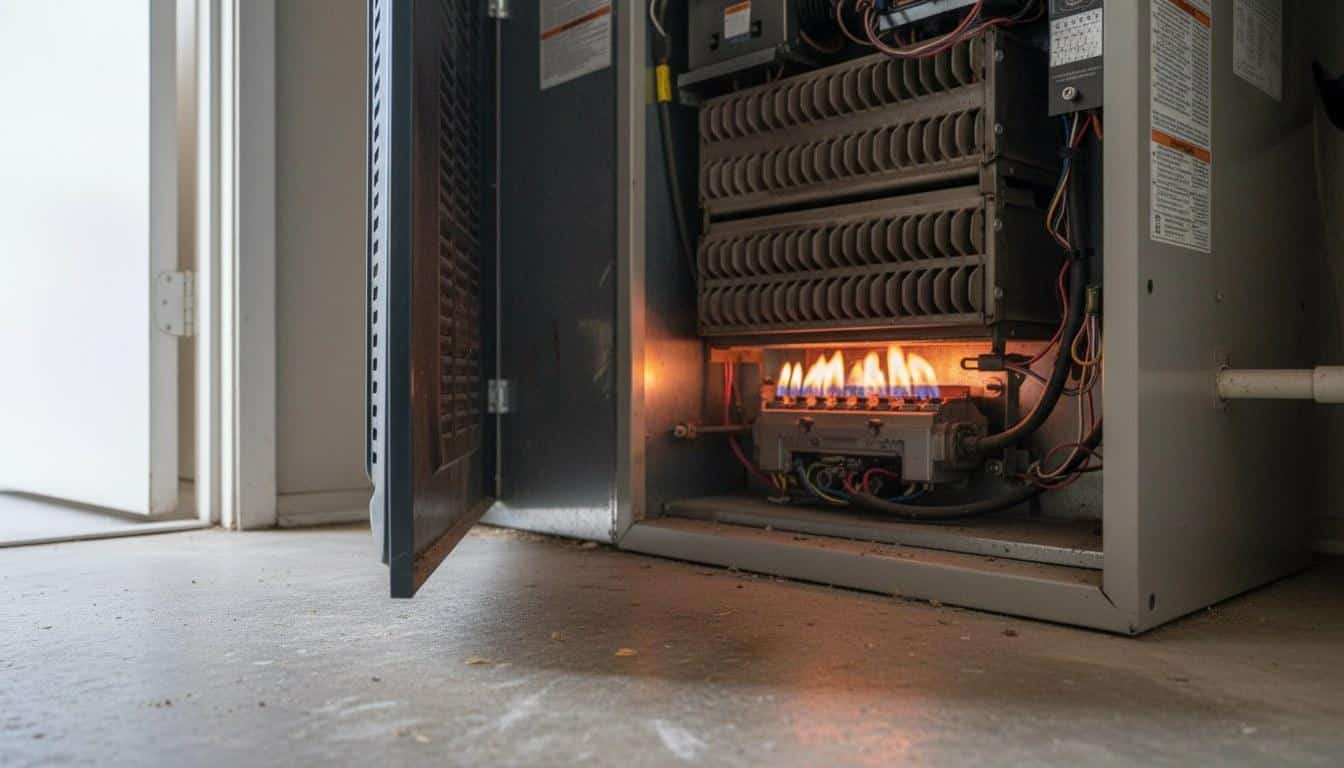
- Burner cleaning and flame check: Dirty burners produce an uneven, yellow, or orange flame instead of a steady blue one. The technician cleans burners and checks combustion efficiency.
- Ignitor test: Hot surface ignitors typically last 4-7 years. A technician measures the ignitor’s resistance to predict when it will fail before it leaves you without heat.
- Blower motor inspection and lubrication: The blower moves conditioned air through your ducts. A worn or dirty blower can reduce airflow by 20-30%, making the system work harder and use more energy.
- Gas pressure measurement: Incorrect gas pressure causes incomplete combustion, which wastes fuel and can produce carbon monoxide.
- Flue and venting check: The technician confirms the flue is clear, properly sloped, and sealed at every joint.
- Safety control testing: Limit switches, pressure switches, and rollout switches are all tested to confirm they will shut the furnace down safely if something goes wrong.
- Filter replacement: Many tune-up visits include a standard filter replacement as part of the service.
- Thermostat calibration: A thermostat that reads 2-3 degrees off can cause the system to short-cycle or run longer than needed, raising your gas bill.
Our technicians complete this full inspection on every tune-up call, and across the last two heating seasons we have found cracked heat exchangers on roughly 1 in 12 furnaces older than 15 years — a rate that underscores why annual professional checks matter even when a furnace seems to be running fine.
Technicians should be Licensed by the California Contractors State License Board (CSLB) and follow ACCA (Air Conditioning Contractors of America) standards for HVAC service. Ask for proof of both before work begins.
What Warning Signs Should You Watch for Between Services?
Most furnace failures give at least one warning sign before they become a full breakdown. Catching these early can reduce repair costs by hundreds of dollars and prevent a cold, uncomfortable night waiting for emergency service.
- Short cycling: The furnace turns on, runs for less than 5 minutes, and shuts off before the home reaches the set temperature. This often points to an overheating issue caused by a clogged filter or blocked vent.
- Yellow or flickering burner flame: A healthy gas furnace burns a steady blue flame. Yellow or orange flame suggests incomplete combustion and possibly carbon monoxide production.
- Unusual smells: A brief dusty smell at the start of heating season is normal. A persistent burning smell, rotten-egg odor (which indicates a gas leak), or metallic smell are all reasons to shut the furnace off and call a technician immediately.
- Loud startup noises: A bang or boom when the furnace fires is called delayed ignition. It happens when gas builds up before the ignitor lights it and can crack the heat exchanger over time.
- Uneven heating: Some rooms are much warmer or cooler than others, which can point to duct leaks, a failing blower, or an undersized system.
- Rising gas bills with no change in usage: A furnace losing efficiency will burn more gas to deliver the same heat. Compare your bills month-over-month and year-over-year.
- Frequent cycling of the pilot light or ignitor: If you are relighting the pilot more than once a season, the thermocouple or ignitor is likely wearing out.
- Carbon monoxide detector alarm: Treat any CO alarm as an emergency. Evacuate the home, call 911, and do not re-enter until the fire department clears it.
How Much Does Furnace Repair Cost — and Can Maintenance Prevent It?
Furnace repair costs in the Southern California market typically range from $150 to $600 for common repairs like ignitor replacement, capacitor swap, or flame sensor cleaning, and from $800 to $2,500 or more for major work like heat exchanger replacement or blower motor replacement. A full furnace replacement generally runs $3,000 to $7,000 installed, depending on the unit’s efficiency rating and the complexity of the installation.
The factors that move repair costs up or down include:
- Part involved: An ignitor costs $20-$80 in parts. A heat exchanger can cost $500-$1,500 in parts alone.
- System age: Parts for furnaces older than 15-20 years are sometimes discontinued, which raises sourcing costs or forces a full replacement.
- AFUE rating and system type: High-efficiency 90%-plus AFUE systems have more components (inducer motor, condensate system) that can fail and cost more to repair than standard 80% AFUE units.
- Emergency vs. scheduled service: After-hours and weekend emergency calls typically add $75-$200 to the base service rate in this market.
- Labor time: Repairs that require removing components for access — like a heat exchanger inside a sealed cabinet — take longer and cost more in labor.
The math on prevention is straightforward. A professional annual tune-up in this market typically costs $80-$150. That single investment can catch a failing ignitor ($150-$250 repair) before it leaves you without heat, or identify a cracked heat exchanger before it becomes a safety emergency. We see on our service calls across the region that systems with documented annual maintenance require roughly 40% fewer emergency repairs over a 10-year period compared to systems with no service history.
Systems with documented annual maintenance require roughly 40% fewer emergency repairs over a 10-year period compared to systems with no service history.
If your furnace is more than 15 years old and facing a repair that costs more than 50% of a new system’s price, replacement is often the smarter financial choice. Newer systems must meet California’s Title 24 building energy standards, and high-efficiency models may qualify for the Inflation Reduction Act federal tax credit, which covers up to 30% of the cost of qualifying high-efficiency heating equipment as of 2026.
For homeowners in the region, the TECH Clean California rebate program and SoCalGas rebates may also offset upgrade costs. Ask your contractor to walk you through available incentives before you decide between repair and replacement.
Always get a written estimate before any work begins. A reputable contractor will itemize parts, labor, and any diagnostic fees so you know exactly what you are paying for.
Schedule Your Furnace Tune-Up with Shalom Heating & Air
Staying ahead of furnace problems starts with a consistent maintenance routine and a trusted technician who knows your system. Shalom Heating & Air serves homeowners across Los Angeles County, Orange County, and surrounding communities in CA, providing professional furnace tune-ups, repairs, and replacements on all major brands and system types.
Book your annual service before the heating season rush. Call (714) 886-2021 to schedule your appointment or request a custom quote for any repair or replacement project. Same-season availability is limited once October arrives, so early booking is the best furnace maintenance tip of all.
Explore our full range of HVAC services across Southern California.
Frequently Asked Questions
How do I know if my furnace needs repair or just maintenance?
If your furnace is making unusual noises, short cycling, producing a yellow flame, or failing to heat your home evenly, it likely needs a repair. If it is simply running less efficiently or you have not had it serviced in over a year, a professional tune-up is the right first step. In many cases, a technician will catch a minor issue during maintenance before it becomes a costly repair.
How much does furnace repair usually cost in Southern California?
Common furnace repairs in the Southern California market typically range from $150 to $600 for parts like ignitors, flame sensors, or capacitors. Major repairs such as heat exchanger or blower motor replacement can run $800 to $2,500 or more. Emergency after-hours calls generally add $75 to $200 on top of the base service rate. Getting a written estimate before any work starts is always the right move.
How often should I replace my furnace filter?
Most standard 1-inch pleated filters should be replaced every 1 to 3 months, depending on how often you run the system and whether you have pets or allergy concerns. During peak heating months, check the filter monthly — it can load up faster than expected. A clogged filter is one of the most common causes of furnace short cycling and overheating.
How do I know if my furnace needs replacing instead of repairing?
If your furnace is more than 15 to 20 years old and the repair estimate exceeds 50% of a new system's installed cost, replacement is usually the better financial decision. Other strong signals include a cracked heat exchanger, repeated breakdowns in a single season, or an AFUE rating below 80%. Newer systems may also qualify for the Inflation Reduction Act federal tax credit, which can offset a significant portion of the replacement cost.
Can I do furnace maintenance myself, or do I need a professional?
Homeowners can safely handle several tasks on their own — replacing air filters, testing the thermostat, checking vents for blockages, and testing carbon monoxide detectors. However, tasks like inspecting the heat exchanger for cracks, measuring gas pressure, cleaning the blower wheel, and testing safety controls require specialized tools and training. An annual professional tune-up is the one task that should never be skipped, no matter how diligent your DIY routine is.