Whole-Home Air Purification vs. Portable Air Purifiers: What’s Better for Your Home?
Trying to decide between a whole-home air purifier and a portable unit? This guide breaks down coverage, cost, and performance so you can make the right call for your indoor air quality.
Whole Home Air Purifier vs. Portable Air Purifier: What Is the Core Difference?
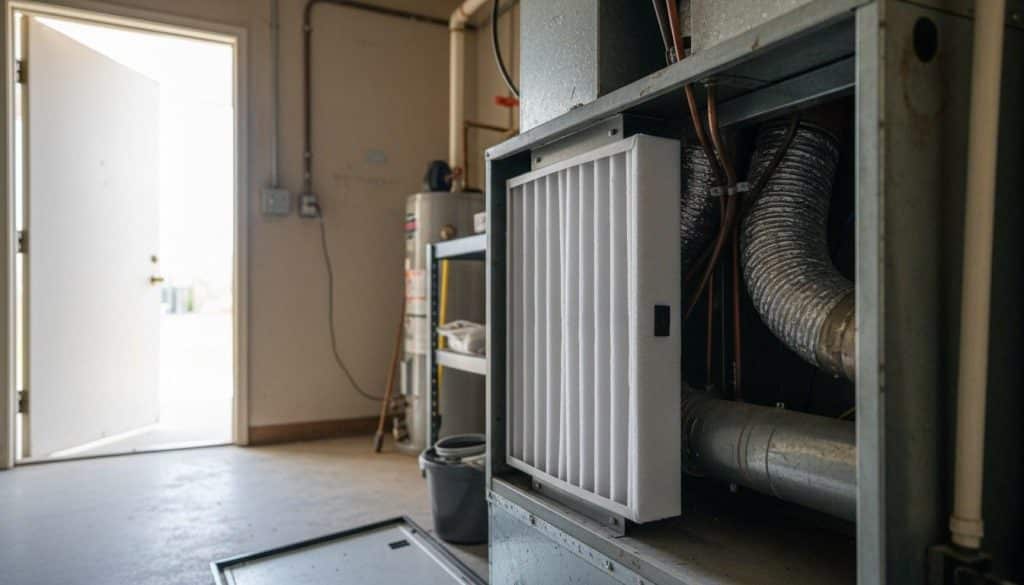
A whole-home air purifier integrates directly into your HVAC system and filters air throughout every room, while a portable air purifier is a standalone unit that cleans the air in a single space. The whole home air purifier vs portable air purifier decision comes down to coverage, convenience, and how seriously you want to address indoor air quality.
Portable units are easy to move and require no installation. Whole-home systems are built into your ductwork and run automatically every time your heating or cooling system operates. For households in Southern California — where wildfire smoke, high pollen counts, and year-round HVAC use are common — the difference in daily performance is significant.
How Does Each Type of Air Purifier Actually Work?
Whole-home air purifiers mount inside your HVAC system — typically at the air handler or in the return duct — and treat every cubic foot of air that passes through your system. Portable air purifiers draw room air through a filter using a built-in fan, then release cleaned air back into the same room.
Both types use one or more filtration technologies. Understanding those technologies helps you compare them fairly.
Common Filtration Technologies
- HEPA filtration: Captures particles as small as 0.3 microns with at least 99.97% efficiency, per EPA standards. Found in both portable and whole-home systems.
- Activated carbon: Absorbs odors, volatile organic compounds (VOCs), and gases. Common in portable units and available as an add-on in whole-home systems.
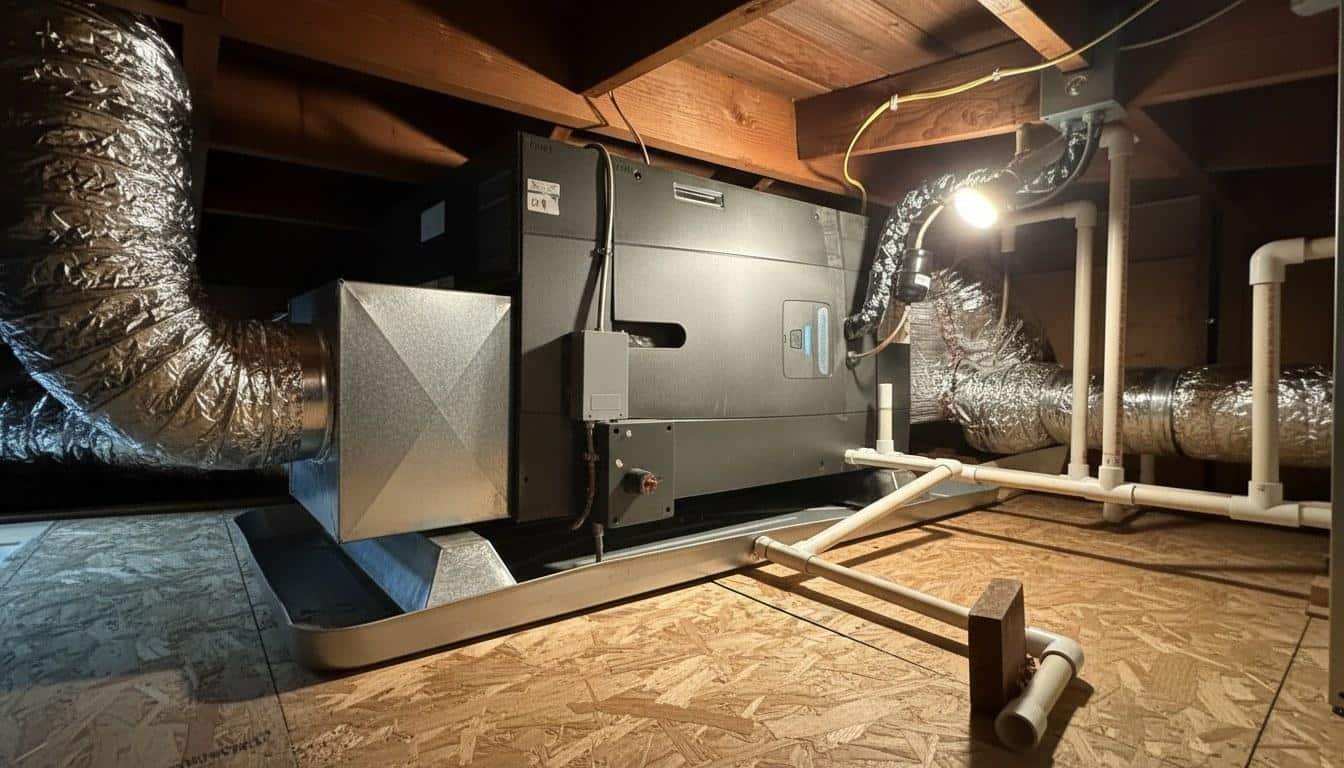
- UV-C germicidal light: Kills bacteria, viruses, and mold spores by disrupting their DNA. Typically used in whole-home systems installed near the air handler coil.
- Electronic/ionizing: Charges particles so they stick to collection plates or surfaces. Used in both types but more common in whole-home installations.
- High-MERV media filters: Whole-home systems often use MERV 11 to MERV 16 filters, which capture fine particles that standard 1-inch filters miss entirely.
Our technicians have found that homes in Southern California running their HVAC systems 8 or more months per year see roughly 3 to 4 times more air passes through a whole-home filter annually than through a portable unit covering the same square footage — making filter media quality and system integration especially important in this climate.
Which One Covers More of Your Home?
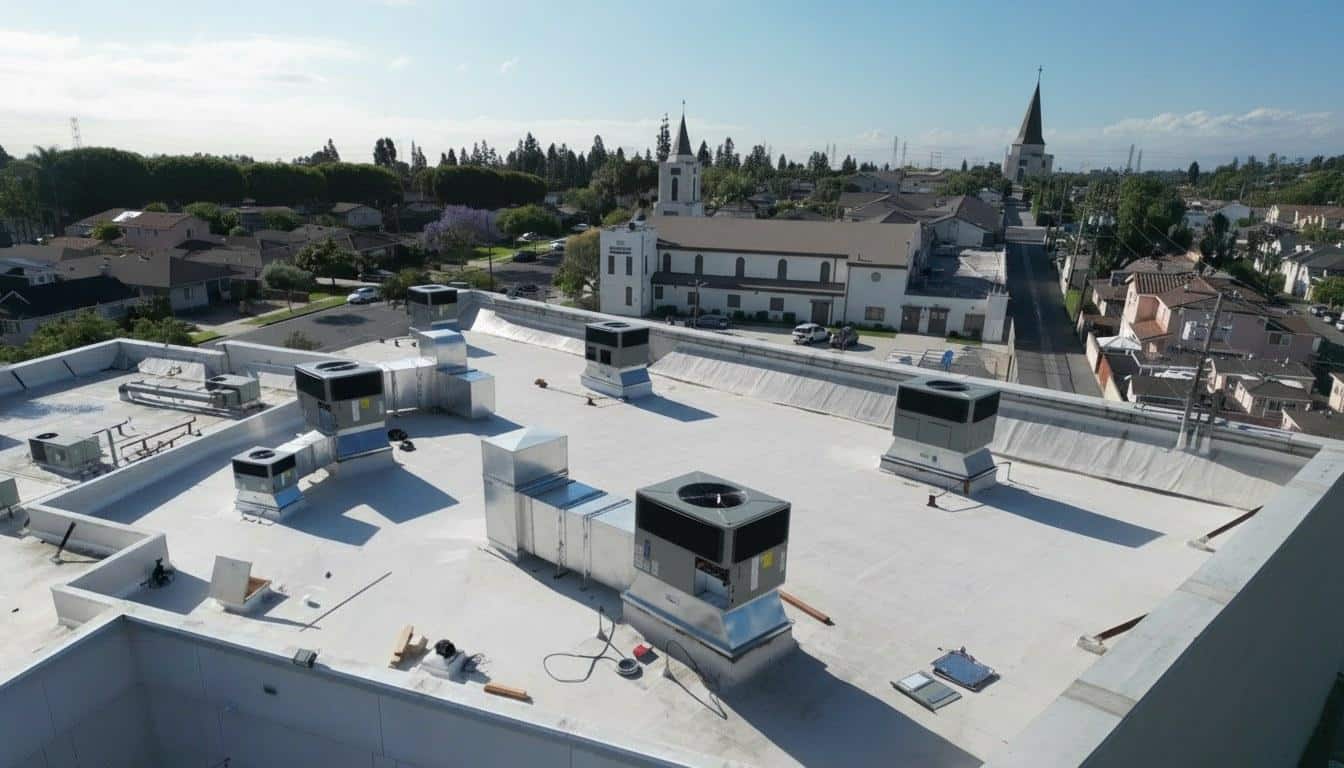
A whole-home air purifier covers every room connected to your duct system — typically 1,500 to 4,000+ square feet — in a single installation. A portable air purifier is rated for one room, usually between 150 and 500 square feet depending on the model’s CADR (Clean Air Delivery Rate).
Coverage is the single biggest practical difference between the two options. A 2,000-square-foot home would need 5 to 8 portable units running simultaneously to match the reach of one whole-home system — and even then, hallways, closets, and transitional spaces would be missed.
A 2,000-square-foot home would need 5 to 8 portable units running simultaneously to match the reach of one whole-home installation.
Coverage Comparison at a Glance
| Feature | Whole-Home Air Purifier | Portable Air Purifier |
|---|---|---|
| Coverage area | Entire home (all ducted rooms) | One room (150–500 sq ft typical) |
| Installation required | Yes — HVAC integration | No — plug and place |
| Operates automatically | Yes — runs with your HVAC system | No — manual on/off |
| Filter types available | HEPA, UV-C, MERV 11–16, carbon, ionizing | HEPA, carbon, ionizing |
| Noise level | Silent (uses existing HVAC fan) | Audible fan (30–55 dB typical) |
| Ongoing maintenance | Filter change every 6–12 months | Filter change every 3–6 months per unit |
| Best fit | Any home size — from single-family to large multi-room | Supplemental coverage or renters |
What Does Each Option Cost — and What Drives the Price?
Portable air purifiers typically range from $50 to $800 per unit depending on room coverage and filtration type. Whole-home air purifier systems — including professional installation — generally range from $500 to $3,000 in the Southern California market, depending on the technology chosen and the complexity of your existing HVAC setup.
The price gap narrows quickly once you account for how many portable units a whole home actually needs. Outfitting a 5-bedroom house with quality portable purifiers can easily exceed the cost of a single whole-home installation — with more ongoing filter replacements and no automatic operation.
Factors That Move the Price
- Filtration technology: A basic MERV media upgrade costs less than a UV-C system with a HEPA bypass filter.
- HVAC system compatibility: Older systems may need a duct modification or bypass to handle higher-MERV filters without restricting airflow.
- Square footage: Larger homes may require a more powerful media filter or a second UV-C lamp near the coil.
- Brand and equipment tier: ENERGY STAR-rated whole-home systems tend to carry a modest price premium but reduce long-term energy draw.
- Number of portable units needed: Multiply the per-unit cost by the rooms you want covered to get a true apples-to-apples comparison.
Some whole-home indoor air quality upgrades may qualify for the Inflation Reduction Act federal tax credit when paired with a qualifying HVAC system replacement, which can offset a meaningful portion of the installed cost. Always confirm eligibility with your tax advisor and contractor before purchasing.
As of 2026, California’s TECH Clean California program also offers rebates on qualifying HVAC and indoor air quality improvements for eligible households — worth checking before you commit to either option.
Which Air Purifier Is Better for Allergies, Smoke, and Pollutants?
For whole-house allergen and smoke control, a whole-home air purifier consistently outperforms portable units because it intercepts airborne particles before they circulate into living spaces — not after they’ve already settled. Portable units can help in a specific room but cannot stop smoke or pollen from spreading through the rest of the house via your duct system.
Performance by Pollutant Type
- Wildfire smoke (PM2.5 particles): Particles as small as 1 micron penetrate deep into lungs. A MERV 13 or higher whole-home filter captures these; most portable units with true HEPA also capture them, but only in one room.
- Pollen and dust: MERV 11 whole-home filters capture most pollen (10–100 microns). Portable HEPA units work in the room they’re placed in.
- Pet dander: Dander (2.5–10 microns) circulates through ductwork constantly. A whole-home system intercepts it at the source; a portable unit only captures what drifts into that room.
- Mold spores: UV-C whole-home systems mounted near the evaporator coil prevent mold growth on the coil itself — a problem portable units cannot address at all.
- VOCs and odors: Activated carbon filters in either system type help, but a whole-home carbon add-on treats air from every room continuously.
- Bacteria and viruses: UV-C germicidal systems installed in whole-home setups are among the most effective tools available, per EPA indoor air quality guidance.
Across our service calls in Southern California, we see a sharp increase in whole-home air purifier inquiries every August and September — directly tied to regional wildfire events — with customers reporting that portable units in bedrooms weren’t enough to keep smoke levels tolerable in kitchens and common areas.
How Do You Choose the Right System for Your Home?
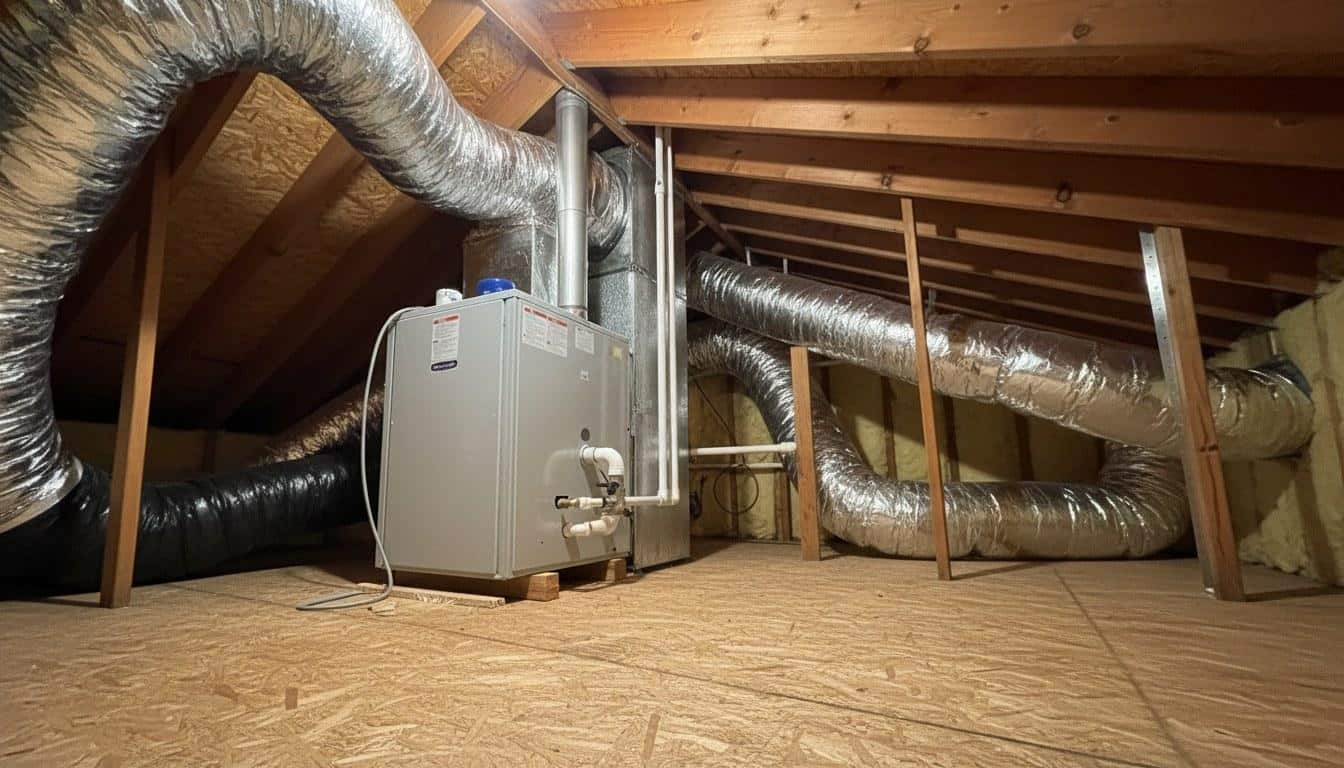
Choose a whole-home air purifier if you own your home, have a central HVAC system, and want consistent air quality in every room without managing multiple devices. Choose a portable air purifier if you’re renting, need immediate relief in one room, or want to supplement an existing whole-home system in a high-use space like a bedroom.
A few practical questions help narrow the decision:
- Do you own your home? Whole-home systems are a permanent installation. Renters typically can’t modify ductwork, making portable units the practical choice.
- How old is your HVAC system? Systems older than 15 years may need an airflow assessment before adding a high-MERV filter. A licensed HVAC contractor can check static pressure and recommend the right filter upgrade without stressing your blower motor.
- What are your primary concerns? Smoke and allergens throughout the house call for a whole-home solution. A single person with asthma sleeping in one bedroom may get real relief from a quality portable HEPA unit in that room.
- What is your budget? Portable units have a lower entry cost but higher per-square-foot cost at scale. Whole-home systems have a higher upfront cost but lower cost-per-room and less ongoing maintenance per area covered.
- Do you want automatic operation? Whole-home systems run every time your HVAC runs — no buttons to push, no forgetting to turn it on. That matters for households with young children or elderly members who may not manage portable devices consistently.
When a whole-home installation is the right call, the work should be done by a contractor licensed by the California Contractors State License Board (CSLB). Improper duct modifications or filter sizing can restrict airflow and reduce both air quality and HVAC efficiency. Always ask for proof of license and a written scope of work before any installation begins.
ACCA (Air Conditioning Contractors of America) standards recommend a Manual J load calculation when pairing a new air quality system with any HVAC modification — this ensures the system is sized correctly for your home’s actual volume and ventilation needs, not just a rough square footage estimate.
Ready to Improve Your Indoor Air Quality?
Whether you’re leaning toward a whole-home system or want to understand what options fit your existing HVAC setup, Shalom Heating & Air can walk you through the right solution for your home. We install whole-home air purification systems — including MERV media upgrades, UV-C germicidal systems, and HEPA bypass units — across Southern California.
Call (714) 886-2021 to schedule an indoor air quality consultation. Get a written quote before any work begins, and ask about current rebate programs that may apply to your installation. Shalom Heating & Air serves homeowners across Southern California — call today and breathe easier tomorrow.
Explore our full range of HVAC services across Southern California.
Frequently Asked Questions
Is a whole-home air purifier worth the cost compared to just buying portable units?
For most homeowners with central HVAC, a whole-home air purifier is worth the investment. It covers every room automatically, requires fewer filter changes per square foot, and operates silently without any manual effort. Outfitting a 4-bedroom home with quality portable HEPA units can cost as much or more than a single whole-home installation — with more ongoing maintenance.
Can I add a whole-home air purifier to my existing AC system?
Yes, most central HVAC systems can be upgraded with a whole-home air purifier. Common options include a high-MERV media filter cabinet, a UV-C germicidal light near the evaporator coil, or a HEPA bypass unit. A licensed HVAC contractor should assess your system's airflow capacity first, since high-MERV filters can restrict airflow in older or undersized systems.
How often do I need to change the filter in a whole-home air purifier?
Most whole-home media filters need replacement every 6 to 12 months, depending on the MERV rating and how much the system runs. Homes with pets, high dust levels, or wildfire smoke exposure may need changes closer to every 6 months. UV-C bulbs typically last 1 to 2 years before output drops below effective germicidal levels.
Do portable air purifiers actually work for wildfire smoke?
Portable HEPA air purifiers do capture wildfire smoke particles — including PM2.5 — in the room where they're placed. The problem is that smoke enters through your duct system and spreads throughout the house. A portable unit in one bedroom won't protect your kitchen or living room. A whole-home system with a MERV 13 or higher filter treats smoke before it circulates into any room.
What MERV rating should I look for in a whole-home air purifier filter?
For general allergen control, a MERV 11 filter is a solid minimum. For wildfire smoke, pet dander, and fine dust, MERV 13 to MERV 16 is recommended by the EPA. However, filters above MERV 13 can restrict airflow in systems not designed for them, so always have a licensed contractor confirm your system can handle the higher-rated filter before upgrading.