Mitsubishi Inverter Heat Pumps: A Complete Buying Guide
Mitsubishi inverter heat pumps are among the most efficient heating and cooling systems available for California homes, but picking the right model and size takes more than a quick search. This guide walks you through every decision you need to make.
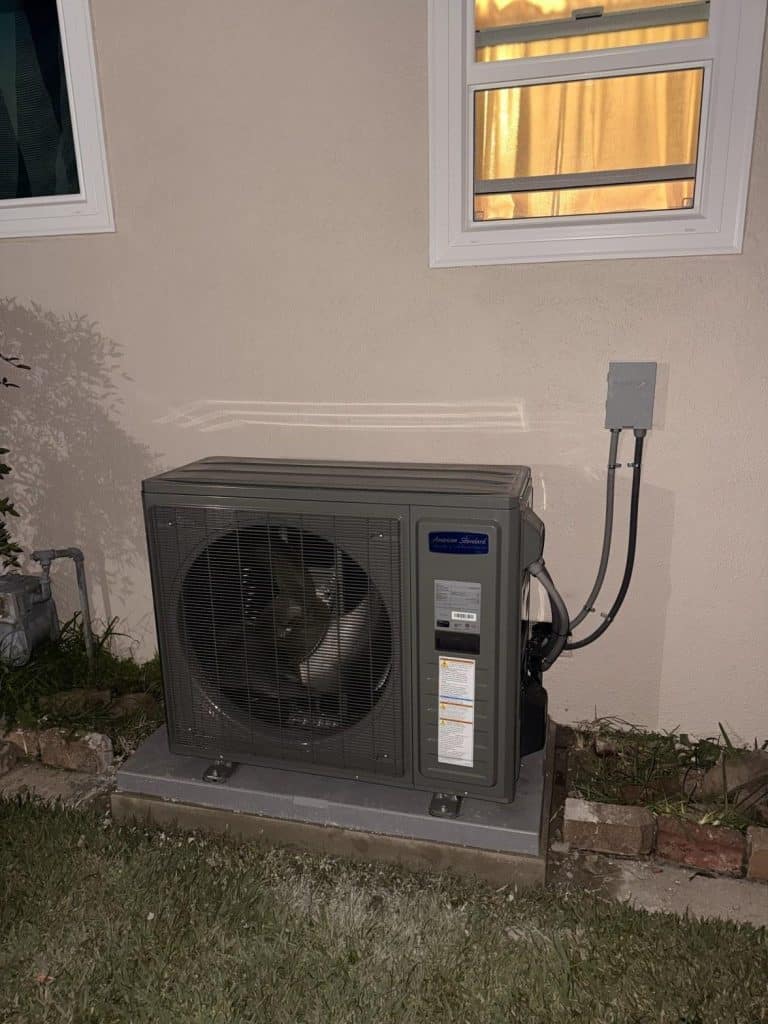
What Makes Mitsubishi Inverter Heat Pumps Different from Standard Systems?
Mitsubishi inverter heat pumps use a variable-speed compressor that adjusts its output continuously rather than cycling fully on and off. That single design difference is why they use 25 to 40 percent less energy than single-stage systems of the same capacity. A conventional system runs at 100 percent power until the room hits the target temperature, then shuts off completely. An inverter system ramps up or down to match the exact load, which keeps temperatures steadier and avoids the energy spike every time the compressor starts.
The inverter technology also allows these systems to produce heat efficiently even when outdoor temperatures drop below 0 degrees Fahrenheit. Mitsubishi’s Hyper-Heat line, for example, maintains rated heating capacity down to 5 degrees Fahrenheit and produces some heat all the way to negative 13 degrees Fahrenheit, according to Mitsubishi Electric’s published specifications. For Southern California winters that rarely dip below 35 to 40 degrees Fahrenheit, that cold-climate headroom means the system almost never struggles.
Quieter operation is another practical benefit. Indoor air handlers on most Mitsubishi units run as low as 19 decibels at minimum speed, which is quieter than a whispered conversation. That matters in bedrooms, home offices, and open-plan living spaces where a cycling central system would be disruptive.
What Types of Mitsubishi Inverter Heat Pumps Are Available?
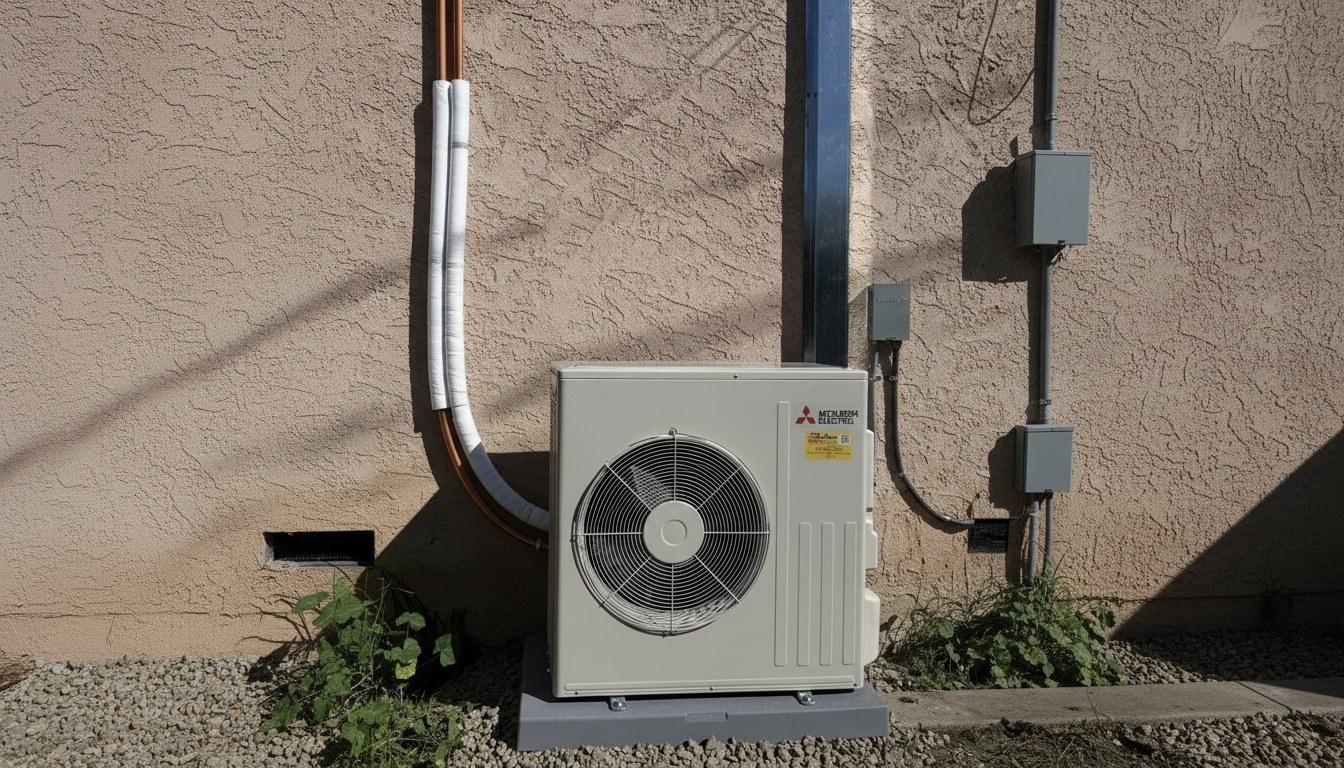
Mitsubishi offers four main system configurations: single-zone mini-splits, multi-zone mini-splits, ducted air handlers, and the larger Zuba-Central and Mr. Slim ducted systems for whole-home replacement. Each type fits a different home layout and budget.
- Single-zone mini-split: One outdoor unit paired with one indoor air handler. Best for adding comfort to a room addition, garage, ADU, or a space that a central system doesn’t reach well. Capacity ranges from 6,000 BTU to 36,000 BTU.
- Multi-zone mini-split (MXZ series): One outdoor unit connected to two to eight indoor air handlers, each controlled independently. Ideal for homes where different rooms have very different comfort needs or where occupants keep different schedules.
- Ducted air handler (SVZ or PEA series): The indoor unit connects to existing ductwork instead of mounting on a wall or ceiling. This is the cleanest retrofit path for homes that already have ducts but want to replace an aging furnace and AC with a single efficient system.
- Mr. Slim and Zuba-Central: Larger-capacity ducted systems designed for whole-home heating and cooling in bigger square footage. These are commercial-grade products that Mitsubishi also positions for large residential applications.
| System Type | Best For | Ductwork Needed? | Zones Supported | Typical Installed Cost Range |
|---|---|---|---|---|
| Single-zone mini-split | One room, ADU, garage | No | 1 | $3,500 to $5,500 |
| Multi-zone mini-split (MXZ) | Homes with 2 to 8 distinct areas | No | 2 to 8 | $6,000 to $14,000+ |
| Ducted air handler | Homes with existing ducts | Yes | 1 per air handler | $5,000 to $10,000 |
| Mr. Slim / Zuba-Central | Large homes, full replacement | Yes | Multiple | $9,000 to $18,000+ |
Cost ranges above reflect typical regional market conditions in California. Actual quotes depend on home size, electrical panel capacity, refrigerant line length, and local labor rates. Always request a written quote before any work begins.
How Do You Choose the Right Size and Efficiency Rating?
Proper sizing requires a Manual J load calculation, not a square-footage rule of thumb. An oversized unit short-cycles, never fully dehumidifies the air, and wears out faster. An undersized unit runs constantly and still can’t hold temperature on the hottest days.
The Air Conditioning Contractors of America (ACCA) defines Manual J as the industry standard for residential load calculations. A proper Manual J accounts for insulation levels, window area and orientation, ceiling height, local climate data, and the number of occupants. In Southern California’s climate zone, homes often need less heating capacity than the same square footage would require in a colder region, which means a smaller, less expensive unit may be the right answer.
For efficiency, look at the ENERGY STAR database. As of 2026, Mitsubishi’s M-Series and P-Series units commonly carry SEER2 ratings between 20 and 33. SEER2 is the updated efficiency metric that replaced SEER starting in January 2023 under revised U.S. Department of Energy test procedures. A higher SEER2 means lower monthly electricity bills, but units above SEER2 25 typically cost more upfront. The breakeven point depends on how many hours per year you run the system and your local electricity rate.
Our technicians perform Manual J calculations on every installation we quote, and we consistently find that roughly 60 percent of homes in Southern California were previously fitted with equipment one to two tons larger than the load actually requires.
California’s Title 24 building energy standards also set minimum efficiency thresholds for new installations. Any replacement system in California must meet or exceed those minimums, and Mitsubishi’s current lineup clears them comfortably.
What Does a Mitsubishi Inverter Heat Pump Cost in California?
In the California regional market, a single-zone Mitsubishi mini-split typically costs $3,500 to $5,500 installed. Multi-zone systems for a whole home generally run $8,000 to $16,000 or more depending on the number of indoor units and electrical work required.
Several factors push costs toward the higher end of those ranges:
- Electrical panel upgrade: Older homes with 100-amp panels often need an upgrade to 200 amps before a multi-zone heat pump can be added. Panel upgrades in Southern California typically add $2,000 to $4,000 to the project.
- Refrigerant line length: Mitsubishi specifies maximum line set lengths for each model. Longer runs between the outdoor unit and indoor air handlers require more refrigerant, more labor, and sometimes a line voltage booster.
- Wall penetrations and line-set routing: Older construction with stucco exteriors or concrete block walls takes more time to penetrate cleanly, which adds labor hours.
- Permit and inspection fees: California requires permits for HVAC replacements in most jurisdictions. Fees vary by county but commonly range from $150 to $500 per project.
- Number of zones: Each additional indoor air handler adds roughly $1,200 to $2,500 in equipment and labor cost.
This mitsubishi inverter heat pumps guide uses market-range figures only. For an accurate number on your specific home, request a custom quote from a licensed contractor.
What Incentives and Rebates Can You Apply to This Purchase?
California homeowners who install a qualifying heat pump can currently combine a federal tax credit with state and utility rebates, reducing the net cost by $2,000 to $8,000 or more depending on income and equipment type.
California homeowners who install a qualifying heat pump can currently combine a federal tax credit with state and utility rebates, reducing the net cost by $2,000 to $8,000 or more.
The Inflation Reduction Act federal tax credit allows homeowners to claim 30 percent of the installed cost of a qualifying heat pump, up to $2,000 per year, through 2032. The credit applies to the equipment and installation labor. See the official IRS guidance at IRS.gov for eligibility details and how to claim it on your return.
On top of the federal credit, California’s TECH Clean California program offers point-of-sale rebates for heat pump installations through participating contractors. Rebate amounts vary by equipment type and income level but have reached $3,000 or more for qualifying systems. Southern California utilities including SoCalGas and Southern California Edison also run their own incentive programs that stack with state rebates in some cases.
To qualify for most rebates, the equipment must carry an ENERGY STAR certification, the installer must be licensed by the California Contractors State License Board (CSLB), and the project must pass a local inspection. Keep all invoices and equipment model numbers, because rebate applications require that documentation.
Across our service calls over the past two years, we have seen homeowners reduce their out-of-pocket cost by an average of $3,500 to $5,000 when they stack the federal tax credit with a TECH Clean California rebate on a qualifying Mitsubishi system.
What Mistakes Should You Avoid When Buying a Mitsubishi Heat Pump?
The most common and costly mistake is skipping the load calculation and choosing a unit based on square footage alone. The second most common is hiring an installer who is not certified by Mitsubishi’s Diamond Contractor program, which voids the extended warranty.
- Skipping the Manual J calculation: Oversized equipment short-cycles, creates humidity problems, and wears out compressor components faster. Always insist on a written load calculation before you approve any equipment selection.
- Choosing the wrong system type for your home: A ductless mini-split is not always the best answer. If your home already has well-sealed ducts in good condition, a ducted air handler may deliver better comfort at a lower total cost.
- Ignoring the electrical requirements: Mitsubishi multi-zone systems often require a dedicated 240-volt circuit. Confirm your panel has capacity before signing a contract, or budget for the upgrade.
- Buying from an uncertified installer: Mitsubishi’s standard warranty is 5 years on parts. When installed by a Diamond Contractor, that extends to 12 years on parts and 12 years on the compressor. That difference represents thousands of dollars in potential repair coverage.
- Forgetting about refrigerant regulations: As of 2025, EPA refrigerant regulations (Section 608) govern how refrigerant is handled during installation and service. Work only with technicians who hold EPA 608 certification to avoid liability and ensure the system is charged correctly.
- Delaying the permit: Unpermitted HVAC work can complicate a home sale and may void your homeowner’s insurance claim if a related loss occurs. Pull the permit before work begins.
- Not comparing multiple quotes: Equipment cost, labor rates, and included warranty service vary widely between contractors. Get at least three written quotes that itemize equipment model numbers, line-set length, electrical work, and permit fees separately.
Get Expert Help Choosing and Installing Your System
Choosing the right Mitsubishi inverter heat pump takes more than reading a spec sheet. Size, zone configuration, electrical capacity, rebate eligibility, and installer certification all have to line up for the system to perform as advertised and qualify for the full warranty.
Shalom Heating & Air serves homeowners across Southern California and can walk you through every step of this process, from the Manual J load calculation to rebate paperwork. Schedule your consultation or request a written quote by calling (714) 886-2021. A licensed, CSLB-credentialed technician will assess your home and recommend the right system for your layout, budget, and comfort goals.
Explore our full range of HVAC services across Southern California.
Frequently Asked Questions
How much does it usually cost to install a Mitsubishi heat pump in California?
In the California regional market, a single-zone Mitsubishi mini-split typically runs $3,500 to $5,500 installed. A multi-zone system for a whole home generally costs $8,000 to $16,000 or more, depending on the number of indoor units, electrical work, and permit fees. Stacking the Inflation Reduction Act federal tax credit with TECH Clean California rebates can reduce that net cost by $3,500 to $5,000 or more for qualifying homeowners.
How do I know what size Mitsubishi heat pump my home needs?
A proper Manual J load calculation is the only reliable way to size a heat pump for your home. Square-footage rules of thumb routinely result in oversized equipment that short-cycles and creates humidity problems. A licensed HVAC contractor should perform the calculation before recommending any specific model or capacity.
Do Mitsubishi inverter heat pumps work well in hot California summers?
Yes. Mitsubishi's M-Series and P-Series units carry SEER2 ratings between 20 and 33, which means they cool very efficiently even during extended heat events. The variable-speed compressor adjusts output continuously, so the system holds a steady indoor temperature without the energy spikes that come from a conventional single-stage unit cycling on and off.
What warranty do I get on a Mitsubishi heat pump?
Mitsubishi's standard warranty is 5 years on parts. When the system is installed by a Mitsubishi Diamond Contractor, the warranty extends to 12 years on parts and 12 years on the compressor. That extended coverage is only available if the installation is done by a certified contractor and the product is registered within 90 days of installation.
Can I get a tax credit for installing a Mitsubishi heat pump?
Yes. Under the Inflation Reduction Act federal tax credit, homeowners can claim 30 percent of the installed cost of a qualifying heat pump, up to $2,000 per year, through 2032. The system must be ENERGY STAR certified and installed by a licensed contractor. California residents may also qualify for TECH Clean California rebates that stack on top of the federal credit.