How to Lower Your HVAC Energy Bills: A Complete Efficiency Guide
This lower HVAC energy bills guide walks California homeowners through every practical step — from thermostat settings to equipment upgrades — to cut monthly cooling and heating costs.
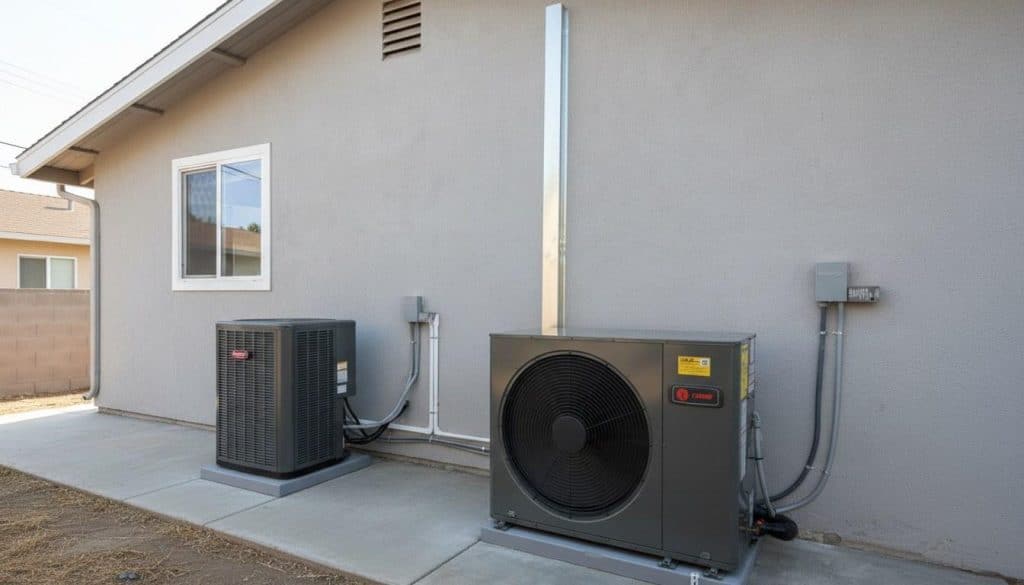
This lower hvac energy bills guide is built for California homeowners who are tired of opening a summer utility bill and wondering where all that money went. HVAC systems — air conditioners, furnaces, and heat pumps — account for roughly 40 to 50 percent of a typical home’s total energy use, according to the U.S. Department of Energy. Small changes in how you run and maintain your system can add up to hundreds of dollars in annual savings.
Why Are HVAC Systems Responsible for Such High Energy Bills?
HVAC equipment uses more electricity than almost anything else in your home, and an aging or poorly maintained system works harder than it needs to — driving up costs every month. In Southern California, summer temperatures regularly push above 90°F, forcing air conditioners to run longer cycles. The harder a system runs, the more energy it burns.
Several factors make the problem worse over time:
- Dirty air filters: A clogged filter forces the blower motor to work harder, increasing energy draw by up to 15 percent.
- Refrigerant leaks: Low refrigerant makes the compressor strain to reach the set temperature, raising runtime and wear.
- Leaky ductwork: The U.S. Department of Energy estimates that duct leaks waste 20 to 30 percent of conditioned air before it reaches living spaces.
- Old equipment: Systems older than 15 years often operate at SEER ratings of 8 to 10, well below today’s minimum of 15 SEER2 required under California Energy Commission appliance standards.
- Poor insulation: Heat seeping through walls and attics forces the system to run longer to maintain comfort.
Understanding these root causes is the first step. Once you know what is driving the bill, you can target the highest-impact fixes first.
What Are the Fastest Free and Low-Cost Ways to Lower HVAC Energy Bills?
The fastest way to lower your HVAC energy bills is to change your air filter, adjust your thermostat schedule, and seal obvious air leaks — steps that cost little or nothing and can cut monthly bills noticeably within one billing cycle. These actions do not require a contractor and can be done in an afternoon.
Thermostat Settings That Save Money
The U.S. Department of Energy recommends setting your thermostat to 78°F when you are home and raising it to 85°F when you are away during summer. Each degree you raise the set point during cooling season saves roughly 1 to 3 percent on your cooling costs. A programmable or smart thermostat automates this schedule so you never forget.
Air Filter Replacement
Standard 1-inch filters should be replaced every 30 to 60 days during heavy-use months. Thicker 4-inch media filters can last 6 to 12 months. Letting a filter go past its replacement window is one of the most common causes of reduced airflow and higher energy use we see on service calls across the region.
Sealing Air Leaks
Check around window frames, door thresholds, attic hatches, and electrical outlets on exterior walls. Weatherstripping and caulk cost under $30 at any hardware store. Sealing these gaps reduces the load on your HVAC system so it reaches the target temperature faster and shuts off sooner.
Window Coverings and Shade
Closing blinds or blackout curtains on south- and west-facing windows during afternoon hours can reduce solar heat gain significantly. This simple habit reduces how long the AC runs on the hottest part of the day.
How Does Equipment Efficiency Affect What You Pay Each Month?
A higher-efficiency HVAC system uses less electricity to deliver the same amount of cooling or heating, directly reducing your monthly bill — often by 20 to 40 percent compared to a unit installed 15 or more years ago. The key rating to understand is SEER2 for air conditioners and heat pumps, and AFUE for gas furnaces.
Our technicians replace roughly 3 in 5 systems in Southern California that are still running on pre-2010 equipment — units that typically carry SEER ratings of 8 to 10, compared to modern systems rated 16 to 22 SEER2.
Here is how efficiency ratings translate to real-world operating costs:
| System Type | Efficiency Rating | Typical Annual Savings vs. 10-SEER Unit | Best For |
|---|---|---|---|
| Standard Central AC | 15 SEER2 (minimum CA standard) | Baseline — meets code | Budget-conscious replacement |
| High-Efficiency Central AC | 18-20 SEER2 | 25 to 35 percent lower cooling costs | Homes with high summer usage |
| Variable-Speed Heat Pump | 20+ SEER2 | Up to 40 percent lower heating and cooling costs | Year-round efficiency, any home size |
| High-Efficiency Gas Furnace | 96% AFUE | 30 percent less gas vs. 70% AFUE unit | Homes with natural gas service |
ENERGY STAR certified equipment meets efficiency thresholds set by the EPA and often qualifies for utility rebates and federal tax credits. When comparing systems, look for the ENERGY STAR label as a baseline quality check.
Proper sizing also matters. A system that is too large short-cycles — it turns on and off too frequently — which wastes energy and wears out components faster. A Manual J load calculation, the ACCA industry standard, determines the correct size for your specific home before any new equipment is installed.
When Should You Repair vs. Replace Your HVAC System to Save Money?
If your system is under 10 years old and the repair cost is less than half the price of a new unit, repair is usually the smarter financial choice. If the system is 15 years or older, or if repair costs exceed 50 percent of replacement cost, a new high-efficiency system will pay for itself faster through lower monthly bills.
Use this decision framework:
- Age under 10 years: Repair first unless the compressor or heat exchanger has failed — those are major components that often cost more to fix than the remaining useful life justifies.
- Age 10 to 15 years: Weigh repair cost against the efficiency gain a new system would deliver. A 16 SEER2 replacement for a 10-SEER unit can save $300 to $600 per year in a Southern California climate, depending on home size and usage.
- Age over 15 years: Replacement almost always wins on total cost over a 5-year horizon, especially with available rebates and tax credits reducing the upfront investment.
- Frequent repairs: If you have paid for two or more repairs in the past 18 months, the system is likely in a failure cycle. Continued repairs rarely stop the pattern.
- R-22 refrigerant systems: R-22 was phased out under EPA refrigerant regulations (Section 608). Recharging these systems is expensive and the refrigerant is increasingly scarce. Replacement is the practical path forward.
In the regional market, a full central AC replacement typically ranges from $4,000 to $10,000 depending on system size, efficiency tier, and whether ductwork needs attention. A heat pump system with both heating and cooling capability generally falls in the $5,500 to $13,000 range. These are market ranges — actual quotes depend on your home’s specific requirements.
What Rebates and Tax Credits Can Help Offset Upgrade Costs in California?
California homeowners upgrading to high-efficiency HVAC equipment can access multiple financial incentives that reduce out-of-pocket costs by thousands of dollars — including the Inflation Reduction Act federal tax credit, utility rebates, and state-level programs. Stacking these incentives together is the key to maximizing savings.
Federal Tax Credits
The Inflation Reduction Act federal tax credit covers 30 percent of the cost of qualifying high-efficiency heat pumps, up to $2,000 per year. Central air conditioners that meet efficiency thresholds qualify for up to $600. These credits apply to equipment placed in service from 2023 through 2032. Visit energy.gov for current qualifying criteria and income limits.
California Utility Rebates
Southern California Edison and SoCalGas both offer rebates on ENERGY STAR certified equipment. Rebate amounts change seasonally, but heat pump installations have qualified for $200 to $1,500 in recent program years. The TECH Clean California program specifically supports heat pump adoption across the state and offers additional incentives for qualified installations.
SoCalREN Programs
The Southern California Regional Energy Network (SoCalREN) offers no-cost energy assessments and rebate assistance for qualifying homeowners. These programs are designed to make efficiency upgrades accessible regardless of income level.
Always confirm current rebate availability before purchasing equipment — programs change, and a contractor who tracks these programs can help you capture every dollar available.
How Often Should You Schedule Professional HVAC Maintenance?
Most HVAC manufacturers and industry standards recommend professional maintenance once per year for a heat pump or AC-only system, and twice per year — once before cooling season and once before heating season — for a combined heating and cooling system. Skipping annual maintenance is one of the fastest ways to let efficiency slip and energy bills climb.
A professional tune-up typically includes:
- Checking and topping off refrigerant levels (low refrigerant forces the compressor to overwork)
- Cleaning evaporator and condenser coils (dirty coils reduce heat transfer efficiency by up to 30 percent)
- Inspecting and tightening electrical connections
- Testing capacitors and contactors for early signs of failure
- Measuring airflow across the evaporator coil
- Lubricating moving parts in the blower assembly
- Inspecting the condensate drain to prevent water damage
- Verifying thermostat calibration and operation
Across our service calls in Southern California, we find that systems skipping maintenance for 2 or more years typically show coil fouling and refrigerant drift that together add 15 to 25 percent to monthly operating costs compared to a properly maintained unit of the same age.
Systems skipping maintenance for 2 or more years typically show coil fouling and refrigerant drift that add 15 to 25 percent to monthly operating costs.
In the regional market, a standard annual AC tune-up typically costs $80 to $150. That investment routinely prevents $300 to $500 in avoidable repairs and keeps the system running at its rated efficiency. Many homeowners find a maintenance plan — covering both the spring AC check and fall heating check — delivers the best value over time.
Any contractor performing refrigerant work must hold EPA Section 608 certification. Contractors installing new equipment in California must be Licensed by the California Contractors State License Board (CSLB). Verifying both credentials before any work begins protects you from liability and ensures the work meets California’s Title 24 building energy standards.
Get Help Lowering Your Energy Bills
If your energy bills have been climbing and you want a clear picture of where the waste is coming from, a professional system inspection is the fastest way to find out. A technician can measure your system’s actual efficiency, check refrigerant charge, inspect ductwork, and give you a prioritized list of fixes ranked by impact.
Shalom Heating & Air helps homeowners across Southern California cut HVAC energy costs through maintenance, smart equipment upgrades, and honest advice about what is actually worth fixing. Whether you need a tune-up, a repair, or a quote on a new high-efficiency system, the team is ready to help.
Call (714) 886-2021 to schedule your inspection or request a written quote. Same-day appointments are often available for urgent issues. Use this lower hvac energy bills guide as your starting checklist — and let Shalom Heating & Air handle the parts that need a professional.
Frequently Asked Questions
How much can I realistically save on my energy bill by upgrading my AC?
Replacing a 10-SEER unit with a modern 18 to 20 SEER2 system can reduce cooling costs by 25 to 35 percent annually. In Southern California, where AC runs heavily from May through October, that often translates to $300 to $600 per year in savings depending on home size. The exact amount depends on your current equipment's age, your usage habits, and whether ductwork is also addressed.
How do I know if my HVAC system is wasting energy?
Signs include rising energy bills without a change in usage, rooms that never reach the set temperature, the system running almost constantly, or the unit cycling on and off every few minutes. A professional inspection can measure actual system efficiency and identify the specific cause — whether it is a dirty coil, low refrigerant, a failing capacitor, or leaky ducts.
What temperature should I set my thermostat to save money in summer?
The U.S. Department of Energy recommends 78°F when you are home and 85°F when you are away during summer cooling season. Each degree you raise the set point reduces cooling costs by roughly 1 to 3 percent. A programmable or smart thermostat makes this schedule automatic so you never have to remember to adjust it.
Does a dirty air filter really make my energy bill go up?
Yes — a clogged filter restricts airflow, forcing the blower motor to work harder and draw more electricity. Studies show a heavily restricted filter can increase HVAC energy use by up to 15 percent. Replacing a standard 1-inch filter every 30 to 60 days during peak-use months is one of the cheapest and highest-impact maintenance steps you can take.
Are there rebates available for HVAC upgrades in California right now?
Yes. The Inflation Reduction Act federal tax credit covers 30 percent of qualifying heat pump costs up to $2,000 per year through 2032. California utility rebates through programs like TECH Clean California and SoCalREN can add hundreds to over a thousand dollars more. Rebate amounts change frequently, so confirm current availability with your contractor before purchasing equipment.