How to Prevent AC Breakdowns: A Complete Maintenance Guide for Southern California Homeowners
Skipping AC maintenance is the most common reason systems fail on the hottest day of the year. This guide walks you through every seasonal task, warning sign, and professional service step that keeps your air conditioner running reliably.
Why Does AC Maintenance Matter So Much in Southern California?
Southern California air conditioners run harder and longer than systems in most other parts of the country. Temperatures across the region regularly climb above 95°F from June through September, and many homes run their AC systems for 6 to 8 months out of the year. That kind of continuous use accelerates wear on every component, from the compressor to the blower motor.
Skipping maintenance does not just shorten the life of your system. It also quietly reduces efficiency, meaning your unit works harder and uses more electricity to produce the same amount of cooling. According to the U.S. Department of Energy, a neglected AC system can lose up to 5 percent of its efficiency each year without proper upkeep.
A neglected AC system can lose up to 5 percent of its efficiency each year without proper upkeep.
The good news is that most breakdowns are preventable. Learning how to prevent AC breakdowns starts with understanding what causes them and building a simple maintenance routine before the heat arrives.
What Should You Do Each Season to Prevent AC Breakdowns?
Breaking maintenance into seasons makes the work manageable and ensures nothing gets missed. Each season brings different demands on your system, and the tasks below are organized to match those demands.
Spring (March through May)
Spring is the most important window for AC prep. This is when you want to catch any problems before the system runs continuously through summer heat.
- Replace the air filter: A clogged filter forces the blower to work harder and restricts airflow across the evaporator coil. Use a filter rated MERV 8 to MERV 11 for the best balance of airflow and filtration.
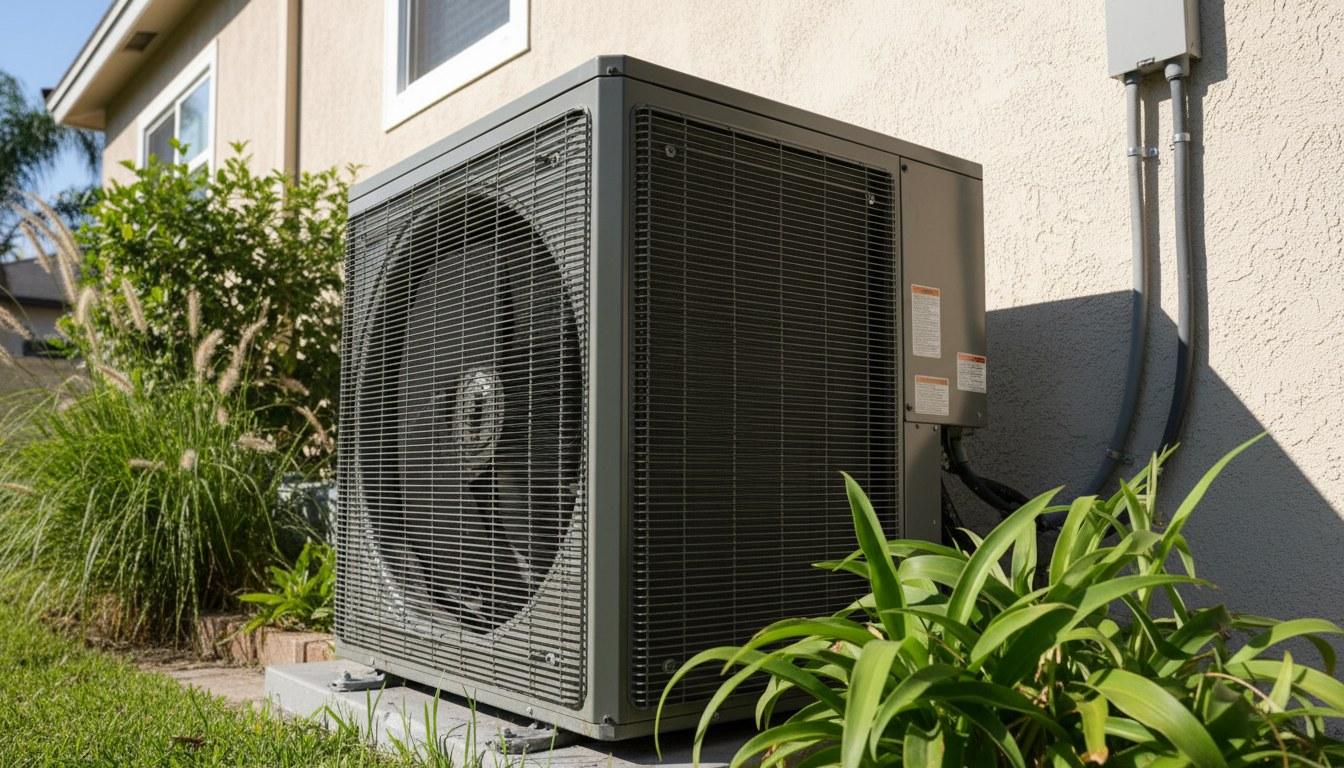
- Clear debris from the outdoor condenser unit: Remove leaves, dirt, and plant material from around the unit. Keep at least 2 feet of clearance on all sides.
- Rinse the condenser coils: Use a garden hose on a gentle setting to wash dust and grime off the fins. Never use a pressure washer, which can bend the delicate aluminum fins.
- Test the thermostat: Switch the system to cooling mode and verify that the temperature reading is accurate. If your thermostat is more than 10 years old, consider upgrading to a programmable or smart model.
- Check the condensate drain line: Pour a cup of diluted white vinegar into the drain pan to prevent algae buildup that can cause clogs and water damage.
- Schedule a professional tune-up: Spring is the ideal time to book a licensed technician before the busy season begins and appointment slots fill up.
Summer (June through August)
During peak cooling season, your main job is to monitor the system and avoid overworking it.
- Check the filter monthly: During heavy use, filters can load up faster than the typical 90-day cycle.
- Keep vents open and unblocked: Closing too many supply vents increases system pressure and can cause the evaporator coil to freeze.
- Set the thermostat no lower than 72°F to 74°F: Extremely low setpoints force the compressor to run almost continuously, accelerating wear.
- Watch for ice on the refrigerant lines: Frost or ice on the copper lines running into your home is a sign of restricted airflow or low refrigerant.
Fall (September through November)
As temperatures cool, fall is the time to wind down and prepare the system for the off-season.
- Replace the filter again: Start the cooler months with a fresh filter so the system is clean if you need to run it during a warm fall day.
- Cover the condenser unit (optional): A breathable cover protects the unit from falling leaves and debris. Do not use a solid plastic cover, which traps moisture and encourages corrosion.
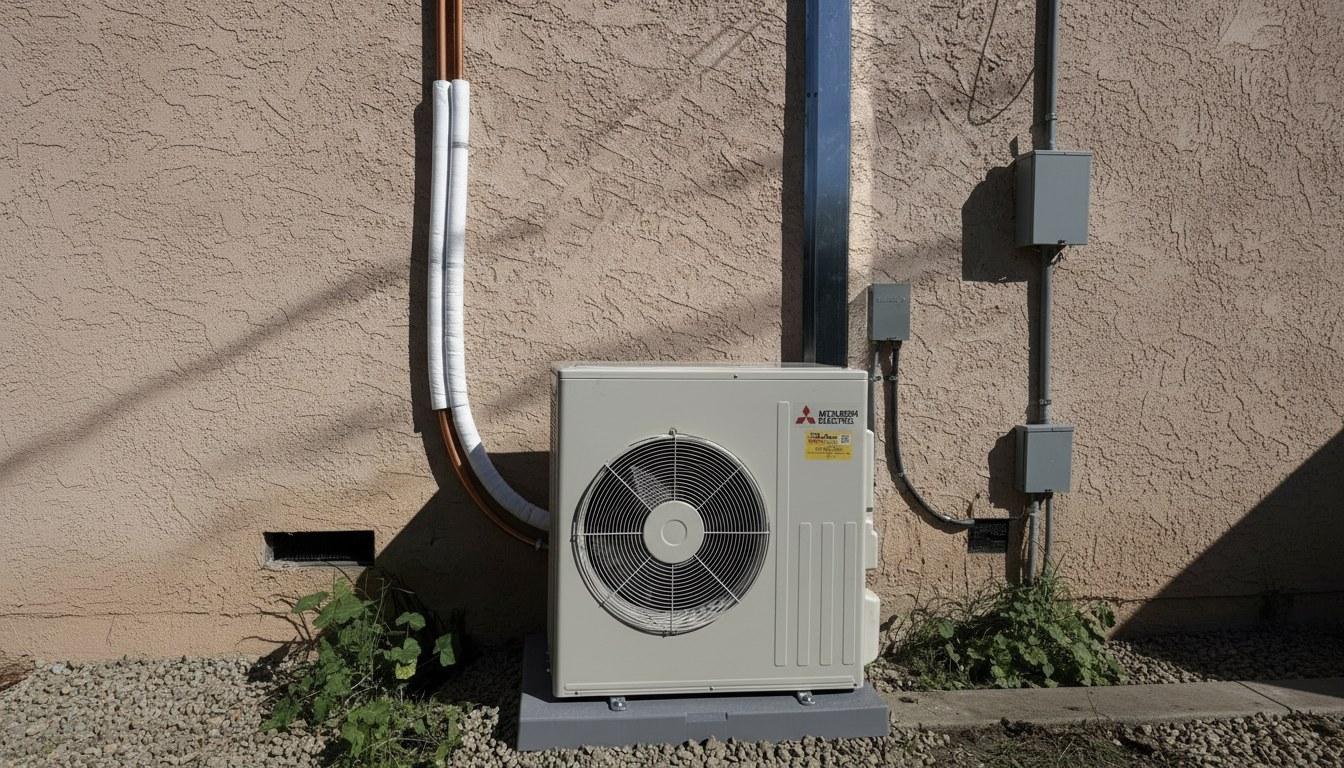
- Inspect insulation on refrigerant lines: The foam insulation around the copper lines can crack or peel over time. Replace any damaged sections to maintain efficiency.
Winter (December through February)
Even in Southern California, winter is a good time to address heating system needs and plan ahead for the next cooling season.
- Schedule furnace or heat pump service: If your system provides both heating and cooling, a winter inspection keeps the heating side in good shape and gives the technician a chance to spot any AC components that need attention.
- Review your energy bills: A significant increase in electricity use compared to the same month last year can signal that a component is struggling.
How Often Should You Perform Each Maintenance Task?
Different tasks have different intervals. Following this schedule is one of the simplest ways to keep your system reliable year after year. The table below covers the most important maintenance items, how frequently to do them, and whether a homeowner can handle the task or whether a licensed professional is needed.
| Task | Frequency | DIY or Pro? |
|---|---|---|
| Replace air filter | Every 1 to 3 months | DIY |
| Clear debris around condenser | Monthly during cooling season | DIY |
| Rinse condenser coils | Once per year (spring) | DIY (gentle rinse) or Pro |
| Flush condensate drain line | Every 3 to 6 months | DIY |
| Check refrigerant level | Annually | Pro only (EPA Section 608 certified) |
| Inspect electrical connections | Annually | Pro only |
| Test capacitors and contactors | Annually | Pro only |
| Clean evaporator coil | Every 1 to 2 years | Pro recommended |
| Inspect and seal ductwork | Every 3 to 5 years | Pro recommended |
| Full professional tune-up | Once per year | Pro only |
Refrigerant work requires a technician certified under EPA refrigerant regulations (Section 608). Handling refrigerant without certification is a federal violation, so never attempt to add refrigerant yourself.
What Does an Annual Professional AC Service Include?
A thorough professional tune-up typically takes 60 to 90 minutes and covers a detailed inspection of every major system component. This is the single most effective step in how to prevent AC breakdowns over the long term. A trained technician can spot a failing capacitor, a low refrigerant charge, or a cracked heat exchanger before any of those problems cause a system failure.
Here is what a standard professional AC service typically covers:
- Refrigerant level check: The technician measures the charge and looks for signs of leaks. An undercharged system runs hot and can damage the compressor.
- Electrical connection inspection: Loose or corroded connections are a leading cause of component failure and can create fire hazards.
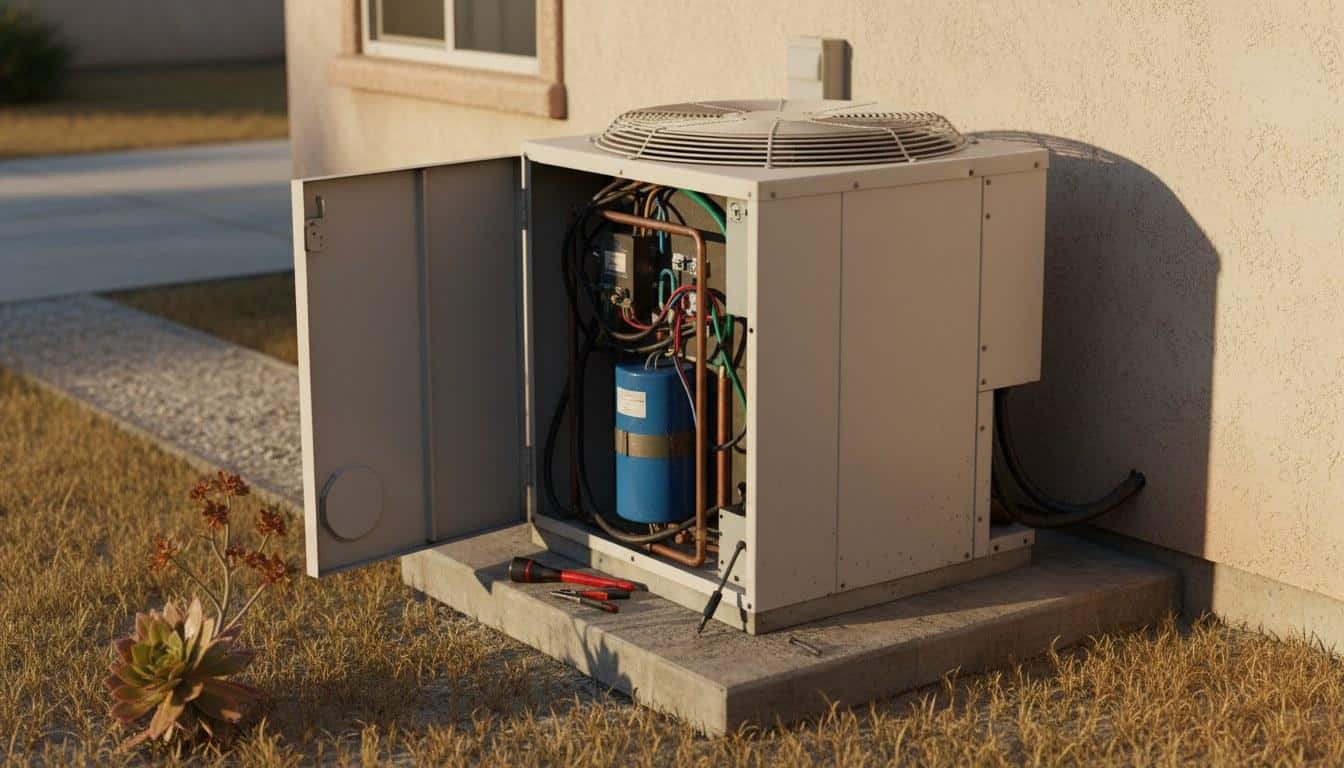
- Capacitor and contactor testing: Capacitors help start and run the compressor and fan motors. A weak capacitor is one of the most common causes of summer breakdowns, and replacing one proactively costs far less than an emergency service call.
- Evaporator and condenser coil cleaning: Dirty coils reduce heat transfer efficiency and force the system to run longer cycles.
- Blower motor and belt inspection: The technician checks for wear, lubrication needs, and proper airflow volume.
- Thermostat calibration: A thermostat that reads 2°F to 3°F off can cause the system to short-cycle or run too long.
- Condensate drain check: A blocked drain can cause water to back up into the air handler and damage drywall, insulation, or flooring.
- Safety controls test: The technician verifies that high-pressure and low-pressure cutoffs work correctly to protect the compressor.
Our technicians frequently find that the condensate drain pan has standing water when we arrive for a tune-up, which tells us the drain line has been partially blocked for some time before the homeowner noticed any problem inside the home.
Professional service costs vary based on the size of the system, its age, and what the inspection turns up. In the Southern California market, a standard annual tune-up typically ranges from $80 to $175 for a single-system home. If repairs are needed, those are priced separately. For a custom quote, contact Shalom Heating & Air directly.
Look for a contractor who is licensed by the California Contractors State License Board (CSLB) and carries current liability insurance. Licensing protects you if something goes wrong during the service.
What Warning Signs Should You Watch for Between Services?
Even with regular maintenance, problems can develop between annual visits. Catching these warning signs early is critical to avoiding a full breakdown during a heat wave. Most of these symptoms point to a specific component that a technician can repair quickly if addressed before it fails completely.
- Warm air from the vents: If the air coming out of your supply registers is not noticeably cool, the system may be low on refrigerant, have a dirty evaporator coil, or have a failing compressor.
- Weak airflow: Reduced airflow usually points to a clogged filter, a blocked duct, or a blower motor that is starting to fail.
- Short cycling: The system turns on, runs for only a few minutes, then shuts off and repeats. This pattern stresses the compressor and often signals an oversized unit, a refrigerant issue, or a failing thermostat.
- Unusual sounds: Banging, rattling, squealing, or grinding noises all indicate mechanical problems. A squealing sound often means a worn blower belt or a bearing that needs lubrication.
- Ice on the refrigerant lines or coil: Ice formation means airflow is restricted or refrigerant is low. Turn the system off and call a technician before running it again.
- Water pooling around the air handler: This usually means the condensate drain is clogged. Left unaddressed, it can cause mold growth and structural water damage.
- Sudden spike in electricity bills: A system that has lost efficiency will draw more power to maintain the same temperature. A bill that jumps noticeably month over month without a change in usage habits is worth investigating.
- Musty or burning smell from vents: A musty odor points to mold in the drain pan or ductwork. A burning smell can indicate an electrical issue and should be treated as urgent.
What Are the Most Common Causes of AC Breakdowns?
Most AC failures trace back to a small set of root causes, almost all of which are preventable with routine care. Understanding these causes helps you prioritize which maintenance steps matter most.
Dirty Air Filters
A clogged filter is the single most preventable cause of AC problems. It restricts airflow, causes the evaporator coil to freeze, and forces every other component to work harder. Replacing the filter every 1 to 3 months costs only a few dollars and prevents a chain reaction of issues.
Failed Capacitors
Capacitors are small cylindrical components that store and release electrical energy to start and run the compressor and fan motors. Heat degrades them over time, and they are especially vulnerable in Southern California’s climate. A failed capacitor is one of the top reasons for summer service calls across the region. Replacing a capacitor typically costs between $100 and $250 in this market, compared to several thousand dollars if a compressor fails because it was forced to start without proper capacitor support.
Low Refrigerant
Refrigerant does not get used up like fuel. If the level is low, there is a leak somewhere in the system. A slow leak can go unnoticed for months, gradually reducing cooling capacity and straining the compressor. Under EPA refrigerant regulations (Section 608), only certified technicians may purchase and handle refrigerant, so this repair always requires a professional.
Dirty Condenser Coils
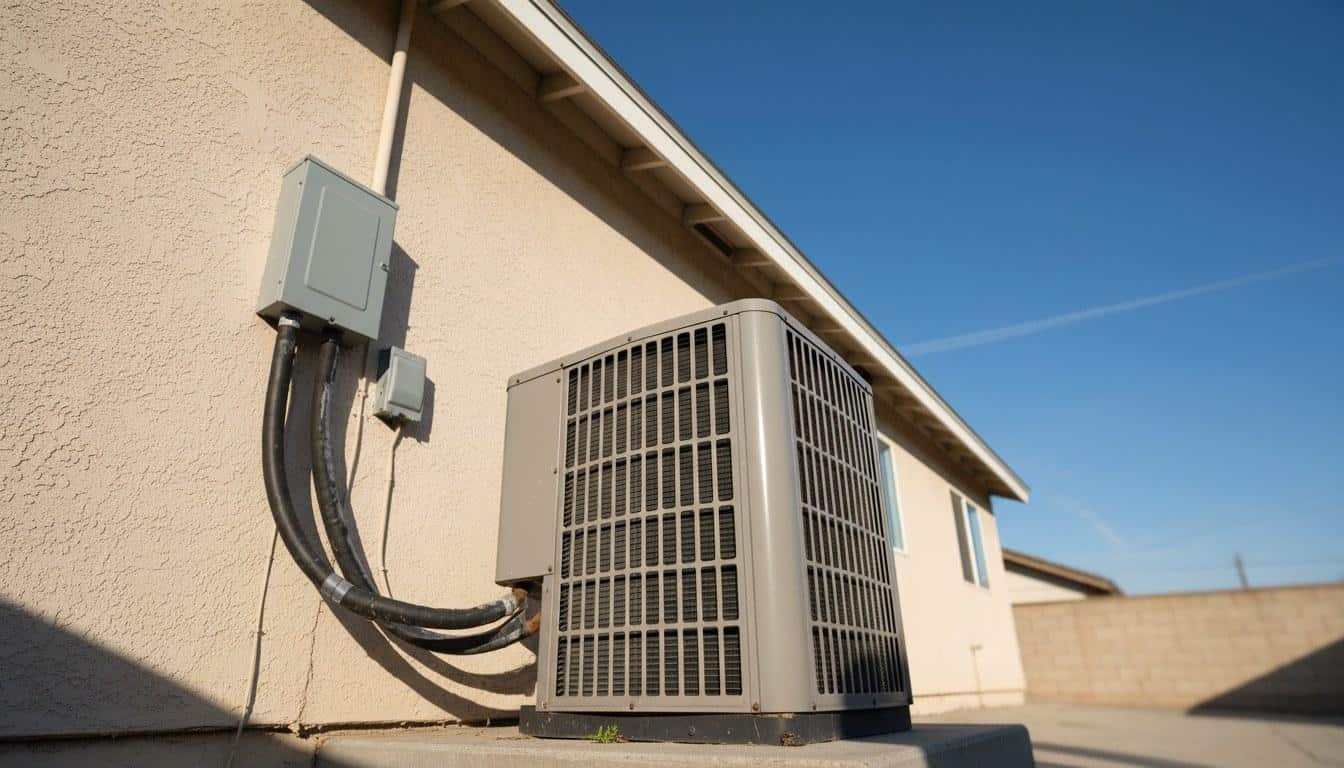
The outdoor condenser unit releases heat from your home into the outside air. When the coils are coated with dust, pollen, and debris, that heat transfer slows down. The system has to run longer cycles to reach the set temperature, which accelerates wear on the compressor. Annual coil cleaning is one of the highest-return maintenance tasks you can do.
Neglected Ductwork
The U.S. Department of Energy estimates that leaky ducts can waste 20 to 30 percent of the air your system produces before it reaches the living space. Duct leaks also pull in unconditioned attic air, which adds humidity and reduces indoor air quality. Having your ductwork inspected every 3 to 5 years and sealed where needed is a key part of how to prevent AC breakdowns caused by system overwork.
The U.S. Department of Energy estimates that leaky ducts can waste 20 to 30 percent of the air your system produces before it reaches the living space.
Aging Equipment
Most residential central AC systems have a service life of 15 to 20 years with proper maintenance. Systems older than 15 years that require frequent repairs are often better candidates for replacement than continued repair. As of 2023, new residential AC systems must meet a minimum SEER2 rating of 14.3 in the Southwest region under updated Department of Energy standards. A new system at that efficiency level can reduce cooling energy costs by 20 to 40 percent compared to an older 10-SEER unit.
Homeowners who replace qualifying equipment may also be eligible for the Inflation Reduction Act federal tax credit, which covers up to 30 percent of the cost of certain high-efficiency HVAC equipment, up to a $600 cap for central AC units as of the 2024 tax year. Check with a tax professional to confirm eligibility for your specific situation.
Schedule Your AC Maintenance with Shalom Heating & Air
Consistent maintenance is the most reliable way to keep your air conditioner running through the hottest months without an unexpected breakdown. Changing filters, cleaning the condenser, and booking an annual professional service each spring puts you well ahead of most homeowners who only call for service when something stops working.
Shalom Heating & Air provides professional AC maintenance, repair, and installation services for homeowners across Southern California. The team is licensed and insured, and every service call is backed by a commitment to honest, thorough work. Whether you need a seasonal tune-up, a refrigerant check, or a full system evaluation, getting a professional set of eyes on your equipment before summer is the smartest investment you can make in home comfort.
Call (714) 886-2021 to schedule your AC maintenance appointment. Book before the spring rush to get your preferred time slot and head into cooling season with confidence.
Explore our full range of HVAC services across Southern California.
Frequently Asked Questions
How much does it usually cost to repair an AC unit in Southern California?
AC repair costs in Southern California vary widely depending on what failed. Minor repairs like a capacitor replacement typically run $100 to $250, while refrigerant leak repairs can range from $200 to $600 or more depending on where the leak is. Compressor replacement, one of the most expensive repairs, can run $1,200 to $2,500 or higher depending on the system. Getting a diagnostic inspection first helps you understand exactly what is needed before committing to any repair.
How do I know if my AC needs repair or just maintenance?
If your system is blowing warm air, making unusual noises, short cycling, or showing ice on the refrigerant lines, those are repair issues that need a technician. If the system is running normally but you have not had it serviced in over a year, what you need is a maintenance tune-up. A professional inspection will tell you which category you are in and what, if anything, needs to be fixed.
Why does my air conditioner keep breaking down every summer?
Repeated summer breakdowns almost always point to deferred maintenance. Components like capacitors, contactors, and coils degrade faster when they are not cleaned and inspected annually. Southern California's long cooling season accelerates that wear. Scheduling a professional tune-up each spring and replacing the air filter every one to three months breaks that cycle for most homeowners.
Can I add refrigerant to my AC myself?
No. Under EPA refrigerant regulations (Section 608), only certified technicians are legally permitted to purchase and handle refrigerant. Attempting to add refrigerant yourself is a federal violation and can also damage the compressor if the charge is incorrect. If your system is low on refrigerant, call a licensed HVAC contractor to find and repair the leak, then recharge the system properly.
How long does a well-maintained AC system last?
A residential central air conditioner that receives annual professional service and regular filter changes typically lasts 15 to 20 years. Systems that are neglected often fail within 10 to 12 years. The compressor is usually the first major component to fail on an aging system, and since compressor replacement can cost nearly as much as a new system, staying on top of maintenance is the most cost-effective strategy.