Signs Your AC Needs Repair: A Troubleshooting Guide for California Homeowners
Warm air, strange noises, and skyrocketing energy bills are all signs your AC needs repair sooner rather than later. This guide walks you through what to check, what it means, and when to call a licensed technician.
Why Do AC Systems Break Down in Southern California?
Southern California’s heat puts AC systems under stress that most other climates never produce. Summer temperatures regularly climb above 90°F across inland communities, and units run for months with little rest. That kind of continuous load accelerates wear on compressors, capacitors, and fan motors faster than manufacturers’ average estimates assume.
The region’s housing stock adds another layer of strain. Many homes built in the 1970s and 1980s still use original ductwork that was never sized to ACCA Manual J load calculation standards. Undersized or leaking ducts force the air handler to work harder, shortening the life of every component downstream.
Coastal humidity near Long Beach and the marine layer that pushes inland can also corrode condenser coils and electrical contacts over time. Inland areas face the opposite problem: dry, dusty air loads up filters and coils quickly. Both conditions push systems toward failure if maintenance is skipped even one season.
What Are the Warning Signs Your AC Needs Repair?
Knowing the signs your AC needs repair early can save you from a full system failure on the hottest day of the year. Most problems announce themselves well before a complete breakdown. Watch for these symptoms:
- Warm or room-temperature air from vents: If the air coming out is not noticeably cooler than the room, the system may have a refrigerant leak, a failing compressor, or a frozen evaporator coil.
- Weak or reduced airflow: Low airflow often points to a clogged filter, a failing blower motor, or collapsed ductwork. Rooms that used to cool in 20 minutes now take an hour or more.
- Ice or frost on the unit: Ice on the indoor coil or the refrigerant lines is a sign the system is not absorbing heat correctly. Running a frozen unit can permanently damage the compressor.
- Unusual noises: Grinding, squealing, banging, or rattling sounds are not normal. Grinding usually means worn bearings; banging can mean a loose or broken component inside the compressor.
- Short cycling: If the system turns on and off every few minutes without completing a full cooling cycle, it may be oversized, low on refrigerant, or have a failing thermostat or capacitor.
- High humidity indoors: A properly working AC removes moisture as it cools. If your home feels sticky even with the system running, the evaporator coil or drain line may need attention.
- Unexplained spike in energy bills: A system working harder than it should uses more electricity. A sudden jump in your bill during a period of normal use is often the first measurable sign something is wrong.
- Water or refrigerant pooling near the unit: A small amount of condensation is normal, but a puddle or oily residue near the indoor air handler or outdoor condenser signals a drain clog or a refrigerant leak.
Symptom, Likely Cause, and What to Do: A Quick Reference
Use this table to match what you are seeing or hearing to the most likely cause and the right next step. Some issues are safe to investigate yourself; others require a licensed technician right away.
| Symptom | Likely Cause | DIY or Pro? |
|---|---|---|
| Warm air from vents | Low refrigerant, failed compressor, or frozen coil | Pro required (refrigerant work requires EPA Section 608 certification) |
| Weak airflow | Dirty or clogged air filter, failing blower motor, blocked ducts | DIY: check and replace filter first. Pro: if airflow stays weak after a new filter |
| Ice on the unit or lines | Low refrigerant, dirty coil, or restricted airflow | DIY: turn system off and let ice thaw. Pro: find and fix the root cause |
| Grinding or squealing noise | Worn motor bearings, loose belt, or debris in fan | Pro required; running a unit with bearing failure causes rapid damage |
| Short cycling | Bad capacitor, low refrigerant, dirty condenser coils, or oversized unit | Pro required for diagnosis |
| High indoor humidity | Clogged condensate drain or undersized unit | DIY: flush drain line. Pro: if humidity stays high after clearing the drain |
| Energy bill spike | Dirty coils, low refrigerant, aging components, duct leaks | Pro: full system inspection recommended |
| Water pooling near unit | Clogged condensate drain line or cracked drain pan | DIY: try clearing the drain. Pro: if water returns or you see refrigerant staining |
What Can You Check Yourself Before Calling a Pro?
Several common AC problems have simple causes a homeowner can safely check in about 15 minutes. Running through these steps before calling for service can save you a diagnostic fee and sometimes resolves the problem entirely.
- Check and replace the air filter. A clogged filter is the single most common cause of weak airflow and frozen coils. Filters in Southern California homes should be replaced every 30 to 90 days during heavy use, depending on the filter’s MERV rating and the amount of dust or pet hair in the home. Hold the old filter up to a light source: if you cannot see light through it, replace it before doing anything else.
- Check the thermostat settings. Confirm the thermostat is set to COOL (not FAN or HEAT), that the set temperature is below the current room temperature, and that the fan is set to AUTO rather than ON. A thermostat accidentally switched to ON will run the fan continuously without cooling.
- Inspect the circuit breaker. Go to your electrical panel and look for a tripped breaker labeled AC, AIR HANDLER, or CONDENSER. A tripped breaker is a symptom, not a fix: if it trips again after you reset it, stop and call a technician.
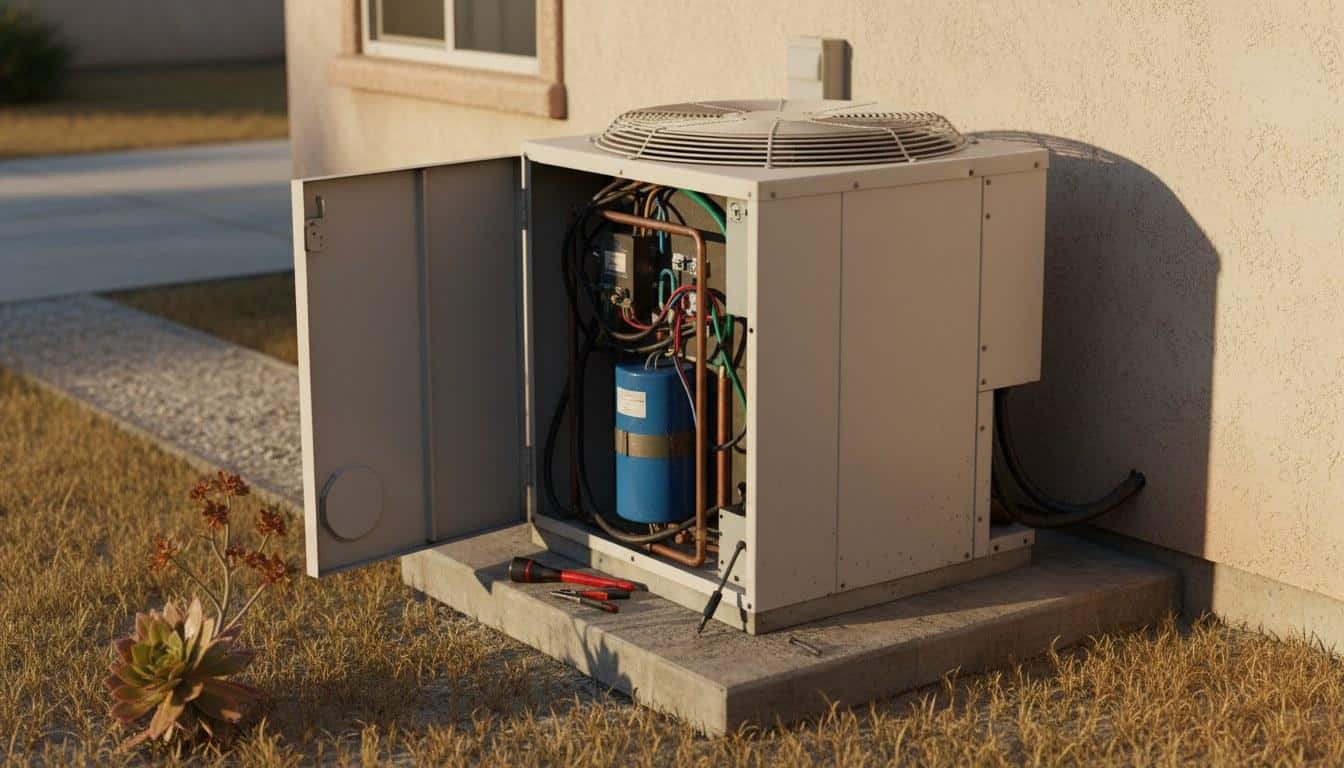
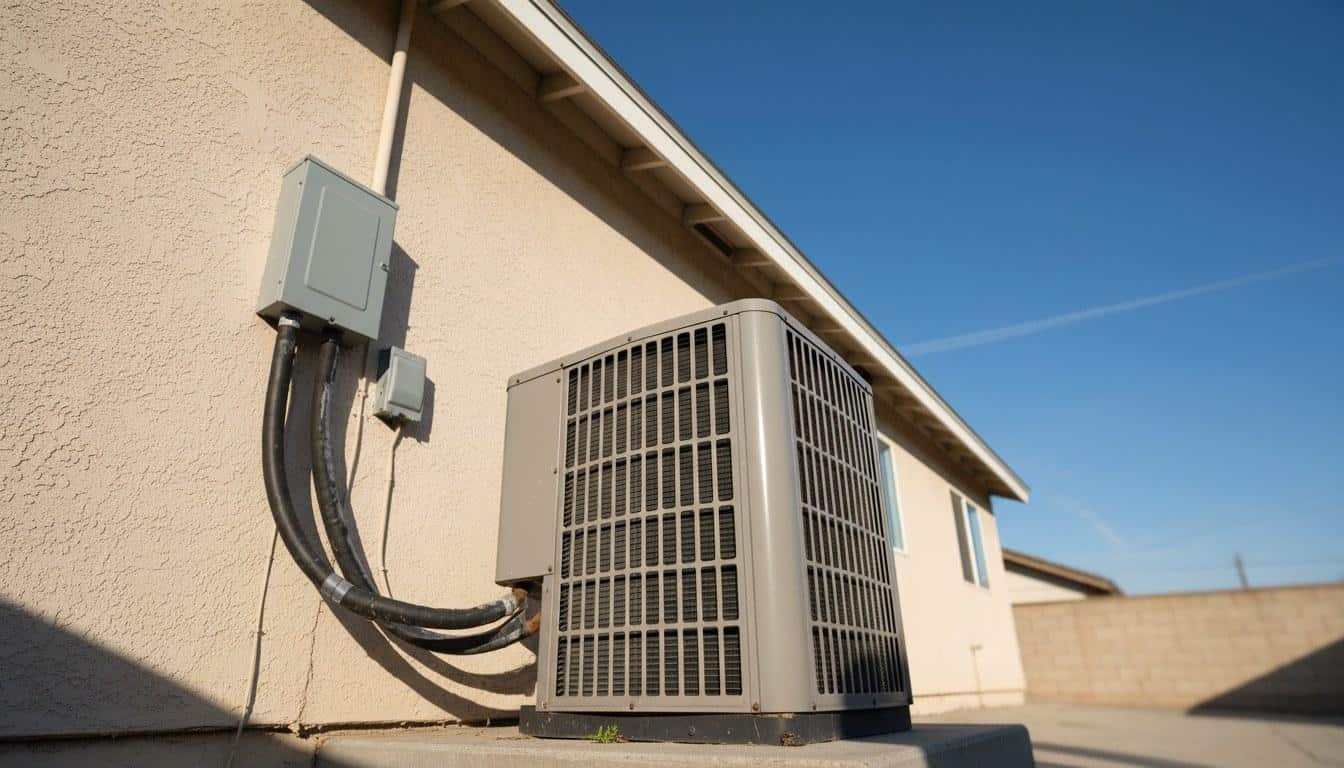
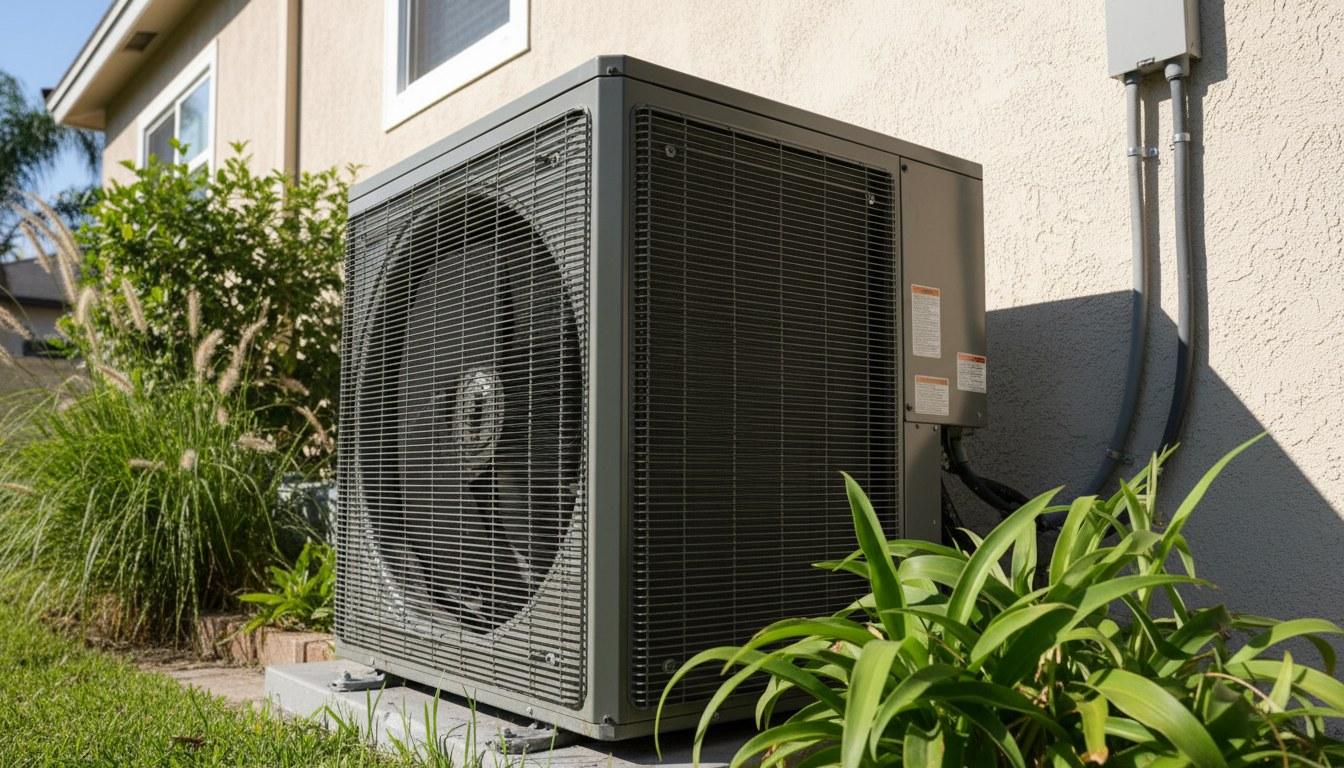
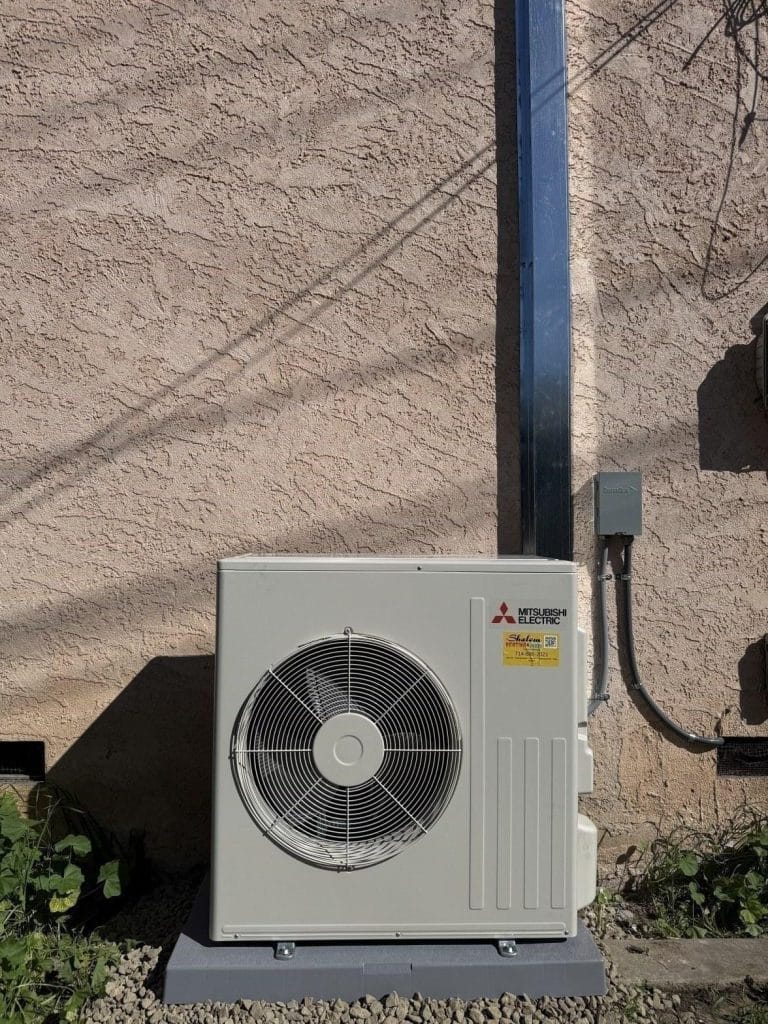
- Look at the outdoor condenser unit. Make sure the unit is not buried in leaves, grass clippings, or debris. Clear at least 2 feet of space around all sides. Check that the fan on top is spinning when the system runs. A condenser fan that is not moving points to a failed capacitor or motor.
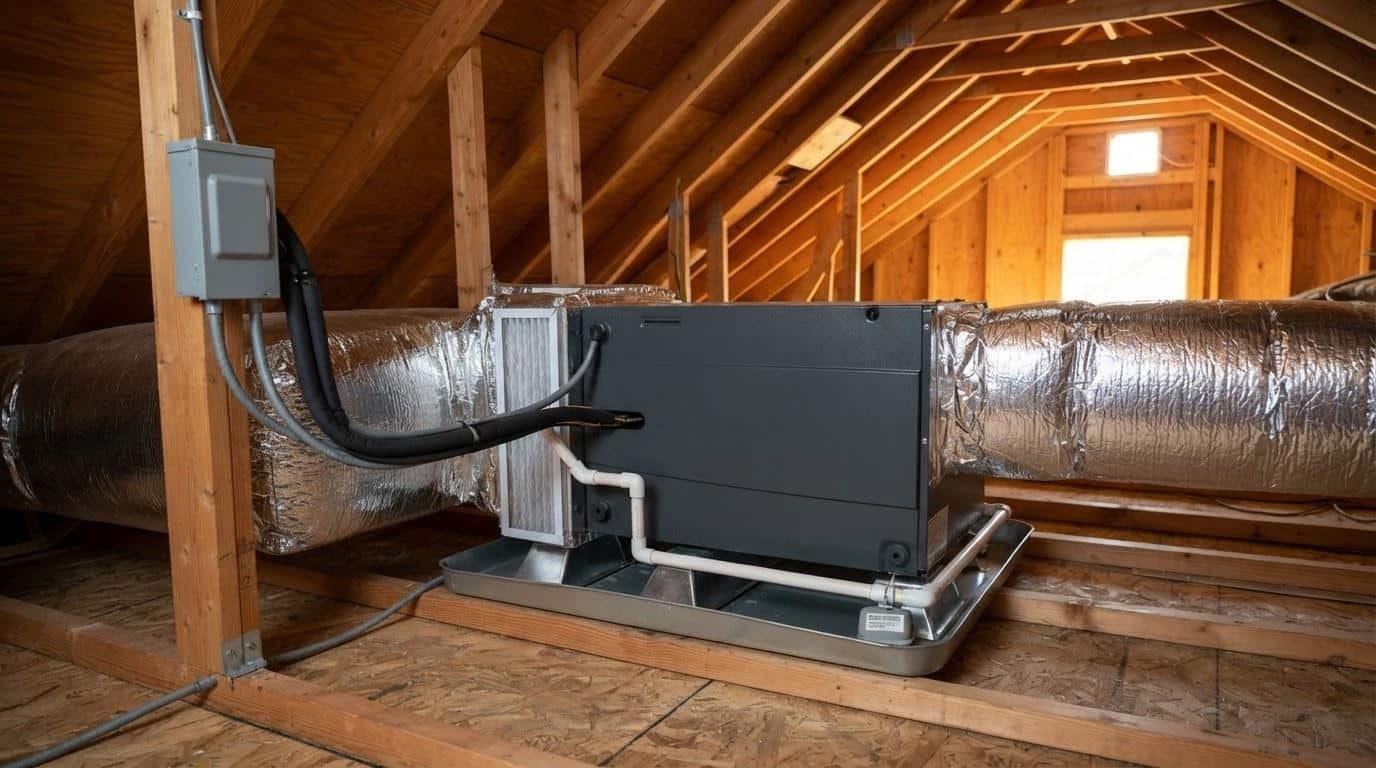
- Check the condensate drain line. Find the PVC drain pipe that exits near your indoor air handler and terminates outside or at a floor drain. If it is clogged, water backs up and can trigger a safety float switch that shuts the system off. A slow pour of distilled white vinegar into the access port can clear minor clogs.
- Look for ice on the indoor unit or refrigerant lines. If you see frost or ice, turn the system to FAN ONLY (not OFF) for one to two hours to let the coil thaw. If the system runs normally after thawing, a dirty filter was likely the cause. If ice returns, a refrigerant issue is probable and a technician is needed.
When Should You Call a Professional for AC Repair?
Call a licensed HVAC technician when the DIY checks above do not resolve the problem, when you hear grinding or banging from the unit, or when you suspect a refrigerant leak. These situations go beyond what a homeowner can safely or legally address.
Refrigerant handling is regulated under EPA refrigerant regulations (Section 608). Only certified technicians may purchase, handle, or recharge refrigerants like R-410A or the newer R-454B that is replacing it in systems built after 2025. Attempting to add refrigerant without a leak diagnosis first is also a waste of money: the refrigerant will escape again through the same leak.
You should also call a pro if:
- The system is more than 10 to 15 years old and showing multiple symptoms at once, which may point toward replacement rather than repair.
- You smell burning plastic or electrical odors near the air handler or condenser.
- The compressor makes a hard clicking sound when starting but fails to run.
- Your energy bills have risen steadily over two or more billing cycles without a change in usage habits.
- The system short cycles more than three or four times per hour.
Our technicians frequently find that a system reported as “not cooling” has a failed dual-run capacitor, a part that costs relatively little but causes the compressor and condenser fan to stop working together. Catching it before the compressor overheats and fails is the difference between a modest repair and a major replacement.
In California, any contractor performing HVAC work should be licensed by the California Contractors State License Board (CSLB). Always ask for a license number and verify it on the CSLB website before work begins.
How Much Does AC Repair Typically Cost in This Market?
In the Southern California market, AC repair costs typically range from around $150 for a simple capacitor swap to $1,500 or more for a compressor replacement, depending on the part involved and the age of the system. Refrigerant recharge jobs vary widely based on the type of refrigerant and the amount needed.
In the Southern California market, AC repair costs typically range from around $150 for a simple capacitor swap to $1,500 or more for a compressor replacement, depending on the part involved and the age of the system.
Here are the factors that most commonly move the price:
- Part type: Capacitors and contactors are inexpensive components. Compressors, evaporator coils, and condenser coils are significantly more costly, and labor to access them adds to the total.
- Refrigerant type: R-22 (used in systems built before 2010) is no longer manufactured in the U.S. and has become expensive on the secondary market. Systems using R-22 that develop leaks often cost more to repair than to replace.
- System age and efficiency rating: Repairing a unit with a ENERGY STAR-rated SEER2 rating of 16 or higher makes economic sense. Spending $800 or more to repair a 15-year-old unit with a SEER rating of 10 rarely does.
- Ductwork condition: If the diagnosis reveals duct leaks, sealing or replacing sections adds to the project cost but can reduce monthly energy use noticeably.
- Permit requirements: California’s Title 24 building energy standards may require a permit for certain replacements or modifications. Permit fees vary by jurisdiction.
Homeowners replacing an older system rather than repairing it may qualify for the Inflation Reduction Act federal tax credit, which covers up to 30% of the cost of a qualifying high-efficiency heat pump or central AC system as of 2025. The TECH Clean California rebate program also offers additional incentives for qualifying equipment in Southern California. Ask your contractor which programs apply to your specific situation before committing to a replacement.
For a repair estimate specific to your system, contact Shalom Heating & Air at (714) 886-2021 to request a custom quote.
Get Expert AC Help Across Southern California
If you are seeing the signs your AC needs repair, acting quickly protects your equipment and your comfort. Delaying a small fix often turns it into a larger one, especially during the months when systems run hardest.
Shalom Heating & Air provides AC repair, maintenance, and installation services for homeowners across Southern California. Whether you are dealing with weak airflow, a system that short cycles, or a unit that has simply stopped cooling, the team is equipped to diagnose and resolve the problem correctly the first time.
Call (714) 886-2021 to schedule your service appointment. Get a written estimate before any work begins so you know exactly what to expect.
Explore our full range of HVAC services across Southern California.
Frequently Asked Questions
How do I know if my AC needs repair or just a good cleaning?
Start by replacing the air filter and clearing any debris from around the outdoor condenser unit. If the system still blows warm air, makes unusual noises, or short cycles after those steps, the problem is likely beyond routine cleaning and a technician should inspect it. A dirty coil can sometimes be cleaned during a maintenance visit, but a refrigerant leak, a failing capacitor, or a worn motor requires a repair.
How much does it usually cost to repair an AC unit in Southern California?
In the Southern California market, AC repairs typically range from around $150 for a simple capacitor or contactor replacement to $1,500 or more for compressor work, depending on the part and the system's age. Refrigerant recharges vary based on the type of refrigerant and how much is needed. Getting a written estimate before work begins is always a good idea.
Why is my air conditioner blowing warm air even though it is running?
Warm air from a running AC is most often caused by low refrigerant from a leak, a frozen evaporator coil, or a failing compressor. Check your air filter first since a severely clogged filter can cause the coil to freeze and stop cooling. If the filter is clean and the air is still warm, turn the system off and call a licensed HVAC technician to diagnose the refrigerant or mechanical issue.
Is it worth repairing an AC unit that is more than 10 years old?
It depends on the repair cost relative to the system's remaining useful life. A general industry guideline is to multiply the repair cost by the unit's age in years: if that number exceeds the cost of a new system, replacement is usually the smarter investment. Systems older than 15 years using R-22 refrigerant are especially expensive to maintain and often make more financial sense to replace with a high-efficiency unit.
What are the signs that my AC compressor is failing?
Common signs of a failing compressor include a hard clicking sound when the system tries to start followed by a shutdown, warm air from vents despite the unit running, the outdoor condenser fan spinning but no cooling occurring, and a circuit breaker that trips repeatedly when the AC runs. Compressor issues require a licensed technician and in many cases point toward a full system replacement, especially on older units.