How Does Humidity Affect Your AC Performance in Southern California?
High humidity makes your air conditioner work much harder than it should, and in Southern California's coastal climate, that extra strain shows up on your energy bill and in your comfort level every summer.

Humidity forces your air conditioner to do two jobs at once: cool the air and remove moisture from it. In Southern California’s coastal climate, where summer mornings can bring relative humidity above 70 percent, that double duty is one of the most overlooked reasons an AC system underperforms. This humidity affect ac performance southern california guide walks through exactly what happens inside your system on muggy days, what the ideal indoor conditions look like, and how the right humidity control solution can extend the life of your equipment and lower your energy costs.
Why Does Humidity Make Your AC Work So Much Harder?
Your AC removes heat by pulling warm air across a cold evaporator coil. When that air carries a lot of moisture, the coil also has to condense and drain that water vapor, which consumes a significant share of the system’s cooling capacity. The result is that your thermostat may read 75 degrees, but the air still feels heavy and sticky because the moisture load is too high for the equipment to handle on its own.
Think of it this way: cooling dry air to 75 degrees is a straightforward task. Cooling humid air to the same temperature while also dropping the moisture level to a comfortable range is a much bigger job. The compressor runs longer cycles, the evaporator coil works at or near its limit, and the blower motor runs continuously trying to catch up.
Longer run cycles mean higher electricity use. According to the U.S. Department of Energy, air conditioners account for roughly 12 percent of home energy spending nationally, and that share rises sharply when systems are oversized or undersized for the actual humidity load in the home.
What Is the Ideal Indoor Humidity Level for a Southern California Home?
The U.S. Environmental Protection Agency and ASHRAE both recommend keeping indoor relative humidity between 30 and 50 percent year-round. In Southern California, the practical target for summer comfort is 45 to 50 percent relative humidity, which balances cooling efficiency with air quality.
Above 60 percent relative humidity, mold and dust mites begin to thrive. Below 30 percent, occupants often experience dry skin, irritated sinuses, and static electricity. The sweet spot between 45 and 50 percent is where your AC runs most efficiently and where most people feel genuinely comfortable, not just cool.
Above 60 percent relative humidity, mold and dust mites begin to thrive, and your AC's evaporator coil is at risk of freezing.
Southern California’s coastal communities regularly see outdoor relative humidity climb past 80 percent during the marine layer season, which typically runs from May through September. When that air infiltrates the home through doors, windows, and gaps in the building envelope, the indoor humidity level can spike quickly, especially in older housing stock that lacks tight insulation.
| Indoor Humidity Level | What It Feels Like | Effect on Your AC |
|---|---|---|
| Below 30% | Dry, scratchy air; static electricity | Less strain on coil, but occupant discomfort |
| 30% to 50% | Comfortable, neutral feel | AC operates at peak efficiency |
| 51% to 60% | Slightly muggy; cooling feels less effective | Longer run cycles, higher energy use |
| Above 60% | Sticky, heavy air; musty odors possible | Coil overloaded; mold risk rises sharply |
How Does High Humidity Damage Your AC System Over Time?
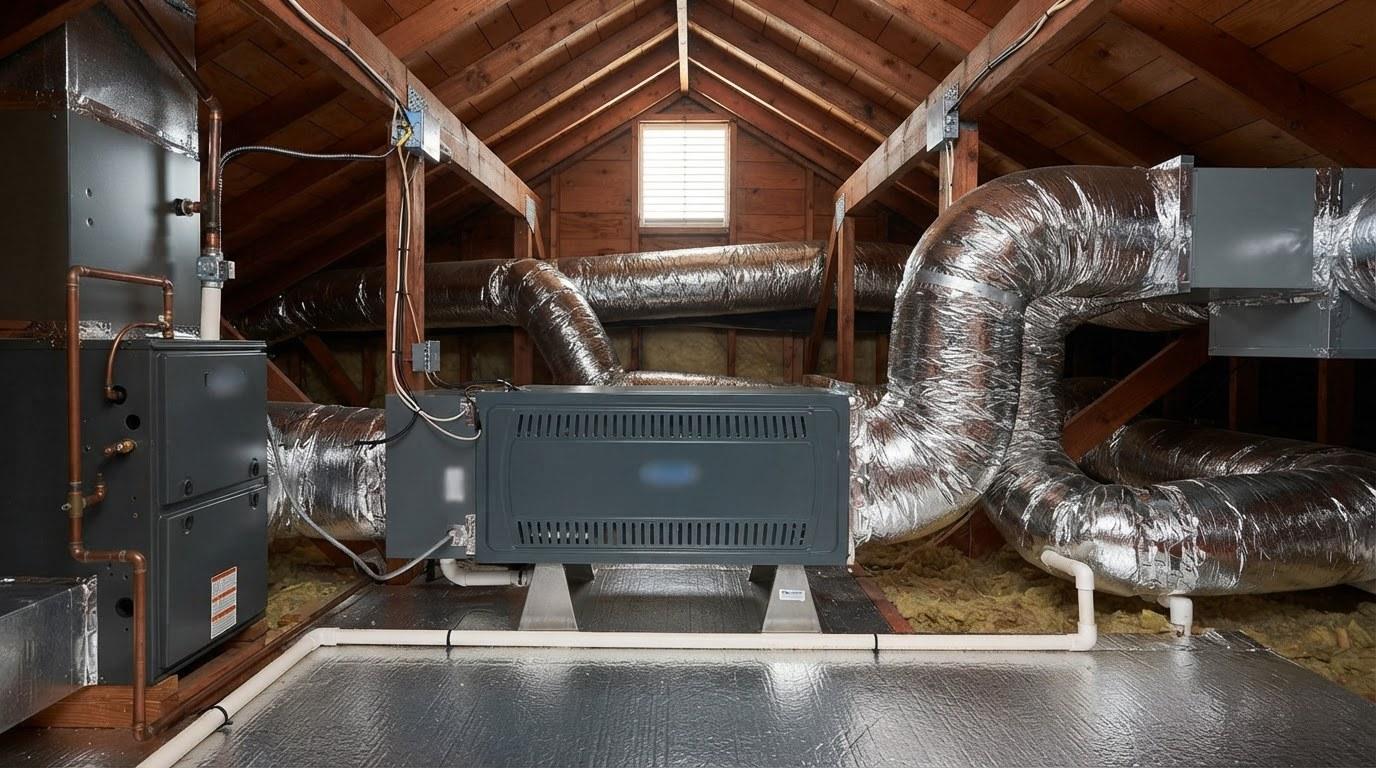
Chronic high humidity shortens the life of several AC components. The evaporator coil, drain pan, and condensate line are most at risk because they handle moisture every time the system runs. When the moisture load consistently exceeds what the system was sized to handle, those components degrade faster than they would under normal conditions.
Here are the specific failure points our technicians see most often in high-humidity environments:
- Frozen evaporator coil: When the coil is overwhelmed by moisture and the airflow slows even slightly, ice can form on the coil surface. A frozen coil blocks airflow entirely and can damage the compressor if ignored.
- Clogged condensate drain: The drain line removes condensed water from the system. Algae and mold grow quickly in standing moisture, and a clogged drain can cause water to back up into the air handler or overflow onto ceilings and walls.
- Corrosion on the coil fins: In coastal areas, airborne salt combines with persistent moisture to corrode aluminum coil fins. Corroded fins reduce heat transfer efficiency and eventually require coil replacement, which is one of the more expensive AC repairs.
- Compressor overwork: A compressor that runs long cycles to compensate for humidity overload wears out faster. Compressor replacement typically costs more than any other single AC repair.
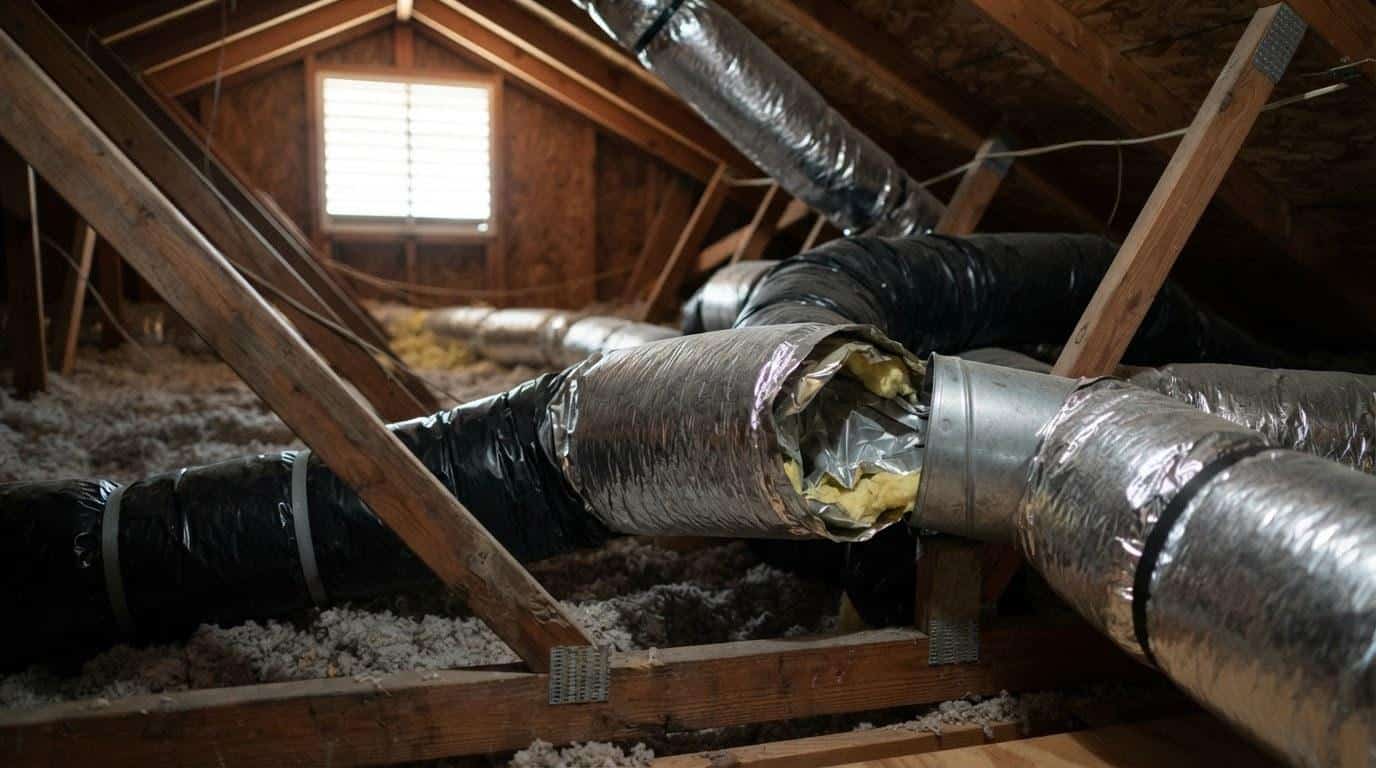
- Mold inside the air handler: Mold colonies can establish inside the air handler cabinet and ductwork when humidity stays above 60 percent for extended periods, circulating spores through the home with every cycle.
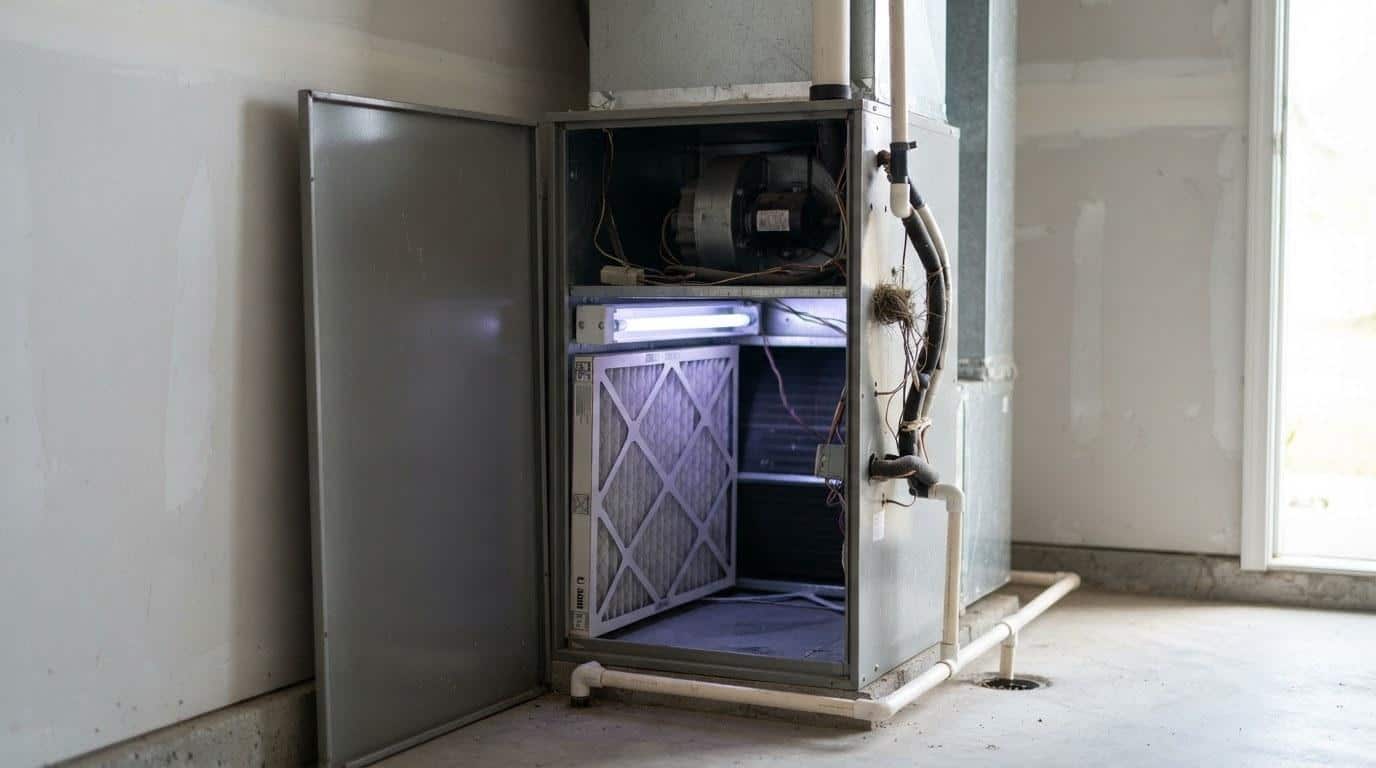
In our experience, when we open an air handler that has been running without humidity control in a coastal-area home, the drain pan often shows a visible biofilm buildup that the homeowner had no idea was there. That buildup is a direct sign the system has been fighting excess moisture for a long time.
A Humidity Affect AC Performance Southern California Guide: Coastal vs. Inland Conditions
Southern California is not a single climate. Coastal communities face high relative humidity driven by the Pacific marine layer, while inland areas deal with dry heat punctuated by occasional humidity spikes from monsoon moisture pushing up from the desert Southwest. The right humidity control strategy depends on where your home sits in that spectrum.
Coastal areas, including communities within a few miles of the Pacific, commonly see morning relative humidity above 75 percent from June through August, according to National Weather Service data. That moisture burns off by midday but still enters homes during the night and early morning, raising the indoor humidity load that the AC then has to manage through the afternoon cooling cycle.
Inland communities typically deal with lower relative humidity during the hottest part of the day, sometimes dropping below 20 percent on a hot Santa Ana wind day. However, during late summer monsoon surges, inland areas can see relative humidity jump from 15 percent to 55 percent within a few hours, which causes its own efficiency problems as the AC scrambles to adjust.
The key difference for equipment sizing is this: coastal homes almost always benefit from a whole-home dehumidifier running alongside the AC. Inland homes may need a dehumidifier only seasonally, or they may benefit more from a ventilation control system that limits how much humid outdoor air enters the home during monsoon periods.
Proper sizing starts with a acca.org/standards/manualj” rel=”noopener” target=”_blank”>Manual J load calculation, which accounts for the local climate, the home’s square footage, insulation levels, window area, and occupancy. A system sized only for temperature load without accounting for the latent (moisture) load will always underperform in Southern California’s coastal climate.
What Humidity Control Options Can Help Your AC Perform Better?
There are three main approaches to managing indoor humidity in Southern California: upgrading the AC system itself, adding a standalone whole-home dehumidifier, or installing a ductless mini-split with advanced humidity sensing. The best fit depends on your home’s layout, existing ductwork, and how severe the humidity problem is.
- Whole-home dehumidifier: Installed in the ductwork alongside your existing HVAC system, a whole-home dehumidifier runs independently of the AC and can remove 70 to 130 pints of moisture per day depending on the model. It maintains a set humidity level around the clock, even when the AC is not actively cooling.
- Variable-speed AC system: Older single-stage AC units run at 100 percent capacity or not at all. Variable-speed systems modulate their output, running at lower speeds for longer periods. Longer, slower cycles are far more effective at removing moisture because the air spends more time in contact with the cold evaporator coil.
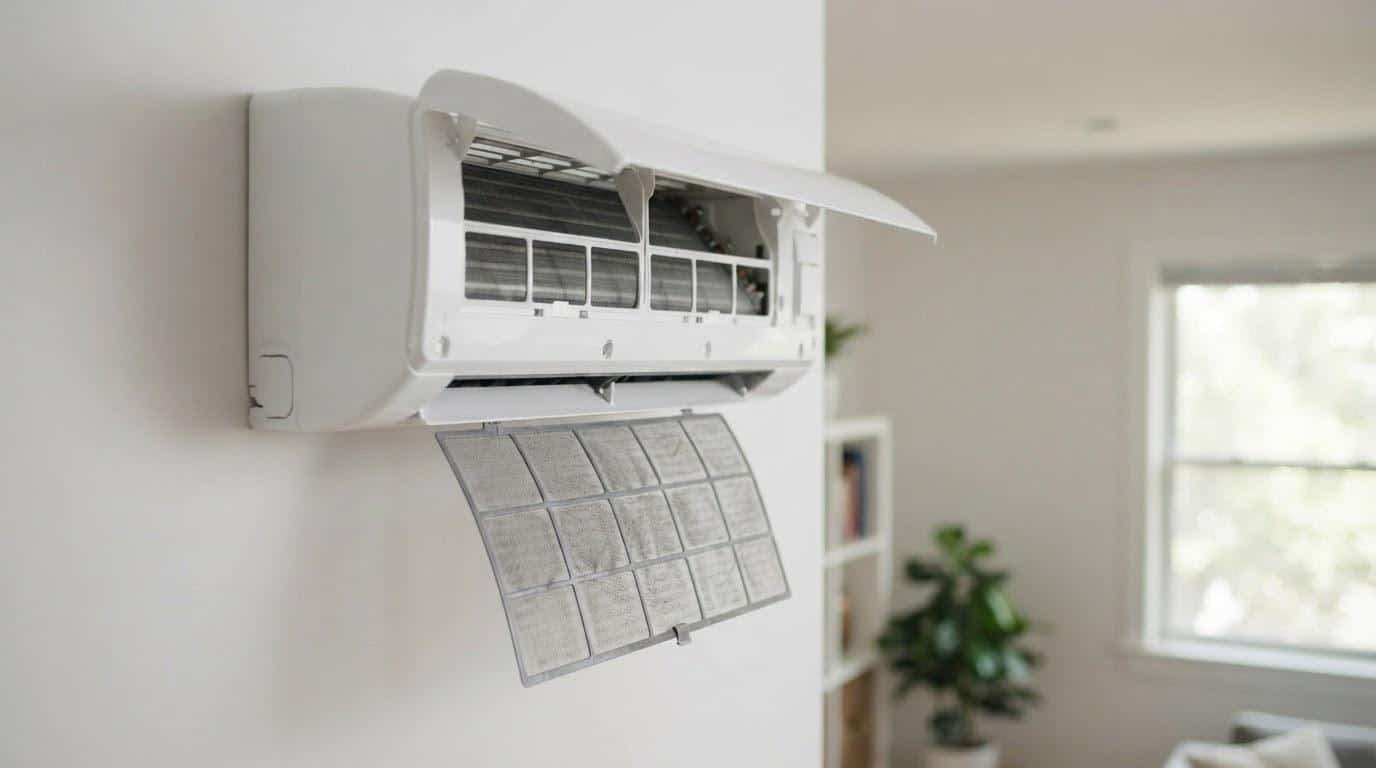
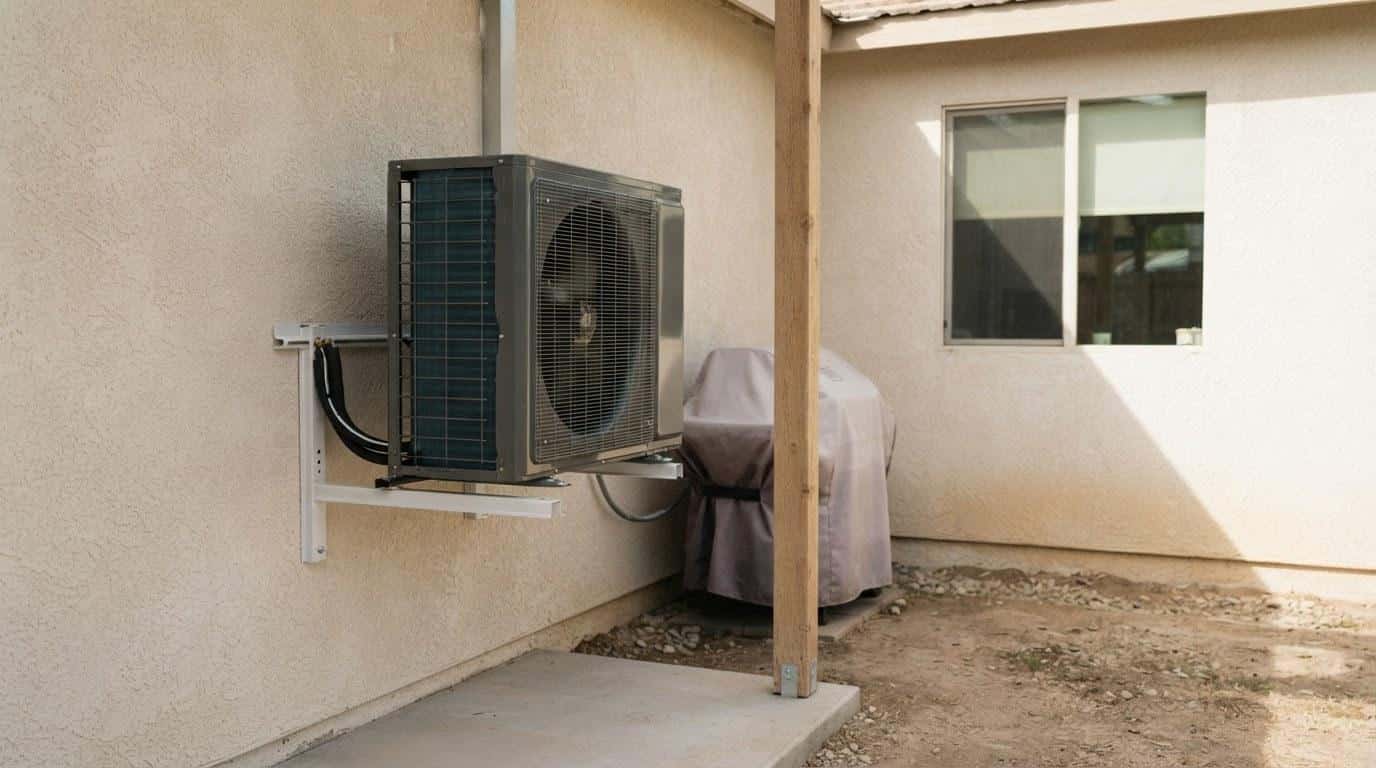
- Ductless mini-split with humidity control: Modern ductless mini-splits include dedicated dry modes and humidity sensors that allow the system to prioritize moisture removal even when the temperature target has been met. These are especially useful in rooms that feel muggy even when the rest of the home is comfortable.
- Energy Recovery Ventilator (ERV): An ERV brings fresh air into the home while capturing outgoing heat and moisture, reducing the amount of humid outdoor air that the AC has to process. The U.S. Department of Energy recommends ERVs for climates where both temperature and humidity control matter year-round.
- Smart thermostat with humidity monitoring: A smart thermostat that reads relative humidity can trigger the AC or dehumidifier based on moisture levels, not just temperature. This prevents the system from shutting off when the temperature target is met but the air is still too humid.
Homeowners who upgrade to a variable-speed system often notice the difference in comfort before they notice the difference on their energy bill. The air simply feels drier and more even throughout the day. As of 2026, new AC systems sold in California must meet California Energy Commission appliance standards and carry SEER2 ratings that reflect real-world performance, including latent load removal, making newer equipment measurably better at managing humidity than systems installed more than 10 years ago.
It is also worth noting that qualifying high-efficiency systems may be eligible for the Inflation Reduction Act federal tax credit, which covers up to 30 percent of the installed cost of qualifying HVAC equipment, with an annual cap of $2,000 for heat pumps and $600 for central AC units as of the 2024 tax year. A qualified contractor can confirm which systems qualify.
How Do You Know If Humidity Is the Real Problem With Your AC?
If your AC runs constantly, your home feels muggy even when the thermostat reads the right temperature, or you notice condensation on windows and cold surfaces, humidity is likely the root cause rather than a failing compressor or a refrigerant leak. These symptoms are easy to misread as a simple cooling failure, which is why homeowners sometimes pay for repairs that do not solve the actual problem.
Look for these specific signs that humidity is overwhelming your system:
- Sticky or clammy air at the set temperature: The thermostat reads 74 degrees but the air feels like 80. This is the clearest sign the system is cooling but not dehumidifying effectively.
- Condensation on interior windows or walls: Moisture condenses on the coldest surfaces in the room. Interior condensation means the dew point of the indoor air is too high.
- Musty or earthy odors: Mold and mildew produce volatile organic compounds that create a musty smell. If the odor is strongest when the AC runs, the source is likely inside the air handler or ductwork.
- Visible water around the air handler: A condensate drain that cannot keep up with the moisture load will overflow, leaving water stains or puddles near the unit.
- AC running in very long cycles without reaching the set point: The system is working but the latent load is too high for it to ever fully satisfy the thermostat.
- Higher-than-expected energy bills in summer: Long run cycles translate directly to higher electricity consumption. If your bill spikes in June through August beyond what the temperature alone would explain, humidity load is a likely contributor.
A qualified HVAC technician can measure the actual relative humidity inside your home with a calibrated hygrometer and compare it to the outdoor conditions to determine how much moisture is entering the home and whether your current system can handle it. This diagnostic step is the right starting point before any equipment upgrade.
Get Professional Humidity and AC Help Across Southern California
Humidity problems do not fix themselves, and an AC system that is fighting excess moisture every summer will wear out faster and cost more to run. The right solution, whether that is a whole-home dehumidifier, a variable-speed system upgrade, or a ductless mini-split, starts with an honest assessment of your home’s actual conditions.
Shalom Heating & Air serves homeowners across Southern California with AC repair, installation, ductless mini-split service, indoor air quality solutions, and whole-home humidity control. Whether you are dealing with a system that cannot keep up on muggy summer mornings or you want to get ahead of the problem before it becomes a repair bill, the team is ready to help.
Call (714) 886-2021 to schedule a humidity assessment or request a custom quote for a humidity control upgrade. A properly sized, properly functioning system makes a measurable difference in comfort and in your monthly energy costs.
Explore our full range of HVAC services across Southern California.
Frequently Asked Questions
Why does my house feel humid even when the AC is running?
Your AC may be cooling the air to the set temperature without removing enough moisture. This usually happens when the system is oversized and short-cycles, when it is an older single-stage unit, or when the moisture load in your home exceeds what the system was designed to handle. A whole-home dehumidifier or a variable-speed system upgrade can solve this.
What relative humidity level should I aim for inside my Southern California home?
The ideal indoor relative humidity for comfort and AC efficiency is between 45 and 50 percent. Above 60 percent, mold risk increases and your AC works much harder. Below 30 percent, the air becomes dry enough to cause respiratory irritation. A smart thermostat with humidity monitoring can help you stay in the target range.
Does high humidity cause my AC to use more electricity?
Yes. When humidity is high, your AC runs longer cycles trying to remove moisture from the air on top of cooling it. Those longer cycles translate directly into higher electricity consumption. Homeowners in coastal Southern California communities often see their summer energy bills spike for this reason, even when outdoor temperatures are only moderate.
Can a dehumidifier help my air conditioner last longer?
A whole-home dehumidifier reduces the latent load on your AC, meaning the system does not have to work as hard or run as long to keep the home comfortable. Less strain on the compressor, evaporator coil, and condensate drain all contribute to a longer equipment lifespan. It also reduces the risk of mold growth inside the air handler.
How do I know if my AC is the right size for my home's humidity load?
A Manual J load calculation, performed by a licensed HVAC contractor, accounts for your home's square footage, insulation, window area, local climate, and moisture load to determine the correct system size. If your current system short-cycles in spring but struggles to keep up on muggy summer mornings, it was likely sized for temperature only and not for the full humidity load your home experiences.