Ductless Mini-Split vs Central AC: Which Saves More Money in Southern California?
Ductless mini-splits and central AC both cool Southern California homes, but their cost profiles are very different. This guide breaks down installation costs, energy efficiency, and long-term savings so you can choose the right system.
Mini Split vs Central AC Cost Savings in Southern California: The Short Answer
When comparing mini split vs central ac cost savings in Southern California, ductless mini-splits generally deliver lower monthly energy bills and avoid expensive duct installation — but central AC wins on upfront cost when your home already has ductwork. The climate here means air conditioning runs for eight or more months a year, so even small efficiency differences add up to hundreds of dollars annually.
Southern California’s average summer temperatures regularly exceed 90°F in inland areas, with the National Weather Service recording multi-week heat events across communities across the region counties each year. That sustained demand makes choosing the right system one of the most important home decisions you can make.
What Does It Cost to Install Each System?
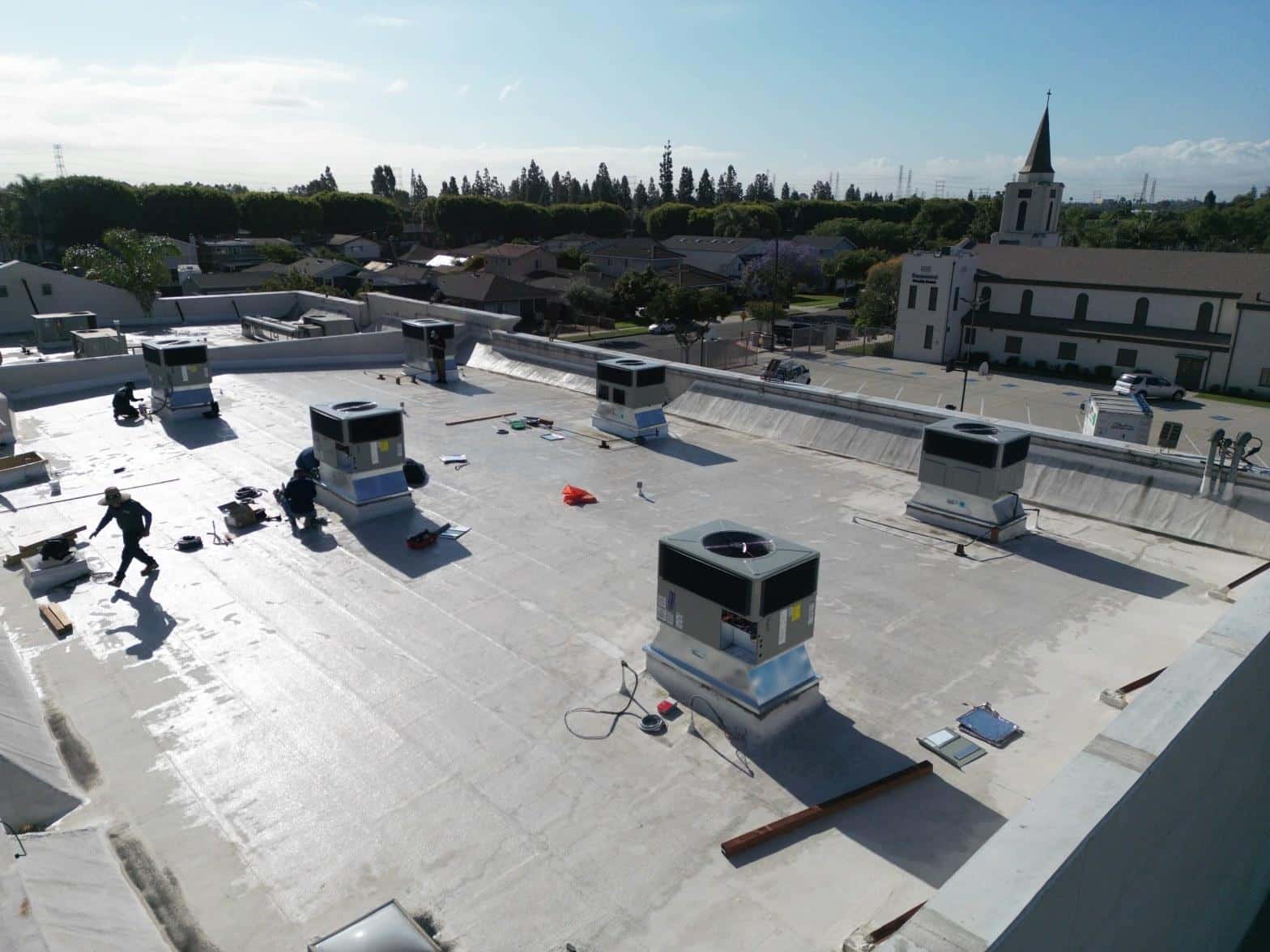
In the Southern California market, a single-zone ductless mini-split installation typically ranges from $3,000 to $6,000, while a full central AC system installation ranges from $5,000 to $14,000 or more depending on home size and duct condition. These are market ranges — your actual project cost depends on several factors.
For central AC, the biggest cost driver is whether your home already has ducts. If it does, a system swap typically lands between $5,000 and $9,000 for a standard 2,000-square-foot home. If new ductwork must be installed, add another $3,000 to $8,000 to that figure, pushing total costs well above $12,000 in many cases.
For mini-splits, a multi-zone system covering three or four rooms typically runs $8,000 to $15,000 installed. That sounds close to central AC, but mini-splits require no ductwork — which is a significant advantage in older California homes built without ducts.
| Cost Factor | Ductless Mini-Split | Central AC |
|---|---|---|
| Single-zone installation (market range) | $3,000 – $6,000 | N/A (whole-home system) |
| Whole-home installation (with existing ducts) | $8,000 – $15,000 (multi-zone) | $5,000 – $9,000 |
| New ductwork required | Not needed | Add $3,000 – $8,000 |
| Zoning capability | Built in — each room controlled separately | Requires add-on damper system ($1,500+) |
| Federal tax credit eligibility (Inflation Reduction Act) | Up to 30% credit on qualifying units | Up to 30% credit on qualifying units |
| TECH Clean California rebate potential | Yes — heat pump mini-splits qualify | Yes — high-efficiency heat pump central systems qualify |
The Inflation Reduction Act federal tax credit allows homeowners to claim up to 30% back on qualifying heat pump systems, including ductless mini-splits, through 2032. That can reduce a $6,000 mini-split installation by $1,800 or more. Always request a custom quote to understand your specific project cost before making a decision.
Which System Is More Energy Efficient in Southern California’s Climate?
Ductless mini-splits are typically 25% to 40% more energy efficient than traditional central AC systems because they eliminate duct losses, which can waste 20% to 30% of cooled air in a typical home. In Southern California’s long cooling season, that efficiency gap translates directly into lower electric bills every month.
Modern ductless systems carry ENERGY STAR ratings and SEER2 ratings of 18 to 30 or higher. Central AC systems, while improved, typically range from 15 to 22 SEER2 for residential installations. The higher the SEER2 rating, the less electricity the unit uses per hour of cooling.
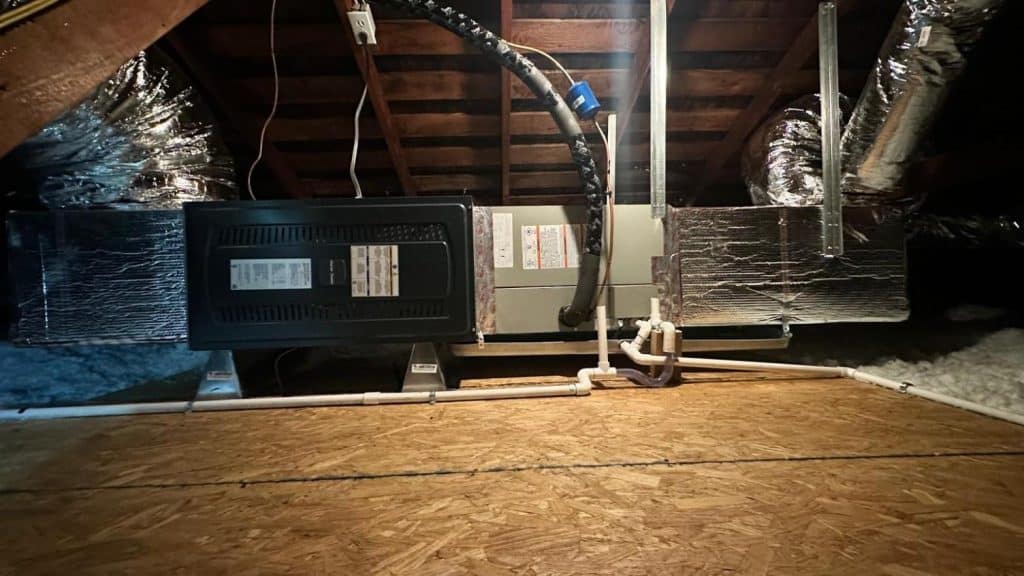
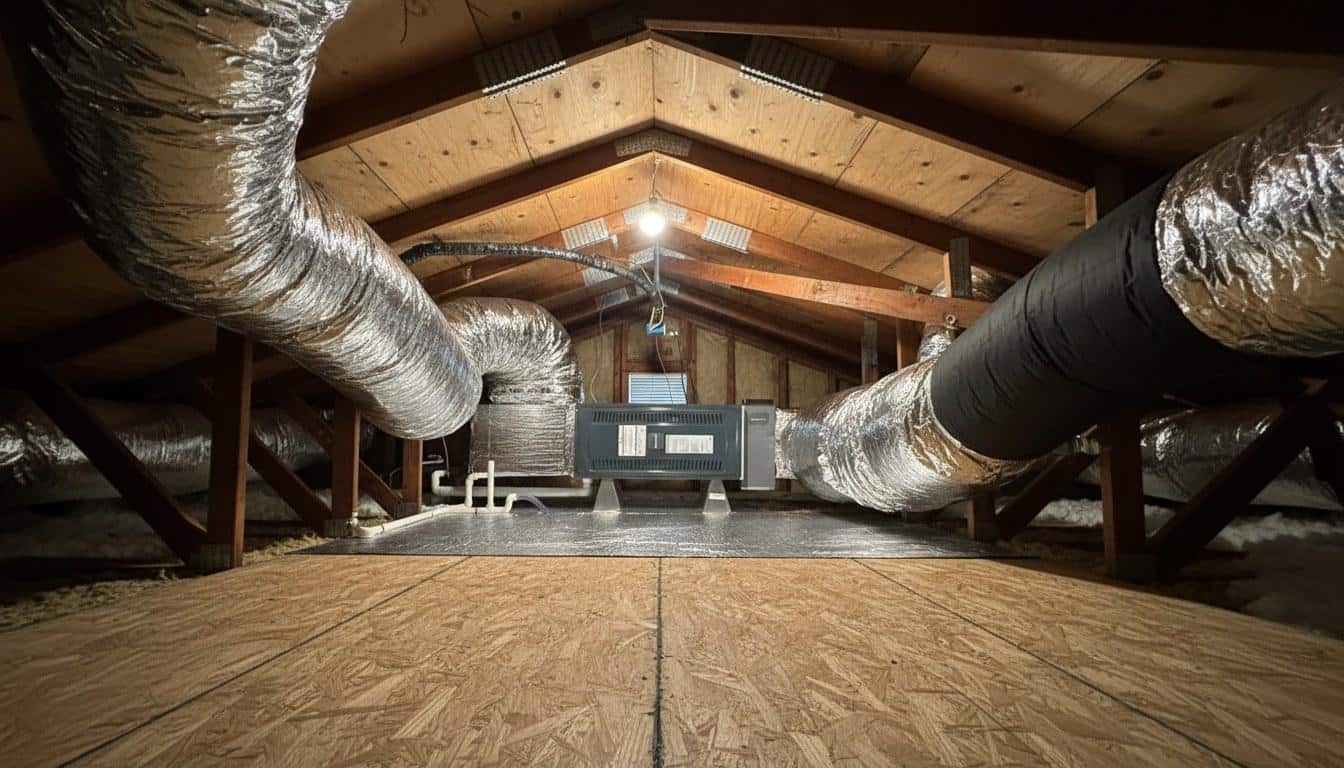
Our technicians see duct leakage on roughly 6 out of every 10 central AC systems we inspect in older Southern California homes — most losing between 20% and 30% of conditioned air into attic spaces before it ever reaches a living area. That waste shows up directly on the electric bill every month.
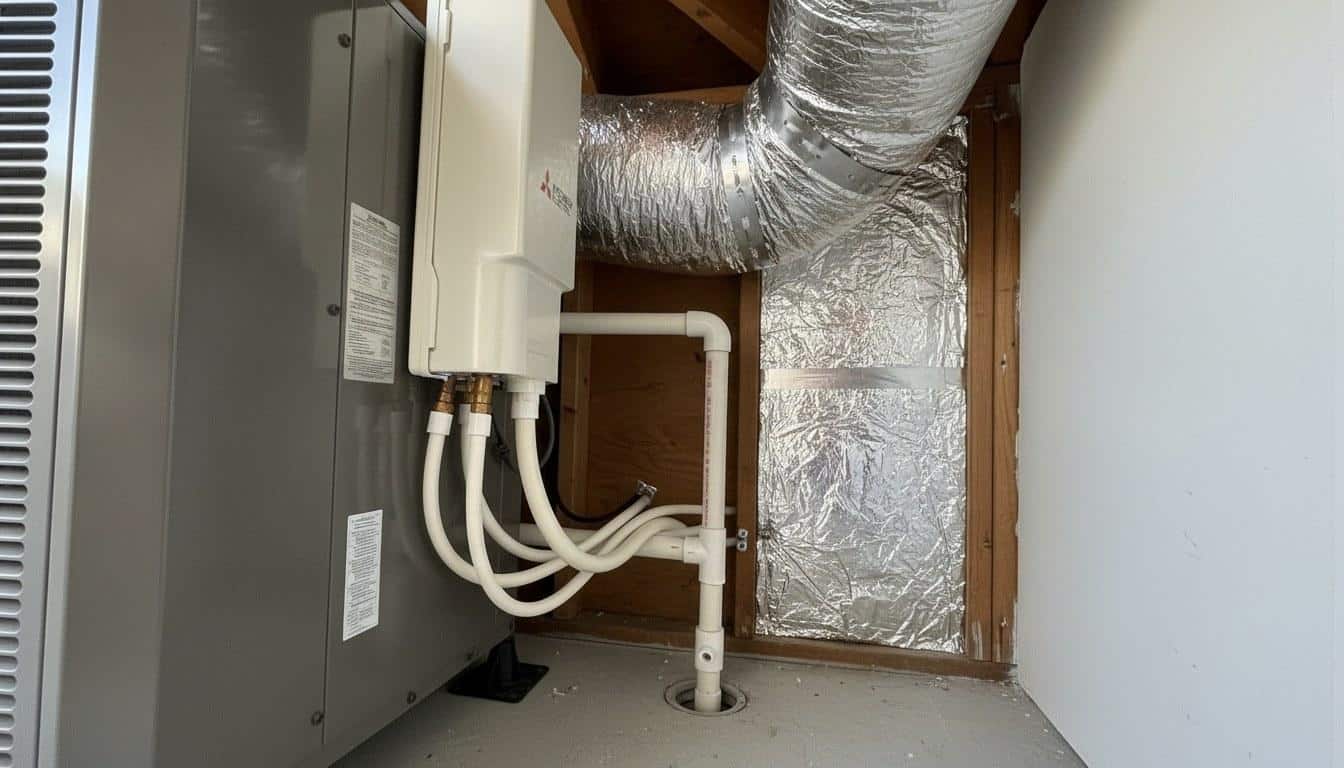
Mini-splits also use inverter-driven compressors that ramp up and down rather than cycling fully on and off. That steady operation keeps temperatures more consistent and avoids the energy spike that happens every time a traditional compressor kicks on.
What Are the Long-Term Savings and Hidden Costs?
Over a 10-year period, a high-efficiency ductless mini-split in Southern California can save $1,500 to $4,000 or more in energy costs compared to an older or mid-efficiency central AC system, depending on home size and usage habits. However, central AC has lower maintenance complexity when your home already has well-sealed ducts.
Over a 10-year period, a high-efficiency ductless mini-split can save $1,500 to $4,000 or more in energy costs compared to a mid-efficiency central AC system.
Long-Term Costs to Factor In
- Duct maintenance: Central AC ducts should be inspected every 3 to 5 years and sealed or replaced as needed — a service that typically runs $300 to $1,000 per visit.
- Filter cleaning: Mini-split indoor units have washable filters that need cleaning every 4 to 6 weeks during heavy use. Skipping this reduces efficiency and can shorten equipment life.
- Refrigerant regulations: As of 2025, EPA refrigerant regulations (Section 608) require certified technicians to handle refrigerant. Both systems require professional service for refrigerant work.
- Equipment lifespan: Central AC systems typically last 15 to 20 years. Ductless mini-splits average 15 to 20 years as well, with some inverter-driven units exceeding 20 years with proper maintenance.
- Zoning savings: Mini-splits let you cool only occupied rooms. A household that leaves bedrooms uncooled during the day can reduce cooling costs by 15% to 25% compared to a central system running at full capacity.
- Repair costs: Mini-split repairs are typically zone-isolated — a failed indoor head unit doesn’t knock out the whole home. A central system failure affects every room at once.
California’s Title 24 building energy standards also increasingly favor high-efficiency heat pump systems, which means future rebate programs and incentive structures are likely to continue favoring mini-splits and heat pump central systems over older refrigerant-cycle-only designs.
How Is a Ductless Mini-Split Installed?
A ductless mini-split installation typically takes one to two days for a single-zone system and two to four days for a multi-zone whole-home setup. No ductwork is required, but the installation does involve electrical work, refrigerant line sets, and wall penetrations — all of which require a licensed contractor.
Step-by-Step: What the Installation Process Looks Like
- Load calculation: A contractor performs a Manual J load calculation to size the system correctly for each room. Oversizing wastes money; undersizing leaves rooms uncomfortably warm.
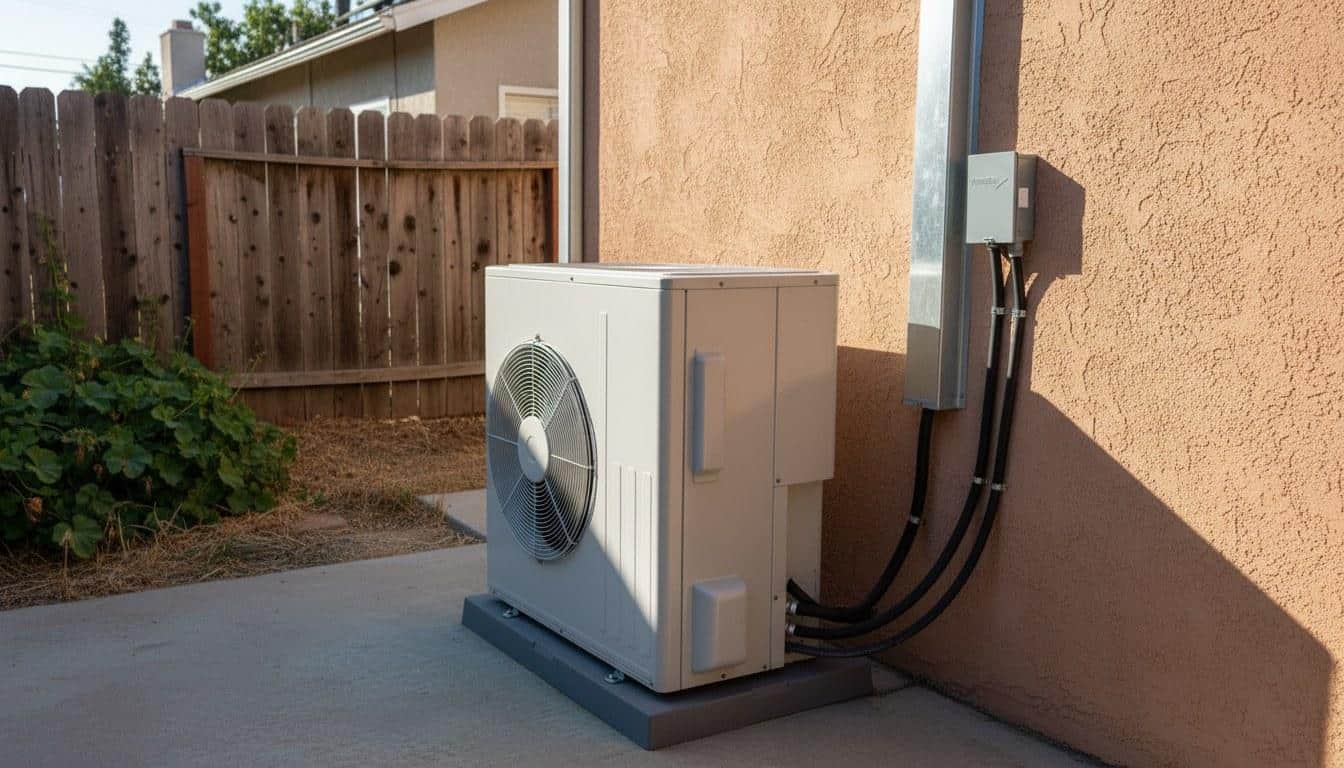
- Outdoor unit placement: The condenser unit is mounted on a pad or wall bracket outside the home, in a location with adequate airflow and clearance.
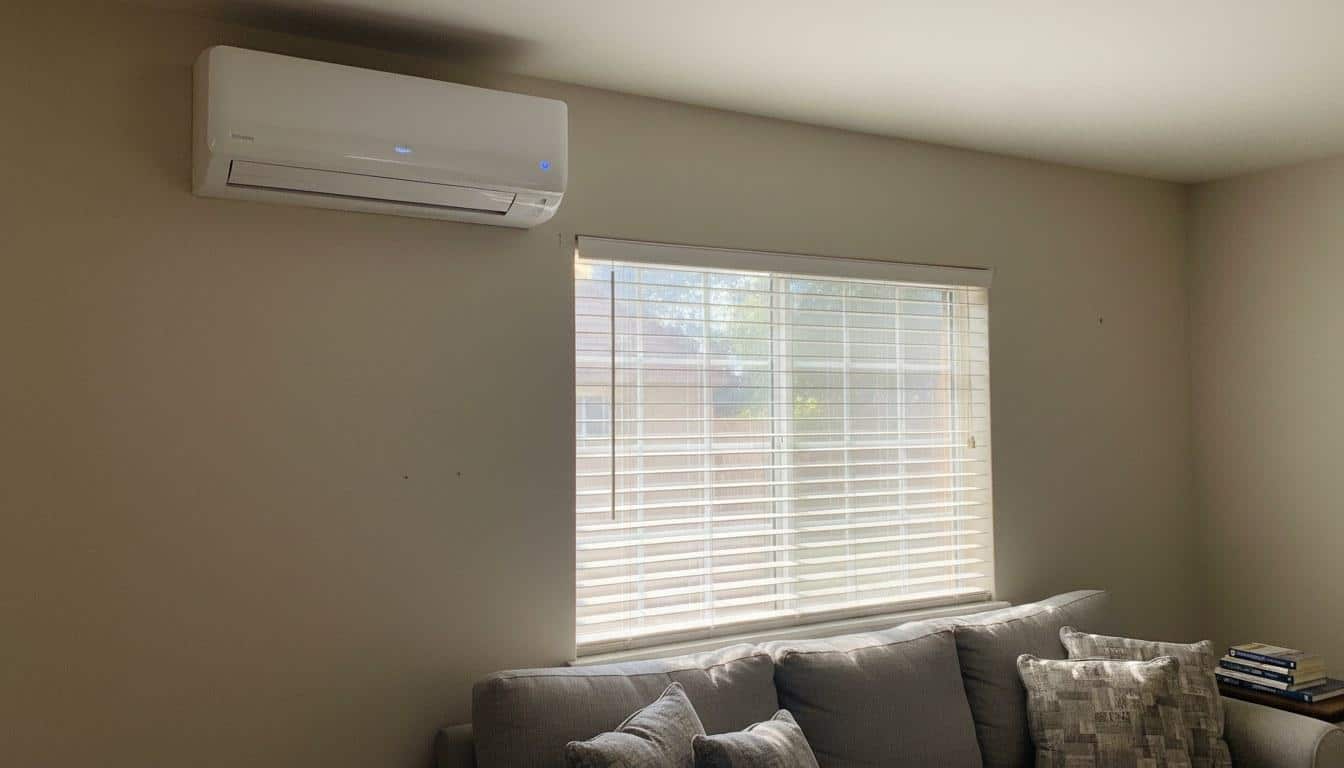
- Indoor unit mounting: Each indoor air handler is mounted high on a wall in the room it serves. Most units require only a 3-inch hole through the wall for the line set.
- Line set installation: Refrigerant lines, a condensate drain, and electrical wiring run through the wall penetration and connect the indoor and outdoor units. Line sets are typically 15 to 50 feet long.
- Electrical connection: Each outdoor unit requires a dedicated circuit. A licensed electrician or HVAC contractor handles panel work and wiring.
- Refrigerant charge and startup: The system is evacuated, charged with refrigerant, and tested for leaks before final startup. This step must be performed by a technician certified under EPA Section 608.
- Thermostat and controls setup: Most mini-splits come with wireless remotes and smartphone app integration. The technician walks the homeowner through zone controls and filter maintenance.
Contractors installing systems in California must be licensed by the California Contractors State License Board (CSLB). Always verify a contractor’s CSLB license number before work begins at cslb.ca.gov.
Which System Is Right for Your Home?
Central AC is usually the better value when your home already has sealed, well-maintained ductwork and you need whole-home cooling from a single system. Ductless mini-splits are the smarter financial choice when there are no existing ducts, when you want room-by-room control, or when you’re adding cooling to a garage, addition, or room that central AC doesn’t reach.
Choose a Ductless Mini-Split If:
- Your home has no existing ductwork, or ducts are in poor condition.
- You want to cool specific rooms or zones independently.
- You’re adding an addition, ADU, or converted garage that isn’t connected to central HVAC.
- You want the highest available SEER2 efficiency rating and lowest monthly electric bills.
- You want a system that also provides heat in winter, eliminating a separate furnace.
- You plan to claim the Inflation Reduction Act federal tax credit on a qualifying heat pump system.
Choose Central AC If:
- Your home already has sealed, well-maintained ductwork in good condition.
- You prefer a single outdoor unit and a unified thermostat for the whole home.
- Your budget favors lower upfront installation cost over long-term efficiency gains.
- You’re replacing an existing central system and the ducts are less than 10 years old.
Across our service calls in Southern California, we find that homes built before 1980 — which make up a significant share of the housing stock in communities across the region — frequently have duct systems that leak 25% or more of conditioned air. In those cases, the energy savings from switching to a ductless system typically offset the higher upfront cost within 5 to 8 years.
Ready to Find Out Which System Saves You More?
The best way to know which system saves more money for your specific home is to get a load calculation and a side-by-side cost comparison from a licensed HVAC contractor. Generic online calculators can’t account for your home’s insulation, window area, ceiling height, or duct condition — all of which significantly affect the real numbers.
Shalom Heating & Air helps homeowners across Southern California compare ductless mini-split vs central AC options with honest, no-pressure assessments. Whether you’re weighing mini split vs central ac cost savings in Southern California or simply need a reliable system before summer peaks, the team at Shalom Heating & Air can walk you through your options with real numbers.
Call (714) 886-2021 to schedule your consultation. Get a written quote before any work begins, and ask about current TECH Clean California rebates and Inflation Reduction Act federal tax credits that may apply to your project.
Frequently Asked Questions
How much does it cost to install a ductless mini-split in Southern California?
In the Southern California market, a single-zone ductless mini-split installation typically ranges from $3,000 to $6,000. A multi-zone system covering three or four rooms generally runs $8,000 to $15,000 installed. The final cost depends on the number of zones, line set length, electrical panel work required, and whether any wall or ceiling modifications are needed. Always get a written quote before work begins.
How is a ductless mini-split installed?
A ductless mini-split is installed by mounting an outdoor condenser unit on a pad or wall bracket, mounting indoor air handler units high on the walls of each room, and running refrigerant line sets through a small hole in the wall to connect them. The system also requires a dedicated electrical circuit for each outdoor unit. A licensed HVAC contractor handles the refrigerant charge and startup, which must comply with EPA Section 608 regulations.
Do mini-splits really save money compared to central air conditioning?
Yes, in most Southern California homes, ductless mini-splits save money on monthly energy bills because they eliminate duct losses, which can waste 20% to 30% of cooled air in a typical home. Homes without existing ductwork see the biggest savings, since they avoid the $3,000 to $8,000 cost of installing new ducts for a central system. Over 10 years, energy savings can range from $1,500 to $4,000 or more depending on home size and usage.
Can I get a rebate or tax credit for installing a mini-split in California?
Yes. Qualifying heat pump mini-split systems are eligible for the Inflation Reduction Act federal tax credit of up to 30% of the installed cost through 2032. California's TECH Clean California program also offers rebates on heat pump systems, including ductless mini-splits. Ask your contractor which programs apply to your specific equipment and income level before installation.
Is central AC or a mini-split better for a home that already has ductwork?
If your home already has sealed, well-maintained ductwork in good condition, central AC is usually the more cost-effective choice upfront because you avoid the cost of a multi-zone mini-split system. However, if your ducts are older and leaking more than 15% to 20% of conditioned air, the energy savings from a ductless system can offset its higher cost within 5 to 8 years. A duct inspection and load calculation from a licensed contractor will give you the clearest answer for your specific home.