California Title 24 and Your HVAC System: What Every Homeowner Needs to Know
If you have been quoted on a new AC or furnace, California's Title 24 energy standards affect what equipment you can install and how it must be set up. This guide explains what the rules mean for your home.
What Is California Title 24 and Why Does It Apply to Your HVAC System?
California’s Title 24 building energy standards are a set of rules that control how much energy new and replacement building systems, including HVAC equipment, are allowed to use. They are enforced by the California Energy Commission and updated roughly every three years, with the most recent major update taking effect January 1, 2023. The standards are part of the California Code of Regulations, Title 24, Part 6, which is why contractors and inspectors simply call them “Title 24.”
Many homeowners assume Title 24 only applies to new construction. That is not the case. Any permitted HVAC installation or replacement in an existing home must also meet the current standards for efficiency, duct performance, and controls. If your contractor pulls a permit for a new air conditioner, heat pump, or furnace, the work will be inspected against these rules.
The standards exist because buildings account for a large share of California’s total energy use. By setting a floor for how efficient equipment must be and how well it must be installed, the state reduces grid demand and cuts household energy bills over time.
Which HVAC Projects Trigger a Title 24 Compliance Requirement?
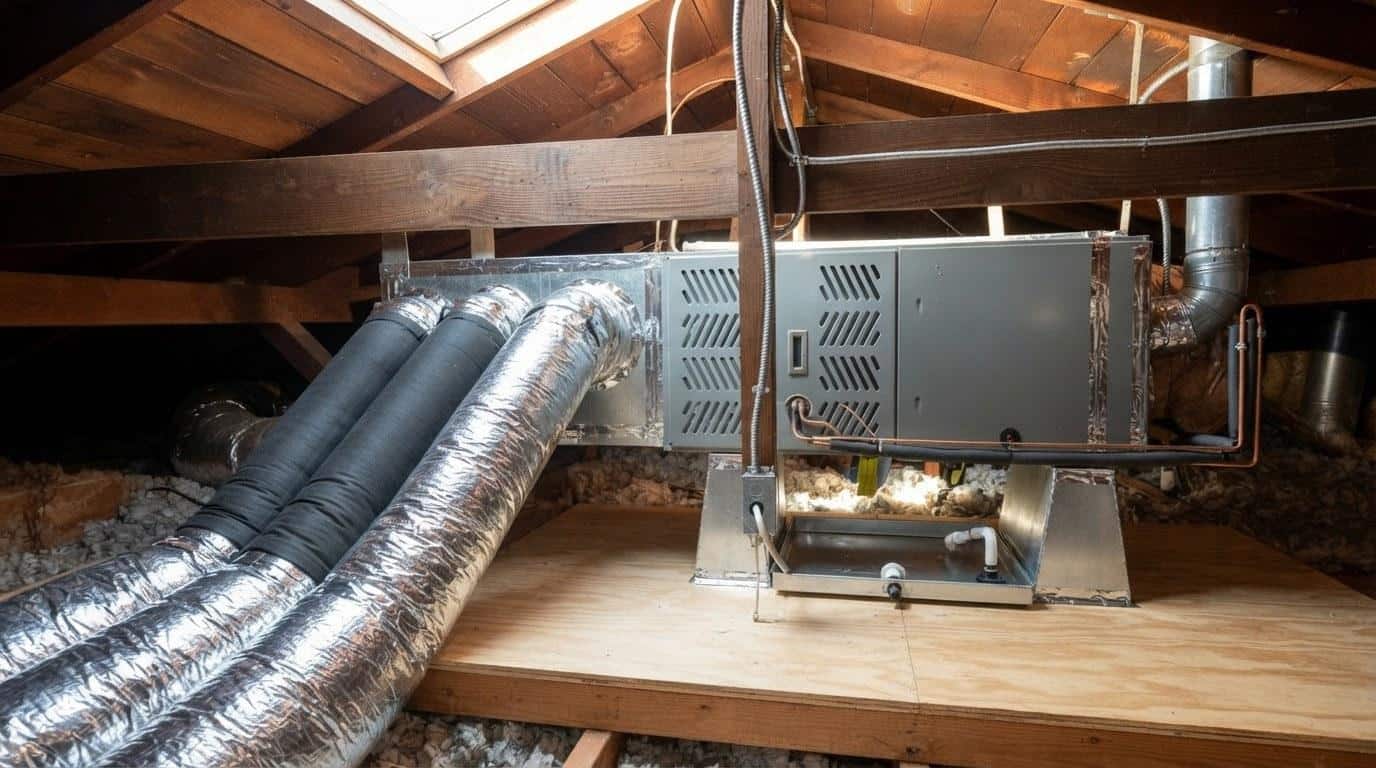
Any HVAC project that requires a building permit in California automatically triggers a Title 24 compliance review. This includes installing a new central air conditioner or heat pump, replacing an existing furnace or air handler, adding ductwork, or installing a ductless mini-split system. Simple repairs, like swapping a capacitor or replacing a fan motor, do not require a permit and are not subject to Title 24 review.
The line that matters is whether a permit is required. California’s building codes generally require permits for any work that involves new equipment installation, changes to existing duct systems, or modifications to the electrical service feeding HVAC equipment. When in doubt, ask your contractor before work begins, because installing equipment without a required permit can create problems when you sell your home.
Projects that commonly trigger Title 24 review include:
- New central AC or heat pump installation: Full system replacements require a permit and must meet current SEER2 minimums.
- Furnace replacement: A new gas furnace must meet minimum AFUE ratings and may require duct leakage testing.
- Ductless mini-split installation: Adding a new mini-split system requires a permit and must meet efficiency standards.
- Duct system additions or replacements: New ductwork must be sealed and tested to meet leakage limits.
- New construction HVAC: Every system in a new home must be designed and commissioned to Title 24 specifications.
What Are the Key Title 24 HVAC Efficiency and Installation Rules?
Title 24 sets minimum efficiency ratings, duct leakage limits, and required controls for HVAC systems. As of the 2022 code cycle (effective January 2023), new central air conditioners and heat pumps must meet a minimum SEER2 rating of 15.2 for split systems in most California climate zones. The older SEER scale has been replaced by the stricter SEER2 measurement standard, which better reflects real-world performance.
For gas furnaces, the minimum AFUE (Annual Fuel Utilization Efficiency) is 80% for most installations, though some climate zones and installation types require higher-efficiency equipment. Heat pump systems are increasingly favored under California’s evolving energy policy because they produce no direct combustion emissions.
Beyond equipment ratings, Title 24 also governs how systems are installed. Key installation rules include:
- Duct leakage testing: New duct systems must leak no more than 15% of system airflow, and in many cases the limit is 6% for sealed systems. A third-party verified test is required.
- Refrigerant charge verification: Technicians must verify that the system has the correct refrigerant charge and airflow, either through measurement or a diagnostic protocol. This requirement aligns with EPA refrigerant regulations (Section 608).
- Thermostat controls: Newly installed systems generally require a programmable or smart thermostat that meets Title 24 demand response readiness requirements.
- Manual J load calculation: Equipment must be sized using an ACCA Manual J load calculation, not just a rule-of-thumb estimate. Oversized or undersized equipment fails inspection.
- HERS verification: Many compliance measures require a California Home Energy Rating System (HERS) rater to independently verify the work before the permit is closed.
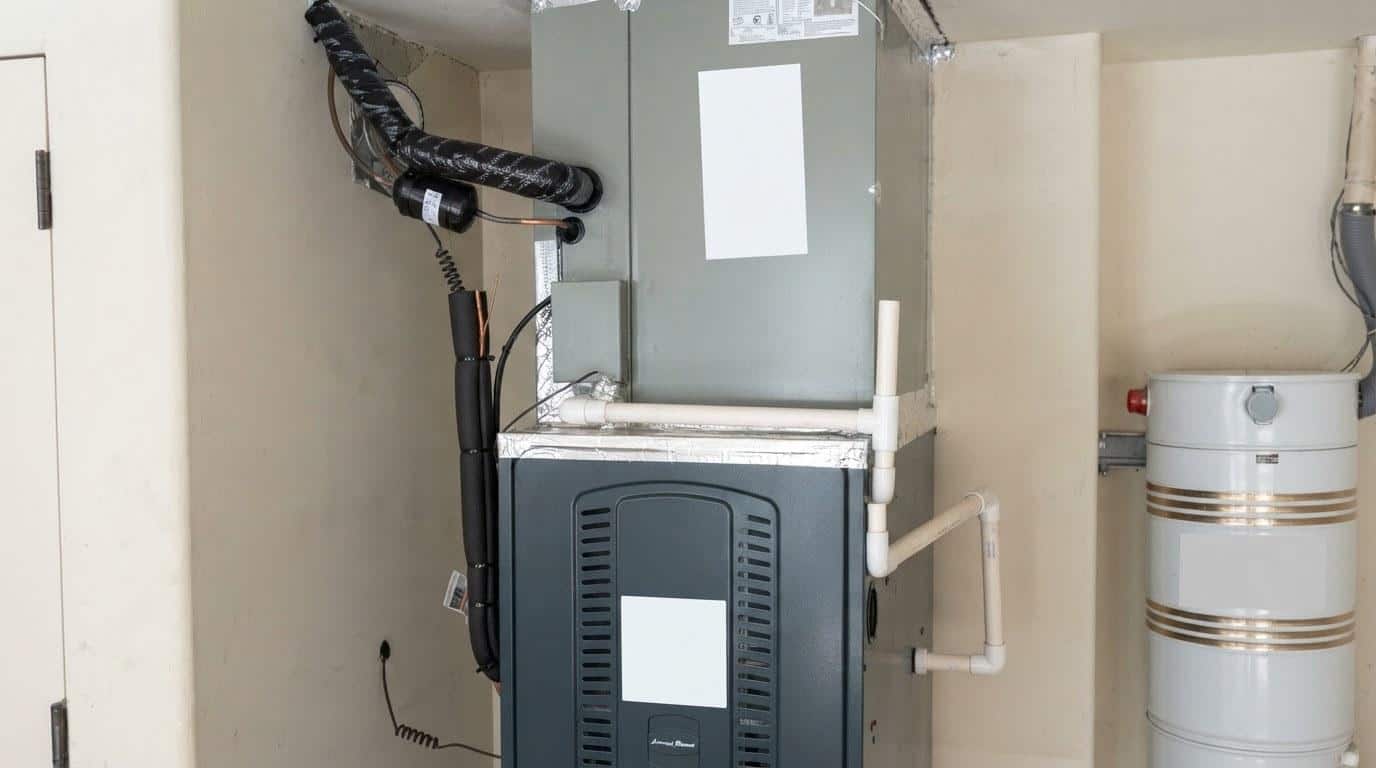
Our technicians use a calibrated blower door and duct blaster setup on every permitted job, and what we find most often is that existing flex duct connections at the plenum have pulled loose over the years, which is exactly where leakage failures show up during HERS testing.
| Compliance Measure | What It Requires | Who Verifies It |
|---|---|---|
| Minimum SEER2 rating | 15.2 SEER2 for most split-system AC and heat pumps | Inspector reviews equipment data plate |
| Minimum AFUE (furnace) | 80% AFUE or higher depending on climate zone | Inspector reviews equipment data plate |
| Duct leakage | No more than 15% total leakage; 6% for sealed systems | HERS rater with duct blaster test |
| Refrigerant charge | Verified correct charge and airflow at startup | HERS rater or documented field verification |
| Thermostat | Programmable or smart thermostat with demand response capability | Inspector visual check |
| Manual J sizing | Equipment sized by load calculation, not rule of thumb | Permit application documents |
california title 24 hvac requirements homeowner guide: What to Expect During the Permit and Inspection Process
A permitted HVAC replacement in California typically involves three stages: permit application, installation, and final inspection with HERS verification. The entire process from permit application to final sign-off commonly takes one to three weeks, depending on your local building department’s workload.
Here is how the process generally works:
- Permit application: Your contractor submits a permit application that includes the equipment specifications, a Manual J load calculation, and a compliance form (CF1R) generated by Title 24 compliance software.
- Installation: The contractor installs the equipment, seals and tests the duct system, verifies refrigerant charge, and installs the required thermostat.
- HERS field verification: A certified HERS rater (a third party, not your contractor) visits the job site to independently test duct leakage, verify refrigerant charge, and confirm airflow. They submit results electronically to the California Energy Commission’s registry.
- Final inspection: The local building department inspector reviews the HERS results and does a visual inspection of the installation. If everything passes, the permit is closed.
- Certificate of installation: You receive a CF2R (installer certificate) and CF3R (HERS verification certificate) for your records. Keep these documents because they will be requested during a home sale.
Contractors who are Licensed by the California Contractors State License Board (CSLB) are required to follow this process. If a contractor offers to skip the permit to save time or money, that is a serious red flag. Unpermitted work can void your homeowner’s insurance coverage for HVAC-related claims and create legal liability when you sell.
How Much Does Title 24 Compliance Add to an HVAC Project Cost?
Title 24 compliance typically adds between $300 and $900 to the total cost of an HVAC replacement project in the Southern California market, depending on the scope of work required. The main cost drivers are the HERS rater fee, the permit fee, and any duct sealing or repairs needed to pass leakage testing.
Title 24 compliance typically adds between $300 and $900 to the total cost of an HVAC replacement project in the Southern California market.
Here is a general breakdown of compliance-related costs in this market:
- Building permit fee: Typically $150 to $400, set by your local jurisdiction.
- HERS rater fee: Generally $200 to $500 for a standard residential system, depending on the number of measures that need verification.
- Duct sealing (if needed): If existing ducts fail the leakage test, sealing work typically costs $300 to $800 depending on duct access and the extent of leakage.
- Compliance software and documentation: Usually included in the contractor’s overhead, but worth confirming when reviewing a quote.
These costs are real, but they are also a sign that the work is being done correctly. A system installed without proper duct sealing and refrigerant verification can lose 20% to 30% of its rated efficiency before it ever runs a full season. Paying for compliance upfront is almost always cheaper than dealing with high utility bills and premature equipment failure later.
Equipment costs themselves are also affected by Title 24. Since the 2023 code update raised the minimum SEER2 threshold, lower-efficiency units that were common before 2023 are no longer legal for permitted installations. Higher-efficiency equipment generally costs more upfront, but the U.S. Department of Energy estimates that moving from a 14 SEER system to a 16 SEER system can reduce cooling energy use by roughly 14%. For a written quote on your specific project, contact Shalom Heating & Air at (714) 886-2021.
Moving from a 14 SEER system to a 16 SEER system can reduce cooling energy use by roughly 14%, according to U.S. Department of Energy estimates.
Can Title 24 Compliance Save You Money in the Long Run?
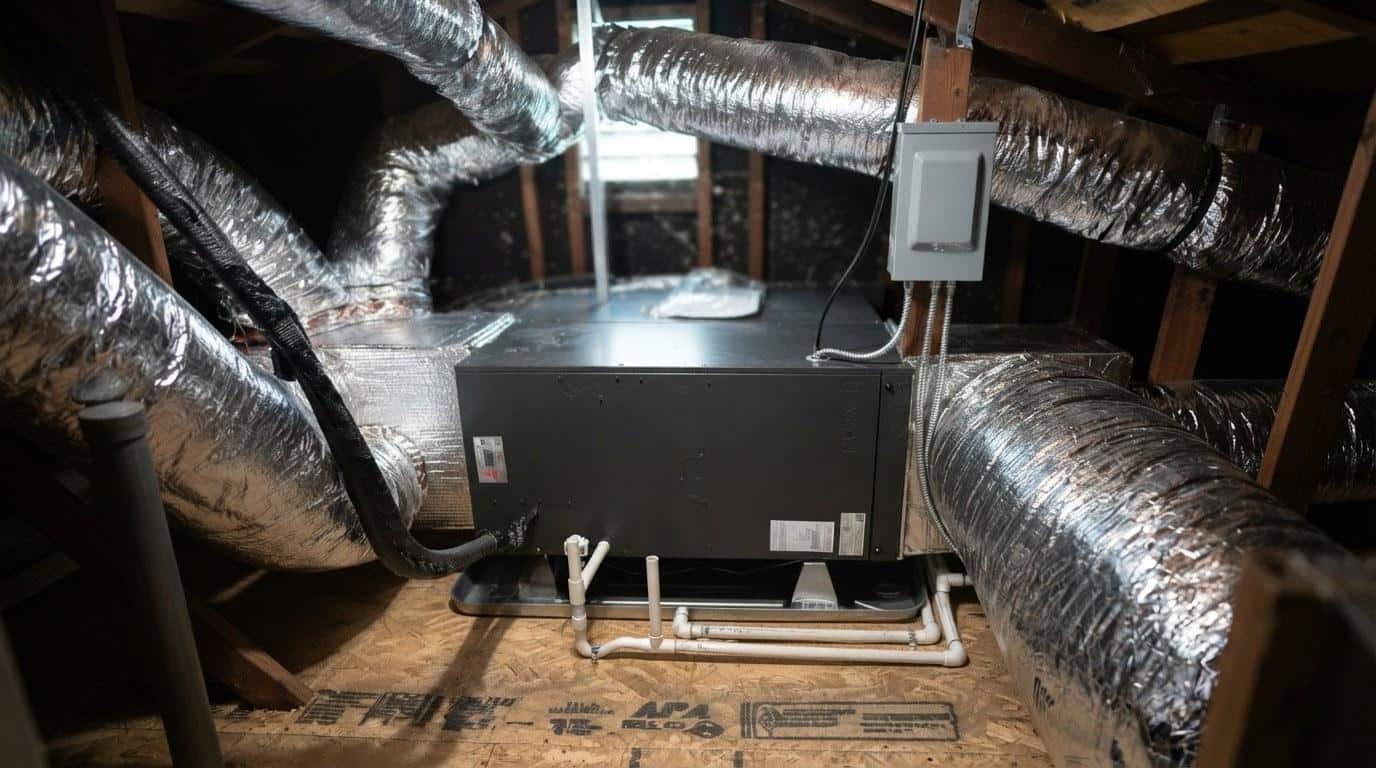
Yes. Title 24 compliance requirements push homeowners toward more efficient equipment and better-sealed duct systems, both of which directly reduce monthly energy bills. A properly sealed duct system alone can recover 20% to 30% of conditioned air that would otherwise be lost in unconditioned attic or crawl space.
Beyond energy savings, compliant installations also qualify for financial incentives that non-compliant ones do not. The Inflation Reduction Act federal tax credit allows homeowners to claim up to 30% of the cost of qualifying heat pumps and high-efficiency HVAC equipment, up to $2,000 per year for heat pumps under the 25C credit. This credit applies to equipment that meets ENERGY STAR efficiency ratings, which overlap significantly with Title 24 minimums.
California also offers rebates through programs like TECH Clean California, which provides incentives for heat pump installations that meet state efficiency standards. These rebates can reach several hundred to several thousand dollars depending on the equipment and income tier. Combining a federal tax credit with a state rebate can offset a meaningful share of the total project cost.
Homes with properly permitted and documented HVAC systems also tend to sell faster and at higher prices. Buyers and their inspectors will ask for permit records, and a clean CF2R and CF3R on file removes a common negotiating obstacle. When we review permit histories on service calls for recently purchased homes, the systems with full HERS documentation are consistently the ones that were installed and charged correctly from day one.
Get Expert HVAC Help That Meets California’s Title 24 Standards
Navigating California’s Title 24 HVAC requirements is easier when you work with a contractor who handles the permit, the compliance documentation, and the HERS coordination as part of the job, not as an afterthought.
Shalom Heating & Air installs, repairs, and maintains heating and cooling systems across Southern California, and every permitted installation is handled in full compliance with California’s Title 24 building energy standards. Whether you need a new central air conditioner, a heat pump, a ductless mini-split, or a furnace replacement, the team can walk you through the compliance requirements before any work begins.
Call (714) 886-2021 to request a custom quote and ask about current rebates and tax credits that may apply to your project. Get your written estimate before any work begins so you know exactly what compliance steps are included.
Explore our full range of HVAC services across Southern California.
Frequently Asked Questions
Does Title 24 apply if I am just replacing my old AC with the same size unit?
Yes, if the replacement requires a building permit, Title 24 applies regardless of whether you are keeping the same equipment size. The new unit must meet current SEER2 minimums, and duct leakage testing is typically required. Always confirm with your contractor whether a permit is needed before scheduling the swap.
What happens if my HVAC system fails the HERS duct leakage test?
If the system fails the duct leakage test, the contractor must locate and seal the leaking connections and then retest. The permit cannot be closed until the system passes. This is why it is important to hire a contractor who seals ducts thoroughly before the HERS rater arrives, rather than hoping the existing ducts pass on their own.
How do I know if a contractor is following Title 24 rules?
Ask the contractor whether they will pull a permit, complete a Manual J load calculation, and arrange a HERS rater for field verification. A contractor who is Licensed by the California Contractors State License Board (CSLB) is required to follow these steps for any permitted installation. You can verify a CSLB license at the CSLB website before hiring.
Can I get a rebate or tax credit for upgrading to a Title 24 compliant heat pump?
Yes. The Inflation Reduction Act federal tax credit allows homeowners to claim up to 30% of qualifying heat pump costs, up to $2,000 per year under the 25C credit. California's TECH Clean California program also offers rebates for qualifying heat pump installations. Your equipment must meet ENERGY STAR efficiency ratings to qualify for most of these programs.
How long does it take to get a Title 24 compliant HVAC system installed and inspected?
Most permitted HVAC replacements in Southern California are completed and inspected within one to three weeks from the time the permit is submitted. The installation itself usually takes one to two days. The HERS rater visit and final building department inspection are typically scheduled within a few days of installation completion, depending on local department availability.