California HVAC Permits: What Homeowners Need to Know Before Any Installation
Pulling the right permit before an HVAC installation protects your home, your insurance, and your resale value. This guide walks California homeowners through every step.
Why Does California Require an HVAC Permit?
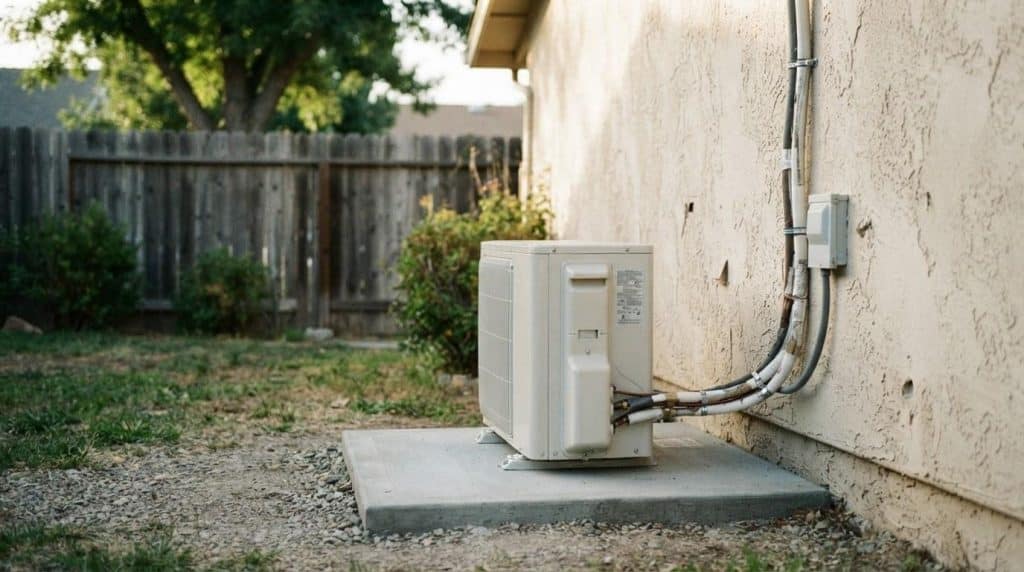
California requires HVAC permits because heating and cooling systems affect structural integrity, electrical safety, gas lines, and indoor air quality. A permitted installation is inspected by a local building official who verifies the work meets California’s Title 24 building energy standards and current mechanical codes. Without that inspection, there is no independent check that the system was installed safely or efficiently.
The state’s California Energy Commission sets the Title 24 standards that govern how HVAC equipment must be sized, installed, and tested. These rules exist to reduce energy waste and protect occupants. A permit is the mechanism that enforces those rules on every job.
There is also a practical financial reason. Homeowner’s insurance policies often include language that excludes coverage for damage caused by unpermitted work. If an improperly installed furnace causes a fire and the work was never permitted, your insurer may deny the claim. Real estate agents are also required to disclose unpermitted work, which can delay or kill a home sale.
This hvac permit california homeowner guide is designed to answer the questions most homeowners have before they hire a contractor: what triggers the permit requirement, how to confirm a contractor is properly licensed, and what the inspection process actually looks like.
When Do You Actually Need a Permit for HVAC Work?
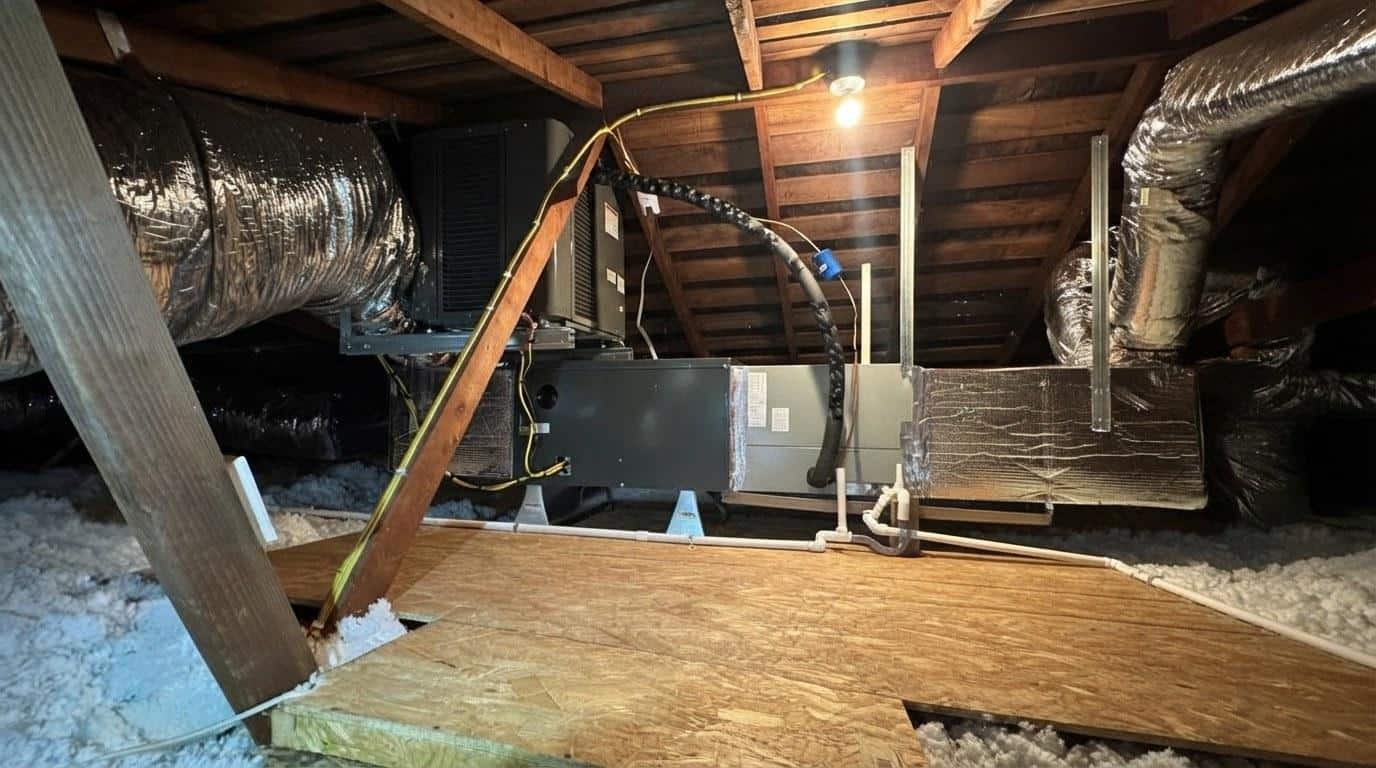
A permit is required for any new HVAC installation, a full system replacement, adding ductwork, or converting from one fuel type to another. Minor repairs, like replacing a capacitor, a thermostat, or a belt, generally do not require a permit. The line between a repair and an installation is important, and local building departments make the final call.
Here is a breakdown of common HVAC tasks and their typical permit status in California:
| HVAC Task | Permit Typically Required? | Why |
|---|---|---|
| New central AC installation | Yes | Involves electrical, refrigerant, and ductwork |
| Full system replacement (same type) | Yes | Equipment sizing and refrigerant handling must be verified |
| Ductless mini-split installation | Yes | Requires electrical circuit and refrigerant line work |
| New furnace installation | Yes | Gas line connection and venting must be inspected |
| Ductwork installation or major repair | Yes | Affects airflow balance and fire separation requirements |
| Thermostat replacement | No | Low-voltage, no structural or fuel-line change |
| Capacitor or contactor replacement | No | Component-level repair, no system change |
| Refrigerant recharge only | No (but EPA cert required) | Technician must hold EPA Section 608 certification |
If you are unsure whether your project requires a permit, call your local building department before any work begins. Most departments will answer that question for free over the phone. Do not rely solely on a contractor’s verbal assurance that no permit is needed; get that confirmation from the building department directly.
One specific situation worth noting: California’s 2022 Title 24 update tightened the rules around HVAC system efficiency and duct sealing verification. Systems installed after January 1, 2023 must meet higher SEER2 ratings. For central air conditioning, the federal minimum SEER2 rating in California’s climate zones is now 14.3 SEER2 for split systems. A permitted inspection confirms the installed equipment actually meets that threshold.
For central air conditioning, the federal minimum SEER2 rating in California's climate zones is now 14.3 SEER2 for split systems installed after January 1, 2023.
How Do You Verify an HVAC Contractor’s License in California?
Every HVAC contractor working in California must hold a valid license issued by the California Contractors State License Board (CSLB). Homeowners can verify any contractor’s license in about two minutes using the free CSLB license lookup tool at cslb.ca.gov. You should check this before signing any contract.
HVAC contractors typically hold one of two CSLB license classifications:
- C-20 (Warm-Air Heating, Ventilating and Air Conditioning): Covers installation, service, and repair of forced-air heating and cooling systems, ductwork, and related equipment.
- C-38 (Refrigeration): Covers commercial refrigeration and some cooling systems. Less common for residential HVAC work.
When you look up a contractor on the CSLB license check page, confirm all of the following:
- License status: Must show “Active”, not “Expired”, “Suspended”, or “Revoked”.
- License classification: Should include C-20 for standard residential HVAC work.
- Bond and insurance: The CSLB record shows whether the contractor carries a contractor’s bond. Ask separately for a certificate of general liability insurance.
- Workers’ compensation: Required if the contractor has employees. The CSLB record notes any exemption.
- Disciplinary history: Check for any citations, suspensions, or judgments against the license.
Technicians who handle refrigerants must also hold an EPA Section 608 certification. This is a federal requirement separate from the CSLB license. It is not visible on the CSLB lookup, so ask the contractor directly and request documentation.
Our technicians carry their EPA Section 608 certification and can show documentation on request. When we arrive at a job involving refrigerant, we look for signs of prior improper handling, such as oil staining around service ports, before we open the system, because that tells us whether the previous work was done correctly.
What Happens During a California HVAC Inspection?
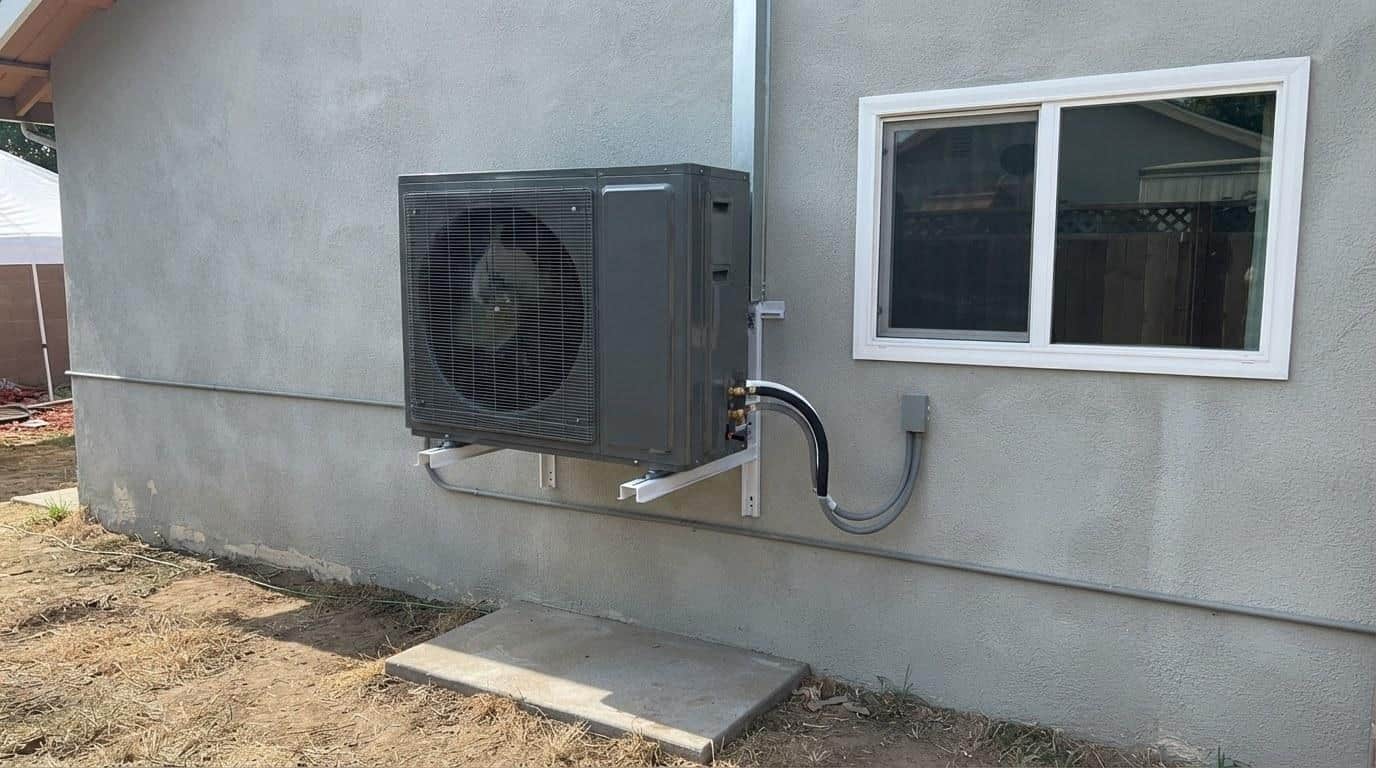
A California HVAC inspection typically has two stages: a rough-in inspection before walls or ceilings are closed up, and a final inspection once the system is fully installed and operational. For a straightforward replacement of an existing system, the two stages are sometimes combined into a single final visit.
Here is what a building inspector typically checks during a residential HVAC inspection in California:
- Equipment sizing documentation: The contractor must provide a Manual J load calculation showing the system is properly sized for the home’s square footage, insulation levels, and climate zone. Oversized and undersized systems both fail.
- Duct sealing and insulation: California requires duct leakage testing (HERS testing) on most new installations. Ducts must be sealed to a specific leakage rate, generally no more than 15 percent total leakage for altered duct systems.
- Refrigerant charge verification: The installer must verify the refrigerant charge is within the manufacturer’s specified range. An incorrect charge reduces efficiency and damages the compressor over time.
- Electrical connections: The disconnect, breaker sizing, and wiring gauge must match the equipment’s nameplate requirements and meet the California Electrical Code.
- Gas line connections (for furnaces): Fittings, pressure, and venting must meet the California Mechanical Code and local amendments.
- Thermostat and controls: Smart or programmable thermostats are required on new installations under Title 24.
The HERS (Home Energy Rating System) test is one part homeowners are often surprised by. A HERS rater, who is a third-party verifier separate from the inspector, physically measures duct leakage using a blower door or duct blaster. This test is required for most new HVAC installations and for replacements that involve more than 40 linear feet of new ductwork. If the ducts fail, the contractor must re-seal and retest before the permit closes.
Failing an inspection does not mean starting over. It means the contractor corrects the deficiency and schedules a re-inspection. The permit remains open until the work passes. A reputable contractor will handle re-inspections at no additional cost to you.
What Does an HVAC Permit Cost in California?
HVAC permit fees in California are set by each local jurisdiction, so they vary significantly across the state. For a standard residential HVAC replacement, permit fees typically range from $150 to $500. Projects that involve new ductwork, panel upgrades, or gas line modifications can push fees higher.
Several factors affect where a permit fee lands within that range:
- Jurisdiction: Larger cities and counties often have higher base fees than smaller municipalities.
- Project valuation: Some jurisdictions calculate the fee as a percentage of the project’s total value rather than a flat rate.
- Number of inspections: Each required inspection (rough-in, HERS, final) may carry a separate fee.
- Plan check fees: Complex installations sometimes require a plan review before the permit is issued, adding a separate plan check fee.
- Re-inspection fees: If work fails an inspection, a re-inspection fee typically runs $50 to $150.
In the regional market, a complete central air conditioning replacement including equipment, labor, permit fees, and HERS testing generally ranges from $5,000 to $12,000 depending on system size, efficiency rating, and ductwork condition. A ductless mini-split installation for a single zone typically ranges from $2,500 to $5,000 installed. These are market context figures; your actual cost depends on your home’s specific conditions. Contact Shalom Heating & Air for a custom quote based on your home.
One important note: the permit fee is almost always a small fraction of the total project cost. Skipping the permit to save $200 in fees is not worth the risk of a denied insurance claim or a required tear-out during a home sale. Legitimate contractors include the permit fee in their written estimate.
Skipping the permit to save $200 in fees is not worth the risk of a denied insurance claim or a required tear-out during a home sale.
How Can California Rebates and Tax Credits Offset Your HVAC Project?
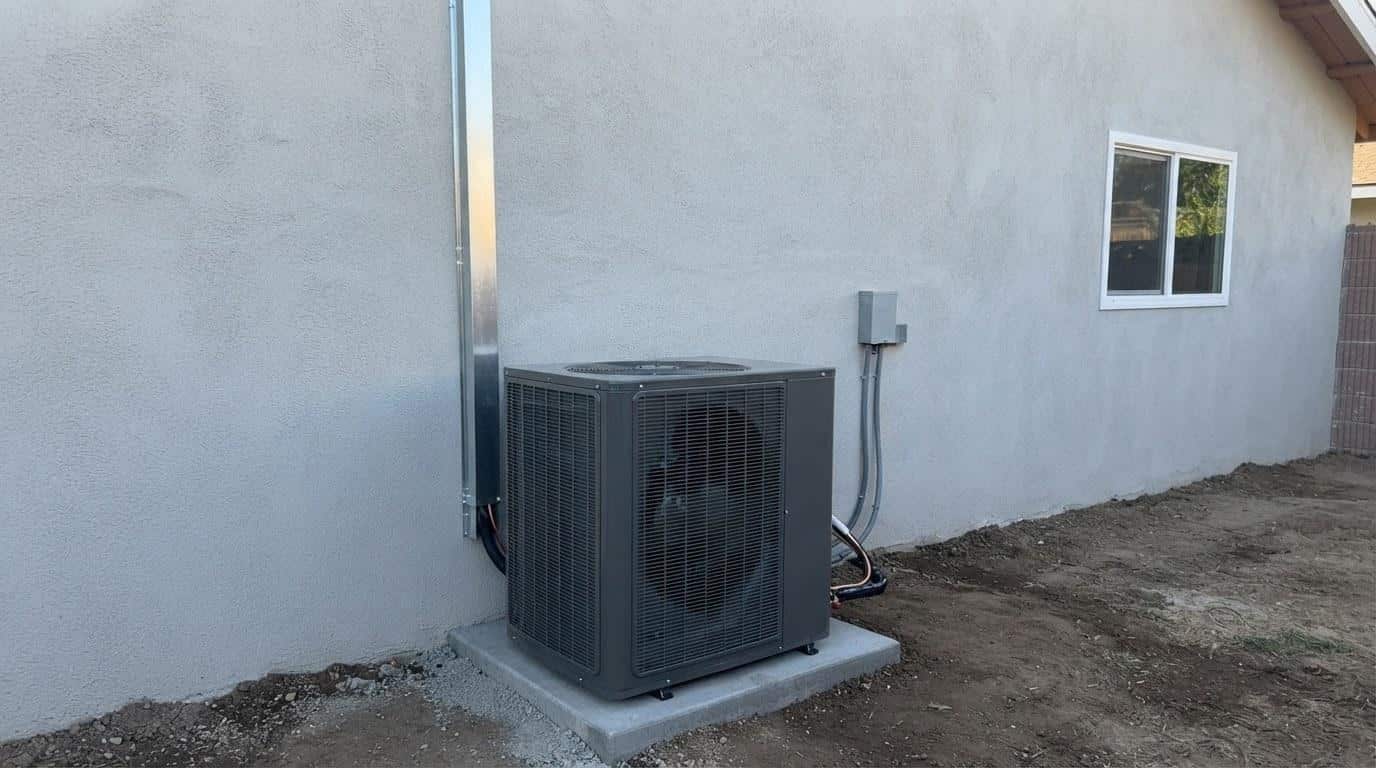
California homeowners installing high-efficiency HVAC equipment may qualify for federal tax credits under the Inflation Reduction Act, utility rebates through programs like TECH Clean California, and manufacturer rebates, which can collectively reduce out-of-pocket costs by hundreds to thousands of dollars. These incentives are available only on permitted, properly installed equipment.
Here are the main programs available as of 2026:
- Inflation Reduction Act federal tax credit: The Energy Efficient Home Improvement Credit allows homeowners to claim 30 percent of the cost of qualifying HVAC equipment, up to $600 for central air conditioning or a furnace, and up to $2,000 for heat pumps and heat pump water heaters. The credit applies to the equipment cost, not labor. Consult a tax professional for your specific situation.
- TECH Clean California: This statewide program offers rebates for heat pump installations as part of California’s effort to move homes away from fossil fuels. Rebate amounts vary by income level and equipment type.
- Utility rebates: Southern California Edison, SoCalGas, and other utilities offer rebates for ENERGY STAR-certified equipment. Rebate amounts change seasonally, so check your utility’s website before purchasing equipment.
- Manufacturer rebates: Major equipment brands frequently offer seasonal rebates on high-SEER2 systems. These are often stackable with utility and federal incentives.
To qualify for most of these programs, the equipment must meet minimum efficiency thresholds. For heat pumps, that typically means a SEER2 rating of at least 15.2 and an HSPF2 of at least 7.5. ENERGY STAR certification is the easiest way to confirm a unit qualifies. Your contractor should be able to identify qualifying equipment and provide the documentation you need for rebate applications.
The U.S. Department of Energy recommends getting a Manual J load calculation before selecting equipment, because an oversized unit will short-cycle, wear out faster, and may not qualify for efficiency rebates even if it carries an ENERGY STAR label. Proper sizing is both a code requirement and a financial advantage.
Ready to Schedule Your HVAC Installation the Right Way?
Pulling a permit, using a licensed contractor, and passing inspection protects your investment, your insurance coverage, and your home’s resale value. This hvac permit california homeowner guide covers the core steps, but every home is different, and the specifics depend on your local jurisdiction, your existing system, and the equipment you choose.
Shalom Heating & Air handles the full permit process for every installation, from pulling the permit to scheduling the HERS test to closing the inspection. You do not have to navigate the building department on your own.
Book your appointment before the season starts. Call (714) 886-2021 to get a written quote that includes permit fees, equipment, and labor with no surprises. Shalom Heating & Air serves homeowners across Southern California.
Explore our full range of HVAC services across Southern California.
Frequently Asked Questions
Do I need a permit to replace my air conditioner in California?
Yes, replacing a central air conditioning system in California almost always requires a building permit. The permit triggers an inspection that verifies the new equipment is properly sized, the refrigerant charge is correct, and the ductwork meets Title 24 sealing requirements. Skipping the permit can void your homeowner's insurance and create problems when you sell your home.
How do I check if my HVAC contractor is licensed in California?
Use the free license lookup tool at cslb.ca.gov to search by the contractor's name or license number. Confirm the license status shows Active, the classification includes C-20 for residential HVAC work, and the bond and insurance are current. This takes about two minutes and is the single most important step before signing a contract.
Who is responsible for pulling the HVAC permit, me or my contractor?
In California, the licensed contractor is responsible for pulling the permit before work begins. A contractor who asks you to pull the permit yourself, or who suggests skipping it, is a red flag. Reputable contractors include the permit fee in their written estimate and handle all permit paperwork on your behalf.
What is a HERS test and do I need one for my HVAC replacement?
A HERS test is a third-party verification required by California's Title 24 standards for most new HVAC installations. A certified HERS rater physically measures duct leakage and verifies refrigerant charge. If your project involves more than 40 linear feet of new ductwork, or if it is a full system replacement, a HERS test is typically required before the permit can close.
Can I get a tax credit or rebate for my new HVAC system in California?
Yes. The Inflation Reduction Act federal tax credit covers 30 percent of qualifying HVAC equipment costs, up to $2,000 for heat pumps and up to $600 for central air conditioning or furnaces. California's TECH Clean California program and utility rebates from providers like Southern California Edison can add additional savings. Equipment must meet minimum SEER2 efficiency ratings and be installed by a licensed contractor to qualify.