Heat Pump vs Mini-Split: What Is the Difference and Which Should You Buy?
Many homeowners confuse heat pumps and mini-splits because the two systems overlap in ways that most product pages never explain. This guide breaks down exactly how they differ, what each one costs, and how to choose the right fit for your home.
What Is the Heat Pump vs Mini-Split Difference, Really?
The heat pump vs mini split difference comes down to delivery method, not the underlying technology. A mini-split IS a heat pump, but it delivers conditioned air through individual wall-mounted units instead of ducts. Traditional ducted heat pumps work just like central air conditioners but add the ability to reverse the refrigerant cycle and provide heat in winter. Mini-splits do the same thing, just without any ductwork at all.
A mini-split IS a heat pump, but it delivers conditioned air through individual wall-mounted units instead of ducts.
This distinction matters because the two systems suit different homes and different problems. A ducted heat pump replaces a furnace-and-AC combo in a home that already has ductwork. A ductless mini-split adds comfort to spaces that have no ducts, or lets you control temperatures room by room.
Many homeowners searching for information on this topic find pages comparing heat pumps to furnaces, or mini-splits to central AC, but almost nothing that explains the overlap between the two. That gap is exactly what this guide fills.
How Does Each System Work?
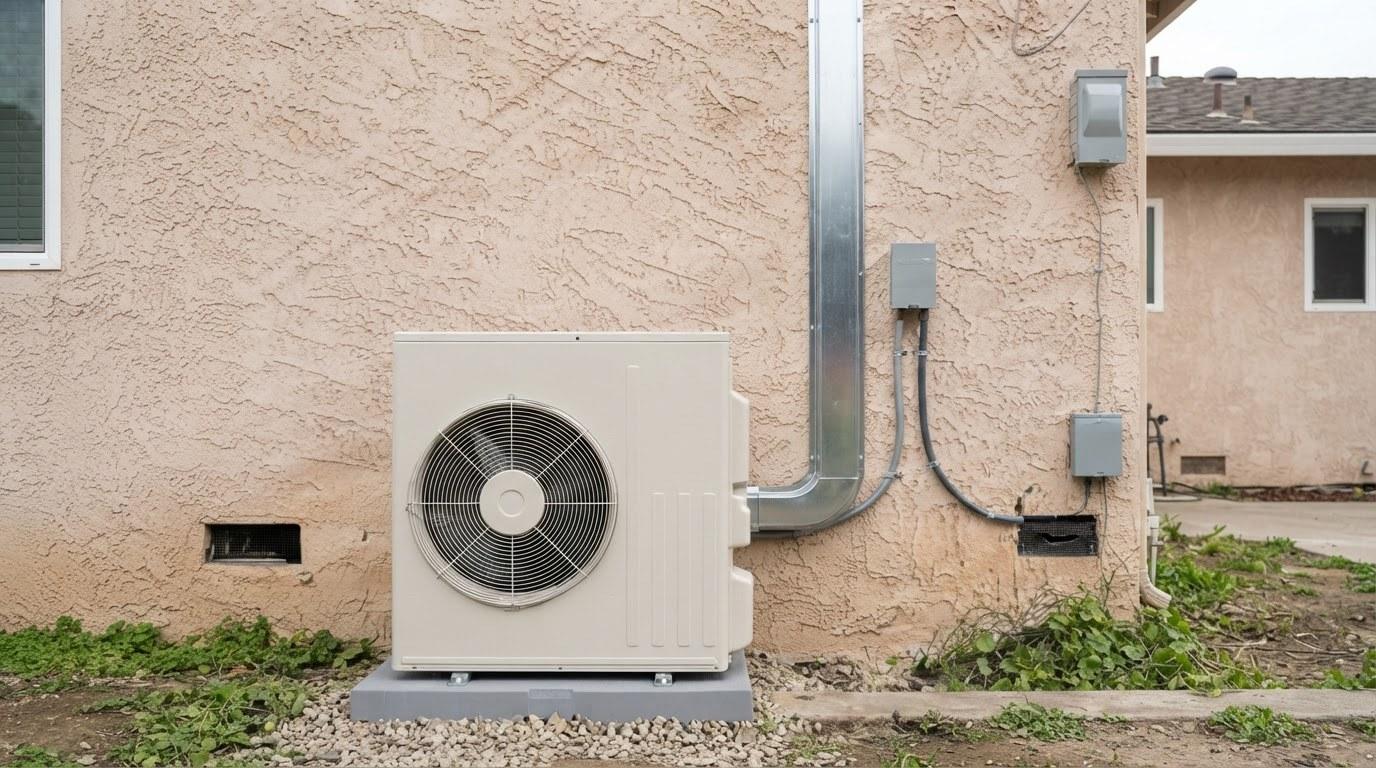
Both systems move heat rather than generate it, which is why they are far more efficient than gas furnaces or electric resistance heaters. In summer, they pull heat out of your indoor air and release it outside. In winter, they reverse the process, pulling heat from outdoor air and moving it inside, even when temperatures drop into the 30s and 40s.
Ducted Heat Pumps
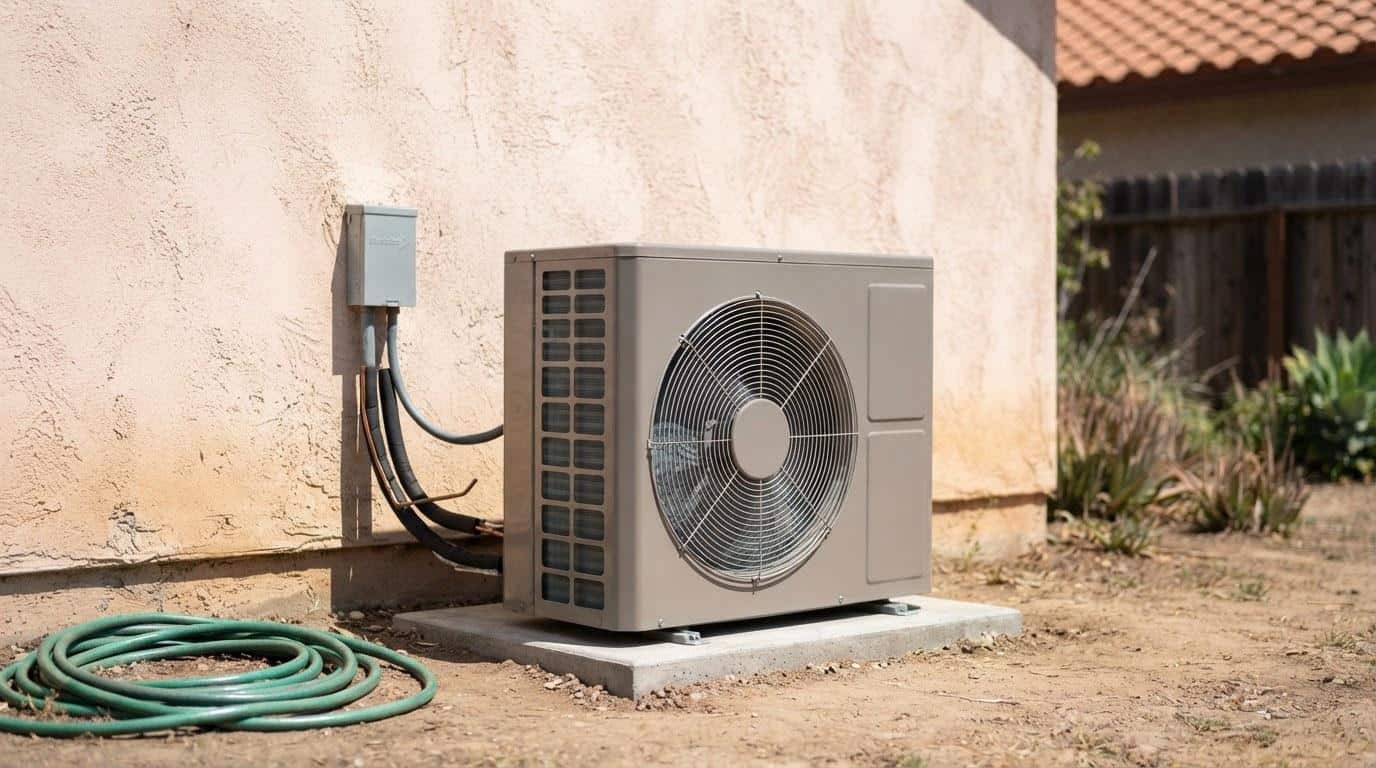
- Single outdoor compressor unit: Sits outside the home and handles all the refrigerant work.
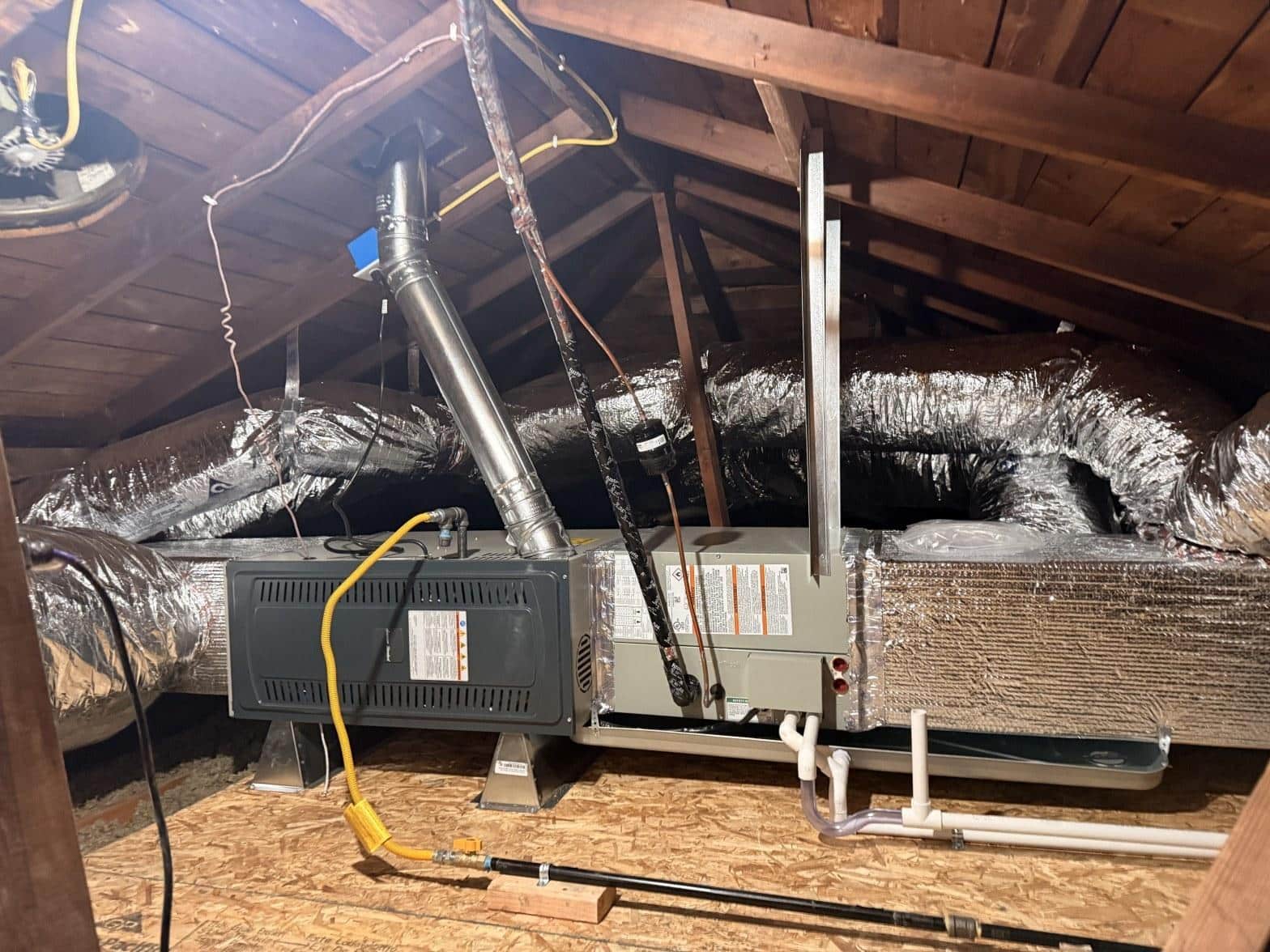
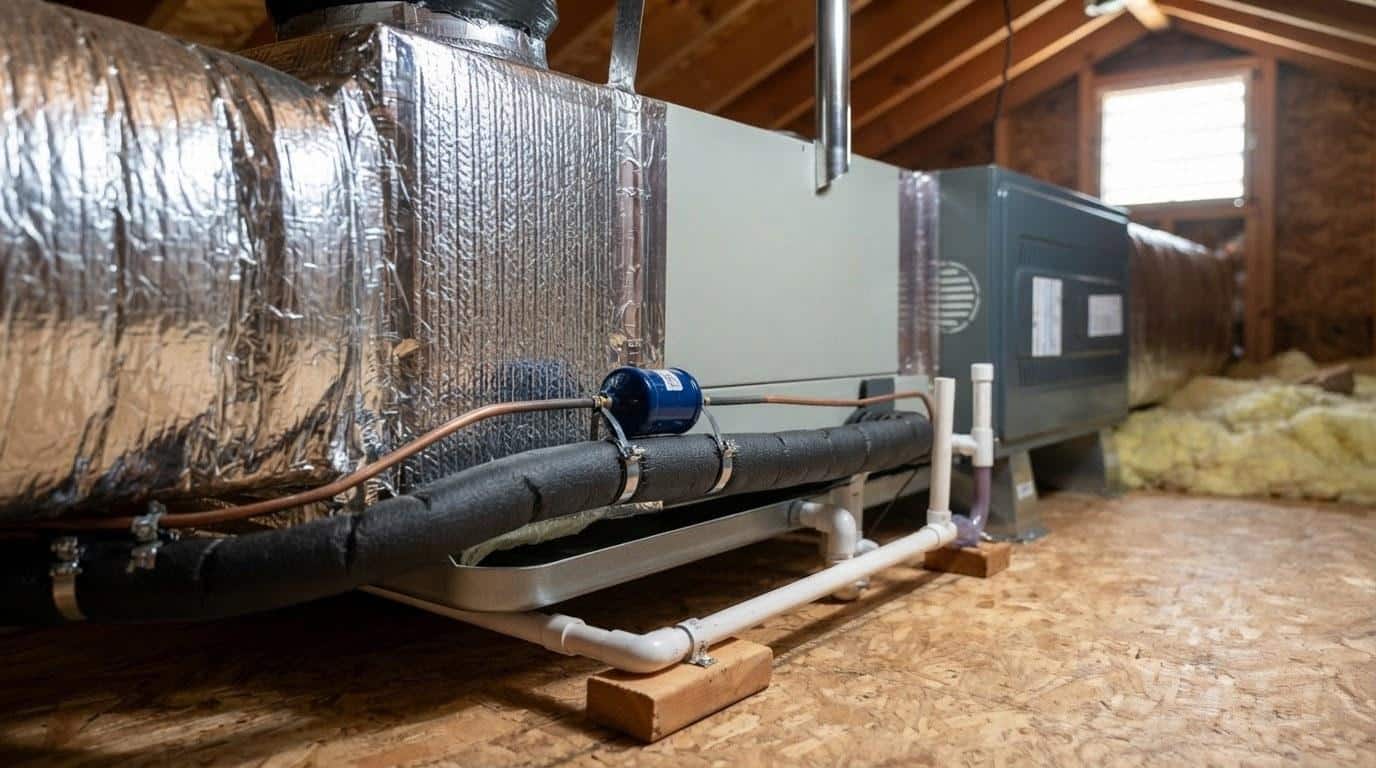
- Air handler or furnace coil indoors: Conditions air and pushes it through your existing duct network.
- Thermostat control: One thermostat manages the whole house as a single zone.
- Dual-fuel option: Some ducted heat pumps pair with a gas furnace as a backup for very cold nights.
Ductless Mini-Splits
- One outdoor compressor unit: Can serve one or several indoor heads depending on the configuration.
- Wall-mounted indoor heads: Each head conditions its own room or zone independently.
- No ductwork required: A small 3-inch hole in the wall carries the refrigerant line, power, and drain.
- Multi-zone capability: A single outdoor unit can power up to 8 indoor heads, each on its own schedule.
Our technicians see roughly 60% of mini-split installs go into homes built before 1980 in Southern California, where original construction included no central duct system at all. The other 40% are additions, garages, or converted spaces added after the original build.
| Feature | Ducted Heat Pump | Ductless Mini-Split |
|---|---|---|
| Requires existing ductwork | Yes | No |
| Heats and cools | Yes | Yes |
| Zoning capability | Limited (with add-ons) | Built-in, per room |
| Visible indoor hardware | Vents only | Wall-mounted heads |
| Whole-home coverage | Yes | Yes (multi-zone) |
| Installation disruption | Low (if ducts exist) | Low (no duct work) |
| Typical SEER2 range | 15 to 20+ | 18 to 30+ |
| Best fit | Homes with existing ducts | Any home, any size |
What Does It Cost to Install a Heat Pump or Mini-Split in California?
In the Southern California regional market, a ducted heat pump installation typically ranges from $4,500 to $12,000 depending on system size, brand, and whether duct modifications are needed. A ductless mini-split system generally ranges from $3,000 to $10,000 for a single-zone setup, and $8,000 to $20,000 or more for a whole-home multi-zone system.
Several factors move the price within those ranges:
- System size (tonnage): A proper ACCA Manual J load calculation determines the right size. Oversizing wastes money; undersizing leaves rooms uncomfortable.
- Number of zones: Each additional indoor head on a mini-split adds equipment and labor cost, typically $1,000 to $3,500 per zone.
- Duct condition: A ducted heat pump in a home with leaky or undersized ducts may require duct repairs that add $500 to $3,000 to the project.
- Efficiency rating: Higher SEER2-rated units cost more upfront but reduce monthly utility bills, often recovering the difference within 4 to 7 years.
- Electrical upgrades: Older homes may need a panel upgrade or a new dedicated circuit, adding $500 to $2,500 to the job.
AC installation charges vary across the region based on local permit fees, labor rates, and equipment availability. Always request a written, itemized quote before any work begins. Contact Shalom Heating & Air at (714) 886-2021 for a custom quote based on your home’s actual layout and load.
Which System Is Right for Your Home?
The single most important factor is whether your home already has ductwork in good condition. If it does, a ducted heat pump is usually the most cost-effective whole-home upgrade. If it does not, or if you need room-by-room control, a ductless mini-split is the smarter path.
Use this decision framework to narrow your choice:
- Home has working ducts: A ducted heat pump replaces your old furnace and AC in one system, reducing equipment, maintenance points, and energy bills.
- Home has no ducts or poor ducts: A multi-zone mini-split covers the whole house without the cost and disruption of installing new ductwork, which can run $5,000 to $15,000 on its own.
- You want room-by-room temperature control: Mini-splits win here. Each zone has its own remote or app control, so a home office can run at 68°F while a rarely used guest room stays at 76°F.
- You are replacing an existing central system: A ducted heat pump slots into the same footprint and uses the same vents, making the transition straightforward.
- You are adding comfort to a new addition, garage, or ADU: A single-zone mini-split is almost always the fastest and most affordable solution.
- You want the highest possible efficiency: Ductless mini-splits regularly achieve ENERGY STAR ratings above SEER2 20, with some inverter-driven models reaching SEER2 30 or higher, because they eliminate the 20 to 30% energy loss that duct leakage causes in many homes.
California’s climate across Southern California makes both systems practical year-round. Winters are mild enough that heat pumps rarely need a backup heat source, and summers are warm enough that high-efficiency cooling pays off quickly. NOAA climate data for the Los Angeles region shows average winter lows staying well above the 20°F threshold where older heat pump models struggled, making modern cold-climate heat pumps a reliable choice throughout the area.
Are There Rebates or Tax Credits Available for Either System?
Yes, and the savings can be substantial. As of 2025, the Inflation Reduction Act federal tax credit covers 30% of the installed cost of a qualifying heat pump system, up to $2,000 per year for heat pumps used for space heating and cooling. Both ducted heat pumps and ductless mini-splits qualify, provided they meet the efficiency thresholds set by the U.S. Department of Energy.
California homeowners have additional options:
- TECH Clean California: A statewide rebate program that pays up to $3,000 for qualifying heat pump installations replacing gas heating equipment.
- SoCalREN rebates: Southern California Regional Energy Network offers rebates for residential HVAC upgrades in participating utility territories.
- Utility rebates: SCE and SoCalGas each run their own rebate programs for high-efficiency heat pumps. Amounts change annually, so confirm current values before purchasing.
To qualify for the Inflation Reduction Act federal tax credit, the system must meet the efficiency standards defined under IRS Form 5695. Your contractor should provide documentation of the system’s SEER2 and HSPF2 ratings at the time of installation. Combining federal credits with state and utility rebates, some California homeowners reduce their net out-of-pocket cost by $4,000 to $6,000 or more on a full system replacement.
Combining federal credits with state and utility rebates, some California homeowners reduce their net out-of-pocket cost by $4,000 to $6,000 or more on a full system replacement.
Equipment must also comply with California’s Title 24 building energy standards, which set minimum efficiency requirements for new and replacement HVAC equipment. A licensed contractor will confirm compliance and pull the required permits as part of the installation.
What Does a Professional Installation Actually Involve?
A proper heat pump or mini-split installation takes one to two days for most residential projects. Complex multi-zone mini-split systems or jobs requiring electrical panel upgrades can run two to three days. Here is what a professional installation covers from start to finish.
- Load calculation: The installer performs a Manual J calculation to size the system correctly for your home’s square footage, insulation, window area, and local climate data.
- Permit application: California requires a mechanical permit for HVAC replacements. The contractor pulls this before work begins.
- Equipment selection: The installer recommends a system that meets California Energy Commission appliance standards and qualifies for available rebates.
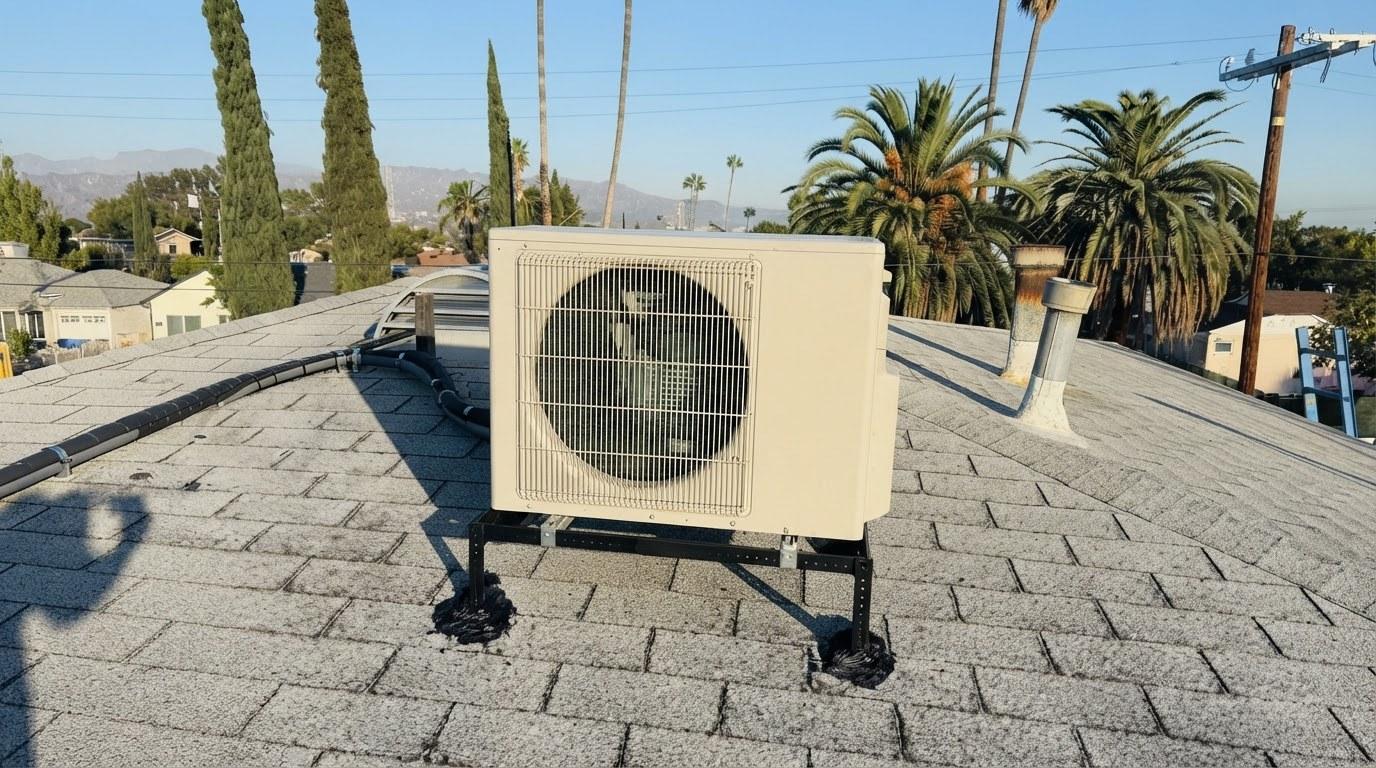
- Outdoor unit placement: The compressor is positioned on a level pad with adequate clearance, away from direct sun where possible.
- Indoor unit installation: For ducted systems, the air handler connects to existing ductwork. For mini-splits, each head is mounted, leveled, and connected through a 3-inch penetration in the exterior wall.
- Refrigerant line set: Lines are run, insulated, and pressure-tested. Technicians certified under EPA refrigerant regulations (Section 608) handle all refrigerant work.
- Electrical connections: Dedicated circuits are wired to code. Panel capacity is verified before connection.
- System commissioning: The technician checks refrigerant charge, airflow, thermostat calibration, and all safety controls before sign-off.
- Permit inspection: A city or county inspector verifies the installation meets local code before the job is closed out.
Across our service calls in Southern California, we see roughly 1 in 4 mini-split installs require an electrical panel upgrade or a new subpanel in the garage, particularly in homes built before 1990 that were never wired for modern multi-zone HVAC loads. Identifying this need during the initial assessment prevents delays and cost surprises mid-job.
A contractor licensed by the California Contractors State License Board (CSLB) is required for this work. Verify the license number at the CSLB website before signing any contract.
Ready to Choose? Get Expert Help Today
Choosing between a ducted heat pump and a ductless mini-split is easier once you know your home’s duct situation, your comfort goals, and the incentives available to you. Both systems heat and cool efficiently, both qualify for meaningful rebates, and both are strong long-term investments in a California home.
Schedule a consultation with Shalom Heating & Air to get a load calculation, a system recommendation, and a written itemized quote for your project. The team is licensed, insured, and familiar with the permit process across Southern California. Call (714) 886-2021 to book your appointment and get the right system matched to your home.
Explore our full range of HVAC services across Southern California.
Frequently Asked Questions
Is a mini-split the same thing as a heat pump?
A mini-split is a type of heat pump, but not every heat pump is a mini-split. Both systems move heat using a refrigerant cycle and can both heat and cool a space. The difference is delivery: mini-splits use wall-mounted heads and no ductwork, while traditional heat pumps push conditioned air through a central duct system.
How much does it cost to install a heat pump in Southern California?
In the Southern California regional market, a ducted heat pump installation typically ranges from $4,500 to $12,000 depending on system size and whether duct repairs are needed. A ductless mini-split ranges from $3,000 to $10,000 for a single zone, or $8,000 to $20,000 or more for a whole-home multi-zone setup. Federal tax credits and state rebates can reduce the net cost by $4,000 to $6,000 on qualifying systems. Contact Shalom Heating & Air at (714) 886-2021 for a custom quote.
How long does it take to install a heat pump or mini-split?
Most single-zone or straight-swap installations take one to two days. A multi-zone mini-split covering four or more rooms, or any job requiring electrical panel work, typically runs two to three days. The permit inspection adds a scheduling step but does not usually require the installer to be on-site for the full day.
Do I need a permit to install a heat pump or mini-split in California?
Yes. California requires a mechanical permit for any HVAC installation or replacement. Your contractor should pull the permit before work begins and schedule the required inspection at the end of the job. A contractor licensed by the California Contractors State License Board (CSLB) handles this process as part of the installation.
Which system is more energy-efficient, a heat pump or a mini-split?
Ductless mini-splits generally achieve higher SEER2 ratings, often 20 to 30 or above, because they eliminate the 20 to 30 percent energy loss caused by duct leakage in many homes. Ducted heat pumps are still far more efficient than gas furnaces or standard central AC units and typically reach SEER2 ratings of 15 to 20. Both qualify for ENERGY STAR certification at higher efficiency tiers.