
Attic AC Installation in Norwalk: Cost & Value
Attic AC Installation in Norwalk: Cost & Value
Homeowners across Norwalk often wonder: “Why would I install my air conditioning unit in the attic instead of keeping it in the crawl space or basement?” The answer lies in space efficiency, aesthetic appeal, and long-term comfort. Modern AC repair and installation in Norwalk frequently involves placing air handlers in attic spaces—a smart solution for homes where ground-level real estate is at a premium or where traditional placement disrupts living areas. Understanding the cost breakdown and genuine value proposition helps Norwalk homeowners make informed decisions about this upgrade path.
📋 In This Guide
💰 Typical Attic AC Installation Cost Ranges
- Full system installation (outdoor unit + attic air handler): $8,000–$15,000
- Ductwork design and fabrication: $2,000–$5,000
- Insulation and vapor barriers: $1,000–$2,500
- Refrigerant lines and electrical work: $1,500–$3,000
- Permitting and inspections: $300–$800
Why Attic Installation Costs More Than Ground-Level Placement
When Shalom Heating & Air installs a complete AC system in a Norwalk home that previously relied only on a floor heater, the attic route introduces several cost factors that ground-level placement avoids. The most significant is structural preparation: attic spaces must be properly insulated, vapor barriers installed, and bracing set for the air handler unit—work that ensures the equipment doesn’t degrade over time or create condensation issues in the home’s thermal envelope.
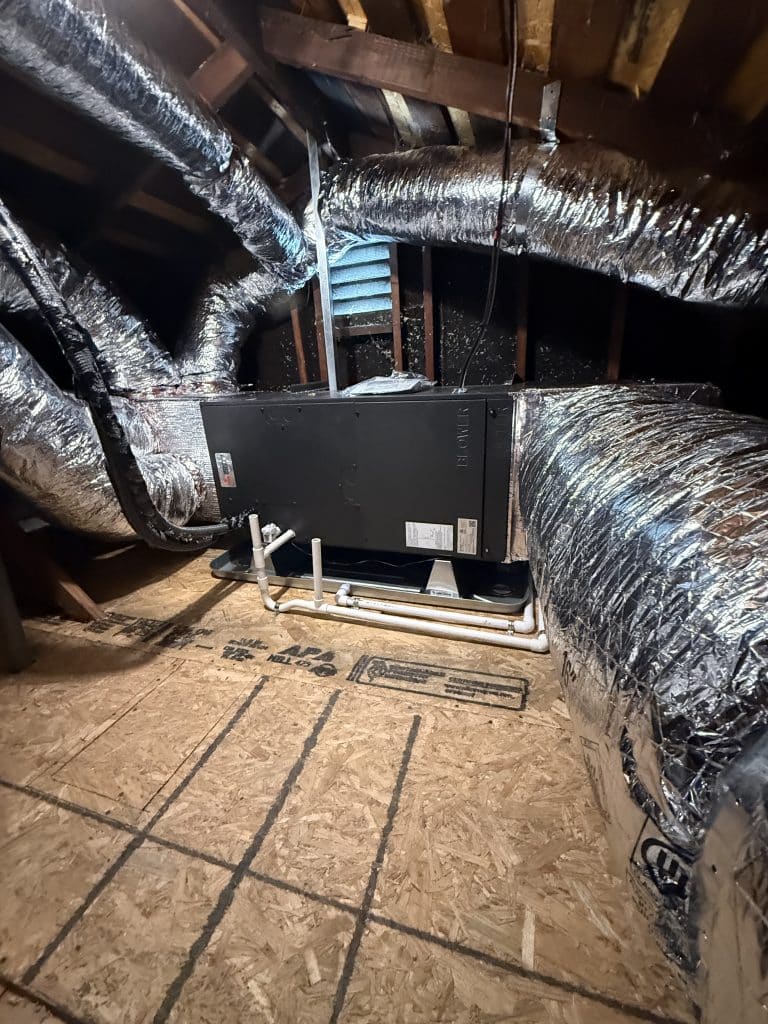
As shown in the third image provided, the air handler sits in a confined attic space surrounded by insulated ductwork and wooden framing. This setup demands precise engineering to route refrigerant lines, electrical connections, and supply/return ducts without compromising the home’s insulation or creating air leaks. In Norwalk neighborhoods like Studebaker and Norwalk Hills, where many homes date from the 1970s and 1980s, these attics often require reinforcement and rework before any equipment installation can safely proceed. The labor intensity of these preparatory steps directly translates to higher upfront costs compared to ground-level installations.
The Outdoor Condenser: Placement and Performance Trade-Offs
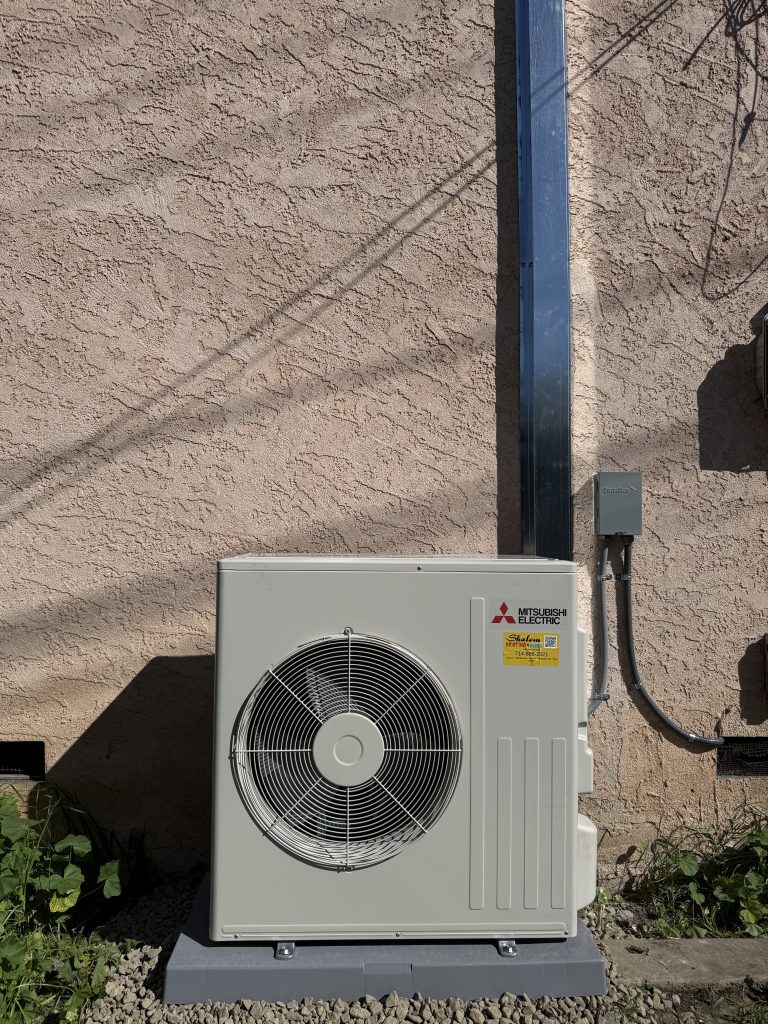
The outdoor condenser unit—visible in the first image as a Mitsubishi Electric system mounted against a stucco wall—remains outside regardless of where the air handler sits. However, when the air handler is in the attic, the refrigerant lines running from the outdoor condenser up through the home’s walls must be properly sized, insulated, and routed to code. Longer line sets increase material costs and create opportunities for refrigerant leaks if not brazed correctly by certified technicians.
In Norwalk’s warm climate, where outdoor temperatures regularly exceed 90°F during summer months, the efficiency of these lines directly impacts cooling performance. Undersized or poorly insulated lines lose cooling capacity en route to the attic handler, forcing the system to work harder and consume more energy. This is why professional load calculations—determining the exact cooling capacity needed for your home—are non-negotiable before installation. A system sized correctly for your home’s square footage, insulation level, and window area will run efficiently for 15–20 years; an undersized system will short-cycle and fail prematurely.
Ductwork Design: The Hidden Cost Driver
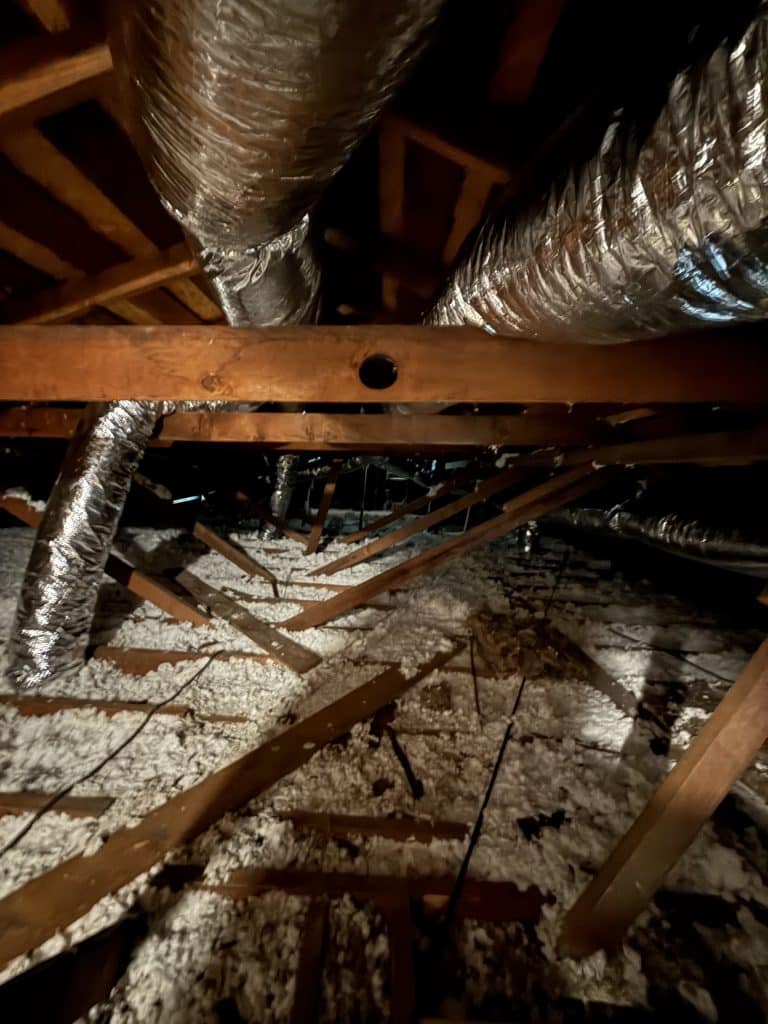
The second image shows the intricate ductwork configuration required in an attic installation. Flex ducts wrapped in silver insulation must be routed through wooden joists, around rafters, and down through wall cavities to reach ceiling vents throughout the home. Poor ductwork design wastes 20–30% of cooled air through leakage, forcing the system to run longer cycles and driving utility bills higher.
Properly sealed ductwork with adequate insulation (typically R-8 minimum in Norwalk attics) costs more upfront but delivers measurable savings within 2–3 years through reduced energy consumption. Many homeowners replacing a floor heater with a full AC system discover their original home layout never accommodated central air design—meaning new supply and return pathways must be cut and framed. In the Civic Center neighborhood and throughout Norwalk, homes built before the 1990s frequently lack return air vents, requiring additional ductwork runs to ensure the system can recirculate cooled air effectively.
Return Air Planning in Older Homes
Return air design is often overlooked but absolutely critical. If the attic air handler can only pull air from the immediate attic space, it will create negative pressure in the home, pulling outdoor air through gaps and cracks. The solution—installing return ducts from living areas back to the handler—adds $1,000–$2,000 to the project but prevents comfort complaints and system strain. Homes in the Norwalk Hills area with vaulted ceilings or complex layouts sometimes require multiple return vents to maintain balanced pressure.
The Value Proposition: Why Homeowners Choose Attic Installation
Despite higher initial costs, attic AC installation delivers measurable value for Norwalk homeowners. The primary benefit is aesthetic and functional: your outdoor living spaces remain uncluttered, your garage or utility areas stay clear, and your home’s curb appeal improves because the condenser is the only visible outdoor equipment. For homes on tight lots—common in Norwalk’s established neighborhoods—this space reclamation alone justifies the premium.
The second value driver is energy efficiency. A properly designed attic system with sealed ductwork and adequate insulation cools more evenly throughout the home than window units or space heaters. Homeowners typically report 15–25% lower cooling costs compared to their previous heating-only setup, especially during peak summer months. Over 15 years, these savings easily exceed the upfront installation premium.
Resale value is the third factor. Homes with full-house central air in Norwalk’s $650,000 median home value range command a $15,000–$25,000 premium compared to similar homes without cooling. Buyers expect AC in a region where summer temperatures regularly hit 95°F+. A professionally installed system with proper permits and inspections (unlike unpermitted ground-level units) provides purchase confidence and avoids title issues.
Permitting, Inspections, and Long-Term Protection
Attic AC installations in Norwalk require electrical permits (for 240V service), mechanical permits (for the HVAC system), and potentially building permits depending on scope. These typically cost $300–$800 combined but are non-negotiable investments. Unpermitted work creates problems during home sales, when insurers verify coverage, or if future issues arise and warranty claims are disputed.
The inspection process—usually two visits, rough-in and final—verifies that ductwork is properly sealed, electrical connections meet code, refrigerant lines are correctly sized and insulated, and the air handler installation doesn’t compromise attic ventilation. In Norwalk, where homes often have older roofing and attic conditions, inspectors commonly flag issues like insufficient rafter spacing or inadequate ventilation that must be addressed before system startup. Planning for these contingencies (typically $500–$1,500) prevents project delays.
Ready to explore whether attic AC installation makes sense for your Norwalk home? Contact Shalom Heating & Air at (714) 886-2021 for a free load calculation and installation quote. We’ll walk you through the cost breakdown, value analysis, and timeline for your specific property—whether you’re upgrading from a floor heater or replacing an aging system. Our team serves Norwalk, Downey, Bellflower, and surrounding neighborhoods with expert design and professional AC installation backed by decades of local experience.
❓ Frequently Asked Questions
How much does attic AC installation cost in Norwalk?
A complete attic AC installation in Norwalk typically ranges from $8,000–$15,000, including the outdoor condenser, indoor air handler, ductwork, insulation, and permits. Costs vary based on home size, existing ductwork condition, and local labor rates. Contact Shalom Heating & Air at (714) 886-2021 for a personalized quote.
Why is attic installation more expensive than ground-level AC placement?
Attic installations require additional structural preparation, insulation, vapor barriers, longer refrigerant line runs, and specialized ductwork routing that ground-level units avoid. These factors add $2,000–$5,000 to labor and materials but result in better energy efficiency and home aesthetics.
How long does an attic AC installation take in Norwalk?
A typical attic AC installation takes 3–7 business days, depending on ductwork complexity, existing conditions, and permit timing. Homes without return air vents or requiring structural modifications may take 2 weeks or longer to complete safely and to code.
Do I need permits for attic AC installation in Norwalk?
Yes, attic AC installations in Norwalk require electrical and mechanical permits. These typically cost $300–$800 combined and protect you during future home sales or insurance claims—making them a worthwhile investment despite the added upfront cost.
📖 More Tips for Norwalk
-
 How Much Does Central AC Installation Cost in Norwalk?
Central air installation in Norwalk costs $6,800-$14,500 in 2026 including equipment, labor, permits, and Title 24 compliance. This…
-
Skip Spring Maintenance in Norwalk? Here's What Fails First When Summer Heat Hits
Prepare your Norwalk home for summer heat with this comprehensive spring HVAC maintenance checklist covering DIY tasks, professional…


