
Skip Spring Maintenance in Norwalk? Here’s What Fails First When Summer Heat Hits
Why Spring Is Your Last Chance to Prepare for Summer Heat in Norwalk
📋 In This Guide
For Norwalk homeowners, the transition from mild spring weather to intense summer heat happens quickly. One week you’re enjoying comfortable 70-degree afternoons, the next you’re facing 95-degree temperatures that push your air conditioning system to its limits. Spring maintenance isn’t just a suggestion—it’s your only opportunity to catch problems before they become emergency breakdowns during a July heatwave.
In neighborhoods like Studebaker and Norwalk Hills, many homes rely on aging HVAC systems that have worked hard through years of California’s demanding climate. These systems need seasonal preparation to handle the extended cooling season ahead. A well-maintained air conditioner runs more efficiently, costs less to operate, and won’t leave your family uncomfortable when temperatures soar. The few hours you invest in spring maintenance can prevent costly emergency AC repair in Norwalk when you need cooling most.
The unique demands of Southern California’s climate make spring maintenance particularly important. Unlike regions with distinct seasonal changes, your AC system in Norwalk may run from April through October—or even year-round during warm winters. This extended operating season accelerates wear on components, making preventive care essential for reliability. When you skip spring maintenance, minor issues that could be fixed inexpensively become major failures that require urgent attention during peak demand periods when HVAC technicians are busiest and parts may be harder to obtain.
Essential Spring Maintenance Tasks Every Norwalk Homeowner Should Complete
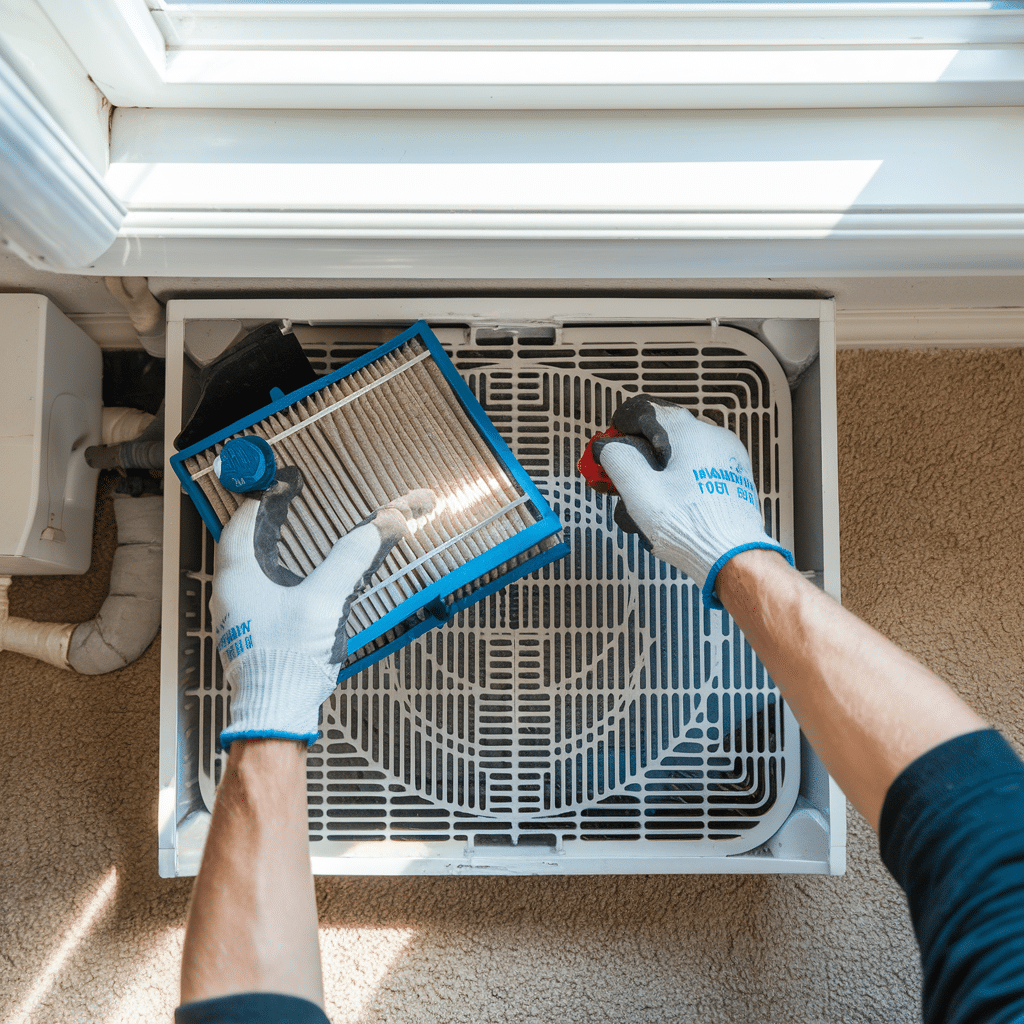
Start your spring maintenance routine by addressing the components you can safely handle yourself. Replace your air filter if you haven’t done so in the past 30-60 days. In Norwalk’s environment, filters accumulate dust, pollen, and particulates quickly, especially during spring when plants are actively growing. A clogged filter restricts airflow, forcing your system to work harder and increasing energy consumption. For homes near busy streets or in the Civic Center area, consider upgrading to higher-quality filters that capture smaller particles and protect your indoor air quality in Norwalk.
Next, inspect your outdoor condenser unit. This component sits outside your home year-round, accumulating leaves, dirt, and debris. Clear away any vegetation growing within two feet of the unit—shrubs, grass, and weeds restrict airflow and reduce efficiency. Gently spray down the exterior fins with a garden hose to remove accumulated dust and pollen. Be careful not to use high pressure, which can bend the delicate aluminum fins. If you notice significant dirt buildup, bent fins, or corrosion, schedule professional cleaning before summer arrives.
Check your thermostat operation by switching to cooling mode and lowering the temperature setting below the current room temperature. Your system should start within a few minutes, and you should feel cool air flowing from your vents. Listen for unusual sounds like grinding, squealing, or banging—these indicate components that need attention. Walk around your home checking each vent to ensure consistent airflow. Weak airflow from certain vents can signal ductwork issues that need addressing.
Inspect visible ductwork in your attic, garage, or crawlspace for disconnections, damage, or gaps. Many Norwalk homes have ductwork running through hot attics where summer temperatures can exceed 140 degrees. Poorly sealed ducts leak cooled air into these spaces, wasting energy and reducing comfort. Look for sections where tape has deteriorated or connections have separated. While comprehensive duct sealing requires professional equipment, you can temporarily secure obvious gaps with metal-backed tape (not standard duct tape, which deteriorates quickly).
Professional Tune-Up Tasks That Prevent Summer Breakdowns
While homeowner maintenance tasks are valuable, professional tune-ups address components and measurements beyond DIY capabilities. A qualified technician from HVAC services in Norwalk brings specialized tools and expertise to identify problems before they cause failures. During a comprehensive spring tune-up, technicians check refrigerant levels—one of the most critical factors affecting cooling performance. Low refrigerant doesn’t just reduce cooling capacity; it can cause your compressor to overheat and fail, resulting in repair costs exceeding $2,000.
Technicians also clean and inspect components you cannot safely access. They remove the condenser unit’s exterior panels to clean coils thoroughly from the inside, where most dirt accumulates. They inspect electrical connections, tightening any that have loosened due to the expansion and contraction cycles that occur during normal operation. Loose electrical connections create resistance that generates heat, potentially causing component damage or creating fire hazards.
Capacitor testing is another essential professional service. Capacitors provide the electrical boost needed to start your compressor and fan motors. These components fail more frequently in hot climates due to the heat stress they experience, especially when mounted on equipment sitting in direct sunlight. A failing capacitor causes hard starts that damage your compressor, but replacement during a tune-up costs only $150-250 compared to $1,500-3,000 for compressor replacement.
Professional maintenance also includes calibrating your thermostat for accurate temperature readings and checking your condensate drain line. In humid conditions, your AC system removes moisture from indoor air, producing condensate that must drain properly. Clogged drain lines cause water damage and automatic system shutoffs designed to prevent flooding. Technicians clear drain lines and add treatments that prevent algae growth, ensuring reliable operation throughout the cooling season.
California-Specific Considerations for Spring HVAC Preparation
Norwalk’s location in Southern California creates unique maintenance considerations. Spring brings high pollen counts from trees, grasses, and flowers throughout the area. This pollen accumulates on your outdoor condenser coils, creating an insulating layer that reduces heat transfer efficiency. Plan to inspect and clean your condenser monthly during spring rather than waiting for your annual tune-up. This extra attention prevents the gradual efficiency loss that increases operating costs.
Wildfire smoke has become an increasingly common concern for California homeowners. Even when fires aren’t burning nearby, smoke from distant fires can affect air quality for weeks at a time. If your area experienced smoke exposure during the previous fire season, consider having your ductwork professionally cleaned before summer. Smoke particles that settled in your ducts will be circulated through your home when you run your AC, affecting indoor air quality and potentially causing respiratory irritation. Installing high-efficiency filters helps, but they cannot remove particles already trapped in your ductwork.
Prepare for heat waves by ensuring your system is operating at peak efficiency. Norwalk regularly experiences multi-day heat events where temperatures exceed 95 degrees with overnight lows that barely drop below 70. During these periods, your AC system runs nearly continuously, providing little opportunity for components to cool down between cycles. Systems that aren’t properly maintained often fail during these demanding conditions. Having a relationship with a reliable contractor like Shalom Heating & Air means you have priority service if problems occur.
Consider upgrading your thermostat to a programmable or smart model if you’re still using a basic manual thermostat. Modern thermostats include features like adaptive recovery (starting your system earlier so your home reaches the desired temperature exactly when you need it), humidity monitoring, and energy usage tracking. Many models can adjust settings automatically based on whether you’re home or away, potentially reducing cooling costs by 10-20% without sacrificing comfort.
Creating Your Spring Maintenance Schedule and What to Expect
Timing matters when scheduling professional maintenance. Many Norwalk homeowners wait until late spring or early summer when they first turn on their AC and discover problems. By then, HVAC contractors are entering their busiest season, with appointment availability limited to several days or even weeks out. Schedule your tune-up in March or early April when contractors have better availability and can dedicate more time to your system without the pressure of emergency calls stacking up.
Budget approximately $120-180 for a comprehensive professional tune-up from a reputable contractor. While some companies advertise cheaper maintenance specials, these often include only cursory inspections without the thorough cleaning and testing that prevent breakdowns. Ask what’s included before booking—quality tune-ups should take 60-90 minutes and include all the tasks mentioned above. If a technician completes a “tune-up” in 20 minutes, they’re likely just changing your filter and collecting a service fee.
During the service visit, ask your technician about your system’s condition and expected lifespan. AC systems typically last 12-15 years in California’s climate, and furnaces last 15-20 years. If your equipment is approaching these ages, start planning for replacement rather than being forced into emergency decisions when failure occurs. Understanding your options for upgrading to more efficient equipment helps you make informed decisions that balance upfront costs with long-term savings.
For homes in Downey, Bellflower, and Cerritos, the same spring maintenance principles apply. Southern California’s consistent climate means neighboring communities face identical challenges preparing HVAC systems for summer demands. Whether you’re in Norwalk’s established residential areas or newer developments, proactive maintenance protects your investment and ensures reliable comfort when summer heat arrives.
Don’t let spring pass without preparing your HVAC system for the demanding months ahead. Contact Shalom Heating & Air at (714) 886-2021 to schedule your comprehensive spring tune-up. Our experienced technicians serve Norwalk, Downey, Bellflower, Cerritos, and surrounding communities with honest, professional service that keeps your home comfortable all summer long.
