
Spring AC Tune-Up Checklist for Garden Grove Homeowners
DIY Maintenance vs. Professional Tune-Up: Which Tasks Should You Handle?
Garden Grove homeowners face a critical decision each spring: which pre-summer central air conditioner tasks can you safely handle yourself, and which require a licensed hvac contractor in Garden Grove? With temperatures regularly climbing into the 90s by June and July pushing well past 95°F, your central air conditioning system isn’t just a luxury—it’s essential for protecting your family and your $850,000 investment in your home.
📋 In This Guide
The answer shapes both your comfort through summer and your wallet. Some maintenance steps take fifteen minutes and cost nothing. Others require EPA certification, specialized tools, and the kind of expertise that prevents a $1,200 compressor failure in mid-July. Understanding the difference helps you allocate your time and budget wisely while ensuring your system delivers reliable cooling when Garden Grove’s heat waves arrive.
💰 Typical Tune-Up & Repair Cost Ranges
- Basic AC tune-up: $85–$200
- Comprehensive maintenance plan (annual): $120–$360
- Refrigerant leak detection and repair: $200–$1,500
- Evaporator coil replacement: $1,000–$4,500
- Emergency mid-summer repair: $300–$600+
The April-May Window: Why Pre-Season Maintenance Prevents July Breakdowns
Garden Grove’s climate creates a specific maintenance timeline. April and May offer the ideal window for Ac Repair in Garden Grove professionals to inspect your system before demand surges. During these months, HVAC contractors can schedule appointments within days rather than weeks, and you’ll often find pre-season specials that reduce costs by 15-20%.
The timing matters for mechanical reasons too. Your central air conditioner sat largely dormant through winter. Dust accumulated on coils, condensate drain lines developed algae growth, and electrical connections experienced thermal expansion and contraction. Running the system hard without addressing these issues accelerates wear on expensive components like compressors and fan motors. A spring tune-up identifies problems while they’re still minor—a $150 capacitor replacement in April prevents a $2,000 compressor failure in July when temperatures hit 98°F and every HVAC services in Garden Grove provider is booked solid.
Garden Grove’s mix of older and newer homes in neighborhoods like Downtown Garden Grove and West Garden Park means systems range from brand-new high-efficiency units to 15-year-old workhorses. Older systems especially benefit from pre-season attention, as worn components fail predictably under sustained summer loads.
Tasks You Can Handle Yourself
Start with your air filter. Check it monthly during cooling season and replace it every 1-3 months depending on use and indoor air quality needs. A clogged filter reduces airflow by up to 50%, forcing your system to run longer and work harder. For most Garden Grove homes, a MERV 8-11 filter balances filtration with airflow. If allergies or Indoor Air Quality in Garden Grove concerns matter, consider MERV 13, but check that your system can handle the increased resistance.
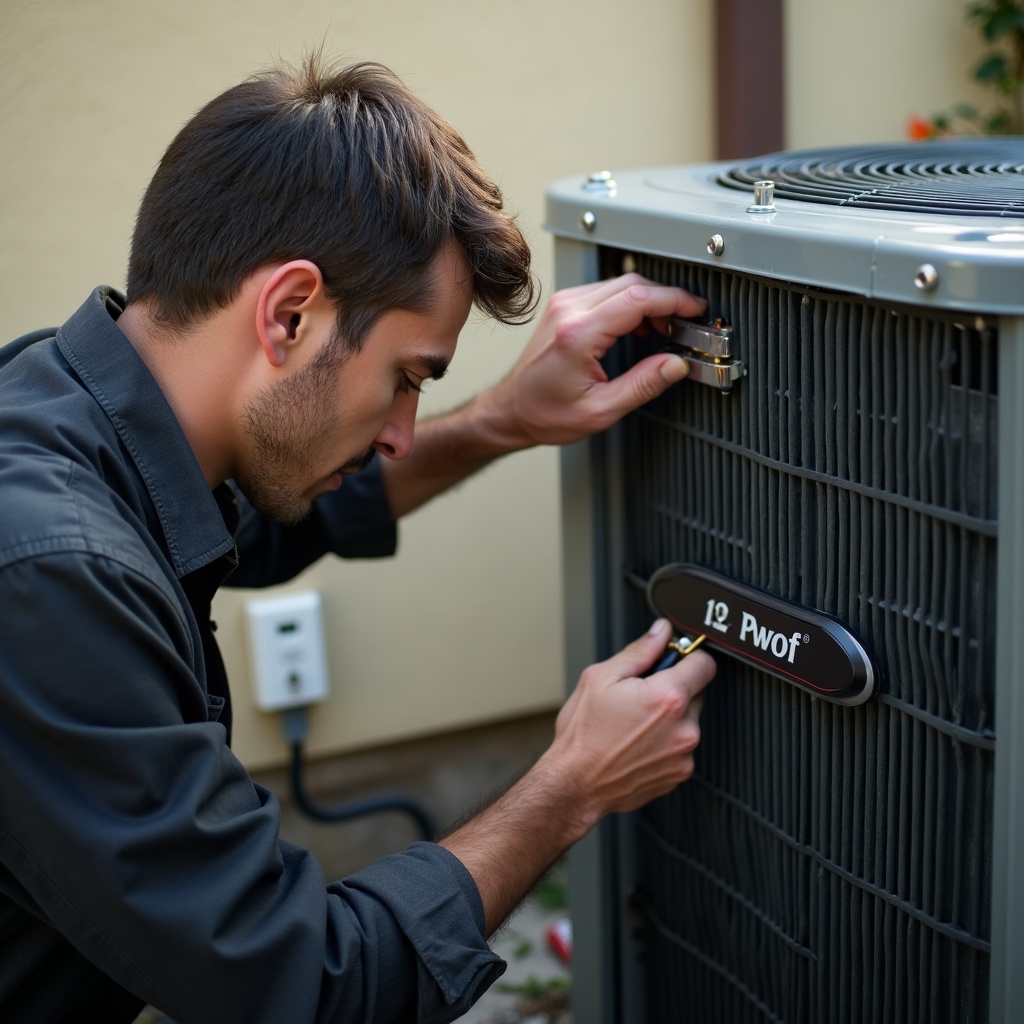
Inspect your outdoor condenser unit. Clear debris—leaves, grass clippings, cottonwood seeds—from the fins and surrounding area. Maintain at least two feet of clearance on all sides. Gently spray the fins with a garden hose from inside out to remove surface dust. Never use a pressure washer, which bends the delicate aluminum fins and reduces heat transfer efficiency.
Check your thermostat operation. Ensure it responds accurately to temperature changes and that the display is clear. If you have a programmable thermostat, verify your settings match your summer schedule. For optimal efficiency in Garden Grove’s climate, consider setting your system to 78°F when home and 85°F when away, as recommended in our guide on Best Thermostat Settings for Garden Grove Homes in Peak Summer.
Tasks That Require Professional Service
Refrigerant level checks require EPA Section 608 certification. Only licensed technicians can legally handle refrigerant, and for good reason—improper handling poses environmental and health risks. Low refrigerant always indicates a leak; central AC systems are sealed and should never need “topping off” unless there’s a problem. A professional uses pressure tests and electronic detectors to locate leaks, then repairs them before recharging the system. This prevents the compressor damage that occurs when systems run low on refrigerant.
Electrical system inspection involves testing capacitors, contactors, and connections. Capacitors store the electrical charge needed to start your compressor and fan motors. They degrade over time, especially in heat, and typically last 5-7 years. A failing capacitor causes hard starts, increased energy consumption, and eventual motor failure. Technicians use multimeters to test capacitance and replace components before they fail catastrophically.
Condensate drain line maintenance goes beyond what homeowners can safely address. While you can pour a cup of diluted bleach down the drain line quarterly, professionals use specialized equipment to pressure-flush the entire line, check for proper pitch and drainage, and verify the float switch operates correctly. In Garden Grove’s climate, condensate lines can clog with algae, potentially causing water damage to your home.
Coil cleaning requires access to indoor evaporator coils, which typically sit above your furnace in the attic or closet. Professionals remove access panels, apply specialized coil cleaners, and rinse thoroughly without damaging the fins or saturating insulation. Clean coils improve efficiency by 15-20% and extend equipment life significantly.
What a Comprehensive Professional Tune-Up Includes
When you schedule professional maintenance with a qualified hvac contractor in Garden Grove, expect a systematic inspection covering 15-26 points depending on the service level. Technicians start with a visual inspection of both indoor and outdoor components, looking for signs of wear, corrosion, or damage.
| Maintenance Category | DIY Tasks | Professional Tasks |
|---|---|---|
| Filtration & Airflow | Replace air filter monthly; clear debris from outdoor unit | Test static pressure; inspect ductwork; measure airflow CFM |
| Electrical System | Verify thermostat operation; check for tripped breakers | Test capacitors; tighten connections; measure amp draw; inspect contactors |
| Refrigerant System | None (requires certification) | Check pressures; test for leaks; verify superheat/subcooling; add refrigerant if needed |
| Drainage | Pour diluted bleach in drain line quarterly | Pressure-flush drain line; test float switch; check drain pan; verify proper pitch |
| Heat Transfer | Gently rinse outdoor coil with hose | Deep-clean evaporator and condenser coils; straighten bent fins; verify temperature split |
The refrigerant check involves measuring both suction and discharge pressures, then calculating superheat and subcooling to determine if levels are optimal. This precision work requires manifold gauges and training to interpret readings correctly for your specific system and outdoor temperature.
Electrical testing includes measuring voltage and amperage at the compressor, condenser fan motor, and blower motor. These readings reveal whether components are drawing appropriate power or struggling, which predicts imminent failures. Technicians also test the contactor—the relay that switches power to your compressor—and inspect it for pitting or wear that causes hard starts.
The thermostat calibration verifies that your actual indoor temperature matches the thermostat reading. A 2-3 degree discrepancy wastes energy and reduces comfort. Professionals also check that your system cycles appropriately rather than short-cycling or running continuously.
Common Issues Pre-Season Inspections Uncover in Garden Grove Homes
Garden Grove’s housing mix—56% owner-occupied with a median value of $850,000—means many homeowners maintain their properties well but may lack HVAC expertise. Pre-season inspections consistently reveal several patterns:
Dirty evaporator coils rank as the most common efficiency killer. These coils sit inside your home, typically in an attic or closet, where they collect years of dust and debris. Unlike outdoor coils that get some natural cleaning from rain, indoor coils accumulate material steadily. Dirty coils reduce capacity by 20-30% and increase energy consumption proportionally.
Aging capacitors appear frequently in systems over five years old. Garden Grove’s summer heat accelerates capacitor degradation. A failing start capacitor causes the compressor to struggle on startup, sometimes requiring multiple attempts to engage. A failing run capacitor reduces motor efficiency and can lead to premature motor failure.
Refrigerant leaks often develop slowly in systems 8-15 years old. Small leaks in evaporator coils or line sets drop refrigerant levels gradually over months or years. Homeowners notice reduced cooling but may not realize the cause. Left unaddressed, low refrigerant causes compressor overheating and failure—a repair costing $1,800-$2,800 for out-of-warranty systems.
Clogged condensate drains develop in Garden Grove’s dry climate when dust mixes with the moisture in drain lines, creating sludge that blocks flow. When drains clog, the safety float switch should shut down your system to prevent water damage. If that switch fails too, you face potential ceiling damage and mold growth.
Worn contactor points result from the thousands of on-off cycles your system experiences over its lifetime. Contactors are electromechanical relays with metal contacts that can pit and burn over time. A worn contactor may cause intermittent operation or fail to engage the compressor at all—typically on the hottest day of summer.
Creating Your Personal Pre-Summer Maintenance Timeline
For Garden Grove homeowners, this schedule optimizes both system readiness and cost-effectiveness:
Early April: Schedule your professional tune-up for late April or early May. Book now while contractors offer off-season rates and can accommodate your preferred schedule. Many Garden Grove HVAC companies offer maintenance agreements covering annual spring and fall service, priority scheduling, and repair discounts.
Mid-April: Complete your DIY tasks. Replace your air filter, clear debris from around the outdoor unit, test your thermostat, and verify that registers throughout your home open freely. Listen for unusual sounds when the system runs and note any rooms that don’t cool evenly.
Late April/Early May: Have your professional tune-up performed. Share your observations about any cooling inconsistencies or unusual sounds. Ask the technician to explain their findings and provide recommendations for both immediate needs and future planning.
Late May: If the tune-up revealed needed repairs, complete them now before summer demand drives up emergency service rates. Replace aging components preventively rather than waiting for failure during a heat wave.
June through September: Maintain monthly filter changes, keep outdoor unit clear, and monitor system performance. Address any new issues promptly—what seems minor in June becomes an emergency when temperatures hit 98°F in July.
This proactive approach costs less than reactive repairs and virtually eliminates the risk of suffering through a breakdown when you need cooling most. For families in Garden Grove’s established neighborhoods, reliable air conditioning isn’t optional—it’s essential for health, comfort, and protecting your home value.
If you haven’t scheduled your pre-summer central air conditioner tune-up yet, now is the time to act. Contact Shalom Heating & Air at (714) 886-2021 to schedule comprehensive maintenance before Garden Grove’s summer heat arrives. Our certified technicians serve all Garden Grove ZIP codes including 92840, 92841, 92843, 92844, and 92845, with expertise in all major brands including Carrier, Lennox, Trane, and York. We’ll ensure your system delivers reliable, efficient cooling all summer long while identifying potential issues before they become expensive emergencies.
