
Refrigerant Leak Detection & Repair in Cypress Homes
When Your Cypress AC Stops Cooling on the Hottest Day
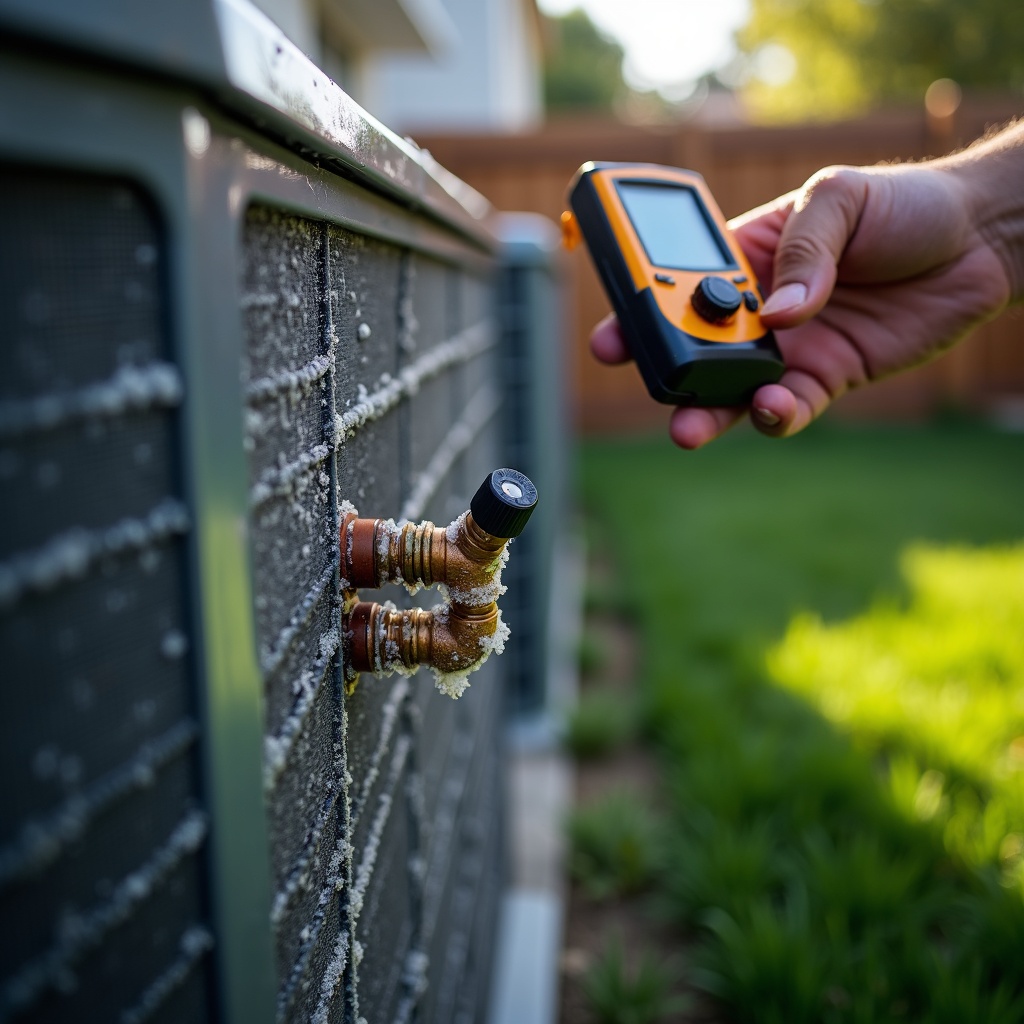
Sarah noticed her College Park home wasn’t cooling properly on a scorching July afternoon. The thermostat read 78°F, but she’d set it to 72°F an hour ago. Her central air conditioner ran constantly, the electric bill had jumped 30% in two months, and a strange hissing sound came from the outdoor unit near her fence. When the HVAC contractor in Cypress arrived, he found ice coating the refrigerant lines—a telltale sign of a central air conditioner refrigerant leak Cypress homeowners face more often than they realize.
📋 In This Guide
💰 Typical Repair Cost Ranges
- Leak detection service: $100–$330
- Minor leak repair & recharge: $200–$500
- Moderate leak with parts: $500–$1,000
- Evaporator/condenser coil replacement: $1,000–$4,500
- R-22 refrigerant (per pound): $90–$250
In Cypress’s $860,000 median-value homes, a failing central air system isn’t just uncomfortable—it’s a threat to your property investment. This guide walks you through identifying, diagnosing, and repairing refrigerant leaks before they destroy your compressor or force a complete system replacement.
Step 1: Recognize the Warning Signs Early
Watch for reduced cooling performance as the AC struggles to maintain the set temperature, higher electricity costs as the system overworks to compensate for lost refrigerant, and unusual sounds caused by refrigerant escaping from damaged lines. In Cypress’s residential neighborhoods like Sorrento and Cypress Village, where outdoor units sit exposed to coastal air, corrosion accelerates these problems.
Evaporator coil leaks can cause poor cooling and ice buildup. If you see frost forming on the copper lines running to your outdoor unit, turn off your system immediately. Turn off the system and contact an AC repair company immediately if there is frost or ice on the evaporator coil—running the unit in this condition can destroy the compressor.
Additional red flags include oil residue around refrigerant connections, a sweet or chemical odor near the outdoor unit, and rooms that never reach the thermostat setting. Cypress homeowners with systems older than 10 years should be especially vigilant, as aging copper lines and coil corrosion make leaks increasingly common.
Step 2: Understand Detection Methods Professionals Use
An AC leak test costs $100 to $330 for detection only, depending on the test method. Professional technicians employ several specialized techniques to pinpoint leak locations:
Electronic Leak Detection
During an inspection, technicians use electronic detectors, dye tests, or nitrogen pressure tests to pinpoint leaks. Electronic detectors can identify refrigerant concentrations as small as 0.1 ounces per year, making them ideal for finding slow leaks in accessible areas like service valves and line connections.
UV Dye Testing
Dye detection involves sending fluorescent dye through the HVAC system—technicians use a UV light to locate spots where the dye leaks out. This method proves especially effective for hidden leaks inside wall cavities or attic spaces common in Cypress tract homes.
Nitrogen Pressure Testing
Nitrogen detection involves replacing the remaining refrigerant in the AC system with compressed nitrogen, which makes audible noises at any leak points. This approach works best for new installations or systems where all refrigerant has already escaped.
Step 3: Identify Common Leak Locations in Cypress Systems
Refrigerant leaks don’t occur randomly. Certain components fail predictably based on age, installation quality, and environmental exposure. Most AC freon leaks are standing leaks (SL) in the evaporator or condenser coil.
| Leak Location | Common Causes | Typical Repair Cost |
|---|---|---|
| Schrader Valves & Service Ports | Worn seals, frequent servicing | $150–$300 |
| Refrigerant Line Connections | Vibration, improper brazing | $200–$500 |
| Evaporator Coil | Formicary corrosion, age | $1,000–$4,500 |
| Condenser Coil (Outdoor) | Coastal corrosion, impact damage | $900–$2,300 |
Refrigerant leaks are extremely common because of formic acid causing pinholes in the evaporator coil and condensing coil—this phenomenon is called “formicary corrosion” where airborne contaminants such as “formic acid” which is usually present in household cleaning products condense on copper surfaces. In Cypress homes with attached garages or near commercial areas along Katella Avenue, this contamination accelerates coil deterioration.
Step 4: Navigate R-22 Phase-Out and Replacement Options
If your Cypress home was built before 2010, your central air conditioner likely uses R-22 refrigerant. R-22 is no longer produced or imported in the U.S. as of 2020, but limited recycled or reclaimed R-22 is still available for servicing existing systems. R-22 was banned because it contains ozone-depleting hydrochlorofluorocarbons (HCFCs).
In 2025, R-22 costs between $90 and $250 per pound, with the average price around $125 per pound. Since most home systems need 6 to 12 pounds, a full recharge—including labor—can cost $660 to $1,900. For a system that’s already leaking, this expense often exceeds the value of the repair.
No, R-410A cannot be used in an R-22 system without significant modifications, as the two refrigerants operate at different pressures and require different components. Converting an R-22 system to R-410A typically costs $2,000–$2,500 and requires replacing the compressor, expansion valve, and filter drier—often making complete system replacement more economical.
For Cypress homeowners facing R-22 leak repairs, consult with a qualified Ac Repair in Cypress specialist about replacement options. Modern systems using R-410A or newer R-454B refrigerants offer 20-40% better energy efficiency and qualify for utility rebates.
Step 5: Comply with California EPA Regulations
The Environmental Protection Agency (EPA) finalized rules in September 2024 concerning the management of certain Hydrofluorocarbons (HFCs) and substitutes under Subsection (h) of the AIM Act. These rules took effect January 1, 2026 and expand compliance obligations for HFC-containing systems.
Federal law prohibits the handling of refrigerant without a license. Ask your pro if they are “Section 608 certified,” which means they are trained and licensed by the EPA to recharge your air conditioner with refrigerant. In California, additional state regulations through CARB (California Air Resources Board) impose stricter requirements than federal standards.
Beginning January 1, 2026, owners or operators and certified technicians must comply with leak repair requirements for certain refrigerant-containing appliances with a charge size of 15 pounds or more of refrigerant that contains an HFC or certain HFC substitutes. The leak repair requirements and the associated timing for leak repair are outlined in regulations.
California homeowners must ensure any technician servicing their system properly recovers refrigerant rather than venting it to atmosphere. Violations carry EPA fines up to $60,000 per day per violation. Always verify your contractor maintains proper recovery equipment and certification.
Step 6: Decide Between Repair and Replacement
AC freon leak repair cost ranges from $250 to $1,600 on average, and homeowners pay an average of $800. Costs vary based on the leak’s location, AC unit type, and refrigerant used. But cost alone shouldn’t drive your decision.
Repair makes sense when your system is under 10 years old, uses modern refrigerant (R-410A or R-454B), the leak is in an accessible location like a service valve or line connection, and total repair costs stay below 50% of replacement value. For Cypress’s high-value homes, maintaining Indoor Air Quality in Cypress and reliable climate control protects your property investment.
Consider replacement if your system uses R-22 refrigerant, is over 15 years old, has had multiple refrigerant-related repairs, shows compressor damage or frozen coils, or repair costs exceed $2,000. A realistic comparison for 2026: R22 recharge: $150-$300 per pound, with a typical residential system needing 5-15 pounds. A full recharge costs $750-$4,500, and you will likely need to recharge again within 1-2 years as the leak worsens.
Modern high-efficiency systems (16+ SEER2) can reduce your cooling costs by 30-40% compared to older units. For Cypress homeowners managing $118,000 median household incomes, the upfront investment pays back through lower electric bills within 5-7 years. Explore comprehensive HVAC services in Cypress to evaluate all your options.
Step 7: Take Preventive Action to Avoid Future Leaks
Schedule professional maintenance twice yearly—before summer cooling season and before winter heating needs. During these visits, technicians should inspect all refrigerant connections, test operating pressures, clean coils to prevent corrosion, and check for early signs of formicary corrosion.
Protect your outdoor condenser from physical damage by maintaining clearance around the unit, trimming vegetation at least 2 feet away, avoiding weed trimmer contact with fins and lines, and considering protective fencing in high-traffic areas. In Cypress neighborhoods near Oak Knoll Park where children play, simple barriers prevent costly accidental damage.
Monitor system performance monthly by checking that your home reaches thermostat settings within 15 minutes, listening for unusual hissing or bubbling sounds, inspecting refrigerant lines for ice or frost, and tracking electric bills for unexplained increases. Catching leaks early can save thousands in repair costs and prevent complete system failure during peak summer heat.
If you suspect a refrigerant leak in your Cypress home, don’t wait for the problem to worsen. Contact Shalom Heating & Air at (714) 886-2021 for professional leak detection and honest repair recommendations. Our EPA-certified technicians serve College Park, Sorrento, and all Cypress neighborhoods with transparent pricing and same-day emergency service.
For related heating system concerns, our Furnace Repair in Cypress team provides year-round comfort solutions. We also serve neighboring communities with expert Ac Repair in Cerritos, Ac Repair in La Palma, and Ac Repair in Buena Park to keep Orange County families comfortable all year.
