
Best High-Efficiency HVAC Models for Buena Park Homes
Choosing the Right High-Efficiency System: A Framework for Buena Park Homeowners
If you’re a Buena Park homeowner facing an HVAC replacement decision, you’re about to invest anywhere from $9,500 to $18,000 in equipment that will affect your comfort and energy bills for the next 15 years. The question isn’t whether to upgrade—it’s which high-efficiency system makes the most financial sense for your $800,000 home in neighborhoods like Bellehurst or San Tract.
📋 In This Guide
High-efficiency HVAC systems rated at 18 SEER2 or higher cost 15–30% more upfront than standard models, but they deliver substantial returns in Buena Park’s climate. With cooling seasons that stretch from April through October and temperatures regularly exceeding 95°F near Knott’s Berry Farm and along Beach Boulevard, your air conditioner runs 2,000+ hours annually. That’s where efficiency transforms from a feature into a financial strategy.
💰 Typical High-Efficiency HVAC Cost Ranges
- Standard Efficiency (14–16 SEER2): $9,500–$13,000 installed
- High Efficiency (18–20 SEER2): $12,000–$16,500 installed
- Premium Efficiency (21+ SEER2): $15,000–$20,000 installed
- Variable-Speed Heat Pump: $13,500–$18,000 installed
- Ductwork Upgrades (if needed): $2,100–$4,000 additional
This guide compares the top high-efficiency models available through a qualified HVAC services in Buena Park provider, breaking down SEER2 ratings, installed costs, annual operating expenses, and the features that matter most in Southern California’s demanding climate.
Understanding SEER2 Ratings and Real-World Savings in Buena Park
SEER2 (Seasonal Energy Efficiency Ratio 2) replaced the older SEER metric in 2023, providing a more accurate picture of how systems perform under real operating conditions. Higher SEER2 numbers mean lower electricity consumption for the same cooling output—critical information when California electricity rates average $0.38–$0.44 per kWh during summer peak hours.
For a typical 2,000-square-foot Buena Park home running a 3-ton system for 2,100 hours annually, the efficiency difference creates measurable financial impact. A 14 SEER2 system (minimum legal standard) costs approximately $2,268 per year to operate. Upgrading to an 18 SEER2 model reduces that to $1,764—a savings of $504 annually. Premium 22 SEER2 systems drop operating costs to $1,443, saving $825 per year compared to baseline efficiency.
Those annual savings compound dramatically over a system’s 15-year lifespan. The $3,000 premium you pay for a high-efficiency model pays for itself within 4–6 years, then continues delivering savings for another decade. When you factor in California’s upward trend in electricity costs—historically rising 3–8% annually—the long-term economics favor efficiency even more strongly.
How Buena Park’s Climate Affects Efficiency Returns
Buena Park sits in IECC Climate Zone 3, characterized by hot, dry summers and mild winters. Your HVAC system faces extended cooling demands but minimal heating stress. This climate profile makes high-efficiency air conditioning and heat pump systems particularly valuable, as you’ll leverage their superior cooling performance throughout the majority of the year. Homes near Medieval Times or in the Plaza Buena Park area experience additional heat gain from urban density, making efficient cooling capacity even more critical.
Top 6 High-Efficiency HVAC Systems Compared
Working with a professional hvac contractor in Buena Park ensures proper system sizing and installation—factors that affect efficiency as much as the equipment itself. Here’s how the leading models stack up for Buena Park applications.
| System Model | SEER2 Rating | Est. Installed Cost | Annual Operating Cost | Best For |
|---|---|---|---|---|
| Lennox SL28XCV | 28.0 | $16,500–$19,500 | $1,290 | Maximum efficiency, long-term ownership |
| Carrier Infinity 26 | 26.0 | $15,000–$18,000 | $1,385 | Premium performance, smart home integration |
| Trane XV20i | 21.5 | $14,000–$17,000 | $1,537 | Durability in extreme heat |
| Lennox XC25 | 26.0 | $15,500–$18,500 | $1,385 | Quiet operation, solar-ready |
| American Standard Platinum 20 | 20.0 | $13,000–$16,000 | $1,620 | Value-focused efficiency |
| Rheem Prestige Series RA20 | 20.0 | $12,500–$15,500 | $1,620 | Budget-conscious upgrade |
Operating costs calculated for 2,100 annual runtime hours at $0.44/kWh peak rate. Installed costs include 3-ton system, standard labor, permits, and startup for typical Buena Park home.
Lennox SL28XCV: The Efficiency Champion
The Lennox SL28XCV holds the distinction of being the most efficient residential air conditioner available in 2026, achieving a remarkable 28.0 SEER2 rating. This variable-capacity system uses a precise inverter-driven compressor that adjusts output in 1% increments, matching cooling delivery exactly to your home’s needs rather than cycling on and off like traditional systems.
For Buena Park homeowners, this translates to several advantages. First, the superior efficiency cuts cooling costs by approximately $978 annually compared to a minimum-efficiency 14 SEER2 system. Second, the variable-speed operation maintains tighter temperature control—typically within 0.5°F of your setpoint—eliminating the temperature swings common with single-stage systems. Third, the SL28XCV operates at sound levels as low as 59 decibels at low capacity, quieter than normal conversation.
Key Features and Technology
The SL28XCV incorporates Lennox’s most advanced technology suite. The Quantum Coil design maximizes heat transfer surface area while minimizing refrigerant volume, improving both efficiency and environmental impact. The system includes solar-ready capability, allowing direct connection to photovoltaic panels—an increasingly popular option for Buena Park homeowners looking to offset California’s high electricity rates.
Smart home integration runs through Lennox’s iComfort S30 thermostat, which learns your schedule patterns and adjusts automatically. The system provides real-time efficiency monitoring and maintenance alerts through a smartphone app, helping you track energy savings and identify service needs before they become expensive repairs.
The primary consideration with the SL28XCV is cost. At $16,500–$19,500 installed for a typical 3-ton system, it represents a $6,000–$8,000 premium over standard efficiency models. However, for homeowners planning to stay in their Buena Park property for 10+ years, the payback period of 6–8 years still leaves substantial cumulative savings. Extended warranty coverage through Lennox Premier Dealers adds value, typically including 5 years of labor coverage alongside the 10-year parts warranty.
Carrier Infinity 26: Premium Performance with Greenspeed Intelligence
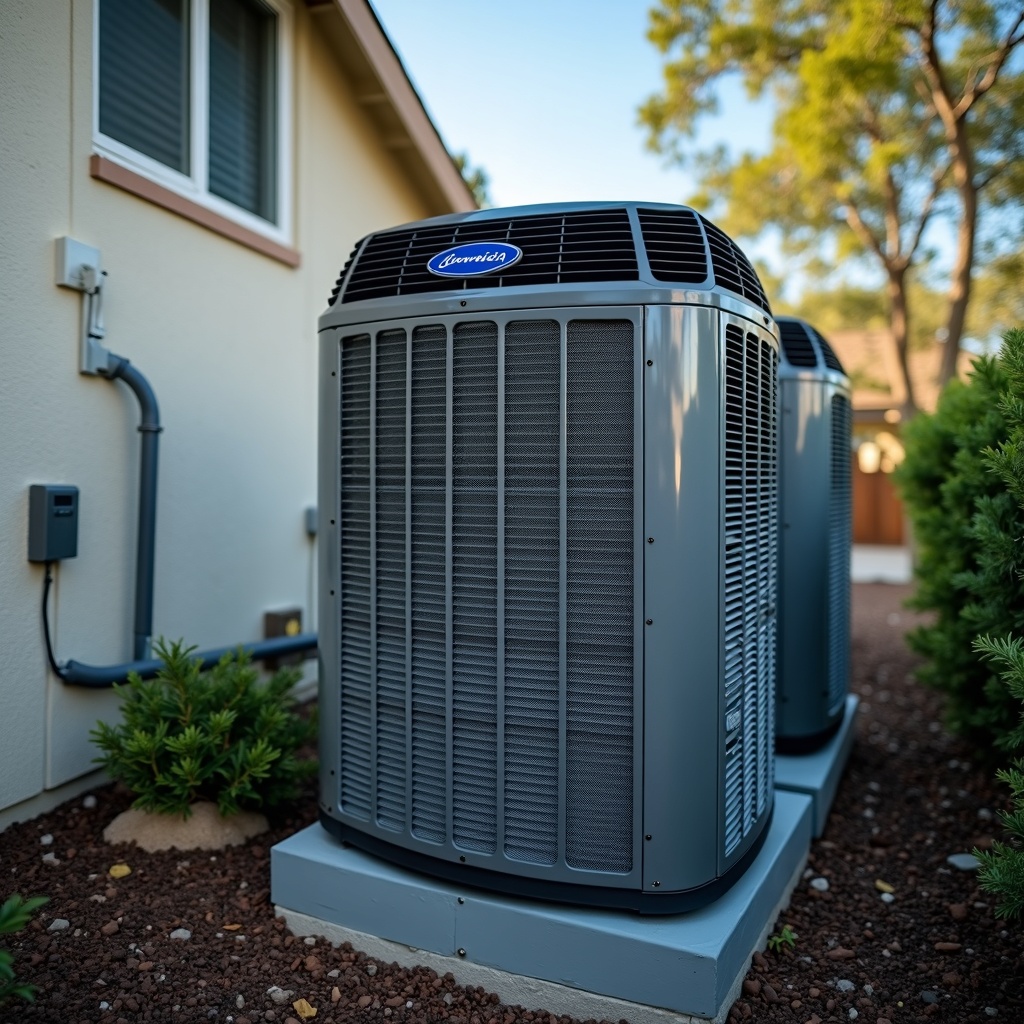
Carrier’s Infinity 26 with Greenspeed Intelligence delivers 26.0 SEER2 efficiency while incorporating some of the most sophisticated control technology in the residential HVAC market. The Greenspeed compressor operates across an infinite range of speeds rather than discrete stages, providing even more precise temperature and humidity control than traditional variable-speed systems.
In Buena Park’s climate, humidity control matters more than many homeowners realize. While our summers are relatively dry compared to coastal or humid regions, indoor humidity levels still affect comfort perception. The Infinity 26 can remove 50% more moisture from indoor air than conventional systems while using less energy, allowing you to set your thermostat 2–3°F higher while maintaining the same comfort level—translating to additional energy savings.
Installation costs for the Infinity 26 typically run $15,000–$18,000 for a complete system including the matching variable-speed air handler. Carrier requires installation by certified dealers, which ensures quality but limits your contractor options compared to more widely available brands. Annual operating costs average $1,385, saving approximately $883 yearly versus baseline efficiency.
Smart Integration and Connectivity
The Infinity system pairs with Carrier’s Côr thermostat or works seamlessly with popular smart home platforms including Apple HomeKit, Amazon Alexa, and Google Assistant. Advanced features include geofencing (the system adjusts when your phone leaves or approaches home), energy usage tracking with personalized recommendations, and integration with whole-home automation systems.
For Buena Park families managing busy schedules—perhaps coordinating around work near HVAC in Anaheim or commuting to nearby employment centers—the automated scheduling prevents wasted cooling when nobody’s home while ensuring comfort when you return.
Trane XV20i: Built for Extreme Conditions
Trane built its reputation on durability, and the XV20i TruComfort variable-speed system exemplifies that heritage. With a 21.5 SEER2 rating, it doesn’t achieve the peak efficiency of Lennox or Carrier’s top models, but it delivers that efficiency consistently even under the harshest operating conditions.
The XV20i features Trane’s patented Climatuff compressor, designed and tested to operate reliably in temperatures exceeding 115°F. When Buena Park experiences heat waves—increasingly common as summer temperatures trend upward—many air conditioners struggle to maintain capacity. The XV20i maintains full cooling output even when outdoor temperatures soar, preventing the frustrating scenario where your AC runs continuously but can’t quite keep up with demand.
Installed costs range from $14,000–$17,000, positioning the XV20i in the premium category but typically $1,000–$2,000 below Lennox’s highest-efficiency models. Annual operating costs of approximately $1,537 represent solid savings of $731 compared to minimum-efficiency systems. Where the Trane really distinguishes itself is in longevity—many contractors report Trane systems lasting 18–20 years with proper maintenance, compared to 12–15 years for the industry average.
The extended 12-year compressor warranty (compared to 10 years for most competitors) reflects Trane’s confidence in their build quality. For homeowners prioritizing system reliability and minimal service needs, the XV20i represents a compelling choice even if it doesn’t lead in pure efficiency numbers.
American Standard and Rheem: Value-Focused Efficiency
Not every Buena Park homeowner needs or wants to invest in the absolute highest efficiency available. American Standard’s Platinum 20 and Rheem’s Prestige Series RA20 both deliver solid 20.0 SEER2 performance at more moderate price points of $12,500–$16,000 installed.
These systems incorporate variable-speed compressor technology and smart controls, delivering many of the comfort benefits of premium systems—better humidity control, quieter operation, more consistent temperatures—while stopping short of the absolute cutting-edge efficiency. Annual operating costs of $1,620 still represent $648 in savings compared to minimum-efficiency equipment.
American Standard shares parent company ownership with Trane, using nearly identical components with different branding. This means you get Trane’s reliability at a slightly lower price point, though typically with marginally shorter warranty coverage. Rheem offers the broadest dealer network of any manufacturer, making parts availability and service options more accessible—a consideration for homeowners who prefer working with smaller, independent contractors rather than brand-specific dealer networks.
When Mid-Tier Efficiency Makes Financial Sense
If you’re planning to sell your Buena Park home within 5–7 years, investing an additional $4,000–$6,000 for a 28 SEER2 system won’t generate enough savings to justify the premium. The 20 SEER2 tier still qualifies for HVAC rebates and federal tax credits (up to $2,000), offers excellent comfort performance, and presents a more balanced short-term value proposition.
Similarly, if your home has existing ductwork issues—leaks, undersizing, poor insulation—the efficiency gains from premium equipment get partially negated by distribution losses. In these cases, investing in 20 SEER2 equipment plus $2,000–$3,000 in ductwork improvements delivers better overall performance than 28 SEER2 equipment with compromised ducts.
Variable-Speed Technology and Why It Matters
All the systems profiled above incorporate variable-speed compressor technology, but understanding what that means helps you appreciate the value you’re receiving. Traditional single-stage air conditioners operate like a light switch—they’re either 100% on or completely off. When indoor temperature rises above your thermostat setpoint, the system kicks on at full capacity, runs until temperature drops below setpoint, then shuts off completely.
This on-off cycling creates several problems. Temperature swings of 3–5°F around your setpoint. Humidity removal only happens when the system runs, leading to clammy conditions during moderate weather when the system cycles frequently. High starting current draws that stress electrical systems and drive peak-hour utility charges. Noise from the compressor starting and stopping.
Variable-speed systems solve these issues by operating at lower capacities—often 25–40% of maximum—during moderate conditions. The compressor runs continuously but at reduced speed, providing just enough cooling to match your home’s heat gain. This delivers consistent temperature (within 0.5°F), superior dehumidification (the coil stays cold continuously), lower electrical consumption (no high-current startup spikes), and dramatically quieter operation.
In Buena Park’s climate, where you need cooling from April through October but don’t necessarily need full capacity except during peak afternoon hours in July and August, variable-speed operation provides ideal performance. The system runs at low speed most of the time, ramping up capacity only when outdoor temperatures peak.
Heat Pumps vs. Air Conditioners: The Buena Park Equation
Most of the efficiency ratings discussed above apply to air conditioning systems paired with gas furnaces. However, many Buena Park homeowners now consider heat pump systems that provide both cooling and heating using electricity rather than natural gas.
Heat pumps make particular sense in Southern California’s mild winter climate. When overnight temperatures drop to 45–55°F—typical for Buena Park winters—modern cold-climate heat pumps operate efficiently, delivering 3–4 units of heat for every unit of electricity consumed. This efficiency advantage over gas furnaces (which max out around 98% AFUE) drives annual heating savings averaging $370 for typical single-family homes.
California’s energy policy direction increasingly favors electrification. Current rebate programs including TECH Clean California and federal HEEHRA incentives provide $4,000–$8,000 for income-qualified homeowners installing heat pumps. Even if you don’t qualify for income-based rebates, federal tax credits of up to $2,000 apply to heat pump installations, offsetting much of the premium over gas furnace systems.
The same Carrier, Trane, and Lennox models discussed above are available in heat pump configurations with similar SEER2 cooling ratings plus HSPF2 heating efficiency ratings of 9.0–10.0. Installed costs run $1,500–$2,500 higher than cooling-only systems, but the combination of heating efficiency, rebate availability, and future-proofing against potential gas service restrictions makes heat pumps increasingly attractive for Buena Park installations.
Critical Features Beyond Efficiency Ratings
SEER2 numbers provide useful comparison data, but several other features significantly impact your long-term satisfaction with a high-efficiency HVAC system.
Warranty Coverage and What It Really Means
Most manufacturers provide 10-year parts warranties when you register your system within 60–90 days of installation. Premium brands like Lennox extend labor coverage to 5 years when installed by Premier Dealers. This matters because a compressor failure costs $1,500–$3,000 in labor alone even if the part is warrantied.
Read warranty terms carefully. Some exclude coverage if you don’t maintain documented annual professional maintenance. Others prorate coverage, providing 100% replacement in year one but declining percentages in later years. A qualified hvac company in Buena Park can explain the specific warranty provisions for each system you’re considering.
Sound Levels and Outdoor Unit Placement
Premium variable-speed systems operate much more quietly than traditional equipment, with outdoor units producing 55–65 decibels at low speed compared to 75+ decibels for single-stage compressors. If your outdoor unit sits near a bedroom window or patio area—common in Buena Park’s established neighborhoods where lot sizes limit placement options—the sound difference dramatically affects livability.
Smart Thermostat Integration
High-efficiency systems require communicating thermostats to access advanced features like variable-speed control and efficiency optimization. Most manufacturers offer proprietary smart thermostats (Lennox iComfort, Carrier Côr, Trane XL1050), but some also work with third-party options like Nest or Ecobee. Verify compatibility before assuming your preferred smart home ecosystem will work with your chosen HVAC system.
Decision Framework: Matching Systems to Your Situation
The “best” high-efficiency HVAC system depends entirely on your specific circumstances, priorities, and home characteristics. Here’s a framework for matching systems to situations:
Choose Lennox SL28XCV if: You plan to stay in your home 10+ years, prioritize maximum efficiency and lowest operating costs, value quiet operation, want solar-ready capability, and can accommodate the premium price.
Choose Carrier Infinity 26 if: You want premium efficiency with the most advanced smart home integration, prioritize humidity control, prefer established brand reputation, and value comprehensive dealer support.
Choose Trane XV20i if: Durability and reliability outweigh peak efficiency in your priorities, you’ve had positive experiences with Trane equipment, you want extended compressor warranty coverage, or your home experiences particularly harsh sun exposure or heat loading.
Choose American Standard Platinum 20 or Rheem Prestige RA20 if: You want solid efficiency gains without premium pricing, you’re selling within 5–7 years, you prefer working with independent contractors rather than brand-specific dealers, or you need to balance HVAC investment with other home improvement priorities.
Home-Specific Factors That Affect System Selection
Your home’s physical characteristics matter as much as equipment specifications. Homes built before 1990 often have undersized ductwork designed for smaller, less efficient systems. If your home shows signs of distribution problems—hot spots in certain rooms, weak airflow from some registers, excessive dust accumulation—invest in ductwork repair and installation alongside your new equipment. A 20 SEER2 system with proper ductwork outperforms a 28 SEER2 system with leaky, undersized ducts.
Insulation levels, window quality, and solar exposure all affect your home’s cooling load. A professional Manual J load calculation—required for permit approval but often rushed or skipped by less thorough contractors—determines the right system size for your specific home. Oversized systems cycle frequently, reducing efficiency and comfort. Undersized systems run continuously but struggle to maintain temperature during peak heat.
2026 Rebates, Incentives, and Tax Credits
California offers the most generous HVAC incentive landscape in the nation, but programs change frequently and funding limitations create first-come, first-served scenarios. Current programs include:
Federal Tax Credits: Up to $2,000 for heat pumps or high-efficiency air conditioning systems (30% of project cost, capped at $2,000). This Energy Efficient Home Improvement Credit (25C) applies to equipment placed in service through December 31, 2025, with extension likely but not yet confirmed for 2026.
TECH Clean California Heat Pump Rebates: Income-qualified homeowners receive $4,000–$8,000 for heat pump installations. As of early 2026, single-family reservations are fully booked with waitlists active, but funding may expand. Check current status before making equipment decisions.
Utility Company Rebates: Southern California Edison and other local utilities offer $100–$300 rebates for high-efficiency systems meeting minimum SEER2 thresholds. These typically stack with federal credits but not always with state rebates—verify stacking rules before assuming you can combine all programs.
Working with contractors experienced in navigating rebate programs prevents costly mistakes. Some rebates require pre-approval before installation, while others work as post-installation reimbursements. Missing a deadline or procedural requirement can forfeit thousands in available incentives.
Maintenance Requirements for High-Efficiency Systems
High-efficiency HVAC systems deliver their rated performance only when properly maintained. The sophisticated technology that enables superior efficiency—variable-speed compressors, precise refrigerant metering, communicating controls—also requires professional attention at least annually.
Budget $200–$350 for comprehensive annual maintenance including refrigerant charge verification, electrical connection inspection, condensate drain cleaning, coil inspection, and control system diagnostics. Many Buena Park homeowners schedule pre-summer HVAC maintenance in March or April, before cooling season demands peak and contractor schedules fill.
Between professional visits, homeowner maintenance matters. Replace or clean air filters every 30–60 days during cooling season (more frequently if you live near Beach Boulevard or other high-traffic areas with elevated dust and particulates). Keep outdoor units clear of debris, vegetation, and obstructions that restrict airflow. Monitor system performance through your smart thermostat and address unusual patterns—longer run times, temperature swings, higher utility bills—promptly before minor issues escalate into major repairs.
Why High-Efficiency Systems Make Sense in Buena Park
Buena Park’s combination of extended cooling seasons, California’s high electricity rates, available incentive programs, and moderate home values creates an ideal environment for high-efficiency HVAC investment. The median $800,000 home value justifies premium system investment that delivers both immediate comfort improvements and long-term operating savings.
Climate trends reinforce this logic. Southern California experiences increasing heat wave frequency and duration, with more days annually exceeding 95°F than a decade ago. High-efficiency systems maintain comfort during these extreme events while using less electricity precisely when grid demand and utility rates peak. The variable-speed technology in premium systems excels during these conditions, ramping capacity as needed without the all-or-nothing operation of standard equipment.
Indoor air quality considerations also favor advanced systems. Many high-efficiency models accommodate indoor air quality in Buena Park enhancements including MERV-13+ filtration, UV air treatment, and whole-home dehumidification. These features matter increasingly during wildfire season, when outdoor air quality degrades and homes become sealed environments.
Ready to Upgrade Your Buena Park Home?
Selecting the right high-efficiency HVAC system requires balancing equipment performance, installed cost, operating expenses, and your family’s specific comfort priorities. The systems profiled in this guide represent the best options available in 2026, each excelling in different aspects while delivering substantial improvements over minimum-efficiency equipment.
Working with an experienced local contractor ensures proper system sizing, quality installation, and access to manufacturer warranties and incentive programs. At Shalom Heating & Air, we’ve helped hundreds of Buena Park families navigate HVAC replacement decisions, comparing options based on each home’s unique requirements rather than pushing any single brand or efficiency level.
Whether you’re dealing with a failing system that needs immediate replacement or planning a proactive upgrade to control rising energy costs, we provide transparent guidance on which systems deliver the best value for your investment. Our team stays current on available rebates and incentive programs, helping you maximize savings while ensuring your new system meets all permit and code requirements.
Call us at (714) 886-2021 to schedule a free in-home consultation. We’ll perform a proper load calculation, discuss your efficiency priorities and budget parameters, and provide detailed comparisons of the systems best suited to your Buena Park home. No pressure, no sales tactics—just honest expertise from professionals who’ve served this community for years.
