
Central AC Installation Cost Bellflower: 2026 Pricing
Why Central Air Differs from Mini-Splits, Window Units, and Heat Pumps
When Bellflower homeowners search for cooling solutions, they often confuse central air conditioners with ductless mini-splits, window units, and heat pumps. Understanding what sets central AC apart matters because installation timing, cost structures, and long-term performance vary dramatically. Central AC units cool down an entire house through a system of ducts, making them fundamentally different from room-specific solutions.
📋 In This Guide
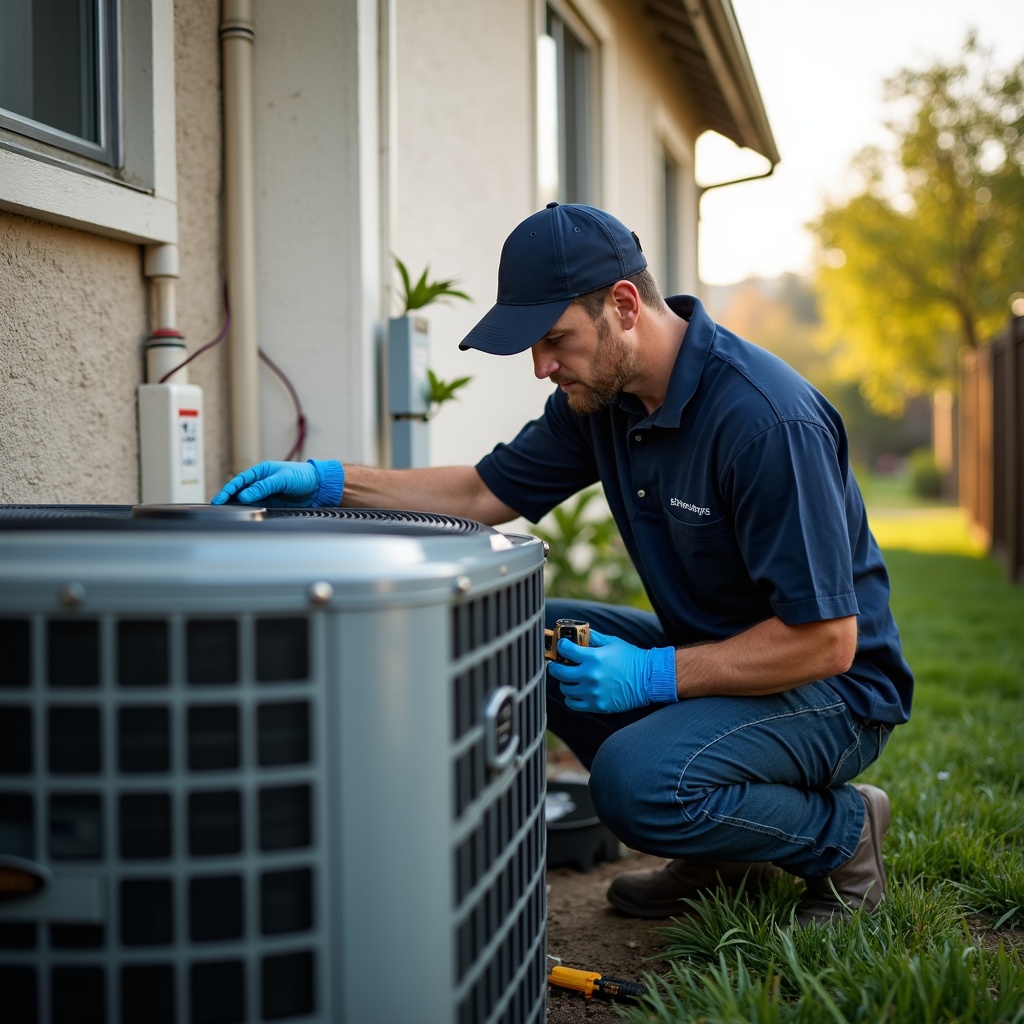
Central air conditioning systems require existing ductwork or new duct installation, a dedicated outdoor condenser unit, and integration with your home’s forced-air distribution system. Unlike ductless mini-splits that mount individual air handlers in each room, or portable units that cool single spaces, central AC delivers whole-home comfort through a single thermostat. In California, homeowners can expect to pay between $3,920 and $13,440, with the average ac installation costing around $6,160, but Bellflower-specific factors influence where you land in that range.
💰 Typical Central AC Installation Cost Ranges
- 2-Ton System (1,000–1,400 sq ft): $5,800–$8,500
- 3-Ton System (1,500–2,000 sq ft): $7,500–$10,800
- 4-Ton System (2,000–2,500 sq ft): $9,200–$13,200
- Ductwork Modifications: $500–$4,000
- Electrical Panel Upgrade: $1,500–$3,500
Heat pumps, while similar in appearance, provide both heating and cooling, typically costing $1,500-$3,000 more than cooling-only central AC. This distinction matters in Bellflower’s climate, where heating needs remain minimal but present. The choice between systems affects not just installation cost but also utility rebate eligibility and seasonal efficiency.
Spring Installation: Why March Through May Offers Cost Advantages
Timing central air conditioner installation strategically can save Bellflower homeowners $800-$1,500 compared to emergency summer replacements. Spring installation—particularly March through May—provides multiple financial and practical advantages that disappear once temperatures climb.
During spring months, any reputable hvac contractor in Bellflower operates with lighter scheduling, allowing more flexibility for equipment selection and installation dates. Contractor availability directly impacts labor costs, which typically run $2,200 to $4,500, depending on system complexity and installation challenges. When demand is lower, contractors can dedicate full crews to single installations rather than rushing between emergency service calls.
Material Availability and Pricing Fluctuations
Equipment manufacturers and distributors maintain larger inventories before cooling season begins. This inventory abundance creates better pricing and faster delivery times for specific models and efficiency ratings. By June, popular mid-efficiency units often face backorders as summer heat drives demand.
Permit Processing Timeline
The cost of permit fees for HVAC installations usually range from $100-$500 depending on several factors, but processing speed varies seasonally. Building departments in Los Angeles County process permits faster in spring when construction activity remains moderate. A permit that takes 3-5 business days in April might require 10-14 days in July when building inspectors handle peak workloads.
Summer Emergency Installations: What You’ll Actually Pay
When central AC fails during a July heatwave in Bellflower, homeowners face compressed timelines and limited negotiating power. Summer installation costs typically run 15-25% higher than spring pricing due to demand surges, overtime labor, and equipment scarcity.
Emergency service calls during peak cooling season often reveal that repairs exceed replacement value. Labor and professional installation can range from $2,500 to $6,000, depending on the complexity of the job. If ductwork needs to be modified or replaced, it can add anywhere from $500 to $4,000 or more. These ranges shift upward when contractors work extended hours to accommodate urgent requests.
Material costs also fluctuate seasonally. Popular 14.3 SEER2 models that meet California’s minimum SEER2 ratings have risen from the SEER rating of 14 to 14.3 can face temporary price increases when distributor inventories tighten. Homeowners who wait until failure often accept whatever equipment remains available rather than selecting optimal efficiency levels.
| Installation Timing | Average Cost (3-Ton System) | Lead Time | Equipment Selection |
|---|---|---|---|
| Spring (March-May) | $7,500–$9,800 | 5–10 days | Wide availability |
| Summer (June-August) | $8,800–$11,500 | 10–21 days | Limited options |
| Fall (September-November) | $7,800–$10,200 | 7–12 days | Good availability |
| Winter (December-February) | $7,200–$9,500 | 3–7 days | Best selection |
System Size and Efficiency: Breaking Down Equipment Costs by SEER2 Rating
Central air conditioner costs vary significantly based on two primary factors: system capacity (measured in tons) and efficiency rating (SEER2). Understanding how these specifications affect pricing helps Bellflower homeowners budget accurately for their home’s specific requirements.
Capacity Requirements for Bellflower Homes
Proper system sizing requires professional load calculation, but general guidelines provide starting points. A 1,200-square-foot home in Bellflower’s predominantly residential neighborhoods typically requires a 2-2.5 ton system, while 1,800-square-foot properties need 3-3.5 tons. For a basic, 2-ton unit, don’t be surprised to pay around $2,214, a mid-range one will run somewhere around $5,000, and superior quality AC systems can crawl as high as $11,070.
Undersized systems run continuously without achieving desired temperatures, while oversized units cycle too frequently, failing to remove humidity and wasting energy. Both scenarios reduce equipment lifespan and increase operating costs, making proper sizing critical regardless of when you install.
SEER2 Efficiency Ratings and California Requirements
States including Florida, Texas, Arizona, California, and Georgia require a minimum SEER2 rating of 14.3 for most split-system air conditioners under 45,000 BTU/h. This federal minimum represents entry-level efficiency, but higher ratings deliver measurable cost savings over time.
For Bellflower’s climate, where cooling seasons extend from May through October, the efficiency rating significantly impacts annual operating costs. A 3-ton system running at 14.3 SEER2 (minimum) versus 17 SEER2 (high efficiency) creates approximately $280-$420 annual difference in electricity costs based on typical Southern California Edison rates.
Installation Labor, Permits, and California Title 24 Compliance Costs
Equipment represents only 50-60% of total central AC installation costs. Labor, permitting, and mandatory California compliance testing add substantial expenses that vary based on installation complexity and home characteristics.
Labor Cost Variables
Straightforward replacement installations where new equipment matches existing system configuration fall toward lower labor cost ranges. Homes requiring refrigerant line modifications, electrical service upgrades, or ductwork changes incur higher labor expenses. Attic-mounted air handlers require additional labor hours compared to ground-level installations, particularly in homes with limited attic access.
California-Specific Permitting and Compliance
Permit fees in Los Angeles vary by jurisdiction but typically range from $150 to $450 for residential HVAC installations. The city requires permits for any AC system replacement, and inspections verify proper installation, correct refrigerant handling, and code compliance. Bellflower falls under Los Angeles County jurisdiction, placing permit costs in the $200-$400 range for standard residential installations.
California’s Title 24 building energy efficiency standards significantly impact installation costs. These regulations require specific minimum efficiency levels (currently 14 SEER or higher for most installations), proper duct sealing verified through testing, and correct refrigerant charge confirmation. Title 24 compliance documentation adds $200 to $500 to your project cost but ensures your system operates at rated efficiency. Duct testing and sealing, mandated by Title 24, costs $400 to $900.
These mandatory costs apply regardless of installation timing, but spring scheduling allows contractors to perform compliance testing without weather-related complications. Summer installations may require multiple inspection attempts if high attic temperatures interfere with proper testing procedures.
Hidden Costs: Electrical, Ductwork, and Home Infrastructure Upgrades
Many Bellflower homes—particularly properties built before 1990—require infrastructure improvements before central AC installation proceeds. These additional costs often surprise homeowners who budget only for equipment and basic installation.
Electrical Panel and Circuit Upgrades
Modern high-efficiency central air conditioners require dedicated 240-volt circuits with 30-60 amp capacity depending on system size. Homes with older 100-amp electrical panels may lack capacity for new AC systems, especially when electric water heaters, dryers, and other major appliances share service. Central AC units must connect to a dedicated circuit with a standard 240-volt connection. Most AC units also require 15 to 60 amps of power, depending on their size. If your home doesn’t have the required electrical circuit, you’ll need to hire a local electrician to install one. New electrical circuits range from $100 to $150, though full panel upgrades cost considerably more.
Electrical panel replacement costs $1,500-$3,500 in the Bellflower area, representing significant unplanned expense. Scheduling this work in advance—ideally during winter or early spring—allows homeowners to spread costs across multiple months rather than combining all expenses into a single emergency installation.
Ductwork Condition and Modification Requirements
Existing ductwork in Bellflower homes varies dramatically in condition and design quality. Many homes feature undersized ducts, improper return air pathways, or decades-old flex duct with collapsed sections. Installing new high-efficiency equipment on compromised ductwork wastes the efficiency investment and creates comfort problems.
Duct sealing for systems with minor leakage costs $400-$900 as part of Title 24 compliance. Homes requiring duct replacement or significant modifications face $2,000-$7,500 additional costs depending on home size and accessibility. Professional Ac Repair in Bellflower technicians can assess ductwork condition before system replacement, allowing accurate budget planning.
Financing, Rebates, and Tax Incentives That Reduce Net Installation Costs
While total installation costs range from $5,800 to $13,200 for most Bellflower homes, multiple programs reduce out-of-pocket expenses through rebates, tax credits, and financing options. Understanding these opportunities matters because qualification requirements and fund availability change throughout the year.
Federal Tax Credits for High-Efficiency Systems
The federal 25C tax credit offers up to $2,000 for qualifying high-efficiency central air conditioners. 17 SEER2 Efficiency: This hits the sweet spot—qualifies for TECH Clean California rebates and the $2,000 federal 25C tax credit. Systems must meet minimum efficiency thresholds: split-system central AC requires 17.0 SEER2 and 12.0 EER2 for full credit eligibility.
This efficiency requirement exceeds California’s minimum standard by approximately 20%, meaning qualifying systems cost $1,200-$2,200 more than baseline equipment. However, the federal credit offsets this premium while delivering ongoing energy savings that compound over the system’s 15-20 year lifespan.
Southern California Edison Rebates and Programs
Golden State Rebates provides instant rebate coupons for Air Conditioners, Smart Thermostats, Electric Heat Pump Water Heaters, and Gas Water Heaters. Bellflower residents served by Southern California Edison can access these programs, though funding availability fluctuates based on annual budget allocations and demand.
Rebate programs typically favor spring installations when annual funding becomes available. Late-summer applicants may encounter depleted funds or waitlists, delaying rebate processing. Coordinating installation timing with rebate cycles maximizes available incentives.
Contractor and Manufacturer Financing Options
HVAC contractors and equipment manufacturers offer various financing programs, many featuring 0% interest for 12-36 months on approved credit. These programs make high-efficiency systems accessible to budget-conscious Bellflower homeowners who might otherwise select minimum-efficiency equipment.
Financing availability and terms often improve during promotional periods—typically spring and fall when manufacturers push inventory. Winter and early spring financing promotions frequently offer longer 0% periods or reduced down payment requirements compared to summer programs.
When to Replace vs. Repair: A Cost-Timing Decision Framework
Central air conditioner failure doesn’t always demand immediate replacement. Understanding when repair remains economical versus when replacement makes financial sense helps Bellflower homeowners make informed timing decisions.
The 5,000-rule provides useful guidance: multiply your system’s age by estimated repair cost. If the result exceeds $5,000, replacement typically offers better long-term value. A 12-year-old system requiring $500 in repairs yields 6,000 ($12 × $500), suggesting replacement consideration. A 6-year-old system needing $400 repairs calculates to 2,400, indicating repair remains economical.
However, this calculation ignores efficiency improvements and upcoming failures. Systems approaching 15 years—even when functioning—consume significantly more energy than modern equipment. A system using $1,800 annually in electricity versus a new high-efficiency system costing $1,100 annually creates $700 yearly savings. Over 15 years, these savings total $10,500, far exceeding the incremental cost of upgrading to high-efficiency equipment.
Timing replacement before failure provides significant advantages. Planned spring installations allow equipment comparison, contractor selection, and rebate coordination. Emergency summer replacements force homeowners to accept available equipment from the first contractor who can respond, often at premium pricing.
Planning Your Bellflower Central AC Installation Investment
Central air conditioner installation represents substantial investment for Bellflower homeowners, but strategic timing and informed decision-making dramatically affect total costs and long-term value. Spring installation provides cost advantages, equipment selection, and contractor availability that disappear during peak summer demand.
Homeowners in Bellflower’s mid-range housing market—where median home values reach $620,000—should view central AC as long-term infrastructure investment rather than simple equipment purchase. Proper sizing, efficiency selection, and installation quality affect comfort, energy costs, and home value for 15-20 years.
Whether you’re managing rental property in Mayfair, upgrading your family home near Thompson Park, or preparing your Downtown Bellflower residence for sale, understanding total installation costs prevents budget surprises. Equipment costs, labor, permits, compliance testing, and potential infrastructure upgrades all factor into complete project budgets.
For personalized assessment of your specific home’s requirements and accurate installation cost estimates, contact Shalom Heating & Air at (714) 886-2021. Our team provides detailed load calculations, efficiency recommendations, and transparent pricing for Bellflower homeowners. We handle all permitting, Title 24 compliance documentation, and coordination with local building departments, ensuring smooth installations that pass inspection on first attempt. As an experienced Shalom Heating & Air — Homepage contractor serving Bellflower and surrounding communities including HVAC in Downey, HVAC in Cerritos, and HVAC in Norwalk, we understand local climate requirements and building codes that affect installation costs and system performance.
Understanding central air conditioner installation costs means recognizing that timing affects far more than just contractor availability. Material pricing, permit processing, rebate funding, and even installation quality vary seasonally. Homeowners who plan installations during moderate-demand periods typically save $800-$1,500 while gaining better equipment selection and more thorough installation service. For homes requiring HVAC Repair vs. Replace: Complete Cost Guide for Bellflower Homeowners guidance, professional assessment determines whether repair or replacement offers better value given your system’s age, condition, and efficiency.
