
2026 AC Installation Cost Guide for Brea Homeowners
What You’ll Really Pay: Breaking Down AC Installation Costs in Brea
Installing a new air conditioning system in Brea in 2026 involves more than just buying equipment. A new AC unit costs $3,300 to $5,900 on average, depending on the type, size, and condition of ductwork, but that’s only part of the story. The final price you pay depends on your home’s specific requirements, the system type you choose, California’s strict compliance rules, and whether you qualify for available rebates. Understanding these cost drivers helps you budget accurately and avoid surprise expenses when the invoice arrives.
📋 In This Guide
For Brea homeowners—where median home values reach $860,000—AC installation represents a significant property investment. The good news? This is also an opportunity to reduce long-term energy costs, increase home value, and take advantage of federal and state incentives that can offset thousands of dollars in upfront expense. Working with an experienced hvac contractor in Brea ensures you navigate these costs efficiently while meeting all local requirements.
💰 Typical AC Installation Cost Ranges in Brea
- Central AC (3-ton, standard efficiency): $5,000–$8,300
- Central AC (3-ton, high efficiency 16+ SEER2): $8,300–$12,500
- Heat Pump System (3-ton): $7,000–$14,000
- Ductless Mini-Split (single zone): $3,200–$5,000
- Permit & Title 24 Compliance: $250–$800
How System Type Determines Your Bottom Line
The type of air conditioning system you choose has the biggest impact on installation cost. Each system type offers different benefits, efficiency levels, and installation complexity—all of which affect the final price.
Central Air Conditioning Systems
Central AC remains the most common choice for Brea homes with existing ductwork. AC replacement costs $5,000 to $8,300 on average for a standard efficiency unit. A mid-range AC unit costs $8,300 to $12,500 installed, while high-efficiency systems can reach $14,000+ with installation. The wide range reflects differences in equipment efficiency, brand selection, and installation complexity.
System efficiency, measured by SEER2 ratings, directly impacts equipment cost. A 16 SEER2 unit is 14% more efficient than a 14 SEER2 unit. New systems range from 13.4 SEER2 (code minimum) to 28+ SEER2 for top-tier variable-speed equipment. For most Brea homeowners, a 16 SEER2 system offers the best balance between upfront cost and long-term energy savings.
Heat Pump Installations
Heat pumps provide both heating and cooling from a single system, making them increasingly popular in Southern California. They align with California’s electrification goals and qualify for substantial rebates. Installation costs typically run higher than traditional AC due to additional components and electrical requirements, but incentive programs can narrow the gap significantly.
For Brea’s mild climate, heat pumps work efficiently year-round. They’re especially valuable for homes looking to eliminate gas furnaces entirely. When factoring in available rebates and tax credits, the actual out-of-pocket expense often becomes competitive with conventional systems.
Ductless Mini-Split Systems
A ductless mini-split AC installation costs $3,200 to $10,500 on average, depending on the number of zones. Single-zone systems serve one area—perfect for home additions, converted garages, or rooms with inadequate cooling. Multi-zone systems can condition entire homes without ductwork, though costs increase substantially with each additional indoor unit.
Mini-splits offer advantages for older Brea homes where adding ductwork would be prohibitively expensive or architecturally challenging. They also provide zone control, allowing different temperature settings in different areas—a feature families appreciate.
| System Type | Typical Cost Range | Best For | Rebate Eligible |
|---|---|---|---|
| Central AC (14 SEER2) | $5,000–$8,300 | Homes with existing ductwork, budget-conscious | Limited |
| Central AC (16+ SEER2) | $8,300–$12,500 | Energy savings priority, longer cooling seasons | Possible utility rebates |
| Heat Pump System | $7,000–$14,000 | Year-round comfort, electrification goals | Yes—substantial |
| Ductless Mini-Split (1 zone) | $3,200–$5,000 | Single rooms, homes without ducts | Varies by model |
| Ductless Mini-Split (multi-zone) | $6,000–$10,500 | Whole-home comfort, zone control | Varies by model |
Home Size and Tonnage Requirements
Your home’s size and cooling load determine the system capacity you need, measured in tons. Proper sizing is non-negotiable—undersized systems run constantly without cooling effectively, while oversized systems short-cycle, wasting energy and reducing equipment lifespan.
Professional load calculations (Manual J) account for square footage, insulation levels, window placement, sun exposure, and ceiling height. In Brea’s neighborhoods like Olinda Ranch and Country Hills, homes typically range from 1,500 to 2,500 square feet, requiring 2.5 to 4-ton systems. Larger properties in Brea Canyon may need 4 to 5-ton systems.
Bottom line: The higher the tonnage, the more the AC system will cost. Each additional ton of capacity adds approximately $1,000 to $1,500 to equipment and installation costs. However, proper sizing saves money long-term through improved efficiency and equipment longevity. Any reputable hvac company in Brea will perform load calculations before recommending system size—if a contractor quotes based on square footage alone, that’s a red flag.
Installation Labor and Professional Services
Labor represents a substantial portion of total installation cost—typically 30% to 40% of the project. Bay Area HVAC installation costs typically run 15-30% higher than the national average. Bay Area HVAC technicians earn $85-150/hour vs $50-100 nationally, reflecting the region’s high cost of living and competitive trade labor market. Southern California rates fall within similar ranges.
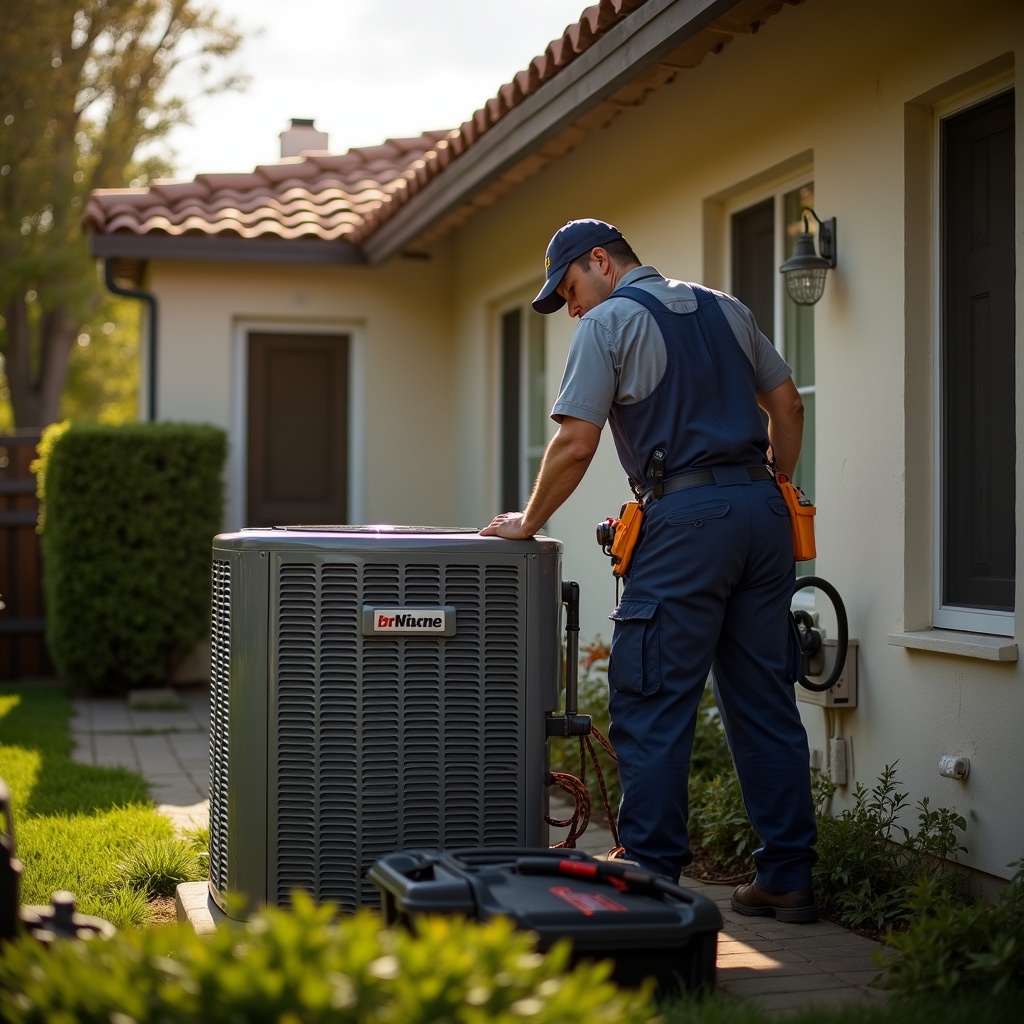
What does professional installation actually involve? Experienced technicians remove and properly dispose of your old system, install the new outdoor condenser and indoor air handler, connect refrigerant lines with proper insulation, wire electrical connections, install or upgrade the thermostat, test airflow and refrigerant charge, and verify system operation. Quality installation takes a full day for straightforward replacements, longer for complex projects.
Installation complexity affects labor costs significantly. Rooftop condenser placement, attic air handler installations, tight-access properties, and homes requiring electrical panel upgrades all increase labor hours. Many Brea homes built in the 1970s and 1980s may need electrical service upgrades to support modern high-efficiency equipment.
Choosing a licensed, insured contractor costs more upfront but protects you from liability, ensures warranty coverage remains valid, and guarantees work meets code requirements. Lower bids from unlicensed installers often lead to failed inspections, voided warranties, and expensive callbacks.
California Permits and Title 24 Compliance Costs
Every AC installation in California requires permits and must comply with Title 24 energy standards. These aren’t optional—they’re legal requirements that protect homeowners and ensure energy efficiency.
The cost of permit fees for HVAC installations usually range from $100-$500 depending on several factors. In Orange County, permit fees typically fall in the $200 to $400 range for residential AC installations. Your contractor should pull permits and include these fees in their quote.
Buildings whose permit applications are applied for on or after January 1, 2026, must comply with the 2025 Energy Code. This updated code emphasizes heat pump installations, improved ventilation standards, and stricter efficiency requirements. Compliance documentation adds to project costs but ensures your system performs as designed.
Title 24 compliance includes HERS (Home Energy Rating System) testing for duct leakage, refrigerant charge verification, and airflow measurements. On average, acquiring an HVAC permit costs approximately $250 – $400 + the cost of a 3rd party duct audit. A 3rd party audit costs about $300 – $450. These verification steps confirm your system operates at rated efficiency and meets state energy goals.
Working with contractors familiar with Title 24 requirements streamlines the process. They know local inspection procedures, maintain relationships with building departments, and handle documentation correctly the first time.
Electrical Upgrades and Additional Infrastructure
Many AC installations require electrical work beyond basic system connection. Older Brea homes may have 100-amp or 125-amp electrical services that can’t support modern high-efficiency equipment. Panel upgrades to 200 amps typically cost $2,000 to $4,000—a significant but sometimes necessary expense.
High-efficiency systems often require dedicated circuits with appropriate amperage. Heat pumps, in particular, may need larger circuits than traditional AC systems. If your electrical panel lacks available breaker spaces, sub-panel installation adds $500 to $1,500.
Outdoor condenser pad replacement or reinforcement may be necessary if existing pads have settled or cracked. New concrete pads cost $150 to $300. Some installations require line-set replacement if existing refrigerant lines are incompatible with new equipment—this adds $500 to $1,200 depending on line length and accessibility.
Thermostat upgrades often accompany new AC installations. Smart thermostats are mandated in the Title 24 guidelines. These energy-efficiency standards require HVAC systems to operate efficiently and reduce energy consumption, thus lowering energy costs. Smart thermostat costs range from $200 to $500 installed, with some utility companies offering rebates that reduce net cost.
Ductwork Modifications and Air Distribution
Existing ductwork condition significantly impacts installation cost and system performance. Many homes in Brea’s older neighborhoods have duct systems that leak conditioned air into attics or crawl spaces—wasting energy and reducing comfort.
Duct sealing improves efficiency substantially and is now mandatory under Title 24. The mandatory measures require air distribution ducts be sealed and HERS tested for leakage in all climate zones even when the performance method of compliance is used. This is a big change from the 2008 Title 24 standards where duct testing was a prescriptive requirement that could be waived by using the performance method of compliance.
Duct sealing costs $800 to $2,000 depending on system size and accessibility. Homes with extensive duct modifications or replacements can see costs of $3,000 to $8,000. However, properly sealed and sized ductwork can improve system efficiency by 20% to 30%, paying for itself through reduced energy bills.
Insufficient return air is a common problem that reduces efficiency and comfort. Adding return air pathways or additional return grilles costs $300 to $800 per location but dramatically improves airflow balance. Properly designed air distribution ensures every room receives adequate cooling—eliminating hot spots common in poorly designed systems.
Energy Efficiency Rebates and Tax Credits for 2026
Federal and California incentive programs can reduce AC installation costs by thousands of dollars. Understanding which programs you qualify for makes high-efficiency equipment more affordable.
Federal Tax Credits
The federal 25C tax credit expired December 31, 2025, and is not available for 2026 installations. However, monitoring potential federal program renewals is worthwhile, as energy efficiency legislation changes periodically.
California HEEHRA Rebates
As of February 24, 2026, HEEHRA rebates for single-family home retrofits are fully reserved statewide. All reservation requests that have not been approved have been put on a waitlist in case budget becomes available again. No new income verification requests are being accepted at this time. While this program provided up to $8,000 for income-qualified homeowners installing heat pumps, funding has been exhausted.
Utility Company Rebates
Southern California Edison and other local utilities periodically offer rebates for high-efficiency AC installations. Rebate amounts and eligibility requirements change annually, so checking current offerings with your utility provider before purchasing equipment is essential. Some programs offer $50 to $120 for smart thermostats and $100 to $150 per ton for high-efficiency heat pumps.
Financing Options
Many HVAC financing options help spread installation costs over time. Contractor-offered financing, home equity lines of credit, and manufacturer promotional financing provide alternatives to paying full cost upfront. Interest rates and terms vary significantly, so comparing multiple options before committing makes financial sense.
Making Your Investment Count: Cost-Saving Strategies
Strategic planning reduces AC installation costs without compromising quality or efficiency. Consider these approaches when budgeting your project:
Schedule installations during off-peak seasons. Spring and fall typically offer better contractor availability and potentially lower labor rates compared to peak summer demand when emergency replacements dominate technician schedules. Planning ahead avoids the premium you pay when your system fails during a heat wave.
Get multiple quotes from licensed contractors. Three to five quotes give you realistic cost ranges and help identify outliers—both suspiciously low bids that may cut corners and inflated quotes. Ensure quotes include identical scope, equipment specifications, and warranty terms for accurate comparison.
Balance efficiency with realistic payback periods. Ultra-high-efficiency systems cost substantially more but may not provide proportional savings in Brea’s moderate climate. For most homeowners in moderate climates, 16 SEER provides the best balance between upfront cost and long-term savings. Those in hot climates with high electricity rates might benefit from 18 SEER ratings, while homeowners in cooler climates may find 14 SEER perfectly adequate.
Address indoor air quality in Brea during installation. Adding whole-home air purification, upgraded filtration, or humidity control during AC installation costs less than retrofitting later. These improvements enhance comfort and health while maintaining efficient system operation.
Don’t skip maintenance agreements. Regular professional maintenance extends equipment life, maintains efficiency, and catches small problems before they become expensive failures. Annual AC repair in Brea service costs $150 to $300 but prevents the majority of premature system failures.
Investing in a new AC system represents a significant commitment, but it’s one that pays dividends through improved comfort, lower energy bills, and increased home value. Brea’s high-value homes deserve properly sized, professionally installed, and efficiently operating cooling systems. Whether you’re replacing a failing unit or proactively upgrading an aging system, understanding true installation costs helps you budget appropriately and make informed decisions.
Ready to get an accurate quote for your home? Contact Shalom Heating & Air at (714) 886-2021 for a comprehensive assessment. Our experienced team provides transparent pricing, professional new AC installation, and ongoing support throughout your system’s lifetime. We’ll evaluate your home’s specific requirements, explain available options clearly, and ensure your installation meets all California compliance standards while staying within your budget.
