How to Choose a Licensed HVAC Contractor in California: A Homeowner’s Checklist
Hiring the wrong HVAC contractor can cost you thousands and void your home insurance. This guide walks you through exactly how to verify an HVAC contractor's license in California before you sign anything.
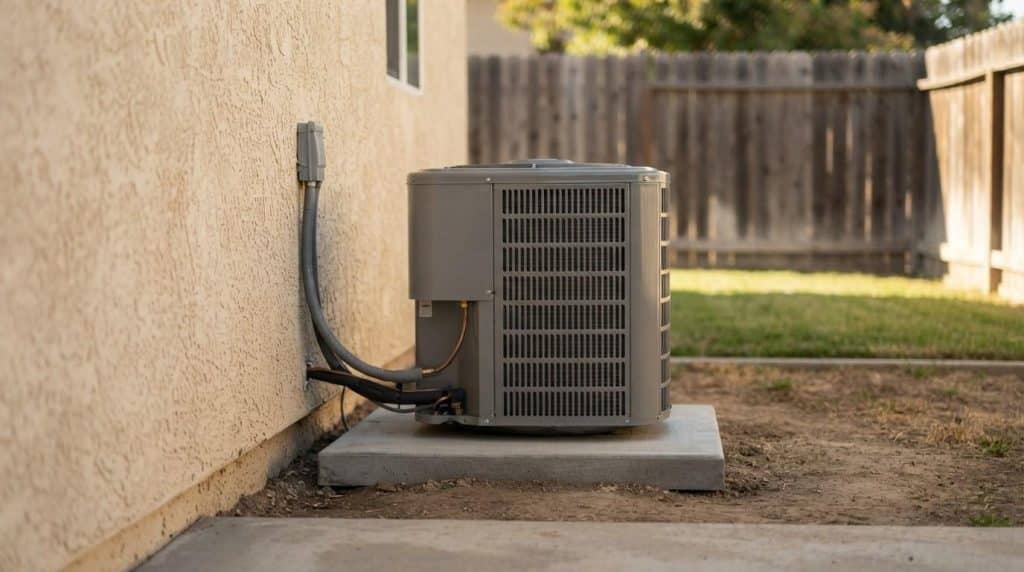
Why Does Your HVAC Contractor’s License Status Matter in California?
Hiring an unlicensed HVAC contractor in California can leave you with failed permits, voided home insurance, and no legal recourse if something goes wrong. California law requires any HVAC contractor performing work valued at $500 or more in labor and materials to hold a valid license issued by the California Contractors State License Board (CSLB). That threshold is low enough to cover almost every repair, installation, or tune-up a homeowner would call about.
When an unlicensed contractor installs a new air conditioner or furnace, the work typically cannot pass a city or county inspection. That means you may have to pay a licensed contractor to redo the job before you can sell your home or file an insurance claim. The financial risk is real and avoidable.
California’s housing stock is large and diverse. Millions of homes across Southern California depend on HVAC systems that run hard through long cooling seasons. The state’s Title 24 building energy standards add another layer of compliance. Work done by an unlicensed contractor rarely meets those standards, which can trigger penalties during a home sale or renovation permit pull.
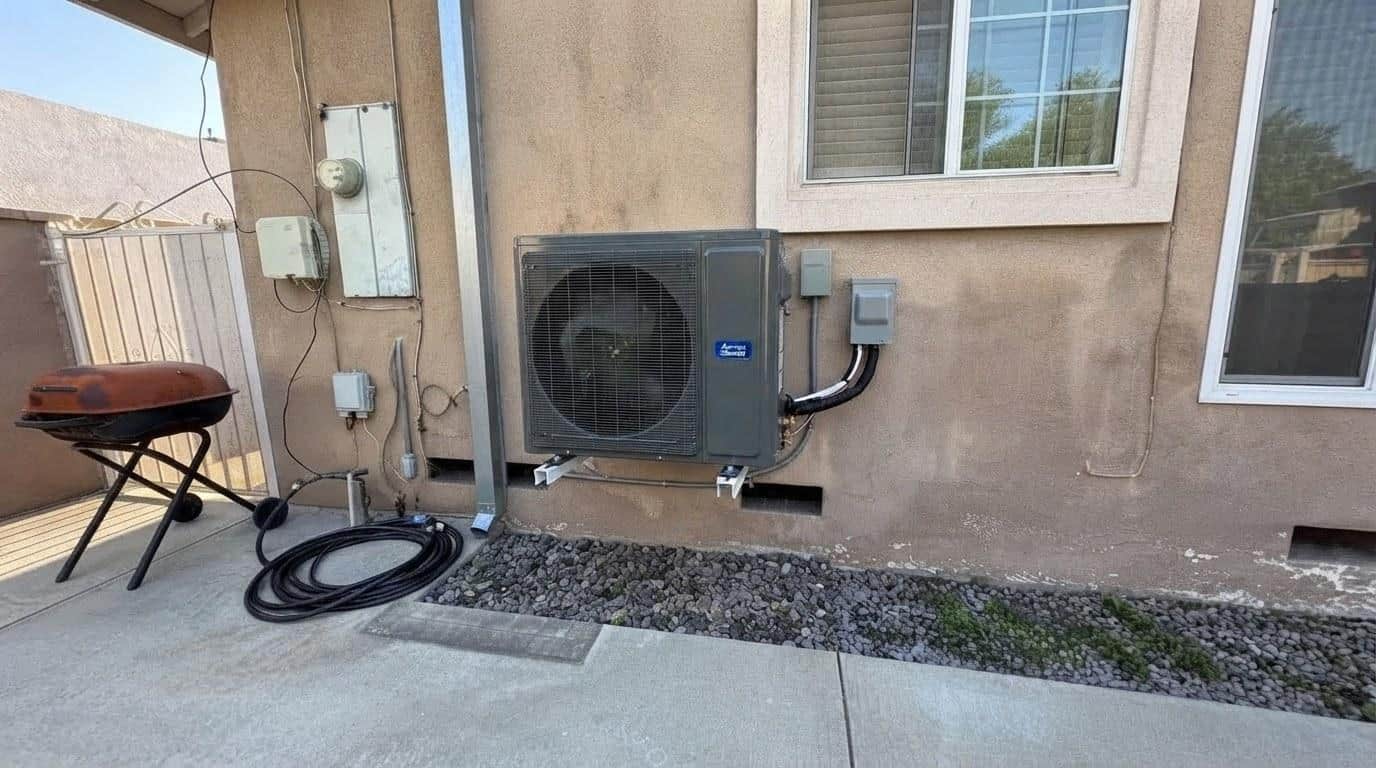
How to Verify HVAC Contractor License California: A Step-by-Step Process
The fastest way to know how to verify HVAC contractor license California is to use the free CSLB license check tool at cslb.ca.gov. The search takes under two minutes and shows you the contractor’s license status, classification, bond amount, and insurance information in real time. Here is exactly how to do it.
- Go to the CSLB license check page: Visit cslb.ca.gov/OnlineServices/CheckLicenseII and enter the contractor’s name or license number.
- Confirm the license is active: The status field must read “Active.” Expired, suspended, or revoked licenses are displayed in red. Do not proceed with any contractor whose license is not currently active.
- Check the license classification: Look for a C-20 (Warm-Air Heating, Ventilating and Air-Conditioning) classification. Some contractors also hold a C-38 (Refrigeration) or B (General Building) license depending on the scope of work. The classification must match the work you need done.
- Verify the bond: California requires licensed contractors to carry a $25,000 contractor’s bond as of 2024. The CSLB record shows the bonding company and whether the bond is current.
- Check for workers’ compensation: The record will indicate whether the contractor has workers’ compensation insurance on file. If the contractor has employees and this field is blank or shows a waiver, ask for a current certificate of insurance directly from their insurer.
- Review disciplinary history: Scroll to the bottom of the CSLB record to see any citations, complaints, or disciplinary actions. One or two resolved complaints on an otherwise clean record may be acceptable; a pattern of violations is a red flag.
After you run the CSLB check, ask the contractor to show you their pocket license card in person. The name, number, and classification on the card should match the online record exactly. Discrepancies between the card and the online database are a warning sign worth investigating before you sign anything.
What License Classifications Should a California HVAC Contractor Hold?
Most residential HVAC work in California requires a C-20 license, which covers the installation, service, and repair of warm-air heating, ventilating, and air-conditioning systems. Some jobs, such as commercial refrigeration or specialized ductwork, may require additional classifications. Understanding which license applies to your project helps you avoid hiring someone who is technically licensed but not authorized for your specific job.
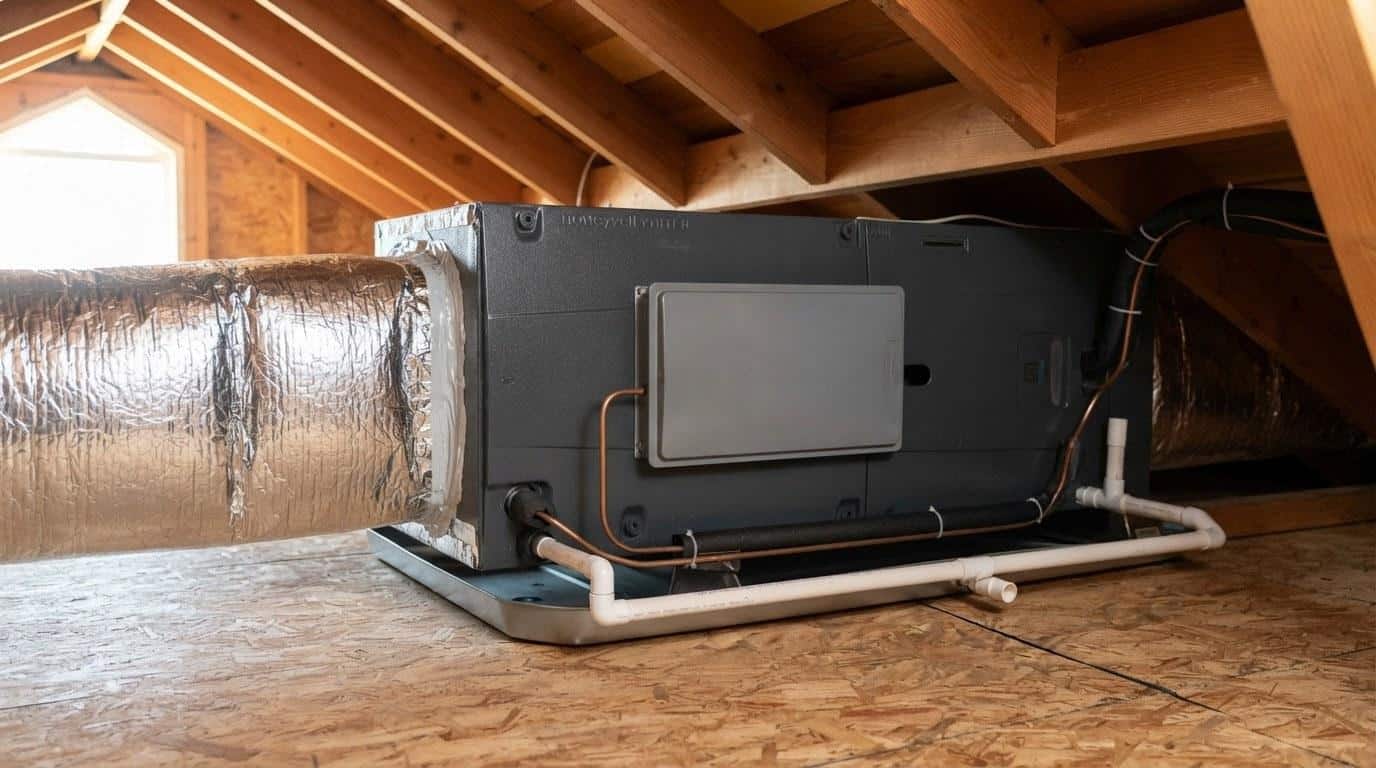
| License Classification | What It Covers | When You Need It |
|---|---|---|
| C-20 (Warm-Air Heating, Ventilating and Air-Conditioning) | Residential and commercial HVAC systems, furnaces, heat pumps, ductless mini-splits, ductwork | Any HVAC installation, repair, or replacement in your home |
| C-38 (Refrigeration) | Refrigeration equipment, commercial cooling systems | Commercial refrigeration or specialized cooling projects |
| B (General Building Contractor) | Broad construction scope; may subcontract HVAC work | Whole-home renovations where HVAC is one component among many |
| C-36 (Plumbing) | Gas piping, water heater connections | Water heater installation or gas line work paired with HVAC |
EPA refrigerant regulations under Section 608 of the Clean Air Act also require any technician who purchases or handles regulated refrigerants to hold an EPA Section 608 certification. This is separate from the CSLB license. Ask your contractor whether their technicians are Section 608 certified, especially if the job involves refrigerant recovery or recharge on an older R-22 system or a newer R-410A or R-32 unit.
Our technicians carry both their CSLB C-20 credentials and EPA Section 608 certification, and when we open up an older system we often find the refrigerant charge has drifted from the manufacturer’s specification, which is the kind of detail that only shows up if you measure it rather than assume it.
What Other Credentials and Insurance Should You Check?
Beyond the CSLB license, a qualified HVAC contractor should carry general liability insurance of at least $1,000,000 per occurrence and active workers’ compensation coverage for every employee on your job. Without these, you could be held financially responsible if a technician is injured on your property.
Here is a checklist of credentials to request before work begins:
- CSLB active license (C-20 or applicable classification): Verified online at cslb.ca.gov, not just from a business card.
- General liability insurance certificate: Ask for a current certificate of insurance naming you or your address as the certificate holder for this job.
- Workers’ compensation insurance: Required if the contractor has any employees. A sole proprietor with no employees may file a workers’ comp exemption, but confirm this in writing.
- EPA Section 608 certification: Required for any technician handling refrigerants. Ask to see the technician-level certification card.
- Manufacturer certifications or factory training: Brands like Carrier, Lennox, and Trane offer factory-authorized dealer programs. These are not legally required but signal ongoing technical training.
- ACCA membership or adherence to ACCA standards: The Air Conditioning Contractors of America sets industry standards for load calculations and installation quality. Contractors who follow ACCA Manual J for load calculations are more likely to size your system correctly.
- Permit-pulling history: Ask whether the contractor pulls permits for installations. In California, most HVAC replacements require a permit. A contractor who skips permits is cutting corners that will cost you later.
ENERGY STAR efficiency ratings are another useful reference point. When a contractor recommends a specific system, you can cross-reference the model on the ENERGY STAR certified products database to confirm it meets current efficiency thresholds. Systems that qualify for the Inflation Reduction Act federal tax credit must meet specific SEER2 or EER2 minimums, and your contractor should be able to confirm which models qualify before you commit to a purchase.
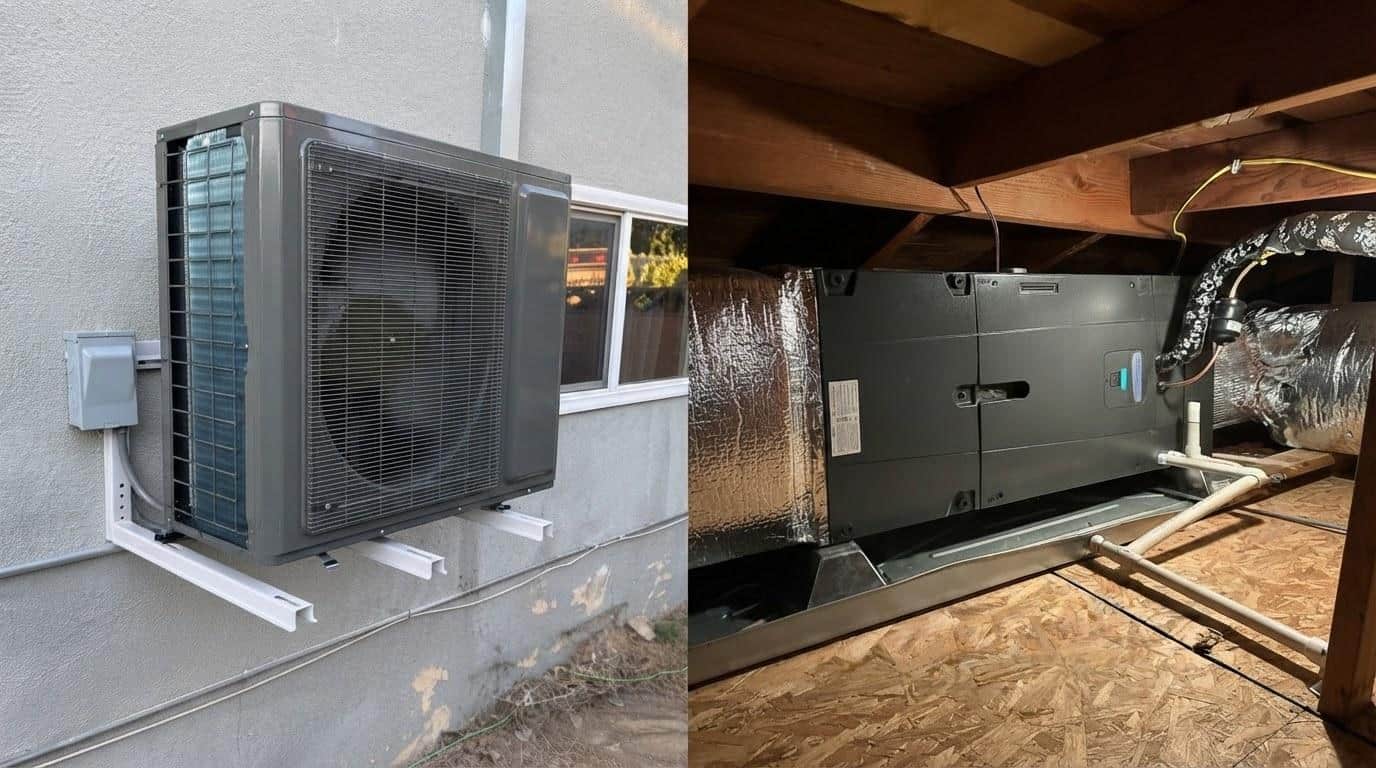
What Questions Should You Ask Before Hiring an HVAC Contractor?
Asking the right questions before signing a contract separates qualified contractors from those who will cause problems later. The answers also tell you a great deal about how the contractor runs their business. Use this list when you call or meet with any HVAC contractor in California.
- “Can I see your CSLB license number so I can verify it online?” A legitimate contractor will give you this immediately. Hesitation or a vague answer is a red flag.
- “Will you pull the permit for this job?” For any new installation or system replacement, the answer should be yes. Permit fees are typically included in a contractor’s bid or itemized separately, but the contractor should be the one who files.
- “How do you size the system?” The correct answer involves a Manual J load calculation, which accounts for your home’s square footage, insulation, window area, orientation, and local climate data. A contractor who quotes a system size based only on your old unit’s tonnage is guessing.
- “What SEER2 rating does the equipment you’re recommending carry?” California’s Title 24 building energy standards set minimum efficiency requirements for new installations. As of the 2022 Title 24 update, most residential split-system air conditioners must meet a minimum SEER2 of 15.2 in California’s climate zones. Your contractor should know this number and be able to confirm the equipment meets it.
- “Do your technicians hold EPA Section 608 certification?” This is a federal requirement, not optional. If the answer is uncertain, move on.
- “What does your written warranty cover, and for how long?” Understand the difference between the manufacturer’s equipment warranty and the contractor’s labor warranty. Both should be documented in writing before work begins.
- “Can you provide references from jobs similar to mine?” A contractor who has handled furnace repair, ductless mini-split installation, or ductwork replacement in homes like yours should be able to point to recent customers willing to speak about their experience.
If you are comparing multiple bids, be cautious of any quote that is dramatically lower than the others. Unusually low bids sometimes reflect unlicensed labor, undersized equipment, or plans to skip the permit. A bid that is 30 to 40 percent below the market range for your project deserves a detailed explanation before you accept it.
A bid that is 30 to 40 percent below the market range for your project deserves a detailed explanation before you accept it.
Common Mistakes Homeowners Make When Hiring HVAC Contractors
The most common mistake is skipping the CSLB license verification entirely and relying only on online reviews or a neighbor’s recommendation. Reviews and referrals are useful, but they do not confirm that a contractor’s license is currently active or that their insurance is valid.
Here are the mistakes that cost homeowners the most time and money:
- Paying a large deposit upfront: California law limits the deposit a contractor can require to 10 percent of the total job cost or $1,000, whichever is less. A contractor who demands 50 percent or full payment before starting is violating state law and is a high risk for abandoning the job.
- Signing a contract without a written scope of work: Verbal agreements are nearly impossible to enforce. Every contract should specify the equipment model and serial number, the work to be performed, the permit plan, the payment schedule, and the completion timeline.
- Assuming the lowest bid includes a permit: Ask explicitly. Many low bids exclude permit fees or plan to skip them altogether.
- Not checking the CSLB record for disciplinary history: A license can be active while also carrying unresolved complaints or past suspensions. Read the full record, not just the status field.
- Hiring a contractor whose license classification does not match the job: A C-38 refrigeration contractor is not automatically qualified to install a residential split-system air conditioner. The classification matters.
- Forgetting to ask about rebate eligibility: California’s TECH Clean California program and utility rebate programs offered through SoCalREN can reduce the cost of qualifying heat pump installations significantly. A knowledgeable contractor should flag these opportunities during the estimate, not after the equipment has already been ordered.
When we review older ductwork during an estimate, we frequently find sections that have separated at the joints or collapsed in the attic, which is invisible from inside the home but responsible for a large share of the system’s inefficiency. A contractor who only looks at the air handler and condenser without inspecting the duct system is giving you an incomplete picture of what the job actually requires.
Ready to Work With a Licensed, Insured HVAC Contractor?
Shalom Heating & Air is Licensed by the California Contractors State License Board (CSLB) and carries full general liability and workers’ compensation insurance. Every installation and replacement job includes proper permit filing and follows California’s Title 24 building energy standards.
Whether you need air conditioning repair, furnace service, a new heat pump, ductless mini-split installation, or a full HVAC system replacement, the process starts with an honest assessment and a written quote. Projects in this market typically range from a few hundred dollars for a repair to several thousand for a full system installation, depending on equipment size, efficiency rating, ductwork condition, and permit requirements. Your actual cost depends on the specifics of your home and the scope of work involved.
Schedule your service with Shalom Heating & Air, serving homeowners across Southern California. Call (714) 886-2021 to speak with a team member and get a written quote before any work begins.
Explore our full range of HVAC services across Southern California.
Frequently Asked Questions
How do I verify an HVAC contractor's license in California?
Go to cslb.ca.gov and use the free license check tool. Enter the contractor's name or license number and confirm the status reads "Active," the classification includes C-20 for HVAC work, and the bond is current. The whole process takes about two minutes and is the single most important step before hiring anyone.
What license does an HVAC contractor need in California?
Most residential HVAC work requires a C-20 (Warm-Air Heating, Ventilating and Air-Conditioning) license issued by the California Contractors State License Board. Some jobs also require EPA Section 608 certification for technicians who handle refrigerants. Always confirm the classification matches the specific work you need done.
Can an unlicensed contractor do HVAC work in California?
No. California law requires a valid CSLB license for any HVAC job valued at $500 or more in combined labor and materials. Work done by an unlicensed contractor typically cannot pass a city inspection, may void your homeowner's insurance, and leaves you with no legal recourse if the work is faulty.
How much can a contractor legally ask for as a deposit in California?
California law caps the upfront deposit at 10 percent of the total contract price or $1,000, whichever is less. Any contractor who demands a larger deposit before starting work is violating state law, which is a serious warning sign. Always get a written contract with a payment schedule before handing over any money.
Does a new AC installation in California require a permit?
Yes, in most California cities and counties a new air conditioner or furnace installation requires a building permit. Your licensed contractor should pull the permit on your behalf as part of the job. Skipping the permit can create problems when you sell your home or file an insurance claim, so always confirm the permit is included in your written contract.