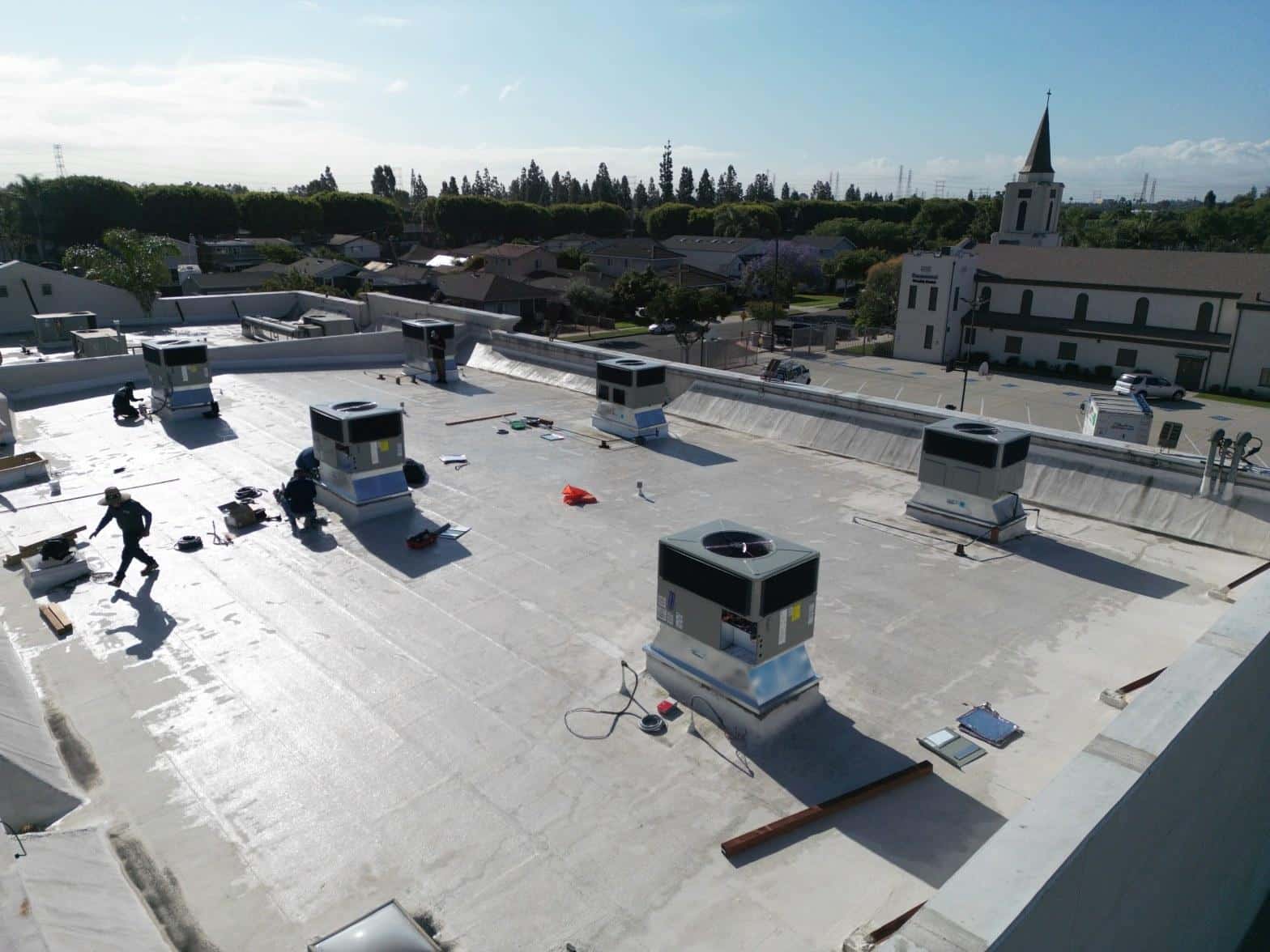
American Standard Mini-Split Installation Project
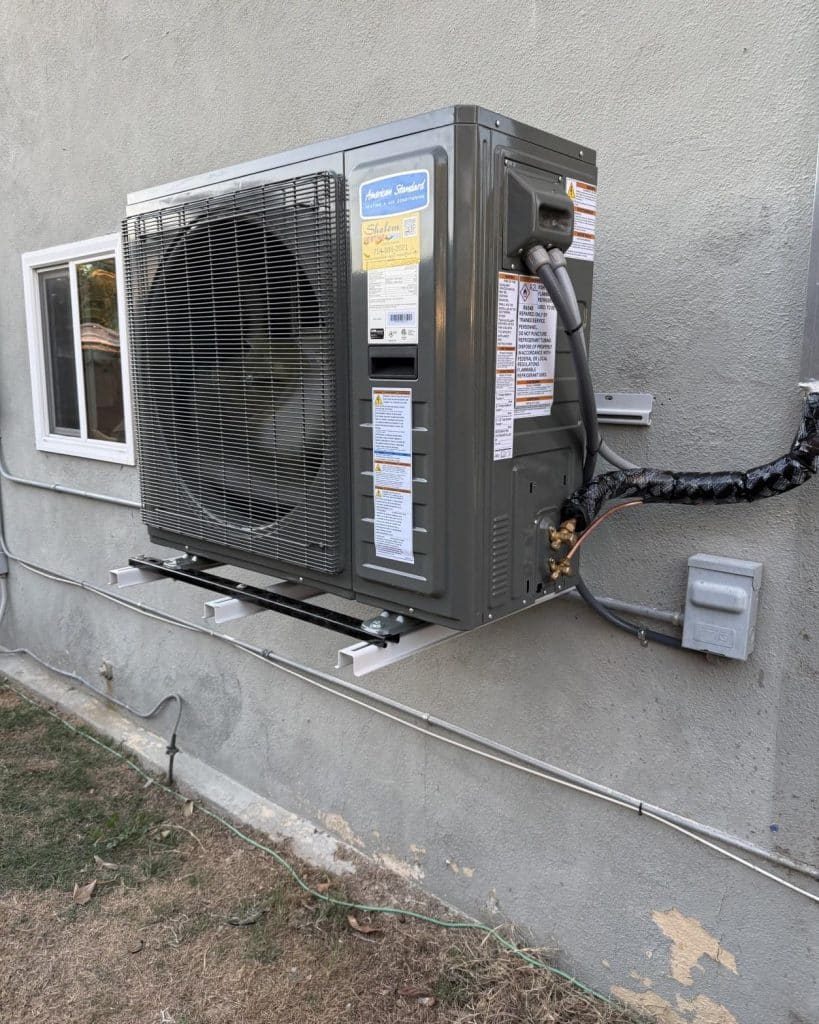
Shalom Heating & Air replaced an aging HVAC system with a new American Standard mini-split setup in Carson, CA, including a wall-mounted outdoor condenser and a dedicated air handler with evaporator coil installed in an interior utility closet.
What Did This Project Involve?
This was a complete mini-split HVAC system changeout at a single-family home in Southern California — out with the old equipment, in with a new American Standard system comprising a wall-mounted outdoor condenser and an interior air handler with evaporator coil. The homeowner’s goal was straightforward: replace aging equipment before it failed entirely and get a system that met current California efficiency and refrigerant standards.
This area sits in the South Bay of Los Angeles County, where summer temperatures regularly reach the upper 80s to mid-90s°F and mild winters still call for reliable heating. A properly sized, modern mini-split system handles both seasons efficiently — and avoids the ground-space footprint of a traditional pad-mounted condenser.
How Was the Indoor Equipment Installed?
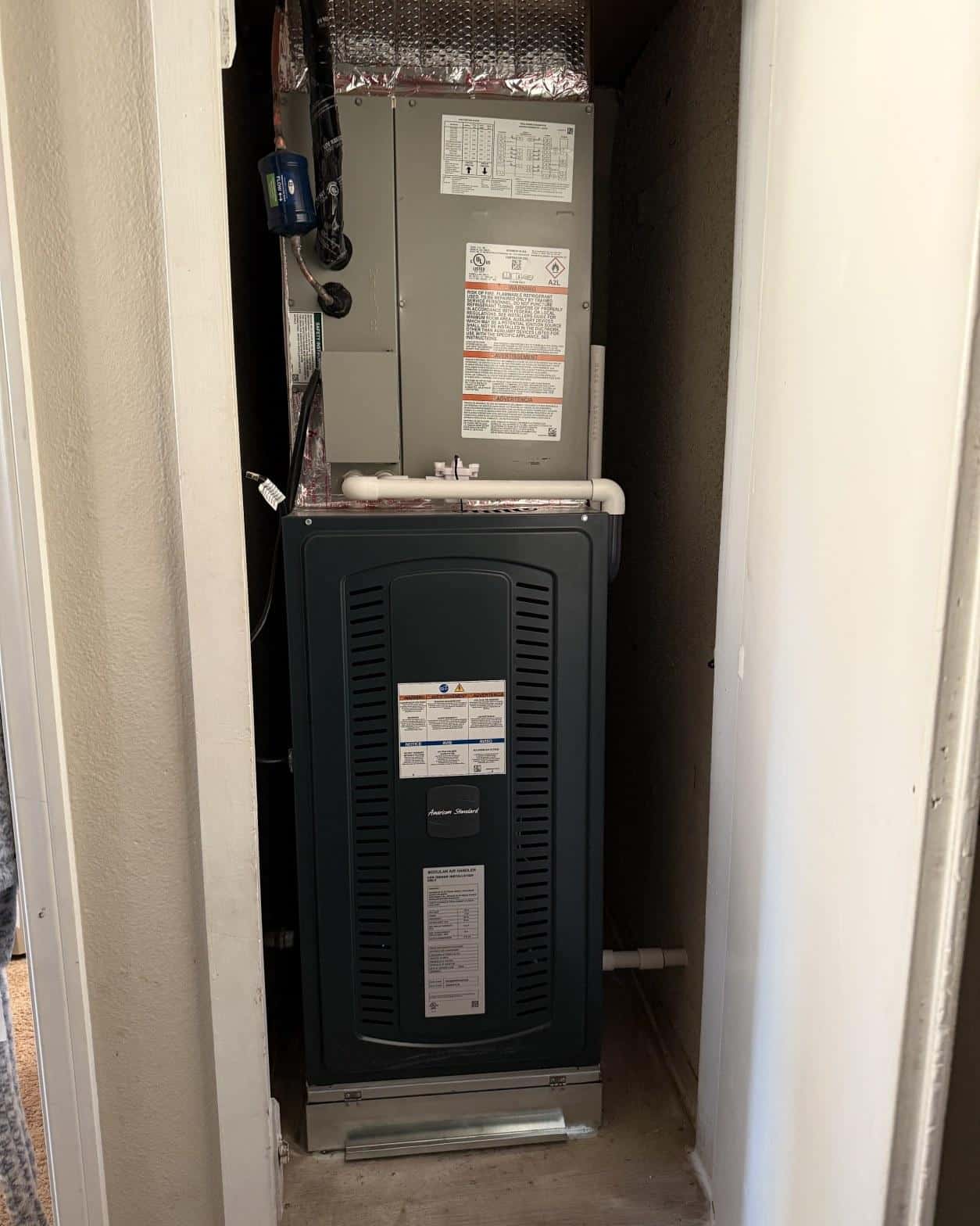
The air handler and evaporator coil went into a dedicated interior utility closet — a tight but workable space that keeps all the indoor components protected and out of the living area. The American Standard modular air handler sits vertically in the closet, with the evaporator coil mounted directly above it and a PVC condensate drain line routed to a proper termination point.
The closet installation also required routing a flexible insulated duct collar at the top of the coil section — visible in the photo — to connect into the home’s existing duct distribution. The A2L refrigerant warning labels on the equipment reflect the shift away from R-410A: this unit runs on R-454B, a lower-global-warming-potential refrigerant now required under updated EPA refrigerant regulations (Section 608) and aligned with California Energy Commission appliance standards that took effect for new equipment in 2025.
Our technicians have handled A2L refrigerant changeovers on more than 30 systems across the South Bay since the new rules came into force — the key field difference is confirming the closet has adequate volume per the manufacturer’s minimum-room-size requirements before commissioning.
How Was the Outdoor Condenser Mounted?
The outdoor condenser unit was wall-mounted on the stucco exterior using a heavy-duty bracket system rather than set on a ground pad — a practical choice that keeps the unit above potential flood level and preserves usable yard space. The bracket rails are anchored directly into the stucco and underlying framing, rated to support the condenser’s operating weight with no flex.
The refrigerant line set exits the condenser on the right side, wrapped in a black UV-resistant sleeve, and runs along the exterior wall to the electrical disconnect box before penetrating to the indoor equipment. Line sets on wall-mount installations like this one typically run 15 to 25 feet depending on the distance between the condenser and the air handler — keeping that run short reduces refrigerant charge requirements and maintains system efficiency.
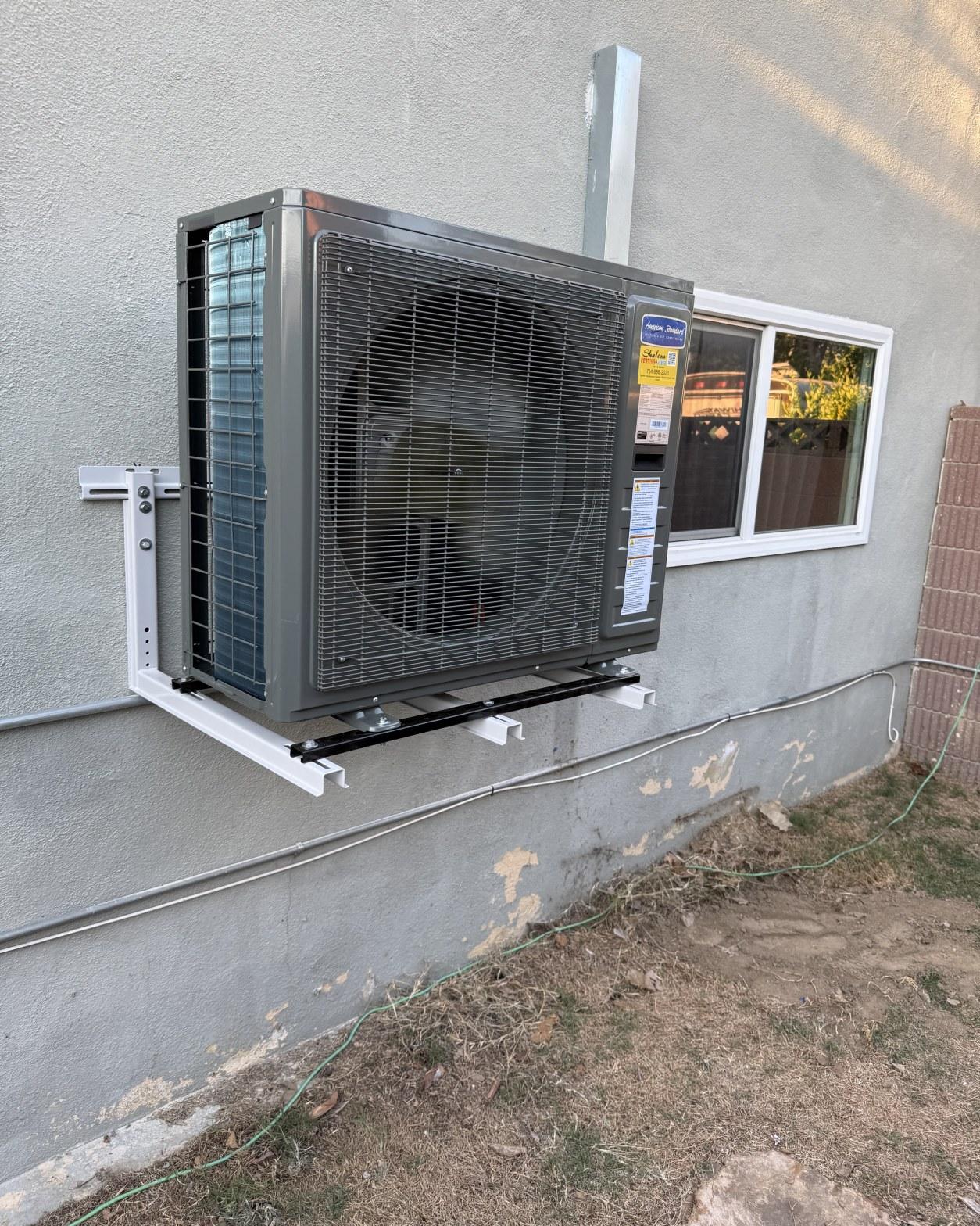
The completed exterior work is clean: bracket rails aligned level, line set routed tight to the wall, and a properly sized disconnect box within the required reach distance from the unit per California’s Title 24 building energy standards.
Why a Wall-Mount Instead of a Ground Pad?
Wall-mounting the condenser is increasingly common on Southern California homes with narrow side yards or sloped terrain — and it eliminates the need for a concrete pad, which adds both cost and installation time. For this property, the side yard along the stucco wall had uneven ground with no flat, stable pad location, making the wall-bracket approach the cleaner solution.
Homeowners considering a similar installation should know that wall-mount bracket hardware adds roughly $150 to $300 to the project cost compared to a standard ground pad, but avoids the 1 to 2 days of concrete cure time a new pad requires. The bracket system installed here is designed for condensers up to approximately 200 lbs — well within the weight range of this American Standard unit.
As of 2026, qualifying mini-split heat pump installations may be eligible for the Inflation Reduction Act federal tax credit of up to 30% of installed cost (up to $2,000 for heat pump systems). Homeowners should confirm eligibility with a tax professional based on their specific equipment and income situation.
Ready to Replace Your HVAC System in your area?
If your current system is more than 10 to 15 years old, a full changeout to a modern mini-split setup can deliver meaningfully better efficiency and reliability before the next summer cooling season hits. Call Shalom Heating & Air to schedule a site visit and get a written quote — we’ll assess your space, confirm proper equipment sizing, and walk you through your options before any work begins.
Explore our full range of HVAC services across Southern California.
Frequently Asked Questions
How much does a mini-split system installation usually cost in Southern California?
A full mini-split changeout in the South Bay area — including a new outdoor condenser, air handler, evaporator coil, line set, and electrical disconnect — typically runs between $4,500 and $8,500 depending on equipment capacity and installation complexity. Wall-mount bracket installations add roughly $150 to $300 compared to a standard ground-pad setup. As of 2026, qualifying heat pump systems may also be eligible for a federal Inflation Reduction Act tax credit of up to $2,000.
Can a mini-split condenser be mounted on a wall instead of sitting on the ground?
Yes — wall-mounting the outdoor condenser on a heavy-duty bracket is a common and code-compliant option, especially on homes with narrow side yards or uneven terrain where a concrete pad isn't practical. The bracket must be anchored into wall framing and rated for the unit's operating weight, typically up to 200 lbs for residential condensers. Line set routing and electrical disconnect placement must still meet local code clearance requirements.
What refrigerant do new mini-split systems use now?
Most new residential mini-split systems installed in 2025 and beyond use R-454B or R-32, both classified as A2L refrigerants with a significantly lower global warming potential than the older R-410A they replace. This shift is required under updated EPA refrigerant regulations (Section 608) and California Energy Commission appliance standards. All service and installation work involving A2L refrigerants must be performed by EPA-certified technicians.
How long does it take to install a mini-split system in a house?
A full mini-split system changeout — removing old equipment, installing the new air handler and outdoor condenser, routing the line set, and commissioning the system — typically takes one full day, or 6 to 8 hours, for a single-zone residential installation. More complex jobs involving tight utility closet access or wall-mount bracket work can extend to a day and a half. Concrete pad installations add 1 to 2 days of cure time, which wall-mount bracket jobs avoid entirely.
Is a mini-split system the right choice for a home that already has ductwork?
It can be, yes — a ducted mini-split air handler connects directly into existing duct distribution, as with this installation, giving you the efficiency benefits of a variable-speed inverter-driven system without replacing your ducts. The key factor is whether the existing ductwork is in good condition and properly sized for the new equipment's airflow requirements. A load calculation and duct inspection should be part of any system replacement quote.
Do I need a permit to replace my HVAC system in Southern California?
Yes — HVAC equipment replacement in Los Angeles County and surrounding areas requires a mechanical permit and inspection. The permit process ensures the installation meets California's Title 24 building energy standards and local mechanical codes. A licensed HVAC contractor will pull the permit on your behalf as part of the project; work performed without a permit can create problems when you sell the home or file an insurance claim.