
Newport Beach Heat Wave AC Efficiency: What It Really Costs
What Running Your Central AC During Newport Beach Heat Waves Actually Costs
When temperatures climb past 95°F in Newport Beach during summer heat waves, your central air conditioner becomes both a necessity and a significant expense. Electricity in Newport Beach costs approximately 36 cents per kilowatt-hour as of February 2026—roughly 80% higher than the national average. For a typical 3-ton central AC unit running 10 hours daily during extreme heat, that translates to monthly cooling costs ranging from $100 to $250, depending on your system’s efficiency rating and usage patterns. These costs vary dramatically based on your home’s insulation, your thermostat strategy, and whether your 15-year-old system is struggling with a SEER rating below 13 or you’ve invested in a modern 18-SEER variable-speed unit. Understanding what drives these costs—and what you can control—matters more in Newport Beach’s high-value housing market (median home value: $2,300,000) where HVAC efficiency directly impacts both comfort and property operating expenses.
📋 In This Guide
💰 Monthly Heat Wave Cooling Cost Ranges
- Older system (10-12 SEER, 3-ton): $180–$250/month during peak heat
- Mid-efficiency (14-16 SEER, 3-ton): $130–$180/month
- High-efficiency (18+ SEER, variable-speed): $100–$140/month
- Single thermostat mistake (setting too low): +$30–$60/month
- Emergency repair during heat wave: $150–$500 (plus wait time)
Smart Thermostat Settings That Balance Comfort and Efficiency
The most common and expensive mistake Newport Beach homeowners make during heat waves is setting their thermostat to 72°F and expecting their central air conditioner to maintain that temperature when it’s 100°F outside. Your system isn’t designed for a 28-degree temperature differential—it’s engineered for approximately 15-20 degrees. Each degree you set above 72°F can save up to 3% on your cooling costs, which means the difference between a 72°F and 78°F setting could reduce your monthly bill by 15-18%.
For Newport Beach heat waves, the U.S. Department of Energy recommends 78°F when you’re home, 82°F while sleeping (ceiling fans help significantly), and 85°F when you’re away for more than four hours. These aren’t arbitrary numbers—they reflect the balance point where your system maintains adequate cooling without constant cycling that wears components and drives up electricity costs at Newport Beach’s premium rates. If 78°F feels uncomfortably warm initially, raise your thermostat by one degree every two days rather than making a sudden jump. Your body acclimates, and you avoid the shock of drastically different indoor temperatures.
Coastal versus inland Newport Beach microclimates matter enormously. Homes on Balboa Peninsula and Corona del Mar benefit from marine layer cooling overnight and steady ocean breezes, often allowing you to raise daytime settings to 80°F without discomfort. Properties in Newport Coast and Eastbluff face more extreme inland temperatures during Santa Ana wind events, when hot, dry air pushes toward the coast and clashes with the marine layer. During these conditions, your central AC works significantly harder, and maintaining realistic temperature expectations prevents system overwork that leads to mid-heat-wave breakdowns.
Immediate Actions That Reduce Heat Wave Cooling Loads
Beyond thermostat settings, several zero-cost or low-cost strategies reduce the cooling burden on your central air conditioner during extreme Newport Beach heat. Closing blinds and curtains on south- and west-facing windows during peak sun hours (11 AM to 6 PM) blocks solar heat gain that can raise indoor temperatures by 10-15 degrees in sun-drenched rooms. Blackout curtains or cellular shades provide the best performance, but even standard blinds make a measurable difference.
Ceiling fans create a wind-chill effect that makes rooms feel approximately 4°F cooler without lowering the actual temperature. This allows you to raise your thermostat setting while maintaining the same comfort level. Run fans counterclockwise during summer to push air downward. Turn them off when you leave the room—fans cool people, not spaces, and running them in empty rooms wastes electricity without benefit.
Avoid heat-generating activities during the hottest part of the day. Running your oven, dishwasher, or dryer between 2 PM and 6 PM adds significant heat to your home precisely when your AC is already struggling with peak outdoor temperatures. Shift these tasks to early morning or after 8 PM when both outdoor temperatures and electricity rates (if you’re on time-of-use pricing) drop. Even small appliances like computers and large-screen TVs generate surprising amounts of heat—turning off unused electronics reduces both cooling load and direct electricity consumption.
Outdoor Unit Maintenance During Heat Waves
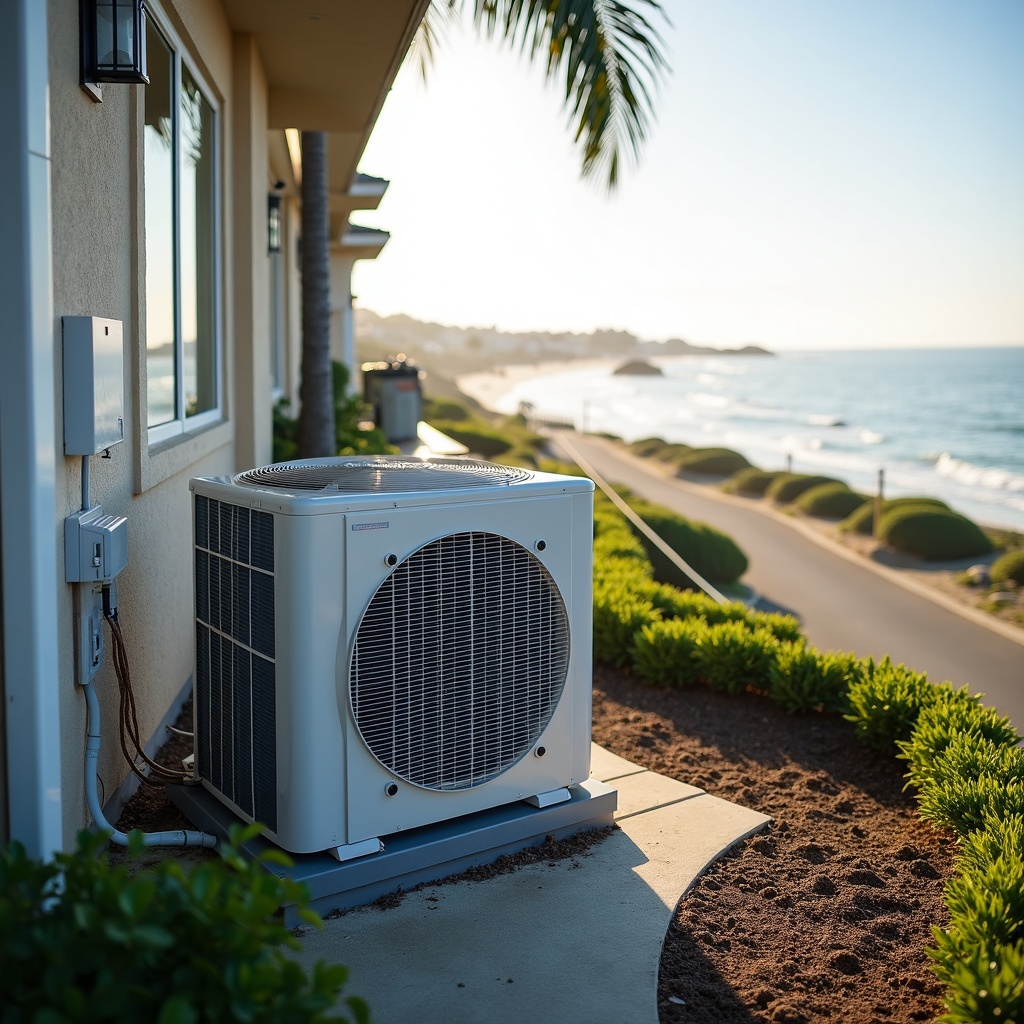
Your central AC’s outdoor condenser unit needs unobstructed airflow to reject heat efficiently. Walk outside and inspect the unit: vegetation should be trimmed back at least 18-24 inches on all sides. In Newport Beach’s coastal environment, salt air can corrode condenser coils, requiring regular rinsing to remove salt buildup that reduces heat transfer efficiency. A gentle spray with a garden hose (power off the unit first at the disconnect box) once monthly during summer helps maintain performance.
Check that the condenser fan spins freely and the unit isn’t making grinding or screeching noises—these indicate bearing wear or motor problems that will worsen under heat wave stress. If your outdoor unit is in direct afternoon sun, consider installing a shade structure (maintaining proper clearances per Newport Beach building codes). Shading the condenser can improve efficiency by 5-10%, though professional installation ensures you don’t block airflow or violate local HVAC installation requirements.
When Your Central AC Struggles: Warning Signs and Response Strategies
Even with perfect thermostat management and maintenance, some heat wave conditions exceed your system’s capacity or reveal underlying problems. Recognizing the difference between normal limitations and failing equipment prevents both discomfort and expensive emergency repairs.
| System Behavior | Normal Heat Wave Response | Problem Requiring Service |
|---|---|---|
| Runtime | Runs 70-80% of the time on 100°F+ days | Runs continuously without cycling off or won’t start |
| Temperature Achievement | Maintains within 3-4°F of setpoint during extreme heat | Can’t reach within 8°F of setpoint or blows warm air |
| Airflow | Strong, consistent airflow from all vents | Weak airflow, ice on indoor coil, or some vents not working |
| Sounds | Normal compressor hum and fan noise | Grinding, screeching, clicking, or hissing sounds |
| Energy Bills | 20-40% higher during heat wave weeks | Sudden doubling of costs with same usage pattern |
If your system can’t maintain temperatures within a reasonable range (78-82°F) when outdoor temperatures hit 95-100°F, the problem might be undersized equipment, refrigerant leaks, or failing components rather than normal heat wave limitations. An experienced AC repair specialist in Newport Beach can diagnose whether you’re experiencing capacity issues or mechanical failure.
Strategic Runtime Management
If you’re on time-of-use electricity pricing, peak rates typically apply weekdays from 4-9 PM when electricity costs the most. Pre-cool your home starting at 1 PM by setting the thermostat to 76°F, then raise it to 80-82°F during the 4-9 PM peak period. Your home’s thermal mass (especially in well-insulated Newport Beach properties) maintains reasonable comfort for several hours without heavy AC usage during the most expensive electricity window. Resume normal cooling after 9 PM when rates drop.
This strategy works best for homes with good insulation and proper air sealing. Older Newport Beach homes built before modern energy codes may lack adequate attic insulation or have leaky ductwork that allows pre-cooled air to escape quickly, reducing the effectiveness of strategic runtime management.
Long-Term Efficiency Improvements for Heat Wave Performance
While behavioral changes and maintenance provide immediate benefits, some heat wave struggles indicate the need for equipment upgrades or home improvements. Newport Beach’s higher-income homeowner base (median household income: $145,000) often justifies investments that improve both comfort and property value.
Systems older than 12-15 years typically operate at 10-12 SEER efficiency, compared to modern units reaching 18-20+ SEER. Older units with SEER ratings of 8-10 can cost an extra $50-$100 per month compared to newer, more efficient models. Variable-speed systems adjust compressor output to match cooling demand rather than cycling on and off at full capacity, providing superior humidity control and temperature consistency crucial during Newport Beach’s humid coastal heat waves.
Ductwork inspection reveals hidden efficiency losses in many Newport Beach homes. Leaky ducts can waste 20-30% of cooled air before it reaches living spaces, forcing your system to run longer to achieve the same comfort. Professional duct sealing and insulation, especially in unconditioned attic spaces where temperatures can exceed 140°F during heat waves, dramatically improves system performance. Any reputable hvac contractor in Newport Beach should include duct assessment as part of system evaluation.
Smart thermostats with learning algorithms and geofencing capabilities automate many efficiency strategies discussed here. They adjust temperatures based on your schedule, outdoor conditions, and even electricity pricing, making optimal decisions without requiring constant attention. Models with humidity sensors provide better comfort control in Newport Beach’s coastal climate where humidity levels significantly impact perceived temperature.
When to Call for Professional Service
Don’t wait until the middle of a 100°F heat wave to address struggling AC performance. Schedule service at the first signs of reduced efficiency—weak airflow, longer run times to reach setpoint, or unusual noises. Emergency service during peak heat waves costs more due to high demand and limited contractor availability, and you may wait days for repair while temperatures remain extreme.
If your central air conditioner is struggling to keep your Newport Beach home comfortable despite following all efficiency strategies, or if you’re concerned about equipment age and reliability heading into summer, Shalom Heating & Air provides expert diagnostics and comprehensive HVAC services throughout Newport Beach. Our technicians understand local climate challenges and can recommend cost-effective solutions matched to your home’s specific needs. Call (714) 886-2021 to schedule an efficiency evaluation before the next heat wave tests your system’s limits.
