Indoor Air Quality Tips: A Complete Home Maintenance Guide
Poor indoor air quality affects your health and comfort year-round. This guide covers the best indoor air quality tips for California homeowners, from filter changes to professional HVAC inspections.
Why Does Indoor Air Quality Matter So Much in California Homes?
Indoor air can be 2 to 5 times more polluted than outdoor air, according to the U.S. Environmental Protection Agency. In California, wildfire smoke seasons, marine-layer humidity, and nearly year-round air conditioning use create conditions that trap pollutants indoors faster than in most other states. When your HVAC system runs for 8 to 10 months of the year, whatever is in your ducts and filters circulates through every room in your home.
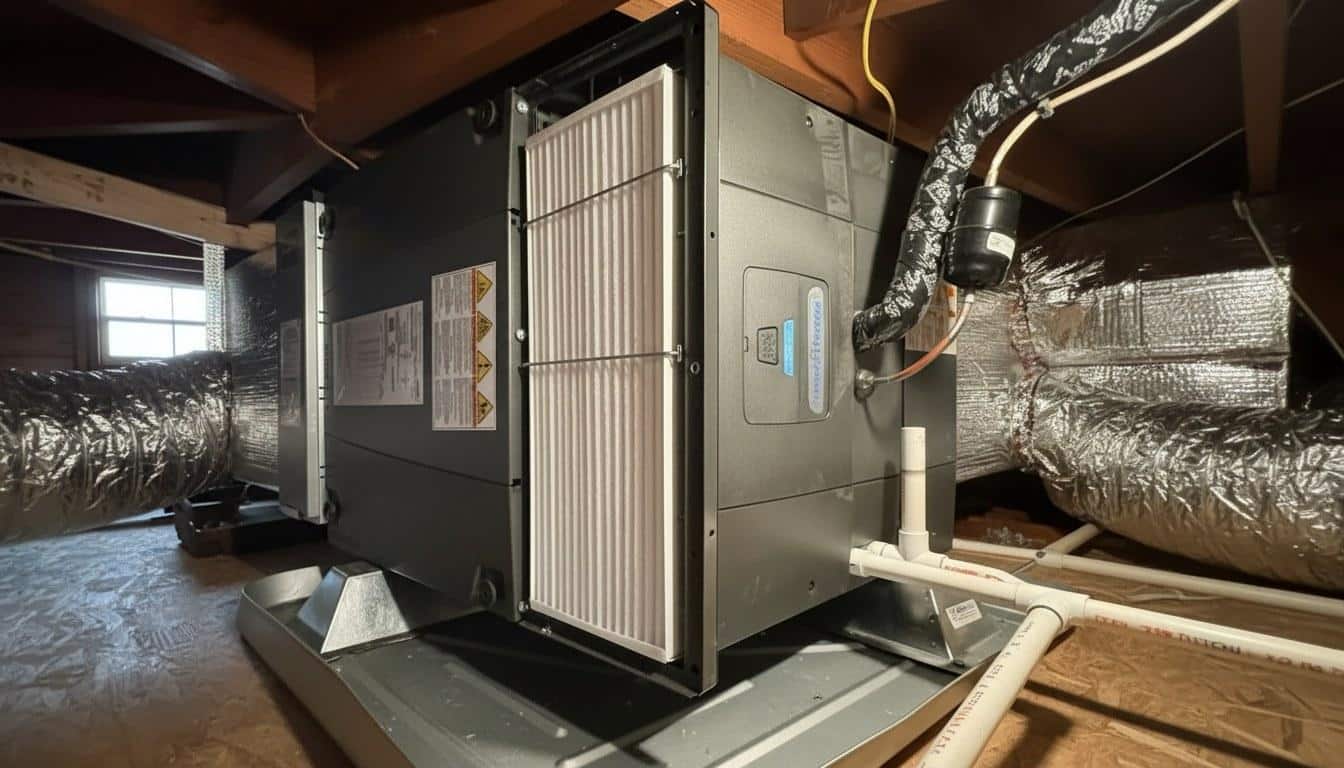
Indoor air can be 2 to 5 times more polluted than outdoor air, and California's nearly year-round HVAC use means whatever is in your ducts circulates through every room in your home.
Poor indoor air quality is linked to headaches, fatigue, allergy flare-ups, and respiratory irritation. Children, older adults, and anyone with asthma or heart conditions feel the effects most sharply. The good news is that most IAQ problems are preventable with consistent maintenance habits and the right equipment choices.
California’s Title 24 building energy standards require homes to meet minimum ventilation rates, but meeting the code minimum does not automatically mean your air is clean. Tight, energy-efficient homes seal in moisture, VOCs from furniture and cleaning products, and biological contaminants like mold spores. Active maintenance is the only reliable fix.
What Are the Most Common Indoor Air Pollutants?
The five pollutants found most often in Southern California homes are particulate matter, mold spores, volatile organic compounds (VOCs), carbon monoxide, and excess humidity. Each one has a different source and requires a different control strategy.
- Particulate matter (PM2.5 and PM10): Tiny particles from wildfire smoke, outdoor traffic, and cooking that pass through low-grade filters and settle deep in the lungs. During California’s fire season, outdoor PM2.5 levels can spike above 150 micrograms per cubic meter — levels that infiltrate homes within hours.
- Mold spores: Coastal and inland valley homes with humidity above 60% are especially prone to mold growth inside ducts, around coils, and in bathrooms. Mold spores become airborne and recirculate through HVAC systems.
- Volatile organic compounds (VOCs): Off-gassing from new flooring, paint, adhesives, and cleaning sprays. Concentrations are typically highest in the first 6 months after a renovation.
- Carbon monoxide (CO): Produced by gas furnaces, water heaters, and attached garages. Even low chronic CO levels cause fatigue and cognitive fog before reaching dangerous thresholds.
- Excess humidity: Relative humidity above 50% accelerates mold, dust mite populations, and bacterial growth. Below 30%, dry air irritates mucous membranes and increases susceptibility to airborne viruses.
Understanding which pollutants are present in your home is the first step toward fixing them. The sections below walk through the practical indoor air quality tips that address each one.
What Are the Best Indoor Air Quality Tips You Can Do Yourself?
The single highest-impact DIY action is replacing your HVAC filter on schedule — every 1 to 3 months depending on filter grade and household conditions. A clogged or low-efficiency filter lets particulates bypass the media and re-enter your living spaces. Pair that habit with the steps below for a comprehensive approach.
Choose the Right Filter
Filters are rated by MERV (Minimum Efficiency Reporting Value). A MERV 8 filter catches large dust and pollen. A MERV 11 or 13 filter captures finer particles including mold spores and some smoke particles. The ENERGY STAR program recommends at least MERV 11 for households with allergy or asthma sufferers. Avoid going above MERV 13 without confirming your system’s blower can handle the added resistance — too dense a filter can reduce airflow and strain the motor.
Control Humidity Actively
Keep indoor relative humidity between 30% and 50%. In summer, your central AC removes moisture as a byproduct of cooling. In winter, or in homes that rarely run AC, a standalone dehumidifier rated for your square footage (typically 30 to 70 pints per day for a 1,000 to 2,500 sq ft home) handles the job. In drier inland areas, a whole-home humidifier attached to the furnace prevents the air from dropping below 30% during cooler months.
Ventilate Strategically
Open windows during low-pollution morning hours when outdoor air quality is good. Check the AirNow.gov daily AQI for your area before ventilating — on days with an AQI above 100, keep windows closed and rely on filtered recirculation. Run kitchen and bathroom exhaust fans for at least 15 minutes after cooking or showering to remove moisture and combustion byproducts before they migrate through the home.
Reduce VOC Sources
Choose low-VOC or zero-VOC paints and adhesives. After any renovation, ventilate aggressively for 48 to 72 hours. Store cleaning products, solvents, and pesticides in a detached garage or sealed cabinet rather than inside living areas. Avoid synthetic air fresheners — they add VOCs without removing any pollutants.
Install CO and Smoke Detectors
California law requires carbon monoxide detectors in all single-family homes with an attached garage or fossil-fuel appliance. Place CO detectors within 15 feet of each sleeping area and test them monthly. Replace units every 5 to 7 years — the electrochemical sensors degrade over time even if the alarm still sounds when tested.
Keep Ducts and Vents Clear
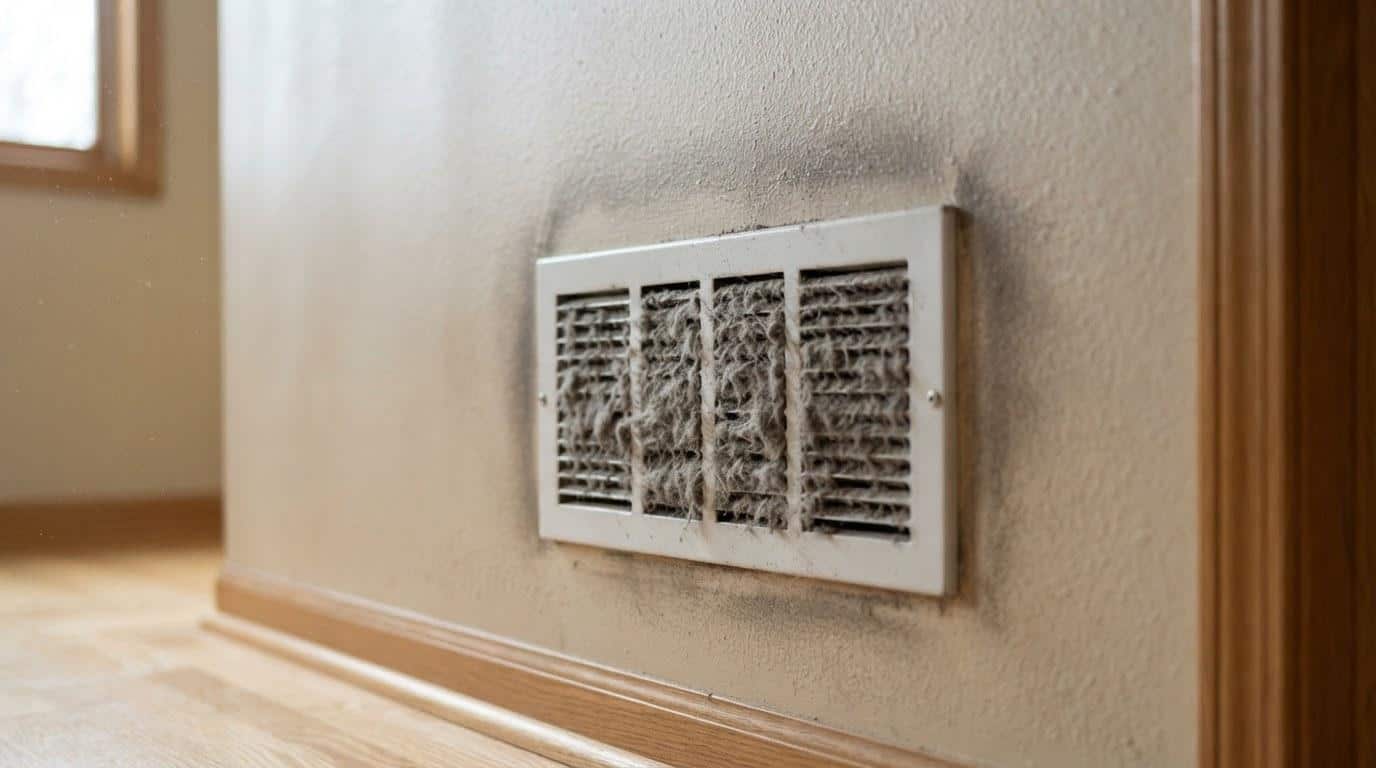
Vacuum supply and return vents every 3 months to prevent dust buildup on the grilles. Make sure furniture and rugs are not blocking return air vents — restricted return airflow causes the system to pull air through gaps in walls and attics, bypassing the filter entirely. Our technicians find blocked return vents in roughly 1 out of every 4 maintenance calls, and it is one of the easiest problems to fix once identified.
What Should You Do Each Season to Protect Your Indoor Air?
IAQ maintenance follows a seasonal rhythm tied to California’s climate — fire season in late summer and fall, marine-layer humidity in spring and early summer, and heating season in winter. Spreading tasks across the year prevents any single season from creating a backlog of neglected maintenance.
Spring (March to May)
- Replace the HVAC filter before cooling season begins.
- Schedule a professional AC tune-up to clean evaporator coils and check refrigerant — dirty coils grow mold and reduce dehumidification efficiency.
- Check bathroom and kitchen exhaust fan operation; clean grilles and blades.
- Test CO detectors and replace batteries.
- Inspect crawl spaces and attic insulation for moisture damage from winter rains.
Summer (June to August)
- Check and replace the AC filter monthly during peak-use months.
- Monitor indoor humidity with an inexpensive hygrometer; adjust AC settings or run a supplemental dehumidifier if humidity climbs above 55%.
- Keep windows closed on high-AQI days and rely on filtered recirculation mode.
- Clean the condensate drain line to prevent mold growth and overflow.
Fall (September to November)
- This is California’s peak wildfire smoke season. Upgrade to a MERV 13 filter or add a portable HEPA air purifier (rated for your room’s square footage) during active smoke events.
- Schedule a furnace inspection before turning on heat — combustion byproducts from a cracked heat exchanger are a serious CO risk.
- Seal window and door gaps to reduce smoke infiltration; even a 1/8-inch gap under a door can allow significant particle entry.
Winter (December to February)
- Replace the furnace filter at the start of heating season and again mid-season if the system runs daily.
- Run a humidifier if indoor humidity drops below 30% — dry air aggravates respiratory symptoms.
- Check gas appliance venting (furnace, water heater) for blockages from debris or bird nests.
- Ventilate briefly on mild days to flush accumulated VOCs from holiday decorations, candles, and cooking.
| Task | Frequency | DIY or Pro? |
|---|---|---|
| Replace HVAC filter (MERV 8-11) | Every 1-3 months | DIY |
| Replace HVAC filter (MERV 13, high-use) | Monthly during fire season | DIY |
| Clean supply and return vent grilles | Every 3 months | DIY |
| Test CO and smoke detectors | Monthly | DIY |
| Clean condensate drain line | Once per cooling season | DIY or Pro |
| Evaporator and condenser coil cleaning | Annually | Pro |
| Duct inspection and cleaning | Every 3-5 years or after renovation | Pro |
| Furnace heat exchanger inspection | Annually before heating season | Pro |
| Whole-home humidity check and calibration | Seasonally | Pro |
| Indoor air quality test (VOCs, CO, particles) | Every 2-3 years or after renovation | Pro |
How Do You Measure Indoor Air Quality at Home?
You can get a useful baseline reading with a consumer IAQ monitor in the $80 to $250 range that tracks PM2.5, VOCs, CO2, temperature, and humidity simultaneously. For mold, radon, or combustion gas testing, professional-grade instruments or certified lab kits are more reliable.
Consumer IAQ Monitors
Devices like those from IQAir, Airthings, or Awair display real-time readings for particulate matter and VOCs. Place the monitor in the room where you spend the most time — typically a bedroom or living room. Run it for at least 48 hours before drawing conclusions, since readings fluctuate with cooking, cleaning, and outdoor air changes. A PM2.5 reading consistently above 12 micrograms per cubic meter (the EPA’s annual average standard) warrants filter upgrades or ventilation changes.
Mold Testing
If you smell a musty odor or see visible discoloration near vents or in bathrooms, a surface swab test or air cassette test sent to a certified lab can confirm the species and concentration. Over-the-counter mold test kits are available for around $30 to $50, but professional sampling with a certified industrial hygienist gives more actionable results. Mold found inside ductwork almost always requires professional remediation — not just filter replacement.
Radon Testing
Radon is a naturally occurring radioactive gas that seeps through foundations. California’s radon levels are generally lower than the national average, but homes in certain inland foothill areas can exceed the EPA’s action level of 4 picocuries per liter (pCi/L). A passive radon test kit left in the lowest occupied level for 90 days costs roughly $15 to $30 at hardware stores and provides a reliable long-term average.
Carbon Monoxide Monitoring
Standard CO detectors alarm at 70 parts per million (ppm) sustained for 1 to 4 hours — a level designed to prevent acute poisoning. Chronic low-level exposure at 10 to 35 ppm causes fatigue and headaches without triggering most alarms. A professional combustion analysis during an annual furnace inspection checks for CO production at the source, which is more reliable than relying on a consumer alarm alone.
What Does a Professional HVAC Inspection Do for Your Indoor Air Quality?
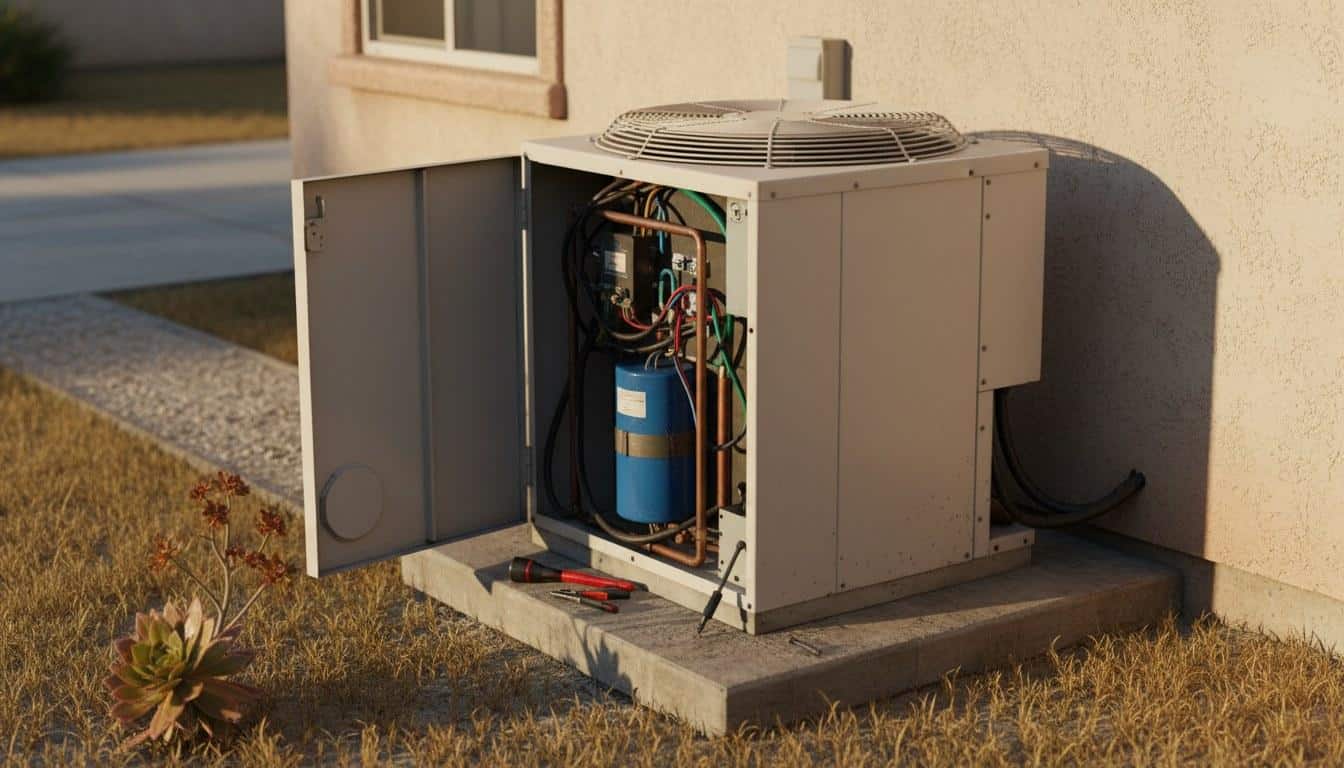
A professional HVAC tune-up goes well beyond what a homeowner can do — it includes evaporator coil cleaning, refrigerant level verification, heat exchanger inspection, combustion analysis, and duct leakage assessment. These are the components most directly tied to indoor air quality that degrade silently between service visits.
A dirty evaporator coil is one of the most overlooked IAQ problems in Southern California homes. When the coil is coated with dust and biological film, the system’s ability to remove humidity drops significantly — and a wet, dirty coil becomes a mold incubator. Across our service calls in the region, we find heavily soiled evaporator coils in roughly 35% of systems that have gone more than 2 years without professional cleaning, almost always paired with elevated indoor humidity readings.
We find heavily soiled evaporator coils in roughly 35% of systems that have gone more than 2 years without professional cleaning, almost always paired with elevated indoor humidity readings.
A professional inspection typically covers:
- Evaporator and condenser coil cleaning to restore dehumidification efficiency
- Refrigerant level check — low refrigerant reduces cooling and dehumidification capacity
- Heat exchanger inspection for cracks that could allow combustion gases into the air stream
- Combustion analysis on gas furnaces to verify CO production is within safe limits
- Blower motor and belt inspection — a failing blower reduces air circulation and filter effectiveness
- Condensate drain flush to prevent standing water and mold growth
- Duct visible inspection for gaps, disconnections, or signs of pest activity
- Thermostat calibration to ensure accurate temperature and humidity control
Work should always be performed by a contractor licensed by the California Contractors State License Board (CSLB). A CSLB license verifies that the technician has passed trade exams and carries the required insurance — important when work involves refrigerant handling under EPA refrigerant regulations (Section 608), which require certified technicians for any system using regulated refrigerants.
In the regional market, a standard HVAC tune-up typically ranges from $80 to $200 depending on system type, age, and scope of cleaning required. Duct cleaning — a separate service — generally ranges from $300 to $700 for a typical single-family home, depending on duct count and accessibility. These are market ranges; request a custom quote based on your specific system.
Homeowners who want to maximize available incentives should ask about the Inflation Reduction Act federal tax credit, which as of 2026 covers up to 30% of the cost of qualifying high-efficiency HVAC equipment upgrades. California’s TECH Clean California rebate program also offers point-of-sale rebates on heat pumps and high-efficiency systems that improve both energy use and indoor air quality. Eligibility depends on income tier and equipment specifications.
Our technicians have found that systems in coastal Southern California communities accumulate coil fouling about 40% faster than systems in drier inland areas — a pattern consistent with the region’s marine-layer humidity keeping surfaces damp and sticky enough to trap airborne particles between service visits. That pattern is why we recommend annual coil cleaning for coastal homes rather than the every-other-year schedule that works fine in drier climates.
Systems in coastal Southern California communities accumulate coil fouling about 40% faster than systems in drier inland areas — a pattern consistent with the region's marine-layer humidity keeping surfaces damp and sticky.
Schedule Your Indoor Air Quality Maintenance
Improving your home’s air quality is not a one-time project — it is a maintenance habit built around your HVAC system’s annual service cycle. Start with the DIY tasks: upgrade to a MERV 11 or 13 filter, set a monthly reminder to check it, and pick up an inexpensive hygrometer to monitor humidity. Then book a professional inspection before each major season change.
Shalom Heating & Air serves homeowners across Southern California with HVAC maintenance, coil cleaning, duct inspection, and full indoor air quality assessments. Whether your system needs a seasonal tune-up or you want a comprehensive IAQ evaluation after a renovation, the team is ready to help.
Call (714) 886-2021 to schedule your service or request a custom quote. Same-day and next-day appointments are available across the region.
Explore our full range of HVAC services across Southern California.
Frequently Asked Questions
How do I improve indoor air quality in my home without spending a lot of money?
The most affordable steps are replacing your HVAC filter every 1 to 3 months with a MERV 11 filter, running kitchen and bathroom exhaust fans for at least 15 minutes after cooking or showering, and keeping indoor humidity between 30% and 50% with a hygrometer and a basic dehumidifier if needed. These three habits address the majority of common indoor pollutants at minimal cost. Avoiding synthetic air fresheners and storing chemical products outside the living area also reduces VOC levels noticeably.
How can I tell if my indoor air quality is bad?
Common signs include persistent headaches, fatigue, or allergy symptoms that improve when you leave the house, a musty or chemical smell that lingers even after cleaning, visible dust buildup on vents within days of vacuuming, and condensation on windows or walls. A consumer IAQ monitor in the $80 to $250 range can confirm elevated particulate matter, VOC, or CO2 levels. If you suspect mold or carbon monoxide, professional testing is the safest next step.
What plants are actually good for indoor air quality?
NASA research identified several houseplants — including spider plants, peace lilies, and snake plants — that absorb small amounts of VOCs like formaldehyde and benzene. However, the air-cleaning effect of houseplants in a real home is modest compared to proper ventilation and filtration; you would need dozens of plants per room to match a good HVAC filter. Plants are a nice complement to a solid maintenance routine, not a replacement for it. They also add humidity, which can be helpful in dry winter conditions.
How do I test my home for mold in the air?
You can start with an air cassette test kit from a hardware store, which captures airborne spores on a slide you mail to a certified lab for around $30 to $50. A musty smell near HVAC vents or visible discoloration around supply registers is a strong indicator that mold has colonized the ductwork or evaporator coil. For a definitive assessment, a professional IAQ inspection with a certified technician provides more reliable sampling and can pinpoint the source — which is critical before deciding on remediation.
How often should I have my HVAC system professionally serviced to keep my air quality good?
Most HVAC manufacturers and industry organizations recommend at least one professional tune-up per year — ideally in spring before cooling season and again in fall before heating season if you run both AC and a gas furnace. In Southern California, where systems run nearly year-round, annual service at minimum keeps evaporator coils clean, the condensate drain clear, and combustion components safe. Skipping more than two years between professional cleanings significantly increases the risk of mold growth on the coil and reduced dehumidification performance.