
Cut Summer Cooling Costs in Brea: Timing Your Energy Moves
Why Energy Savings Aren’t the Same as AC Repair — And Why That Timing Matters
Most Brea homeowners think about their air conditioner only when it breaks down. You search for AC repair near me, pay $300–$800 to fix a bad capacitor or refrigerant leak, and forget about the system until next summer. But energy efficiency works on a completely different timeline. While AC repair in Brea is reactive — you fix problems after they happen — energy savings require strategic timing throughout the cooling season. The families who cut their electric bills by 20–30% aren’t just lucky. They’re making specific moves at specific times, from March preparation to September shutdown.
📋 In This Guide
With Brea electricity costs at 33¢ per kilowatt-hour as of early 2026, understanding when to act on energy efficiency can mean the difference between a $250 monthly bill and a $400 one. In neighborhoods like Olinda Ranch and Country Hills, where median home values push $860,000, homeowners are learning that protecting their investment means more than emergency repairs — it means timing your efficiency upgrades to maximize savings before peak heat arrives.
💰 Verified Energy Savings by Strategy
- Setting thermostat to 78°F vs. 72°F: Up to 3% savings per degree = 18% bill reduction
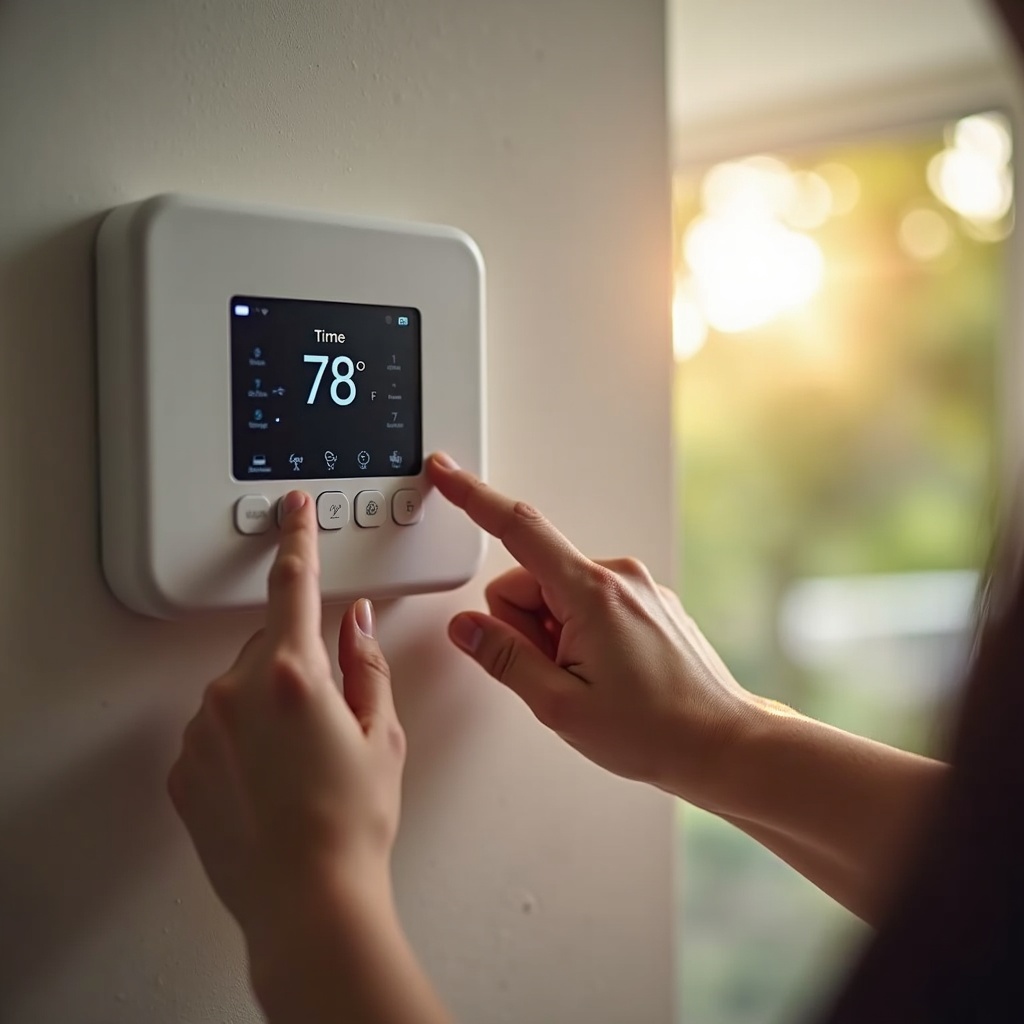
- Smart thermostat with time-of-use programming: 10% annual savings
- Annual professional maintenance: 15% energy reduction from clean filters and blower components
- Upgrading to high-efficiency system (20 SEER2): 33% more efficient than 13.4 SEER2
- Sealing ductwork leaks: Recover 20–30% of lost conditioned air
March–April: Pre-Season Prep That Pays Off All Summer
The biggest mistake Brea homeowners make is waiting until Memorial Day weekend to think about cooling costs. By then, you’ve already lost the opportunity for the highest-ROI energy moves. A quality HVAC services in Brea provider will tell you that March and April are when professionals have the most availability and when you can make changes that compound savings throughout the entire cooling season.
Schedule your annual maintenance before the first 85°F day. According to the U.S. Department of Energy, upgrading your HVAC system can reduce monthly utility bills by 20–40%, but even without replacement, proper maintenance delivers significant returns. When a technician cleans your evaporator coils, checks refrigerant levels, and ensures proper airflow in March, that system runs 15–20% more efficiently every single day from May through October. At Brea’s electricity rates, that’s $30–60 in monthly savings from a $150 service call.
Install a Smart Thermostat Before Peak Rate Season Begins
Southern California Edison’s peak hours run either 4–9 p.m. or 5–8 p.m., depending on your specific plan, with rates often reaching over 50¢/kWh during evening hours. A programmable or smart thermostat installed in early spring gives you three critical advantages: you learn the system before you need it desperately, you can pre-cool your home before peak rates hit, and you capture savings for the entire six-month cooling season rather than just the tail end.
Seal Air Leaks and Add Attic Insulation While It’s Still Cool
No one wants to crawl around a 140°F attic in July. Spring is when insulation contractors have availability and when the work is physically tolerable. In a typical house, about 20 to 30 percent of conditioned air is lost through duct leaks, meaning nearly a third of what you’re paying to cool simply leaks into your attic or walls. Sealing those leaks in April means every cooling dollar works harder from June onward.
May–August: Daily Timing Strategies During Peak Heat
Once Brea summer heat arrives — and it does arrive, with weeks of 90–100°F days — your energy savings shift from preparation to execution. The homeowners who keep bills reasonable during peak season aren’t just setting the thermostat higher. They’re timing their cooling around utility rate structures and natural temperature swings.
The California Energy Commission recommends setting thermostats to 78 degrees when home and 85 degrees when away during summer. But timing matters as much as the number. Pre-cool your home to 75°F between noon and 3 p.m., when off-peak rates apply and your system runs most efficiently. Then program your thermostat to 78 degrees or higher at the start of the 4 p.m. on-peak period. Your home coasts on stored cool air through the expensive evening hours, and returns to your normal evening temperature after 9 p.m. when rates drop again.
Use Ceiling Fans to Extend Thermostat Setpoints
A ceiling fan uses about 90% less energy than central air conditioning, yet it allows you to set your thermostat significantly higher without sacrificing comfort. Running a ceiling fan counterclockwise creates a cool breeze that makes rooms feel up to four degrees cooler, meaning you can bump your thermostat from 75°F to 78–79°F and feel exactly the same. Over a four-month cooling season in Brea, that 3–4 degree adjustment saves 9–12% on your electric bill — $25–50 monthly for most households.
Manage Window Treatments and Afternoon Sun Exposure
Brea’s inland location means intense afternoon sun exposure, especially in west- and south-facing rooms. Closing blackout curtains or cellular shades from 1–7 p.m. prevents solar heat gain that forces your AC to work harder during peak rate hours. This isn’t a 24/7 strategy — open windows and window coverings during cool evenings to flush out hot air naturally, a technique that works particularly well in Brea’s foothill neighborhoods like Brea Canyon where evening breezes develop.
September–October: Shoulder Season Optimization
September in Brea still delivers plenty of 85–95°F days, but the timing shifts. Mornings and evenings cool down faster, creating opportunities to shut down your AC entirely for 10–14 hours daily. Homeowners who stay aggressive about energy savings through October often see their lowest cost-per-degree-of-cooling all year because they’re using the system strategically rather than continuously.
This is also the ideal window to assess whether your current system is worth keeping. If you’ve spent more than $800 on repairs since spring, or if your summer bills averaged over $350 despite careful thermostat management, you’re likely running an inefficient system. A reputable hvac contractor in Brea can provide a cost-benefit analysis: compare your projected five-year operating costs against the expense of a high-efficiency replacement. A 20 SEER2 unit is 33% more efficient than a 13.4 SEER2 unit, which translates to $900–1,500 in annual savings for a typical Brea home running AC from April through October.
| Timing Strategy | When to Act | Estimated Annual Savings |
|---|---|---|
| Annual maintenance | March–early April | $180–360 (15% energy reduction) |
| Smart thermostat installation | April (before peak season) | $120–250 (10% savings) |
| Thermostat to 78°F (vs. 72°F) | May–September daily | $215–325 (18% bill reduction) |
| Duct sealing | March–April | $240–430 (recover 20–30% lost air) |
| High-efficiency system upgrade | September–October assessment | $900–1,500 (33% efficiency gain) |
November–February: Off-Season Decisions That Shape Next Summer
Winter is when emergency AC repair Brea summer season gets decided. If your system struggled last summer — frequent breakdowns, inability to maintain temperature on 100°F days, or monthly bills exceeding $400 — don’t wait until May to address it. November through February is when equipment prices are most negotiable, when hvac company in Brea schedules have availability for thoughtful installation rather than emergency replacement, and when financing terms are often most favorable.
This is also the time to evaluate your whole-home energy profile. Replacing old heating and cooling equipment with ENERGY STAR certified equipment can cut annual energy bills by nearly $140, but the real savings come from a systems approach. An experienced indoor air quality in Brea professional can assess whether your ductwork, insulation, and ventilation are working together efficiently or fighting each other. Homes in older Brea neighborhoods like Downtown Brea often have duct systems designed for smaller, less efficient AC units — upgrading the cooling system without addressing duct sizing leaves 20–30% of your efficiency gains on the table.
Winter is also when you should lock in your maintenance agreement for the coming year. Many contractors offer prepaid annual plans with priority scheduling and discounted service rates. Signing up in January means you’re first in line when March maintenance season arrives, and you’ve budgeted the expense during a lower-bill month rather than competing with summer cooling costs.
Year-Round Maintenance: The Monthly Tasks That Compound Savings
Energy efficiency isn’t just about big seasonal moves. It’s important to check your air filter once a month and replace or clean it when dirty. A clogged filter forces your system to work 15–20% harder, costing you $20–40 monthly in wasted energy. Set a recurring phone reminder for the first of each month — five minutes of filter maintenance saves more money than almost any other single action.
Clear debris from your outdoor condenser unit monthly during cooling season. Leaves, cottonwood seeds, and dust accumulate quickly in Brea’s dry climate, restricting airflow and forcing the compressor to work harder. A simple rinse with a garden hose once a month keeps the unit breathing freely. Check that furniture, curtains, and storage items aren’t blocking interior vents — restricted airflow results in higher utility bills and difficulty keeping the house comfortable.
Monitor your monthly electric bills for unexpected spikes. If your June bill jumps 40% compared to last June despite similar usage patterns, you likely have a developing problem — a refrigerant leak, a failing capacitor, or ductwork that’s come loose. Catching these issues early, when they’re causing inefficiency but before they trigger complete failure, saves hundreds in both energy waste and repair costs. A small refrigerant leak might cost $350 to fix in May; ignored until July, it becomes a $1,200 compressor replacement during a heat wave when you’re also paying premium emergency service rates.
When to Call Shalom Heating & Air for Strategic Energy Planning
Not every energy efficiency question requires a service call, but some decisions are too important to guess at. If your summer cooling costs consistently exceed $300 monthly despite aggressive thermostat management, if your system is more than 12 years old, or if you’re planning home improvements that will affect your cooling load, a professional assessment pays for itself. Shalom Heating & Air provides comprehensive energy audits that identify your specific opportunities — from duct sealing to equipment upgrades to airflow rebalancing — and prioritize them by ROI so you know exactly where your money works hardest.
We serve all of Brea including Country Hills, Olinda Ranch, and the downtown area, with a focus on long-term efficiency rather than short-term fixes. Our technicians are trained to spot the timing opportunities many homeowners miss — the early spring maintenance window, the fall replacement sweet spot, the monthly tasks that compound into major savings. Call us at (714) 886-2021 to schedule your pre-season efficiency assessment and start cutting your cooling costs before the next heat wave arrives.
