
-
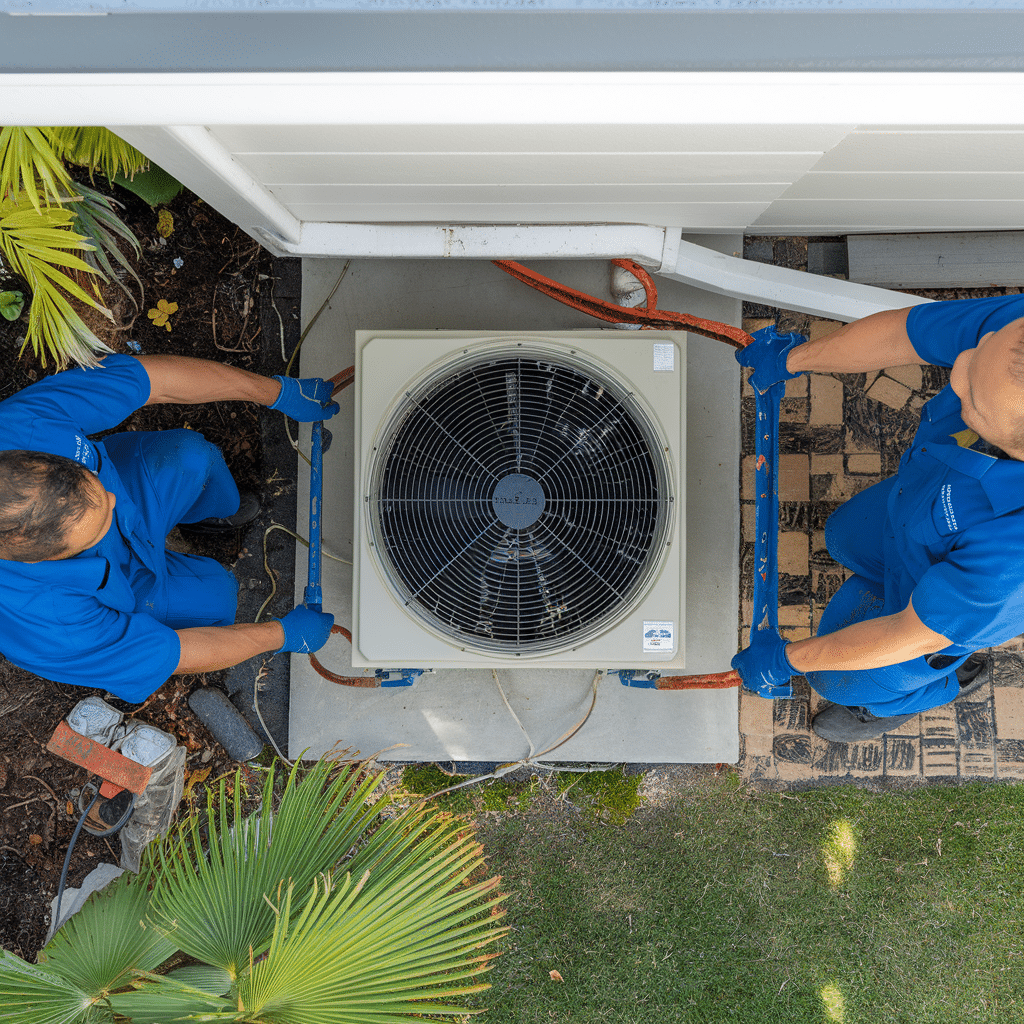
 Central AC Installation Rooftop Condenser
This Los Angeles central AC installation features dual Mitsubishi Electric condensers mounted on the rooftop with full attic…
-
 What You'll Actually Pay for New AC Installation in Anaheim: 2026 Real-World Pricing
Wondering what new AC installation actually costs in Anaheim? Get real 2026 pricing by system type, home size,…
-
HVAC Repair vs. Replace: Complete Cost Guide for Anaheim Homeowners
Comprehensive guide helping Anaheim homeowners decide between HVAC repair and replacement using the 5,000 rule, real-world costs, efficiency…
-
Frozen Evaporator Coil? How to Safely Thaw and Fix Your AC in Anaheim
Discovering ice on your air conditioner during Anaheim's summer heat signals a problem that needs immediate attention. Learn…
-
Your Anaheim Home's Pre-Winter Heating Checklist: Prepare Before the Cold Arrives
Get your Anaheim heating system ready before the first cold snap with this comprehensive fall maintenance guide covering…
-
Attic Furnace Replacement in Lakewood, CA
Replacing an attic furnace requires experience, planning, and attention to safety. Learn when replacement makes sense, what’s involved,…
-
Cut Cypress Summer Cooling Costs Before Peak Heat Hits
With Cypress electricity rates hitting 30¢/kWh and SCE increasing costs 12.9% in 2026, implementing energy-saving HVAC strategies before…
-
Your Cypress Home's Pre-Summer System Check: Small City, Big HVAC Expectations
Cypress homeowners need comprehensive spring HVAC maintenance to prepare for California's intense summer heat. Learn essential tasks, local…
-
How Santa Ana Winds Affect Your AC System in Cypress
Santa Ana winds create unique challenges for Cypress AC systems. Learn how heat surges, airborne dust, and debris…
-
Wildfire HVAC Prep Is Different from Regular Seasonal Maintenance
Why Wildfire HVAC Prep Is Different from Regular Seasonal MaintenanceHomeowners in Cerritos often confuse wildfire-season HVAC preparation with…
-
HVAC Wildfire Season Preparation in Cerritos
Cerritos homeowners risk emergency repairs, efficiency losses, and thousands in unexpected costs by delaying spring HVAC maintenance before…
-
Why AC Systems Struggle in Cerritos During 100+ Heat Waves
Learn why residential AC systems in Cerritos struggle during triple-digit heat waves and the steps homeowners can take…
-
AC Heatwave Prep: What Breaks When You Wait Too Long
Discover what actually breaks when your AC faces extreme heat and the specific preparation steps Buena Park homeowners…
-
What Skipping Pre-Summer HVAC Maintenance Costs Buena Park Homeowners
Spring offers a critical window for HVAC preparation before summer heat arrives. This comprehensive maintenance checklist helps Buena…
-
Top 5 AC Problems in Buena Park Every Summer
From refrigerant leaks to thermostat failures, these are the top 5 AC problems Buena Park homeowners deal with…
-
How Heating Issues Disrupt Daily Life in Buena Park Homes
Families in Buena Park often notice heating issues through daily routines—cold bedrooms, uneven warmth, or longer warm-up times.…
-
5 Allergy Season Air Quality Myths Brea Homeowners Believe
Most Brea homeowners rely on air quality strategies that backfire during allergy season. Discover which common myths worsen…
-
The Hidden Cost of Skipping Spring HVAC Prep in Brea
Spring HVAC preparation in Brea prevents costly summer breakdowns. This comprehensive checklist covers essential maintenance tasks, professional tune-ups,…
-
AC Condenser Replacement
When your outdoor AC condenser stops working, Shalom Heating & Air provides expert Brea AC repair to restore…
-
New AC Installation
A Brea homeowner upgraded to a brand-new high-efficiency air conditioning system, replacing aging equipment with a professionally installed…
-
Winter Air Quality in Bellflower: 5 Steps To Take Today
Sealed homes during Bellflower's winter trap dust, VOCs, and even wildfire smoke—worsening allergies and straining HVAC systems. Learn…
-
5 HVAC Summer Energy Myths Busted for Bellflower Homes
Debunking five dangerous HVAC myths costing Bellflower families hundreds each summer. This myth-busting checklist reveals evidence-based strategies to…
-
Will Your HVAC Make Wildfire Smoke Worse? What Bellflower Homeowners Get Wrong
Wildfire smoke doesn't just threaten outdoor air quality—it can cause expensive damage to your HVAC system. Learn how…
-
Is It a Frozen Coil or Something Else? A Bellflower Homeowner's Diagnostic Guide
Step-by-step guide for Bellflower homeowners dealing with frozen evaporator coils, including symptoms, DIY troubleshooting, and prevention strategies for…
-
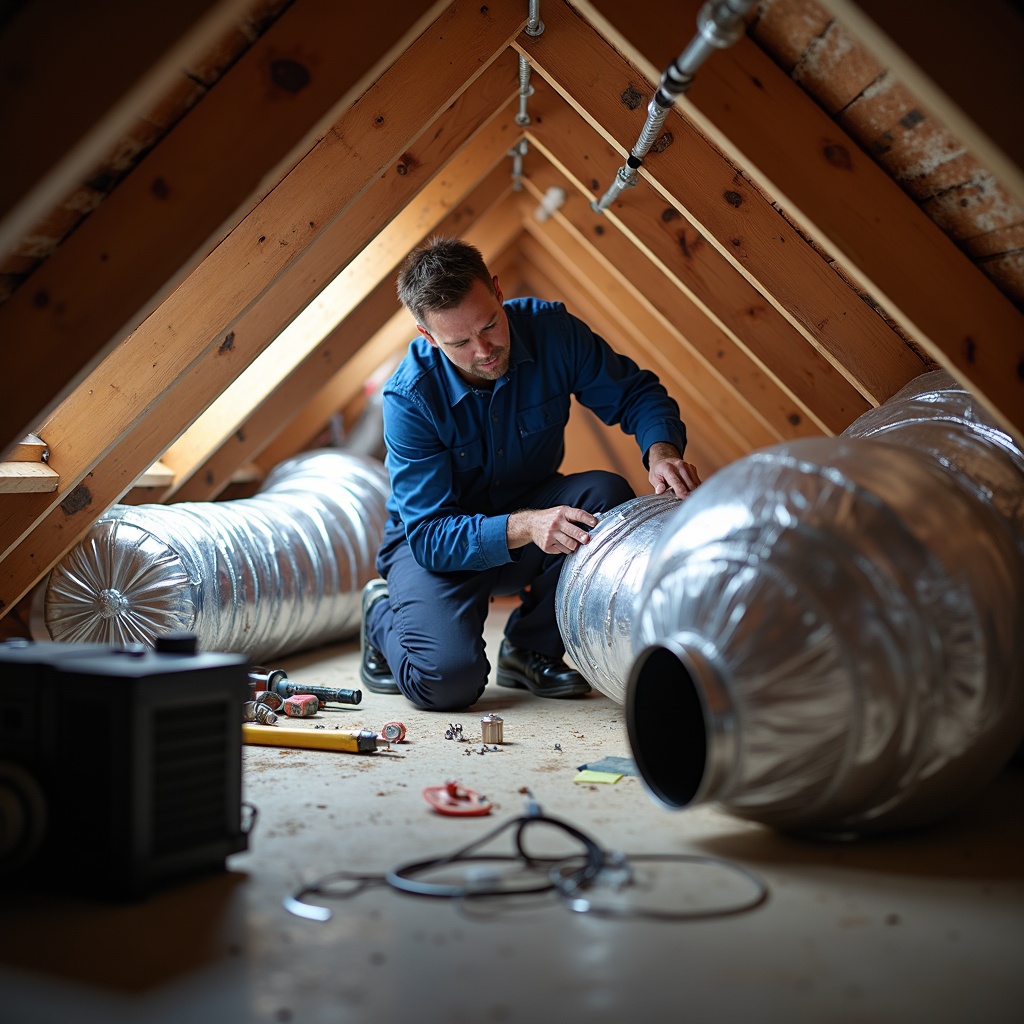
Ductwork Replacement Costs in Anaheim: 2026 Guide
Ductwork replacement costs in Anaheim vary based on home size, material choice, accessibility, and whether your older home…
-
HVAC Repair vs. Replace: Complete Cost Guide for Anaheim Homeowners
Comprehensive guide helping Anaheim homeowners decide between HVAC repair and replacement using the 5,000 rule, real-world costs, efficiency…
-
Frozen Evaporator Coil? How to Safely Thaw and Fix Your AC in Anaheim
Discovering ice on your air conditioner during Anaheim's summer heat signals a problem that needs immediate attention. Learn…
-
Your Anaheim Home's Pre-Winter Heating Checklist: Prepare Before the Cold Arrives
Get your Anaheim heating system ready before the first cold snap with this comprehensive fall maintenance guide covering…
❓ Frequently Asked Questions
How much does it cost to install central air conditioning in a Los Angeles home?
Central AC installation costs in Los Angeles typically range from $5,800 to $15,500 depending on system size and efficiency. A 2-3 ton system for an average 1,500-2,000 square foot home costs $7,500-$10,800 including equipment, labor, permits, and Title 24 compliance. Factors affecting cost include existing ductwork condition, electrical system capacity, system efficiency rating (SEER), and installation complexity. High-efficiency systems cost more upfront but qualify for utility rebates and federal tax credits that offset $1,500-3,500 of the investment.
Are heat pumps more expensive to install than regular AC in Los Angeles?
Yes, heat pump installations typically cost $1,500-$3,000 more than cooling-only AC systems of similar capacity in Los Angeles. A 3-ton heat pump system runs $9,500-$13,800 installed compared to $7,500-$10,800 for equivalent central AC. However, heat pumps provide both heating and cooling, eliminating the need for a separate furnace. They also qualify for higher utility rebates (up to $1,750) and federal tax credits (up to $2,000) compared to AC-only systems. For new construction or complete HVAC replacements, heat pumps often prove more cost-effective when you factor in not needing separate heating equipment.
What additional costs should Los Angeles homeowners expect beyond the AC unit price?
Beyond AC equipment costs, Los Angeles homeowners should budget for installation labor ($2,200-$4,500), permits ($150-$450), Title 24 compliance and duct testing ($600-$1,400), and potential electrical upgrades ($150-$3,500). Additional costs may include ductwork modifications ($500-$8,500 if needed), thermostat upgrades ($150-$600), condensate drain work ($200-$600), and outdoor unit pad replacement ($150-$400). For older homes, plan for possible line set replacement ($400-$1,200). Total installation costs typically add $3,000-$8,000 to equipment prices, depending on your home's specific requirements and existing infrastructure condition.
How do California energy efficiency requirements affect AC installation costs in Los Angeles?
California's Title 24 energy standards add $600-$1,400 to Los Angeles AC installations through mandatory compliance measures. All systems must meet minimum 14 SEER efficiency, which costs $500-$1,200 more than older 10-12 SEER units previously allowed. Required duct leakage testing and sealing adds $400-$900. Refrigerant charge verification and documentation add $200-$500. However, these requirements ensure proper system performance and qualify homeowners for utility rebates ($300-$1,750) and federal tax credits (up to 30% of costs). While Title 24 increases upfront costs, the combination of lower energy bills and available incentives typically recovers these expenses within 2-4 years.
📖 More Tips for Los Angeles

🏘️ Same Topic in Nearby Cities
❓ Frequently Asked Questions
How long does ductwork typically last before it needs replacement in Anaheim homes?
Ductwork lifespan depends on material and installation quality. Flexible ducts typically last 15–25 years, while rigid metal ducts can last 30–50 years or longer. Homes in Anaheim built before 1980 often have original ductwork that's overdue for replacement, especially if you're experiencing uneven temperatures or rising energy bills.
Can I replace just part of my ductwork or does the entire system need replacement?
Partial replacement is possible when damage is localized and the rest of the system is in good condition. However, if your home has widespread leaks, poor insulation, or ducts over 20 years old, full system replacement typically delivers better long-term value. A pressure test and professional inspection will determine the most cost-effective approach.
What should I do if I suspect my Anaheim home has asbestos in the ductwork?
Do not disturb the material. Contact a licensed asbestos inspector for testing. If asbestos is confirmed, certified abatement specialists must remove it before any ductwork replacement can proceed. This is a legal requirement in California and protects your household from serious health risks. Shalom Heating & Air works with qualified abatement contractors to coordinate safe, compliant projects.
Is ductwork replacement covered by California energy efficiency rebates?
Ductwork replacement may qualify for utility rebates when combined with high-efficiency HVAC equipment upgrades. Rebate programs require proper permitting and HERS verification testing. Your contractor should help identify available incentives and handle the necessary documentation. Contact Shalom Heating & Air at (714) 886-2021 to discuss current rebate opportunities for your Anaheim home.
📖 More Tips for Anaheim


🏘️ Same Topic in Nearby Cities
❓ Frequently Asked Questions
How do I know if I should repair or replace my HVAC system in Lakewood?
Use the 5,000 rule as a starting point: multiply the repair cost by your system's age in years. If the result exceeds 5,000 and your system is over 10 years old, replacement typically offers better value. For example, a $800 repair on a 12-year-old system equals 9,600, suggesting replacement. Also consider factors like system efficiency (older systems waste $600-$800 annually compared to new models), frequency of recent repairs, and available California rebates that can reduce replacement costs by $1,000-$3,000. Systems over 13 years old requiring repairs exceeding $1,200 almost always favor replacement when you factor in energy savings and avoided future repairs.
What are typical HVAC replacement costs in Lakewood after rebates?
Lakewood homeowners typically invest $5,500-$9,500 for a complete central AC replacement after factoring in available rebates and incentives. Before rebates, standard efficiency systems (14-16 SEER) range from $5,500-$8,500 depending on size, while high-efficiency systems (17+ SEER) cost $7,000-$11,000. However, Southern California Edison rebates ($250-$500), federal tax credits (up to $600 for AC, $2,000 for heat pumps), and California TECH incentives ($500-$2,500) can reduce actual out-of-pocket costs by $1,000-$3,000. Complete HVAC system replacements (AC plus furnace) typically range from $8,000-$16,000 before incentives. Installation includes permits, proper sizing, Title 24 compliance, and warranty registration.
How much can I save on energy bills with a new HVAC system in Lakewood?
Lakewood homeowners replacing 12-15 year old systems typically save $600-$800 annually on cooling costs with new high-efficiency equipment. If your current system operates at 10-12 SEER efficiency and you upgrade to a 16-18 SEER system, expect to reduce cooling costs by 30-45%. For an average 1,800 square foot Lakewood home, this means reducing annual cooling expenses from $1,800-$2,200 down to $1,100-$1,400. Over the new system's 15-20 year lifespan, this represents $9,000-$15,000 in cumulative energy savings. Lakewood's climate—with hot summers but mild winters—means cooling costs dominate your HVAC expenses, making efficiency upgrades particularly valuable compared to colder regions where heating costs are primary.
What California rebates are available for HVAC replacement in Lakewood?
Lakewood residents can access multiple rebate programs that significantly reduce HVAC replacement costs. Southern California Edison offers $250-$500 for high-efficiency central AC systems (16+ SEER) and $300-$600 for heat pumps, plus up to $400 for duct sealing. Federal tax credits through the Inflation Reduction Act provide up to $600 for qualifying AC systems and up to $2,000 for heat pumps. The California TECH Clean California Program adds $500-$2,500 for heat pump installations, with higher incentives ($3,000-$7,000) for income-qualified households. Combined, these programs can reduce your actual replacement cost by $1,500-$3,500 or more. Shalom Heating & Air handles all rebate paperwork and ensures your installation meets program requirements to maximize available incentives.
📖 More Tips for Lakewood

🏘️ Same Topic in Nearby Cities

❓ Frequently Asked Questions
How do I know if I should repair or replace my HVAC system in Tustin?
Use the 5,000 rule: multiply your repair cost by your system's age. If the result exceeds $5,000, replacement typically makes more financial sense. For example, a $1,500 repair on a 10-year-old system equals $15,000, suggesting replacement is better. Also consider repair history—if you've spent over $1,500 in the past 2-3 years, replacement often prevents ongoing expenses and provides better long-term value for Tustin homes.
What does a new HVAC system cost in Tustin?
HVAC replacement costs in Tustin range from $6,500-$13,000 for most homes, depending on system size and efficiency. A standard 3-ton, 14-16 SEER system costs $8,000-$11,000 installed. However, California rebates and federal tax credits can reduce your net cost by $2,000-$3,000. Higher-efficiency systems cost more upfront but save $250-$400 annually on energy bills, which offsets the investment over the system's 15-20 year lifespan.
When is it better to repair instead of replace an HVAC system?
Repair makes sense when your system is under 10 years old, the repair cost is under $1,000, and you haven't had multiple recent breakdowns. Common repairs like capacitors ($150-$400), contactors ($150-$350), or thermostats ($150-$450) are often worthwhile on systems with 5+ years of expected life remaining. If the 5,000 rule calculation is under $5,000 and your system has been reliable, repair is typically the smart choice.
How much can I save on energy bills with a new HVAC system in Tustin?
Upgrading from a 10-year-old system (10 SEER) to a modern 16 SEER system reduces cooling costs by approximately 37%, saving typical Tustin homeowners $250-$400 annually. Over a 15-year system lifespan, that's $3,750-$6,000 in energy savings. For homes with even older systems (8-9 SEER), savings can reach $400-$500 per year. These savings, combined with rebates and improved reliability, often justify replacement costs even when repairs are still possible.
🏘️ Same Topic in Nearby Cities

❓ Frequently Asked Questions
How do I know if my Cypress home's HVAC system is worth repairing or should be replaced?
Multiply your repair cost by your system's age. If that number exceeds the cost of replacement, choose replacement. For a 13-year-old system, a $1,200 repair equals $15,600 total — well above a new system's $7,000-$9,000 cost. Systems older than 12-14 years with repair costs above $1,000 typically favor replacement.
What's the average cost to replace a central AC system in a Cypress home?
A complete 3-ton 16-SEER split system replacement typically costs $6,200-$8,800 for most Cypress homes, including installation, permits, and Title 24 compliance. Upgrading to 18-SEER high-efficiency equipment runs $7,500-$10,200. Homes requiring electrical upgrades or extensive ductwork modifications may add $1,200-$3,000 to total costs.
How much can I actually save on energy bills with a new high-efficiency HVAC system in Cypress?
Replacing a 15-year-old 10-SEER system with a 16-SEER model saves approximately $80-$100 monthly during peak summer months — $960-$1,200 annually. Over the new system's 15-year lifespan, that's $14,400-$18,000 in avoided utility costs, making replacement financially advantageous even without considering repair avoidance.
Does Shalom Heating & Air offer financing for HVAC replacement in Cypress?
Yes, Shalom Heating & Air provides multiple financing options for Cypress homeowners, including plans with competitive rates. We also help homeowners access California rebate programs and utility incentives that can reduce replacement costs by $600-$1,500. Call (714) 886-2021 to discuss financing options and current incentive opportunities for your home.
📖 More Tips for Cypress


🏘️ Same Topic in Nearby Cities

❓ Frequently Asked Questions
How much does HVAC repair typically cost in Cerritos compared to replacement?
Common HVAC repairs in Cerritos range from $150 for capacitor replacement to $3,500 for compressor replacement. Complete system replacements cost $6,500-$15,000 depending on efficiency and system type. Use the 5,000 Rule (repair cost × system age) as a baseline: results over 5,000 typically favor replacement. Factor in California rebates ($400-$1,500) and energy savings ($450-$550 annually) when comparing options. For systems over 12 years old needing repairs exceeding $1,500, replacement usually provides better long-term value.
What is the 5,000 Rule for HVAC repair decisions?
The 5,000 Rule multiplies your estimated repair cost by your system's age in years. If the result exceeds 5,000, replacement is typically more cost-effective than repair. For example, a $2,000 repair on a 10-year-old system equals 20,000 (2,000 × 10), strongly indicating replacement makes better financial sense. However, this rule should be combined with efficiency analysis, available rebates, and your specific circumstances. Systems under 7 years old or with recent major component replacements may warrant repair even with higher calculation results.
What California rebates are available for HVAC replacement in Cerritos?
Southern California Edison offers rebates of $400-$750 for high-efficiency air conditioners (17+ SEER) and $1,000-$1,500 for heat pumps. Federal tax credits provide 30% of installation costs up to specific limits. Combined, these incentives can reduce replacement costs by $2,000-$4,000. Title 24 requirements mandate duct testing and sealing for all replacements, adding $500-$1,200 but ensuring optimal efficiency. Work with qualified contractors familiar with rebate programs to maximize available incentives and ensure proper documentation for tax credits.
How do I calculate if repairing or replacing my Cerritos HVAC saves more money long-term?
Calculate your break-even point by comparing total costs over your system's remaining lifespan. For repair: add repair cost plus estimated energy costs over remaining years (typically 2-4 years for systems 12+ years old). For replacement: subtract rebates from replacement cost, then subtract annual energy savings over the same period. A 14-year-old system needing $2,200 in repairs might cost $9,400 total over 3 years, while replacement after rebates and savings costs $6,100 net—saving $3,300 while providing a new system with 15+ years remaining life.
📖 More Tips for Cerritos


🏘️ Same Topic in Nearby Cities

❓ Frequently Asked Questions
What is the 5,000 rule for HVAC repair vs replacement?
The 5,000 rule helps determine if repair or replacement makes better financial sense. Multiply your repair cost by your system's age in years. If the result exceeds 5,000, replacement typically provides better value than repair. For example, a $500 repair on a 12-year-old system equals 6,000 (500 x 12), suggesting replacement is the smarter investment. This rule accounts for diminishing returns on aging equipment that will likely need additional repairs soon after.
How much does HVAC replacement cost in Buena Park?
HVAC replacement costs in Buena Park range from $4,500-$13,000 for AC systems and $3,500-$9,500 for furnaces, depending on capacity, efficiency rating, and installation complexity. Complete system replacement (both heating and cooling) typically costs $8,000-$16,000. California rebates can reduce these costs by $1,000-$3,000 or more. High-efficiency systems cost more upfront but save $600-900 annually on energy bills, often paying for themselves over their 15-20 year lifespan.
What California rebates are available for HVAC replacement?
Southern California homeowners can access multiple rebate programs: SCE and SoCalGas offer $300-$500 for high-efficiency air conditioners and heat pumps, plus $50-$75 for smart thermostats. The California TECH Clean California initiative provides $1,000-$3,000 for qualifying heat pump installations. Manufacturer promotions add another $500-$1,500 during promotional periods. These rebates often stack together, potentially reducing replacement costs by $2,000-$4,000 or more, significantly improving the financial case for replacement.
When should I repair versus replace my HVAC system in Buena Park?
Replace rather than repair when: the 5,000 rule calculation exceeds 5,000, your system is 12+ years old, you've had multiple repairs recently, efficiency is significantly below current standards, or repair costs exceed 50% of replacement cost. Repair makes sense when: your system is under 8 years old, it's a minor component failure, the 5,000 rule strongly supports repair, or you're planning to sell your home within 1-2 years. Consider Buena Park's cooling-dominated climate where AC efficiency savings especially justify replacement of aging air conditioners.
📖 More Tips for Buena Park


🏘️ Same Topic in Nearby Cities

❓ Frequently Asked Questions
How much does HVAC repair typically cost in Brea compared to replacement?
Minor HVAC repairs in Brea cost $150-$500, mid-range repairs run $500-$1,500, and major repairs like compressor replacement cost $1,500-$4,000. Complete system replacement typically ranges from $5,500-$14,000 depending on system type, size, and efficiency. Use the 5,000 Rule (repair cost × system age) to determine whether repair or replacement makes financial sense—if the result exceeds 5,000, replacement typically offers better value.
What is the 5,000 Rule for deciding between HVAC repair and replacement?
The 5,000 Rule helps homeowners decide between repair and replacement by multiplying the repair cost by the system's age in years. If the result exceeds 5,000, replacement usually makes better financial sense. For example, a $600 repair on a 12-year-old system equals 7,200 (600 × 12), suggesting replacement is smarter. However, consider additional factors like California energy rebates, system efficiency, and whether you're planning to sell your home soon when making your final decision.
How much can Brea homeowners save on energy costs with a new HVAC system?
Brea homeowners typically save $75-$110 monthly during summer cooling season by upgrading from an old 10 SEER system to a modern 16 SEER system—that's $300-$440 in annual summer savings. Over a new system's 15-20 year lifespan, these efficiency improvements can save $4,500-$8,800. Combined with California energy rebates ($200-$1,000+) and federal tax credits (up to $2,000), new high-efficiency systems offer substantial financial benefits beyond just avoiding future repair costs.
Does replacing an HVAC system increase home value in Brea?
Yes, a new HVAC system can add $3,000-$6,000 to your Brea home's resale value while making it more attractive to buyers. Homes with newer HVAC systems (under 5 years old) typically sell faster than comparable properties with older systems. For Brea homes with a median value of $860,000, a modern, efficient HVAC system represents a valuable property feature that appeals to cost-conscious buyers who want to avoid immediate replacement expenses after purchase.
📖 More Tips for Brea


🏘️ Same Topic in Nearby Cities
❓ Frequently Asked Questions
How much does it typically cost to replace an HVAC system in Bellflower?
HVAC replacement costs in Bellflower range from $4,500-11,000 depending on system type, size, and efficiency rating. A standard 3-ton split system with SEER 14-16 efficiency costs $5,500-7,500 installed, while high-efficiency systems add $1,500-3,000. Heat pumps range from $6,500-12,000. These prices include equipment, labor, permits, and California Title 24 compliance requirements. Available rebates from Southern California Edison and federal tax credits can reduce costs by $1,000-4,000, significantly improving affordability.
What is the 5,000 Rule for deciding between HVAC repair and replacement?
The 5,000 Rule multiplies the cost of a proposed repair by your system's age in years. If the result exceeds 5,000, replacement typically makes better financial sense than repair. For example, a $600 repair on a 12-year-old system equals 7,200, suggesting replacement. The same repair on a 6-year-old system equals 3,600, indicating repair is smarter. This rule accounts for increasing repair frequency, declining efficiency, and reduced remaining lifespan in older systems.
How much can I save on energy bills by replacing an old HVAC system in Bellflower?
Replacing an old SEER 10 system with a modern SEER 16 system saves approximately $250-400 annually on cooling costs for typical Bellflower homes. Over a 15-year lifespan, this represents $3,900-6,000 in total savings before accounting for utility rate increases. High-efficiency SEER 18-20 systems provide even greater savings of $300-500 annually. Upgrading from an 80% AFUE furnace to 95% AFUE saves an additional $150-250 yearly on heating costs. These savings significantly reduce the net cost of system replacement.
What California rebates are available for HVAC replacement in Bellflower?
Bellflower homeowners can access multiple rebate programs: Southern California Edison offers $200-500 for qualifying high-efficiency systems plus $75-125 for smart thermostats. Federal tax credits provide 30% back (up to limits) for heat pumps and high-efficiency equipment. California's TECH Clean California program offers $500-3,000 for heat pump installations depending on income. These incentives can stack, potentially reducing replacement costs by $1,000-4,000. Manufacturer rebates during promotional periods add another $300-1,000 in savings.
📖 More Tips for Bellflower


🏘️ Same Topic in Nearby Cities
❓ Frequently Asked Questions
What is the average cost of AC installation in Anaheim in 2026?
For typical Anaheim homes (1,500-2,200 sq ft), complete AC installation costs range from $6,800-$13,500 depending on system efficiency, installation complexity, and necessary upgrades. Standard 14-15 SEER systems run $6,800-$11,500, mid-efficiency 16-17 SEER systems cost $8,500-$13,500, and high-efficiency 18+ SEER installations range from $11,500-$16,500. These prices include equipment, professional labor, permits, and standard electrical connections. Costs increase for homes requiring electrical upgrades ($300-$3,000), significant ductwork improvements ($800-$3,500), or complex installations. Contact Shalom Heating & Air at (714) 886-2021 for a detailed assessment and accurate quote for your specific Anaheim home.
How much does a new 3-ton AC unit cost installed in Anaheim?
A 3-ton central AC system (appropriate for 1,500-1,800 sq ft homes) typically costs $6,800-$11,000 installed in Anaheim, including equipment, labor, permits, and standard connections. Basic 14 SEER systems range from $6,800-$8,500, mid-efficiency 16 SEER units cost $8,000-$10,000, and high-efficiency 17-18 SEER systems run $9,500-$11,000. Heat pump systems providing both cooling and heating cost 15-25% more. Additional expenses include electrical upgrades if needed ($300-$2,000), ductwork sealing or repairs ($800-$2,000), and smart thermostat installation ($150-$400). Prices vary based on equipment brand, installation complexity, and your home's specific requirements. Shalom Heating & Air provides transparent pricing—call (714) 886-2021 for an accurate estimate.
Are there any rebates or incentives for AC installation in Anaheim?
Yes, several rebate programs can reduce AC installation costs in Anaheim. Southern California Edison offers $300-$500 rebates for qualifying 16+ SEER systems, with additional incentives for heat pumps and smart thermostats. Federal tax credits provide up to $2,000 for qualifying heat pump installations meeting specific efficiency criteria. Equipment manufacturers frequently offer seasonal promotions providing $200-$800 rebates during spring and fall. California financing programs like HERO offer special terms for energy efficiency improvements. Combined, these incentives can reduce net installation costs by $500-$2,000 or more. Rebate programs change periodically, so verify current availability when planning your installation. Shalom Heating & Air tracks available incentives and helps Anaheim homeowners maximize savings—call (714) 886-2021 for current program information.
Does AC installation in Anaheim require permits and inspections?
Yes, most AC installations in Anaheim require building permits, typically costing $150-$400 depending on system size and work scope. The City of Anaheim requires permits for new equipment installations, refrigerant line replacements, and electrical upgrades to ensure work meets safety codes. Professional contractors handle permit applications and schedule required inspections. California Title 24 energy standards mandate minimum 15 SEER efficiency in Climate Zone 9 (including Anaheim) and often require ductwork testing documentation, adding $200-$500 to projects involving duct modifications. While permits add upfront costs, they protect homeowners by ensuring qualified electrical connections, proper refrigerant handling, and code-compliant installations. Established contractors like Shalom Heating & Air manage all permitting and inspection coordination—call (714) 886-2021 for compliant, professional installation.

