HVAC Repair vs. Replace: How to Make the Right Call and Control Your Costs
Weighing HVAC repair vs. replace cost? This guide breaks down the real numbers, warning signs, and decision rules that help Southern California homeowners choose wisely.
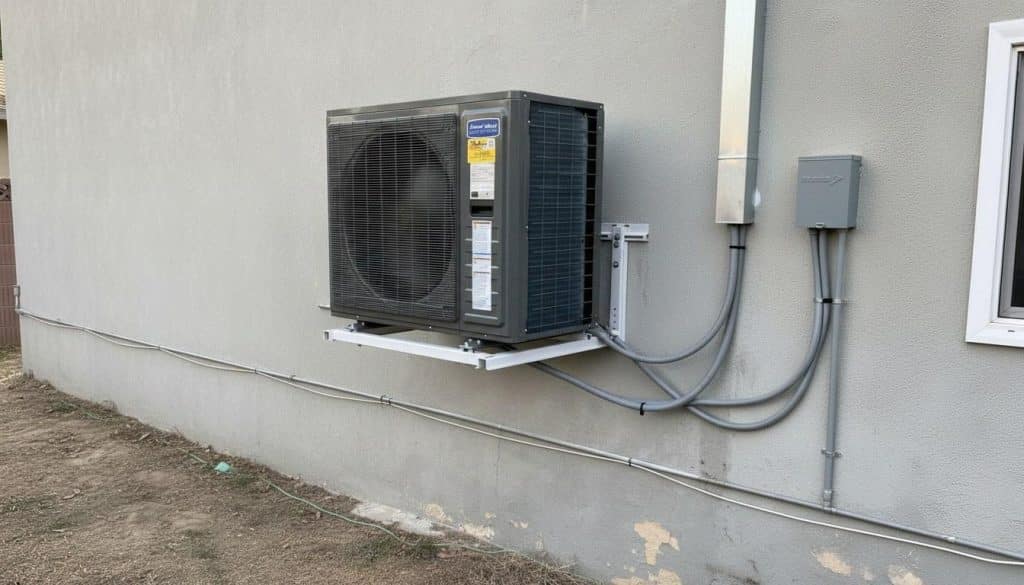
How Do You Know Whether to Repair or Replace Your HVAC System?
The core decision comes down to three things: the age of your system, the cost of the repair, and how much the unit has already cost you in the past two years. A system under 10 years old with a single, straightforward repair is almost always worth fixing. A system 15 years or older that keeps breaking down is almost always cheaper to replace.
Most central air conditioners and gas furnaces are designed to last 15 to 20 years under normal use, according to the U.S. Department of Energy. Once a system crosses that threshold, parts wear out faster, refrigerant leaks become more common, and efficiency drops enough to raise your monthly utility bills noticeably.
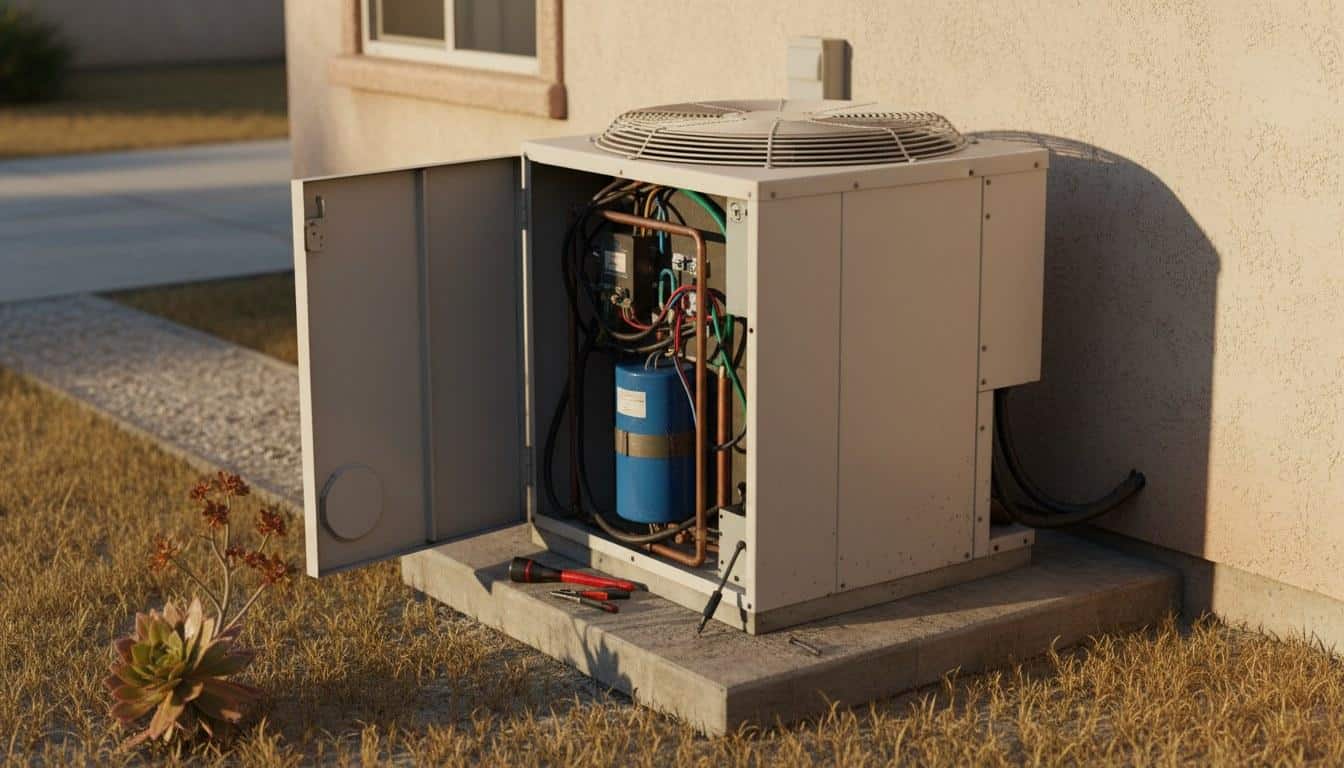
The hvac repair vs replace cost question also depends on what broke. A capacitor swap or a clogged filter is a minor repair. A failed compressor or a cracked heat exchanger is a major one — and those repairs can cost nearly as much as a new system.
What Does HVAC Repair vs. Replace Cost in the Current Market?
In the Southern California market, common HVAC repairs typically range from $150 to $2,500 depending on the part and labor involved. Full system replacement generally runs from $5,000 to $14,000 or more, depending on system size, efficiency rating, and installation complexity.
Those are wide ranges, so here is a breakdown of the most common repair scenarios and what they cost in this region:
| Repair Type | Typical Market Range (Southern CA) | Repair or Replace? |
|---|---|---|
| Capacitor replacement | $150 – $400 | Repair — low cost, quick fix |
| Refrigerant recharge (R-410A) | $200 – $600 | Repair if no leak; investigate if recurring |
| Contactor or relay replacement | $150 – $350 | Repair — straightforward part swap |
| Evaporator coil replacement | $800 – $2,000 | Compare to system age before deciding |
| Compressor replacement | $1,200 – $2,800 | Usually replace if system is 10+ years old |
| Full AC system replacement (3-ton) | $6,000 – $10,500 | Replace when repair costs stack up |
| Full HVAC system (AC + furnace) | $9,000 – $14,000+ | Replace aging dual systems together |
Several factors move these numbers up or down. Duct condition, attic access, permit fees, and the efficiency tier you choose all affect the final price. Always request a written, itemized quote before any work begins.
Our technicians see refrigerant-related service calls spike roughly 40% every June through August across Southern California, with the majority of those calls involving systems installed before 2014 — units now running on older R-22 refrigerant that is no longer manufactured and can cost two to three times more per pound than current R-410A or R-454B alternatives.
What Is the 5,000 Rule and How Do You Use It?
The 5,000 rule is a simple formula: multiply your system’s age (in years) by the estimated repair cost. If the result is over 5,000, replacement is usually the smarter financial move.
For example, if your 12-year-old air conditioner needs a $500 repair, the math is 12 x 500 = 6,000. That result is above 5,000, which signals that replacement deserves serious consideration even though the repair itself does not sound expensive.
If your 6-year-old system needs the same $500 fix, the result is 3,000 — well below the threshold, making repair the clear choice.
The 5,000 rule does not replace a full professional assessment, but it gives you a fast, honest gut-check before you spend money on a repair that may not be worth it. Pair it with a look at your energy bills: if your cooling costs have climbed 15% or more over the past two summers without a change in usage habits, the system’s declining efficiency is already costing you money every month.
Which Warning Signs Mean Your System Is Past Saving?
Some HVAC problems are fixable. Others are signals that the system is at the end of its useful life and continued repairs are just delaying the inevitable. Knowing the difference saves you from throwing money at a system that will fail again within a season or two.
Watch for these warning signs that lean strongly toward replacement:
- Age over 15 years: Most systems lose significant efficiency after 15 years. Parts become harder to source and more expensive.
- R-22 refrigerant system: R-22 (Freon) was phased out under EPA refrigerant regulations (Section 608) and is no longer produced. Recharging an R-22 system can cost $50 to $150 per pound — and the underlying leak still needs fixing.
- Multiple repairs in 24 months: If you have spent more than $1,000 on repairs in the last two years, the system is in a decline cycle.
- Uneven cooling or heating: Hot and cold spots throughout the house often point to a failing compressor or duct system that a simple repair cannot fix.
- Loud or unusual noises: Banging, grinding, or screeching sounds typically indicate mechanical wear in the compressor or blower motor — expensive components.
- Cracked heat exchanger: This is a safety issue, not just an efficiency issue. A cracked exchanger can allow carbon monoxide to enter living spaces and should trigger immediate replacement.
- SEER rating below 13: Systems manufactured before 2006 often carry SEER ratings of 10 or lower. California’s minimum standard is now 15 SEER2 for new residential equipment, per California’s Title 24 building energy standards. Running a 10-SEER system when 18-SEER+ equipment is available means paying significantly more every month just to move the same amount of air.
How Do Efficiency Ratings and Rebates Change the Math?
A high-efficiency replacement system can cut monthly cooling and heating costs by 20% to 40% compared to a unit running at the minimum old standard, which shifts the long-term financial picture significantly in favor of replacement.
Modern air conditioners carry SEER2 ratings ranging from 15 to 26 or higher. The higher the SEER2, the less electricity the unit uses to produce the same amount of cooling. For a typical Southern California home running the AC four to six months per year, stepping from a 10-SEER system to an 18-SEER2 unit can mean saving $400 to $700 annually on electricity, depending on home size and usage.
Stepping from a 10-SEER system to an 18-SEER2 unit can mean saving $400 to $700 annually on electricity, depending on home size and usage.
Rebates and tax credits can reduce the upfront cost of replacement considerably. As of 2026, the Inflation Reduction Act federal tax credit covers up to 30% of the cost of qualifying high-efficiency heat pumps and HVAC equipment, with a maximum credit of $2,000 per year for heat pump systems. Southern California homeowners may also qualify for incentives through the TECH Clean California program, which promotes electric heat pump adoption statewide.
To qualify for the federal tax credit, the equipment must meet current ENERGY STAR efficiency ratings. Your installer should be able to provide the manufacturer’s certification statement at the time of installation, which you will need when filing IRS Form 5695.
When you factor in available rebates and monthly savings, the effective payback period on a new system often drops to five to eight years — well within the 15-to-20-year lifespan of the new equipment.
What Happens During a Professional HVAC Assessment?
A proper HVAC assessment takes 45 minutes to 90 minutes and covers the entire system — not just the part that failed. A technician who only looks at the broken component and quotes a repair without checking the rest of the system is not giving you enough information to make a good decision.
Here is what a thorough assessment should include:
- Visual inspection of the outdoor condenser and indoor air handler: Checking for corrosion, refrigerant oil stains, and physical damage.
- Electrical component testing: Measuring capacitor microfarads, contactor condition, and voltage at the disconnect.
- Refrigerant pressure check: Confirming the system is holding a proper charge and checking for leak indicators.
- Airflow measurement: Verifying that static pressure across the coil falls within the manufacturer’s design range.
- Heat exchanger inspection (furnaces): Looking for cracks, rust, or stress fractures that could allow combustion gases to mix with supply air.
- Duct condition review: Checking for obvious disconnections, excessive leakage, or insulation failure in accessible areas.
- System age and repair history review: Using the serial number to confirm manufacture date and discussing prior service calls.
After the assessment, a qualified technician should give you a written summary with two clear options: the cost to repair the identified issue and the cost to replace the system. That side-by-side view is what makes the hvac repair vs replace cost decision straightforward rather than confusing.
Contractors licensed by the California Contractors State License Board (CSLB) are required to provide written estimates before starting work. You can verify any contractor’s license at cslb.ca.gov before you agree to anything.
Across our service calls in Southern California, we find that roughly 1 in 4 systems brought in for a single repair has a secondary issue — often a failing capacitor alongside a refrigerant undercharge — that would have triggered another service call within 60 to 90 days if left unaddressed.
Across our service calls in Southern California, we find that roughly 1 in 4 systems brought in for a single repair has a secondary issue that would have triggered another service call within 60 to 90 days if left unaddressed.
Get an Honest Answer From Shalom Heating & Air
If you are weighing hvac repair vs replace cost and want a straight answer, schedule a full system assessment with Shalom Heating & Air. Our team will inspect your entire system, give you a written repair quote and a written replacement quote, and walk you through which option makes more financial sense for your home — without pressure.
Call (714) 886-2021 to book your assessment. Same-day and next-day appointments are available across Southern California. Whether your system needs a quick fix or a full replacement, you will leave the call knowing exactly what it costs and exactly what to do next.
Explore our full range of HVAC services across Southern California.
Frequently Asked Questions
How do I know if my HVAC system is worth repairing or should just be replaced?
Use the 5,000 rule: multiply your system's age by the repair cost. If the result is over 5,000, replacement is usually the better financial move. Also consider whether the system is over 15 years old or has needed multiple repairs in the past two years — those are strong signs that replacement will save you more money long-term.
How much does it cost to replace an HVAC system in Southern California?
Full AC system replacement in the Southern California market typically ranges from $6,000 to $10,500 for a standard central air unit. Replacing both the AC and furnace together generally runs $9,000 to $14,000 or more. The final price depends on system size, efficiency rating, duct condition, and installation complexity. Request a written quote before committing to any work.
Are there any rebates or tax credits available when I replace my HVAC system?
Yes. As of 2026, the Inflation Reduction Act federal tax credit covers up to 30% of the cost of qualifying high-efficiency heat pumps, with a maximum of $2,000 per year. California homeowners may also qualify for TECH Clean California incentives. Equipment must meet current ENERGY STAR efficiency ratings to qualify for the federal credit.
Why is my air conditioner blowing warm air, and does it mean I need a new unit?
Warm air from your AC most often means a refrigerant leak, a failed compressor, or a dirty evaporator coil — not necessarily a full replacement. A technician needs to diagnose the root cause first. If the system is under 10 years old and the repair cost is reasonable, fixing it makes sense. If the compressor has failed on a system older than 12 years, replacement is usually the smarter call.
How long does a new HVAC system last compared to keeping an old one running?
A properly installed new central air conditioner or heat pump typically lasts 15 to 20 years with regular maintenance. An older system past 15 years will likely need increasing repairs and runs at lower efficiency, costing more each month in energy bills. In most cases, a new system pays for itself through energy savings and avoided repair costs within five to eight years.