Ductwork Guide: Leaky Ducts, Repair, and Replacement Cost
Ductwork replacement cost in California typically runs between $1,500 and $8,000 for a whole-home system, but the right answer depends on your home's size, duct material, and how much of the system actually needs replacing.
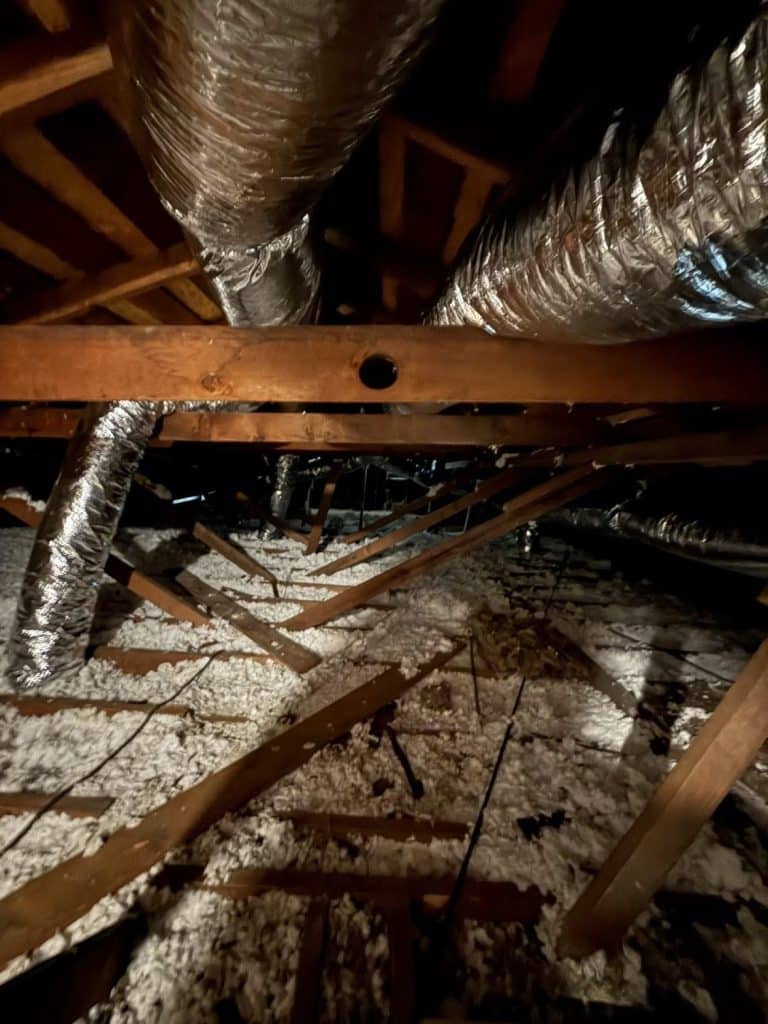
What Does Ductwork Replacement Cost in the CA Market?
Full ductwork replacement in the Southern California market typically ranges from $1,500 to $8,000, with most single-story homes landing between $2,000 and $5,000. Larger two-story homes or projects requiring custom fabrication can push toward the higher end of that range. These figures reflect regional labor and material costs as of 2026 and should be treated as market context, not a price quote from any specific contractor.
Partial duct repair, which involves sealing leaks or replacing a single run of air ductwork, generally costs $300 to $1,000 in this market. The scope of the job is the single biggest cost driver. A 1,200-square-foot home with accessible attic ducts is a very different project from a 2,800-square-foot home with ducts buried in concrete slab or behind finished walls.
According to the U.S. Department of Energy, leaky ducts can waste 20 to 30 percent of the conditioned air a system produces, meaning a compromised duct system is quietly inflating your utility bills every month.
Leaky ducts can waste 20 to 30 percent of the conditioned air a system produces, quietly inflating your utility bills every month.
| Scenario | Typical Market Range | What’s Usually Included |
|---|---|---|
| Single duct run repair or seal | $300 to $700 | Mastic sealant or metal tape, 1 to 2 duct sections, basic testing |
| Partial replacement (25 to 50% of system) | $700 to $2,500 | New flex duct or sheet metal runs, reconnection to existing trunk lines |
| Full replacement, small home (under 1,500 sq ft) | $1,500 to $3,500 | All new air ductwork, new registers, basic airflow balancing |
| Full replacement, medium home (1,500 to 2,500 sq ft) | $3,000 to $5,500 | All new HVAC duct runs, trunk line, registers, airflow balancing |
| Full replacement, large or two-story home | $5,000 to $8,000+ | Custom sheet metal, zoning considerations, full system balancing |
What Factors Drive Ductwork Replacement Cost Up or Down?
The five biggest cost drivers are home size, duct accessibility, duct material type, the condition of existing ductwork, and whether any permits or inspections are required. Understanding each one helps you evaluate quotes and spot anything that seems out of line.
- Home square footage: More living space means more linear feet of hvac duct. Contractors price by the job, but footage is the baseline. A 3,000-square-foot home can need two to three times the material of a 1,200-square-foot home.
- Accessibility: Ducts in an open attic or crawlspace are far easier to reach than ducts inside finished walls, under a concrete slab, or in a tight attic with low clearance. Difficult access adds labor hours and cost.
- Duct material: Flexible duct (flex duct) is the least expensive option. Sheet metal (galvanized steel) costs more but lasts longer. Fiberboard duct falls between the two. Custom fabrication for unusual shapes or sizes adds cost.
- Extent of damage or deterioration: A system with minor leaks at the joints is a quick fix. A system with collapsed sections, rodent damage, or asbestos-wrapped ducts requires significantly more labor and disposal handling.
- Permits and inspections: California’s Title 24 building energy standards may require a permit for full duct replacement. Permit fees vary by county but typically add $100 to $400 to the project total.
- System design changes: If the new ductwork involves resizing supply or return air ducts to match a new HVAC system, contractors should perform a Manual J load calculation and a Manual D duct design. This adds time but ensures the system actually performs correctly.
Our technicians replace ductwork in roughly 60 to 70 percent of homes where the original system is more than 20 years old, because flex duct that age has often lost its insulation value and develops tears at the connections that no sealant can fully fix.
Repair vs. Replace: How Do You Know Which One You Need?
If less than 25 percent of your duct system is damaged and the rest of the air conditioning duct network is structurally sound, repair is usually the right call. If more than half the system is deteriorated, leaking at multiple points, or the wrong size for your current HVAC equipment, full replacement is almost always more cost-effective over a five-year horizon.
If more than half the system is deteriorated, leaking at multiple points, or the wrong size for your current HVAC equipment, full replacement is almost always more cost-effective over a five-year horizon.
The table below maps common symptoms to their likely cause and the appropriate response.
| Symptom | Likely Cause | Repair or Replace? |
|---|---|---|
| One or two rooms consistently warm or cool | Localized duct leak or disconnected joint | Repair (targeted seal or reconnection) |
| Dusty air from vents, allergy flare-ups | Gaps pulling attic or crawlspace air into system | Inspect first; repair if isolated, replace if widespread |
| Utility bills rising 15 to 25% with no usage change | Multiple duct leaks losing conditioned air | Pressure test; replace if leakage exceeds 15% of system airflow |
| Collapsed or crushed flex duct sections | Age, pest damage, or improper installation | Replace affected runs at minimum |
| Visible mold inside duct lining | Moisture intrusion, condensation, or humidity imbalance | Replace affected sections; address moisture source |
| System over 25 years old, multiple issues | End-of-life deterioration throughout | Full replacement is typically more cost-effective |
A duct leakage test, sometimes called a duct blaster test, can quantify exactly how much air your system is losing. This test costs $150 to $300 in the regional market and gives you objective data to base the repair-vs.-replace decision on, rather than guessing.
What Are the Different Types of HVAC Duct Materials?
The three main air ductwork materials used in California homes are flexible duct, sheet metal, and duct board. Each has a different cost profile, lifespan, and best use case. Most homes use a combination: a rigid sheet metal trunk line with flexible duct branches running to each register.
- Flexible duct (flex duct): A wire coil wrapped in plastic and insulated with fiberglass. It is the most common and least expensive option, typically costing $1 to $2 per linear foot for materials. Flex duct is easy to route around obstacles but can sag, kink, or tear over time, especially in hot attics. Lifespan is roughly 15 to 25 years.
- Sheet metal (galvanized steel): The most durable option, with a lifespan of 30 years or more. Sheet metal hvac ducting does not sag, does not absorb moisture, and is easier to clean thoroughly. Material costs run $3 to $6 per linear foot, and custom fabrication adds labor. It is the preferred choice for trunk lines and high-use runs.
- Duct board (fiberglass duct board): Rigid fiberglass panels formed into rectangular ducts. Duct board has built-in insulation value and is quieter than sheet metal, but it is more susceptible to moisture damage and mold growth if not properly sealed. It is less common in new installations as of 2024.
- Insulated flexible duct: All flex duct used in California must meet minimum insulation requirements under California’s Title 24 building energy standards. Ducts in unconditioned spaces like attics must be insulated to at least R-6, and R-8 is increasingly required in hot climate zones.
What Is NOT Included in a Standard Ductwork Quote?
Most standard ductwork replacement quotes cover labor, new duct materials, and basic register replacement. Several common add-ons can surprise homeowners when they see the final invoice. Knowing what to ask about upfront prevents sticker shock.
- Duct cleaning before or after replacement: If existing ducts are being retained in part, professional cleaning of those sections is typically a separate line item, generally $300 to $600 for a whole-home cleaning.
- Mold remediation: Removing and treating mold inside air conditioning ducts or the surrounding structure requires licensed remediation and is priced separately from duct replacement.
- Permit fees: As noted above, county permit fees are often not included in the base quote. Always ask.
- Attic insulation repair: Replacing ductwork in an attic often disturbs existing insulation. Restoring insulation to code levels is a separate cost.
- Air handler or furnace modifications: If the new duct design requires changes to the plenum, air handler cabinet, or return air box, those modifications are usually quoted separately.
- Zoning systems or dampers: Adding motorized dampers for zone control is a separate system with its own cost, typically $1,500 to $3,500 for a basic two-zone setup.
- Asbestos abatement: Homes built before 1980 may have asbestos-wrapped duct insulation. Abatement by a licensed contractor is required before any duct work can proceed and is never included in a standard HVAC quote.
How Do You Get an Accurate Ductwork Quote?
An accurate quote requires a contractor to physically inspect your attic, crawlspace, or wherever your hvac duct system runs. Phone estimates for ductwork are rarely reliable because accessibility and existing conditions vary so much from home to home.
Before the appointment, gather the following information to help the contractor give you the most precise estimate possible:
- Home square footage and number of stories: This gives the contractor a baseline for the scope of duct work involved.
- Age of the existing duct system: If you know when the ducts were last replaced or installed, share that. Systems over 20 years old are much more likely to need full replacement.
- Current HVAC equipment model: The duct system must be sized to match the air handler’s airflow capacity. If you recently replaced your AC unit, the old ducts may be undersized or oversized for the new equipment.
- Any known problem areas: Note which rooms are too hot or cold, where you have heard rattling from vents, or where you have seen visible duct damage.
- Utility bills from the past 12 months: A spike in cooling or heating costs without a change in usage is a strong indicator of duct leakage.
Ask every contractor whether they will perform a duct leakage test before and after the work. Post-installation testing is the only way to confirm the new system meets ENERGY STAR performance standards and California Title 24 leakage requirements. Contractors who are licensed by the California Contractors State License Board (CSLB) are required to pull permits when applicable and meet state code, which protects you if something goes wrong.
Post-installation testing is the only way to confirm the new system meets ENERGY STAR performance standards and California Title 24 leakage requirements.
We see homeowners skip the post-installation leakage test on about 1 in 4 jobs where they hired the lowest bidder, and in roughly half of those cases the new duct system still leaks above the Title 24 threshold because connections were not properly sealed at the register boots.
If your project qualifies, ask about the Inflation Reduction Act federal tax credit, which as of 2025 allows homeowners to claim up to 30 percent of the cost of qualifying energy efficiency improvements, including duct sealing work that meets program requirements. The TECH Clean California rebate program may also offer additional incentives depending on your utility and project scope.
Get a Custom Ductwork Quote from Shalom Heating & Air
The market ranges in this guide give you a realistic starting point, but your actual ductwork replacement cost depends entirely on your home’s specific layout, existing duct condition, and what the inspection reveals. Generic estimates without a site visit are rarely accurate.
Shalom Heating & Air provides thorough ductwork inspections, duct leakage testing, and complete duct replacement and repair services across Southern California. Every project is scoped after a real inspection, not a phone guess. Call (714) 886-2021 to schedule your inspection and get a written quote based on your actual system.
Explore our full range of HVAC services across Southern California.
Frequently Asked Questions
How much does it usually cost to replace ductwork in a house?
Full ductwork replacement in the Southern California market typically runs between $1,500 and $8,000, depending on home size, duct material, and how accessible the existing system is. Smaller homes under 1,500 square feet usually land between $1,500 and $3,500, while larger two-story homes can reach $5,000 to $8,000 or more. These are regional market ranges, not guaranteed prices, so always get a quote based on an in-person inspection.
How do I know if my ducts need to be replaced or just repaired?
If less than 25 percent of your duct system is damaged, targeted repairs are usually enough. If the system is more than 20 to 25 years old, has multiple leak points, or has collapsed or mold-damaged sections throughout, full replacement is almost always more cost-effective in the long run. A duct leakage test, which costs $150 to $300, can give you objective data to make that decision with confidence.
How much does it cost to install central air conditioning with new ductwork?
Installing a new central AC system along with a full duct replacement in California typically ranges from $5,000 to $15,000 or more, depending on the size of the home, the efficiency rating of the equipment chosen, and the complexity of the duct layout. The ductwork portion of that project generally accounts for $2,000 to $6,000 of the total. Getting separate line items for the equipment and the duct work in your quote helps you compare contractors accurately.
How do I get rid of mold in my air ducts?
Visible mold inside air conditioning ducts usually means the affected duct sections need to be replaced, not just cleaned, because mold penetrates the inner lining of flex duct and cannot be fully removed by cleaning alone. The moisture source that caused the mold, such as a condensate leak or inadequate insulation, must also be fixed or the mold will return. For significant mold growth, a licensed mold remediation contractor should assess the situation before any duct work begins.
Does ductwork replacement qualify for any tax credits or rebates in California?
Qualifying duct sealing and replacement projects may be eligible for the Inflation Reduction Act federal tax credit, which allows homeowners to claim up to 30 percent of the cost of eligible energy efficiency improvements as of 2025. California's TECH Clean California program may also offer utility rebates depending on your service territory and project scope. Ask your contractor to confirm which incentives apply to your specific project before work begins.