
Why April Matters: Pre-Summer AC Tune-Up in Placentia
The Timing Window Most Placentia Homeowners Miss
Every spring in Placentia, central air conditioner systems sit idle for weeks after mild winter months. Most homeowners wait until the first 90-degree day in late May or June to test their cooling system—exactly when HVAC contractors are swamped with emergency calls and broken-down units. Professional AC repair in Placentia becomes harder to schedule, and preventable failures turn into expensive mid-summer crises. April and early May represent the critical preparation window when a simple tune-up can prevent a total breakdown during Placentia’s hottest weeks.
📋 In This Guide
💰 Typical Pre-Season Maintenance Cost Ranges
- Basic AC tune-up: $85–$200
- Comprehensive maintenance visit: $150–$300
- Refrigerant top-off (R-410A): $100–$320
- Capacitor replacement: $150–$300
- Annual maintenance plan (2 visits): $200–$500
1. Clean or Replace Your Air Filter Before Heat Arrives
The simplest task on any central air conditioner tune-up Placentia checklist starts with the air filter. During spring months when windows stay open and pollen counts spike across Old Town Placentia and Alta Vista, filters accumulate dust, pet dander, and outdoor allergens faster than winter months. A clogged filter restricts airflow to your evaporator coil, forcing the blower motor to work harder and reducing cooling capacity by up to 15 percent. Check your filter location—most Placentia homes have filters at the return air grille or inside the indoor air handler—and replace disposable filters or wash reusable ones. Standard 1-inch filters should be changed every 30-60 days during peak use, while thicker 4-inch media filters last 6-12 months. Schedule this task in early April, before you need cooling, so your system starts summer with maximum airflow. If you discover heavy dust buildup or poor indoor air quality in Placentia, consider upgrading to MERV 11-13 filters for better particle capture.
2. Inspect and Clean the Outdoor Condenser Unit
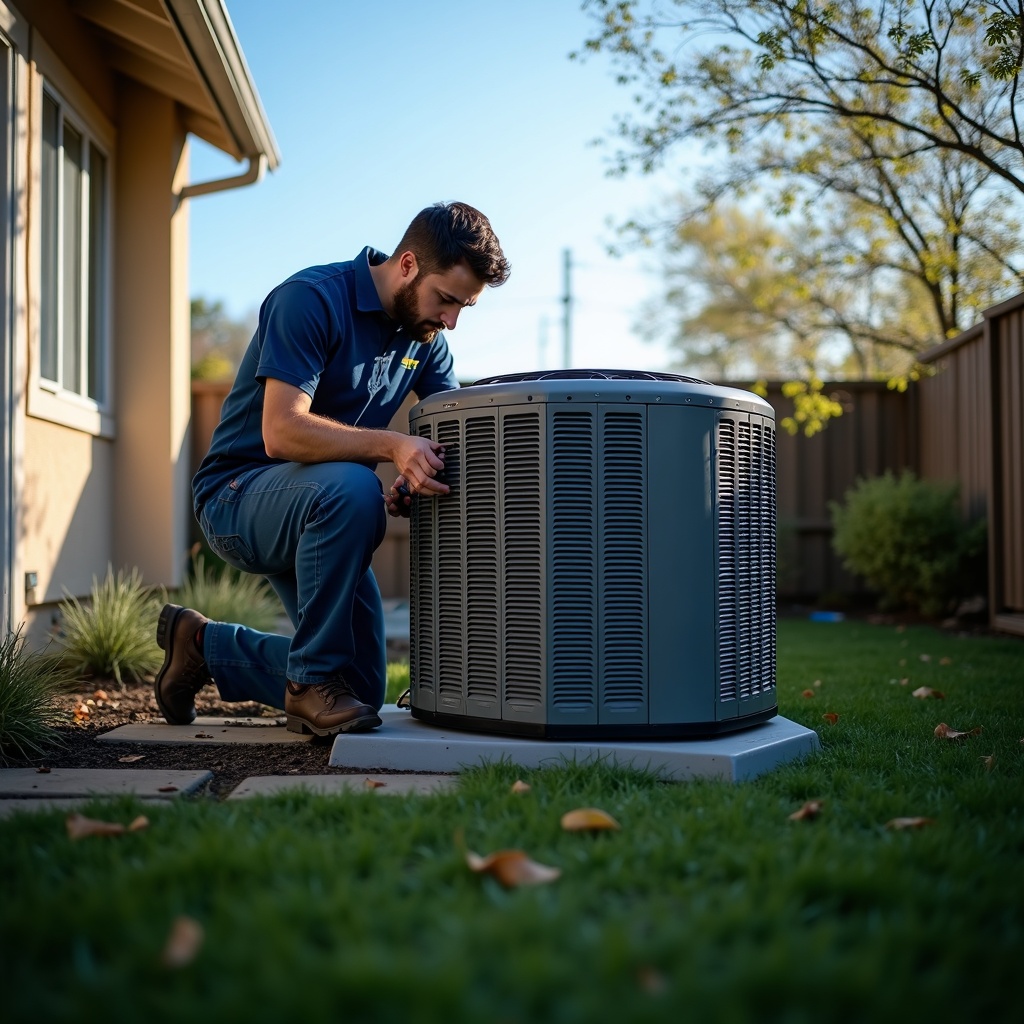
Your outdoor condenser sits exposed to weather year-round in Placentia’s coastal-influenced climate. By April, winter storms and spring winds have deposited leaves, dirt, pollen, and debris around the unit and inside the condenser coil fins. Walk outside and examine the unit: look for leaves packed against the sides, weeds growing underneath, or bent aluminum fins on the coil surface. Turn off power at the disconnect box, then use a garden hose (not a pressure washer, which can damage fins) to spray debris from the inside out through the coil. Clear at least two feet of space around all sides to ensure proper airflow—condenser units need room to exhaust heat efficiently. Straighten bent fins with a fin comb tool available at hardware stores. This 30-minute DIY task can restore 10-15 percent of lost efficiency before summer, but a professional hvac contractor in Placentia will clean coils more thoroughly using specialized coil cleaner and check refrigerant pressures during the same visit.
3. Test Electrical Components and Capacitors Early
Electrical failures cause the majority of mid-summer AC breakdowns in Placentia’s high-value homes, where systems sit unused for months and then suddenly face 100-degree demand. Capacitors—cylindrical components that provide the electrical jolt to start compressor and fan motors—degrade over time and often fail on the first hot day when homeowners switch on cooling after weeks of inactivity. A qualified technician will test capacitor microfarad ratings with a multimeter, inspect contactor points for pitting or wear, verify amp draw on compressor and fan motors, and check all electrical connections for corrosion or looseness. These components don’t typically fail gradually; they work fine until they don’t, leaving you without cooling on a 95-degree afternoon. Having a professional HVAC services in Placentia provider test electrical components in April—before peak demand—means you can replace a $200 capacitor on your schedule rather than paying emergency rates in July.
Why Capacitors Matter More Than You Think
Weak capacitors force compressor motors to draw excessive current during startup, shortening compressor lifespan and increasing the risk of catastrophic failure. A capacitor showing 10-15 percent below its rated microfarads should be replaced preventively, even if the system still runs. Most HVAC contractors include capacitor testing in comprehensive tune-ups, but not all basic maintenance visits check this critical component.
4. Verify Refrigerant Levels and Check for Leaks
Central air conditioners don’t consume refrigerant the way cars burn fuel—they circulate the same refrigerant in a closed loop for years. If refrigerant levels drop, your system has a leak that needs repair before adding more refrigerant. Low refrigerant causes reduced cooling capacity, frozen evaporator coils, and compressor damage. A professional technician will measure suction and discharge pressures, calculate superheat and subcooling, and compare readings to manufacturer specifications for your specific system. Most Placentia homes installed in the past 15 years use R-410A refrigerant, which currently costs $50-$100 per pound installed. A typical 3-ton system serving a 1,800-square-foot home holds 6-12 pounds total, making a complete recharge $300-$1,200 if all refrigerant leaked out. Catching a small leak in April and adding 1-2 pounds costs far less than discovering a major leak in June after the compressor has been damaged. Ask your contractor about leak detection methods—electronic leak detectors and UV dye provide more accurate results than simple pressure tests.
5. Clear and Test the Condensate Drain System
Placentia’s inland location means higher humidity during summer months compared to coastal neighbors like Newport Beach. Your indoor evaporator coil removes moisture from air as it cools, producing condensation that drains through a PVC pipe to the outside or into a floor drain. Over winter, algae and mold grow inside these drain lines, creating blockages that cause water to back up into the drain pan and potentially overflow into your ceiling or attic. Locate your condensate drain line—usually a 3/4-inch white PVC pipe exiting near the outdoor unit or through an exterior wall—and pour a cup of white vinegar or condensate pan tablets down the line to kill biological growth. Watch the drain outlet to confirm water flows freely. Many Placentia homes in neighborhoods like Atwood have secondary drain pans with separate emergency drain lines that should also be checked. Professional tune-ups include vacuuming drain lines and inspecting float switches that shut down the system if the primary drain clogs. This preventive step takes 10 minutes but prevents thousands in water damage repairs.
Signs Your Drain Line Needs Professional Attention
If you notice water pooled around the indoor unit, musty odors near air vents, or your system randomly shutting off during operation, the condensate drain may be completely blocked. Don’t ignore these warnings—water damage from overflowing drain pans can ruin ceilings, insulation, and create mold conditions that affect indoor air quality.
6. Check Thermostat Accuracy and Consider Upgrading
An inaccurate thermostat wastes energy and prevents comfortable temperatures, even when your central air conditioner runs perfectly. Test your thermostat by placing a reliable thermometer next to it and comparing readings after 15 minutes. Temperature differences of more than 2-3 degrees indicate calibration problems or a failing sensor. Older mechanical thermostats drift out of calibration over 10-15 years, while battery-powered digital models may show low-battery warnings before they fail completely. April is the ideal time to upgrade to a programmable or smart thermostat that automatically adjusts temperatures when you’re away and learns your schedule over time. These devices reduce cooling costs by 10-15 percent in Placentia’s climate by avoiding unnecessary runtime. Installation takes 30-60 minutes for a professional, and many AC repair in Brea and Placentia contractors include thermostat upgrades as part of system tune-ups. Smart models from brands like Ecobee and Honeywell integrate with home automation systems and provide energy usage reports that help identify efficiency problems before they become expensive failures.
DIY Tasks vs. Professional Service: What You Can Handle
Homeowners can safely handle filter changes, outdoor unit cleaning, and visual inspections without specialized tools or training. These monthly or quarterly tasks maintain system performance between professional visits. However, refrigerant work, electrical testing, and internal component cleaning require EPA certification, specialized gauges, and technical knowledge that only licensed technicians possess. Attempting DIY refrigerant work violates federal law and risks serious injury from high-pressure systems. A realistic approach combines monthly homeowner maintenance—changing filters, keeping the outdoor unit clear, and monitoring system performance—with annual professional service that addresses complex mechanical, electrical, and refrigerant systems. Schedule your professional tune-up in April before contractors’ calendars fill with emergency calls, and you’ll often receive off-season discounts of 10-20 percent compared to peak summer pricing.
Don’t wait for the first heat wave to discover your central air conditioner needs service. Shalom Heating & Air provides comprehensive pre-summer tune-ups for Placentia homeowners throughout Old Town, Golden Hills, and surrounding neighborhoods. Our technicians check all critical components, verify refrigerant levels, test electrical systems, and ensure your home stays comfortable when temperatures climb. Call (714) 886-2021 to schedule your April maintenance visit and avoid the mid-summer rush.
| Maintenance Task | DIY Homeowner | Professional Required |
|---|---|---|
| Air filter replacement | ✓ Monthly during peak use | — |
| Outdoor coil cleaning (external) | ✓ Basic rinsing | — |
| Condensate drain flushing | ✓ Vinegar treatment | — |
| Refrigerant testing/recharge | — | ✓ EPA certified only |
| Electrical component testing | — | ✓ Licensed technician |
| Internal coil deep cleaning | — | ✓ Specialized equipment |
❓ Frequently Asked Questions
How much does a pre-season AC tune-up cost in Placentia?
Most Placentia homeowners pay $85-$200 for a basic tune-up or $150-$300 for comprehensive service including refrigerant check and electrical testing. Scheduling in April often qualifies for off-season discounts of 10-20 percent compared to peak summer pricing.
What happens if I skip my spring AC maintenance?
Systems that don't receive pre-season maintenance are far more likely to fail during the first heat wave, when HVAC contractors have multi-day wait times for service calls. Dirty coils, low refrigerant, and weak capacitors cause 80-90 percent of mid-summer breakdowns that cost $300-$1,200 to repair on emergency basis.
Can I perform AC maintenance myself or do I need a professional?
Homeowners can safely change filters, rinse outdoor coils, and clear debris, but refrigerant work and electrical testing require EPA certification and specialized equipment. A realistic approach combines monthly DIY tasks with annual professional service from a licensed contractor.
When should I call Shalom Heating & Air for AC service in Placentia?
Call (714) 886-2021 in April or early May to schedule pre-season service before summer demand fills technician schedules. Early scheduling often provides faster appointment times and avoids the rush that begins in late May when temperatures reach the 90s.
