
Pilot Light Won’t Stay Lit in Brea? 6 Critical Things
Why Timing Matters: The Cost of Waiting on Pilot Light Issues
When your furnace pilot light refuses to stay lit in Brea, the clock starts ticking on more than just your comfort. Every day you delay diagnosis and repair, you’re risking potential dangerous gas leaks and higher emergency repair costs when the system fails completely during a cold snap. Many homeowners in neighborhoods like Olinda Ranch and Country Hills wait until overnight temperatures drop, only to discover that what could have been a $150-$250 thermocouple replacement has escalated into a $500+ emergency service call. Understanding the root causes of pilot light failure—and acting quickly—protects both your $860,000 home investment and your family’s safety.
📋 In This Guide
💰 Typical Pilot Light Repair Cost Ranges
- Thermocouple Replacement: $150–$250
- Gas Valve Replacement: $280–$550
- Flame Sensor Cleaning/Replacement: $150–$350
- Emergency After-Hours Service: $350–$500
- Diagnostic Service Call: $100–$150
1. Thermocouple Failure: The Most Common Culprit
The thermocouple acts as your furnace’s safety sentinel, detecting whether the pilot flame is present and signaling the gas valve to remain open. When this small sensor fails, it incorrectly tells the system to shut off gas flow even when the pilot is lit. If you relight the pilot and it repeatedly goes out, it may be because the thermocouple isn’t sending the right signal to keep the gas valve open. This component typically lasts 3-5 years before corrosion, dust buildup, or thermal stress causes failure.
In Brea’s climate, thermocouples can accumulate fine dust from nearby Carbon Canyon Regional Park during Santa Ana wind events, accelerating wear. The part itself costs only $10-$30, but the cost to replace a thermocouple on a furnace ranges from $100 to $250, including parts and labor, depending on furnace accessibility and whether your unit is tucked into an attic space common in many Brea homes. Professional replacement by a qualified Furnace Repair in Brea technician ensures proper positioning—the sensor tip must sit directly in the pilot flame for accurate readings.
How to Identify Thermocouple Problems
You can perform a visual inspection by removing the furnace access panel and locating the small copper tube extending into the pilot assembly. Look for visible corrosion, a bent position that moves the tip away from the flame, or a loose connection at the gas valve. If the pilot lights easily but extinguishes within 30 seconds of releasing the reset button, the thermocouple is almost certainly the problem. However, attempting DIY replacement involves working with gas connections—a task that requires shutting off gas supply and understanding proper torque specifications to prevent leaks.
2. Gas Supply Interruptions and Pressure Issues
Inconsistent gas pressure or supply problems can prevent pilot lights from staying lit, even when the thermocouple functions perfectly. Southern California Gas Company occasionally adjusts pressure during high-demand periods, and homes in areas like Downtown Brea with older gas infrastructure may experience more significant fluctuations. Additionally, if other gas appliances (water heaters, stoves, dryers) are running simultaneously, they can temporarily reduce pressure to the furnace.
Check your gas meter to confirm the valve is fully open—it should be parallel to the pipe. If you’ve recently had work done on any gas appliance, air may have entered the lines, requiring purging before the pilot will maintain a stable flame. Never attempt to adjust gas pressure regulators yourself; this requires calibrated instruments and creates serious safety risks. A licensed HVAC services in Brea technician can measure gas pressure at the furnace inlet (typically 3.5-7 inches of water column for natural gas) and identify whether the problem originates at the meter, in the supply line, or within the furnace gas valve itself.
Seismic Activity and Gas Connection Integrity
California’s seismic activity adds another layer of complexity. Even minor earthquakes can shift gas piping connections slightly, creating microscopic leaks that reduce pressure or allow air infiltration. If your pilot light problems began shortly after ground shaking, inspect visible gas connections for signs of movement. Many Brea homes built before 1990 lack flexible gas connectors, making rigid pipes more susceptible to stress fractures. This is particularly important in the Brea Canyon area where hillside construction puts additional stress on foundation-mounted utilities.
3. Draft and Ventilation Problems Blowing Out the Flame
Proper venting removes combustion byproducts while maintaining the negative pressure needed to sustain the pilot flame. When vent pipes develop cracks, become disconnected, or suffer blockages from bird nests or debris, backdrafts can extinguish the pilot. Downdrafts are especially problematic during Santa Ana wind conditions common in Brea, when strong gusts create pressure differentials that force air down the vent stack.
Inspect the vent pipe from your furnace to where it exits your home—look for rust holes, separated joints, or sagging sections where condensation has pooled. Attic-mounted furnaces in homes throughout Country Hills may have particularly long vent runs where problems can develop far from the unit itself. The vent cap on your roof should include a bird screen and draft hood; verify these components are intact and not blocked by leaves or nesting material. If you notice the pilot flame flickering wildly or blowing sideways rather than pointing straight up, you’re witnessing a ventilation problem that requires immediate professional assessment from an hvac contractor in Brea.
4. Dirty Pilot Assembly and Orifice Buildup
The pilot orifice—the tiny opening where gas flows to create the flame—is remarkably small, typically just 0.018-0.020 inches in diameter. Even microscopic debris can partially obstruct this opening, creating a weak, yellow flame that fails to adequately heat the thermocouple. Natural gas contains trace amounts of sulfur and other compounds that, over years of combustion, leave mineral deposits inside the orifice. Dust, spider webs, and insulation fibers from attic installations contribute to the problem.
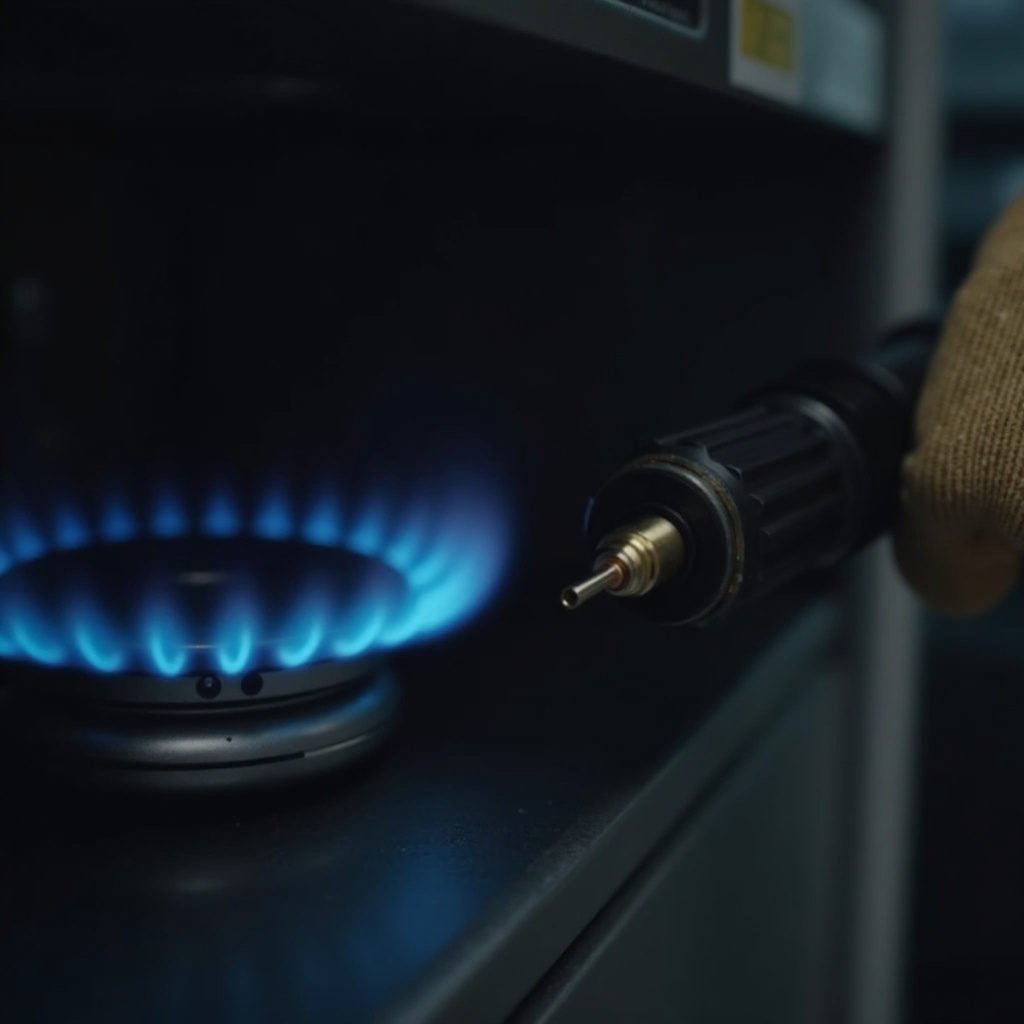
A healthy pilot flame should be bright blue with a small yellow tip, standing 1-2 inches tall and producing a slight roaring sound. For gas furnaces, the pilot light should be a steady blue. A yellow or flickering flame can indicate a ventilation problem or the presence of carbon monoxide, a serious safety hazard. If your flame is entirely yellow, weak, or produces a sooty residue on surrounding components, the pilot assembly needs cleaning. Professional cleaning involves removing the pilot assembly, using specialized wire tools to clear the orifice without damaging it, and reinstalling with new gaskets. This typically costs $200-$300 when combined with a Indoor Air Quality in Brea inspection to identify the contamination source.
| Pilot Flame Characteristic | What It Indicates | Action Required |
|---|---|---|
| Bright blue, 1-2″ tall | Normal operation | No action needed |
| Yellow or orange flame | Incomplete combustion, possible CO production | Immediate professional service |
| Weak, small flame | Clogged orifice or low gas pressure | Cleaning and pressure test |
| Flickering or dancing flame | Draft issues or ventilation problems | Vent inspection required |
| No flame despite gas flow | Ignition failure or complete blockage | Emergency professional repair |
5. Flame Sensor and Control Board Malfunctions
Modern furnaces use electronic flame sensors that work alongside or instead of thermocouples, continuously monitoring for flame presence throughout the heating cycle. These sensors use flame rectification technology, detecting the electrical conductivity difference between the flame and the sensor rod. When sensors accumulate carbon deposits or suffer corrosion, they fail to detect the flame and shut down the gas valve as a safety precaution. Flame sensor replacement can cost between $280 and $470, as flame sensors prevent unnecessary gas flow.
Control boards orchestrate the entire ignition sequence: purging the combustion chamber, opening the gas valve, energizing the ignitor, and verifying flame establishment. Circuit board failures can manifest as intermittent pilot problems that seem to have no pattern—working fine for days, then repeatedly failing. These issues often worsen during temperature extremes when attic-mounted equipment in Brea homes experiences thermal stress. Diagnosing control board problems requires specialized testing equipment and often leads to component replacement rather than repair, with costs ranging $300-$600 depending on the furnace model.
6. Safe Relighting Procedures and When to Call Professionals
Before attempting to relight any pilot, verify you don’t smell gas anywhere near the furnace. If you detect even a faint gas odor, do not attempt ignition—evacuate immediately, avoid creating sparks (don’t use light switches or phones near the smell), and call Southern California Gas Company’s emergency line at 1-800-427-2200 from outside your home. Only proceed with relighting if the area is completely clear of gas smell and you’ve allowed at least 5 minutes for any accumulated gas to dissipate.
To safely relight a standing pilot, locate the gas control knob on your furnace and turn it to the “Off” position. Wait at least 5 minutes for residual gas to clear. Turn the knob to “Pilot,” press and hold the reset button, and use a long lighter or match to ignite the pilot while continuing to hold the button for 30-60 seconds. This allows the thermocouple to heat sufficiently to signal the gas valve. Release the button—the pilot should remain lit. If it extinguishes immediately, do not repeatedly attempt relighting; you’re dealing with a component failure that requires professional diagnosis. Similarly, if the pilot stays lit during the “Pilot” setting but goes out when you turn the knob to “On,” suspect a bad gas valve or control board issue.
When DIY Becomes Dangerous
While relighting a pilot is generally safe for homeowners, several situations demand immediate professional intervention from an hvac company in Brea. Never attempt repairs if you smell gas, hear hissing sounds from gas connections, see physical damage to the furnace cabinet or vent pipes, or notice soot accumulation around the burner area. If the pilot has gone out more than three times in a week, you’re dealing with a systemic problem that relighting won’t solve. California regulations require licensed contractors for any work involving gas connections, and homeowner’s insurance typically won’t cover damage from DIY gas appliance repairs. Given the stakes—potential carbon monoxide poisoning, gas explosions, and voiding manufacturer warranties—professional diagnosis makes both safety and financial sense.
For homeowners in Brea facing persistent pilot light issues, Shalom Heating & Air provides expert diagnosis and repair services at (714) 886-2021. Our technicians arrive with the specialized tools and replacement parts needed to resolve pilot light problems in a single visit, backed by transparent pricing and workmanship warranties. We serve all Brea neighborhoods from downtown to Brea Canyon, understanding the unique challenges that local construction styles, climate conditions, and aging gas infrastructure present. Whether you need a simple thermocouple replacement or complete gas valve overhaul, we’ll restore your furnace to safe, reliable operation—and help you understand preventive maintenance steps to avoid future failures. Don’t let a failing pilot light escalate into a costly emergency repair or dangerous gas leak; experienced help is just a phone call away.
