
AC Heatwave Prep: What Breaks When You Wait Too Long
When Cooling Systems Collapse: The Hidden Danger in Southern California Heatwaves
The worst AC failures happen when you need cooling most. A station in Long Beach hit 109 degrees Fahrenheit on September 6, 2024, and across Orange County, inland areas regularly push past 100°F during late summer heatwaves. Many people who die of extreme heat die inside their homes without adequately running air conditioning. In Buena Park’s established neighborhoods — from Bellehurst to San Tract — families in mid-range homes face a stark reality: it’s not uncommon for aging or poorly-maintained AC systems to give out while working against extreme temperatures. Preparing your AC for a heatwave in Buena Park isn’t optional maintenance — it’s emergency planning that prevents compressor burnout, electrical failures, and the dangerous indoor temperatures that follow. This guide breaks down exactly what happens when cooling systems fail under extreme load, the 24–48 hour preparation steps that prevent catastrophic breakdowns, and the emergency protocols every homeowner should have ready before the next heatwave warning.
📋 In This Guide
Why Air Conditioners Fail During Extreme Heat — And What Actually Breaks First
The Mechanical Reality of Heat Stress
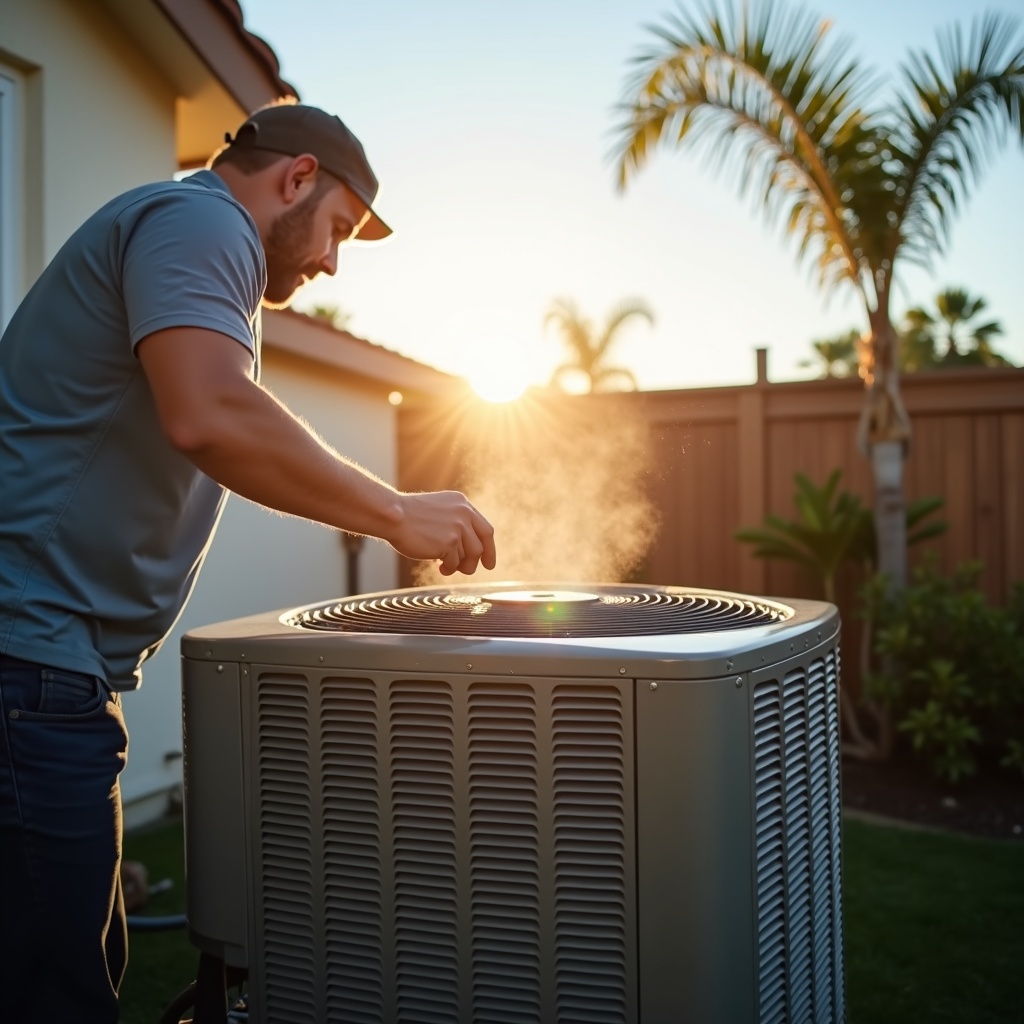
The combination of high temperatures and humidity provides extreme stress to the equipment and can cause the system to fail at any point during a heatwave. When outdoor temperatures exceed 95°F — common during Buena Park’s September heat surges — your AC’s outdoor condenser unit struggles to release heat into air that’s already saturated with thermal energy. Once the temperature exceeds 95°F, the air conditioning system must work overtime, as it becomes increasingly difficult for the outdoor unit to release warm air back into the already hot surroundings. The compressor, which pressurizes refrigerant to transfer heat, runs continuously without the normal rest cycles that prevent overheating.
The Five Components That Fail Under Peak Load
Heat waves can exacerbate the susceptibility of AC units to malfunction, as increased demand often pushes systems beyond their design limits. From compressor overloads to refrigerant leaks, various factors can contribute to system failure when temperatures rise. Aging components, lack of maintenance, and improper installation can all play significant roles. The most vulnerable parts: capacitors that store electrical charge to start motors, fan motors in both indoor and outdoor units, evaporator coils that can paradoxically freeze when airflow is restricted, refrigerant lines that develop leaks under thermal expansion, and the compressor itself — the most expensive component to replace. During heatwaves, leak issues become obvious: if your system is a bit low on refrigerant, it may still cool on mild days but struggle once it’s really hot. Low refrigerant means the AC can’t absorb as much heat, so the system runs constantly without reaching the set temperature.
What Homeowners Miss Until It’s Too Late
The warning signs appear days or weeks before total failure. Small issues like dirty filters, low refrigerant levels, or blocked drain lines go unnoticed until they cause a larger failure. These seemingly minor problems force your AC to work harder than it should, leading to inefficiency, higher energy bills, and costly breakdowns. A slight decline in cooling performance, longer run cycles to reach set temperatures, or unusual sounds from the outdoor unit all indicate an overworked system approaching failure. Working with a reliable Ac Repair in Buena Park service before heatwave warnings can identify these problems while they’re still minor.
Your 24–48 Hour Emergency Preparation Protocol
Immediate System Assessment
When forecasts predict temperatures above 95°F, start with these checks: Replace or clean your air filter immediately — clogged or dirty filters impede airflow, compelling the AC unit to use additional energy. This can lead to less effective cooling and higher indoor temperatures, as restricted circulation prevents cold air from spreading through your home. Walk outside and inspect the condenser unit: clear vegetation, debris, and obstructions within two feet of all sides. Check that your thermostat is set to “cool” mode and programmed to avoid extreme temperature swings — setting it 5–7 degrees lower than current indoor temperature forces the system into continuous operation that accelerates wear.
Thermostat Strategy for Peak Heat
Program your thermostat strategically before the heatwave arrives. Set the temperature to 78°F during occupied hours and avoid frequent adjustments that trigger hard starts. Pre-cool your home to 75°F in early morning (before 10 AM) when outdoor temperatures are lowest and your AC operates most efficiently. During afternoon peak heat (2–7 PM), resist the urge to lower settings — your system is already working at maximum capacity. Consider raising the setting to 80°F during these hours if you can tolerate it, which reduces compressor strain during the most dangerous period for mechanical failure.
Shade and Insulation Quick-Fixes
According to the Department of Energy, 76% of the sunlight that falls on standard double-pane windows enters to become heat. Prevent this heat gain in your home by closing all of your curtains and blinds. In Buena Park’s neighborhoods where many homes were built in the 1960s and 70s, window coverings make a measurable difference. Install reflective window film or cardboard-backed foil panels on south- and west-facing windows that receive direct afternoon sun. Check attic ventilation — hot attics transfer heat directly into living spaces and force your AC to combat both outdoor heat and radiant heat from above. Seal visible gaps around windows and doors with weather stripping.
Emergency Supply Checklist
Prepare for the possibility of AC failure by assembling: battery-powered fans (they won’t cool air but increase evaporative cooling from skin), ice and coolers (fill bathtubs with cold water for emergency cooling baths), plenty of drinking water (at least one gallon per person per day), and contact information for emergency AC repair services. Identify the nearest cooling centers — Buena Park’s public libraries and community centers typically serve this function during heat emergencies. Have a plan for vulnerable family members: Older adults, children and people with certain illnesses and chronic conditions are at greater risk from extreme heat. Know when to call an HVAC services in Buena Park professional versus when to evacuate to a cooler location.
When to Schedule Emergency Service — And What Signals Immediate Failure
The 48-Hour Window
If heatwave forecasts give you 48 hours notice, that’s your window for professional preventative service. A skilled hvac contractor in Buena Park can identify refrigerant leaks, test capacitor voltage, clean condenser coils, and verify electrical connections — all the interventions that prevent mid-heatwave failures. During extreme heat events, repair companies prioritize emergency no-cooling calls, which means preventative appointments may not be available. Schedule service during the 24–48 hour period between forecast and arrival of peak temperatures.
Warning Signs That Demand Immediate Attention
Call for emergency service immediately if you observe: ice forming on refrigerant lines or indoor coils (indicates critically low airflow or refrigerant), a burning smell that may indicate electrical issues or overheating components — the system should be turned off right away to prevent fire risk, strange grinding or squealing noises from the outdoor unit (suggests bearing failure in compressor or fan motor), or frequent circuit breaker trips when the AC attempts to start. These symptoms indicate imminent total failure. Especially during high temperatures, lack of cooling in extreme heat can create serious health risks and should be addressed immediately.
What a Pre-Heatwave Service Visit Should Include
Professional heatwave preparation goes beyond standard maintenance. Technicians should measure electrical amperage draw on the compressor and fan motors to detect components operating outside normal parameters, test capacitor microfarad ratings (capacitors weaken before they fail completely), check refrigerant superheat and subcool temperatures to verify proper charge levels, and inspect condensate drain operation. HVAC technicians can identify and rectify underlying issues that might not be apparent to homeowners. For example, they can inspect the refrigerant levels, electrical connections, and overall system performance, addressing any potential problems before they escalate. An hvac company in Buena Park familiar with local conditions understands that coastal humidity levels affect system performance differently than inland heat.
| Preparation Action | DIY (24–48 hrs before) | Professional Service |
|---|---|---|
| Air Filter | Replace or clean immediately | Inspect filter housing, check for bypass leaks |
| Thermostat Settings | Pre-cool to 75°F in early morning, raise to 78–80°F during peak | Verify calibration, test anticipator settings |
| Outdoor Unit | Clear debris within 2 feet, shade from direct sun if possible | Clean coils, test fan motor amperage, check refrigerant pressures |
| Electrical Components | Verify breaker hasn’t tripped, look for corrosion at disconnect | Test capacitor microfarads, measure compressor amperage, tighten connections |
| Window/Insulation | Close blinds on south/west windows, seal visible gaps | Thermal imaging to identify major insulation failures (if needed) |
Emergency Protocols When Your AC Fails Mid-Heatwave
Despite preparation, failures still occur. Air conditioning failures rarely happen at convenient times. During extreme heat, indoor temperatures can rise quickly. High indoor heat may damage electronics, furniture, and wood flooring. It can also create health risks for children, elderly family members, and pets. If your system stops cooling during a heatwave, first check the obvious: verify the thermostat is set to “cool” and the temperature setting is below current room temperature, confirm the circuit breaker hasn’t tripped (reset it once if needed, but call for service if it trips again), and check that the outdoor unit fan is spinning (if the compressor hums but the fan doesn’t spin, the fan motor or capacitor has failed).
If these checks reveal no solution, implement emergency cooling measures immediately: close all windows and exterior doors, draw curtains and blinds on all sun-facing windows, turn off heat-generating appliances (ovens, dishwashers, clothes dryers), and move to the coolest room in your home (typically north-facing rooms on the lowest floor). You should also focus on keeping your body cool and hydrated. Exposure to a hot environment can make you susceptible to heatstroke, especially if you perform strenuous activities and don’t stay hydrated. Small children and the elderly are particularly prone to heatstroke. Place cold, wet towels on wrists, neck, and forehead. Drink water continuously even if you don’t feel thirsty. If indoor temperatures exceed 85°F and you have vulnerable household members, relocate to a cooling center, library, or air-conditioned business.
Contact emergency AC repair services immediately — during heatwaves, response times extend due to call volume. Professional AC repair teams that offer around-the-clock service can respond quickly. Service vehicles are typically stocked with common replacement parts such as contactors, capacitors, and fan motors. This allows technicians to complete most repairs during the first visit. Calling Shalom Heating & Air at (714) 886-2021 connects you with technicians who stock common failure parts and understand the urgency of heatwave repairs. Explain symptoms clearly: when the system stopped working, any unusual sounds or smells, and whether the outdoor unit is running. This information helps technicians arrive prepared with likely replacement components.
If you’re experiencing multiple HVAC challenges, understanding both cooling and heating performance helps you make informed decisions — exploring resources like Why Seasonal Temperature Changes Affect Furnace Performance in Buena Park provides context for year-round system reliability. For homeowners near major attractions, specific challenges exist: families living near Knott’s Berry Farm or Medieval Times deal with both higher property values and the expectation of reliable climate control for guests visiting from out of town.
Long-Term Prevention: Building Heatwave Resilience Into Your System
Emergency preparation prevents immediate failures, but long-term resilience requires systematic maintenance. Preventative maintenance is one of the most cost-effective ways to extend the life of your air conditioner and avoid expensive breakdowns. Regular HVAC inspections and cleanings allow HVAC professionals to catch small issues — like a weak capacitor or partially clogged drain — before they become major problems. A well-maintained system also runs more efficiently, helping you lower your energy bills while keeping your home consistently cool. Schedule professional maintenance in March or April, before cooling season begins and before service companies become overwhelmed with emergency calls.
Annual maintenance should include refrigerant pressure testing and leak detection using electronic leak detectors, electrical testing of all motors and the compressor with amperage measurements, condenser and evaporator coil cleaning to restore heat transfer efficiency, and airflow measurement to verify ductwork isn’t restricting circulation. For Buena Park homeowners with systems over 10 years old, consider installing a surge protector dedicated to the AC unit — the number of major outages in the US doubled between 2017 and 2020. Most of the increase is happening during the summer months, that tells me that these systems are not resilient. Power fluctuations during grid stress damage sensitive electronic controls.
Upgrade components proactively rather than waiting for failures during heatwaves: replace capacitors every 5–7 years regardless of performance (they weaken gradually), install a hard-start kit if your compressor struggles to start, and consider a two-stage or variable-speed system replacement if your current single-stage unit runs constantly. Understanding the full scope of when repairs make sense versus replacement helps — reviewing information like What Delaying Your HVAC Decision Will Cost You in Buena Park provides financial context for these decisions. Your home’s value and the Orange County climate justify investing in reliability.
Monitor your system’s performance continuously during summer months. Track runtime hours if your thermostat displays them — if the AC runs more than 18 hours per day during moderate weather (85–90°F), efficiency has degraded. Note any changes in cooling performance week to week. Document utility bills monthly and investigate if costs spike without corresponding temperature increases. These data points help technicians diagnose developing problems before they cause failures. If you’re also concerned about heating season reliability, exploring Furnace Repair in Buena Park options ensures your system performs year-round.
Finally, understand your system’s age and expected lifespan. Air conditioners typically last 12–15 years in Southern California’s climate, where they run extensively. If your unit approaches this age and you’re investing in frequent repairs, the next heatwave may be the time it fails permanently. Planning replacement during moderate weather — rather than as an emergency during a 105°F heatwave — gives you time to research options, compare quotes, and potentially qualify for utility rebates. For broader context about common failures during peak season, Top 5 AC Problems in Buena Park Every Summer outlines patterns that help you anticipate issues.
Heatwave preparation isn’t a one-time checklist — it’s an ongoing strategy that combines immediate pre-event protocols, emergency response planning, and long-term system maintenance. For Buena Park homeowners managing mid-range properties and balancing comfort with budget consciousness, this approach prevents both the discomfort of failed cooling and the financial strain of emergency repairs during peak-demand periods. When forecast temperatures climb above 95°F, you’ll have confidence that your preparation has positioned your AC system to handle the stress — and backup plans ready if it doesn’t. Reach out to Shalom Heating & Air at (714) 886-2021 to schedule your pre-season assessment or emergency service when you need it most.
