HVAC in Older Homes: Common Problems and Solutions
Older homes come with unique HVAC challenges — from undersized ductwork to outdated refrigerants. This guide walks you through the most common problems and the smartest solutions.
Why Do Older Homes Have So Many HVAC Problems?
Homes built before 1990 were designed around heating and cooling equipment that no longer exists in its original form — and the infrastructure built to support that equipment often cannot handle modern systems without modification. Duct sizing, insulation levels, electrical capacity, and even wall thickness were all calculated for older technology with lower efficiency standards. When a modern HVAC unit gets dropped into that environment without adjustments, problems multiply fast.

California’s housing stock includes millions of homes built between the 1940s and 1980s. According to the U.S. Census Bureau’s American Housing Survey, a significant share of California’s occupied housing units were constructed before 1980. Each decade brought different construction norms, and HVAC systems have changed dramatically since then — from the refrigerants used to the efficiency ratings required by law.
This hvac older homes guide is designed to help homeowners understand exactly what goes wrong, why it happens, and what the most practical fixes look like in real California conditions.
What Are the Most Common HVAC Issues in Older Homes?
The six most frequent problems in older homes are undersized or deteriorating ductwork, outdated refrigerants, mismatched equipment, poor insulation, electrical system gaps, and aging heat exchangers. Each one has a specific cause and a clear solution path.
Ductwork Problems
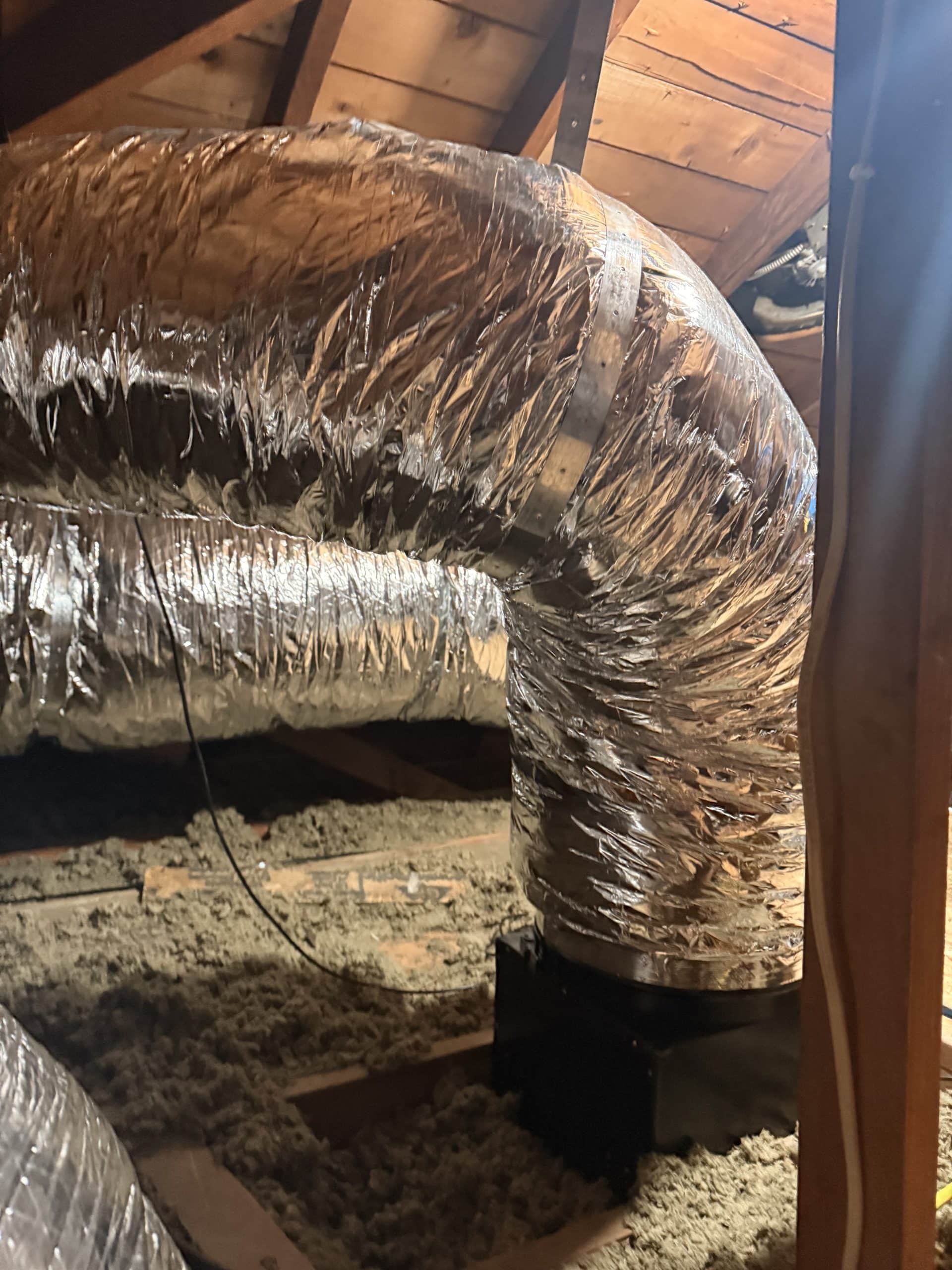
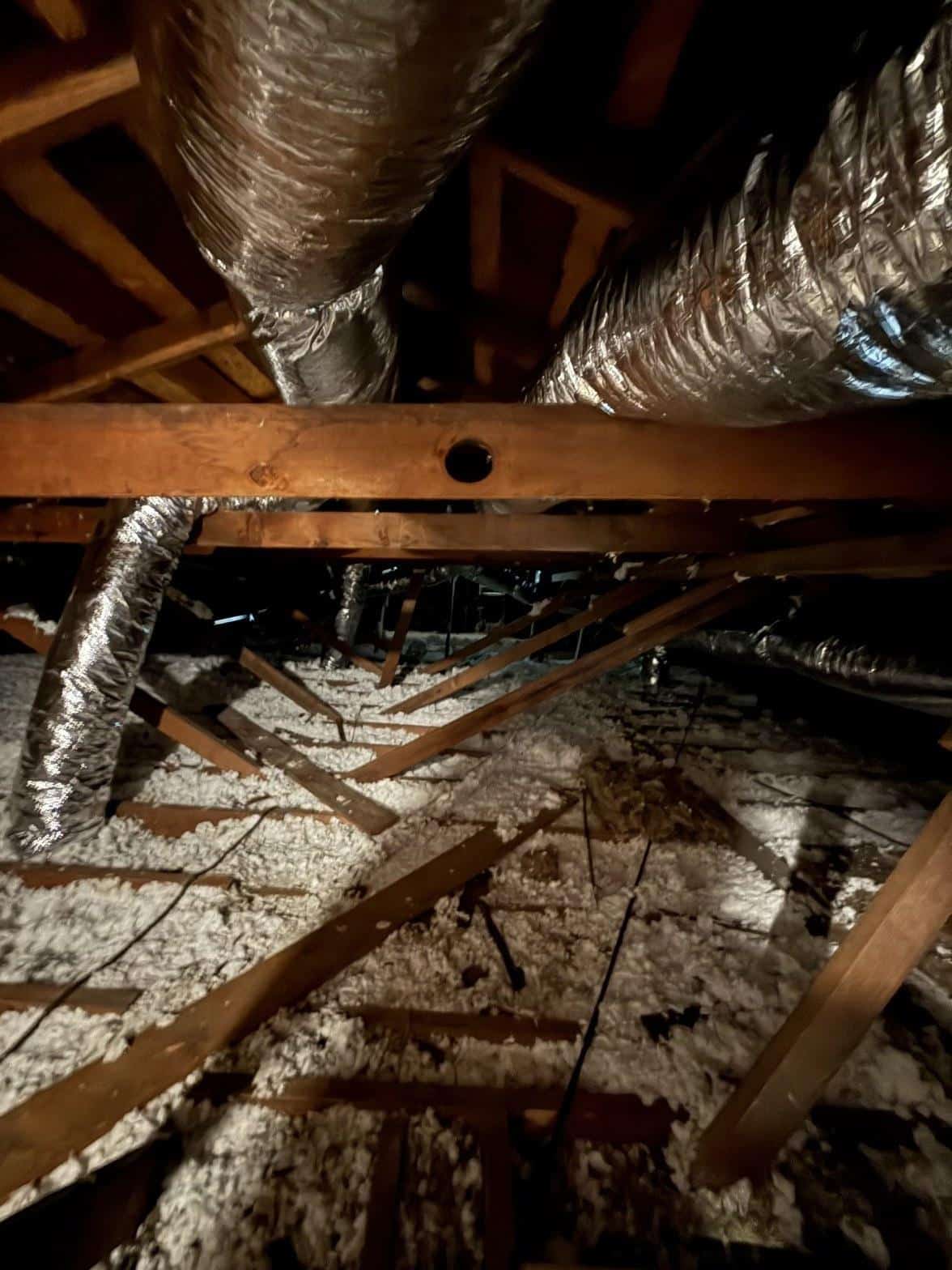
Ducts installed before the 1980s were often sized using rules of thumb rather than a proper Manual J load calculation. The result is ductwork that is either too small for a modern air handler or riddled with leaks from decades of settling, pest damage, and deteriorating mastic. The U.S. Department of Energy estimates that leaky ducts can waste 20 to 30 percent of the conditioned air a system produces — a major driver of high utility bills in older homes.
The U.S. Department of Energy estimates that leaky ducts can waste 20 to 30 percent of the conditioned air a system produces — a major driver of high utility bills in older homes.
Flex duct installed in the 1970s and 1980s is especially prone to kinking and collapse. Sheet metal ducts from that era often have unsealed joints held together with nothing more than friction and deteriorated tape.
Outdated Refrigerants
Systems manufactured before 2010 commonly use R-22 refrigerant, which the EPA phased out of production under EPA refrigerant regulations (Section 608) as of January 1, 2020. R-22 is still available as a reclaimed substance, but supply is tight and prices have climbed sharply. A system that leaks R-22 today can cost several hundred dollars just for the refrigerant recharge — before any repair work is factored in.
Mismatched or Oversized Equipment
When homeowners replace just the outdoor condenser unit without replacing the indoor air handler, they often end up with a mismatched system. A new high-efficiency condenser paired with an old coil loses most of its rated efficiency. Oversized equipment — common in older homes where contractors guessed at load rather than calculated it — short-cycles, which means it runs in short bursts, never fully dehumidifying the air and wearing out components faster.
Electrical System Gaps
Modern central air conditioning systems typically require a dedicated 240-volt circuit rated at 30 to 60 amps depending on the unit size. Many homes built before 1970 have 100-amp main panels that were never designed to carry that load alongside modern appliances. Adding a new HVAC system without upgrading the electrical panel can trip breakers repeatedly or, worse, create a fire hazard.
Aging Heat Exchangers in Furnaces
Gas furnaces in older homes — especially those 20 years or older — are at risk of cracked heat exchangers. A cracked heat exchanger allows combustion gases, including carbon monoxide, to mix with the air circulating through the home. This is a safety issue, not just an efficiency issue, and it typically means the furnace must be replaced rather than repaired.
Poor Insulation and Air Sealing
HVAC equipment cannot overcome a poorly sealed building envelope. Homes built before California’s Title 24 building energy standards took effect in 1978 often have little to no wall insulation and single-pane windows. Even a perfectly sized, properly installed system will run almost continuously in summer if the home bleeds conditioned air through gaps in the attic, walls, and around windows.
How Do You Know When to Repair vs. Replace an Older HVAC System?
The clearest signal to replace rather than repair is when the repair cost exceeds 50 percent of the cost of a new system, or when the existing equipment is more than 15 years old and requires a major component like a compressor or heat exchanger. Age, refrigerant type, and efficiency rating are the three fastest ways to assess whether a repair makes financial sense.
Our technicians find that roughly 6 out of 10 service calls on systems older than 18 years result in a replacement recommendation — not because repair is impossible, but because the cost of keeping aging equipment running reliably over the next 3 to 5 years exceeds the cost of a new system with a manufacturer warranty.
| Factor | Lean Toward Repair | Lean Toward Replace |
|---|---|---|
| System age | Under 10 years old | 15 years or older |
| Refrigerant type | R-410A or R-32 | R-22 (phased out) |
| Repair cost vs. replacement | Less than 30% of replacement cost | More than 50% of replacement cost |
| SEER2 rating | Close to current minimums (14.3+ SEER2 in CA) | Below 10 SEER (pre-2006 standard) |
| Heat exchanger condition | Intact, no cracks detected | Cracked — replace immediately |
| Frequency of repairs | First or second issue in 5 years | Recurring issues every 1-2 years |
California’s current minimum efficiency standard for new central AC systems, as established under California’s Title 24 building energy standards, is 14.3 SEER2 for most split systems. A system from the early 2000s running at 8 or 9 SEER uses roughly 40 percent more electricity to produce the same cooling as a new minimum-standard unit. That gap in operating cost often tips the math toward replacement.
A system from the early 2000s running at 8 or 9 SEER uses roughly 40 percent more electricity to produce the same cooling as a new minimum-standard unit.
What Does It Cost to Upgrade HVAC in an Older Home?
In the Southern California regional market, a full HVAC system replacement in an older home typically ranges from $6,000 to $15,000 or more, depending on system type, home size, duct condition, and electrical work required. Partial upgrades — replacing only the air handler or only the condenser — generally run $2,500 to $6,000 before any duct or electrical work is factored in.
The factors that push costs toward the higher end of the range include:
- Duct replacement or major sealing: Full duct replacement in a 1,500 to 2,500 square foot home typically adds $3,000 to $7,000 to the project cost.
- Electrical panel upgrade: Adding a dedicated circuit or upgrading from a 100-amp to a 200-amp panel generally runs $1,500 to $4,000 in this market.
- Attic or crawlspace access difficulty: Homes with limited attic access, original knob-and-tube wiring, or asbestos-wrapped ducts require additional labor and safety precautions.
- System type: Ductless mini-split systems, which are a strong option for older homes without existing ductwork, typically run $3,000 to $6,000 per zone installed.
- Equipment efficiency tier: ENERGY STAR-rated systems with SEER2 ratings of 18 or higher cost more upfront but qualify for rebates and deliver lower monthly operating costs.
Always request a written, itemized quote before any work begins. Projects in this category vary widely based on scope, and a proper Manual J load calculation should be completed before any equipment is sized.
What Rebates and Tax Credits Are Available for HVAC Upgrades?
California homeowners upgrading HVAC equipment in older homes can access both federal tax credits and state or utility rebate programs — in some cases stacking them to reduce the net cost by $1,000 to $3,000 or more. As of 2026, the primary sources of financial assistance are the Inflation Reduction Act federal tax credit, TECH Clean California, and local utility rebate programs.
- Inflation Reduction Act federal tax credit: Homeowners who install qualifying heat pumps or high-efficiency HVAC equipment may claim a federal tax credit of up to $2,000 per year under the Energy Efficient Home Improvement Credit (25C). Details are available at energy.gov.
- TECH Clean California: This statewide program offers rebates on qualifying heat pump systems and heat pump water heaters, with enhanced incentives for income-qualified households. Rebates have reached up to $3,000 on qualifying installations.
- SoCalGas and SCE rebates: Southern California utility customers may qualify for additional rebates on high-efficiency equipment through their utility provider’s energy efficiency programs.
- ENERGY STAR certification: Equipment must meet ENERGY STAR efficiency thresholds to qualify for most rebate programs — confirm ratings before purchasing.
Rebate programs change frequently. Confirm current availability and income eligibility requirements with your contractor or directly with the program administrator before committing to a specific equipment choice.
How Do You Choose the Right HVAC Solution for an Older Home?
The right solution depends on whether the home has existing ductwork in serviceable condition, the home’s electrical capacity, the local climate zone, and the homeowner’s budget for upfront cost versus long-term operating savings. There is no single answer that fits every older home — but there are three main paths most projects take.
Path 1: Repair and Optimize the Existing System
If the system is under 12 years old, uses a current refrigerant, and the ductwork is in reasonable condition, targeted repairs combined with duct sealing and a programmable or smart thermostat can extend the system’s useful life by 5 to 8 years at a fraction of replacement cost. This path makes sense when the home is also getting insulation or window upgrades that will reduce the load on the existing system.
Path 2: Full Central System Replacement
For homes with existing ductwork that can be sealed or partially replaced, a full central system replacement — new air handler, new condenser, new coil — is typically the most cost-effective long-term choice. Pairing the new system with a Manual J load calculation ensures the equipment is correctly sized, avoiding the short-cycling problems common in older homes where equipment was oversized from the start.
Path 3: Ductless Mini-Split Installation
For homes without existing ductwork, with severely deteriorated ducts, or with additions and converted spaces that cannot be served by the central system, ductless mini-splits are a strong option. A multi-zone mini-split system can heat and cool an entire home without any ductwork, and modern units achieve SEER2 ratings above 20 — well above the minimum required under California’s Title 24 building energy standards. We see ductless systems installed in roughly 1 in 4 older-home projects across Southern California, particularly in homes built before 1960 that were never designed for central air.
Key Questions to Ask Before Choosing
- What is the condition of the existing ductwork? A duct leakage test (blower door or duct blaster) gives a concrete answer rather than a visual guess.
- What is the home’s electrical panel capacity? A licensed electrician should evaluate this before equipment is selected.
- Has a Manual J load calculation been performed? Equipment sized without one is almost always wrong — either too large or too small.
- Does the proposed equipment qualify for available rebates? SEER2 rating, refrigerant type, and equipment category all affect rebate eligibility.
- Is the contractor Licensed by the California Contractors State License Board (CSLB)? Verify the license number at cslb.ca.gov before signing any contract.
Get Expert Help from Shalom Heating & Air
Older homes require a more careful approach to HVAC than new construction — the right equipment choice, correct sizing, and honest assessment of ductwork and electrical conditions all matter. Shalom Heating & Air works with homeowners across Southern California on exactly these projects, from straightforward system replacements to complex older-home retrofits involving duct work, electrical upgrades, and ductless installations.
Schedule a full system evaluation and get a written, itemized quote before any work begins. Call (714) 886-2021 to book your appointment. Same-day and next-day availability is offered for urgent repair situations.
Explore our full range of HVAC services across Southern California.
Frequently Asked Questions
How do I know if my older home's HVAC ductwork needs to be replaced?
Signs that ductwork needs replacement include rooms that are consistently hotter or cooler than the thermostat setting, visible tears or disconnected sections in accessible ducts, and utility bills that are unusually high despite a functioning system. A duct leakage test performed by a licensed HVAC technician gives a concrete measurement — if more than 15 percent of airflow is lost to leaks, replacement or major sealing is typically the right call. Flex duct installed before 1990 is especially prone to collapse and should be inspected closely.
Can I just replace the outdoor AC unit and keep the old indoor equipment in my older home?
Replacing only the outdoor condenser while keeping an old indoor air handler and coil is generally not recommended. Mismatched systems lose most of the efficiency gains the new outdoor unit is rated for, and in some cases the old coil is incompatible with the new refrigerant the outdoor unit uses. A matched system replacement — both indoor and outdoor components — delivers the efficiency and reliability the new equipment is rated for and typically qualifies for rebates that a partial replacement does not.
What refrigerant does my older AC system use, and is it still available?
Systems manufactured before 2010 almost always use R-22 refrigerant, which the EPA phased out of production as of January 1, 2020 under EPA refrigerant regulations (Section 608). R-22 is still available as a reclaimed substance, but supply is limited and costs have risen significantly — making repeated recharges on a leaking R-22 system expensive. If your system uses R-22 and has a refrigerant leak, replacement with a system using current refrigerants like R-410A or R-32 is usually the more cost-effective long-term choice.
How much does it typically cost to replace HVAC in an older home in Southern California?
In the Southern California regional market, a full HVAC system replacement in an older home typically ranges from $6,000 to $15,000 or more, depending on system type, home size, duct condition, and whether electrical upgrades are needed. Duct replacement can add $3,000 to $7,000 to the project, and electrical panel upgrades add another $1,500 to $4,000 in many cases. Contact Shalom Heating & Air at (714) 886-2021 for a written, itemized quote based on your specific home.
Are there rebates available for upgrading HVAC in an older California home?
Yes — as of 2026, California homeowners can access the Inflation Reduction Act federal tax credit of up to $2,000 per year for qualifying heat pump or high-efficiency HVAC installations, plus TECH Clean California rebates that have reached up to $3,000 on qualifying systems. Southern California utility customers may also qualify for additional rebates through SCE or SoCalGas efficiency programs. Equipment must meet ENERGY STAR efficiency thresholds to qualify for most programs, so confirm ratings and current rebate availability with your contractor before choosing equipment.