
Spring HVAC Maintenance Checklist for Orange Homeowners
Why Spring Maintenance Protects Your Orange Home Investment
📋 In This Guide
As the spring breeze starts warming Old Towne Orange and temperatures climb toward Southern California’s intense summer heat, your HVAC system faces months of demanding work ahead. For Orange homeowners with properties valued around $900,000, protecting your cooling system isn’t just about comfort—it’s about safeguarding a significant home investment and avoiding emergency repairs during triple-digit heat waves.
Spring represents the critical window for HVAC preparation before cooling season hits full force. In Orange’s 92865, 92866, 92867, 92868, and 92869 neighborhoods, May and June typically bring temperatures into the 80s and 90s, with July and August pushing well into the 100s. Waiting until your AC fails on the hottest day of summer means competing with hundreds of other homeowners for emergency service—often at premium pricing.
Proactive maintenance catches small issues before they become expensive problems. A refrigerant leak detected in April costs far less than replacing a burned-out compressor in July. Similarly, addressing ductwork problems during mild weather prevents energy waste when you’re running your system 12 hours daily during heat waves. For Orange families seeking smart home management, spring maintenance delivers both peace of mind and measurable return on investment through lower energy bills and extended equipment lifespan.
Critical Outdoor Unit Care Before Summer Heat Arrives
Your outdoor condenser unit works harder than any other component during Orange’s summer months, and spring preparation directly impacts its performance when temperatures soar. Start by clearing the area around your unit—remove dead leaves, trim back plants to maintain at least two feet of clearance on all sides, and check for debris buildup from winter storms and Santa Ana winds.
The condenser coils themselves require careful attention. Throughout winter and early spring, pollen from Orange’s abundant trees accumulates on these fins, along with dust, dirt, and airborne particles. This buildup acts like insulation, preventing proper heat transfer and forcing your system to work harder. Using a garden hose with a spray nozzle, gently rinse the coils from inside out (never use a pressure washer, which can bend the delicate aluminum fins). For heavily soiled units, consider scheduling professional coil cleaning as part of your AC repair in Orange service.
Inspect the concrete pad beneath your unit for settling or tilting, which can strain refrigerant lines and create drainage problems. In Orange neighborhoods near Chapman University and Orange Heights, older homes may have units that have gradually settled over decades. Check electrical connections for corrosion, especially the disconnect box near the unit. Finally, listen for unusual sounds when the system starts—grinding, squealing, or rattling noises signal problems that should be addressed before summer demand increases.
Indoor System Components That Need Spring Attention
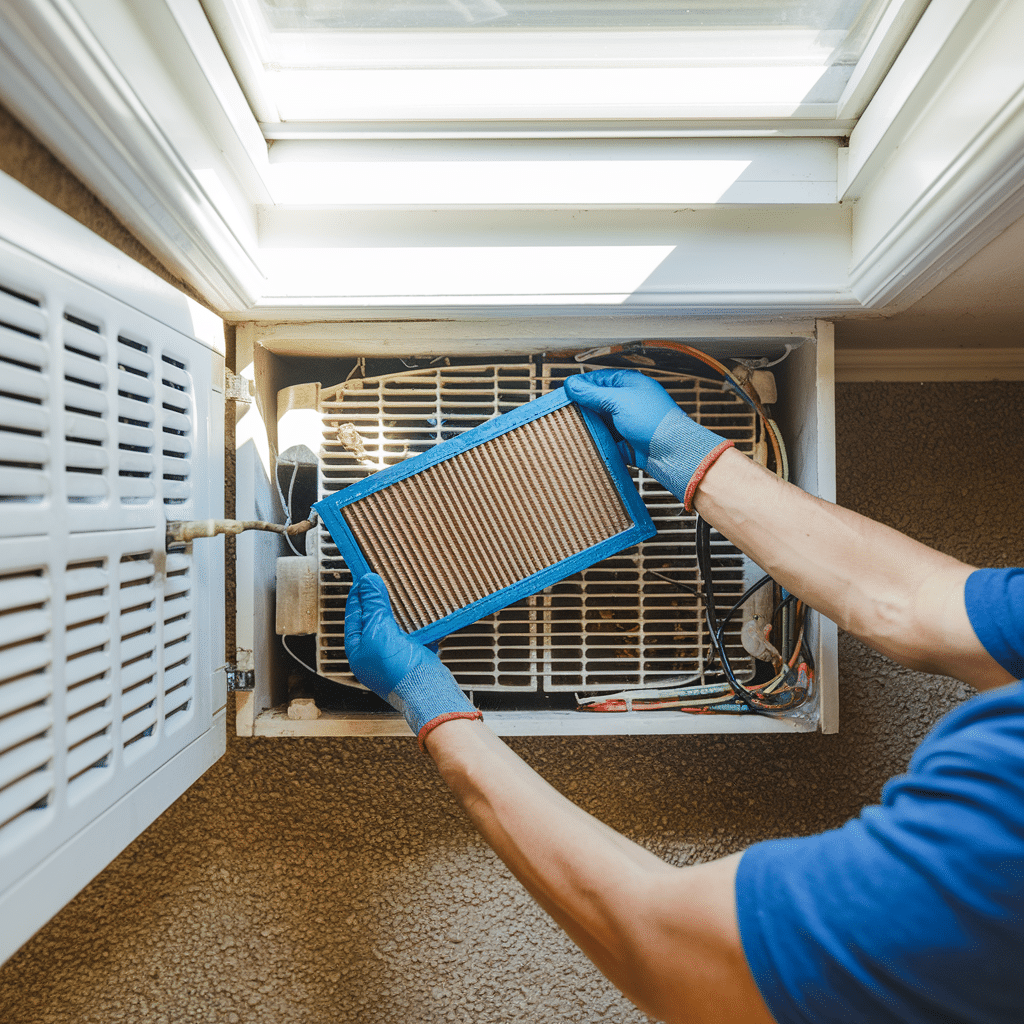
While outdoor units get the most attention, your indoor components play equally important roles in summer comfort. Begin with air filters—the single most important maintenance task homeowners can perform themselves. During spring, Orange experiences high pollen counts from local vegetation, and many residents also deal with residual dust from Santa Ana wind events. Replace standard filters monthly, or check higher-efficiency pleated filters every two months. Homes near Old Towne Orange’s tree-lined streets may need even more frequent changes during peak pollen season.
Your thermostat deserves a spring checkup as well. Replace batteries in battery-powered models, clean dust from sensors using compressed air, and verify temperature accuracy by comparing readings with a separate thermometer. If your thermostat is more than ten years old, consider upgrading to a programmable or smart model that can adjust temperatures based on your schedule—a valuable upgrade for Orange’s working families who can raise temperatures during empty daytime hours and cool homes before arrival.
Inspect supply and return vents throughout your home, removing dust buildup and ensuring furniture, curtains, or storage items haven’t blocked airflow. Check your condensate drain line by pouring a cup of water mixed with a tablespoon of vinegar down the drain—this prevents algae growth that can cause backups during high-humidity periods. For homes with attic-mounted air handlers common in Orange’s housing stock, visually inspect the drip pan for standing water or rust, which indicates drainage problems requiring professional attention. If you’re experiencing comfort issues in specific rooms, it may indicate ductwork problems best addressed through HVAC services in Orange before summer arrives.
Professional Tune-Up Tasks Worth the Investment
While homeowners can handle many spring maintenance tasks, professional HVAC technicians bring expertise, specialized tools, and diagnostic capabilities that maximize system performance and longevity. A comprehensive spring tune-up includes refrigerant level checks—critical for proper cooling efficiency. Low refrigerant indicates leaks that waste energy and reduce cooling capacity, while overcharged systems can damage compressors. Only licensed technicians can legally handle refrigerants and properly diagnose charging issues.
Professionals also test electrical components using multimeters and amp clamps to verify proper voltage, amperage draw, and capacitor function. Capacitors—the components that help motors start and run—commonly fail during Orange’s hot summers, and spring testing identifies weak capacitors before they leave you without cooling. Technicians measure airflow across evaporator coils, ensuring your system moves the proper volume of air for efficient operation. They also inspect blower motors, belts (on older systems), and bearings for wear.
Perhaps most importantly, professional maintenance includes safety checks. Technicians verify proper operation of safety switches, inspect electrical connections for overheating signs, and ensure refrigerant lines are properly insulated. For Orange homeowners in older properties throughout 92865 and surrounding areas, these safety inspections provide peace of mind that aging systems remain safe for another season. Many HVAC companies offer maintenance agreements that bundle spring and fall tune-ups at reduced rates—an excellent value for Orange families managing household budgets while maintaining valuable home systems. If problems are discovered during maintenance, addressing them before summer often means lower repair costs and better scheduling flexibility than emergency calls during heat waves.
Spring preparation also represents the ideal time to discuss system performance with technicians. If your energy bills have crept upward, if certain rooms don’t cool properly, or if your system seems to run constantly, these conversations can identify whether repairs, ductwork improvements, or eventually replacement make financial sense. For systems approaching 15 years of age in Orange’s climate, planning replacement during moderate weather provides more options and better pricing than emergency replacement during a July heat wave.
Air Quality Improvements for Healthier Summer Indoor Living
Orange’s spring and summer months bring specific air quality challenges that smart homeowners address before cooling season begins. Wildfire smoke from regional fires increasingly impacts California communities, and spring represents the time to upgrade filtration systems before summer fire season arrives. Standard one-inch filters capture large particles but miss smoke particulates, pollen, and allergens. Consider upgrading to four-inch media filters, electronic air cleaners, or HEPA filtration systems that dramatically improve indoor air quality in Orange homes.
For families with allergies, asthma, or respiratory sensitivities, spring maintenance should include duct cleaning assessment. While not necessary for every home annually, properties that have undergone renovation, homes with pets, or systems showing visible dust buildup around vents benefit from professional duct cleaning. Orange’s older homes—particularly those in established neighborhoods near Old Towne—may have decades of accumulated dust in original ductwork.
Humidity control matters too, even in Southern California’s relatively dry climate. Coastal moisture can affect Orange properties, particularly those closer to neighboring Anaheim and Garden Grove areas. Spring maintenance should verify proper condensate drainage and consider whether whole-house dehumidifiers would improve comfort. Conversely, extremely dry conditions during Santa Ana wind events can be addressed with humidification systems that integrate with your HVAC.
Ultraviolet (UV) light systems installed in air handlers kill mold, bacteria, and viruses circulating through ductwork. For Orange families concerned about indoor air quality—particularly homes with immune-compromised residents—spring installation means cleaner air throughout summer’s closed-window season when homes recirculate indoor air continuously. These systems represent a modest investment that pays ongoing health dividends, particularly valuable for Orange homeowners managing multigenerational households common in the area’s diverse communities.
Ready to ensure your Orange home stays comfortable all summer? Call Shalom Heating & Air at (714) 886-2021 to schedule your spring HVAC maintenance. Our experienced technicians serve all Orange neighborhoods from Old Towne to Orange Heights, providing thorough tune-ups that maximize efficiency, prevent breakdowns, and extend system lifespan. Don’t wait for the first heat wave—protect your home investment with professional spring maintenance today.
