
Is Your Long Beach HVAC System Ready for Summer? Here’s How to Check
Why Early Summer Preparation Matters in Long Beach’s Coastal Climate
📋 In This Guide
Long Beach homeowners face unique cooling challenges each summer. With temperatures regularly climbing into the 80s and 90s—and occasional heat waves pushing past 100 degrees—your air conditioning system doesn’t just provide comfort; it’s essential for health and safety. Whether you’re among the 40% of Long Beach residents who own their homes or you’re a landlord maintaining rental properties in neighborhoods like Downtown Long Beach, Alamitos Beach, or the East Village Arts District, a failing AC during peak summer isn’t just inconvenient—it’s potentially dangerous.
Our coastal location brings additional considerations that inland areas don’t face. Salt air from the Pacific accelerates corrosion on outdoor units, while Long Beach’s position near major highways and industrial areas means your air filters work overtime capturing pollutants. Add seasonal pollen from California’s unique vegetation and potential wildfire smoke that drifts into the region during fire season, and you understand why spring HVAC maintenance Long Beach residents schedule before temperatures spike is absolutely critical.
At Shalom Heating & Air, we’ve been helping Long Beach families avoid mid-summer breakdowns for years. The pattern is consistent: homeowners who invest in preventive maintenance in April or May rarely call us for emergency repairs in July and August. Those who skip this crucial step? They’re often facing expensive repairs during the hottest days of the year when HVAC companies are busiest and replacement parts are harder to source.
Your Essential DIY Pre-Summer HVAC Checklist
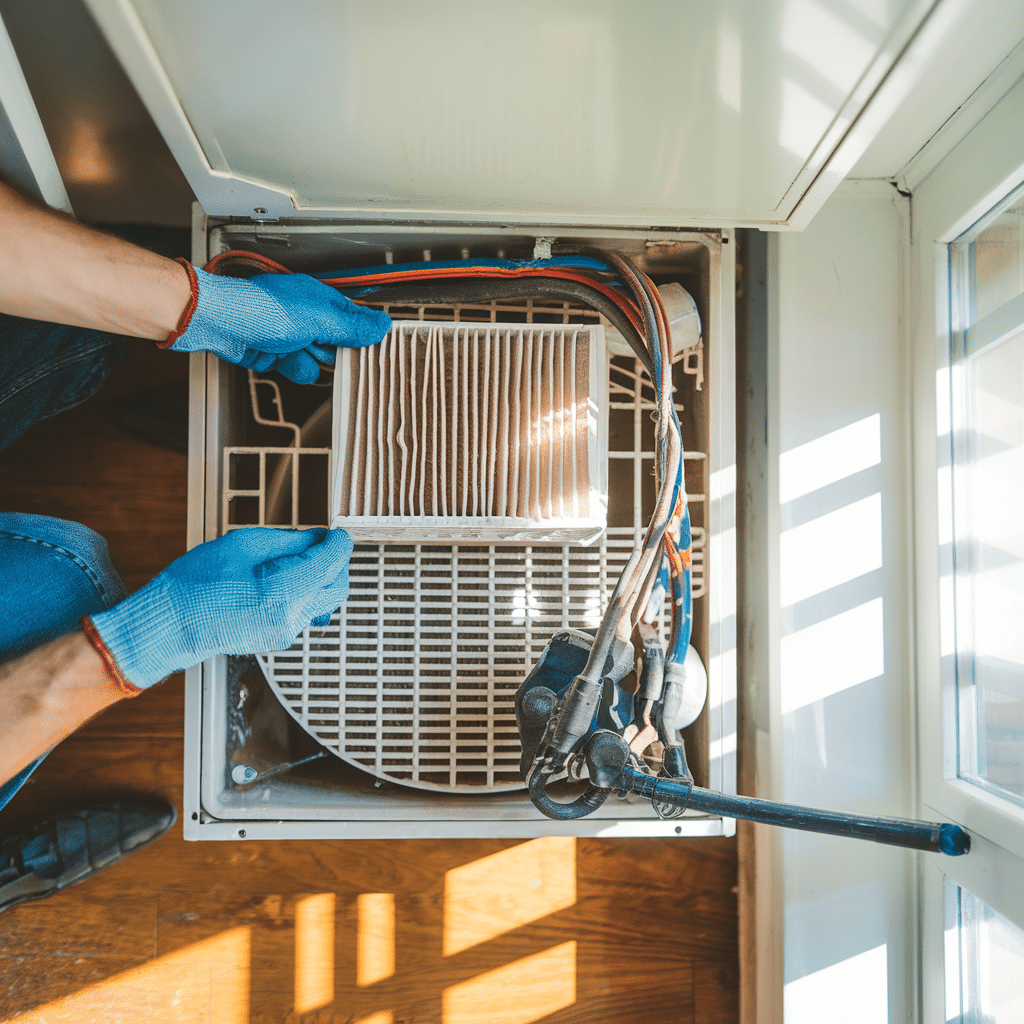
Before calling for professional service, Long Beach homeowners can tackle several important maintenance tasks that significantly improve system performance. Start with your air filter—this simple component has an outsized impact on efficiency and indoor air quality. In Long Beach’s dusty, pollen-heavy environment, filters accumulate particles quickly. Check your filter monthly during cooling season, and replace it when it looks dirty or every 30-90 days depending on usage and indoor air quality in Long Beach conditions.
Next, inspect your outdoor condenser unit. This equipment sits exposed to the elements year-round, accumulating leaves, coastal debris, dirt, and even spider webs inside the unit. Turn off power to the unit at your electrical panel, then carefully remove any debris from around and inside the unit. Use a garden hose (never a pressure washer, which can damage delicate fins) to gently spray the condenser coils from the inside out, removing accumulated dirt and salt deposits that reduce efficiency.
Inside your home, check all supply and return vents. Remove vent covers and vacuum out any dust buildup. Ensure furniture, curtains, or storage items aren’t blocking airflow—restricted vents force your system to work harder and can create hot spots in your Long Beach home. Walk through each room and verify that your thermostat accurately reflects the temperature. If you notice a discrepancy of more than two degrees, your thermostat may need recalibration or replacement.
Finally, listen to your system. Turn on your AC and pay attention to any unusual sounds—grinding, squealing, banging, or rattling can indicate developing problems that are easier and cheaper to fix before they cause a complete breakdown. If you hear anything concerning, that’s your cue to schedule professional AC repair in Long Beach before the problem worsens.
What Professional Spring Maintenance Includes
While DIY maintenance is valuable, professional tune-ups address components and systems that homeowners can’t safely or effectively service themselves. When you schedule spring HVAC maintenance Long Beach residents trust with Shalom Heating & Air, our certified technicians perform a comprehensive 25-point inspection designed to catch problems before they cause failures.
Refrigerant level checking is crucial yet impossible for homeowners to perform. Low refrigerant doesn’t just reduce cooling capacity—it forces your compressor to work harder, increasing energy consumption and potentially causing expensive component damage. Our technicians measure refrigerant levels precisely, identify any leaks, and recharge systems to manufacturer specifications. This single service often pays for itself through improved efficiency and avoided repairs.
Electrical connection inspection prevents dangerous failures. Our technicians check all electrical connections, measure voltage and amperage on motors, and tighten any loose connections. Electrical problems are among the most common causes of AC failures during Long Beach heat waves, when systems run for extended periods. We also inspect your capacitor—the component that helps motors start and run efficiently. Capacitors weaken over time, and replacing a failing capacitor during maintenance prevents a mid-summer breakdown.
Condenser and evaporator coil cleaning goes far beyond what homeowners can accomplish with a garden hose. Using specialized cleaning solutions and tools, we remove stubborn buildup that restricts heat transfer. In Long Beach’s salt air environment, this thorough cleaning is especially important—coastal corrosion and salt deposits significantly reduce efficiency if not properly addressed. We also check your condensate drain line, which frequently clogs with algae and mold in California’s humidity, potentially causing water damage to your home.
For homes with HVAC services in Long Beach that include ductwork, we inspect accessible sections for leaks, damage, or disconnections that waste cooled air. Studies show that typical duct systems lose 20-30% of conditioned air through leaks, directly increasing your energy bills. We identify problem areas and recommend repairs that quickly pay for themselves through reduced energy consumption.
Long Beach-Specific Summer Preparation Considerations
Long Beach’s unique environment creates specific HVAC challenges that require targeted preparation. Wildfire smoke has become an unfortunate reality of California summers, and when smoke from distant fires drifts into the South Bay area, your HVAC system becomes your primary defense for maintaining breathable indoor air. Before wildfire season intensifies, consider upgrading to MERV 13 or higher filters if your system can accommodate them. These filters capture fine particulate matter from smoke while still allowing adequate airflow.
If you live near the coast in areas like Alamitos Beach or Naples, salt air corrosion requires extra attention. During your spring maintenance, ask your technician to specifically inspect your outdoor unit’s coil coating for deterioration. Coastal units benefit from specialized coil cleaners designed to remove salt deposits, and in severe cases, protective coatings can extend equipment life. Property owners near the water often see reduced equipment lifespan without this targeted maintenance.
Long Beach heat waves—while less extreme than inland areas—still push systems to their limits, especially in older homes without adequate insulation. Before summer arrives, assess your home’s ability to retain cool air. Check weatherstripping around doors and windows, ensure attic insulation meets current standards, and consider whether west-facing windows would benefit from UV-blocking window film. These improvements reduce the cooling load on your HVAC system, helping it maintain comfort even during extreme weather.
For landlords managing rental properties in Long Beach’s competitive rental market, pre-summer HVAC maintenance isn’t optional—it’s a legal and practical necessity. California law requires landlords to provide functioning cooling in habitable rental units. Scheduling maintenance before summer prevents tenant complaints, reduces liability, and avoids expensive emergency service calls. Document all maintenance for your records, and consider establishing a preventive maintenance schedule that includes filter changes between professional services.
When to Call Shalom Heating & Air for Professional Service
Certain situations demand immediate professional attention, especially as summer approaches. If your system is more than 10 years old and hasn’t been professionally serviced in over a year, don’t wait—older systems are far more likely to fail under summer heat stress. Long Beach homes built before 2000 often have original HVAC equipment approaching or exceeding its design life, making breakdowns increasingly likely without proper maintenance.
Notice your energy bills creeping upward even though your usage hasn’t changed? This often signals developing efficiency problems that professional maintenance can address. Small issues like dirty coils, low refrigerant, or failing capacitors reduce efficiency before causing complete failures. Addressing these problems during spring maintenance costs a fraction of what you’d pay for emergency repairs during a July heat wave—plus you’ll save on inflated cooling costs all summer.
If you’re experiencing uneven cooling—some rooms comfortable while others remain stuffy and warm—schedule a professional evaluation. This common Long Beach problem stems from various causes: leaky ductwork, undersized equipment, poor system design, or blocked vents. Our technicians diagnose the root cause and recommend targeted solutions rather than band-aid fixes.
Finally, if you’re considering selling your Long Beach property, pre-summer HVAC maintenance provides documentation of proper care that appeals to buyers and their home inspectors. Well-maintained systems are a selling point in our competitive real estate market, potentially adding value to homes in neighborhoods like Belmont Shore or California Heights where buyers expect turn-key condition.
Don’t wait for the first 95-degree day to discover your AC isn’t ready for summer. Contact Shalom Heating & Air at (714) 886-2021 to schedule your pre-summer HVAC tune-up. Our Long Beach technicians are scheduling spring maintenance appointments now, ensuring your system delivers reliable, efficient cooling all summer long. With convenient service throughout zip codes 90802, 90803, 90804, 90805, and 90806, we’re your trusted partner for AC repair in Long Beach and preventive maintenance that protects your comfort and your investment.
❓ Frequently Asked Questions
How often should Long Beach homeowners schedule professional HVAC maintenance?
Long Beach homeowners should schedule professional HVAC maintenance at least once annually, ideally in spring before summer cooling season begins. Homes near the coast with salt air exposure, properties with older systems, or homes with residents who have allergies or respiratory conditions may benefit from twice-yearly service. Spring maintenance prepares your AC for summer heat, while fall service ensures your heating system is ready for cooler months. Regular professional maintenance extends equipment life, improves efficiency, and catches small problems before they become expensive failures.
What HVAC maintenance tasks can Long Beach homeowners do themselves?
Long Beach homeowners can handle several important maintenance tasks: replace air filters monthly or every 1-3 months depending on conditions; clear debris from around outdoor condenser units; gently hose off outdoor coil surfaces to remove salt deposits and dirt; ensure vents aren't blocked by furniture or curtains; vacuum supply and return vents; and verify thermostats accurately reflect room temperatures. However, tasks involving refrigerant, electrical components, internal cleaning, and system diagnostics require professional expertise for safety and effectiveness.
Why is spring the best time for AC maintenance in Long Beach?
Spring is ideal for AC maintenance in Long Beach for several reasons: HVAC companies have more availability before peak summer demand, allowing for flexible scheduling and thorough service; technicians can identify and fix problems before heat waves when parts and service are harder to obtain; you'll test your system before you desperately need it, avoiding emergency situations; and addressing efficiency issues before summer saves money on cooling costs throughout the season. Waiting until summer often means expensive emergency service calls during extreme heat when systems are most likely to fail.
How does Long Beach's coastal location affect HVAC maintenance needs?
Long Beach's coastal proximity creates unique HVAC challenges requiring specific maintenance attention. Salt air accelerates corrosion on outdoor units, particularly condenser coils and metal components, requiring more frequent cleaning and inspection. Coastal humidity promotes algae growth in condensate drain lines, increasing clog risk. Ocean breezes carry sand and debris that accumulate in outdoor units. Air filters work harder capturing coastal pollutants and require more frequent replacement. Professional maintenance should include specialized cleaning to remove salt deposits and inspection of protective coatings on outdoor equipment to extend system life in this corrosive environment.
📖 More Tips for Long Beach
-
 New Package Unit Installation With Ducts
Shalom Heating & Air completed a full package unit installation with new ductwork in a Long Beach, CA…
-
 New Rooftop Package Unit Installation
A Long Beach homeowner upgraded to a new high-efficiency rooftop package unit, replacing an aging system with a…


