
Furnace Repair in Long Beach: Signs Your Heater Needs Service This Year
Why Do Furnaces Fail in Long Beach, CA?
Long Beach furnaces fail most often from long idle periods followed by sudden heavy use — a pattern driven directly by the local Mediterranean climate. Summers here are dry and warm, so most furnaces sit untouched for five to seven months. Then Santa Ana wind events sweep in during October and November, dropping humidity below 10 percent and raising fire risk, followed almost immediately by cooler nights that push indoor temperatures down. Homeowners flip the heat on for the first time in months — and that’s when deferred problems surface.
The housing stock in Long Beach adds another layer of complexity. Many homes in ZIP codes 90802, 90804, and 90806 were built between the 1940s and 1970s. Furnaces in those homes are sometimes 15 to 25 years old, well past the U.S. Department of Energy‘s general guidance that most gas furnaces last 15 to 20 years. Coastal neighborhoods like Alamitos Beach also deal with salt-laden marine-layer air that can accelerate corrosion on heat exchangers (the internal component that transfers heat from the burner to your living space) and electrical contacts.
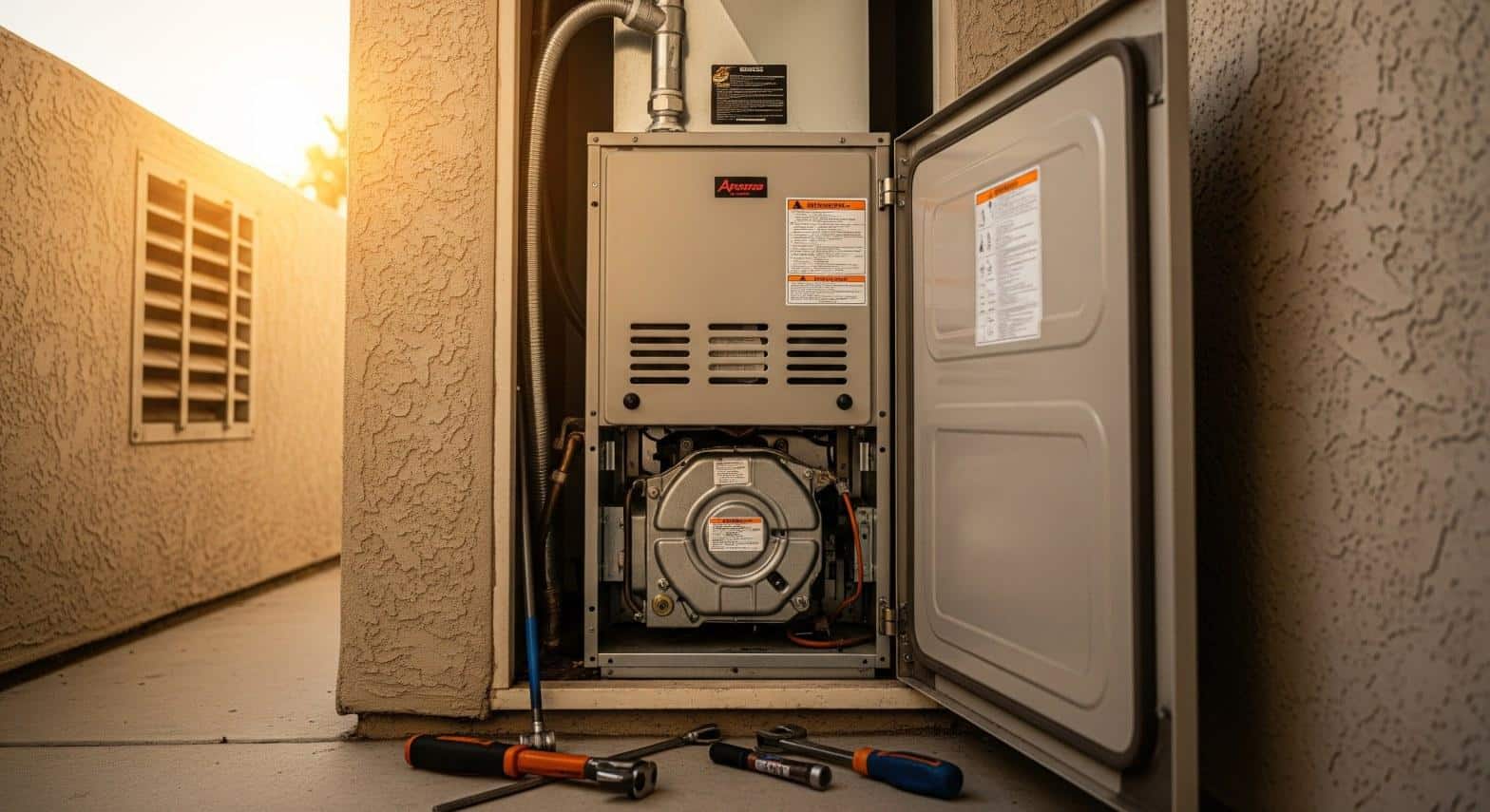
What Are the Warning Signs Your Furnace Needs Repair in Long Beach?
The most common warning signs are unusual noises, weak or uneven heat, short cycling, and a yellow or flickering pilot flame. Catching these early usually means a simpler, less expensive fix.
- Banging or booming at startup: Often caused by delayed ignition, where gas builds up before the burner lights. This can stress the heat exchanger over time.
- Weak or uneven airflow: Some rooms stay cold while others are warm. This points to a failing blower motor, blocked ducts, or a clogged filter.
- Short cycling: The furnace turns on, runs for only a few minutes, then shuts off before the house reaches the set temperature. Common causes include an overheating limit switch or a dirty flame sensor.
- Yellow or orange pilot flame: A healthy gas flame is blue. A yellow or orange flame can indicate incomplete combustion or a carbon monoxide risk and should be checked immediately.
- Unusual smells: A brief dusty smell at first startup is normal after a long idle period. A persistent burning smell, rotten-egg odor (which signals a gas leak), or metallic scent all require professional attention right away.
- Rising energy bills with no usage change: A furnace working harder than it should — due to a dirty heat exchanger or failing components — burns more gas to produce the same heat.
- Thermostat not responding: If the system doesn’t respond within a minute or two of a temperature change, the issue could be the thermostat itself, a tripped circuit, or a failed control board.
What Can You Safely Check Yourself Before Calling a Pro?
Before scheduling a service call, homeowners can safely check four things: the air filter, the thermostat settings, the circuit breaker, and the furnace’s power switch. These steps resolve a surprising number of no-heat calls and cost nothing.
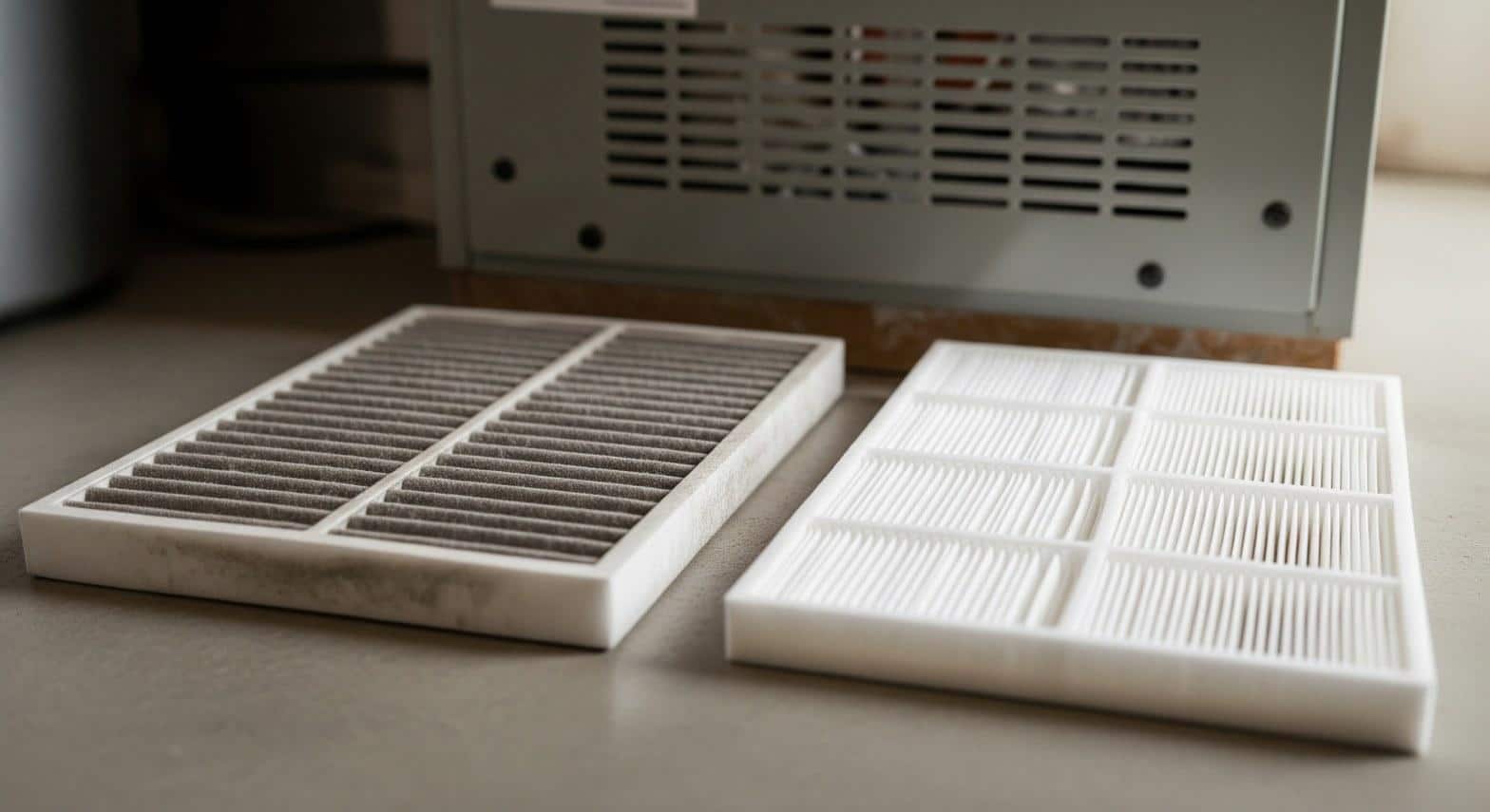
- Check and replace the air filter. A filter clogged with dust is the single most common cause of reduced airflow and overheating. Filters in Long Beach homes should be replaced every 1 to 3 months during heating season. Hold it up to a light — if you can’t see light through it, replace it with a matching size (check the cardboard frame for the dimensions).
- Confirm thermostat settings. Make sure the system is set to HEAT, not COOL or FAN ONLY, and that the set temperature is at least 3 to 5 degrees above the current room temperature. Replace the thermostat batteries if it has them — low batteries cause erratic behavior.
- Check the circuit breaker. Locate your electrical panel and look for a tripped breaker labeled FURNACE or HVAC. A tripped breaker sits in the middle position, not fully on or off. Reset it once. If it trips again immediately, stop and call a technician.
- Check the furnace power switch. Most furnaces have a wall switch near the unit that looks like a standard light switch. It’s sometimes accidentally flipped off. Make sure it’s in the ON position.
- Clear the area around the furnace. Furnaces need at least 30 inches of clearance on all sides. Stored boxes or laundry piled near the unit can block combustion air intake and trigger a safety shutoff.
When Should You Call a Professional for Furnace Repair in Long Beach?
Call a licensed HVAC technician immediately if you smell gas, see a yellow flame, notice soot around the unit, or if the furnace keeps tripping the breaker. These symptoms can involve carbon monoxide exposure or a gas leak — both are life-safety issues that go beyond DIY.
You should also call a pro for any of the following:
- Cracked heat exchanger: This is the most serious furnace failure. A cracked heat exchanger can leak carbon monoxide into living spaces. It requires a licensed technician with combustion-analysis tools to diagnose.
- Ignitor or flame sensor replacement: These parts cost between $20 and $80 in parts, but accessing them safely requires shutting off the gas supply and working inside the furnace cabinet. This is a job for a licensed tech.
- Blower motor failure: A failed blower motor (the fan that pushes heated air through your ducts) requires electrical work and refrigerant-side access on some systems. Replacement typically takes 2 to 4 hours.
- Gas valve issues: Any repair involving the gas valve requires a technician licensed to handle gas lines under California codes.
- Control board replacement: Modern furnaces run on a circuit board that controls every function. Diagnosing a failed board requires a multimeter and manufacturer wiring diagrams.
California requires HVAC contractors to be Licensed by the California Contractors State License Board (CSLB). Always ask for a contractor’s license number before any work begins. This protects you if something goes wrong.
Our technicians respond to roughly 3 times more emergency furnace calls in October and November than in any other two-month window — almost all triggered by the first cold snap following the Santa Ana season, on systems that hadn’t run since the previous winter.
What Does a Pro Actually Do on a Furnace Service Call?
A standard furnace diagnostic call in Long Beach takes 60 to 90 minutes and covers safety checks, combustion testing, and component inspection. Here is what a licensed technician typically does, in order.
The tech starts with a visual inspection of the heat exchanger for cracks or rust, then checks the flue (exhaust pipe) for blockages or improper slope. They test the ignitor (the component that lights the burner) for resistance — a reading below about 40 ohms on a silicon nitride ignitor usually means it’s near the end of its life. They clean the flame sensor with fine steel wool, which fixes a large share of short-cycling complaints.
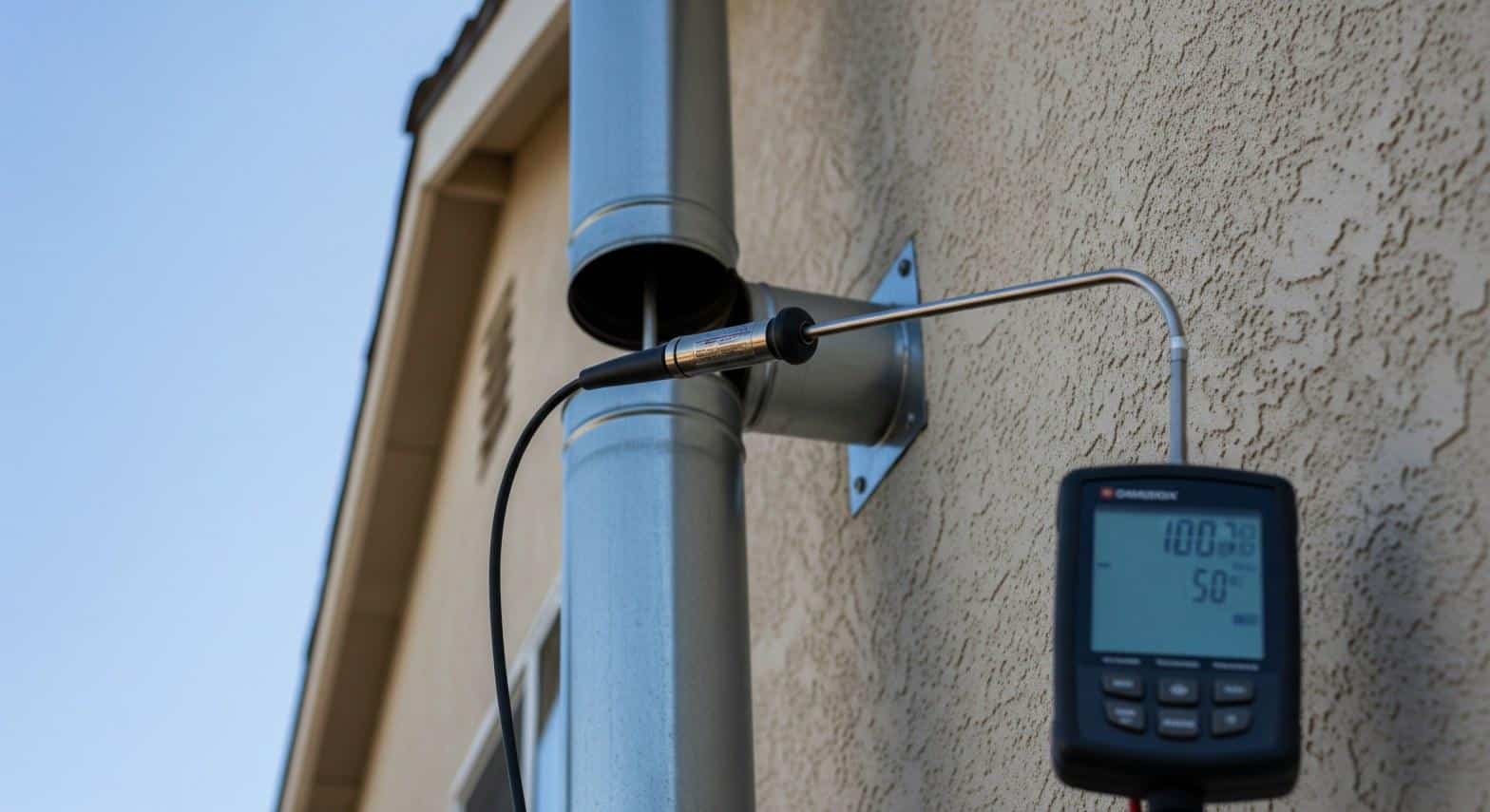
Next, they run a combustion analysis using a digital flue-gas analyzer to confirm the burner is operating within safe carbon monoxide limits. This step is required under California’s Title 24 building energy standards for any permitted furnace work. The tech also checks the blower motor’s amp draw against the nameplate rating — a motor drawing more than its rated amps is overheating and close to failure.
Common brands found in Long Beach homes include Carrier, Lennox, Trane, and Goodman. Parts availability for these brands is generally good in the Los Angeles metro area, which keeps most repairs to a single visit. Less common brands or units older than 20 years may require a parts order, adding one to three business days.
For furnaces that meet ENERGY STAR efficiency ratings (generally 95% AFUE or higher), the technician will also verify that the condensate drain (the drain that removes water produced by high-efficiency combustion) is clear — a clogged condensate line is a very common service call on 95% AFUE units in humid coastal climates.
What Does Furnace Repair Cost in the Long Beach Market?
In the Southern California regional market, furnace repair projects typically range from around $150 for a simple ignitor swap to $800 or more for a blower motor replacement or control board repair. A cracked heat exchanger often makes replacement more cost-effective than repair.
The factors that move cost the most are:
- Part type and availability: Ignitors and flame sensors are inexpensive and usually stocked on service vans. Blower motors and control boards cost more and may need to be ordered.
- System age: Parts for furnaces older than 15 years are harder to source and sometimes cost more.
- Scope of the repair: A single failed component is a straightforward fix. Multiple failing parts on an aging unit shifts the math toward replacement.
- Permit requirements: In Long Beach, replacing a furnace requires a City of Long Beach mechanical permit. Repair work on existing equipment generally does not, but any new gas-line connection does.
As of 2026, homeowners replacing an old furnace with a qualifying high-efficiency heat pump system may be eligible for the Inflation Reduction Act federal tax credit, which covers up to 30 percent of the installed cost of qualifying equipment. The TECH Clean California rebate program also offers incentives for heat pump installations in Southern California. Ask Shalom Heating & Air for current rebate details when requesting a quote, since program availability changes throughout the year.
Across our service calls in Long Beach, we find that roughly 60 percent of furnace repair visits involve either a dirty flame sensor, a failed ignitor, or a clogged filter — all relatively low-cost fixes when caught before the unit fully stops working.
Get Furnace Repair Help in Long Beach, CA
Schedule your furnace diagnostic before the next cold snap hits. Call Shalom Heating & Air at (714) 886-2021 to book a same-day or next-day service call across Long Beach ZIP codes 90802, 90803, 90804, 90805, and 90806. Whether you need furnace repair in Long Beach or are weighing whether a full replacement makes more sense, get a written diagnosis and quote before any work begins. No guesswork, no pressure.
Related Articles
Frequently Asked Questions
How much does furnace repair usually cost in Long Beach?
In the Southern California market, furnace repair typically ranges from about $150 for a simple ignitor or flame sensor replacement to $800 or more for a blower motor or control board. The biggest cost drivers are the specific part needed, the age of the unit, and whether parts have to be ordered. Contact Shalom Heating & Air at (714) 886-2021 for a written diagnostic quote specific to your system.
How do I know if my furnace needs repair or replacement?
If your furnace is under 15 years old and needs a single component replaced, repair usually makes financial sense. If the unit is 18 to 25 years old, has a cracked heat exchanger, or needs multiple parts at once, replacement is often the better value — especially given current Inflation Reduction Act federal tax credit incentives for high-efficiency systems. A licensed technician can give you a written comparison of both options.
Why is my furnace blowing cold air in Long Beach?
The most common causes are a clogged air filter restricting airflow, a tripped high-limit switch (a safety device that shuts off the burner when the furnace overheats), a failed ignitor, or a dirty flame sensor. Start by replacing the air filter and checking your thermostat settings. If the problem continues, a technician can diagnose the root cause in about an hour.
How long does a furnace repair take?
Most furnace repairs in Long Beach are completed in one to two hours once the technician is on-site. Simple fixes like a flame sensor cleaning or ignitor swap are often done in under an hour. Blower motor or control board replacements can take two to four hours, and if a part needs to be ordered, a second visit is scheduled within one to three business days.
Is it safe to run my furnace if it has a yellow flame?
No — a yellow or orange flame instead of a blue one can indicate incomplete combustion and a potential carbon monoxide leak. Turn the furnace off, ventilate the home, and call a licensed HVAC technician before running the system again. Carbon monoxide is odorless and colorless, so do not wait to see if the problem resolves on its own.
