What This Palos Verdes Homeowner Needed
A Palos Verdes homeowner wanted reliable, zoned climate control without tearing into existing walls to add ductwork. A ductless mini-split system was the right solution: one compact outdoor condenser unit handles both heating and cooling, and individual indoor air handlers let each room run at its own set temperature.
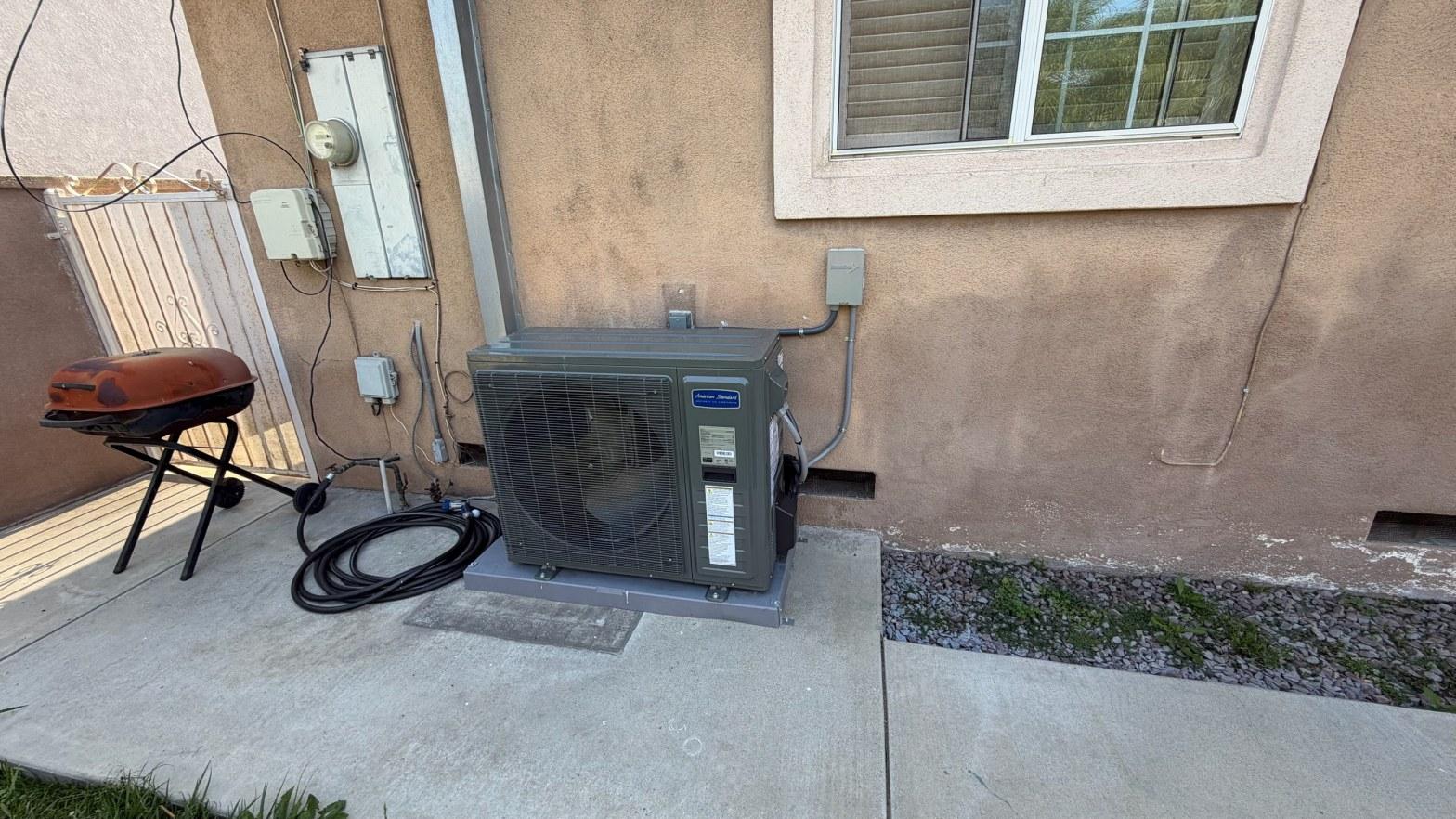
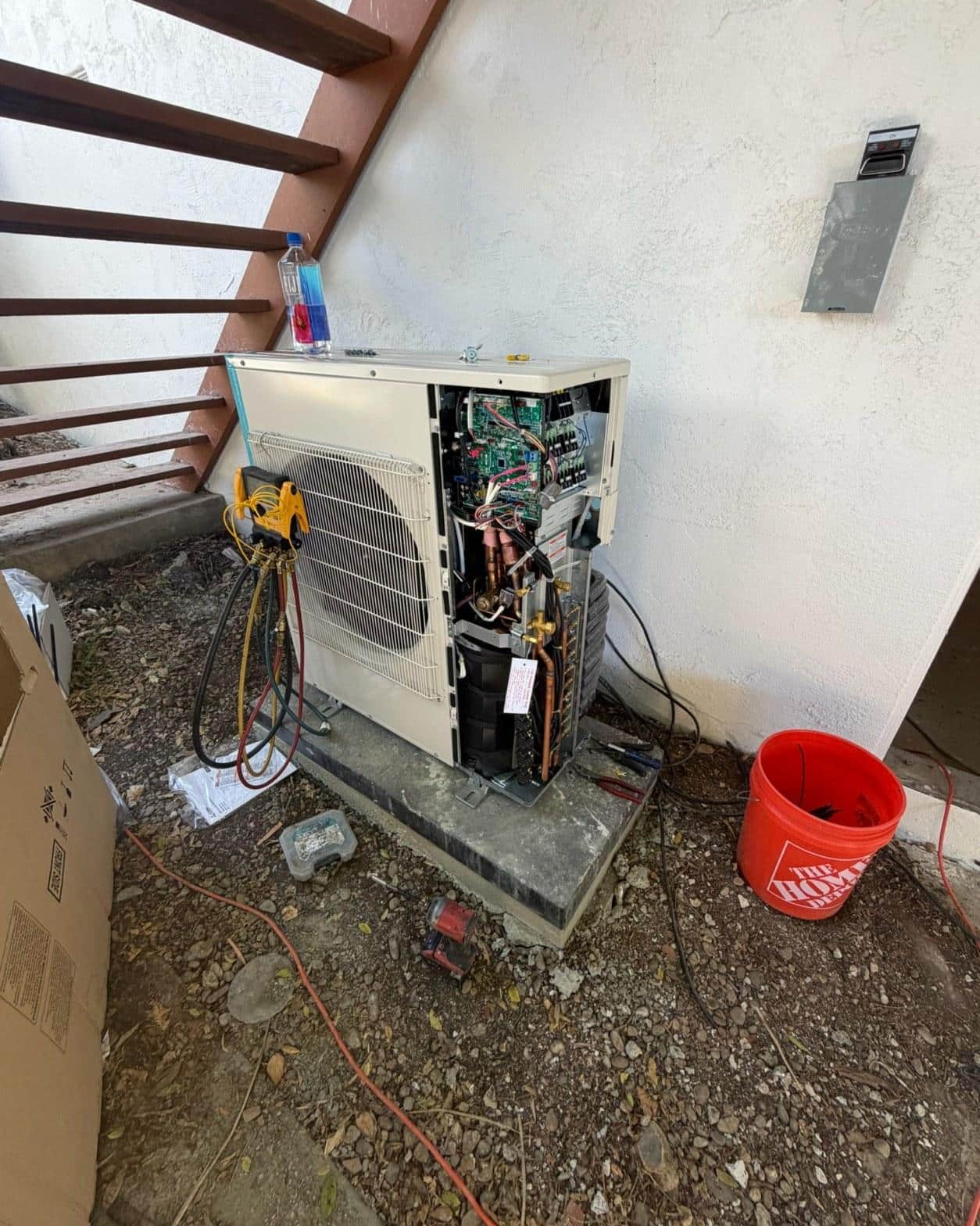
The property already had a concrete equipment pad tucked beneath a staircase on the exterior wall, which gave us a sheltered, level surface to work with right away. The electrical sub-panel visible on the wall nearby was also positioned close enough to keep line runs short, reducing both material cost and installation time.
How Did We Set Up the Outdoor Condenser?
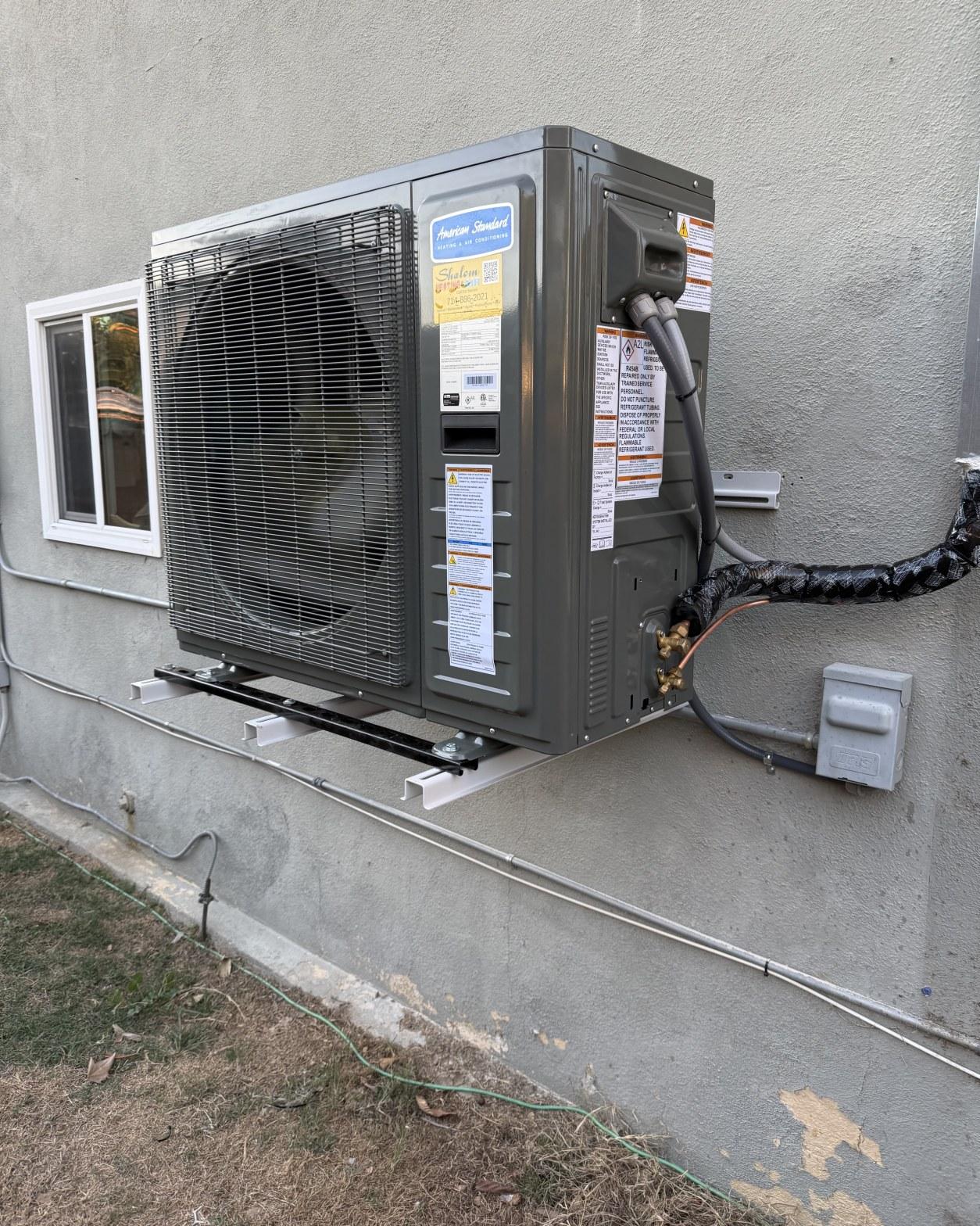
We set the condenser directly onto the existing concrete pad and secured it with mounting hardware before opening the service panel to begin wiring and refrigerant connections. Working with the front access panel removed, our technician connected the copper refrigerant lines to the service ports on the unit. You can see in the featured photo that two copper lines run from the base of the condenser: the larger suction line and the smaller liquid line, each carefully flared and torqued to manufacturer spec to prevent leaks.
The control board inside the condenser required several low-voltage wiring connections routed back to the indoor air handler. These signal wires tell the unit which mode to run, what temperature the thermostat is calling for, and whether the compressor should stage up or down. Getting these connections right at the board is what separates a system that runs quietly for 15 or more years from one that throws fault codes within the first season.
Refrigerant handling on this job followed EPA refrigerant regulations (Section 608), which govern how refrigerant is recovered, charged, and documented by certified technicians.
Why a Concrete Pad and Sheltered Location Matter
Placing a condenser on a solid, level pad prevents vibration stress on the refrigerant lines and keeps the unit stable during the strong Santa Ana wind events that move through the Palos Verdes Peninsula each fall and winter. The staircase overhead provides partial shade, which can meaningfully affect efficiency: a condenser operating in direct afternoon sun can see ambient temperatures 10 to 15 degrees Fahrenheit higher than a shaded unit, forcing the compressor to work harder to reject heat.
Our technicians have found that in coastal South Bay neighborhoods, condenser coils benefit from a rinse-down every 6 to 12 months because salt-laden marine air deposits a fine residue on the aluminum fins. Left uncleaned, that buildup reduces airflow across the coil and drives up operating costs over time.
Palos Verdes sits at elevations ranging from near sea level up to roughly 1,400 feet, and the National Weather Service Los Angeles office records average summer highs in the mid-70s°F for the peninsula, mild enough that a properly sized mini-split handles both the warm months and the cooler, damp winters without straining.
Commissioning and What the Homeowner Can Expect
Once all wiring and refrigerant connections were complete, we pressure-tested the lines with dry nitrogen before pulling a vacuum to remove moisture, then charged the system to the manufacturer’s specified weight. A manifold gauge set (visible beside the unit in the featured photo) confirmed that both high-side and low-side pressures were within the normal operating range for the ambient temperature that day.
Mini-split systems installed today must meet California’s Title 24 building energy standards, which set minimum efficiency thresholds for cooling equipment. As of 2026, many qualifying mini-split heat pump systems also remain eligible for the Inflation Reduction Act federal tax credit of up to $2,000, which can offset a meaningful portion of the total installed cost for homeowners who file IRS Form 5695.
The homeowner can expect the system to deliver comfortable zoned temperatures year-round. A well-maintained ductless unit at this capacity class typically runs for 15 to 20 years before a compressor replacement becomes a serious consideration, and annual filter cleaning, roughly every 4 to 6 weeks during heavy-use months, is the single most important thing a homeowner can do to protect that lifespan.
Schedule Your Mini-Split Installation Consultation
If your Palos Verdes home lacks ductwork or you want to add climate control to a garage, bonus room, or addition, a ductless mini-split is worth a serious look. Shalom Heating & Air is licensed by the California Contractors State License Board (CSLB) and handles the full scope from equipment selection through final commissioning. Call us or fill out the contact form to request a site visit and written quote.
Explore our full range of HVAC services across Southern California.
Frequently Asked Questions
How long does it take to install a mini-split outdoor condenser unit?
Most single-zone mini-split installations take between 4 and 8 hours from start to finish, depending on how far the refrigerant lines need to run and how complex the electrical connection is. If the concrete pad and sub-panel are already in place, as they were on this Palos Verdes job, the timeline stays on the shorter end of that range.
Do I need a permit to install a mini-split in Palos Verdes?
Yes. Ductless mini-split installations in Palos Verdes generally require a mechanical and electrical permit from the local building department. The permit process ensures the installation meets California's Title 24 building energy standards and local electrical codes. Your installing contractor should pull these permits before work begins.
Can I get a federal tax credit for a mini-split heat pump in 2026?
As of 2026, qualifying mini-split heat pump systems remain eligible for the Inflation Reduction Act federal tax credit of up to $2,000, claimed on IRS Form 5695. The system must meet minimum efficiency thresholds, so confirm the specific model's SEER2 and HSPF2 ratings with your contractor before purchase.
Why does my mini-split condenser need to sit on a concrete pad?
A concrete pad keeps the unit level and stable, which prevents vibration stress on the copper refrigerant lines over time. It also elevates the unit above ground moisture and makes it harder for settled soil or landscaping to shift the unit out of alignment. Vibration on an unlevel condenser can eventually loosen fittings and cause refrigerant leaks.
How often should a mini-split condenser be serviced in a coastal area like Palos Verdes?
In coastal neighborhoods where marine-layer air carries salt, plan on a professional condenser coil cleaning once a year and an indoor filter cleaning every 4 to 6 weeks during heavy-use months. Salt residue on aluminum fins reduces airflow and forces the compressor to run harder, raising operating costs and shortening the unit's service life.
What refrigerant do new mini-splits use and is it being phased out?
Most mini-splits currently being installed use R-410A refrigerant, though manufacturers are transitioning to lower-global-warming-potential refrigerants such as R-32 and R-454B in response to EPA regulations under Section 608 and the AIM Act. Ask your contractor which refrigerant the specific unit uses so you understand future serviceability.
Passionate - Dedicated - Professional