
Complete HVAC System Change-Out in Norwalk
A complete HVAC system change-out in Norwalk, CA: old equipment and ductwork fully removed, replaced with a new American Standard heat pump, gas furnace, and fresh flex duct system.
What the Old System Was Putting This Norwalk Family Through
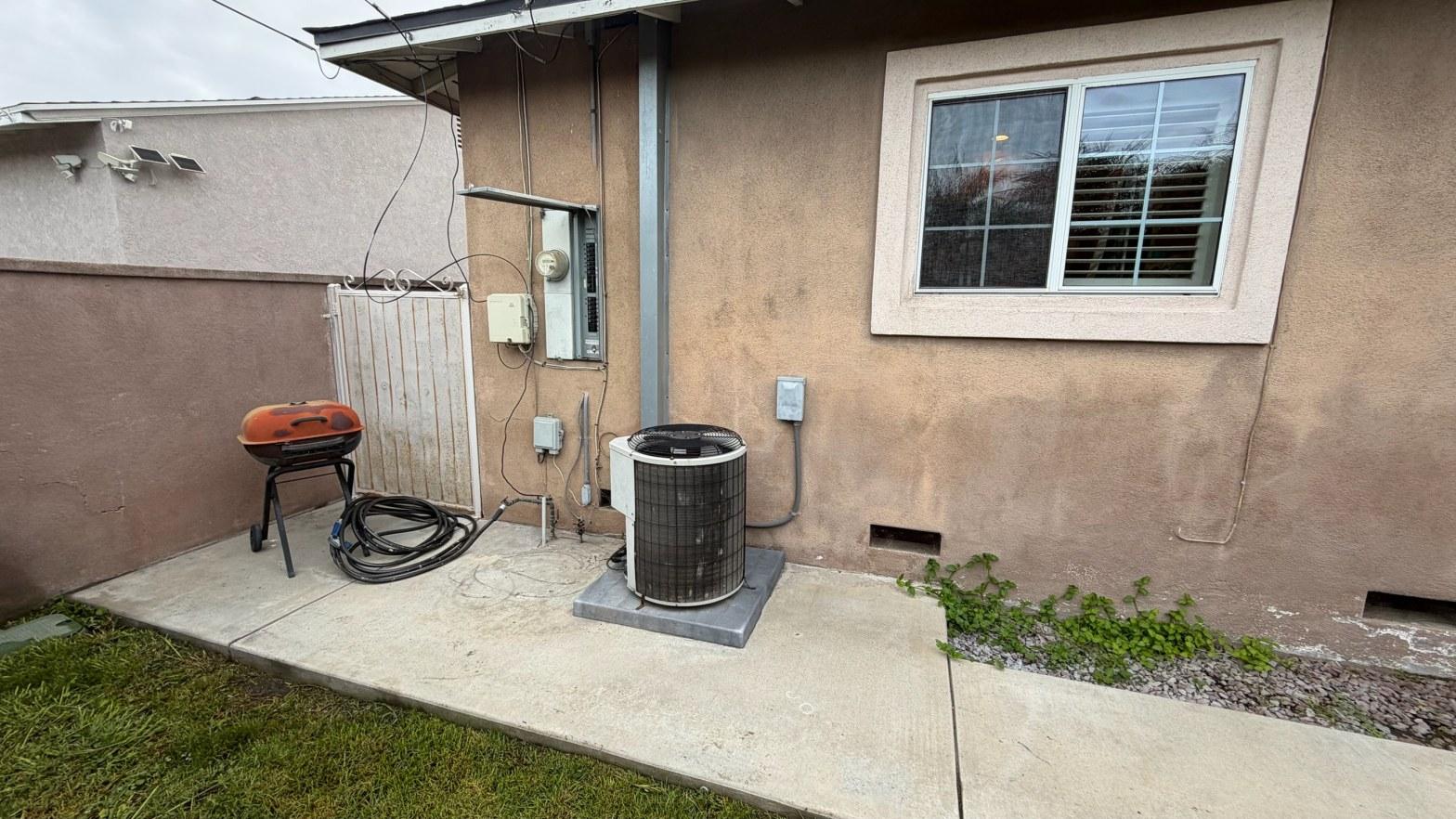
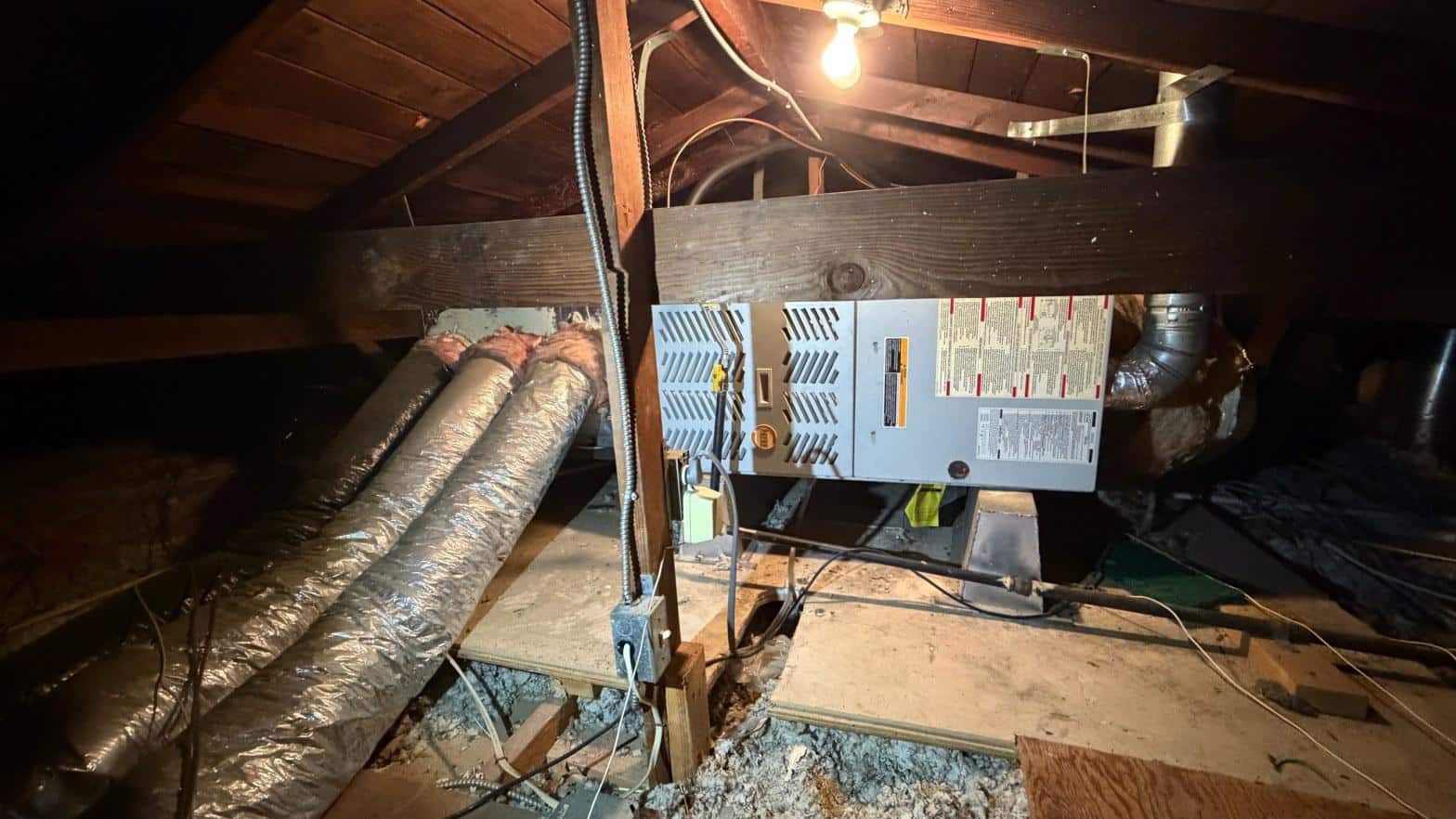
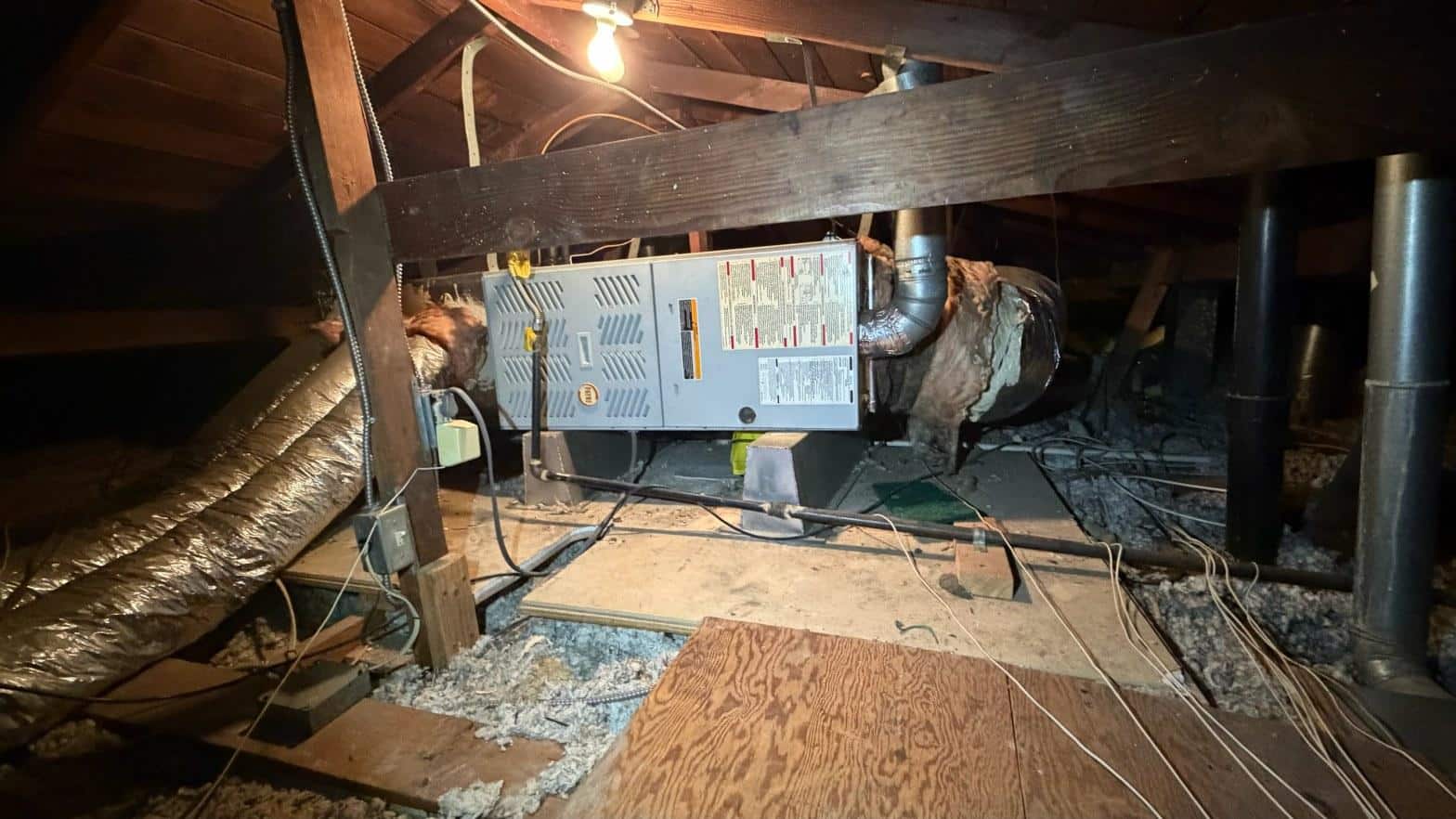
The existing HVAC system at this Norwalk home had reached the end of its useful life — and it showed. The original condenser, a standard round-top unit sitting on a concrete pad along the stucco exterior wall, was weathered and inefficient. Inside the attic, the furnace and ductwork told the same story: aging flex ducts with compromised insulation, a cramped installation that had been patched rather than properly maintained, and a system that simply could not keep pace with the City of Norwalk’s summer temperatures, which regularly exceed 95°F between June and September.
The homeowners weren’t just uncomfortable — they were watching energy bills climb with no improvement in comfort. After an honest assessment, the decision was clear: a full change-out was the only path forward. Not a repair. Not a patch. Everything out, everything new.
Our Plan: A Matched System Built for Norwalk’s Climate
A mismatched HVAC system — old ducts paired with new equipment, or vice versa — wastes a significant portion of the efficiency gains the new equipment is designed to deliver. Industry research from ACCA’s Manual J load calculation standards consistently shows that duct leakage alone can reduce system efficiency by 20–30%. For a Norwalk home, where the system runs 6 to 8 months of the year, that loss adds up fast.
The plan called for removing 100% of the existing ductwork alongside the old condenser and furnace, then installing a complete, matched American Standard system: a new heat pump condenser outdoors on the existing concrete pad, and a new gas furnace in the attic serving as the air handler — all tied together with fresh insulated flex ducts sized correctly for the home’s actual load.
Our technicians see this pattern regularly in Norwalk’s older housing stock: across our attic furnace replacements in this area, roughly 7 out of 10 units we pull out are paired with flex duct systems that have at least one compromised duct run — kinked, disconnected, or with failed insulation facing.
The Work: What Came Out and What Went In
The old condenser was disconnected, refrigerant was recovered in accordance with EPA refrigerant regulations (Section 608), and the unit was removed from the pad. Inside the attic, the existing furnace — sitting in a low-clearance space with barely 36 inches of working height — was carefully extracted along with every run of the old duct system.
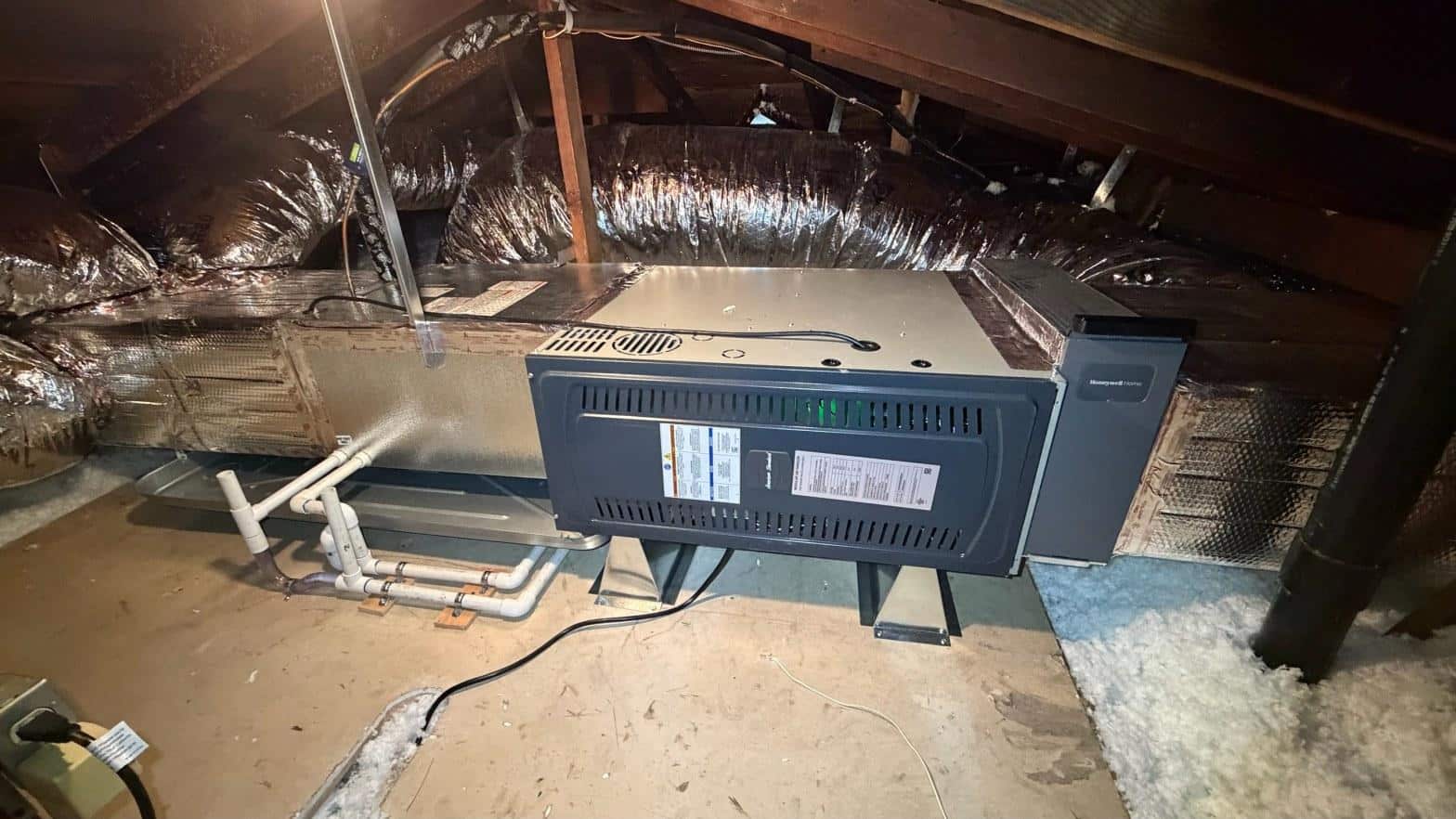
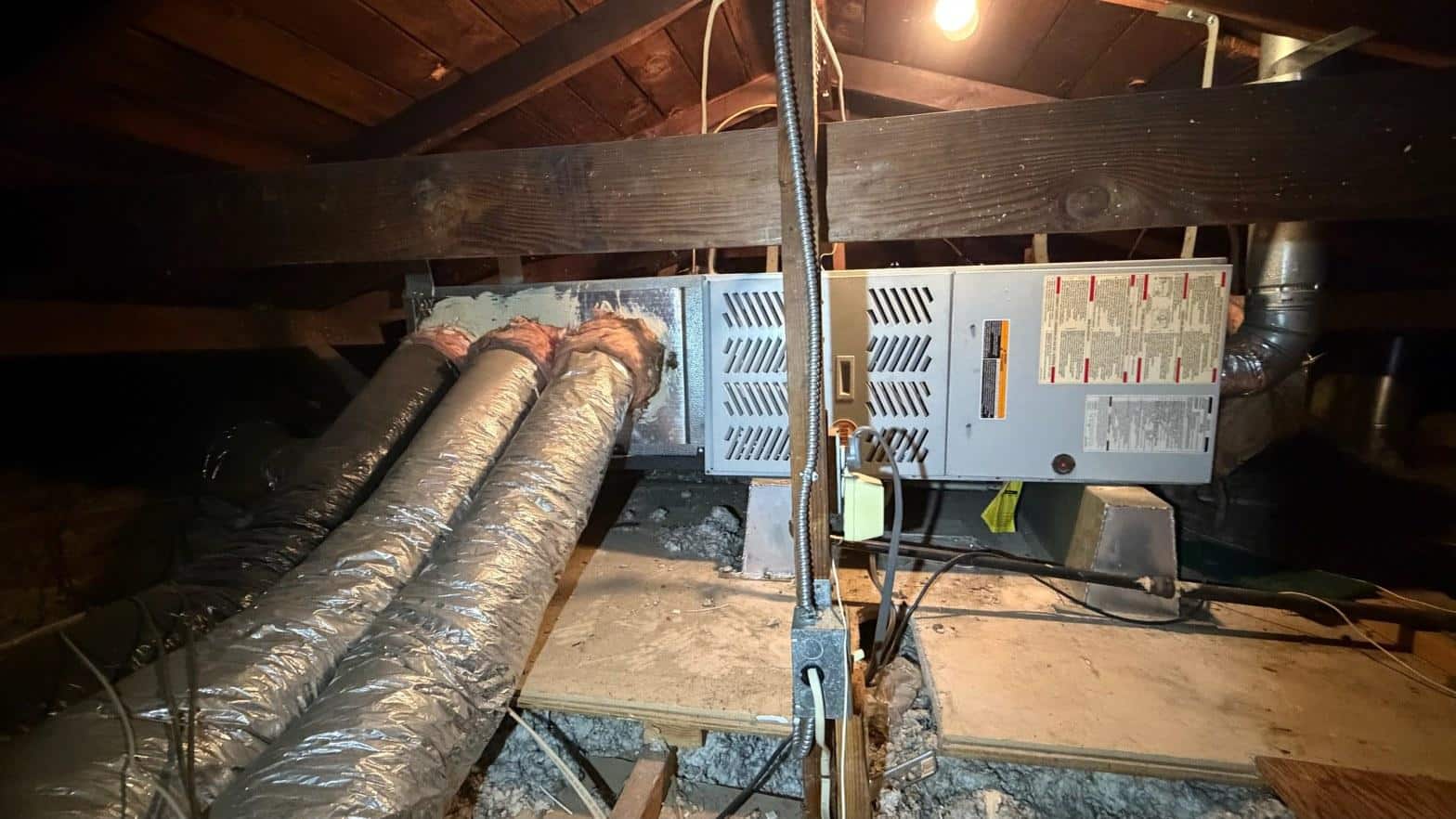
With the attic cleared, the new American Standard gas furnace was positioned on a raised equipment platform to keep it level and accessible. New PVC condensate drain lines were run cleanly through the attic floor. Fresh insulated flex ducts were routed to each supply and return point, properly supported and sealed at every connection. The flue pipe was run and secured before the unit was energized.
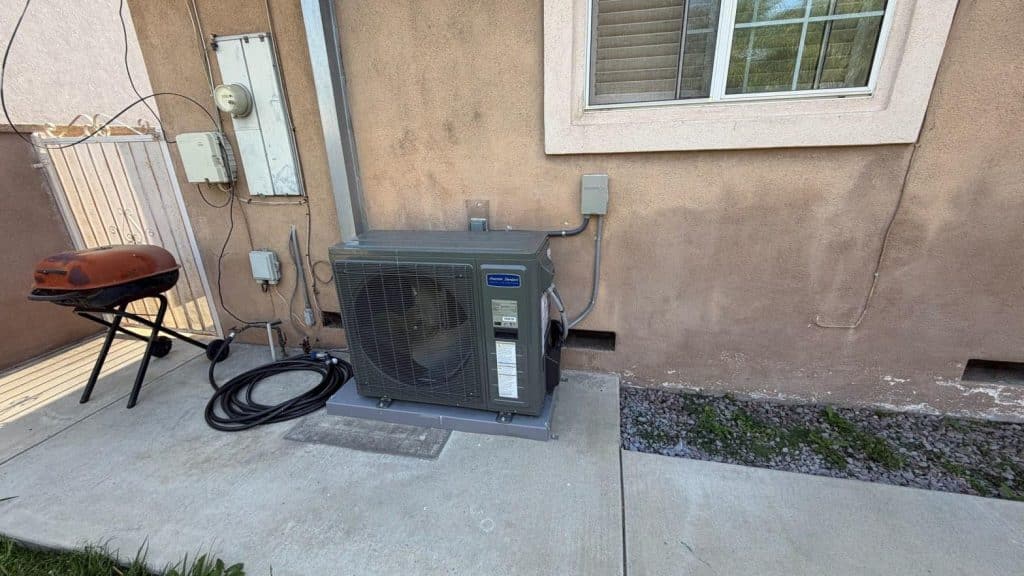
Outdoors, the new American Standard heat pump condenser was set on the existing concrete pad and connected to the new disconnect box mounted on the exterior wall. Line sets were run cleanly through new conduit, keeping the install code-compliant with California’s Title 24 building energy standards.
The Transformation: Before vs. After in Plain Sight
The visual contrast between the old system and the new one is immediate. Where the previous condenser was a tired round-top unit showing years of weathering, the new American Standard heat pump sits square and clean on the pad — properly wired, properly spaced from the wall, with a dedicated disconnect within reach. The refrigerant line sets run through new conduit rather than lying exposed.
In the attic, the difference is just as stark. The old install — low to the deck, surrounded by degraded insulation and debris — gave way to a properly elevated furnace with clean duct connections, new PVC drain lines, and organized electrical conduit. The Honeywell Home thermostat control wiring runs neatly to the new unit.
Homeowners replacing a system this old — typically 15 to 20 years in service for units in similar condition — can realistically expect to see heating and cooling costs drop by 20–40% depending on how degraded the previous equipment was, according to ENERGY STAR efficiency guidance. As of 2025, qualifying heat pump installations may also be eligible for the Inflation Reduction Act federal tax credit of up to $2,000, which offsets a meaningful portion of project cost.
The Result for This Norwalk Home
The City of Norwalk home went from a failing, mismatched system to a complete, properly sized, code-compliant HVAC installation — new equipment, new ducts, nothing left over from the old system. Every component is matched, every duct run is sealed and insulated, and the system is registered and permitted correctly.
The homeowners now have reliable cooling for Norwalk summers and efficient gas heat for winter nights, all from a single integrated American Standard system designed to run as a unit — not a collection of mismatched parts that fight each other for efficiency.
Schedule Your HVAC Replacement Consultation in Norwalk
If your system is more than 12–15 years old, or if you’re patching the same equipment year after year, a full change-out is almost always more cost-effective than another repair. Get a written quote before any work begins. Call Shalom Heating & Air or book online — we serve the City of Norwalk and surrounding communities throughout Los Angeles County.
Frequently Asked Questions
How much does a complete HVAC system change-out cost in Norwalk, CA?
A full HVAC change-out in Norwalk — including new condenser, new furnace or air handler, and all-new ductwork — typically runs between $8,000 and $18,000 depending on system size, duct complexity, and equipment tier. As of 2025, qualifying heat pump installations may offset up to $2,000 through the Inflation Reduction Act federal tax credit, reducing out-of-pocket cost meaningfully.
Do I need to replace my ductwork when I get a new HVAC system?
Not always, but if your ducts are more than 15 years old or show signs of leakage, collapsed sections, or failed insulation, replacing them alongside the new system is strongly recommended. Pairing new equipment with degraded ducts can reduce system efficiency by 20–30%, which erodes the energy savings the new equipment is designed to deliver.
How long does a full HVAC system replacement take to complete?
A complete change-out — removing the old condenser, attic furnace, and all ductwork, then installing entirely new equipment and ducts — typically takes 1 to 2 full days for a single-family home. Attic installations in low-clearance spaces can add time due to access constraints.
Is a heat pump a good choice for a home in Norwalk, California?
Yes. Norwalk's climate, with summer highs regularly above 95°F and mild winters, is well-suited to a heat pump paired with a gas furnace backup — sometimes called a dual-fuel system. Heat pumps operate efficiently when temperatures stay above approximately 35–40°F, which covers the vast majority of Norwalk's winter nights.
Does HVAC replacement in California need to meet Title 24 standards?
Yes. Any permitted HVAC installation in California must comply with California's Title 24 building energy standards, which set minimum efficiency ratings for equipment and ductwork installation quality. A properly permitted change-out ensures your system meets these requirements and protects you at resale.
What is the lifespan of a new American Standard HVAC system?
A properly installed American Standard heat pump condenser or gas furnace typically lasts 15 to 20 years with regular maintenance — annual tune-ups, filter changes every 1 to 3 months, and prompt attention to minor issues. New ductwork installed at the same time generally lasts 20 to 25 years.
Explore Our HVAC Services
Serving Bellflower, Long Beach & Orange County with licensed heating & cooling since 2000.
